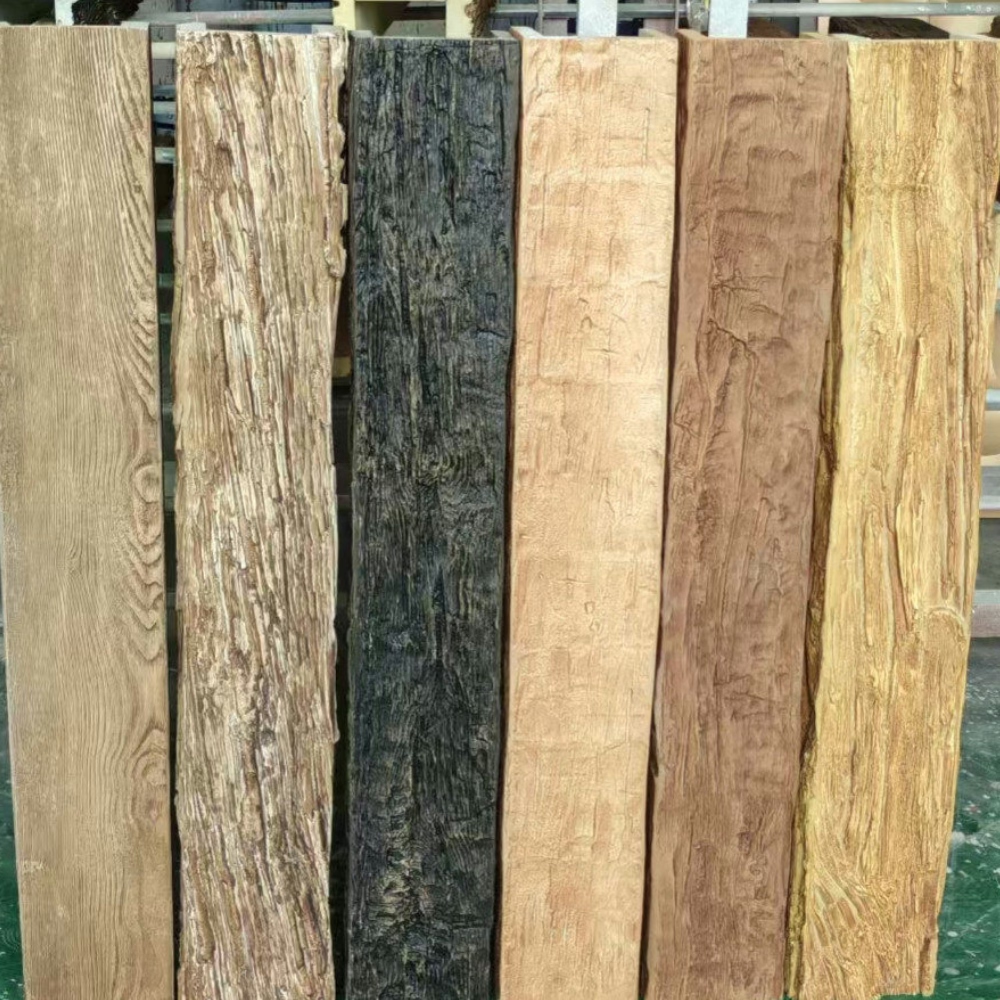
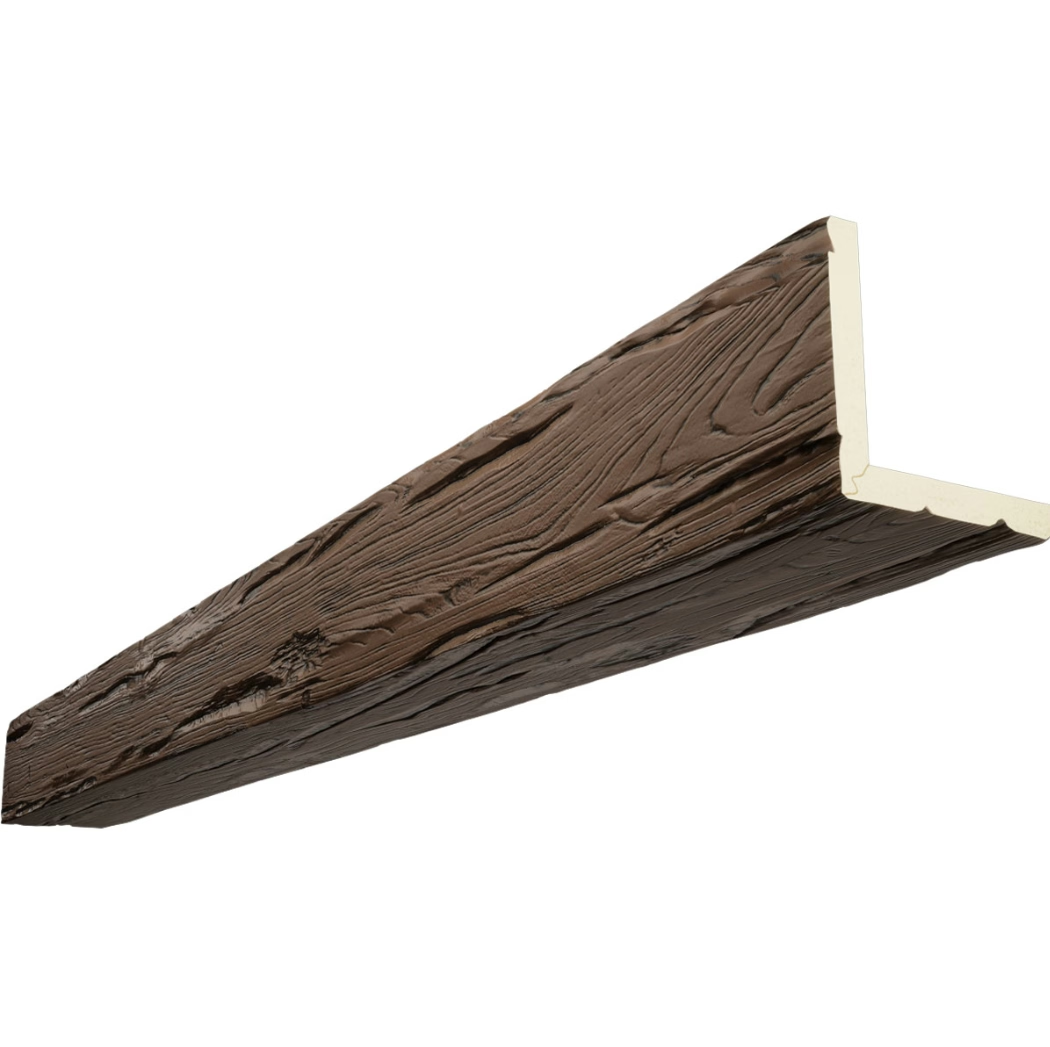
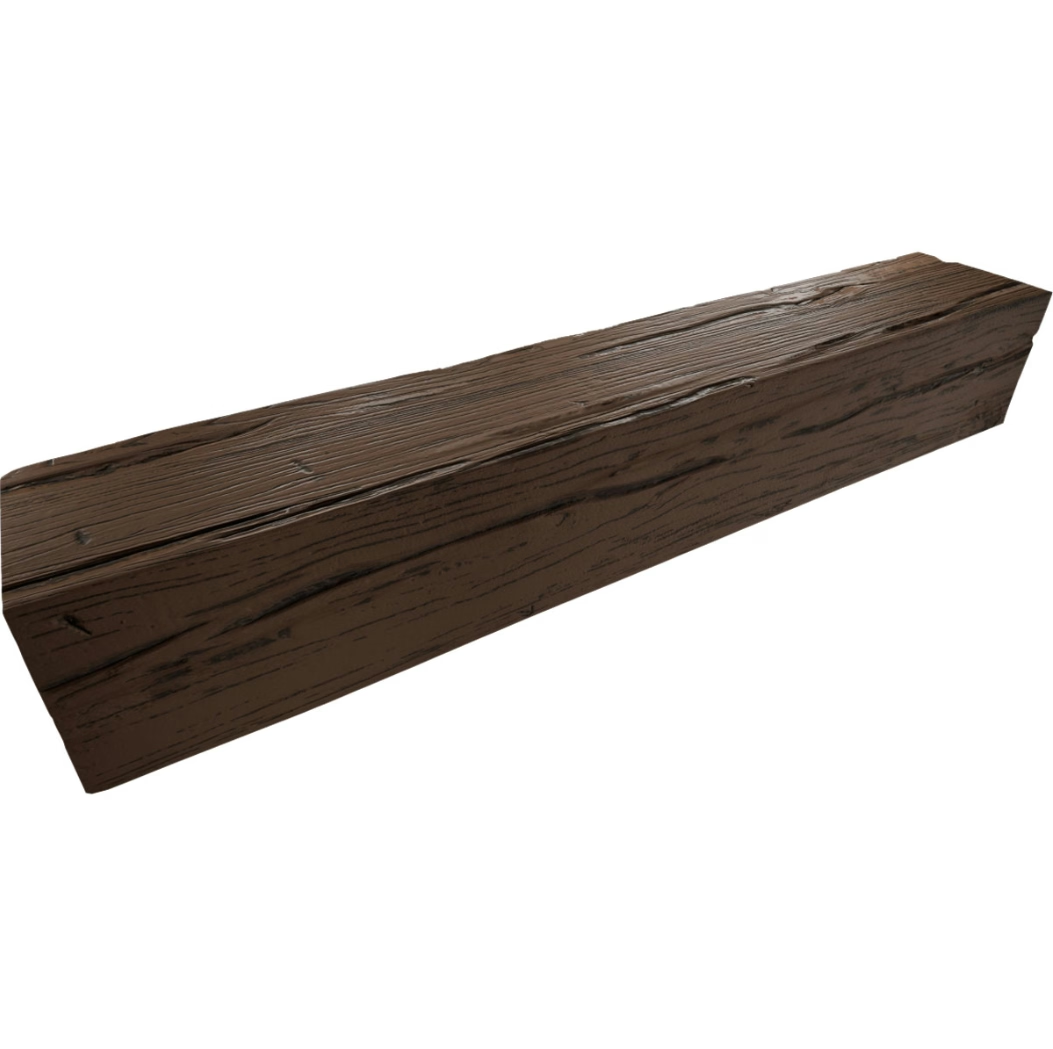
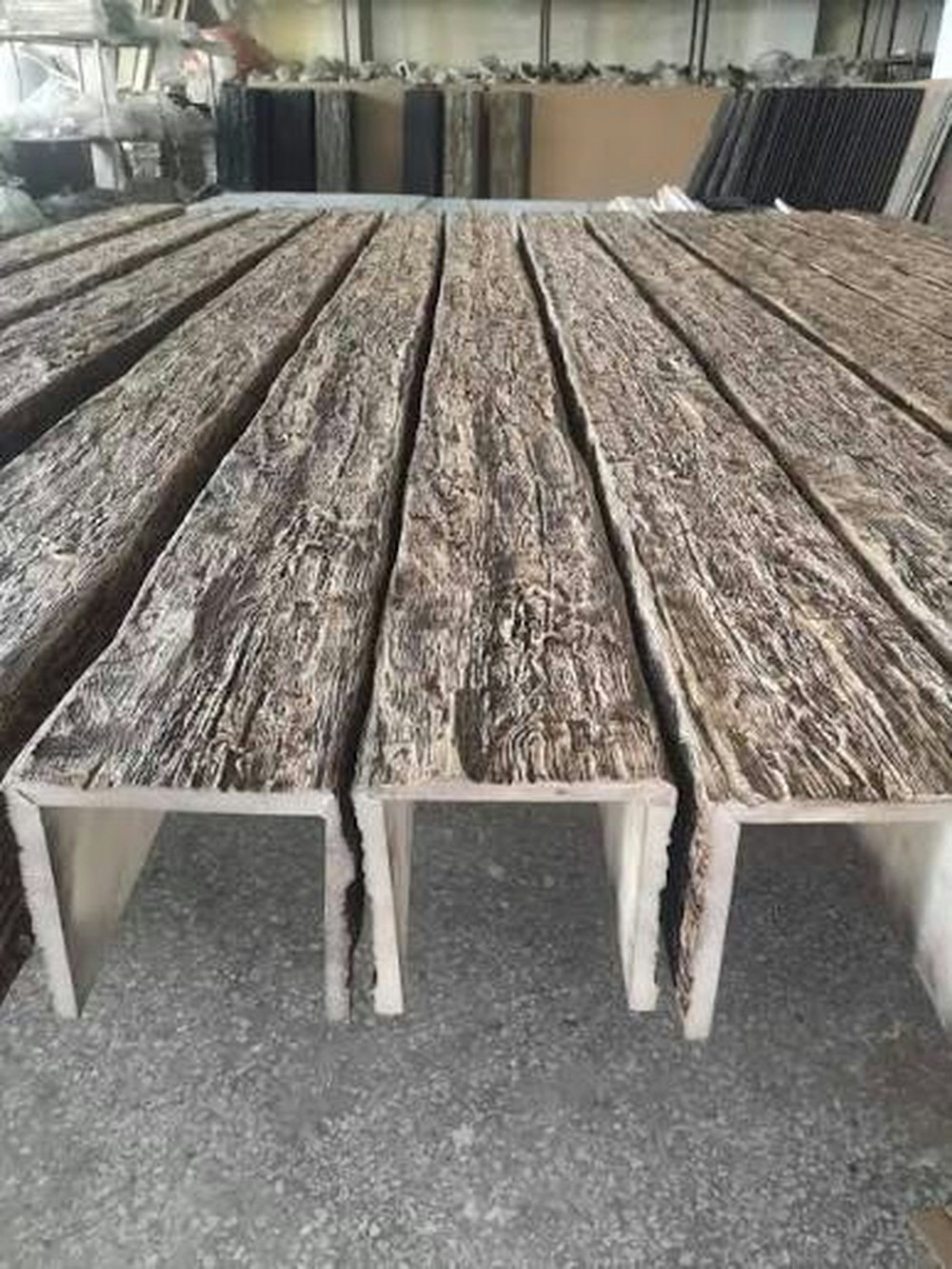
Moisture Proof Faux Timber Beams | Factory Wholesale for Villa Projects
Villa projects have beam installations in spaces that most residential projects don't encounter. Pool houses, beachfront covered terraces, spa and sauna ceilings, bathroom ceilings in luxury suites, kitchen ceilings over high-output ranges—each of these spaces has specific moisture conditions that affect the beam specification. A beam that works in a living room ceiling may fail in a pool house within 18 to 36 months if it's not specified for the moisture conditions.
This is what moisture-proof beam specification means in villa contexts, what the different applications require, and how factories wholesale the right specification for each.
What "moisture proof" actually means in the beam spec
Polyurethane is a closed-cell foam, which means the bulk material doesn't absorb water the way open-cell materials do. That's the starting point for moisture performance, but it's not the whole picture.
A moisture-proof faux timber beam specification includes:
- Closed-cell polyurethane foam density. Higher density (200+ kg/m³) has fewer open cells at the cut edges and better long-term moisture resistance.
- Factory-sealed cut ends. The cut ends of a beam are the most vulnerable point for moisture ingress. The factory applies a sealer that matches the beam's moisture rating.
- Factory finish chemistry. The finish itself has to be moisture-resistant. Water-based polyurethane finishes are standard; some applications require marine-grade or specialized moisture-resistant finishes.
- Joint sealing at install. The joints between beams, and the joints between beams and walls, need to be sealed at install with a compatible product.
A beam that meets all four criteria is moisture-proof at the spec level. A beam that misses any of them may perform adequately in dry conditions but fail in high-moisture environments.
Pool house and indoor pool ceilings
Pool houses and indoor pool ceilings are the most moisture-intensive residential environments. The conditions:
- Constant high humidity. Typically 60 to 80 percent relative humidity, even with proper ventilation.
- Chlorine vapor. In indoor pools, chlorine off-gassing from the water creates a corrosive atmosphere that degrades many materials.
- Direct splash. In pool houses with adjacent outdoor pools, the beams may be exposed to direct splash from swimmers.
- Temperature cycling. Pool houses often have temperature swings between high heat (when the pool is heated) and cooler ambient temperatures.
For pool house ceilings, the beam specification should include:
- Moisture-proof rating. Confirmed by the factory's data sheet.
- UV-resistant finish. Pool house beams are often exposed to direct sunlight through windows or skylights.
- Chemical-resistant finish. Chlorine and other pool chemicals can degrade some finishes. The factory should specify a chemical-resistant finish for pool house applications.
- Stainless or coated cleat hardware. Standard cleats will corrode in pool house environments.
Beachfront and oceanfront ceilings
Beachfront properties have specific moisture challenges:
- Salt air corrosion. Salt in the air accelerates corrosion of any metal components, including cleats.
- High humidity. Coastal humidity is consistently high, often 70 to 90 percent.
- Storm exposure. Covered outdoor ceilings on beachfront properties may be exposed to wind-driven rain during storms.
- Intense UV. Coastal properties often have intense UV exposure due to reflection off water.
For beachfront beams, the specification should include:
- Marine-grade cleat hardware. Stainless steel (316 grade) or hot-dip galvanized cleats.
- UV-resistant factory finish. With documented UV stability rating.
- Enhanced cut-end sealing. Because the beams may be exposed to wind-driven rain.
- Confirmed moisture-proof rating. With documentation of the test method and result.
Spa, sauna, and steam room ceilings
Spa and sauna environments have the most extreme moisture conditions in residential construction:
- Direct steam exposure. In steam rooms, the beams may be exposed to direct steam for extended periods.
- High temperature. Saunas operate at 150 to 195°F, well above normal residential temperatures.
- Constant humidity cycling. Spas cycle between high humidity (during use) and lower humidity (between uses).
- Essential oil and chemical exposure. Spa environments often have essential oil diffusers and chemical treatments that can affect finishes.
For spa and sauna beams, the specification is the most demanding:
- Highest moisture-proof rating. With documentation specific to steam exposure.
- Heat-resistant factory finish. Some finishes degrade at sustained high temperatures.
- Chemical-resistant finish. For essential oils and spa chemicals.
- Stainless cleat hardware. For corrosion resistance.
- Specialized joint sealing. With high-temperature-resistant sealant.
Not all faux beam factories produce beams rated for sauna or steam room applications. The contractor should confirm the rating with the factory before specifying beams for these environments.
Bathroom ceilings in luxury villas
Luxury villa bathrooms have varying moisture conditions:
- Standard bathroom ceilings. Humidity from showers, but no direct water exposure. Standard moisture-proof beams are sufficient.
- Wet-room or curbless shower ceilings. Direct water exposure from overhead showers. Enhanced moisture-proof beams with confirmed steam rating are required.
- Outdoor or covered outdoor bathroom ceilings. Same considerations as beachfront ceilings.
For luxury villa bathrooms, the specification depends on the specific bathroom design. The contractor should review each bathroom's design and confirm the appropriate beam spec.
Kitchen ceilings
Kitchen ceilings have specific moisture considerations:
- Steam from cooking. Daily exposure to cooking steam, particularly over ranges and ovens.
- Range hood exhaust. Most of the steam is captured by the range hood, but some escapes into the room.
- Dishwasher and sink steam. Short bursts of high humidity during dishwasher and sink use.
- Grease and cooking residue. Cooking produces airborne grease that can affect finishes.
For kitchen ceilings, the specification should include:
- Moisture-proof rating. Standard moisture-proof is typically sufficient.
- Easy-clean finish. The finish should be cleanable with standard kitchen cleaners without degradation.
- Grease-resistant finish. Some finishes are more resistant to grease buildup than others.
Outdoor covered ceilings (loggias, lanais, covered terraces)
Many villas have outdoor covered ceilings that connect to the interior ceiling visually. The beams continue from inside to outside, requiring the same profile and color but different performance specifications.
For outdoor covered beams, the specification should include:
- Enhanced moisture-proof rating. For wind-driven rain exposure.
- UV-resistant factory finish. With documented UV stability.
- Stainless or coated cleat hardware. For corrosion resistance.
- Confirmed freeze-thaw resistance. In climates where temperatures cycle below freezing.
The factory should be able to produce interior and exterior beams in matching color and finish, with the exterior beams rated for the specific climate conditions.
Factory wholesale supply for villa projects
For villa projects with multiple beam applications (interior, exterior, pool house, bathroom, kitchen), the factory wholesale supply picture includes:
Per-application specification
Each beam application has its own specification—profile, color, finish, cleat type. The factory should produce per-application quotes with the appropriate ratings for each.
Color matching across applications
The interior and exterior beams, the pool house beams, the bathroom beams—all should match in color and finish as closely as possible, even though their performance specifications differ. The factory should hold a master color reference that applies across all applications, with the appropriate finish chemistry for each.
Documentation for each application
Each beam order should include application-specific documentation:
- Moisture-proof rating and test method.
- UV resistance rating.
- Chemical resistance rating (where applicable).
- Cleat hardware specifications.
- Install guide specific to the application.
Replacement stock
Villa projects often have long construction timelines (24 to 36 months) and long service lives. The factory should hold replacement stock for the duration of the construction period, available for replacement within 5 to 10 business days.
How to brief the factory on a villa project
For villa projects with multiple beam applications, the factory brief should include:
- Project overview. Villa size, location, climate, construction timeline.
- Beam applications. Interior, exterior, pool house, bathrooms, kitchen, etc.
- Per-application specifications. Performance requirements for each application.
- Color and finish requirements. Matching across applications where required.
- Reference projects. Photographs of completed villa projects with similar beam applications.
With this brief, the factory can develop per-application specifications, produce samples for approval, and quote accurately. Without it, the factory makes assumptions that may not match the project's actual requirements.
Common pitfalls in villa beam specifications
A few issues that come up often enough to flag:
- Indoor-rated beams specified for outdoor use. The contractor specifies interior beams for the outdoor covered ceiling, not realizing the performance requirements differ.
- Wrong cleat hardware for the environment. Standard cleats specified for pool house or beachfront applications. The cleats corrode within 1 to 3 years.
- Insufficient moisture-proof rating for steam rooms. Standard moisture-proof beams specified for steam rooms. The beams degrade within 18 to 36 months.
- Color mismatch between interior and exterior beams. The interior and exterior beams are ordered from different production runs, with slight color variation.
- Missing documentation for inspection. The villa project requires documentation that the factory hasn't provided.
How to manage the villa-factory relationship
For villa builders and contractors, the right factory relationship for moisture-proof beam work includes:
- Factory tour and capability review. Visit the factory to confirm they produce the moisture-proof ratings required.
- Per-application specification development. Work with the factory's technical team to develop specifications for each beam application.
- Sample production for the most demanding applications. Produce samples for pool house, beachfront, or steam room applications and verify performance before full production.
- Documentation package per application. Ensure each beam order includes the documentation required for that application.
- Long-term replacement stock. Hold replacement stock at the factory for the duration of the villa's construction and initial service period.
Moisture-proof faux timber beams for villa projects are a category where the per-application specification, the factory capability, and the documentation depth all need to align. The right factory relationship produces beams that perform across the full range of villa applications. The wrong one produces beams that look right at install but fail in service within a few years.
Technical References
ASTM standards cited in every specification
Test Data
Lab results from internal testing program
Updated 2026
Reviewed against current product specs