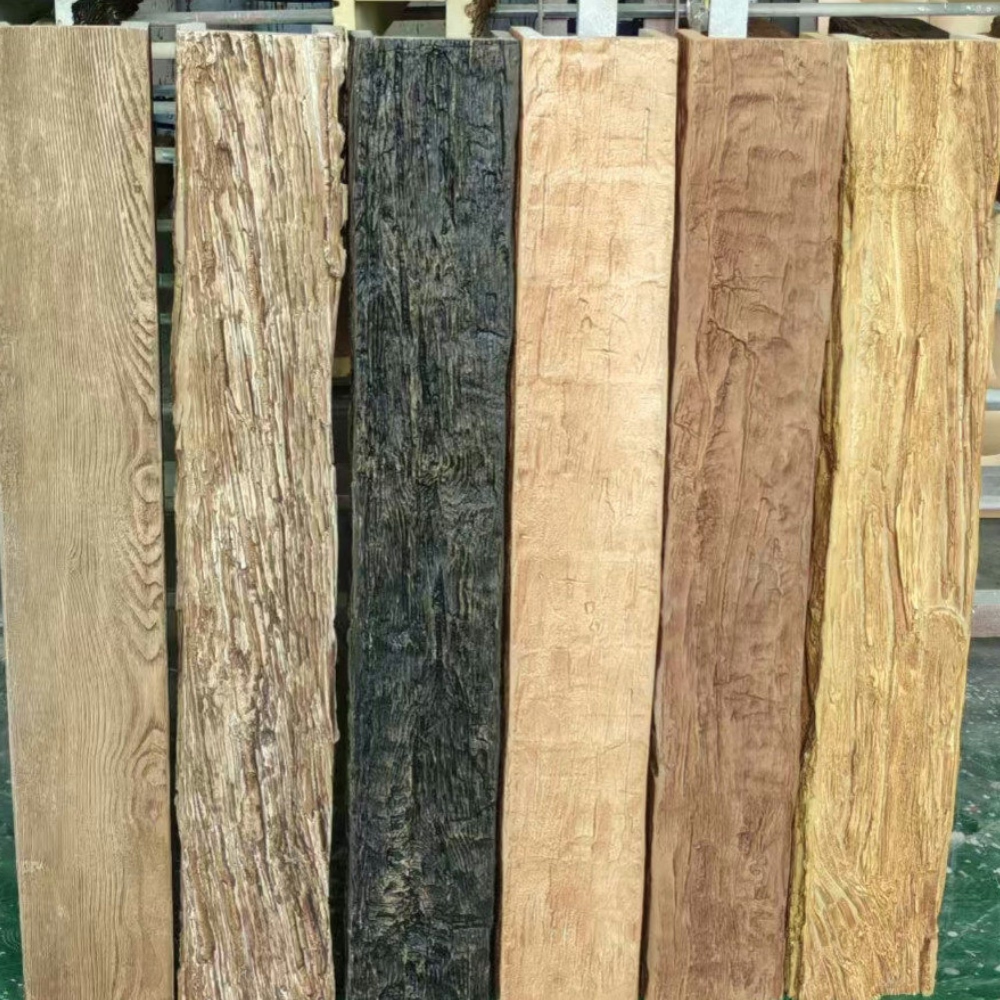
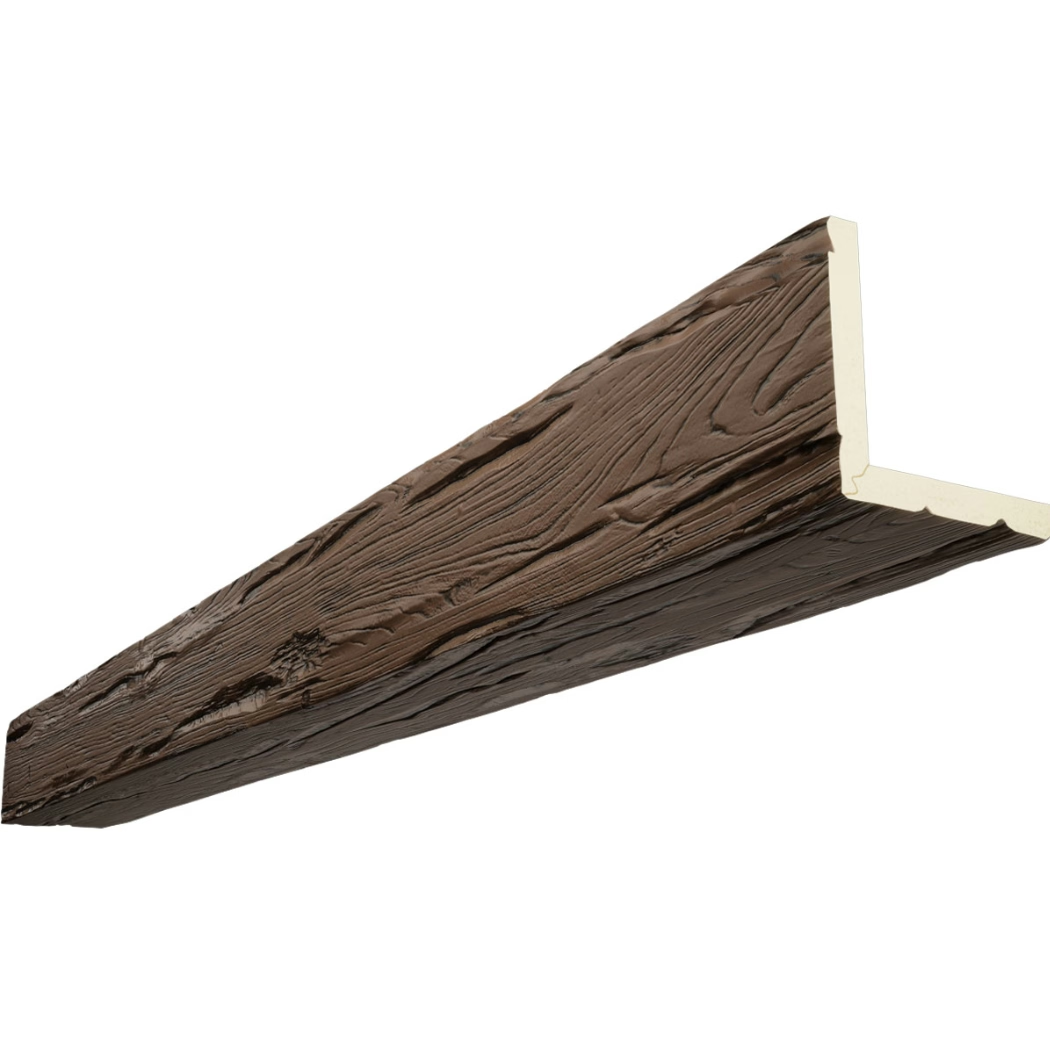
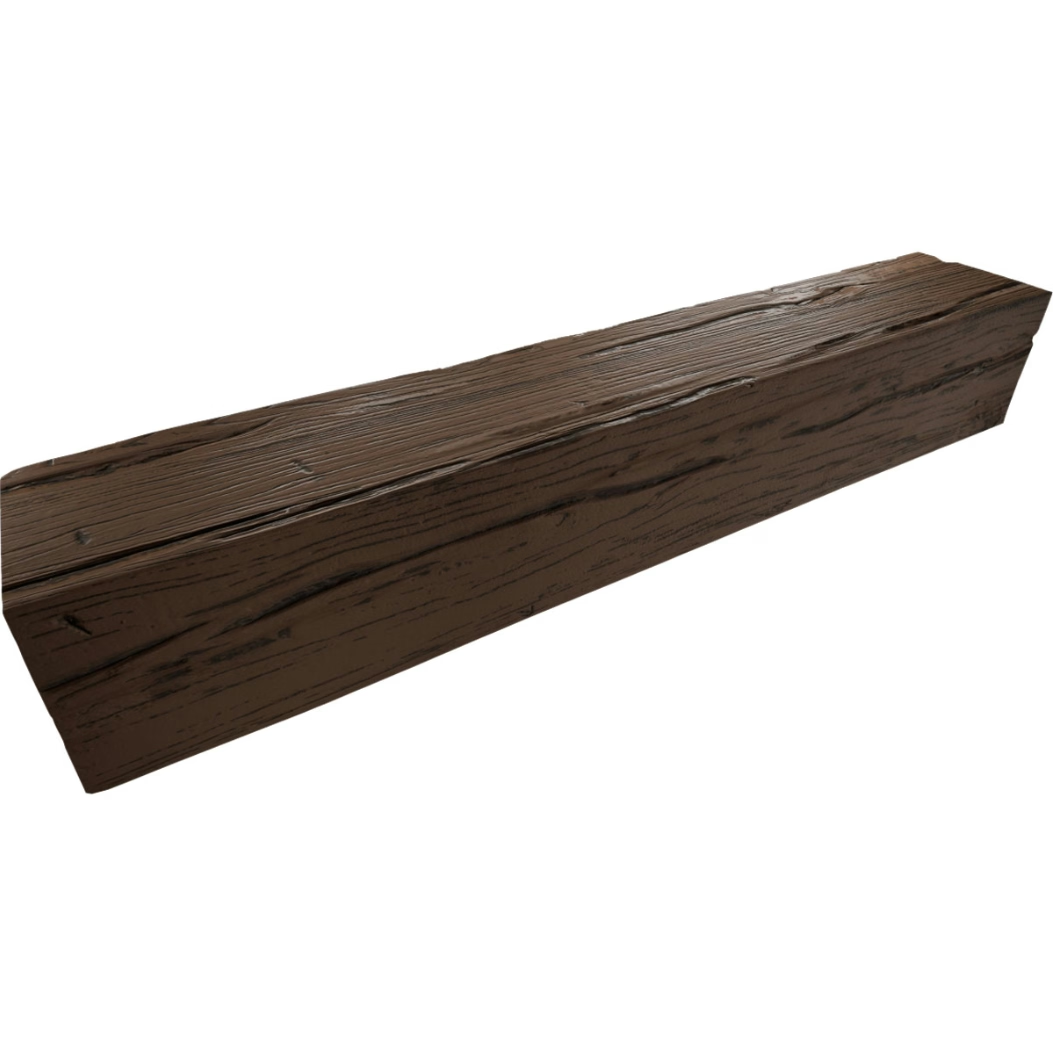
Moisture Proof PU Faux Beams | Ideal Choice for Builders in Humid Areas
Builders in humid areas—coastal regions, tropical climates, areas with high rainfall, and indoor environments with elevated humidity (bathrooms, pool houses, indoor pools)—need beam materials that resist moisture damage. Polyurethane faux beams are moisture-proof by design, making them ideal for these applications. Understanding the moisture resistance properties and the specifications that matter for humid applications helps builders select the right beams.
What makes polyurethane beams moisture-proof
Polyurethane beams are moisture-proof because of their physical structure:
Closed-cell structure
The closed-cell structure prevents water absorption:
- Each cell is a sealed pocket of gas surrounded by solid polyurethane.
- Cells don't connect to each other.
- Water can't migrate through the material.
- Less than 1 percent water absorption by weight even at 100 percent humidity.
The closed-cell structure is the foundation of moisture resistance.
No organic content
Polyurethane doesn't contain organic material that can support biological growth:
- No wood fiber that can rot.
- No cellulose that can support mold.
- No protein that can attract insects.
- Biological degradation doesn't occur.
The lack of organic content prevents biological issues.
Stable dimensions
Polyurethane doesn't change dimensions with humidity:
- No swelling from moisture absorption.
- No shrinking from moisture release.
- No warping from humidity cycling.
- Dimensions remain stable over decades.
Dimensional stability is what protects the installation over time.
Humid area applications
For builders in humid areas, common applications include:
Coastal homes
Coastal homes face:
- Salt air exposure.
- High humidity year-round.
- Storm-driven moisture.
- Hurricane or tropical storm exposure.
Polyurethane beams handle coastal conditions well.
Tropical climate homes
Tropical climate homes face:
- High humidity year-round.
- Heavy rainfall.
- Direct sun exposure.
- Biological growth challenges.
Polyurethane beams resist tropical climate challenges.
Bathrooms
Bathroom beam applications face:
- High humidity from showers and baths.
- Direct water exposure in some cases.
- Cleaning chemical exposure.
- Ventilation challenges.
Polyurethane beams work in bathroom applications.
Pool houses
Pool house applications face:
- Chlorinated air exposure.
- High humidity from pool evaporation.
- Direct water splash in some cases.
- Outdoor UV exposure.
Polyurethane beams work in pool house applications.
Indoor pools
Indoor pool applications face:
- Extremely high humidity.
- Chlorinated air exposure.
- Constant moisture exposure.
- Ventilation challenges.
Polyurethane beams handle indoor pool conditions.
Outdoor kitchens
Outdoor kitchen applications face:
- Direct weather exposure.
- Cooking steam and smoke.
- Cleaning water exposure.
- UV exposure.
Polyurethane beams work in outdoor kitchen applications.
Specifications for humid area applications
For humid area applications, several specifications matter:
Density
Higher density is better for humid applications:
- 200 to 320 kg/m³ recommended.
- Lower density more susceptible to surface issues.
- Higher density provides better surface integrity.
Higher density supports long-term humid performance.
Cut-end sealing
Cut-end sealing is critical for humid applications:
- Marine-grade or enhanced sealer recommended.
- Proper sealer thickness and coverage.
- Full cure before packaging.
- Visual inspection of sealing quality.
Cut-end sealing prevents moisture ingress at the most vulnerable points.
Surface finish
The surface finish should be appropriate for humid environments:
- Moisture-resistant topcoat.
- Chemical-resistant for pool environments.
- UV-stabilized for outdoor applications.
- Mildew-resistant additives for some applications.
The surface finish protects against environmental exposure.
Installation considerations
Installation in humid environments requires:
- Stainless steel or hot-dip galvanized cleat hardware.
- Proper sealing of mounting penetrations.
- Adequate ventilation behind beams where possible.
- Drainage considerations for outdoor applications.
Installation considerations affect long-term performance.
Documentation
For humid applications, documentation should include:
- Water absorption data.
- Salt spray testing data (for coastal).
- Chemical resistance data (for pool environments).
- UV stability data (for outdoor).
- Warranty terms for humid environments.
Documentation supports specification verification.
Performance testing for humid environments
For humid environment applications, several performance tests apply:
Water absorption test
Standard water absorption testing:
- Beam submerged in water for 24 to 48 hours.
- Weight change measured.
- Less than 1 percent absorption typical for polyurethane.
- Higher absorption indicates quality issues.
Water absorption testing verifies moisture resistance.
Salt spray test
For coastal applications:
- ASTM B117 standard salt spray testing.
- 100 to 1,000 hours of exposure.
- Visual inspection for degradation.
- Quantitative weight change measurement.
Salt spray testing verifies coastal performance.
UV exposure test
For outdoor applications:
- ASTM G154 standard UV exposure testing.
- 1,000 to 3,000 hours of exposure.
- Color change measurement.
- Surface degradation inspection.
UV testing verifies outdoor performance.
Chemical resistance test
For pool environments:
- Exposure to chlorine, bromine, and other pool chemicals.
- Visual inspection for degradation.
- Color change measurement.
- Surface integrity assessment.
Chemical testing verifies pool environment performance.
Comparison to alternative materials
For humid environments, how polyurethane compares to alternatives:
Solid wood
Solid wood in humid environments:
- Significant moisture absorption (10 to 20 percent by weight).
- Swelling, warping, and rot.
- Biological growth challenges.
- Requires extensive sealing and maintenance.
Solid wood is a poor choice for humid environments.
MDF
MDF in humid environments:
- Significant moisture absorption.
- Swelling and degradation.
- Edge swelling especially problematic.
- Limited moisture resistance.
MDF is a poor choice for humid environments.
Metal
Metal in humid environments:
- No moisture absorption.
- May corrode in salt air.
- Different aesthetic.
- Higher cost.
Metal has good moisture resistance but different aesthetic.
PVC
PVC in humid environments:
- Excellent moisture resistance.
- Limited aesthetic options.
- Lower quality perception.
- Lower cost.
PVC has good moisture resistance but limited aesthetics.
Polyurethane
Polyurethane in humid environments:
- Excellent moisture resistance (less than 1 percent absorption).
- Aesthetic options including wood looks.
- Premium quality perception.
- Moderate cost.
Polyurethane offers the best combination of moisture resistance and aesthetics.
Common pitfalls in humid area beam selection
A few issues that come up often enough to flag:
- Insufficient cut-end sealing. Standard cut-end sealing inadequate for humid environments.
- Wrong cleat hardware. Standard cleats may corrode in salt air.
- Inadequate surface finish. Standard finish may not protect against humid environment.
- Missing documentation. No documentation for humid environment performance.
- Wrong installation details. Installation details that allow moisture penetration.
How builders evaluate moisture-proof beam suppliers
For builders in humid areas evaluating beam suppliers:
- Moisture resistance data. The supplier provides quantitative moisture resistance data.
- Cut-end sealing specification. The supplier's cut-end sealing is appropriate for humid environments.
- Surface finish options. The supplier offers finishes appropriate for humid environments.
- Installation guidance. The supplier provides installation guidance for humid environments.
- References. The supplier has done comparable humid environment projects.
- Warranty. The supplier offers warranty appropriate for humid environments.
Moisture-proof polyurethane faux beams for builders in humid areas is a category where the closed-cell structure, the appropriate specifications, and the proper installation all need to align. The right combination produces beams that maintain their appearance and integrity in humid environments over decades.
Technical References
ASTM standards cited in every specification
Test Data
Lab results from internal testing program
Updated 2026
Reviewed against current product specs