Moisture Resistant PU Faux Beams | Ideal for Residential Building Projects
Moisture resistance is one of the most practical advantages of polyurethane faux beams in residential construction. Real wood beams absorb water, swell, warp, and develop mold or rot in high-moisture environments. Polyurethane beams, properly specified, hold up in these environments indefinitely.
This is where moisture resistance matters in residential projects, what the polyurethane specifications look like for each environment, and what builders need to know to spec correctly.
Why moisture resistance matters in residential projects
Most residential construction includes at least some spaces with elevated moisture levels:
- Bathrooms. Daily steam from showers and baths.
- Kitchens. Steam from cooking, dishwasher cycles, and kettle use.
- Basements. Higher ambient humidity, potential for water intrusion.
- Laundry rooms. Steam from dryers and humidity from washing machines.
- Covered porches and lanais. Outdoor humidity, occasional wind-driven rain.
- Pool houses. Direct splash, high humidity, chlorine vapor.
- Crawl spaces or attics. Moisture intrusion from outside.
For each of these spaces, a real wood beam will show signs of moisture damage within 1 to 5 years—warping, cracking, finish delamination, sometimes mold. A polyurethane beam with the right specification will hold up indefinitely.
The moisture resistance specification
A moisture-resistant polyurethane beam specification includes several elements:
Closed-cell polyurethane density
Higher density (200+ kg/m³) means fewer open cells at the cut edges and better long-term moisture resistance. For high-moisture environments, medium to high density is appropriate.
- Standard residential (dry areas): 120 to 180 kg/m³.
- Moisture-resistant residential: 180 to 250 kg/m³.
- High-moisture residential (bathrooms, pool houses): 250 to 320 kg/m³.
The density upgrade costs 15 to 30 percent more per piece but produces significantly better moisture performance.
Cut-end sealing
The cut ends of a polyurethane beam are the most vulnerable point for moisture ingress. The factory's cut-end sealing specification should include:
- Sealer type (polyurethane-based, epoxy-based, or specialized moisture-resistant formulations).
- Sealer thickness (typically 1/16 to 1/8 inch).
- Curing time before packaging.
For high-moisture environments, the cut-end sealing should be specified at the higher end of these parameters. Some factories offer a "marine-grade" cut-end sealing for pool house and coastal applications.
Factory finish chemistry
The factory finish should be specified for the moisture environment:
- Standard interior: Water-based acrylic or polyurethane.
- Moisture-resistant interior: Water-based polyurethane with moisture-resistant additives.
- High-moisture interior (bathrooms): Two-part water-based polyurethane or specialized bathroom-grade finish.
- Exterior or pool house: UV-stabilized, moisture-resistant, chemical-resistant finish.
For most residential moisture-resistant applications, two-part water-based polyurethane is the appropriate specification.
Joint sealing at install
The joints between beams, and the joints between beams and walls, need to be sealed at install with a compatible product:
- Color-matched caulk for visible joints.
- Silicone or polyurethane sealant for high-moisture environments.
- Epoxy-based filler for field joints in long-span beams.
The factory should provide the recommended sealant products in the documentation.
Application-specific specifications
For each residential application, the moisture resistance specification has specific elements:
Bathroom beams
- Density: 180 to 250 kg/m³.
- Cut-end sealing: Standard moisture-resistant.
- Finish: Two-part water-based polyurethane, moisture-resistant.
- Color: Light to medium tones show moisture spotting less than dark tones.
- Cleat hardware: Stainless or coated for humid environments.
For full bathroom coverage (over showers or tubs), the beams should be specified at the high end of these parameters.
Kitchen beams
- Density: 150 to 220 kg/m³.
- Cut-end sealing: Standard moisture-resistant.
- Finish: Water-based polyurethane, cleanable surface.
- Color: Medium tones work best for kitchen environments.
For beams directly over cooking surfaces, higher density and a more durable finish are appropriate.
Basement beams
- Density: 180 to 250 kg/m³.
- Cut-end sealing: Enhanced moisture-resistant (basements can have water intrusion).
- Finish: Water-based polyurethane, moisture-resistant.
- Color: Lighter tones can help brighten basement spaces.
For basements with known moisture issues, additional vapor barriers or encapsulation may be needed in addition to the beam specification.
Covered porch beams
- Density: 200 to 280 kg/m³.
- Cut-end sealing: Enhanced for wind-driven rain.
- Finish: UV-stabilized, moisture-resistant.
- Cleat hardware: Stainless or hot-dip galvanized.
Covered porch beams are exposed to outdoor humidity and occasional wind-driven rain, so the specification should be exterior-rated even though the beams are covered.
Pool house beams
- Density: 250 to 320 kg/m³.
- Cut-end sealing: Marine-grade.
- Finish: UV-stabilized, chemical-resistant, moisture-resistant.
- Cleat hardware: Stainless steel (316 grade for chlorinated environments).
Pool house beams are exposed to chlorine vapor and high humidity; the specification should be at the high end of moisture resistance.
What residential builders should specify
For a residential builder specifying moisture-resistant beams, the specification should include:
Project context
Identify the spaces where beams will be installed and the moisture conditions in each:
- Bathroom, kitchen, basement, covered porch, etc.
- Indoor or covered outdoor.
- High humidity or direct moisture exposure.
Beam specification per environment
For each environment, specify:
- Density.
- Cut-end sealing.
- Finish chemistry.
- Color and finish.
- Cleat hardware.
For projects with beams in multiple environments, each environment may have a different specification. The factory should provide per-environment quotes and documentation.
Documentation requirements
For each environment, the documentation should include:
- Moisture resistance rating and test method.
- Finish chemistry and durability specifications.
- Cleat hardware specifications.
- Install guide specific to the environment.
- Care and maintenance guide.
The documentation supports both the install and the long-term performance of the beams.
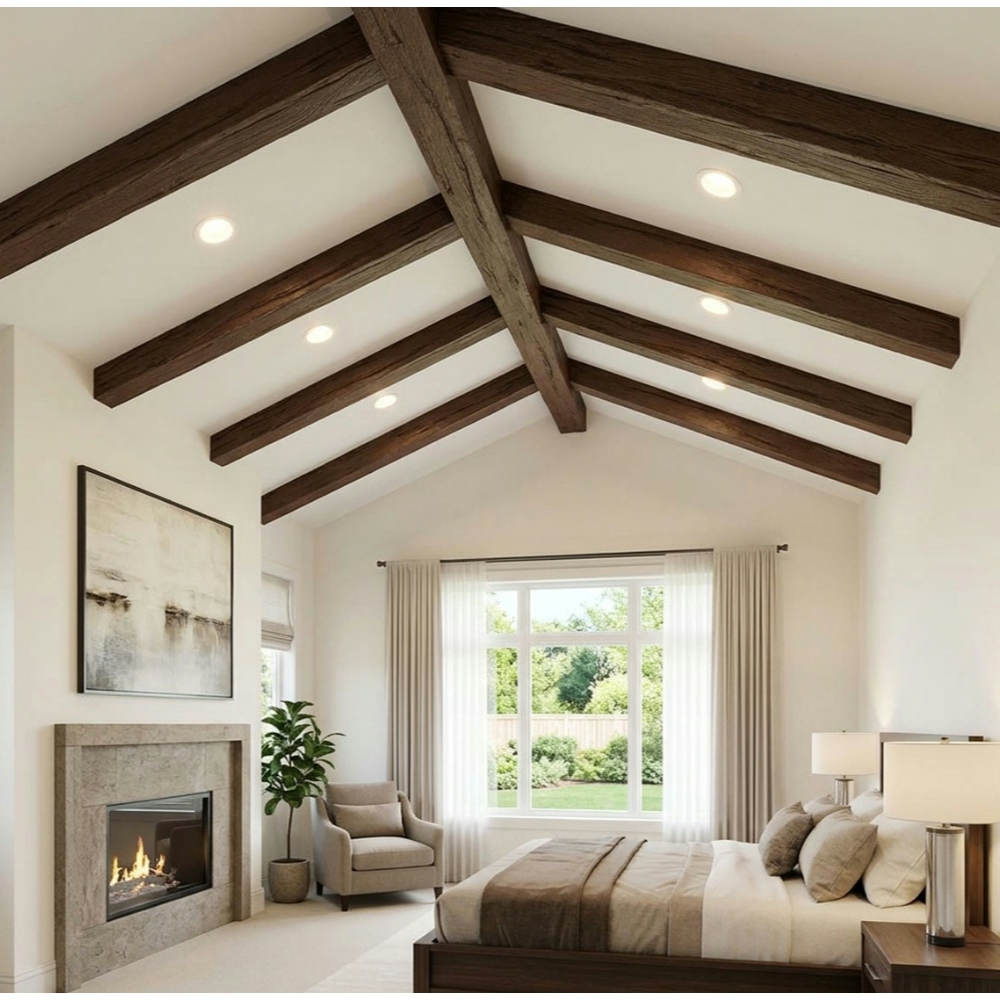
Common pitfalls in moisture-resistant beam specifications
A few issues that come up often enough to flag:
- Specifying standard density for high-moisture environments. Standard-density beams don't perform as well as higher-density beams in bathrooms, kitchens, or pool houses.
- Insufficient cut-end sealing. Standard cut-end sealing is fine for dry environments but inadequate for high-moisture applications.
- Wrong finish chemistry. Some finishes degrade quickly in high-moisture environments; the factory should specify finishes designed for those conditions.
- Inadequate cleat hardware. Standard cleats corrode in high-moisture environments; stainless or coated cleats are needed.
- Forgetting the joint sealing. Even the best moisture-resistant beam fails at the joints if the joint sealant isn't appropriate for the environment.
Cost premium for moisture resistance
The cost premium for moisture-resistant beams varies by specification:
- Density upgrade: 15 to 30 percent.
- Enhanced cut-end sealing: 5 to 10 percent.
- Specialized finish: 10 to 20 percent.
- Stainless cleats: $1 to $3 per cleat premium.
For a typical residential project with moisture-resistant beams in 30 to 50 percent of the spaces, the total cost premium is 10 to 20 percent above standard beam pricing.
For most residential projects, this premium is worth the cost. The beams perform in environments where standard beams would fail, and the longer service life justifies the upfront investment.
Moisture-resistant polyurethane faux beams for residential projects are a category where the right specification produces beams that handle the environment correctly. The wrong specification produces beams that fail prematurely despite the moisture resistance claims. Knowing the application and specifying accordingly is the difference.
Technical References
ASTM standards cited in every specification
Test Data
Lab results from internal testing program
Updated 2026
Reviewed against current product specs