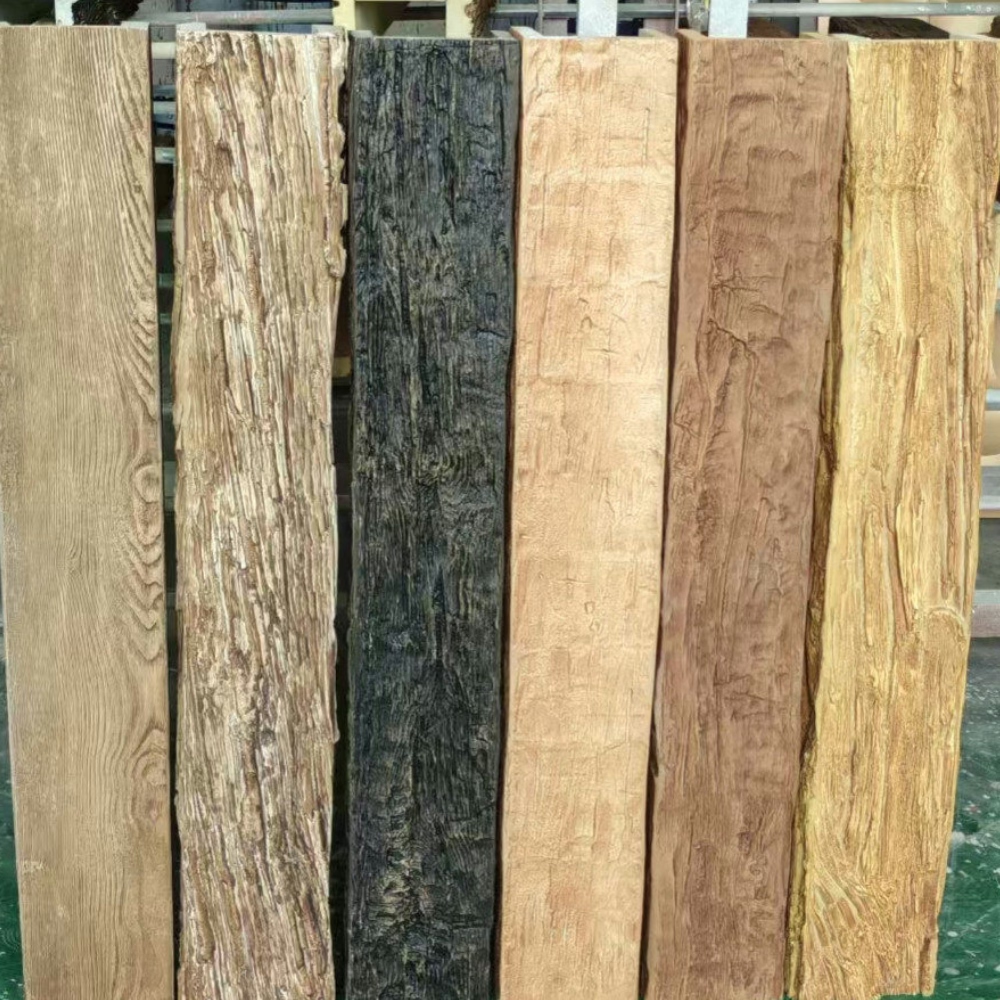
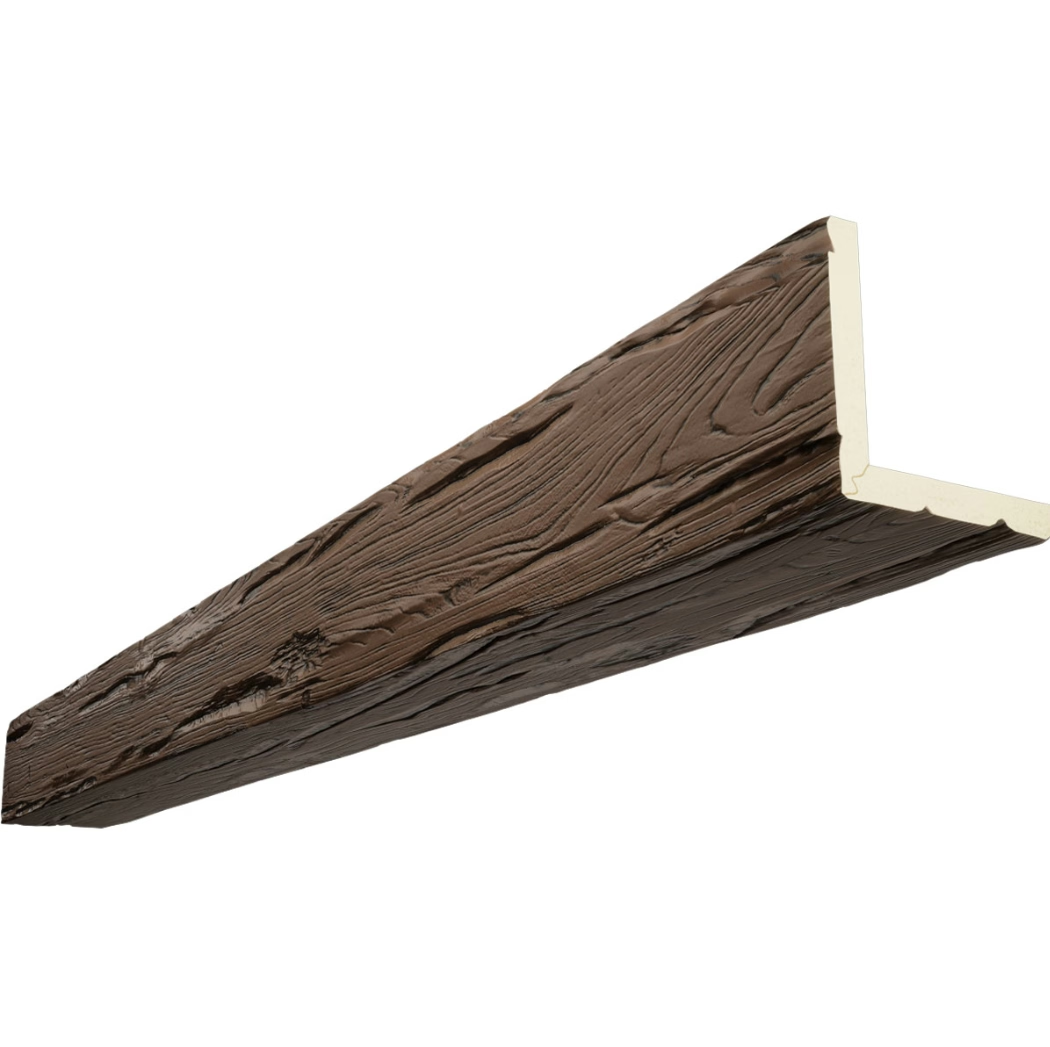
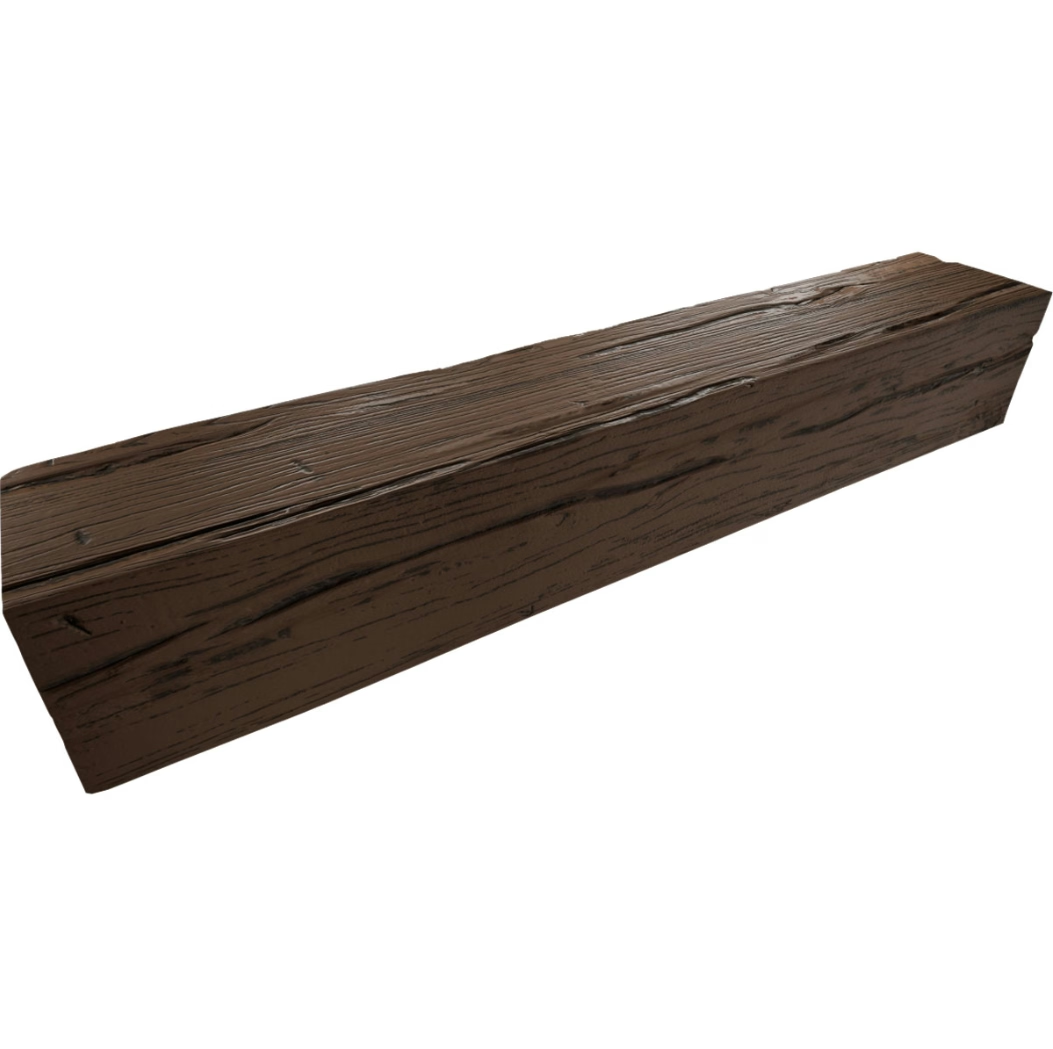
Polyurethane Faux Beams | Custom Made for Residential Construction
A "custom made" polyurethane faux beam is more than specifying a color and length. The custom designation covers several distinct levels of customization, each with different factory processes, lead times, and cost implications. For residential construction projects, understanding what custom made actually means at each level helps scope the project correctly.
This is what custom made means in practice, what the factory does at each customization level, and how residential projects should approach it.
The customization levels
For polyurethane faux beams, customization falls into four levels:
Level 1: Custom length
A stock profile cut to a specific length.
Factory process: The beam is poured in the standard mold, cured, demolded, and cut to the specified length. The factory uses standard cutting equipment.
Lead time: 5 to 15 business days.
Cost: Standard per-piece pricing by length, plus possible small-order surcharge for unusual lengths.
What changes: Nothing about the production process except the cut-to-length step.
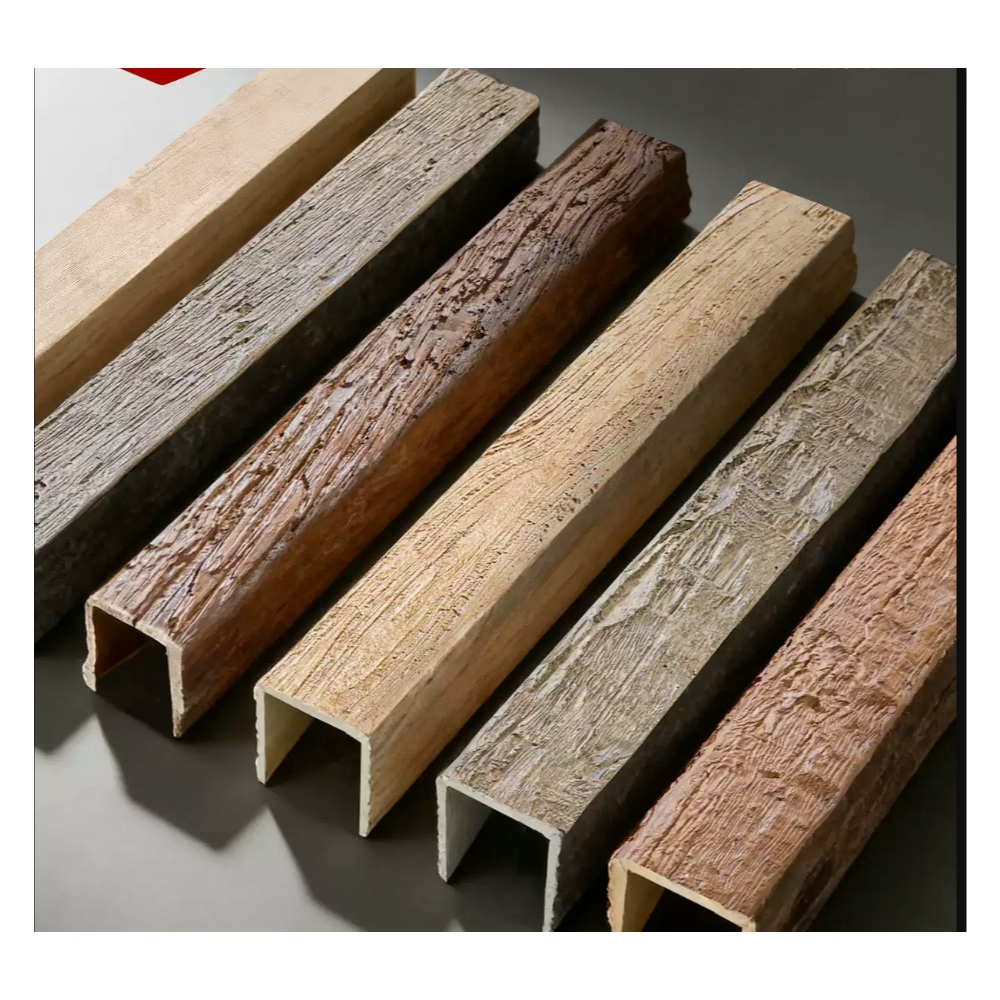
Level 2: Custom color
A standard profile with a custom-matched color (and possibly custom finish).
Factory process: The beam is poured in the standard mold, cured, demolded, cut to length. The factory's colorist develops the color formula against the customer's reference, produces test samples, and applies the color during finishing.
Lead time: 10 to 20 business days, plus 1 to 3 weeks for color development if a new color is needed.
Cost: Color match fee ($200 to $800 per color) plus per-piece pricing.
What changes: The finishing step uses a custom color formula rather than a stock color.
Level 3: Custom profile
A profile that doesn't exist in the factory's stock mold library, requiring mold development.
Factory process: The factory creates a wood master (hand-carved or CNC-carved), pours a production mold from the master, produces sample beams, iterates with the customer, and produces the order against the new mold.
Lead time: 8 to 16 weeks for the mold development and first order.
Cost: Mold development fee ($3,000 to $8,000+) plus per-piece pricing.
What changes: The mold production process is added, and the factory maintains a custom mold for future reorders.
Level 4: Custom everything
A profile, color, finish, and size combination that requires full custom development.
Factory process: Combines Level 2 and Level 3 processes—mold development plus custom color and finish development.
Lead time: 10 to 20 weeks for the full development and first order.
Cost: Mold development fee plus color match fee plus per-piece pricing.
What changes: All production steps are customized to the project's specification.
For most residential construction projects, Level 1 or Level 2 customization is sufficient. Level 3 or 4 customization is reserved for distinctive projects or builder-specific brand standards.
When each level makes sense for residential
For residential construction projects, the appropriate customization level depends on the project:
Level 1 (custom length) when
- The project's design uses stock profiles but requires specific lengths.
- The homeowner's design intent is achieved with stock colors and finishes.
- The project timeline doesn't allow for custom color development.
- The budget doesn't allow for custom fees.
Most production home builder projects fall in this category.
Level 2 (custom color) when
- The project's design requires a specific color that doesn't match any stock color.
- The homeowner wants to match existing woodwork in a renovation.
- The interior designer has specified a custom color palette.
- The builder wants a distinctive portfolio element.
Custom home builder projects and renovation projects often fall in this category.
Level 3 (custom profile) when
- The project's design requires a profile that doesn't exist in stock libraries.
- The builder wants a portfolio-distinctive profile.
- The homeowner's architect has specified a custom design element.
- The project is high-end and the design distinctiveness matters.
Luxury custom homes and architect-designed homes often fall in this category.
Level 4 (custom everything) when
- The project requires both a custom profile and a custom color.
- The design intent is highly specific and can't be achieved with any stock elements.
- The project budget supports the full custom development cost.
Most residential projects don't need Level 4 customization. The combination is reserved for very specific design briefs.
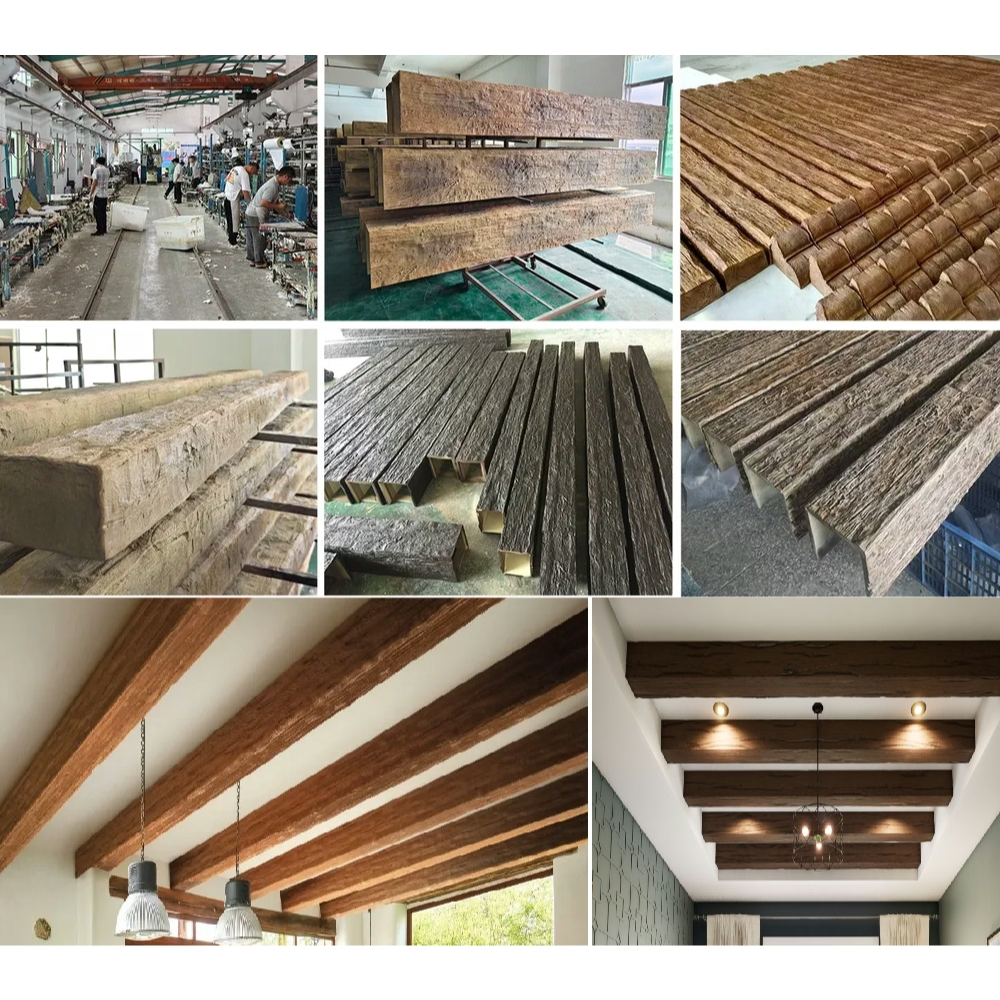
How the factory handles custom made orders
For a custom made order, the factory's process includes several steps:
Specification development
The customer provides the factory with:
- Design intent (sketches, reference images, samples).
- Specific dimensions (length, cross-section).
- Color and finish specifications.
- Quantity and timeline.
- Any other requirements (documentation, cleat hardware).
The factory's design team reviews the specification for feasibility:
- Can the profile be produced with polyurethane?
- What mold modifications are needed?
- What color and finish development is needed?
- What is the timeline and cost?
The feasibility assessment typically takes 1 to 2 weeks.
Sample production
For Level 2+ customization, the factory produces samples:
- Color match against the customer's reference.
- Finish sample with sheen and weathering effects.
- Profile sample (for Level 3+).
Samples are produced within 1 to 3 weeks after specification finalization.
Customer approval
The customer reviews the samples and either approves, requests modifications, or rejects.
Most projects require 1 to 3 sample iterations before approval.
Production
Once the customer approves, the factory produces the order:
- Stock mold or modified mold: 3 to 4 weeks.
- Custom mold: 4 to 6 weeks after mold approval.
- Custom color and finish: integrated with production.
Production typically takes 3 to 6 weeks depending on the customization level.
Delivery and installation
The factory delivers the beams per the customer's timeline:
- One-time delivery for small orders.
- Phased delivery for larger orders.
- Replacement stock held at the factory.
The installation is the customer's responsibility, with the factory's install guide and technical support available.
What custom made means for project economics
For residential construction projects, custom made affects project economics in several ways:
Cost premium
The cost premium for custom made varies by level:
- Level 1: No premium beyond per-piece pricing.
- Level 2: $200 to $800 one-time color match fee.
- Level 3: $3,000 to $8,000 mold development fee.
- Level 4: Combined fees plus extended production time.
Lead time impact
Lead time varies by level:
- Level 1: 5 to 15 business days.
- Level 2: 10 to 20 business days.
- Level 3: 8 to 16 weeks.
- Level 4: 10 to 20 weeks.
For projects with tight timelines, higher customization levels may not be feasible.
Risk profile
Custom made carries more risk than stock:
- Specification errors may not be visible until production.
- Color matches may not achieve the customer's reference.
- Mold development may not produce the expected profile.
The factory mitigates these risks through sample approval cycles, but the customer should plan for some iteration.
How to scope a custom made residential project
For residential projects considering custom made beams, the scoping process includes:
Define the design intent clearly
Before talking to the factory:
- Reference images, sketches, or material samples.
- Specific dimensions and locations.
- Color and finish references.
- Budget range and timeline.
The clearer the design intent, the more accurate the factory's proposal.
Choose the appropriate customization level
Based on the design intent and budget:
- Start with the lowest customization level that meets the design intent.
- Add higher levels only when necessary.
- Justify each level with a specific design requirement.
The appropriate level produces the right result without overpaying.
Plan the timeline
Custom made orders require lead time. The timeline planning should include:
- Specification development: 1 to 2 weeks.
- Sample production: 1 to 3 weeks.
- Iteration cycles: 1 to 4 weeks.
- Production: 3 to 6 weeks.
- Total: 6 to 20 weeks depending on level.
For projects with shorter timelines, lower customization levels may be necessary.
Budget realistically
The budget should include:
- Per-piece pricing.
- Color match fee (for Level 2+).
- Mold development fee (for Level 3+).
- Freight.
- Documentation (if separate).
- Replacement stock.
Realistic budgeting prevents mid-project cost surprises.
Common pitfalls in custom made residential projects
A few issues that come up often enough to flag:
- Choosing Level 3 or 4 when Level 1 or 2 would suffice. Overpaying for customization that doesn't add design value.
- Insufficient lead time. Ordering custom beams with standard lead times produces delays.
- Vague design intent. A vague brief produces a beam that doesn't match expectations.
- Insufficient sample iteration. Skipping the sample approval cycle to save time produces mismatched results.
- Inadequate budget planning. Not accounting for mold or color match fees produces mid-project budget issues.
Polyurethane faux beams custom made for residential construction is a category where the customization level, the factory process, and the project scope need to align. The right combination produces beams that match the design intent at a defensible cost. The wrong combination produces friction at every step.
Technical References
ASTM standards cited in every specification
Test Data
Lab results from internal testing program
Updated 2026
Reviewed against current product specs