PU Faux Beams Factory | Custom Color & Grain for Contractors
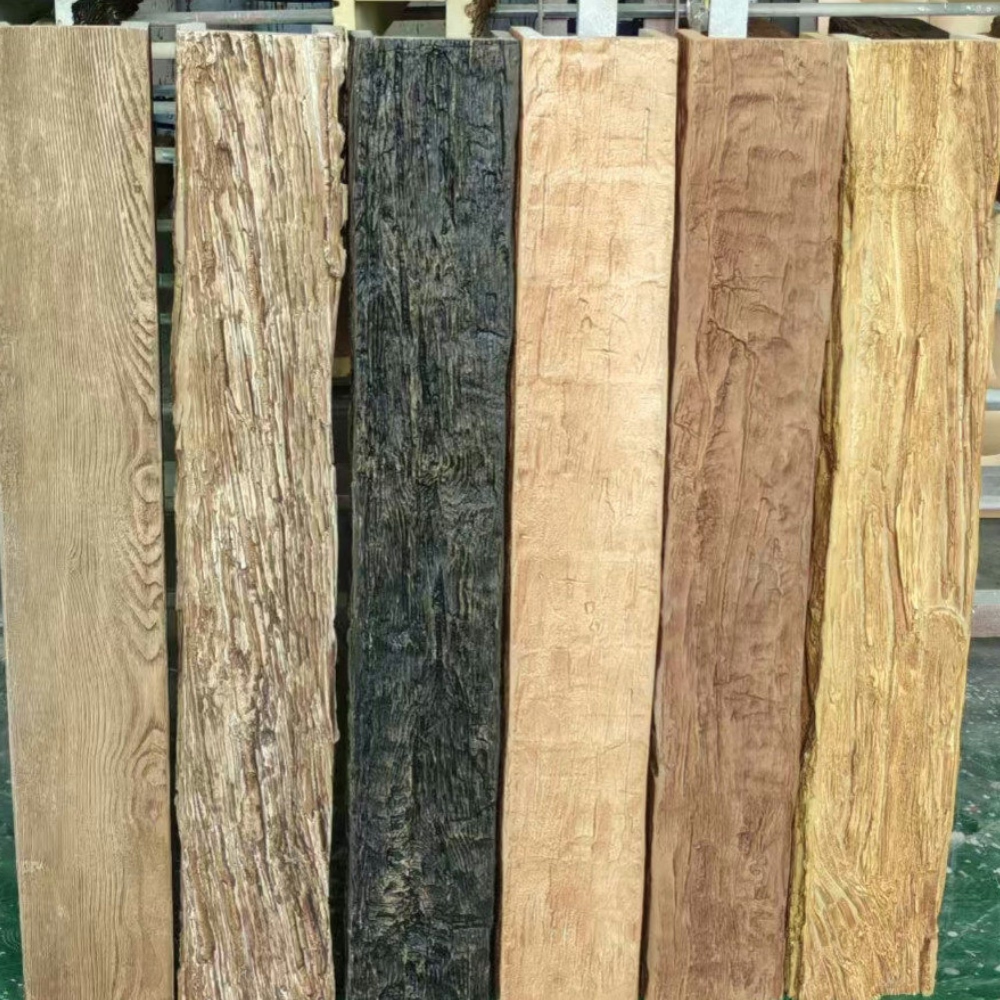
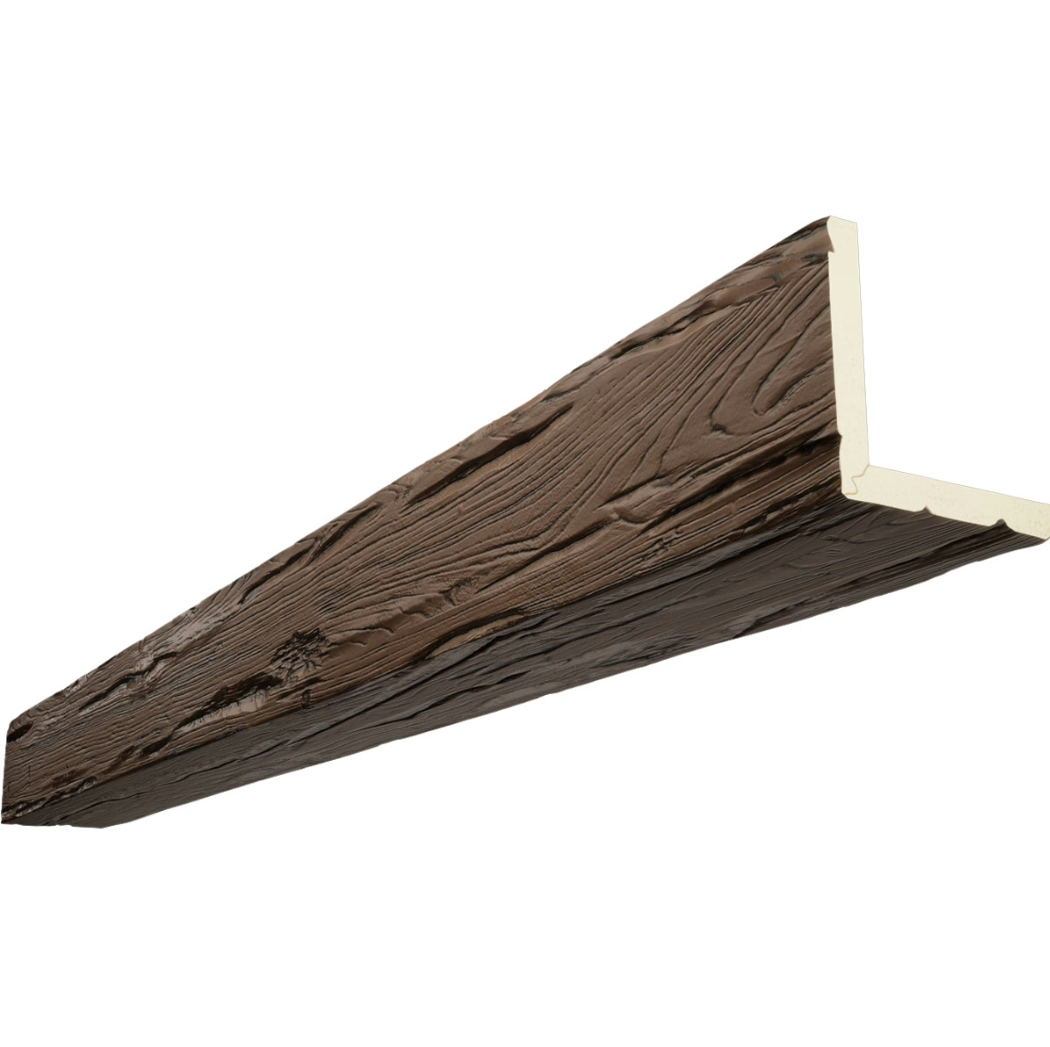
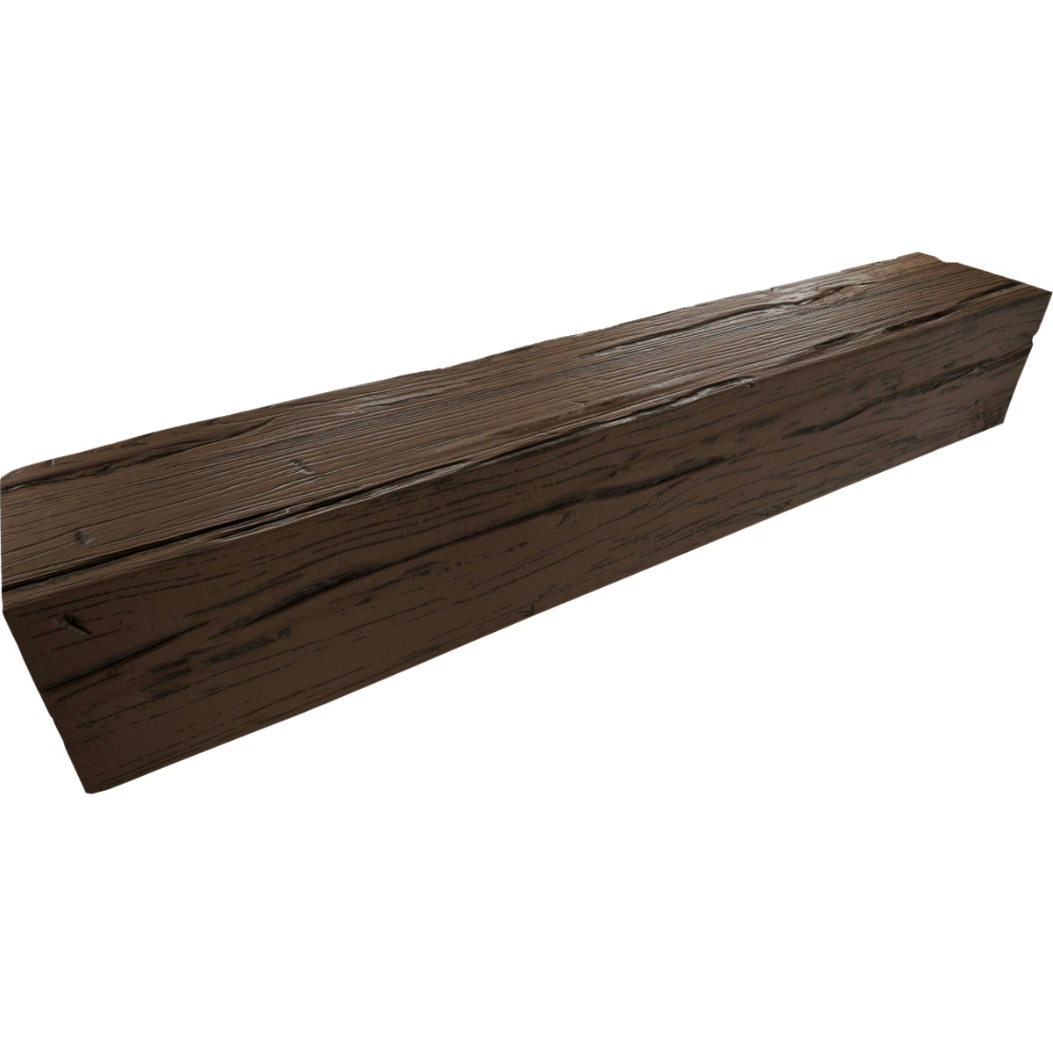
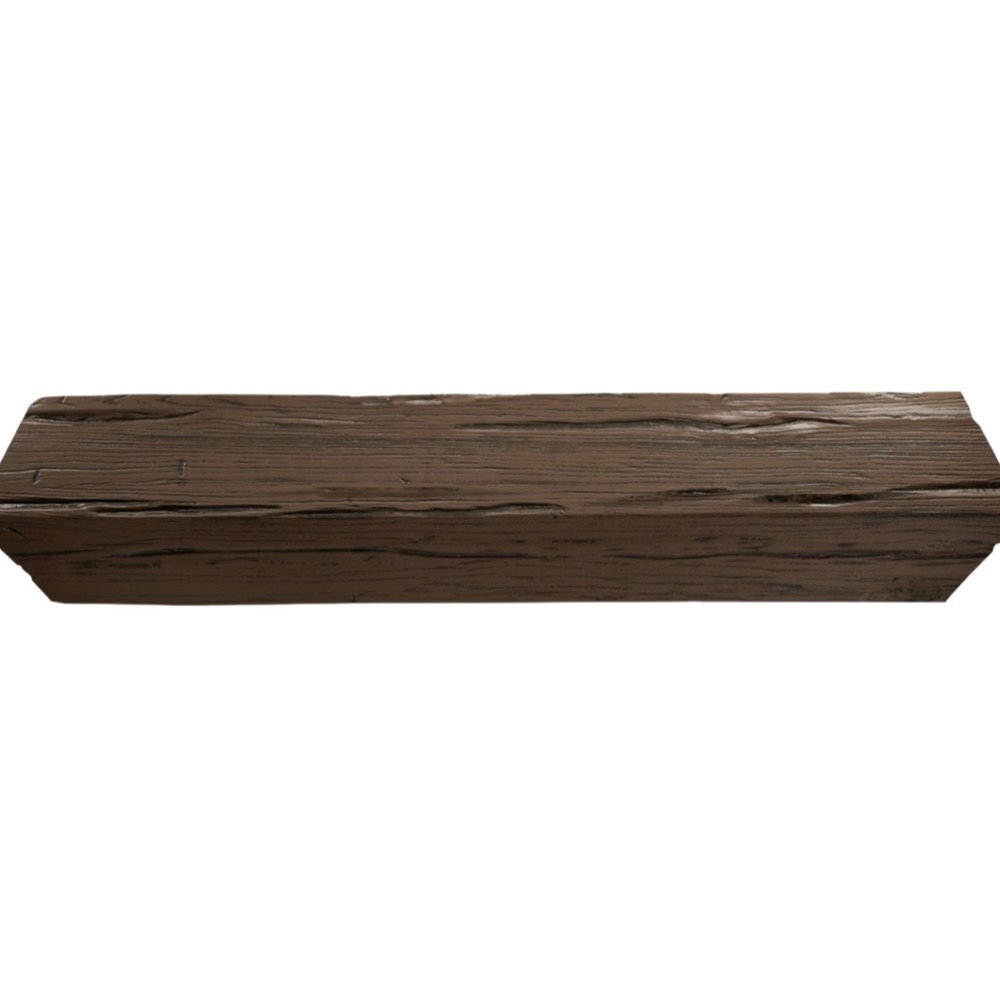
For contractors specifying custom color and grain on polyurethane faux beams, the factory's process is what determines whether the result matches the design intent. Color science, grain photography, hand-detailing, and quality control all combine in the factory's custom color and grain program. Understanding the process helps contractors scope projects accurately and evaluate factory proposals.
This is the factory process for custom color and grain on polyurethane beams—what the factory actually does at each step, what the cost structure looks like, and how contractors should engage.
The custom color matching process
When a contractor requests a custom color, the factory follows a structured process:
Reference evaluation
The factory's colorist evaluates the contractor's reference:
- Physical samples. Wood pieces, finish chips, or material samples provided by the contractor.
- Photographs or digital images. When physical samples aren't available, the colorist works from photographs.
- Color codes. Pantone, RAL, Benjamin Moore, Farrow & Ball, or other color system references.
The colorist assesses:
- Base color (the dominant hue).
- Undertones (the secondary hues that give the color its character).
- Variation (the range of colors present in the reference).
- Sheen (matte, satin, gloss, or specialty).
Color formula development
The colorist develops a base color formula:
- Pigment selection (organic or inorganic, light-stable or not).
- Binder selection (water-based or solvent-based).
- Additives (UV stabilizers, drying agents, texture modifiers).
- Base-to-pigment ratios.
The formula is documented with quantitative measurements (typically Lab* color space values) so it can be reproduced consistently.
Test sample production
The colorist produces test samples:
- Small sections of beam with the proposed color formula.
- Multiple variations to show the formula's sensitivity to application.
- Comparison against the contractor's reference.
Test samples are typically produced within 1 to 2 weeks.
Iteration
The contractor reviews the test samples and either approves, requests modifications, or rejects.
For most custom color matches, 1 to 3 iteration cycles are needed:
- Cycle 1: Initial match attempt.
- Cycle 2: Adjustment based on feedback.
- Cycle 3: Final refinement.
Complex color matches (especially those with multiple undertones or weathering effects) may require more iterations.
Final approval and production
Once the contractor approves the color formula:
- The formula is documented in the factory's color library.
- A master reference sample is held for production runs.
- Production batches are matched against the master reference.
Color drift monitoring ensures consistency across production waves.
The custom grain matching process
Grain matching is more complex than color matching because it involves texture, not just color.
Reference evaluation
The factory's grain specialist evaluates the contractor's reference:
- Wood species identification. Oak, pine, fir, cedar, reclaimed wood, or other.
- Grain pattern characteristics. Straight grain, cathedral grain, knots, burls, or other features.
- Texture characteristics. Smooth, rough-sawn, wire-brushed, hand-hewn, or other.
- Density of grain features. How prominent the grain is in the reference.
Mold selection or development
The factory determines the best mold for the grain pattern:
- Stock mold matching. Many grain patterns exist in the factory's mold library.
- Mold modification. For grain patterns close to stock but not exact, the mold can be modified.
- Custom mold development. For grain patterns not in stock or modified libraries, a new mold is developed.
The mold selection determines the grain pattern fidelity.
Hand-detailing
For grain patterns that require it, hand-detailing adds character:
- Hand-applied texture variations.
- Selective staining to emphasize or de-emphasize grain features.
- Hand-carved accents (in the wood master for custom molds).
Hand-detailing is labor-intensive and adds to the per-piece pricing.
Grain reference samples
The factory produces grain reference samples for contractor approval:
- 12 to 24 inch sections showing the grain pattern.
- Multiple samples to show variation across the production run.
- Comparison against the contractor's reference.
The approval cycle for grain is similar to the color approval cycle.
Combining color and grain
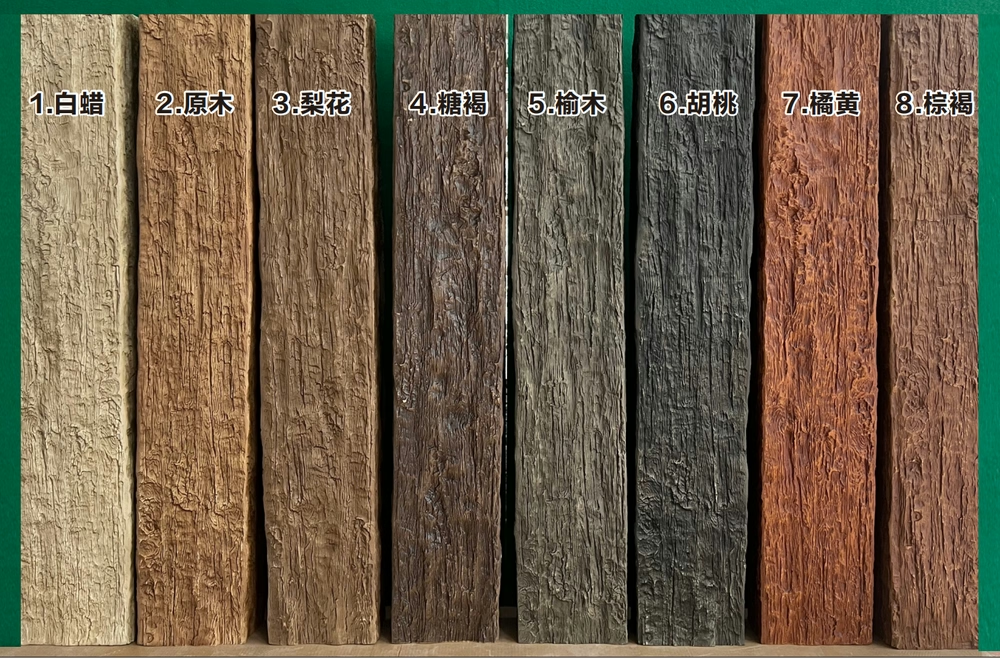
The most sophisticated custom orders combine color and grain:
- A specific wood species grain pattern (e.g., reclaimed heart pine).
- A specific color treatment (e.g., weathered gray with brown undertones).
- Specific weathering effects (e.g., worn edges, traces of original finish).
For these combinations, the factory's process includes both color and grain development, with iteration cycles that may need to consider both elements simultaneously.
The complexity of combined color and grain matching often requires more iteration cycles and longer lead times.
Factory capabilities that matter
For contractors evaluating a factory's custom color and grain capability, several capabilities matter:
Color science capability
The factory should have:
- A trained colorist with experience in faux wood color matching.
- Quantitative color measurement equipment (spectrophotometer or colorimeter).
- A color library with documented formulas.
- Light-fastness testing capability.
These capabilities ensure accurate and durable color matches.
Grain pattern library
The factory should have:
- A mold library with diverse grain patterns.
- Wood species coverage (oak, pine, fir, cedar, exotic species, reclaimed patterns).
- Grain pattern documentation (photographs, descriptions, technical specs).
A diverse grain library supports most project requirements without custom mold development.
Hand-detailing capability
The factory should have:
- Skilled craftspeople who can hand-apply grain variations.
- Texture specialists who can produce the desired surface character.
- Quality control for hand-detailed products.
Hand-detailing capability produces the most authentic-looking results.
Color drift monitoring
The factory should have:
- Quantitative color measurement for production batches.
- Tolerance specifications (typically Delta E less than 1.0 to 2.0 for color match).
- Correction procedures for batches exceeding tolerance.
Color drift monitoring ensures consistency across production runs.
Cost structure for custom color and grain
The cost structure for custom color and grain includes:
Color match fee
- $200 to $800 per color, depending on complexity.
- Often includes 1 to 3 iteration cycles.
- Additional iterations may be charged separately.
Grain match fee
- Included in per-piece pricing for stock grain patterns.
- $500 to $2,000 for modified grain patterns.
- $3,000 to $8,000+ for custom mold development.
Hand-detailing premium
- 10 to 30 percent above standard per-piece pricing for hand-applied variation.
- Per-piece pricing varies with the level of hand-detailing required.
Per-piece pricing
- Custom color and grain typically add 20 to 50 percent above stock pricing.
- Premium projects with combined color, grain, and hand-detailing can add 50 to 100 percent.
Lead time for custom color and grain
Lead time depends on the customization level:
- Custom color only: 10 to 20 business days.
- Custom color with grain modification: 15 to 25 business days.
- Custom color with custom grain mold: 10 to 16 weeks.
Contractors should plan accordingly.
How contractors should engage factories for custom color and grain
For contractors seeking custom color and grain, the engagement process includes:
Provide clear references
- Physical samples when possible.
- High-quality photographs when physical samples aren't available.
- Color codes for color references.
- Multiple reference images showing the desired variation.
Clarify the design intent
- What the beam should look like in the installed context.
- How the beam should relate to other materials in the space.
- Any weathering or aging effects required.
Plan for iteration
- Build 1 to 3 iteration cycles into the timeline.
- Allow 2 to 4 weeks for color and grain development.
- Have decision-makers available for sample review.
Document the approved specification
- Save the approved color formula reference.
- Save the approved grain pattern reference.
- Document any application notes from the colorist.
This documentation supports reorders and quality verification.
Common pitfalls in custom color and grain factory programs
A few issues that come up often enough to flag:
- Insufficient reference materials. A vague reference produces a color and grain that doesn't match expectations.
- Skipping sample iteration. Rushing through sample approval produces mismatched results.
- Not budgeting for setup fees. Color match and grain modification fees come as a surprise.
- Insufficient lead time. Custom color and grain require longer lead times than stock.
- No documented reference for reorders. Subsequent reorders may not match the original color and grain without proper documentation.
PU faux beams factory custom color and grain for contractors is a category where the factory's process, the contractor's references, and the iteration discipline all need to align. The right combination produces custom beams that match the design intent. The wrong one produces beams that don't quite match, with rework costs and project delays.
Technical References
ASTM standards cited in every specification
Test Data
Lab results from internal testing program
Updated 2026
Reviewed against current product specs