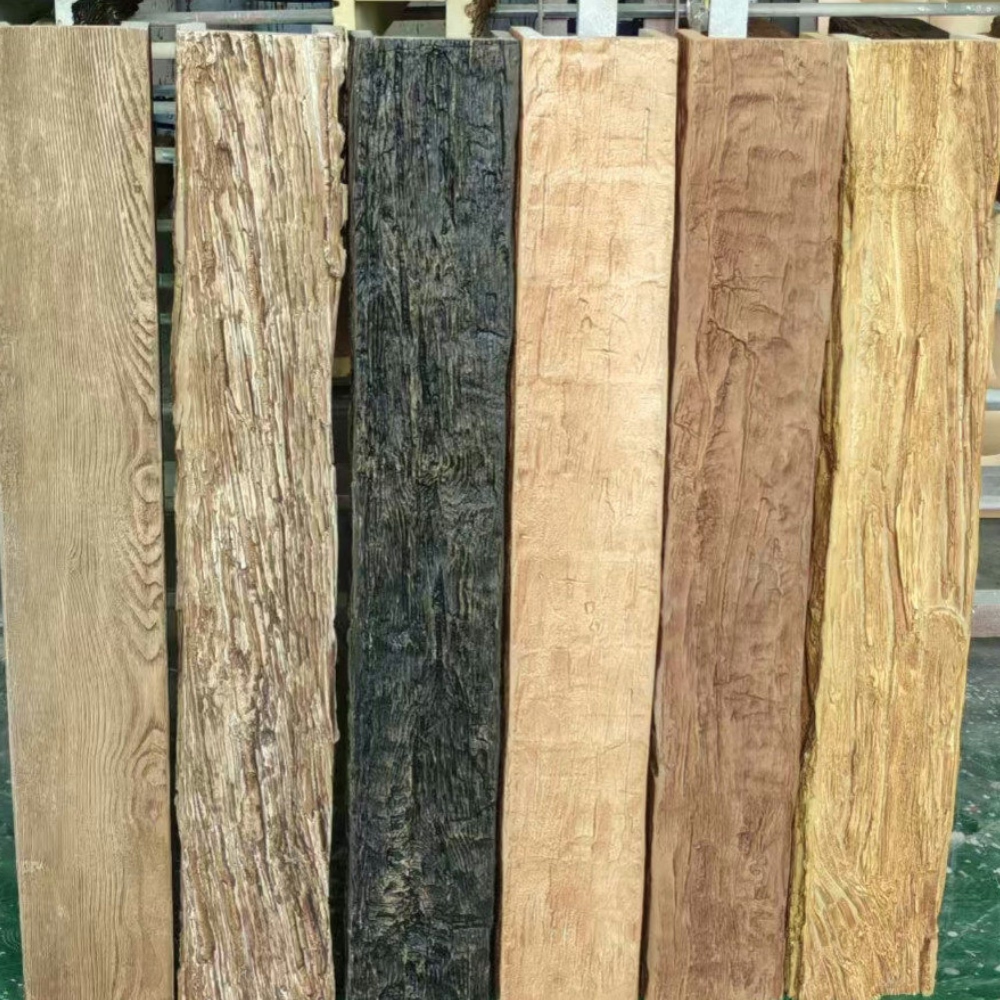
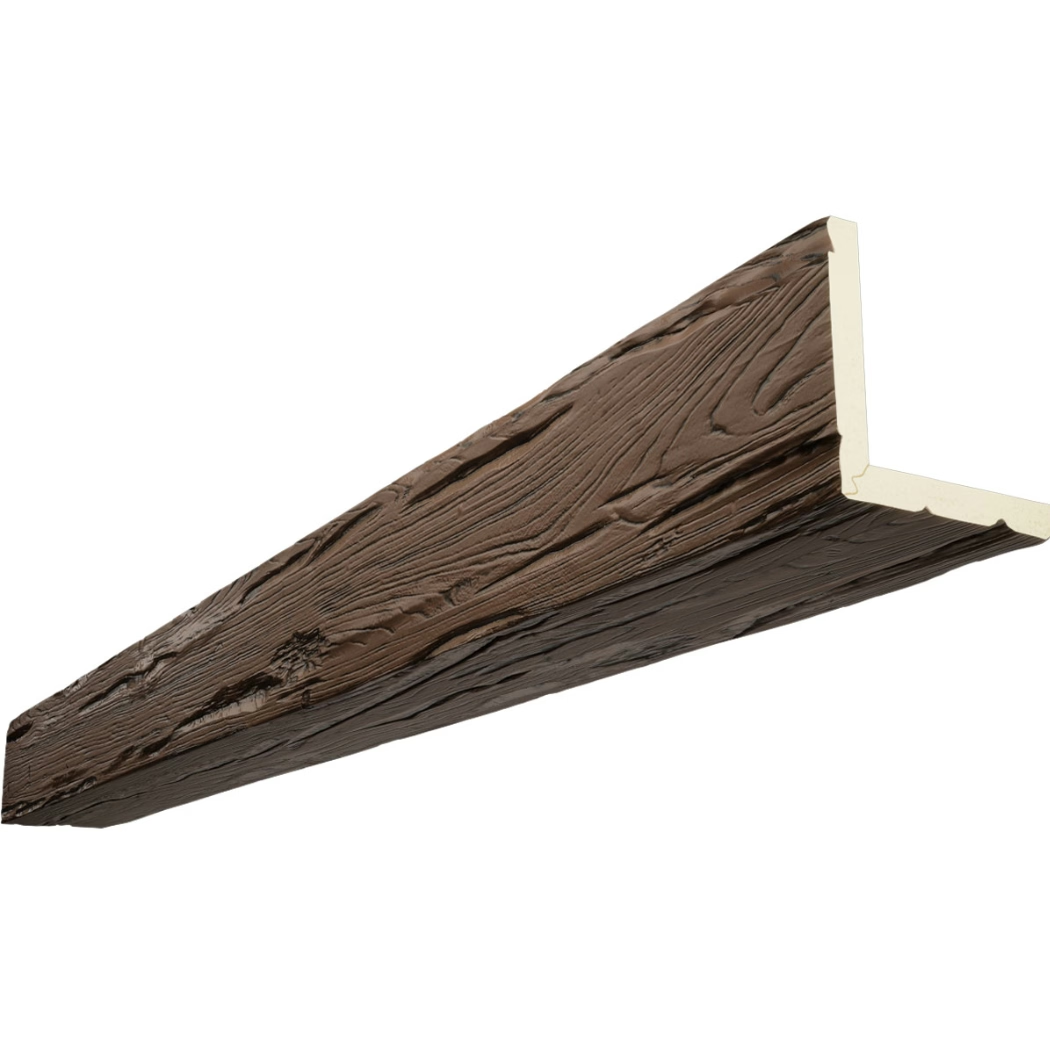
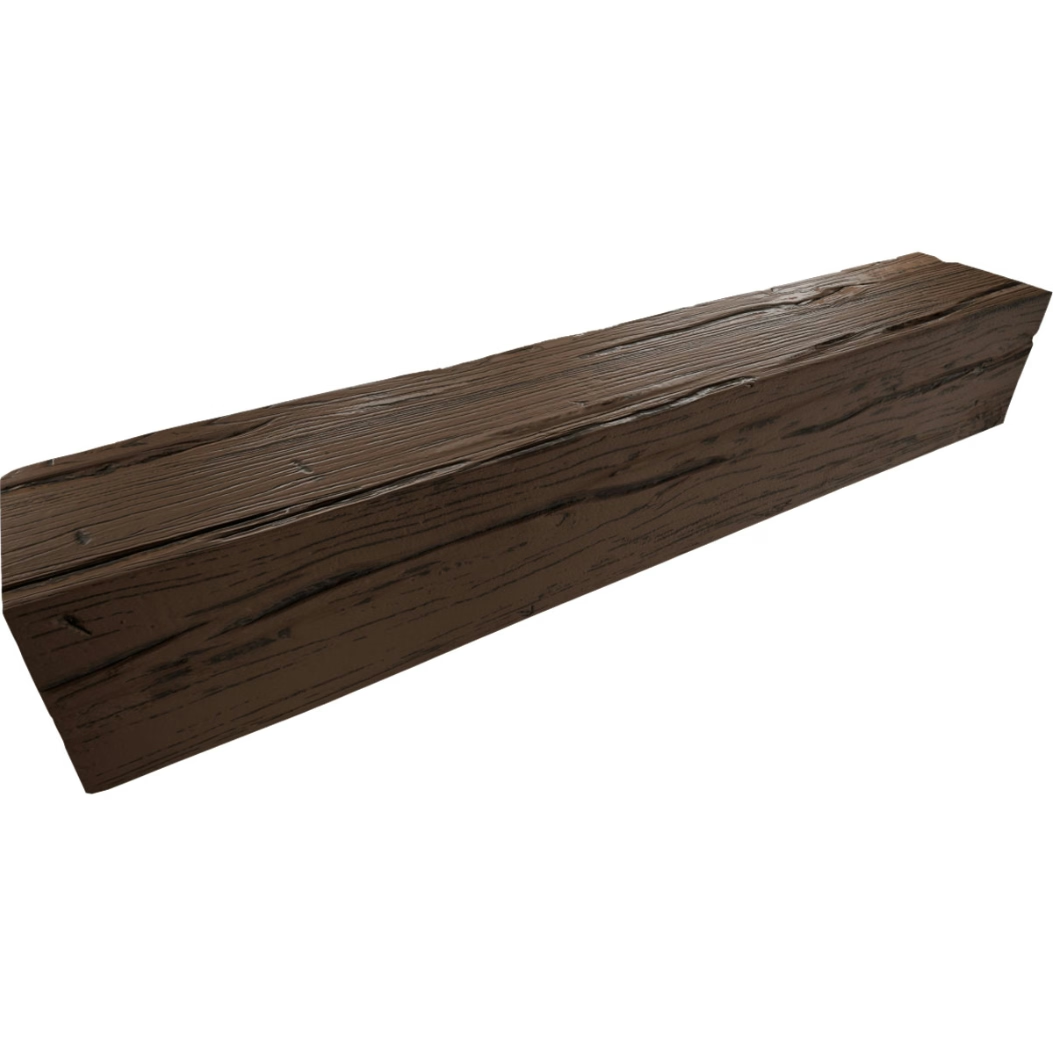
PU Faux Beams: Material Advantages for Remodeling Contractors
Remodeling contractors work in existing buildings with constraints that new construction doesn't face: structural limitations, existing substrates, code compliance for older buildings, and the need to match retained elements. Polyurethane faux beams offer specific material advantages that address these remodeling challenges. Understanding the advantages helps remodeling contractors select the right beam material for renovation projects.
This is what specific material advantages polyurethane faux beams offer remodeling contractors, how each advantage addresses remodeling challenges, and what the operational implications are.
Lightweight advantage for existing structures
The lightweight nature of polyurethane beams addresses a key remodeling challenge:
Existing structural limits
Older buildings often have structural limitations:
- Joists sized for original loads, not additions.
- Roof structures designed for original roof materials.
- Wall structures that can't support additional weight.
- Foundation limits on cumulative building weight.
Polyurethane beams add minimal load (typically 2 to 5 pounds per linear foot) vs solid timber (15 to 30+ pounds per linear foot).
Renovation without reinforcement
Polyurethane beams can be added without structural reinforcement in most cases:
- No need to upgrade joists for beam loads.
- No need for additional support posts.
- No need for engineering review in many jurisdictions.
- Faster project completion.
The avoidance of reinforcement saves significant cost and time.
Occupied building considerations
For remodeling in occupied buildings:
- Less structural work means less disruption.
- Faster completion supports tenant or occupant schedules.
- Less noise and vibration during installation.
- Better for buildings with noise-sensitive occupants.
The minimal structural impact supports occupied remodeling.
Moisture resistance advantage
Polyurethane's closed-cell structure addresses moisture challenges in older buildings:
Old building moisture issues
Older buildings often have moisture concerns:
- Basement moisture migrating into structure.
- Roof leaks affecting ceiling areas.
- Plumbing leaks from aging systems.
- HVAC condensation issues.
Polyurethane beams don't absorb moisture and aren't affected by these issues.
Bathroom and kitchen remodels
For bathroom and kitchen remodels:
- High humidity from showers, cooking, dishwashing.
- Direct water exposure in some installations.
- Cleaning chemical exposure.
- Ventilation challenges in some buildings.
Polyurethane beams handle these environments without degradation.
Basement conversions
For basement-to-living-space conversions:
- Higher ambient humidity than above-grade spaces.
- Potential for water intrusion.
- Limited ventilation options.
- Concrete substrate moisture.
Polyurethane beams work in basement environments.
Historic buildings
For historic building remodels:
- Inconsistent HVAC and moisture control.
- Original construction may have moisture issues.
- Modern moisture standards may not be met.
- Sensitive to interventions that could trap moisture.
Polyurethane beams don't introduce moisture problems.
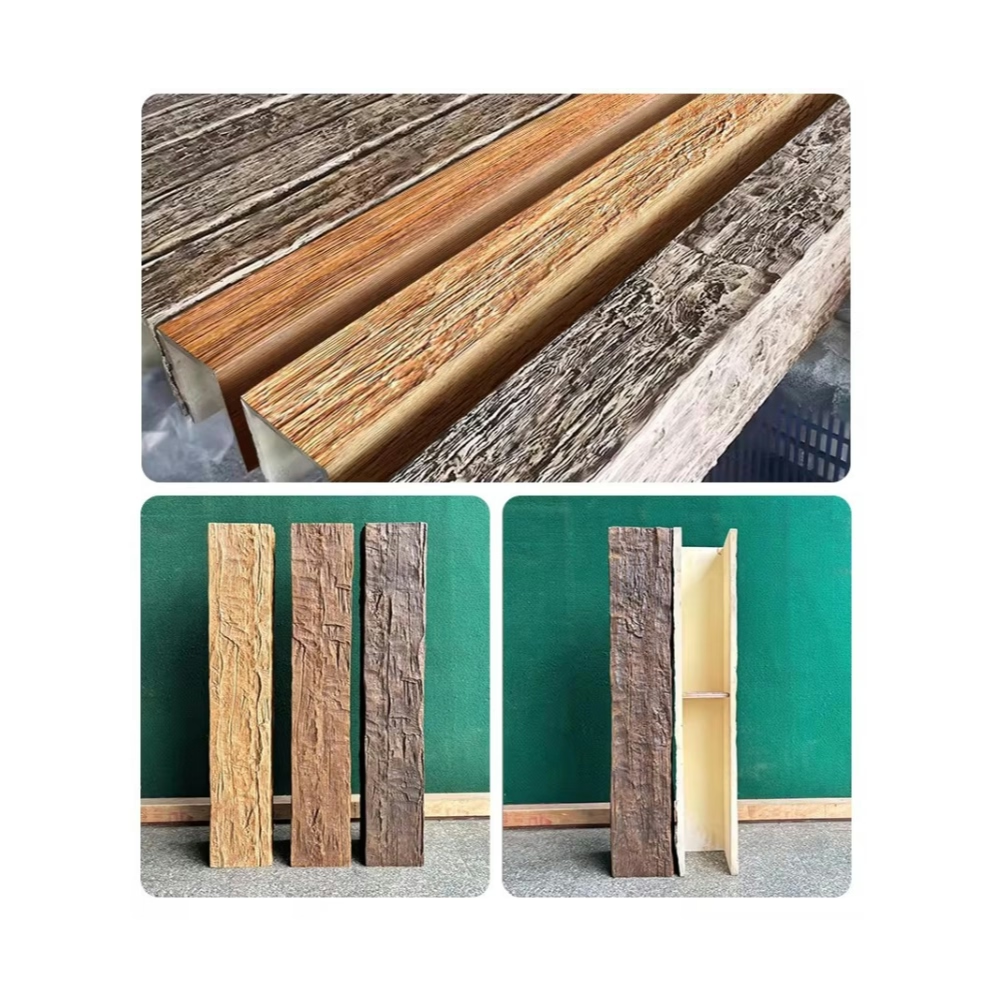
Finish flexibility advantage
Polyurethane beams can be finished to match any existing woodwork:
Custom color matching
For remodels with retained woodwork:
- Color matched exactly to existing beams, flooring, cabinetry, or trim.
- Multiple iteration cycles for accurate match.
- Factory-applied or builder-applied depending on preference.
The flexibility supports cohesive renovation results.
Custom finish effects
For matching aged or weathered existing elements:
- Patina or aging effects matched.
- Worn edges matched.
- Paint traces for reclaimed looks matched.
- Weathering matched to existing exposure.
The finish flexibility produces authentic renovation results.
Custom sheens
For matching existing finish sheens:
- Matte for aged or rustic looks.
- Satin for traditional looks.
- Semi-gloss for formal looks.
- Custom sheen levels per project.
The sheen flexibility supports existing element matching.
Coordinating with new woodwork
For renovations that add new woodwork:
- Beams match new cabinetry.
- Beams match new flooring.
- Beams match new trim.
- Coordinated design throughout.
The finish flexibility supports coordinated renovation design.
Substrate adaptability advantage
Polyurethane beam cleat systems adapt to varied renovation substrates:
Multiple substrate types
Renovation projects encounter varied substrates:
- Original wood framing.
- Plaster and lath (pre-1960 homes).
- Modern drywall (previously renovated areas).
- Metal framing (some commercial renovations).
- Concrete or masonry (some building types).
Cleat specifications adapt to each substrate.
Substrate-specific mounting
For each substrate:
- Wood framing: Standard lag screws.
- Plaster and lath: Toggle bolts or specialized anchors.
- Drywall: Lag screws into joists or toggle bolts.
- Metal framing: Self-tapping screws.
- Concrete or masonry: Expansion or chemical anchors.
Cleat specification matches substrate.
Substrate condition considerations
For substrates in varying condition:
- Original framing may be sound or degraded.
- Plaster may be cracked or sound.
- Drywall may be standard or fire-rated.
- Concrete may be solid or have issues.
Substrate condition assessment informs cleat specification.
Reduced substrate preparation
Compared to solid timber:
- Less substrate reinforcement needed.
- Less blocking required.
- Less substrate modification.
- Faster installation preparation.
The reduced preparation saves time and cost.
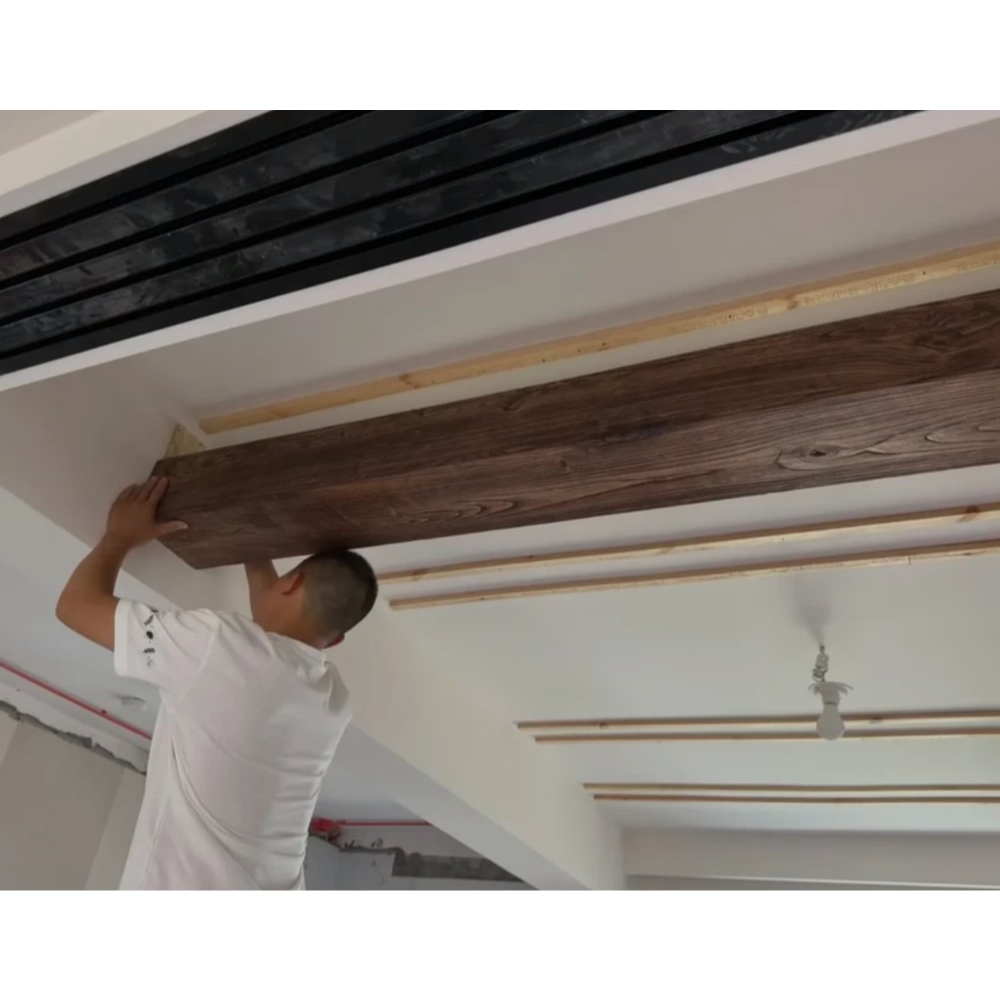
Code compliance advantage for older buildings
Polyurethane beams meet code requirements for older buildings:
Fire rating for remodeling
For remodeling in jurisdictions requiring fire-rated beams:
- ASTM E84 Class A or B available.
- Per beam type and finish.
- Project-specific documentation.
- Verification at inspection.
Fire rating documentation supports permit and inspection.
Updated code compliance
For buildings being brought to current code:
- Beams meet current fire rating requirements.
- Beams meet current VOC standards.
- Beams meet current seismic requirements where applicable.
- Documentation supports code compliance verification.
Updated compliance supports permit approval.
Historic preservation compliance
For historic preservation projects:
- Beams don't damage historic fabric.
- Reversible installation options.
- Documentation supports preservation review.
- Coordination with preservation authorities.
Historic compliance supports preservation approval.
Insurance considerations
For insurance purposes:
- Fire-rated beams may qualify for insurance discounts.
- Documentation supports insurance verification.
- Standard compliance reduces insurance issues.
Insurance compliance supports coverage.
Installation speed advantage
Polyurethane beams install faster than alternatives in renovation contexts:
Faster project completion
For remodeling timelines:
- 15 to 30 minutes per beam vs 90 to 240 for solid timber.
- Less disruption to occupants.
- Faster project completion.
- Lower labor costs.
Faster installation supports tight remodeling timelines.
Less trade coordination
For renovation projects with multiple trades:
- Beam installation doesn't require other trades to wait.
- Less coordination complexity.
- Faster trade sequencing.
- Reduced overall project duration.
Less coordination simplifies remodeling project management.
Occupied building operations
For buildings with ongoing operations:
- Less noise during installation.
- Less dust and debris.
- Less disruption to occupants.
- Better for retail, office, or hospitality operations.
The reduced disruption is valuable for occupied renovations.
Cost predictability advantage
Polyurethane beams offer cost predictability for remodeling budgets:
Per-piece pricing
For remodeling budget planning:
- Per-piece pricing by length is predictable.
- No surprises from hidden defects in solid timber.
- No special handling costs.
- Standard freight costs.
Predictable pricing supports accurate budgeting.
Lifecycle cost
For long-term cost analysis:
- No warping or replacement costs.
- No refinishing costs.
- Long service life.
- Low maintenance.
Lifecycle cost is favorable.
Total project cost
For total project comparison:
- Lower material cost than solid timber.
- Lower labor cost due to faster installation.
- Lower structural reinforcement cost.
- Lower lifecycle cost.
Total project cost is typically 50 to 75 percent less than solid timber equivalent.
When polyurethane isn't the right choice for remodeling
Honest assessment: polyurethane isn't always the right choice:
Authentic solid timber preference
When the buyer specifically wants solid timber:
- Solid timber weight and feel.
- Solid timber authenticity signals.
- Traditional craftsmanship preferences.
Structural applications
When the beam serves a structural purpose:
- Load-bearing applications.
- Engineered structural requirements.
- Specific code requirements for structural beams.
Specific historic restoration requirements
When historic restoration requires authentic materials:
- Period-specific materials.
- Restoration guidelines requiring original materials.
- Preservation requirements for authentic materials.
The right choice depends on project specifics.
Material advantages summary
For remodeling contractors, the key material advantages:
| Advantage | Remodeling Benefit |
|---|---|
| Lightweight | No structural reinforcement in most cases |
| Moisture resistance | Works in bathrooms, basements, humid areas |
| Finish flexibility | Matches existing woodwork precisely |
| Substrate adaptability | Works with all common substrates |
| Code compliance | Meets current code requirements |
| Installation speed | Faster project completion |
| Cost predictability | Better budget control |
The advantages address real remodeling challenges.
How remodeling contractors evaluate polyurethane beam suppliers
For remodeling contractors evaluating suppliers:
- Material certification. The supplier provides material certifications.
- Finish capability. The supplier has finish flexibility for matching.
- Substrate cleat options. The supplier offers cleats for all substrates.
- Code documentation. The supplier provides code compliance documentation.
- References. The supplier has done comparable remodeling work.
PU faux beams for remodeling contractors offer material advantages that address the specific challenges of working in existing buildings. The advantages produce faster project completion, lower total cost, and better long-term performance compared to alternatives in most remodeling contexts.
Technical References
ASTM standards cited in every specification
Test Data
Lab results from internal testing program
Updated 2026
Reviewed against current product specs