PU Faux Beams: Material Advantages for Remodeling Contractors
Remodeling contractors operate in existing buildings. That single fact changes the calculus on every material choice compared to new construction. The substrate is uncertain, the structure is not sized for new loads, the ceiling is rarely flat, and the finishes around the new beam must match construction that is years or decades old. Materials that perform well in new construction can become liabilities in remodel work, and materials that struggle to justify themselves in new construction can become the obvious choice in remodel work.
Polyurethane faux beams land firmly in the second category. They are not always the right choice for new construction where solid timber's structural capacity might justify its cost. But for remodel work — where the beam is decorative, where the ceiling has unknown capacity, where the install happens in a finished space with active occupants — the material properties of polyurethane solve problems that no other beam material handles as cleanly.
This article is about the material itself: what polyurethane is made of, how it behaves compared to wood-based alternatives, what those properties mean for remodel applications, and where the material's limitations deserve honest acknowledgment.
Polyurethane composition, briefly
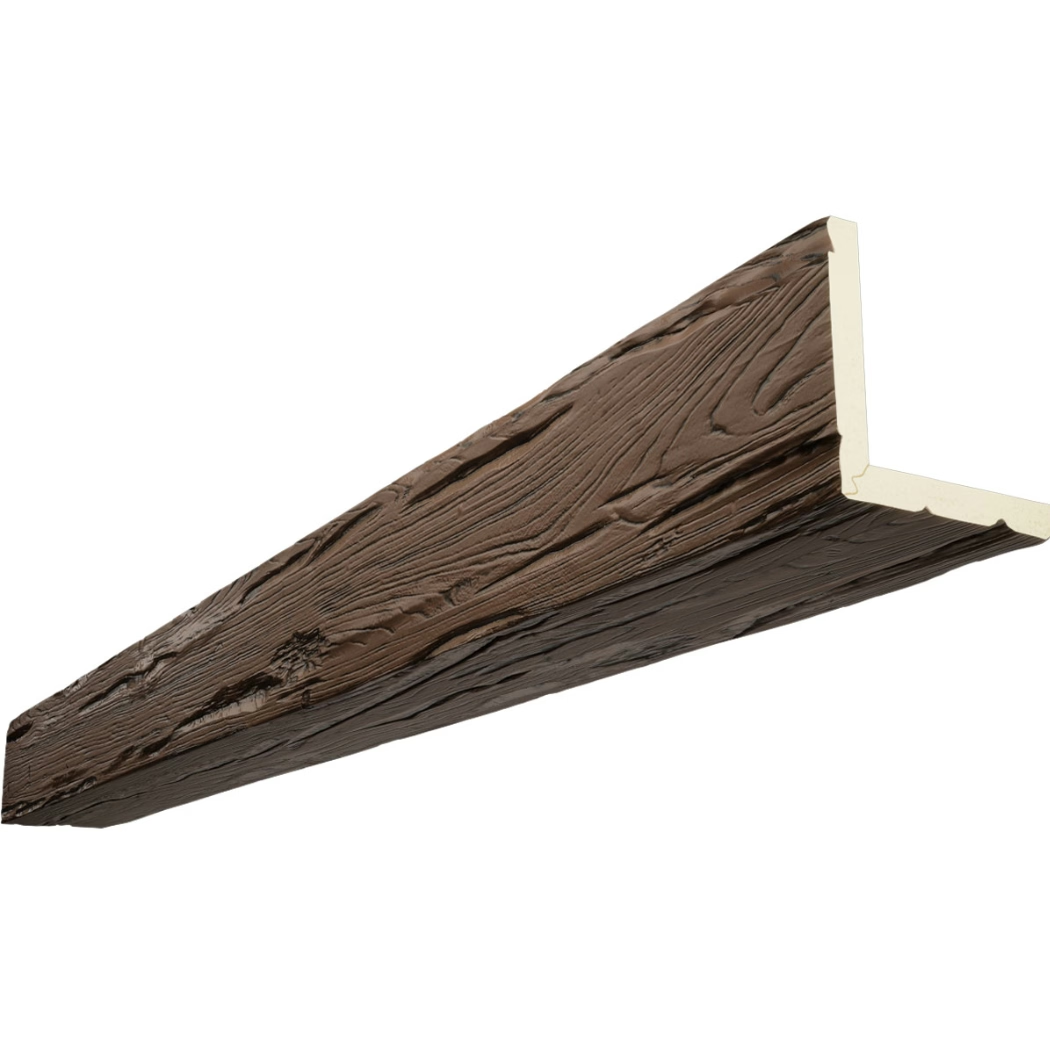
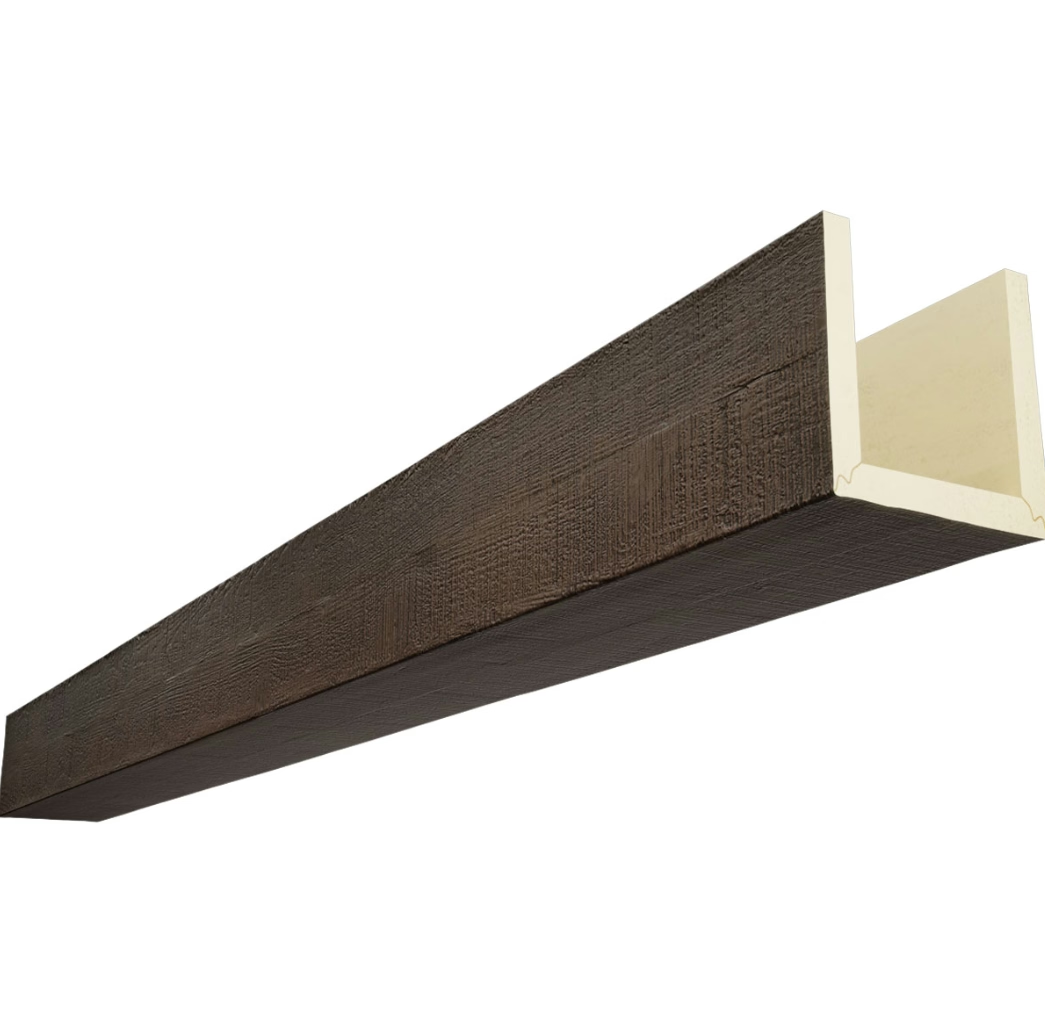
Polyurethane in the context of architectural beams is a closed-cell rigid foam, typically formed by reacting a polyol with an isocyanate inside a heated mold. The reaction produces a thermoset polymer — once cured, the material cannot be re-melted or reshaped. The cell structure is overwhelmingly closed (non-interconnected), which gives the material its characteristic moisture resistance and dimensional stability.
For beam manufacturing, two density grades dominate:
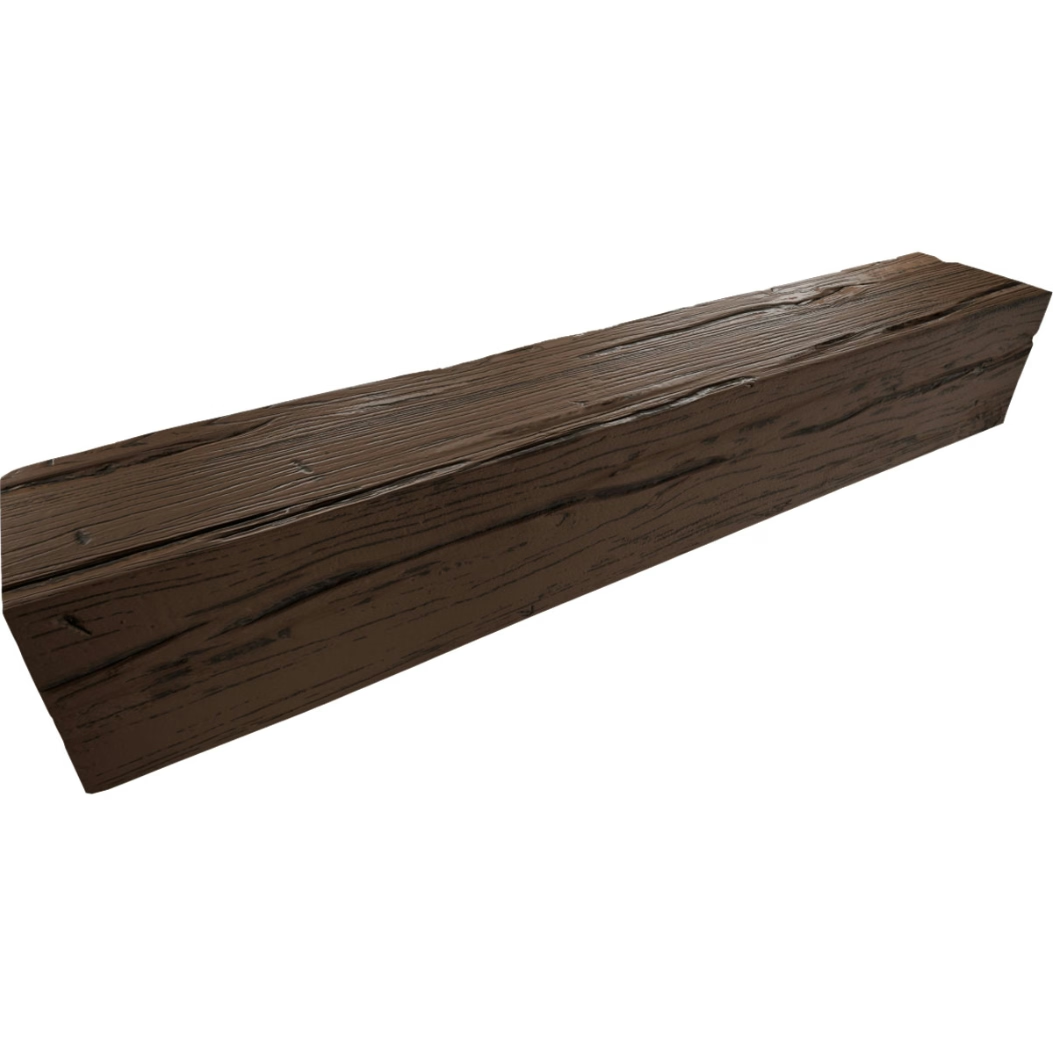
Standard-density polyurethane (8–10 lb/ft³). Used for typical decorative interior beams. Density of 8 lb/ft³ produces a beam that weighs 1.5–2.0 lb per linear foot for an 8×10 cross-section. The material is rigid enough to maintain shape under its own weight and during installation but is light enough to handle comfortably.
High-density polyurethane (10–12 lb/ft³ or higher). Used for commercial-grade beams, longer spans, and applications requiring additional impact resistance. Density of 11 lb/ft³ brings weight to 2.2–2.6 lb per linear foot for the same profile. Still a fraction of the equivalent solid timber weight.
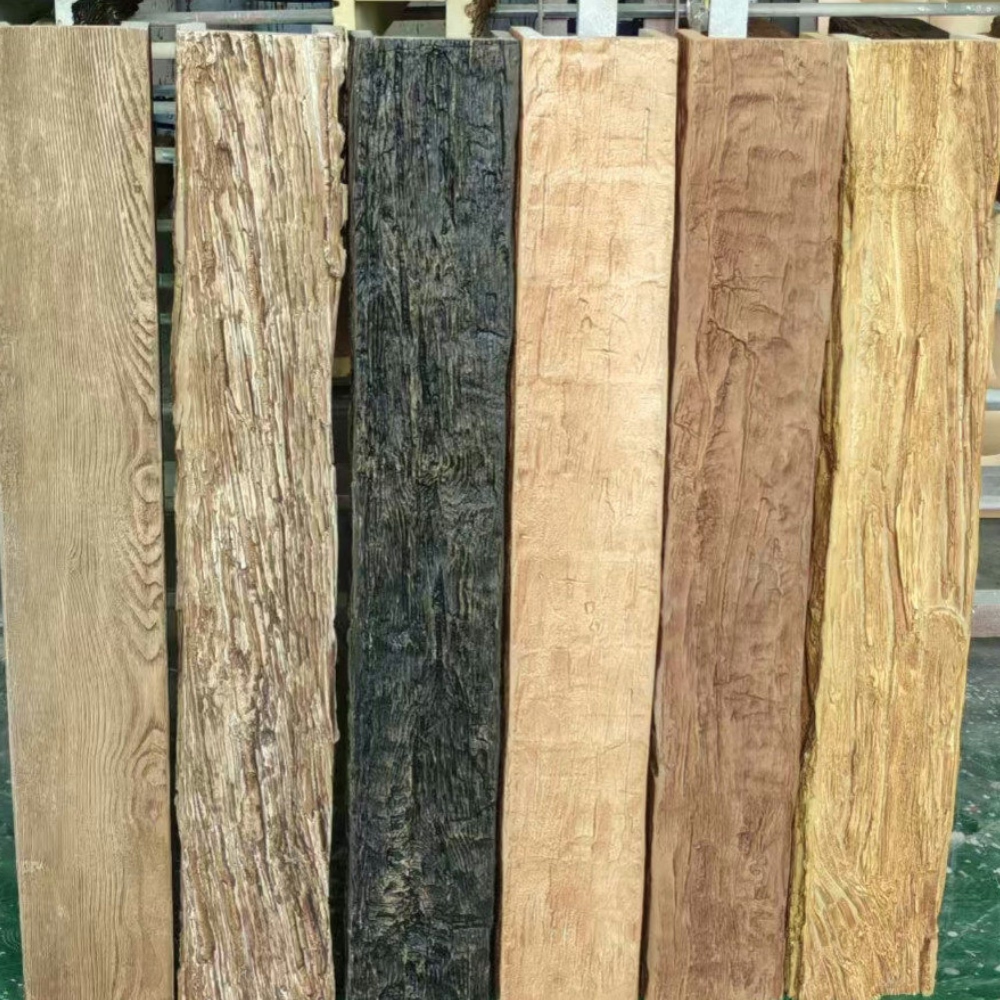
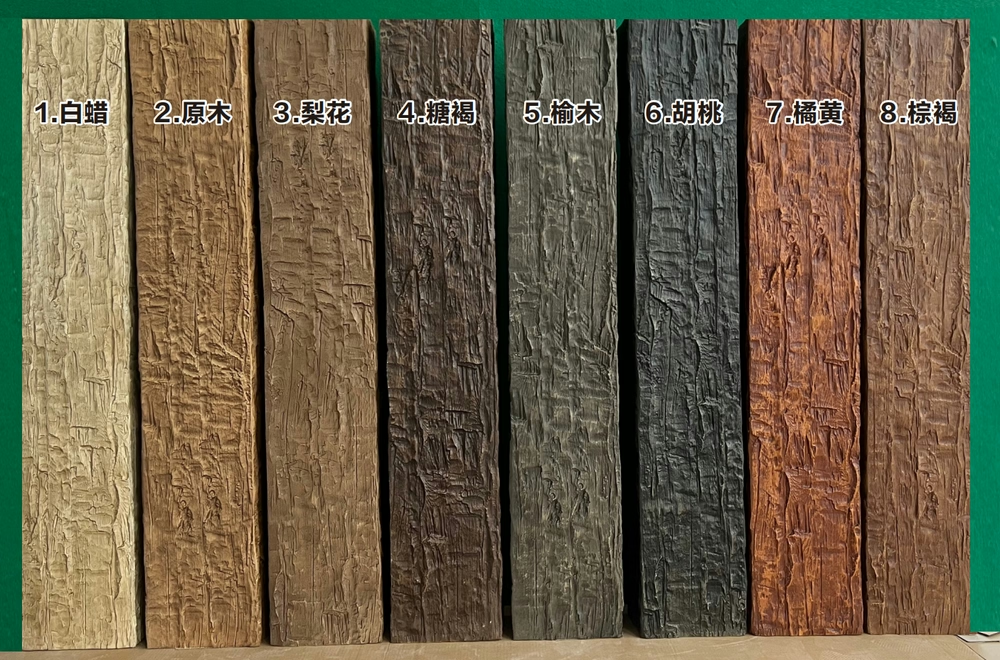
The mold surface carries the texture detail — wood grain, hand-hewn marks, adze cuts, weathered character. After demolding, beams receive a multi-layer finishing system that produces both the visual aesthetic and the protective topcoat.
The weight comparison that drives remodel decisions
For new construction, weight is a design variable that the structural engineer adjusts through sizing of the framing members. For remodel work, weight is a constraint imposed by existing construction that the engineer cannot easily change. Adding 240 pounds per linear foot of solid timber beam to a 1920s ceiling structure typically requires reinforcement work that costs more than the beam itself.
Polyurethane beams at 1.5–2.6 pounds per linear foot add effectively nothing to the existing structural loading. Two-inch solid concrete over metal deck in a 1960s commercial building is not going to feel the new beam weight at all. Wood-framed construction from any era handles the addition without reinforcement.
The weight benefit cascades through the entire remodel logistics chain:
- Delivery to the project site can be by standard pickup truck or small van rather than flatbed with forklift
- Movement into the building can use interior doorways and corridors without structural modification
- Positioning at install can be by two-person crew from a stepladder rather than four-person crew with a lift
- Storage during phased remodel work does not require reinforced staging
- Adjustment during installation can happen by hand without special rigging
When a remodel contractor asks "can I add decorative beams to this space without a structural review," the answer with polyurethane is reliably yes. With solid timber, the answer depends entirely on the existing structure.
Moisture behavior: the remodel-relevant advantage
Remodel projects often happen in buildings with moisture vulnerabilities — old roofs with occasional leaks, bathrooms with inadequate ventilation, kitchens with elevated humidity, basements with seasonal moisture intrusion. Wood-based decorative materials in these environments absorb moisture, expand, contract, develop surface checks, and eventually fail.
Polyurethane is essentially closed-cell polymer with no wood fibers to absorb water. The material property table is straightforward:
| Material | Water absorption (24-hour soak) | Dimensional change (RH 30–90%) |
|---|---|---|
| Solid timber (kiln-dried) | 8–15% by weight | 0.5–1.5% across grain |
| MDF (medium-density fiberboard) | 15–25% by weight | 0.6–1.0% across panel |
| PVC foam | 0.5–1.5% by weight | 0.1–0.3% |
| Polyurethane (closed-cell) | 0.3–0.8% by weight | 0.1–0.2% |
| Polystyrene foam | 0.5–2.0% by weight | 0.2–0.5% |
The low water absorption of polyurethane means the material maintains dimensional stability in environments where wood-based alternatives would fail. A polyurethane beam in a bathroom, basement, or coastal environment performs essentially identically to the same beam in a climate-controlled interior.
For remodel work in moisture-vulnerable spaces, this property alone justifies the polyurethane choice. The alternative materials that match the moisture performance (PVC foam, polystyrene foam) lack the surface detail and finish compatibility that polyurethane offers.
Fire performance and code compliance during remodel
Remodel projects frequently trigger code compliance questions that new construction does not. Adding a new decorative element to an existing assembly can affect the fire rating of the existing assembly. Local jurisdictions vary on how this is interpreted.
Polyurethane beams are available in several fire performance ratings:
- Standard polyurethane (untreated). Class C fire rating per ASTM E84 (flame spread 76–200). Acceptable in most residential applications but limited in commercial and multi-family.
- Fire-retardant-treated polyurethane. Class B rating (flame spread 26–75). Required for many commercial applications and multi-family common areas.
- Fire-rated polyurethane with intumescent coating. Class A rating (flame spread 0–25). Required for many hospitality, healthcare, and commercial interior applications.
The cost premium for fire-rated polyurethane over standard is roughly $25–$60 per beam depending on the rating level and certification documentation required. Lead time impact is typically 1–3 weeks for certifications and batch testing documentation.
For remodel contractors, the practical question is what rating the local jurisdiction requires for the specific installation. A living room beam in a single-family residence usually doesn't require anything beyond standard polyurethane. A beam in a hotel corridor or multi-family common space typically requires Class A or Class B with documented certification.
Material data sheets and code compliance documentation from the manufacturer should be retained as part of the project record. Inspectors may request this documentation at final inspection.
Finish durability in active environments
Remodel work often happens in occupied buildings. The beams are installed while the homeowner or business remains active in adjacent spaces. The finishes on the new beams are exposed to whatever environmental conditions exist immediately upon installation — not the controlled commissioning environment of new construction.
Polyurethane beams finished with commercial-grade systems hold up well in these conditions:
- Two-part polyurethane topcoats provide chemical resistance adequate for routine cleaning with household or commercial cleaning products
- Acrylic-urethane blends offer UV resistance for installations near windows with significant sun exposure
- Moisture-cure urethane systems provide the toughest finish for high-humidity environments
The finish layer is the part of the beam system that actually faces the conditions of the remodeled space, and it is the part that ages. Polyurethane beams accept these finish systems readily because the substrate and the finish are chemically compatible — both are polymer-based.
For routine maintenance, polyurethane beams require nothing more than occasional dusting and the same cleaning protocol as adjacent millwork. There is no refinishing cycle on a 5- to 10-year schedule the way solid timber requires. There is no sealing or conditioning the way concrete or stone requires.
Workability during install
Remodel contractors value materials that are forgiving on site. Polyurethane is forgiving in several specific ways:
Field cutting. Standard woodworking tools cut polyurethane cleanly. Carbide-tipped blades are recommended for longer tool life. Field modifications for unexpected conditions (an out-of-plumb wall, an unforeseen obstruction, a lighting integration point) can be made on site without sending the beam back to the factory.
Fastener behavior. Polyurethane accepts screws and nails without pre-drilling for most applications. The material grips threads well and provides holding power comparable to MDF for light-duty applications. For heavier loads, the typical approach is to fasten through the beam into a cleat or substrate structure behind it rather than relying on the polyurethane material itself for holding.
Touch-up. Field damage to the finish can be touched up using the same finish system provided by the manufacturer. Most suppliers provide touch-up kits for this purpose. The repair is rarely invisible on close inspection but is generally acceptable at typical viewing distances.
Tolerances for out-of-plumb substrates. Remodel work includes ceilings and walls that are not perfectly plumb or level. Polyurethane beams have enough flexibility in their mounting that out-of-plumb conditions can be accommodated through shimming, scribing, or clever cleat placement. Solid timber is less forgiving because of its weight and rigidity.
Material limitations to acknowledge honestly
Polyurethane is not the right material for every remodel application. Honest acknowledgment of its limitations prevents misapplication.
Structural capacity. Polyurethane beams are decorative. They do not support loads beyond their own weight in most installations. If the remodel calls for a beam that actually carries structural load — supporting a roof, holding a floor system, transferring wall loads — solid timber, structural steel, or LVL is the correct material regardless of the other polyurethane advantages.
High-impact abuse environments. Garages, workshops, and similar spaces where ladders, equipment, or vehicles might contact the beam at speed are poor polyurethane applications. The material dents on hard impact and cannot be repaired invisibly. Solid timber handles impact better in these environments.
Authentic material requirement. Some projects call for actual wood as a documented design requirement — a heritage restoration, a prestige commercial interior where natural material is part of the brand positioning, or a residential project where the owner specifically wants real wood. Polyurethane cannot satisfy these requirements.
Heat exposure. Polyurethane begins to degrade at sustained temperatures above 180–200°F. Installations near wood stoves, industrial cooking equipment, or commercial heat sources need either solid timber alternatives or specific thermal isolation. Most residential kitchens and bathrooms operate well below these temperatures.
UV exposure outdoors. Polyurethane beams are available in exterior-grade formulations, but UV-stable finishes require specific chemistry and maintenance cycles that solid timber also requires. The exterior polyurethane market is smaller and more expensive than interior applications.
Comparison with other materials for specific remodel situations
Polyurethane vs solid wood. Polyurethane wins on weight, moisture, install labor, and cost predictability. Wood wins on material authenticity, structural capacity, and impact tolerance. For purely decorative interior beam applications, polyurethane is the better material. For applications with structural demands or authentic material requirements, wood remains appropriate.
Polyurethane vs MDF. Polyurethane wins on weight, moisture, and finish quality. MDF wins on initial material cost and on field-cutting familiarity for carpenters. For moisture-sensitive applications and for installations requiring reduced labor, polyurethane is better. For low-budget decorative work where moisture is not a concern, MDF remains a viable option.
Polyurethane vs PVC foam. Polyurethane wins on aesthetic depth and on the ability to replicate real wood character authentically. PVC foam wins on absolute moisture resistance and on chemical resistance in industrial environments. For decorative residential and commercial beams where aesthetic matters, polyurethane is better. For utilitarian applications where appearance is secondary, PVC can be appropriate.
Polyurethane vs high-density polystyrene. Polystyrene wins on cost for very large volume decorative work where appearance quality is not a priority. Polyurethane wins on density, hardness, and finish compatibility for higher-quality applications.
Practical material specifications for remodel orders
When ordering polyurethane beams for a remodel project, the material specifications should include:
Density grade. Specify 8–10 lb/ft³ for typical interior decorative work, 10–12 lb/ft³ for commercial-grade or longer-span applications.
Fire rating. Specify standard, Class B, or Class A based on the local jurisdiction requirements for the installation context.
Finish system. Specify the base stain, glaze depth, and topcoat type. For high-moisture or high-traffic environments, specify the upgraded finish system explicitly.
Mounting detail. Specify the cleat-and-screw mounting approach for typical applications, or specify face-mount with finish-covered fasteners if cleat mounting is not feasible.
Field-cut tolerance. Specify whether field cuts are acceptable or whether all cutting must be completed at the factory. Field-cut beams may need factory-supplied touch-up kits for finish repair.
Warranty. Specify the manufacturer's warranty terms and exclusions. Most polyurethane beams carry 10–25 year limited warranties against manufacturing defects. Confirm that the warranty transfers to the property owner upon installation.
A closing note on material choice and project economics
Remodel contractors make material recommendations to clients based on the combination of aesthetic result, practical performance, and total installed cost. Polyurethane beams check all three boxes for most decorative beam applications in remodel work. The material science supports the recommendation with measurable properties rather than marketing language.
The honest recommendation when the application calls for decorative interior beams is polyurethane unless specific conditions exclude it (structural demand, high-impact environment, authentic material requirement). The honest acknowledgment when those exclusion conditions exist is that solid timber or another material serves the project better.
Material selection is not a question of which product is universally best. It is a question of which material best fits the specific application's requirements. For the wide category of decorative interior beams in remodel work, polyurethane is the appropriate answer more often than the alternatives.
Technical References
ASTM standards cited in every specification
Test Data
Lab results from internal testing program
Updated 2026
Reviewed against current product specs