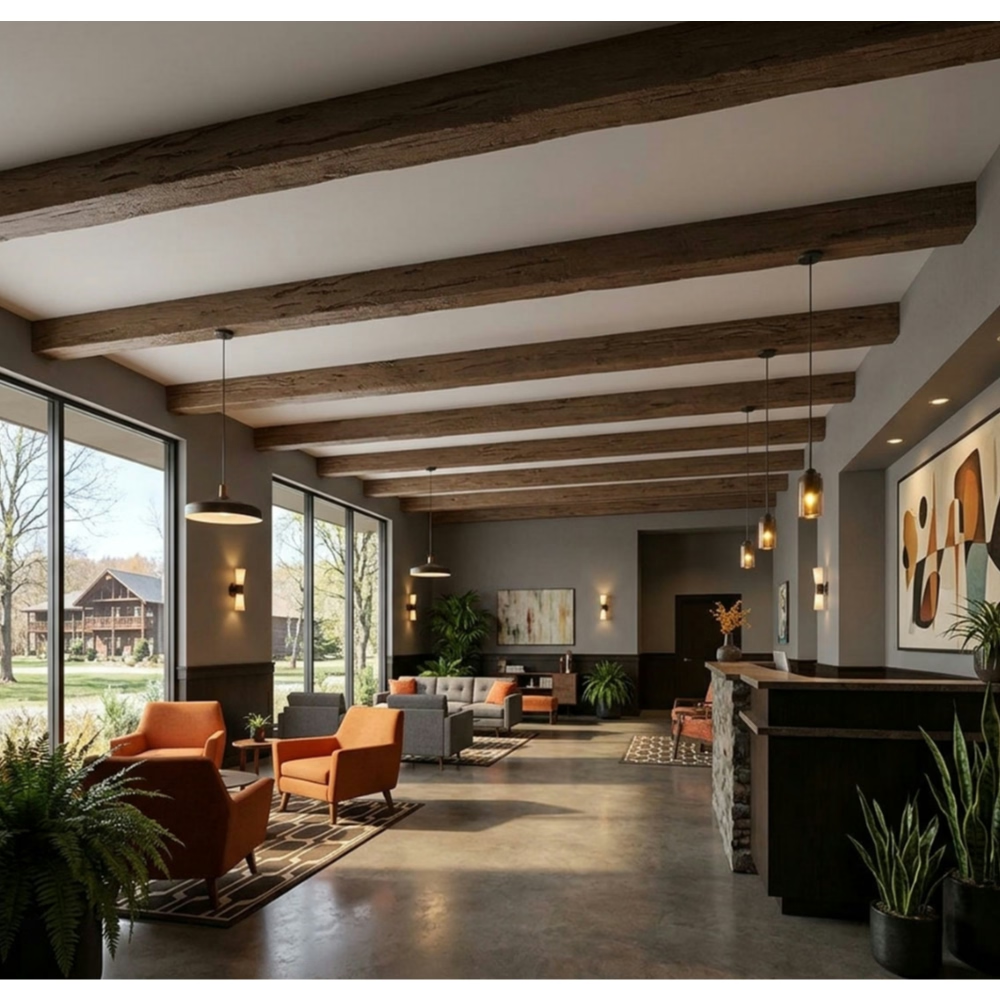
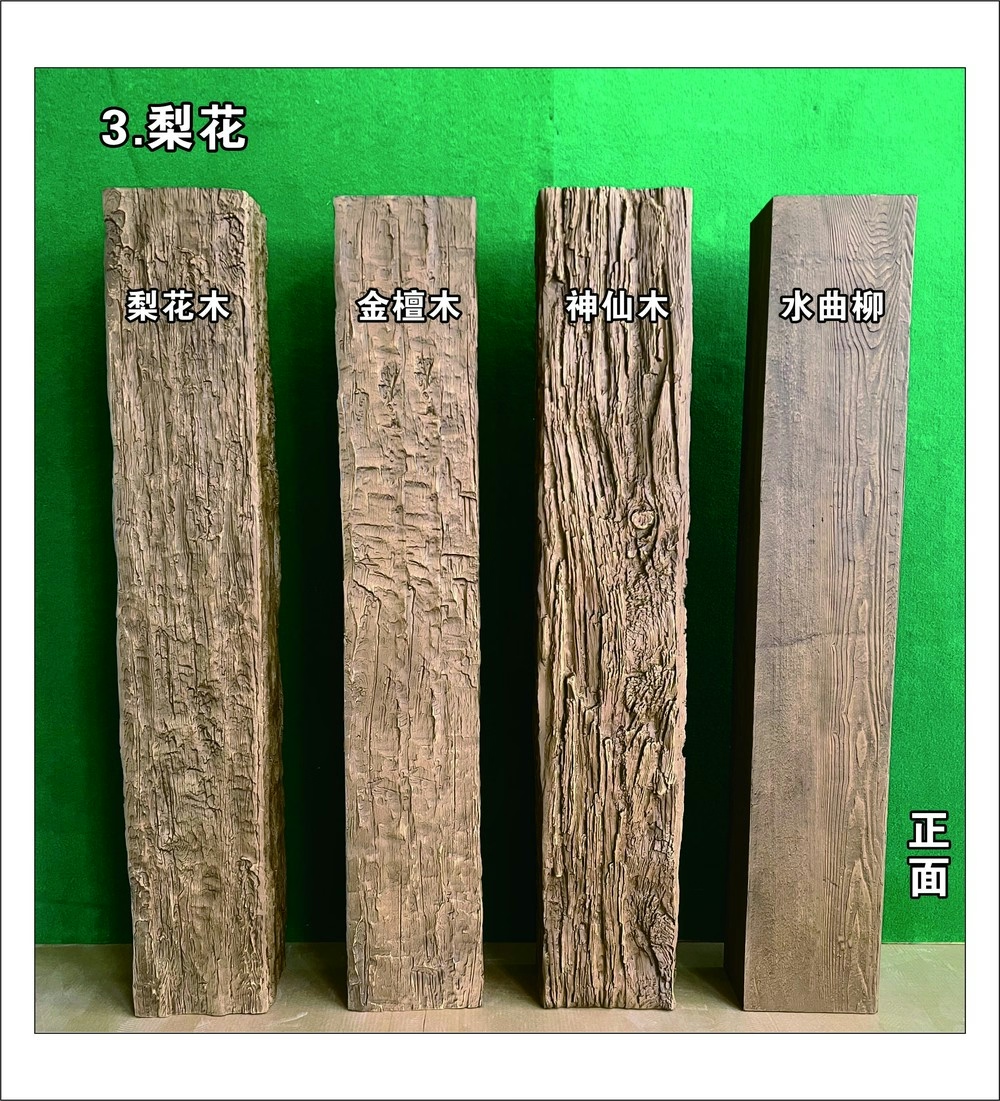
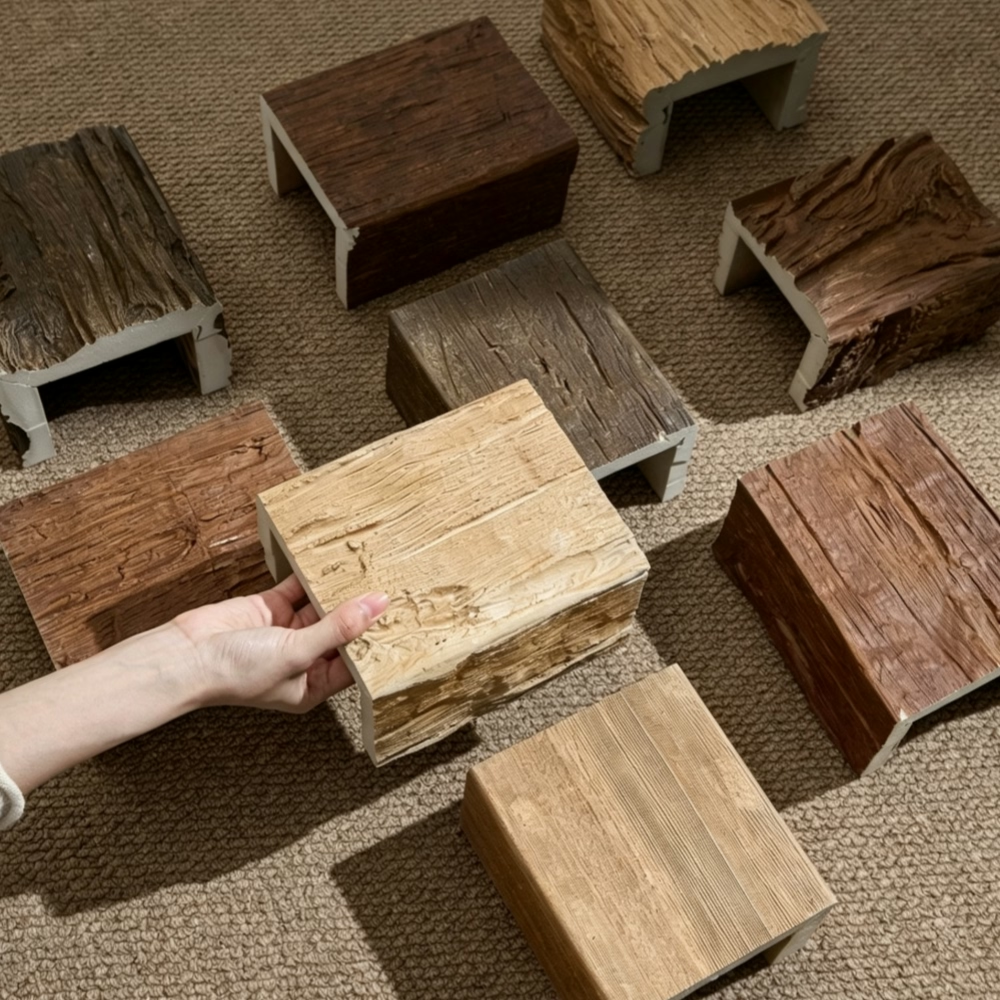
PU Faux Beams vs Solid Wood Beams | A Guide for Construction Companies
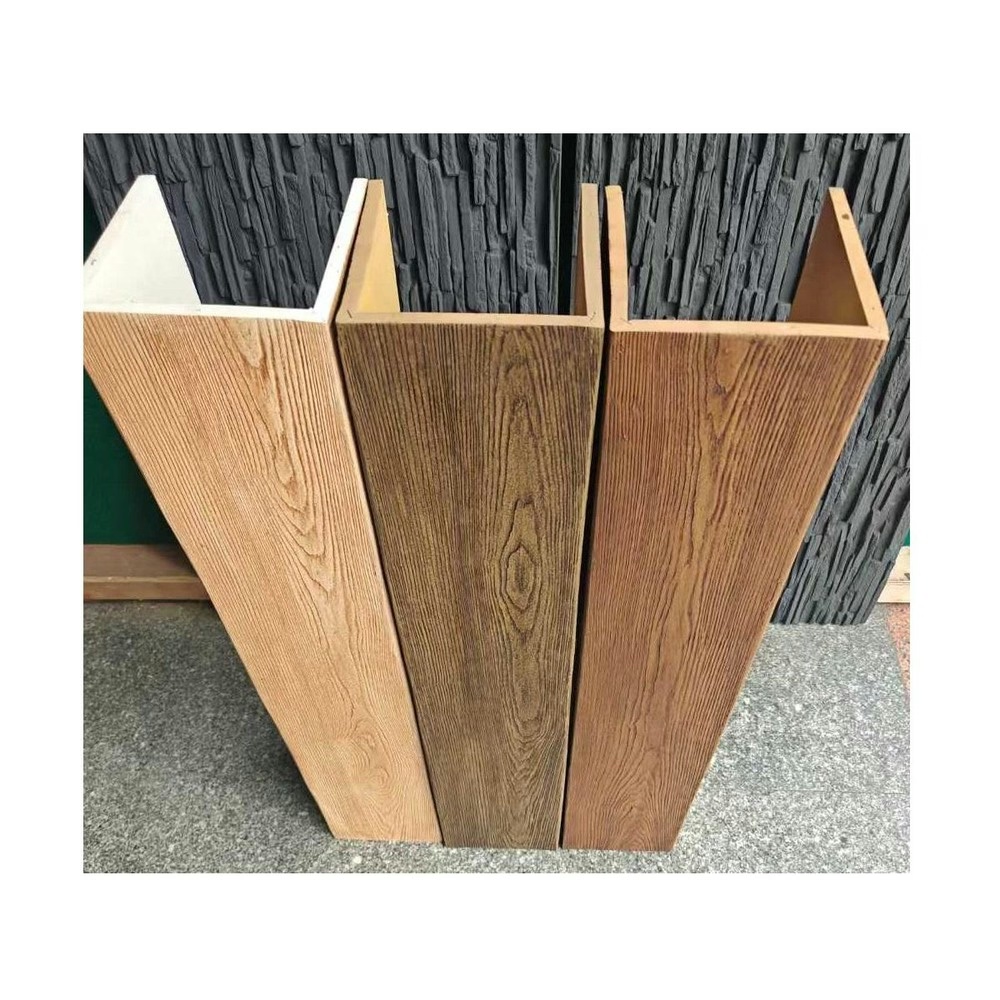
Construction companies choosing between polyurethane faux beams and solid wood beams need a head-to-head comparison covering cost, installation, durability, maintenance, and the decision criteria that determine which is right for specific projects. This guide provides that comparison with practical guidance for construction company decision-making.
Cost comparison
Material cost
For comparable profiles and sizes:
Polyurethane:
- Stock profile: $10 to $18 per linear foot.
- Modified profile: $15 to $25 per linear foot.
- Custom profile: $25 to $40 per linear foot.
Solid wood:
- Softwood (pine, fir): $30 to $60 per linear foot.
- Hardwood (oak, maple): $50 to $100 per linear foot.
- Reclaimed wood: $60 to $150 per linear foot.
- Exotic species: $100 to $300 per linear foot.
Polyurethane is typically 50 to 80 percent less expensive than solid wood for comparable profiles.
Freight cost
Polyurethane beams weigh 2 to 4 pounds per linear foot. Solid wood beams weigh 15 to 30 pounds per linear foot. Freight costs are 3 to 8 times higher for solid wood.
Installation cost
Polyurethane:
- Two-person crew, 15 to 30 minutes per beam.
- $20 to $80 per beam for labor.
Solid wood:
- Four to six person crew, 90 to 240 minutes per beam.
- $240 to $1,200 per beam for labor.
- May require crane or lift rental.
Polyurethane installation is 3 to 8 times less expensive than solid wood installation.
Total cost comparison
For a 200 linear foot project with comparable profile:
Polyurethane:
- Material: $3,000.
- Freight: $200.
- Installation: $1,500.
- Total: $4,700.
Solid wood (softwood):
- Material: $9,000.
- Freight: $1,500.
- Installation: $9,000.
- Total: $19,500.
Polyurethane is approximately 75 percent less expensive than solid wood for comparable projects.
Installation comparison
Crew requirements
Polyurethane:
- Two-person crew for most beams.
- Standard carpentry tools.
- No specialized equipment.
Solid wood:
- Four to six person crew.
- Standard carpentry tools plus specialized cutting equipment.
- Crane or lift for long or heavy beams.
Polyurethane installation requires fewer crew members and simpler equipment.
Time requirements
Polyurethane:
- 15 to 30 minutes per beam for typical beams.
- 25 to 45 minutes per beam for longer beams.
- 45 to 90 minutes per beam with field joint.
Solid wood:
- 90 to 240 minutes per beam for typical beams.
- Multiple hours per beam for longer beams.
- Crane time adds significant duration.
Polyurethane installation is 3 to 8 times faster than solid wood.
Skill requirements
Polyurethane:
- Standard carpentry skills.
- No specialized training required.
- Beginner crew can install with basic guidance.
Solid wood:
- Advanced carpentry skills.
- Specialized training often required.
- Experienced crew needed for quality installation.
Polyurethane installation requires less skill than solid wood.
Substrate requirements
Polyurethane:
- Standard cleat mounting per substrate.
- Lightweight reduces substrate load requirements.
- Can mount to most substrates with appropriate cleats.
Solid wood:
- Engineered mounting for heavy loads.
- May require additional structural support.
- Substrate must support significant weight.
Polyurethane installation has simpler substrate requirements.
Durability comparison
Dimensional stability
Polyurethane:
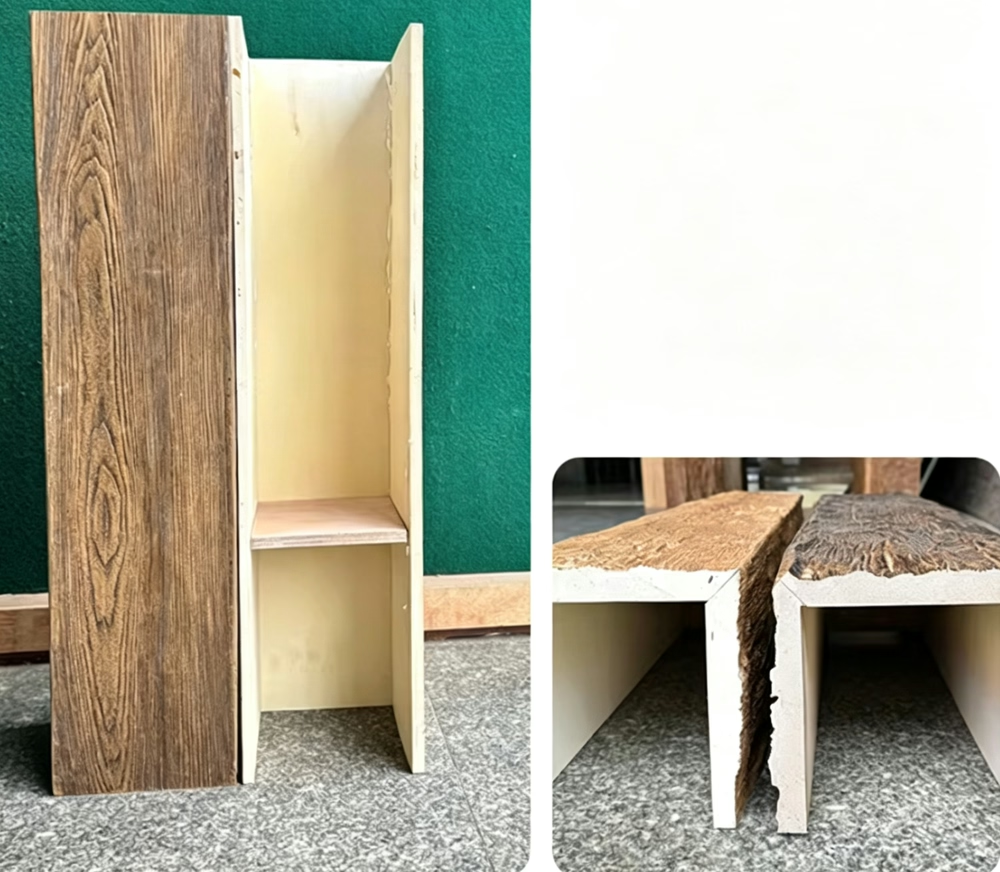
- Closed-cell structure doesn't absorb moisture.
- No swelling or shrinking from humidity.
- No warping, cupping, or twisting.
- Maintains dimensions over decades.
Solid wood:
- Hygroscopic material absorbs and releases moisture.
- Swells and shrinks with humidity changes.
- Warps, cups, and twists over time.
- Dimensions change over the building's life.
Polyurethane has significantly better dimensional stability.
Finish durability
Polyurethane:
- Factory finish under controlled conditions.
- UV-stabilized options available.
- Chemical-resistant options for harsh environments.
- Finish maintained with minimal care.
Solid wood:
- Finish applied on-site or at the shop.
- UV degradation without protection.
- Chemical resistance varies by finish.
- Finish requires periodic maintenance.
Polyurethane finishes are more consistent and durable.
Biological resistance
Polyurethane:
- No organic content for biological growth.
- No rot, mold, or insect damage.
- Stable in humid environments.
- No biological degradation over time.
Solid wood:
- Organic content supports biological growth.
- Susceptible to rot, mold, and insects.
- Requires treatment for humid environments.
- Biological degradation possible over time.
Polyurethane has superior biological resistance.
Long-term performance
Polyurethane:
- 20+ year service life typical.
- Maintained appearance over decades.
- Warranty terms often 10 to 25 years.
Solid wood:
- Variable service life depending on conditions.
- Appearance may degrade over time.
- Replacement may be needed within 20 to 50 years.
Polyurethane has more predictable long-term performance.
Maintenance comparison
Cleaning
Polyurethane:
- Standard cleaning with mild soap and water.
- No special products required.
- Resistant to most cleaning chemicals.
Solid wood:
- Specific wood cleaning products.
- Some chemicals may damage finish.
- More careful cleaning required.
Polyurethane has simpler cleaning requirements.
Refinishing
Polyurethane:
- Typically not needed for 15 to 25 years.
- Light surface refresh possible if needed.
- Full refinishing challenging (factory finish).
Solid wood:
- Refinishing needed every 5 to 15 years.
- Sanding and refinishing possible.
- Standard practice for wood maintenance.
Polyurethane has lower refinishing needs.
Repair
Polyurethane:
- Surface repairs possible with manufacturer materials.
- Significant damage may require beam replacement.
- Color-matched touch-up materials available.
Solid wood:
- Repairs common and well-understood.
- Replacement boards can be sourced.
- Color matching may require custom finishing.
Solid wood has more established repair practices.
Lifecycle cost
For 30-year lifecycle cost:
Polyurethane:
- Initial cost: $4,700 (example project).
- Maintenance: $500 over 30 years.
- Refinishing: Minimal.
- Replacement: Rare.
- Total: $5,200.
Solid wood:
- Initial cost: $19,500.
- Maintenance: $2,000 over 30 years.
- Refinishing: $3,000 over 30 years.
- Replacement: $5,000 partial replacement.
- Total: $29,500.
Polyurethane has significantly lower 30-year lifecycle cost.
When solid wood is preferred
Honest assessment: solid wood is preferred for some projects:
Premium positioning
When the project requires authentic solid wood positioning:
- Ultra-luxury homes.
- Historic preservation.
- Specific buyer requirements for solid wood.
Solid wood positioning justifies the cost premium.
Authentic material preference
When the buyer specifically wants authentic wood:
- Wood enthusiasts.
- Traditional craftsmanship preferences.
- Specific design authenticity requirements.
Authentic material preference justifies solid wood.
Structural applications
When the beam serves a structural purpose:
- Load-bearing applications.
- Engineered structural requirements.
- Building code requirements for structural beams.
Structural applications require solid timber.
Specific design authenticity
When the design requires authentic wood character:
- Reclaimed wood appearance that's difficult to replicate.
- Specific wood species character.
- Hand-hewn details beyond factory capability.
Specific design authenticity may require solid wood.
Decision criteria for construction companies
For construction companies choosing between polyurethane and solid wood:
| Consideration | Polyurethane Better | Solid Wood Better |
|---|---|---|
| Cost | Lower total cost | Premium positioning |
| Installation | Faster, simpler | Traditional craftsmanship |
| Durability | Better dimensional stability | Traditional service life |
| Maintenance | Lower maintenance | Established repair practices |
| Humidity | Better moisture resistance | Traditional with treatment |
| Code compliance | Easier documentation | Established codes |
| Design flexibility | Higher | Limited to wood species |
| Aesthetic | Factory-controlled variation | Natural wood variation |
The criteria help construction companies choose appropriately per project.
Common reasons construction companies choose each
Why construction companies choose polyurethane
- Lower total cost.
- Faster installation.
- Better moisture resistance.
- Easier code compliance.
- Design flexibility.
- Lower maintenance.
Why construction companies choose solid wood
- Premium positioning.
- Authentic material preference.
- Structural applications.
- Specific design authenticity.
- Traditional craftsmanship.
- Buyer preference.
Making the decision
For most construction company projects:
- Polyurethane is the right choice for most decorative beam applications.
- Solid wood is the right choice for specific positioning, structural, or authenticity requirements.
- The decision comes down to specific project requirements and company positioning.
The right choice depends on the project, not a universal rule.
PU faux beams vs solid wood beams for construction companies is a category where the head-to-head comparison, the decision criteria, and the project specifics all need to align. The right combination produces the appropriate choice for each project, balancing cost, performance, and design intent.
Technical References
ASTM standards cited in every specification
Test Data
Lab results from internal testing program
Updated 2026
Reviewed against current product specs