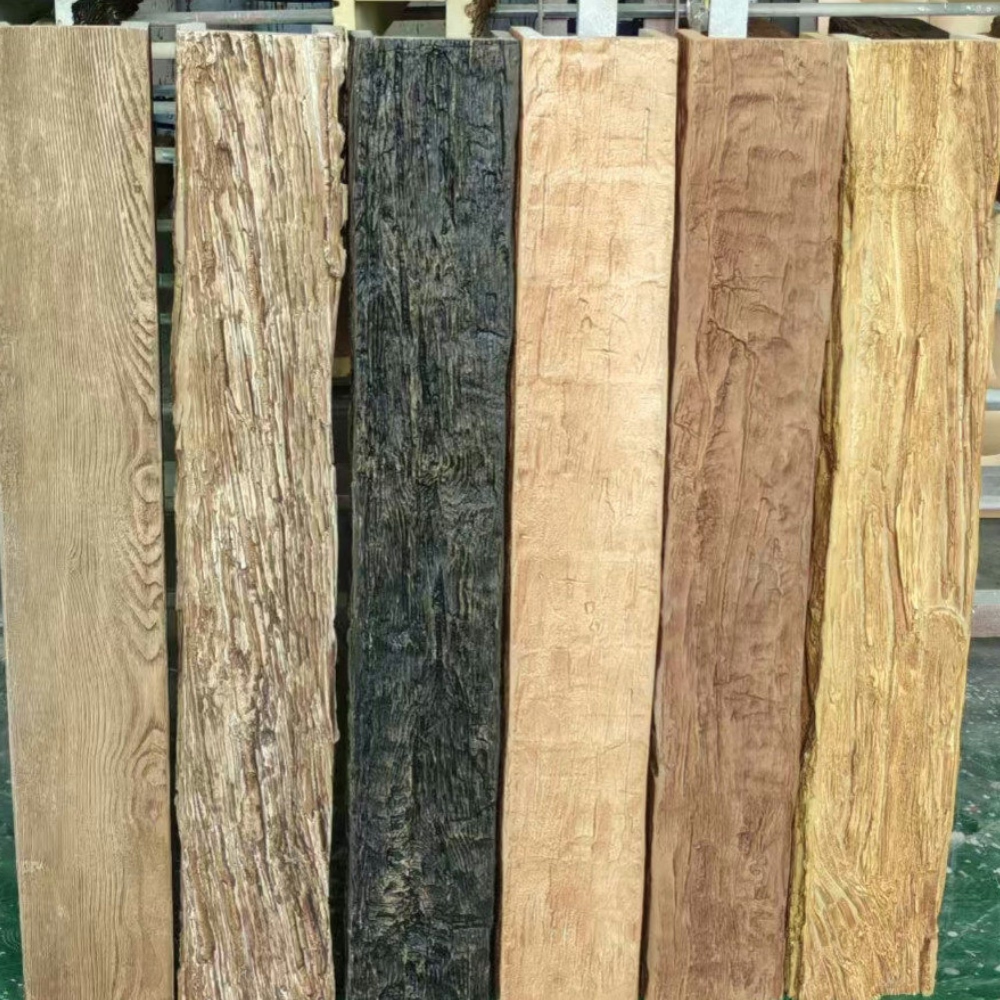
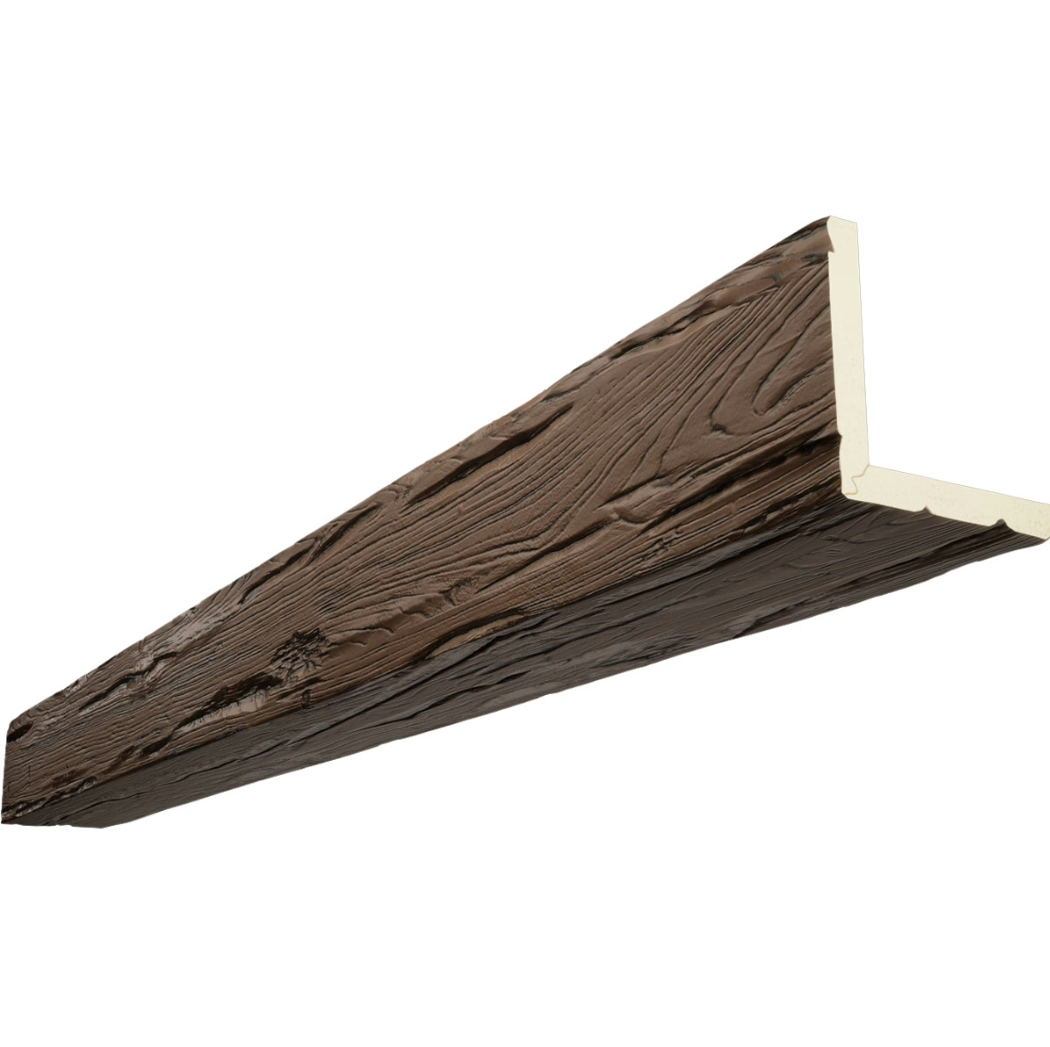
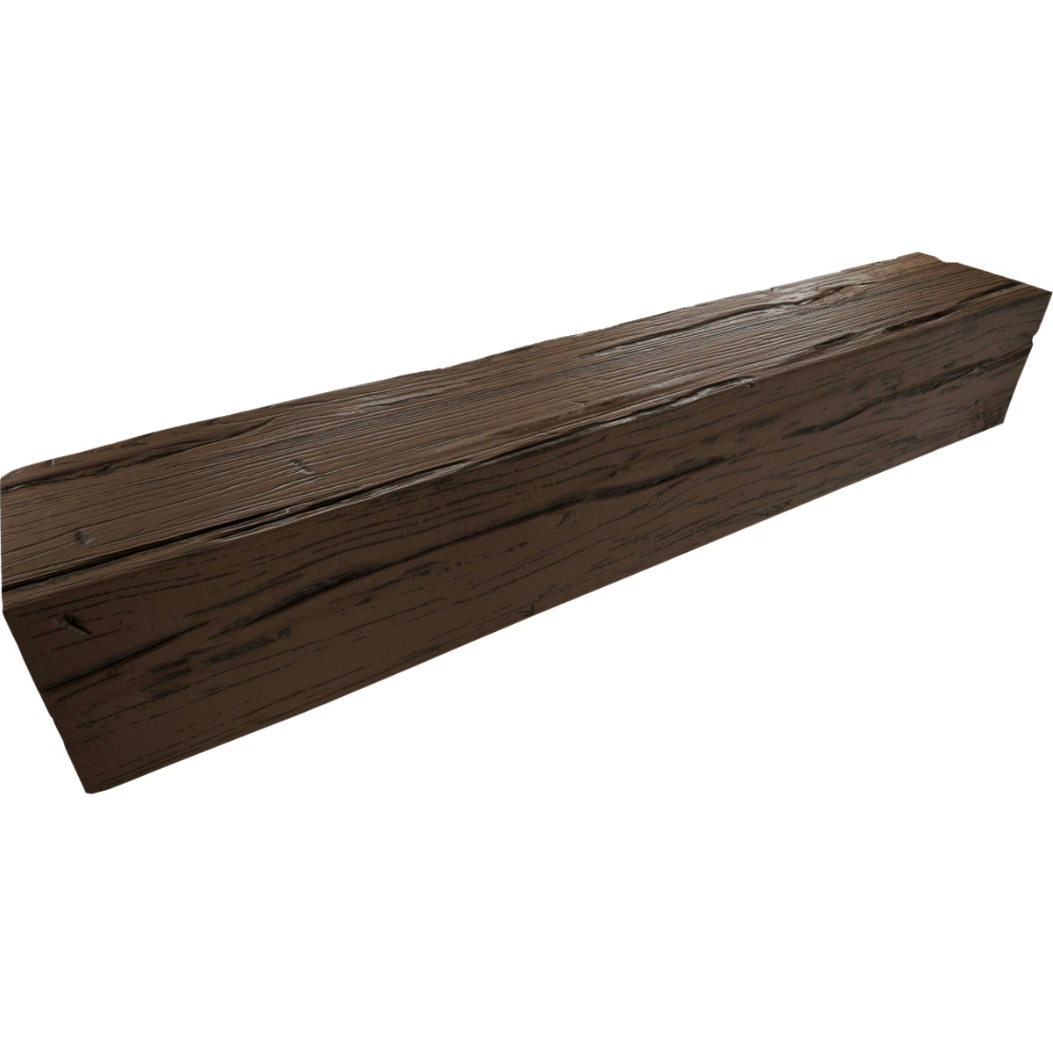
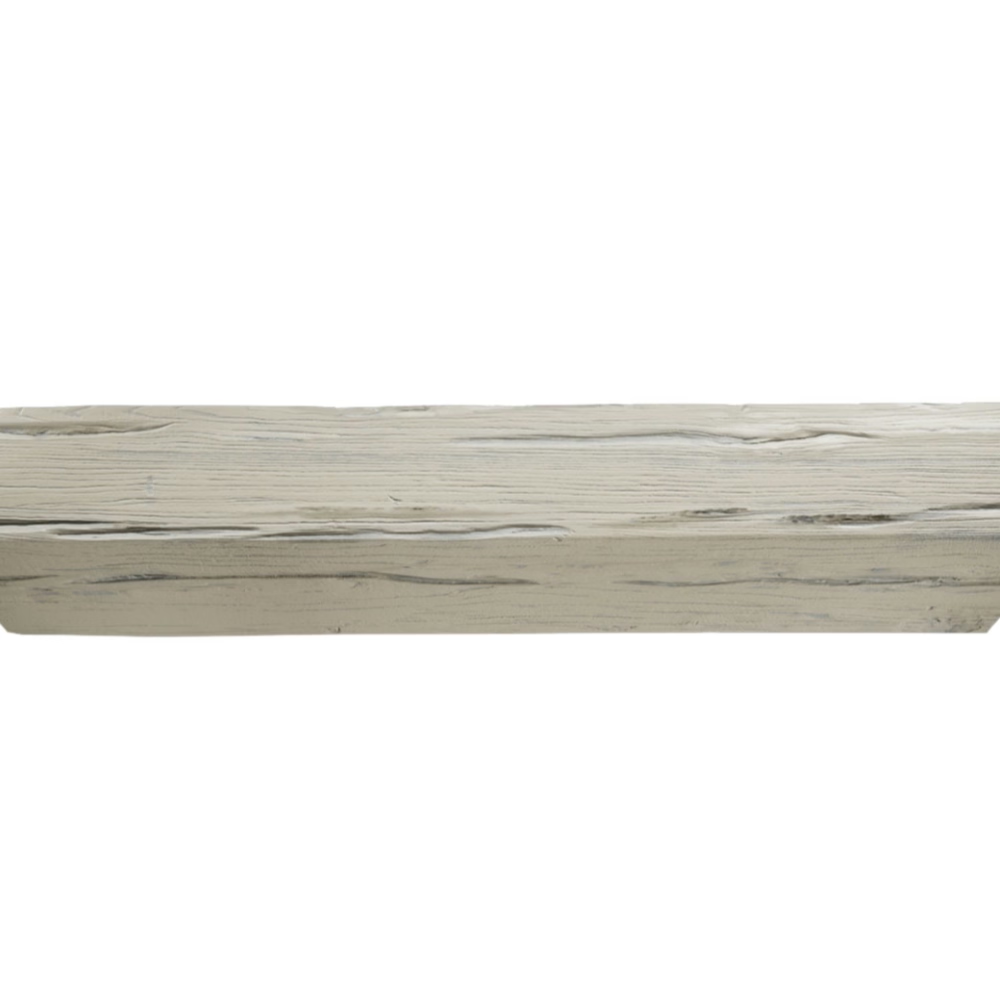
PU Faux Beams with Custom Finish | Bulk Orders for New Construction
The finish on a polyurethane faux beam determines its visual character, durability, and maintenance requirements. For new construction projects with specific design intent—coordinating with flooring, cabinetry, or other finishes—a custom factory finish produces better results than a stock finish. Understanding what custom finish means, what options exist, and how bulk orders work helps new construction projects specify correctly.
This is what custom finish means on polyurethane faux beams, the finish options available, and how bulk orders for new construction work.
What "custom finish" means
A custom finish on a polyurethane faux beam refers to a factory-applied finish that goes beyond the standard stock finishes. The customization can include:
Custom color
A color developed specifically for the project, matched against a reference provided by the customer:
- Matches other finishes in the project (flooring, cabinetry, trim).
- Coordinates with the project's overall color palette.
- May include weathering or aging effects.
Custom sheen
A sheen level beyond the standard options:
- Specific matte level (e.g., 5 GU at 60 degrees).
- Specific gloss level (e.g., 25 GU at 60 degrees).
- Specialty sheen effects (e.g., wax appearance, oil appearance).
Custom weathering effects
Aging or weathering effects applied at the factory:
- Chalk wash (for weathered or driftwood looks).
- Paint traces (for reclaimed or distressed looks).
- Worn edges (for aged appearances).
- Multiple color layers (for complex finishes).
Custom texture detailing
Hand-applied texture variations:
- Worn spots or wear patterns.
- Selective staining to emphasize grain features.
- Hand-rubbed effects.
Custom finishes combine these elements to achieve a specific design intent.
Finish chemistry options
For polyurethane faux beam finishes, several chemistry options exist:
Water-based acrylic
Characteristics: Low VOC, fast dry, good color stability.
Best for: Interior applications, projects with VOC restrictions, projects requiring fast turnaround.
Durability: Moderate. Good for residential interiors; may not be suitable for high-traffic commercial.
Water-based polyurethane
Characteristics: Higher durability than acrylic, good chemical resistance, low VOC.
Best for: High-traffic residential, commercial interiors, projects requiring cleanable finishes.
Durability: High. Suitable for most applications.
Solvent-based polyurethane
Characteristics: Highest durability, best chemical resistance, higher VOC.
Best for: Commercial applications, exterior applications, projects requiring maximum durability.
Durability: Very high. May be required for some commercial code compliance.
Specialty finishes
Characteristics: Wax appearance, oil appearance, metallic effects, or other specialty looks.
Best for: Specific design intents (rustic, industrial, luxury).
Durability: Variable. Often moderate; specified for aesthetic rather than durability.
UV-stabilized finishes
Characteristics: Enhanced UV resistance, color stability under sunlight exposure.
Best for: Exterior applications, high-sun interior applications.
Durability: High for UV exposure; combined with other chemistry for full durability.
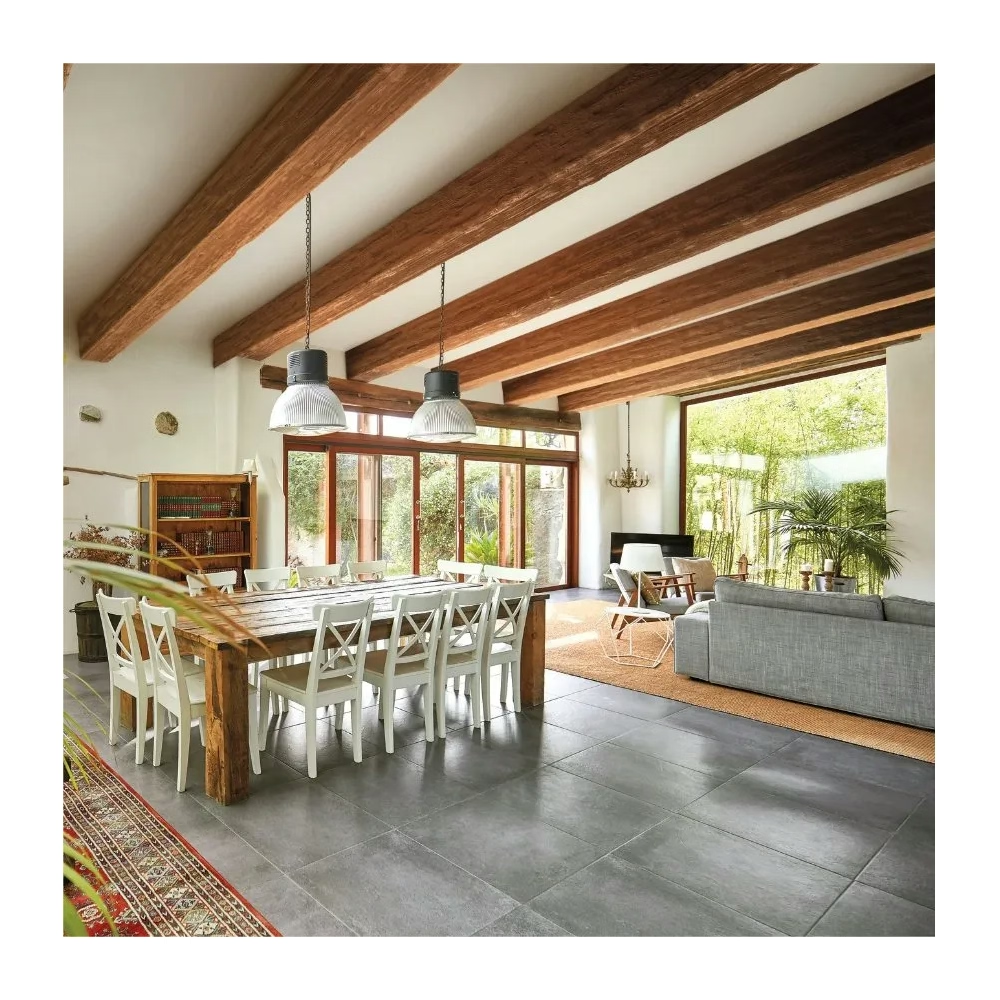
Finish application techniques
For custom finishes, the application technique affects the final appearance:
Spray application
Characteristics: Uniform color, consistent sheen, efficient production.
Best for: Standard color applications, large production runs.
Limitations: Limited ability to produce variation within a single piece.
Wipe-on application
Characteristics: More variation, depth of color, hand-applied character.
Best for: Multi-tone finishes, custom color matching, premium finishes.
Limitations: More labor-intensive, higher per-piece cost.
Hand-rubbed effects
Characteristics: Worn appearance, depth of color, distinctive character.
Best for: Rustic or aged looks, premium artisan finishes.
Limitations: Labor-intensive, requires skilled craftspeople.
Layered application
Characteristics: Multiple color layers, complex effects, depth.
Best for: High-end custom finishes, artisan looks, complex color specifications.
Limitations: Multiple production steps, higher cost, longer lead time.
Custom finish development process
For a custom finish on a polyurethane faux beam, the development process includes:
Reference evaluation
The factory's finish specialist evaluates the customer's reference:
- Physical samples when available.
- High-quality photographs when physical samples aren't available.
- Color codes or specifications.
- Design intent documentation.
The specialist identifies the elements that need to be reproduced.
Sample production
The factory produces finish samples:
- 6 to 12 inch sections of beam with the proposed finish.
- Multiple variations showing the formula's sensitivity.
- Comparison against the customer's reference.
Sample production typically takes 1 to 2 weeks.
Iteration
The customer reviews the samples and either approves, requests modifications, or rejects:
- Cycle 1: Initial match attempt.
- Cycle 2: Adjustment based on feedback.
- Cycle 3: Final refinement.
Most custom finishes require 1 to 3 iteration cycles.
Final approval
The customer approves the finish:
- Color formula documented.
- Application technique documented.
- Reference sample held for production runs.
- Durability specifications documented.
The approved finish becomes part of the order specification.
Bulk orders for new construction
For new construction projects ordering custom finish beams in bulk, the order pattern includes:
Specification development
The new construction project develops the beam specification:
- Profile and cross-section.
- Custom finish specification.
- Quantity and lengths.
- Documentation requirements.
The specification is documented for the order.
Order placement
The builder or contractor places the order:
- Per-piece quantities and lengths.
- Custom finish specification referenced.
- Delivery dates aligned to construction phases.
- Documentation requirements specified.
The factory confirms the order and production timeline.
Phased production
The factory produces beams in waves aligned to the construction schedule:
- First wave: Initial spaces for early verification.
- Subsequent waves: Aligned to construction phases.
- Final wave: Last spaces, plus replacement stock.
Each wave has consistent quality per the custom finish specification.
Quality verification
The factory verifies quality across production waves:
- Color consistency against the master reference sample.
- Sheen consistency.
- Texture consistency.
- Application consistency.
For multi-wave production, drift monitoring prevents visible variation between waves.
Installation
The beams are installed per the factory's install guide:
- Standard cleat mounting.
- Field joint finishing (for long-span beams).
- Color-matched touch-up for any field damage.
The custom finish holds up through typical installation.
Pricing for custom finish bulk orders
Pricing for custom finish bulk orders typically includes:
Custom finish development fee
- $200 to $800 per finish specification.
- Often includes 1 to 3 iteration cycles.
- Additional iterations may be charged separately.
Per-piece pricing premium
- 10 to 30 percent above stock finish pricing.
- Higher for complex multi-layer or hand-rubbed finishes.
- Lower for simple custom color or sheen.
Total premium
For a typical new construction project with custom finish beams:
- Custom finish development: $200 to $800.
- Per-piece premium: 10 to 30 percent of beam material cost.
- Total premium: $500 to $3,000 above stock finish pricing.
Lead time for custom finish orders
Lead time varies by finish complexity:
- Custom color only: 10 to 20 business days.
- Custom color and sheen: 15 to 25 business days.
- Complex multi-layer finish: 20 to 35 business days.
The lead time affects project scheduling. Builders should plan accordingly.
Common pitfalls in custom finish bulk orders
A few issues that come up often enough to flag:
- Insufficient reference materials. A vague reference produces a finish that doesn't match expectations.
- Skipping sample iteration. Rushing through sample approval produces mismatched results.
- Insufficient lead time. Custom finishes require longer lead times than stock.
- No documented reference for reorders. Subsequent reorders may not match the original finish without proper documentation.
- Cross-wave color drift. Inadequate drift monitoring produces visible variation between production waves.
How builders evaluate custom finish suppliers
For builders evaluating suppliers for custom finish work:
- Finish development capability. The supplier has skilled finish specialists.
- Sample quality. The supplier's samples demonstrate high-quality finish reproduction.
- Quality consistency. The supplier maintains consistent quality across production waves.
- Lead time reliability. The supplier meets custom finish lead time commitments.
- References. The supplier has done comparable custom finish projects.
- Pricing transparency. The supplier's pricing for custom finishes is clear.
PU faux beams with custom finish bulk orders for new construction is a category where the finish development process, the quality consistency, and the lead time all need to align. The right supplier produces custom finishes that match the design intent and hold up over time. The wrong one produces finishes that don't quite match or that vary across production waves.
Technical References
ASTM standards cited in every specification
Test Data
Lab results from internal testing program
Updated 2026
Reviewed against current product specs