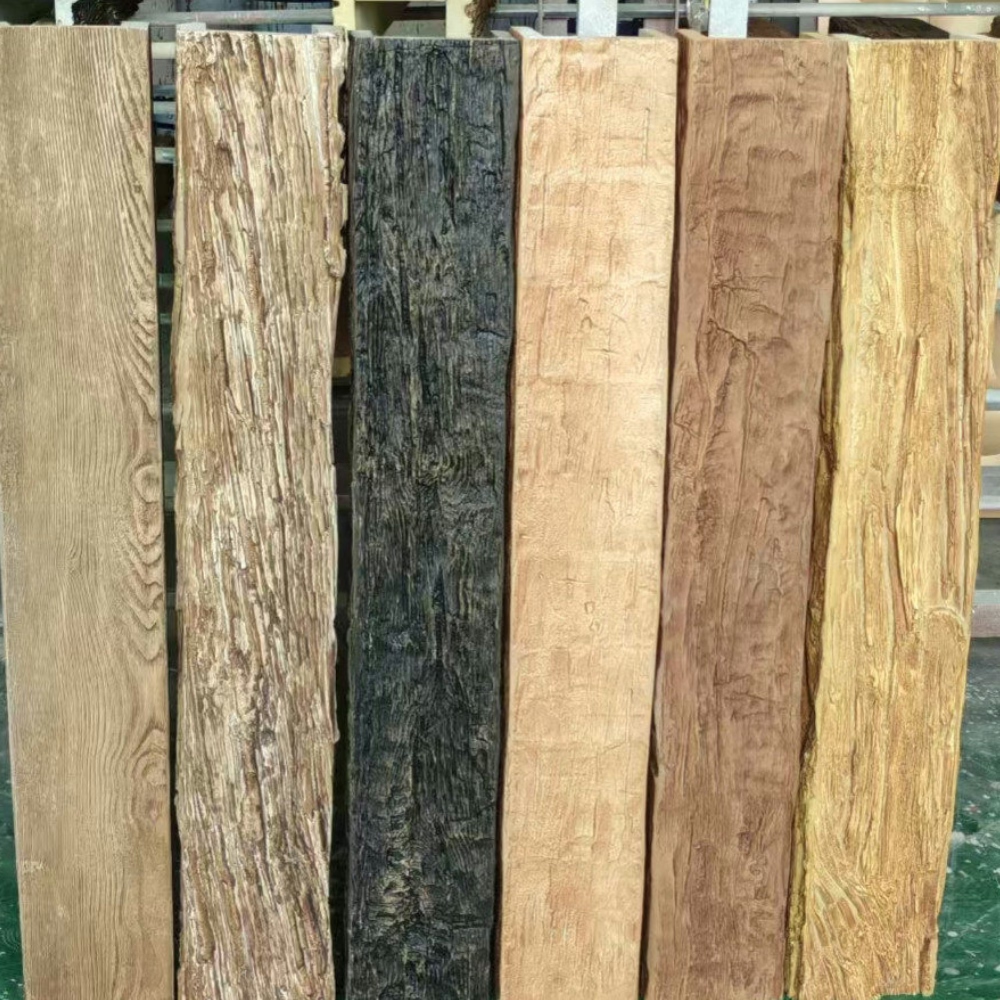
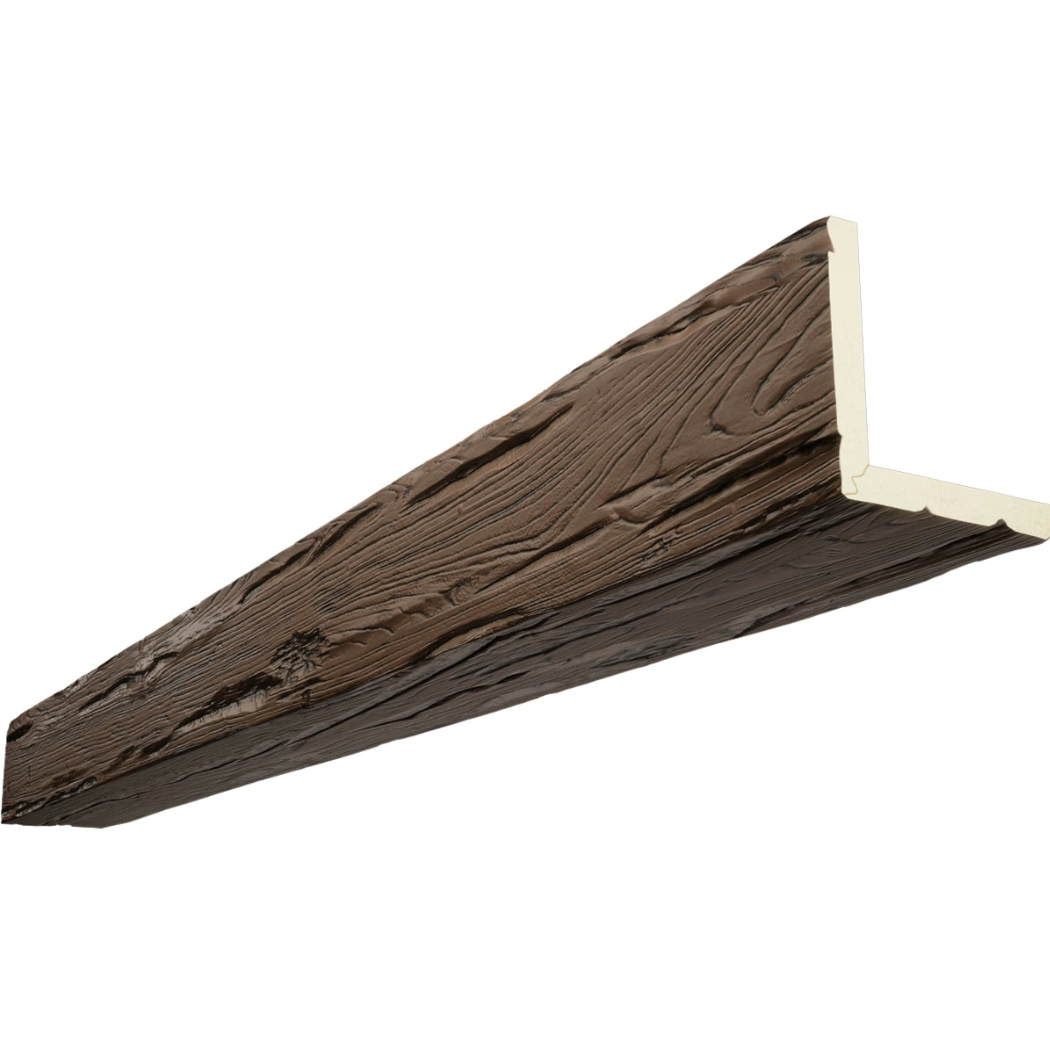
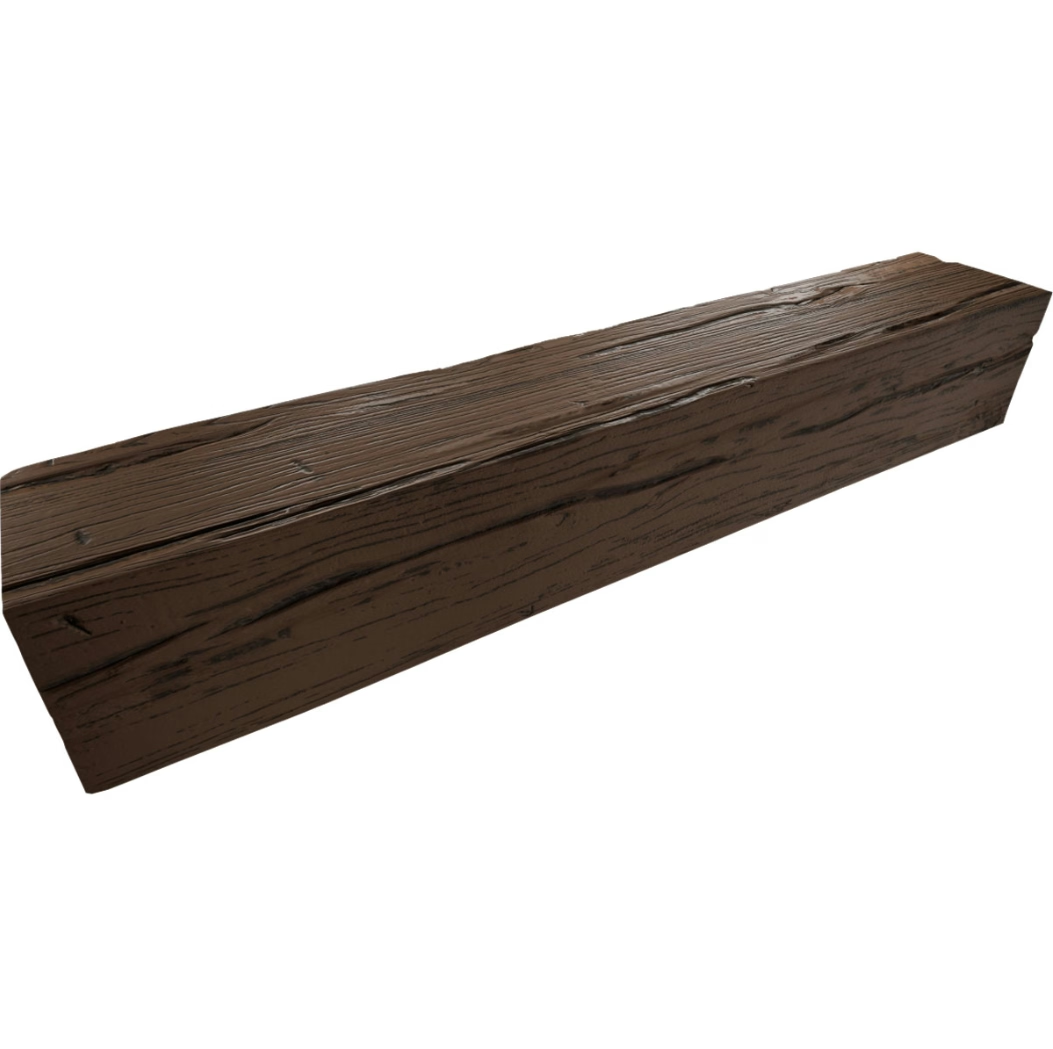
Raw Surface PU Faux Beams | Wholesale for On-site Staining by Builders
Raw surface polyurethane faux beams—factory-sealed at the cut ends but otherwise unfinished—are a category that serves builders who prefer to handle the finishing in-house. The builder's finishing crew applies the stain and sealer on-site after install, allowing exact color matching to other woodwork in the home and full control over the finishing schedule. For builders with skilled finishing crews, raw surface beams offer flexibility and cost savings.
This is how builders use raw surface polyurethane beams, what the on-site staining process looks like, and how the wholesale supply structure supports it.
Why builders choose raw surface beams
Several factors drive builders to choose raw surface beams over prefinished:
In-house finishing capability
Some builders have in-house finishing crews:
- Painters and finishers on staff or as regular subcontractors.
- Crew members trained in wood staining and sealing.
- Equipment and materials maintained for finishing work.
For these builders, on-site finishing is more cost-effective than factory finishing.
Exact color matching
For renovations and additions with existing woodwork:
- The new beams need to match the existing wood exactly.
- Factory color matching is approximate; on-site matching is exact.
- The finisher can blend the new beams with existing wood.
The exact color match is often the deciding factor for renovation projects.
Custom finishing techniques
Some designers or builders specify finishing techniques that are difficult at the factory:
- Hand-rubbed staining.
- Multi-layer glazing.
- Selective weathering or aging.
- Color washes with hand-applied variation.
These techniques are typically applied on-site by a skilled finisher.
Cost savings
Raw surface beams are typically 15 to 25 percent cheaper than prefinished beams:
- The factory doesn't apply the multi-step finish.
- The savings flow to the builder or homeowner.
- For builders doing many projects, the savings are significant.
The cost savings can be 30 to 50 percent of the finishing cost.
Lead time compression
Raw surface beams typically have 1 to 2 weeks shorter lead time than prefinished:
- The factory doesn't need to schedule finishing time.
- The beams can ship as soon as curing and cut-end sealing are complete.
For tight project timelines, the shorter lead time matters.
How raw surface beams are produced
For raw surface polyurethane faux beams, the factory production includes:
Molding and curing
Same as prefinished beams:
- Mold pouring and curing.
- Demolding.
- Cutting to length.
- Quality inspection.
Cut-end sealing
The factory seals the cut ends of the beam:
- Clear or color-neutral sealer.
- Sealer thickness per factory specification.
- Full cure before packaging.
Cut-end sealing is critical for raw surface beams, especially for outdoor or high-moisture applications.
Surface preparation
The factory applies a basic surface preparation:
- A clear sealer or primer that prepares the surface for staining.
- Sometimes a light scuff or texture to improve stain adhesion.
The surface preparation depends on the customer's specification and the recommended finishing products.
No color or finish application
Unlike prefinished beams, raw surface beams have no factory color or finish:
- The beam surface is the prepared polyurethane, ready for on-site staining.
- The factory may provide a recommended stain and sealer list.
- The factory may provide touch-up materials for field repairs.
Packaging
The packaging is more protective than for prefinished beams:
- Foam end-caps and corner protectors.
- Protective wrapping to prevent surface damage.
- Sturdy crating for long beams.
The packaging protects the unfinished surface during shipping and handling.
Documentation
The documentation is specific to raw surface beams:
- Cut-end sealing specification.
- Surface preparation specification.
- Recommended stain and sealer products.
- Application guidance for common finishing techniques.
- Touch-up kit for field repairs.
The documentation supports the builder's finishing crew.
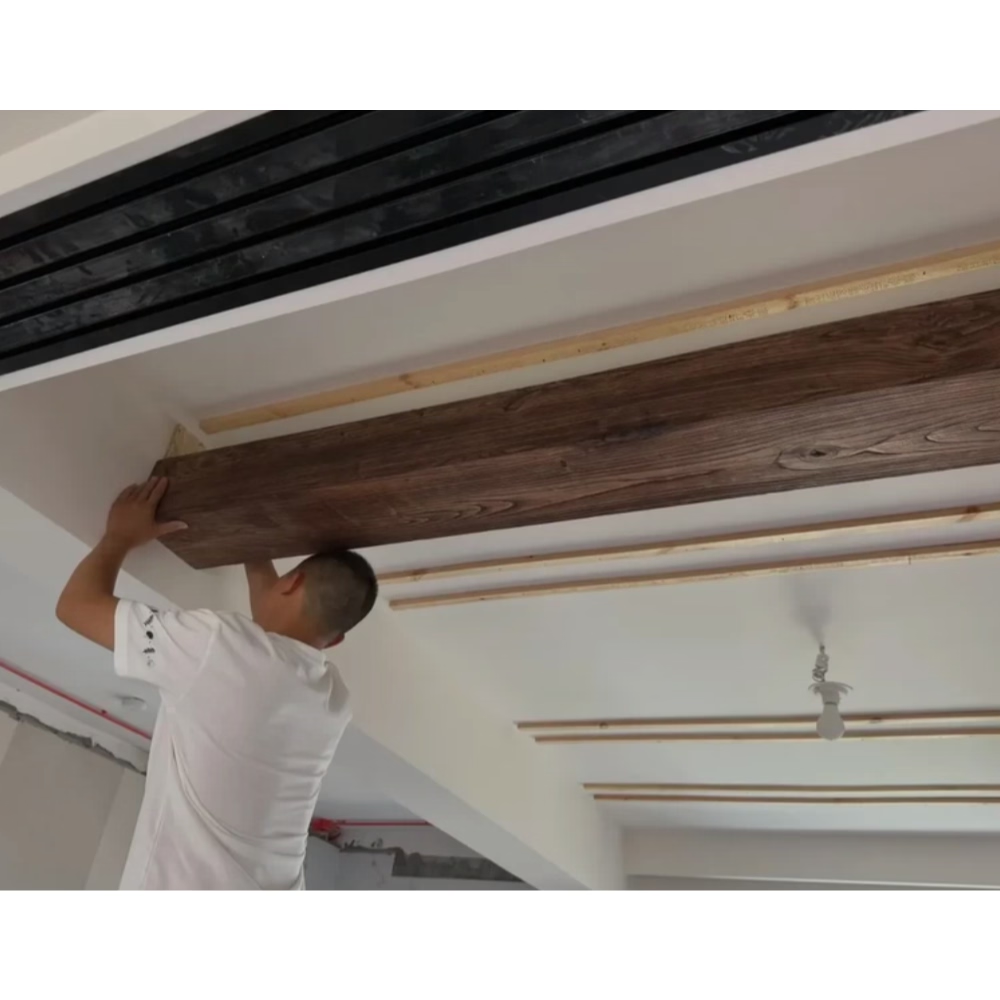
On-site staining process
For builders with in-house finishing crews, the on-site staining process typically includes:
Pre-staining preparation
- Beam inspection on arrival for damage or contamination.
- Cleaning to remove any mold release residue or surface contamination.
- Acclimation to the install environment for 24 to 48 hours.
- Surface preparation per the factory's specification.
Stain application
The finisher applies the stain:
- Stain type (oil-based, water-based, gel, etc.) per the specification.
- Application technique (wipe, brush, spray) per the desired effect.
- Number of coats per the depth of color required.
- Dry time between coats per the product specifications.
Sealer or topcoat
After the stain dries, the finisher applies the sealer:
- Sealer type (polyurethane, varnish, wax) per the specification.
- Sheen level (matte, satin, gloss) per the design intent.
- Number of coats per the durability requirements.
- Dry time between coats per the product specifications.
Curing
The finished beams need to cure before further construction activity:
- Full cure time varies by product (typically 7 to 14 days for most sealers).
- During cure, beams should be protected from dust, debris, and direct contact.
Final inspection
The finisher's QC inspector verifies:
- Color match against the specification.
- Sheen consistency.
- Coverage uniformity.
- Any defects or inconsistencies that need touch-up.
Wholesale supply for raw surface beams
For builders running raw surface beam programs, wholesale supply typically includes:
Standing specifications
The builder establishes standing specifications:
- Standard profiles in the builder's typical projects.
- Surface preparation specification.
- Recommended finishing products.
- Standard documentation.
The standing specs cover most orders.
Volume tiers
The builder negotiates volume tiers:
- Tier 1: 1,000 to 3,000 linear feet annually.
- Tier 2: 3,000 to 6,000 linear feet annually.
- Tier 3: 6,000+ linear feet annually.
Each tier carries progressively better pricing.
Pricing structure
Raw surface beam pricing typically includes:
- Lower per-piece pricing than prefinished (15 to 25 percent savings).
- Volume discounts at tier thresholds.
- Setup fees for deviations against standing specs.
- No color match or finish fees.
Replacement beam availability
For raw surface beams, replacement beams are important:
- Damaged-in-finishing beams.
- Field damage after install.
- Mid-project specification changes.
The supplier should hold replacement stock with same per-piece pricing.

Stain and sealer products for raw surface beams
Several product categories work with polyurethane faux beams:
Stain types
- Oil-based stain. Deep penetration, rich color, longer dry time.
- Water-based stain. Low VOC, fast dry, easier cleanup.
- Gel stain. Sits on the surface, good for controlling color depth.
- Dye stain. Very transparent, good for color adjustment.
Each type has characteristics that affect the final result.
Sealer types
- Oil-based polyurethane. Durable, amber tone, longer dry time.
- Water-based polyurethane. Low VOC, clear, fast dry.
- Wax. Soft sheen, easy to apply, less durable.
- Conversion varnish. Very durable, professional finish.
Each sealer type has appropriate applications.
Compatibility
Not all stains and sealers are compatible with polyurethane:
- The factory should provide a recommended products list.
- The builder's finisher should test products before applying.
- Some products may react with the polyurethane or the surface preparation.
Compatibility testing prevents finish failures.
Common pitfalls in raw surface beam programs
A few issues that come up often enough to flag:
- Insufficient cut-end sealing. Standard cut-end sealing may not be adequate for some applications.
- Inconsistent surface preparation. The factory's surface preparation varies, leading to inconsistent staining.
- Wrong stain products used. Products not compatible with polyurethane.
- Insufficient dry or cure time. Rushing the schedule produces finish failures.
- Inadequate crew training. Crew members not trained in wood finishing techniques.
How raw surface beams differ from prefinished beams
The operational differences between raw surface and prefinished beam programs:
| Aspect | Raw Surface | Prefinished |
|---|---|---|
| Per-piece cost | Lower | Higher |
| Lead time | Shorter | Longer |
| Quality control | Builder controls finishing | Factory controls finishing |
| On-site labor | Higher (finishing required) | Lower (install only) |
| Custom color | High flexibility | Limited to factory capability |
| Damage risk during install | Higher (unfinished surface) | Lower (factory finish) |
For builders with in-house finishing capability, raw surface beams are the more economical and flexible choice. For builders without that capability, prefinished beams are the practical choice.
How builders evaluate raw surface beam suppliers
For builders evaluating raw surface beam suppliers:
- Surface preparation specification. The supplier's preparation supports the builder's finishing.
- Recommended products list. The supplier provides tested stain and sealer products.
- Cut-end sealing. The supplier seals cut ends properly.
- Documentation. The supplier provides documentation specific to raw surface beams.
- Replacement beam availability. The supplier supports fast replacement.
- References. The supplier has done comparable raw surface beam work.
Raw surface polyurethane faux beams wholesale for on-site staining by builders is a category where the surface preparation, the recommended products, and the operational rhythm all need to align. The right combination produces cost-effective beams with custom finishes. The wrong combination produces finishing issues at every project.
Technical References
ASTM standards cited in every specification
Test Data
Lab results from internal testing program
Updated 2026
Reviewed against current product specs