Rustic Artisan Faux Timber Beams | Wholesale Supply for New Construction
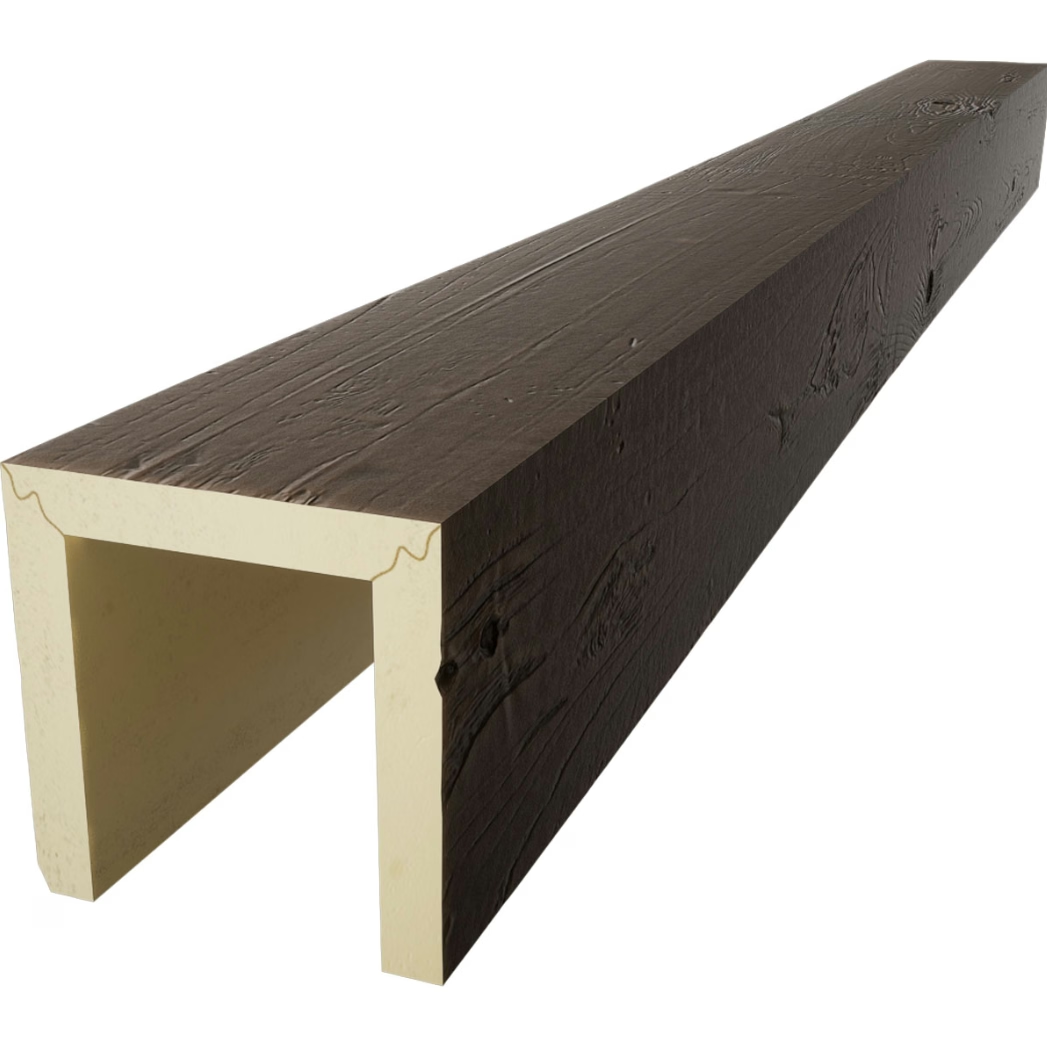
Rustic artisan faux timber beams occupy a specific position in the wholesale market. The look combines the visual character of hand-hewn, weathered, or aged timber with the practical advantages of polyurethane. Producing this look at wholesale scale for new construction requires factory capabilities that balance authenticity with efficiency. For new construction projects specifying rustic artisan beams, understanding the supply structure helps optimize procurement.
This is what rustic artisan production looks like at wholesale scale, what new construction projects need, and how the supply relationship works.
What defines rustic artisan production
Rustic artisan beams have specific characteristics that distinguish them from standard faux beams:
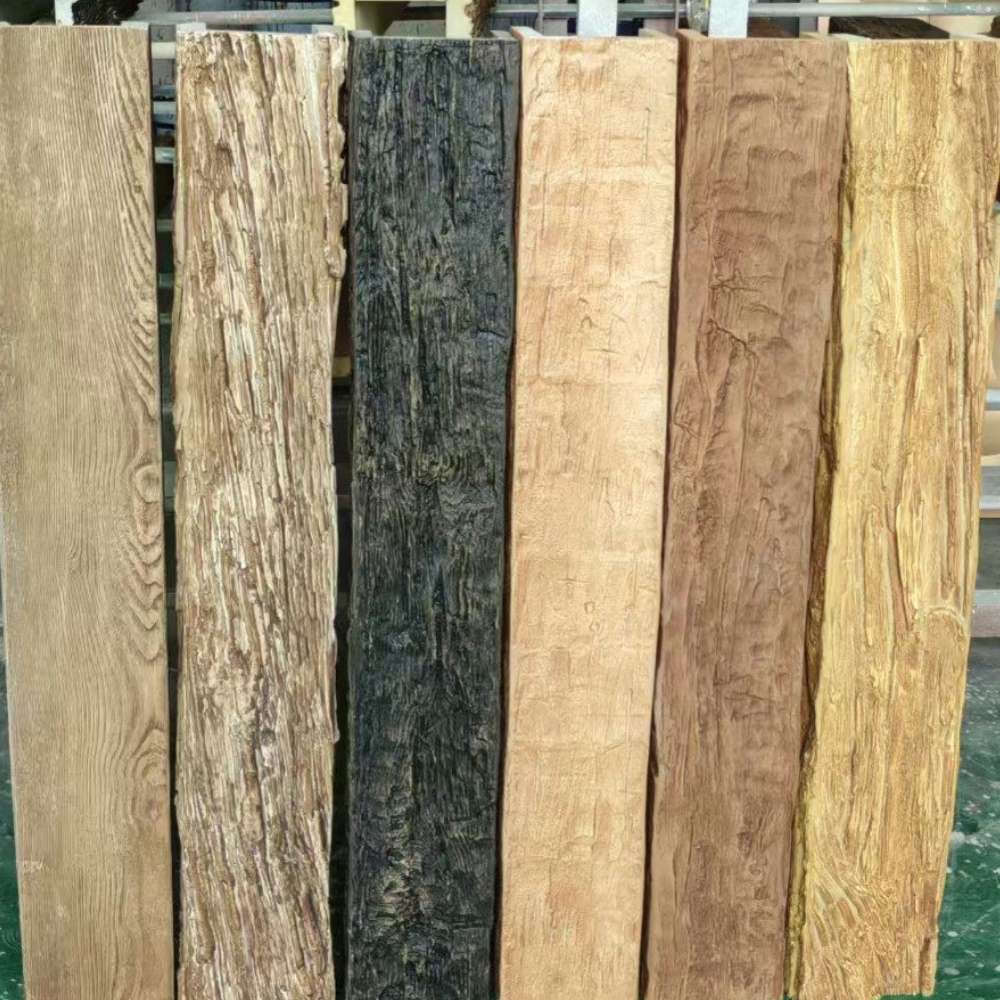
Hand-hewn texture replication
The texture of rustic artisan beams replicates hand-hewn or aged timber:
- Rough-sawn texture. Visible circular saw marks.
- Hand-hewn texture. Axe or adze marks, irregular surface.
- Weathered texture. Aged appearance with erosion patterns.
- Reclaimed texture. Multiple layers of wear, paint traces, or aging.
The texture is what gives the beam its rustic character.
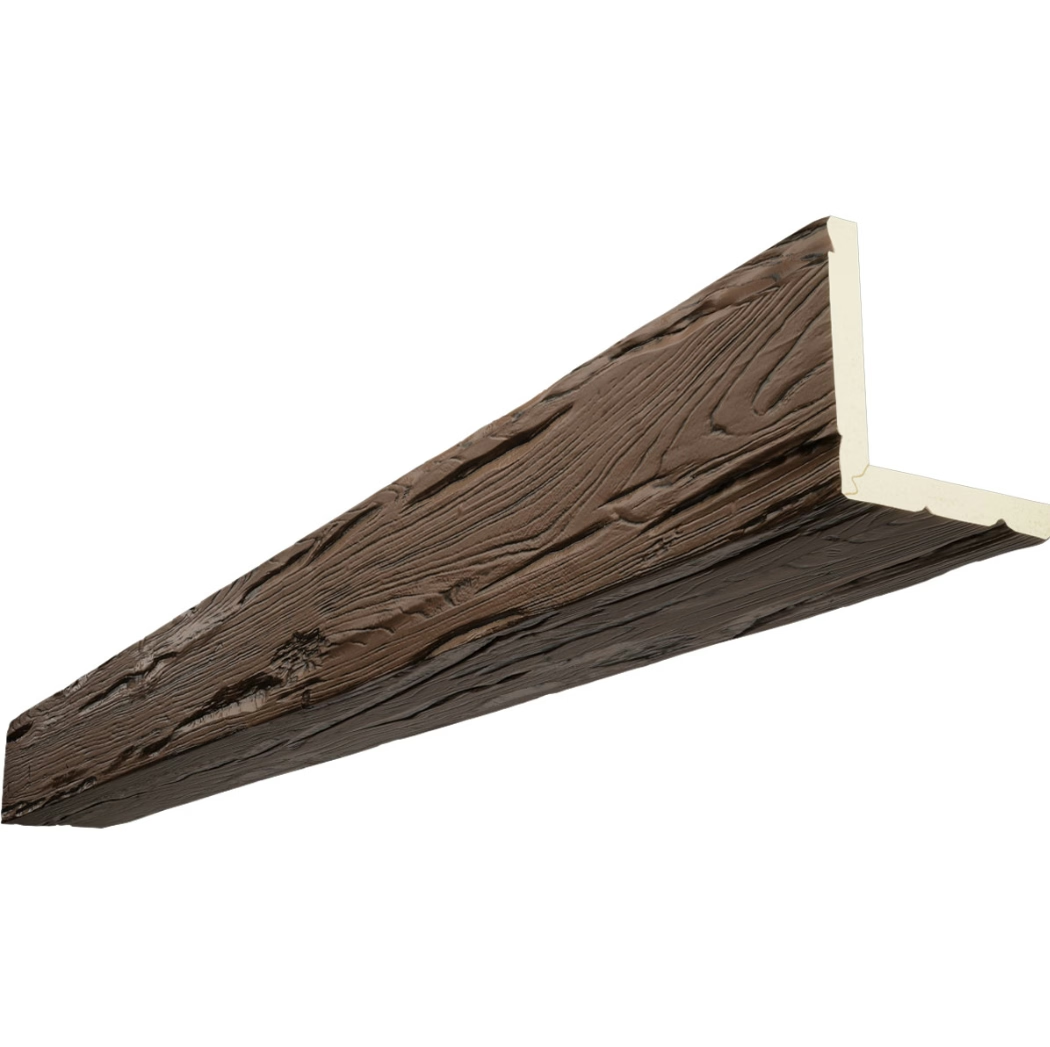
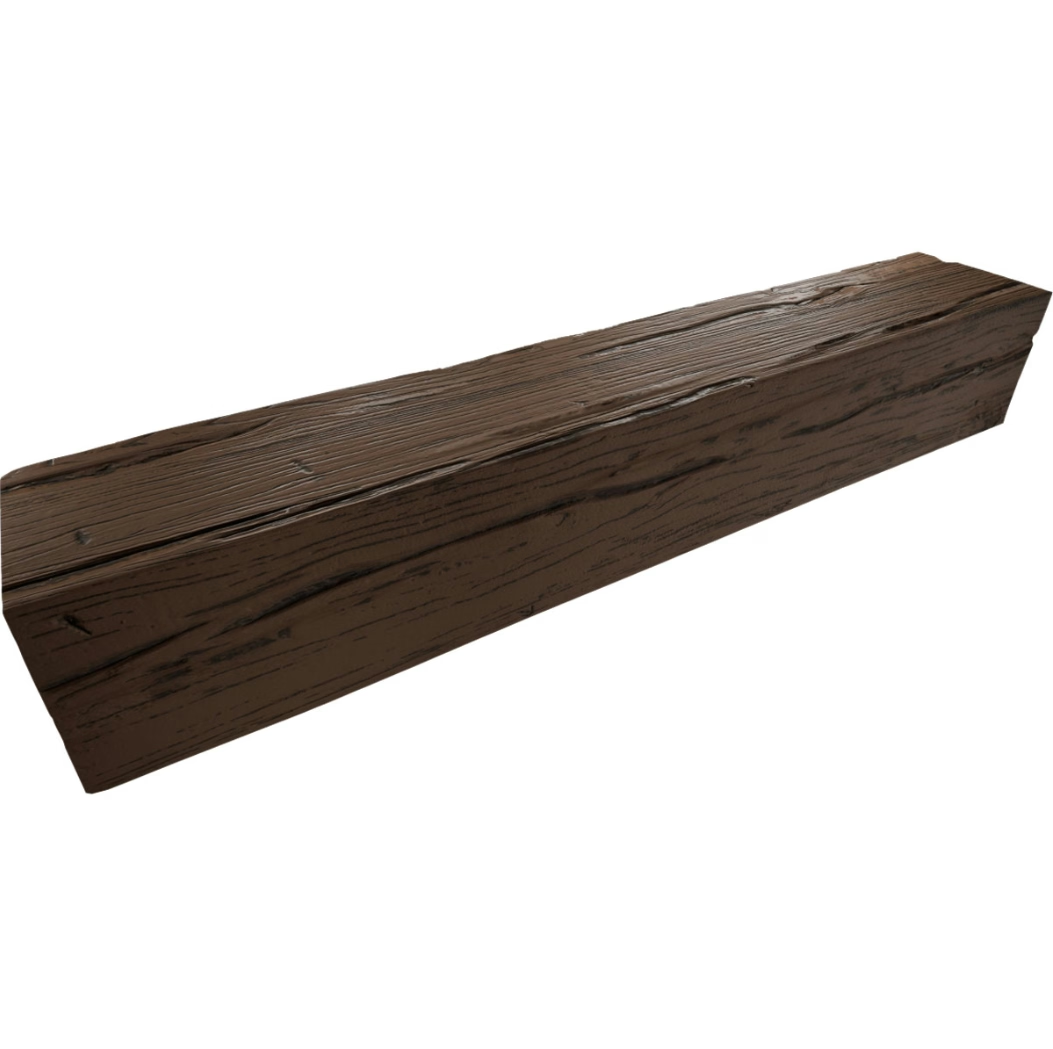
Multi-tone factory finishes
Rustic artisan beams feature complex, layered color:
- Base color providing the dominant tone.
- Secondary tones for depth and variation.
- Highlight and shadow tones for dimension.
- Optional weathering or aging effects.
- Sheen appropriate to the rustic aesthetic (typically matte or satin).
The multi-tone finish creates the visual complexity that single-tone finishes can't achieve.
Higher-density polyurethane
Rustic artisan beams typically use higher-density polyurethane:
- 200 to 320 kg/m³ for best edge detail.
- Better surface for hand-detailing.
- More durable for long-term service.
Higher density supports the artisan quality.
Hand-detailing for authenticity
Skilled craftspeople add hand-detailing to each beam:
- Hand-applied color variations.
- Selective staining for grain emphasis.
- Texture variations across the surface.
- Quality inspection at each step.
The hand-detailing is what creates the artisan authenticity.
How factories produce rustic artisan at wholesale scale
For wholesale scale production of rustic artisan beams, factories use several approaches:
Specialized production lines
Some factories maintain specialized rustic artisan production lines:
- Skilled craftspeople dedicated to artisan work.
- Smaller batch sizes than standard production.
- More labor-intensive processes.
- Higher quality standards.
The specialized lines produce the artisan quality but at lower volume than standard lines.
Tiered artisan offerings
Many factories offer tiered rustic artisan programs:
- Standard rustic. Stock rustic profiles with stock rustic finishes. Volume pricing.
- Premium rustic. Stock or modified profiles with custom finishes. Higher pricing.
- Bespoke rustic. Custom profiles and finishes per project. Premium pricing.
The tiers allow new construction projects to choose the appropriate level.
Sample library maintenance
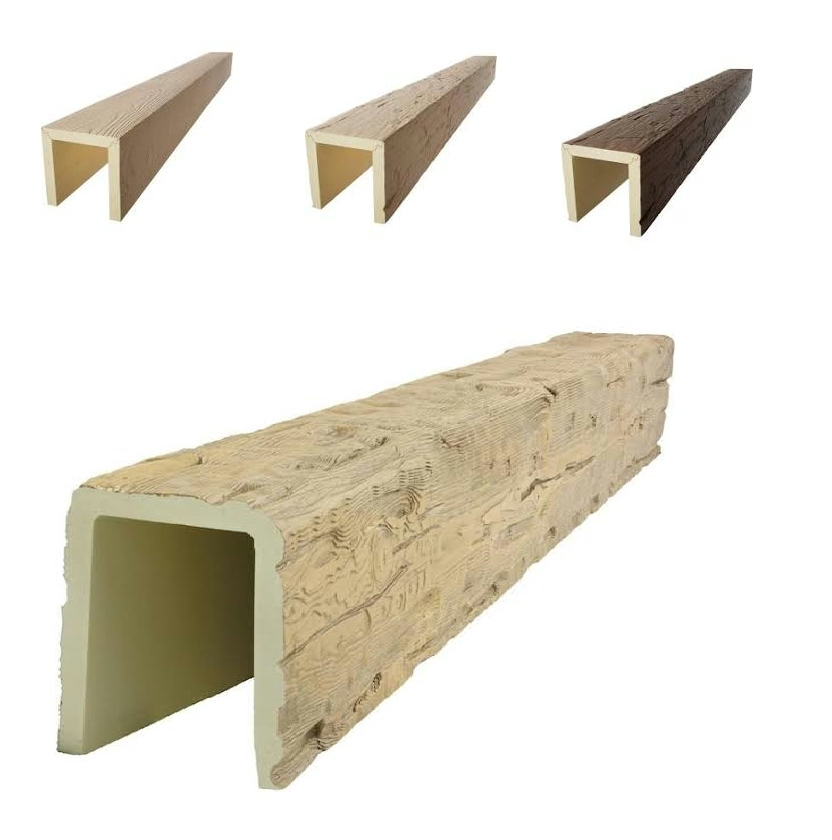
For wholesale supply to new construction, factories maintain sample libraries:
- Profile samples showing texture variations.
- Color and finish samples with multi-tone examples.
- Reference projects for client presentations.
- Sample refresh programs.
The sample library supports new construction sales presentations.
What new construction projects need
For new construction projects specifying rustic artisan beams, several needs matter:
Quality at scale
New construction projects need consistent quality across many beams:
- Master reference samples held per project.
- Hand-detailing consistency across production runs.
- Multi-tone finish consistency across batches.
- Quality inspection at each stage.
Quality consistency is what maintains the project's appearance across all beams.
Volume capability
New construction projects often involve substantial volume:
- 100 to 1,000+ linear feet per project.
- Production across multiple waves.
- Replacement stock held at the factory.
Volume capability supports the project's beam schedule.
Construction timeline alignment
New construction timelines require phased production:
- Lead times of 4 to 6 weeks per wave.
- Delivery aligned to construction phases.
- Coordination with the project's construction manager.
Timeline alignment keeps the construction schedule on track.
Design coordination
New construction rustic artisan projects involve designers:
- The designer specifies the beam profile, color, and finish.
- The factory coordinates with the designer on samples.
- The designer approves production reference samples.
Design coordination ensures the design intent is achieved.
How wholesale supply works for new construction rustic artisan
For new construction projects, wholesale supply typically includes:
Standing specifications
For new construction builders running multiple projects:
- Standard rustic profiles in the builder's portfolio.
- Standard color and finish specifications.
- Standard documentation packages.
Standing specs cover most orders.
Volume tiers
The new construction builder negotiates volume tiers:
- Tier 1: 500 to 1,500 linear feet annually.
- Tier 2: 1,500 to 3,000 linear feet annually.
- Tier 3: 3,000+ linear feet annually.
Volume tiers reflect the builder's annual beam spend.
Pricing structure
Pricing for rustic artisan wholesale supply typically includes:
- Per-piece pricing by length with volume discounts.
- Premium for artisan hand-detailing (30 to 60 percent above standard).
- Premium for higher-density polyurethane (15 to 30 percent above standard).
- Custom color and finish development fees.
- Documentation package pricing.
For a typical new construction project with rustic artisan beams, per-piece pricing is 50 to 100 percent above standard faux beam pricing.
Lead times
Lead times for rustic artisan orders:
- Stock profile, stock color, standard artisan finish: 4 to 6 weeks.
- Modified profile, custom color, premium artisan finish: 6 to 10 weeks.
- Custom profile development, fully custom: 12 to 20 weeks.
Lead times are longer than standard faux beams due to the artisan process.
Replacement stock
The factory holds replacement stock for the project:
- 5 to 10 percent of order quantity.
- Coverage period of 24 to 36 months.
- Same artisan quality and color match.
Replacement stock protects the project against damage.
Common pitfalls in rustic artisan wholesale supply
A few issues that come up often enough to flag:
- Inconsistent hand-detailing across production. Variation between beams reduces artisan quality.
- Color drift across production waves. Visible variation between construction phases.
- Insufficient design coordination. Supplier doesn't communicate with the design team.
- Lead time not planned for. Artisan projects require longer timelines than standard beams.
- Replacement stock unavailable. Damaged beams without fast replacement delay the project.
How new construction projects evaluate wholesale suppliers
For new construction projects evaluating wholesale suppliers for rustic artisan beams:
- Artisan capability. The supplier has skilled craftspeople for hand-detailing.
- Volume capability. The supplier handles project volumes.
- Quality consistency. The supplier maintains artisan quality across production runs.
- Lead time reliability. The supplier meets artisan lead time commitments.
- References. The supplier has done comparable rustic artisan work.
Rustic artisan faux timber beams wholesale supply for new construction is a category where the artisan capability, the volume capacity, and the quality consistency all need to align. The right supplier produces rustic artisan beams that justify the premium pricing at project scale. The wrong one produces beams that look like they're trying to be artisan without achieving the look.
Technical References
ASTM standards cited in every specification
Test Data
Lab results from internal testing program
Updated 2026
Reviewed against current product specs