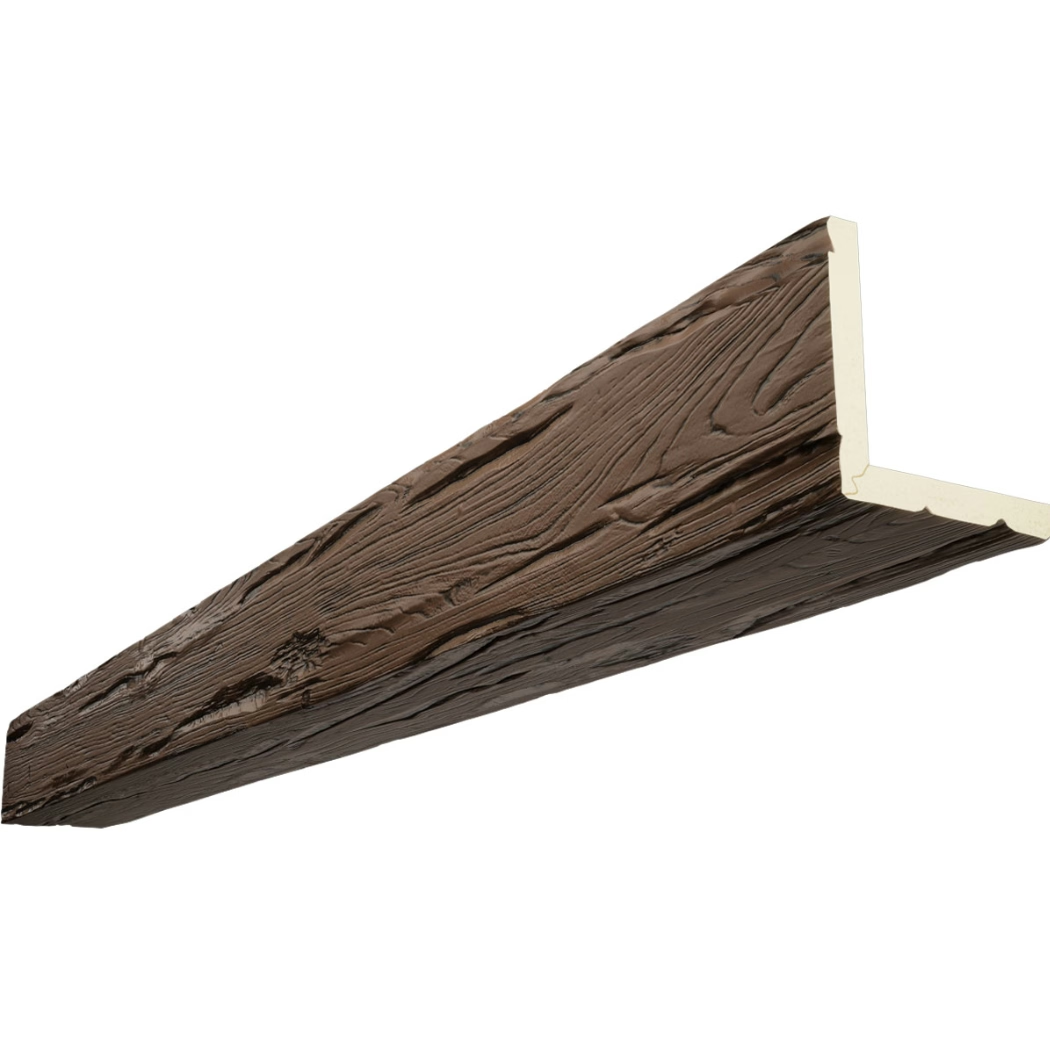
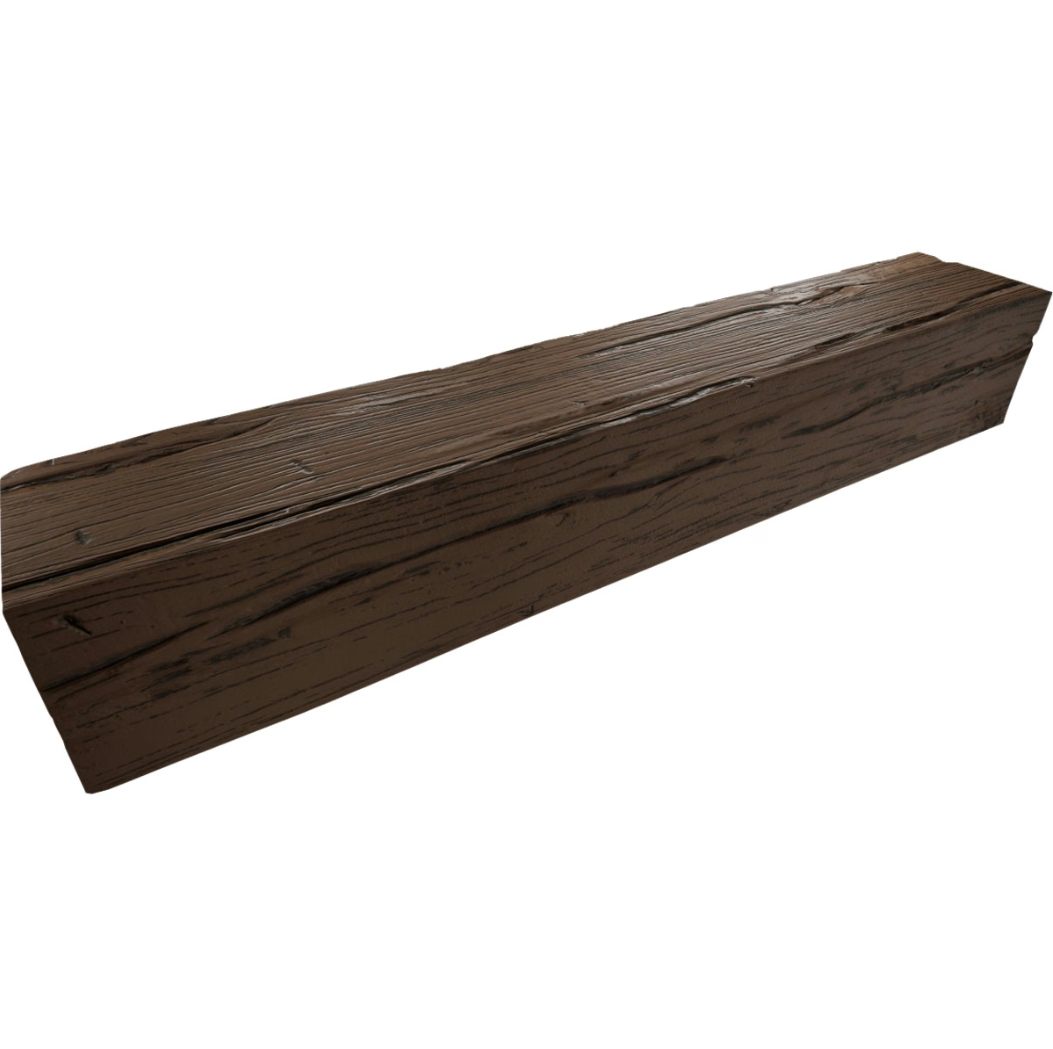
Sourcing Long Span Faux Wood Beams for Large Living Room Projects
Long span faux wood beams for large living room projects involve specific engineering, field joint planning, sight line coordination, and sourcing logistics. Understanding these specifics helps project teams specify and source long span beams correctly for large living room installations.
What defines long span in residential applications
For residential applications, long span beams are typically:
- 16 feet or longer for typical spans.
- 20 feet or longer for premium spans.
- 24 feet or longer for luxury spans requiring field joints.
The specific definition varies by project context.
Engineering considerations for long spans
Long span beams have specific engineering considerations:
Deflection
Polyurethane beams deflect under their own weight:
- 8 inches by 10 inches at 16 feet: Less than 1/4 inch deflection at midspan.
- 8 inches by 10 inches at 20 feet: Less than 3/8 inch deflection.
- 10 inches by 12 inches at 24 feet: Less than 1/2 inch deflection.
For most residential applications, these deflections are acceptable.
Cleat spacing
Cleat spacing for long spans:
- 15 to 18 feet: Endpoint cleats, possibly one midspan.
- 18 to 22 feet: Endpoint cleats plus one or two intermediate.
- 22 to 24 feet: Endpoint cleats plus two intermediate.
- 24+ feet: Field joint required, plus cleats per section.
Cleat spacing affects structural integrity and appearance.
Midspan support
Where midspan support is available:
- Structural beam in ceiling cavity.
- Decorative truss or structural element.
- Dropped soffit or beam pocket.
Midspan support simplifies engineering and reduces deflection.
Field joint planning for long spans
For spans beyond 24 feet, field joints are required:
Joint types
Common joint types:
- Scarf joint. 45-degree angle meeting, hidden from below after finishing.
- Hinged joint. Factory-produced hinged sections that fold out for install.
- Butt joint with cleat. Two pieces meet square, with cleat behind the joint.
The joint type affects appearance and installation complexity.
Joint location
Joint location planning:
- Ideally at a point where visual impact is minimized.
- Above a wall or transition point.
- Not at the most visible point of the beam.
- Coordinated with room features.
Joint location affects final appearance.
Joint finishing
Field joints require finishing:
- Factory-supplied filler at the joint.
- Curing per factory specifications.
- Color-matched touch-up with factory materials.
- Quality inspection of joint appearance.
Joint finishing produces invisible joints from below.
Sight line coordination for large living rooms
Long span beams in large living rooms need sight line coordination:
TV and entertainment center sight lines
For living rooms with entertainment centers:
- Beams should not block the screen from primary seating.
- Beam layout should frame or complement the entertainment area.
- Coordination with AV equipment placement.
Sight line coordination affects beam layout.
Window sight lines
For living rooms with substantial windows:
- Beams should not block primary window views.
- Beams can frame windows or terminate at window headers.
- Coordination with natural light distribution.
Window coordination affects beam layout.
Traffic flow
For living rooms with multiple traffic paths:
- Beams should not interrupt natural traffic flow.
- Beam layout allows free movement through the room.
- Coordination with furniture placement.
Traffic flow affects beam layout.
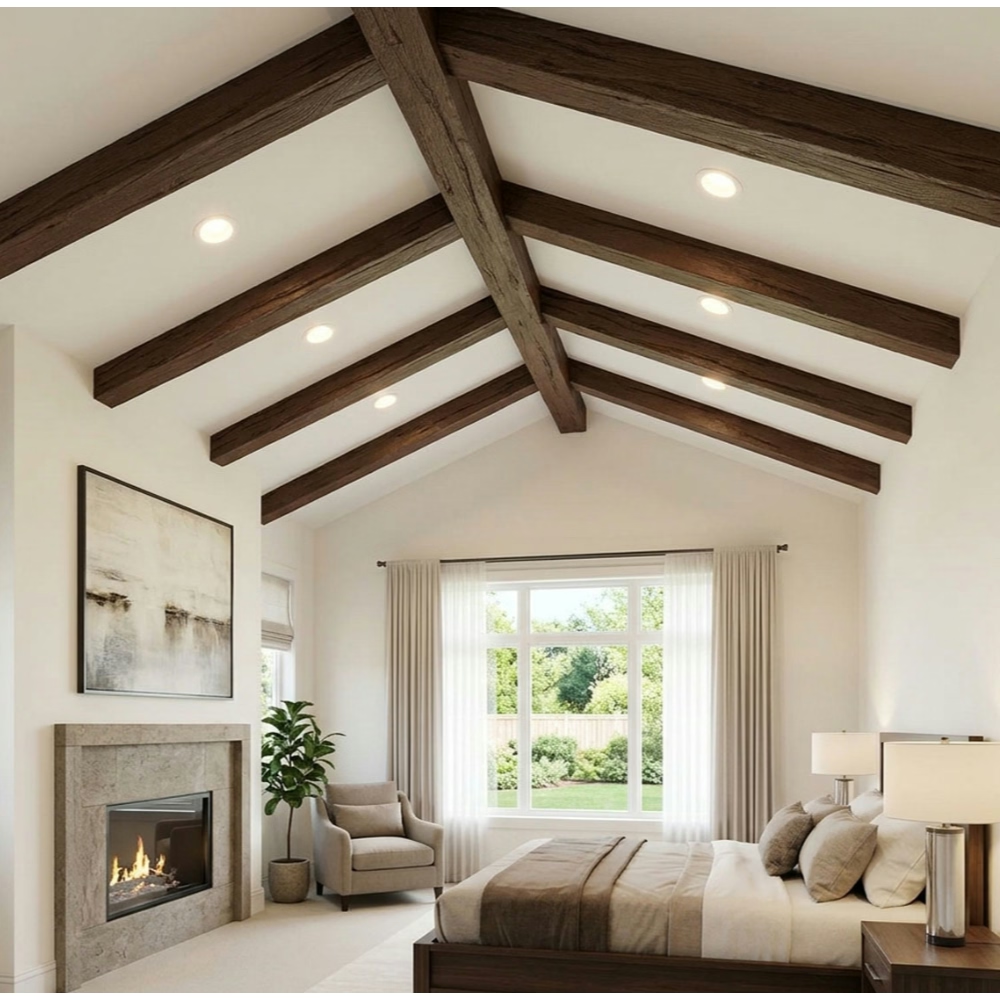
Focal points
For living rooms with focal points:
- Beams should complement, not compete with, focal points.
- Coordination with fireplaces, views, or architectural features.
- Beam orientation relative to focal points.
Focal point coordination affects beam layout.
Sourcing logistics for long span beams
For long span beam procurement, sourcing logistics include:
Freight considerations
Long span beams have specific freight considerations:
- Length affects shipping method.
- Some lengths require specialized crating.
- Multiple pieces for field joint shipments.
- Coordination with receiving capacity.
Freight considerations affect procurement planning.
Manufacturing lead time
Long span beam lead times:
- Standard mold (up to 16 feet): 5 to 15 business days.
- Extended mold (16 to 24 feet): 10 to 20 business days.
- Field joint (24+ feet): 15 to 25 business days.
Lead times vary by length specification.
Custom engineering
For specific projects, custom engineering may apply:
- Cleat specifications per substrate.
- Seismic documentation where required.
- Engineered drawings for complex installations.
- Coordination with structural engineer.
Custom engineering supports specific project requirements.
Coordination with other trades
Long span beam installation coordinates with:
- Structural (for support and blocking).
- HVAC (for ductwork and ceiling elements).
- Electrical (for lighting and fixtures).
- Other finish trades.
Multi-trade coordination supports successful installation.
Specification development for long span beams
For long span beam specification, several elements need definition:
Beam dimensions
Specific dimensions per location:
- Length per location.
- Cross-section per application.
- Profile per design intent.
Field joint specification
For beams requiring field joints:
- Joint type (scarf, hinged, butt with cleat).
- Joint location per beam.
- Joint finishing specification.
Cleat specification
Cleat specification per location:
- Cleat type per substrate.
- Spacing per engineering.
- Load rating per application.
- Finish coordination with beam.
Documentation requirements
Documentation per project:
- Engineering data.
- Installation guide.
- Field joint assembly guide.
- Care and maintenance guide.
Pricing for long span beams
Pricing for long span beams reflects the additional complexity:
Per-piece pricing
Longer beams have higher per-piece pricing:
- 16 to 20 feet: 20 to 40 percent above 8 to 12 feet pricing.
- 20 to 24 feet: 40 to 60 percent above 8 to 12 feet pricing.
- 24+ feet (field joint): Two beams at higher length tier plus joint work.
Field joint pricing
Field joints add to beam pricing:
- Factory-prepared joint: Included in beam pricing.
- Field assembly labor: Added to installation cost.
- Joint finishing materials: Included in beam pricing.
Freight pricing
Long beams have higher freight costs:
- Domestic freight per linear foot.
- Specialized crating for very long beams.
- Higher per-piece freight for long beams.
Engineering pricing
For projects requiring custom engineering:
- Engineered drawings: $500 to $2,000 per project.
- Seismic documentation: $500 to $2,000 per project.
Common pitfalls in long span beam sourcing
A few issues that come up often enough to flag:
- Underestimating engineering requirements. Long spans need proper engineering.
- Insufficient field joint planning. Field joint location and type affect appearance.
- Ignoring sight line coordination. Beams blocking views create buyer dissatisfaction.
- Inadequate freight planning. Long beams require specialized shipping.
- Missing midspan support consideration. Beams without midspan support may deflect excessively.
How project teams evaluate long span beam suppliers
For project teams evaluating long span beam suppliers:
- Engineering capability. The supplier has engineering capability for long spans.
- Field joint capability. The supplier produces quality field joints.
- Extended mold production. The supplier has extended mold capability.
- Freight capability. The supplier can ship long beams safely.
- References. The supplier has done comparable long span projects.
Sourcing long span faux wood beams for large living room projects is a category where the engineering, the field joint planning, and the sight line coordination all need to align. The right combination produces beams that span large living rooms while maintaining appearance and structural integrity. The wrong combination produces beams with visibility issues, joint problems, or excessive deflection.
Technical References
ASTM standards cited in every specification
Test Data
Lab results from internal testing program
Updated 2026
Reviewed against current product specs