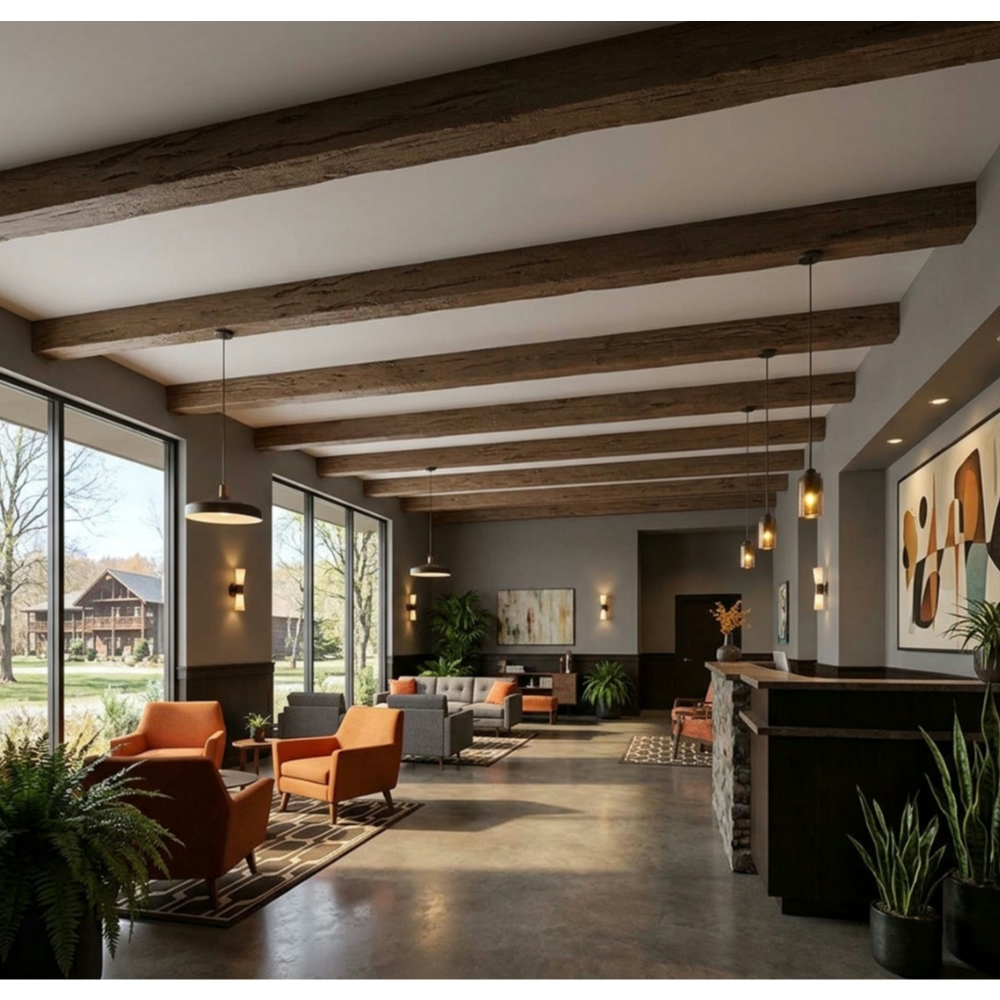
Spanish Style Faux Beams | Wholesale Sourcing Guide for Luxury Home Builds
Sourcing Spanish style faux beams at wholesale for luxury home builds requires specific evaluation criteria, profile selection knowledge, coordinating element understanding, and supply structure awareness. This guide walks through the wholesale sourcing process for luxury home Spanish beam procurement.
Step 1: Define the luxury Spanish beam requirements
Before sourcing, define the beam requirements for the luxury home.
Architectural style specification
Determine the specific Spanish style:
- Spanish colonial.
- Spanish revival.
- Mediterranean.
- Hacienda.
- Mission.
- Modern Spanish.
The specific style affects profile and finish selection.
Project scope
Determine the project scope:
- Single luxury home or multi-home development.
- Beam volume per home.
- Coordinating elements (corbels, caps, latillas, column wraps).
- Indoor-outdoor continuity requirements.
The scope affects supplier selection and pricing.
Quality tier
Determine the quality tier:
- Standard Spanish faux (basic Spanish appearance).
- Premium Spanish faux (enhanced hand-detailing, multi-tone finishes).
- Bespoke Spanish faux (custom profiles, fully custom finishes).
The quality tier affects supplier selection and pricing.
Documentation requirements
Determine documentation needs:
- Standard documentation.
- Code compliance documentation (for attached structures or specific jurisdictions).
- Designer or architect specifications.
- Premium documentation packages.
Documentation requirements affect supplier selection.
Step 2: Evaluate wholesale suppliers
With requirements defined, evaluate wholesale suppliers.
Production capability
Evaluate production capability:
- Production capacity for the project's volume.
- Premium tier production capability.
- Custom profile development capability.
- Coordinating element production capability.
- Indoor-outdoor specification capability.
Production capability is the foundation of supplier evaluation.
Spanish style experience
Evaluate Spanish style experience:
- Spanish style projects completed.
- Spanish profile library diversity.
- Spanish finish library diversity.
- References from comparable Spanish projects.
Spanish style experience is critical for quality results.
Designer collaboration
Evaluate designer collaboration capability:
- Designer communication responsiveness.
- Sample production for designer approval.
- Iteration cycle support.
- Designer reference network.
Designer collaboration supports design intent.
Quality consistency
Evaluate quality consistency:
- Master reference samples held per project.
- Color drift monitoring across production.
- Texture consistency across production.
- Long-term quality standards.
Quality consistency maintains luxury reputation.
Lead time reliability
Evaluate lead time reliability:
- Lead time commitments.
- On-time delivery history.
- Production capacity for the project's timeline.
- Communication about production status.
Lead time reliability supports project schedules.
References
Verify references:
- Comparable luxury Spanish projects.
- Recent references (within 12 to 24 months).
- References that can be contacted.
- References that can be visited.
References confirm the supplier's actual performance.
Step 3: Select profiles and coordinating elements
With the supplier selected, select profiles and coordinating elements.
Viga profiles
Select viga profiles:
- Cross-section dimensions per ceiling height.
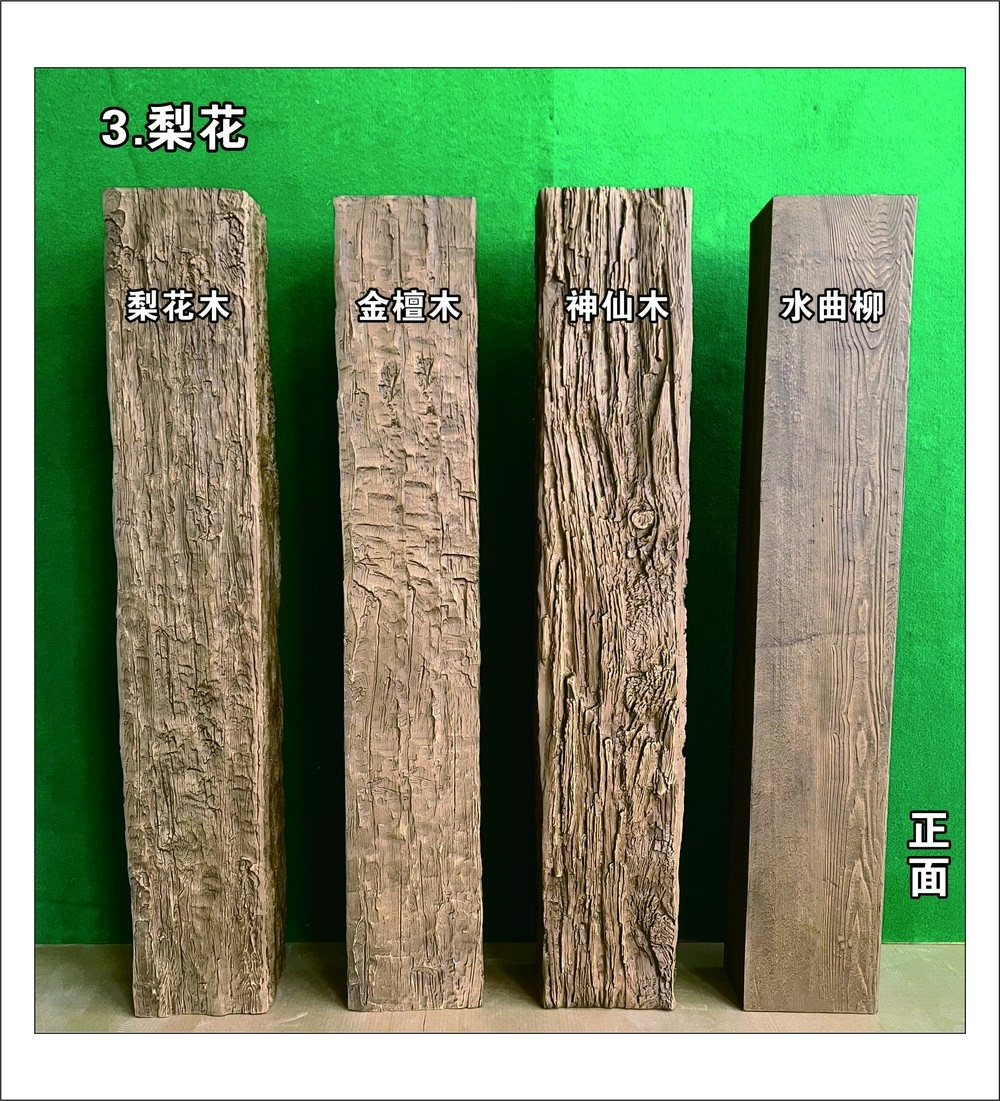
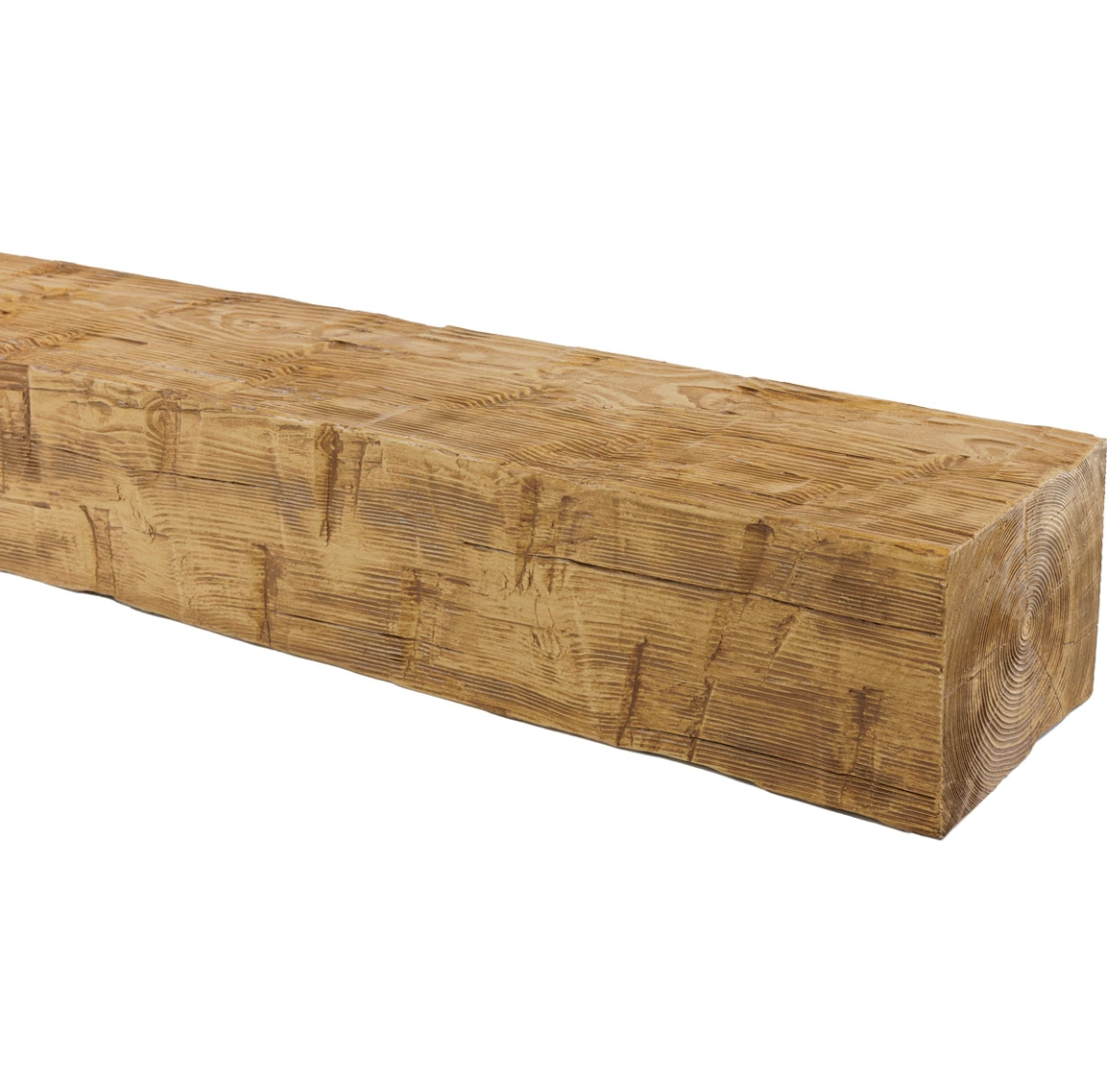
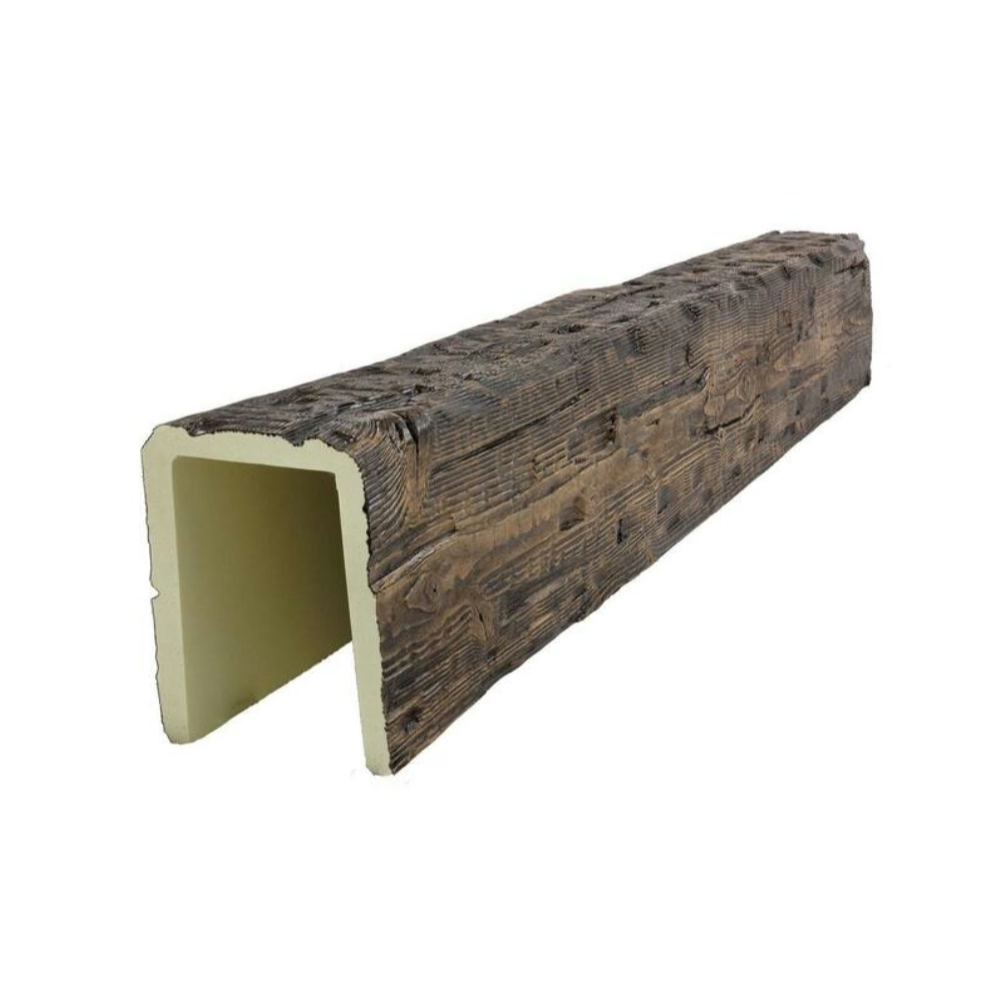
- Texture per the Spanish style (rough-sawn, hand-hewn, weathered).
- Standard profiles for most projects.
- Custom profiles for distinctive elements.
Viga profile selection establishes the primary beam appearance.
Latilla profiles
Select latilla profiles:
- Diameter per the design.
- Texture per the viga texture.
- Spacing per the design intent.
- Standard profiles for most projects.
Latilla profile selection fills between vigas.
Coordinating elements
Select coordinating elements:
- Corbels supporting vigas.
- Beam caps on exposed ends.
- Column wraps on support columns.
- Optional elements (canes, zarzos, decorative brackets).
Coordinating elements complete the Spanish vocabulary.
Indoor-outdoor coordination
For projects with indoor-outdoor continuity:
- Same profiles across environments.
- Different performance specifications per environment.
- Coordinated color and finish across environments.
Indoor-outdoor coordination maintains visual continuity.
Step 4: Specify color and finish
With profiles selected, specify color and finish.
Color palette
Specify the color palette:
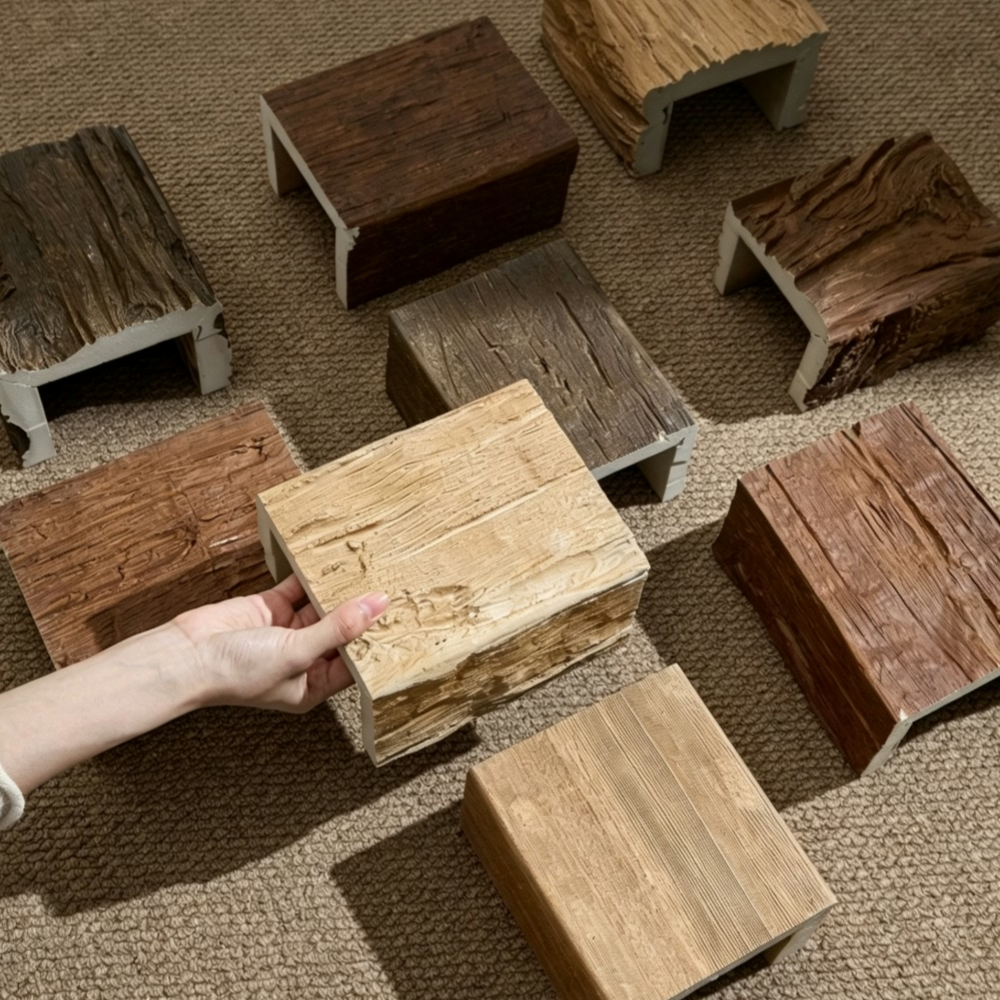
- Warm honey tones for traditional Spanish.
- Weathered tones for hacienda and rustic Spanish.
- Dark walnut tones for formal Spanish.
- Whitewash tones for modern Spanish.
Color palette establishes the visual mood.
Sheen specification
Specify the sheen:
- Matte for rustic and aged looks.
- Satin for traditional Spanish.
- Semi-gloss for formal Spanish.
- Specialty sheen for specific effects.
Sheen affects the visual character.
Multi-tone specification
For premium tier, specify multi-tone:
- Base color.
- Secondary tones for depth.
- Highlight and shadow accents.
- Weathering or aging effects.
Multi-tone creates visual complexity.
Hand-detailing
For premium tier, specify hand-detailing:
- Selective staining for grain emphasis.
- Worn edge effects.
- Weathering in specific areas.
- Character marks.
Hand-detailing produces the artisan character.
Step 5: Sample development and approval
With specifications developed, develop and approve samples.
Reference provision
Provide references for sample development:
- Physical wood samples (when available).
- Photographs of desired appearance.
- Reference images for the project.
- Color codes or specifications.
Clear references support accurate sample development.
Sample production
The supplier produces samples:
- Profile, color, and finish samples.
- Multiple iterations as needed.
- Designer and homeowner review.
Sample production takes 1 to 3 weeks per iteration.
Sample approval
Approve samples:
- Review against design intent.
- Coordinate with designer and homeowner.
- Document the approved specification.
- Authorize production.
Sample approval produces the production reference.
Step 6: Order placement and production
With samples approved, place the order and coordinate production.
Order structure
Structure the order:
- Per-location quantities and lengths.
- Coordinating element quantities.
- Indoor and outdoor specifications.
- Delivery dates aligned to construction phases.
- Documentation requirements.
The order structure should align with the project's needs.
Production scheduling
Coordinate production scheduling:
- Production waves aligned to construction phases.
- Quality consistency across waves.
- Replacement stock held per wave.
- Communication about production status.
Production scheduling supports the project's timeline.
Delivery coordination
Coordinate delivery:
- Delivery dates per construction phase.
- Delivery locations and access.
- On-site storage arrangements.
- Coordination with the construction manager.
Delivery coordination supports smooth project flow.
Step 7: Installation and follow-up
With delivery complete, manage installation and follow-up.
Installation planning
Plan the installation:
- Crew composition and scheduling.
- Tools and equipment.
- Coordination with other trades.
- Quality control procedures.
Installation planning supports quality installation.
Installation execution
Execute the installation:
- Standard cleat mounting per specifications.
- Beam positioning and securing.
- Field joint finishing for long spans.
- Touch-up for any field damage.
Installation execution produces the installed beams.
Replacement stock and follow-up
Maintain follow-up:
- Replacement beams held at the supplier.
- Coverage period (24 to 36 months).
- Care and maintenance guidance provided.
- Warranty documentation.
Follow-up protects the luxury home's beam investment.
Common pitfalls in Spanish luxury beam sourcing
A few issues that come up often enough to flag:
- Insufficient designer engagement. Suppliers who don't communicate with designers miss design intent.
- Coordinating elements mismatched. Elements that don't match primary beams.
- Custom profile costs underestimated. Mold fees add significant cost.
- Insufficient indoor-outdoor coordination. Beams that don't match across environments.
- Lead time not planned for. Luxury Spanish projects require longer timelines.
Quick reference for Spanish luxury beam sourcing
- Standard luxury project: 500 to 1,200 linear feet, premium tier, 6 to 10 weeks lead time.
- Bespoke luxury project: 800 to 2,000+ linear feet, fully custom, 12 to 20 weeks lead time.
- Coordinating elements: 30 to 60 corbels, 30 to 60 beam caps, 2 to 8 column wraps.
- Documentation: Premium documentation packages with designer approval.
Spanish style faux beams wholesale sourcing for luxury home builds is a category where the supplier evaluation, the profile and finish selection, and the operational structure all need to align. The right combination produces luxury Spanish beams that authentically reflect Spanish traditions at premium quality.
Technical References
ASTM standards cited in every specification
Test Data
Lab results from internal testing program
Updated 2026
Reviewed against current product specs