Spanish Style Faux Timber Beams | Custom Grain for Construction Projects
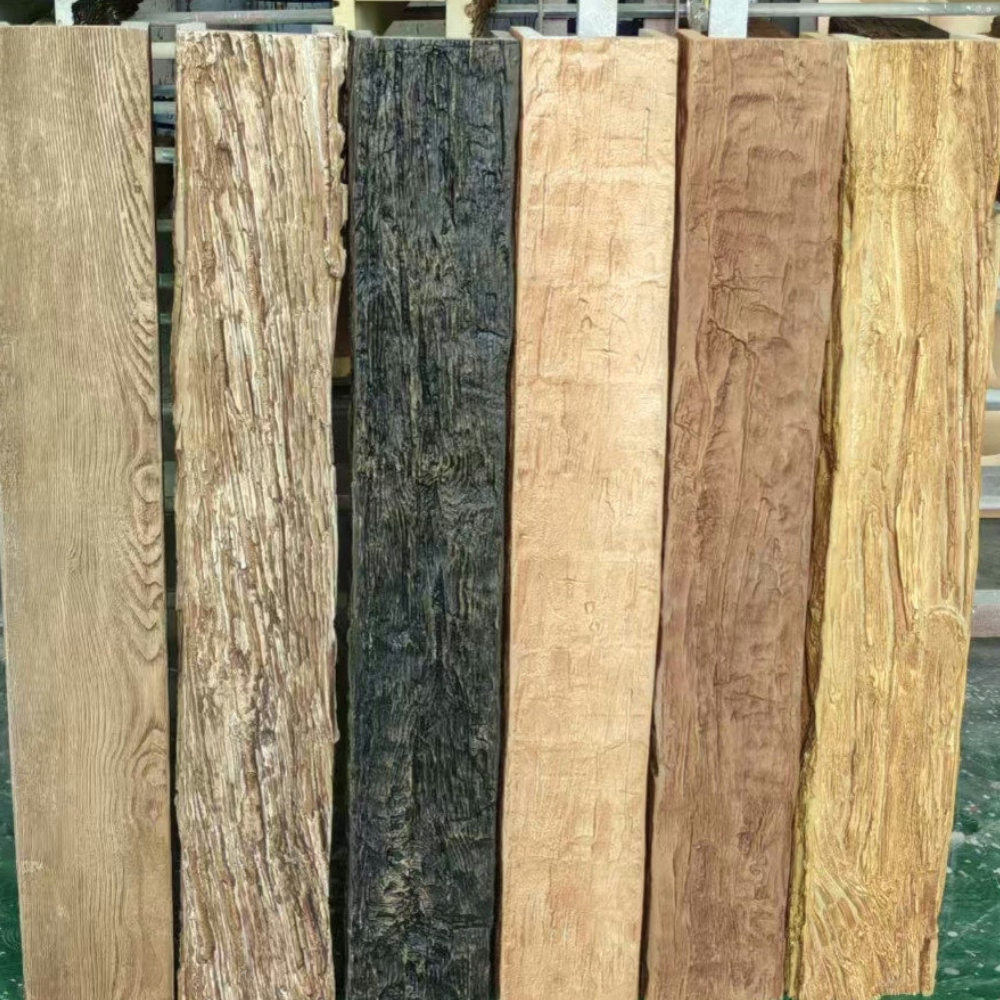
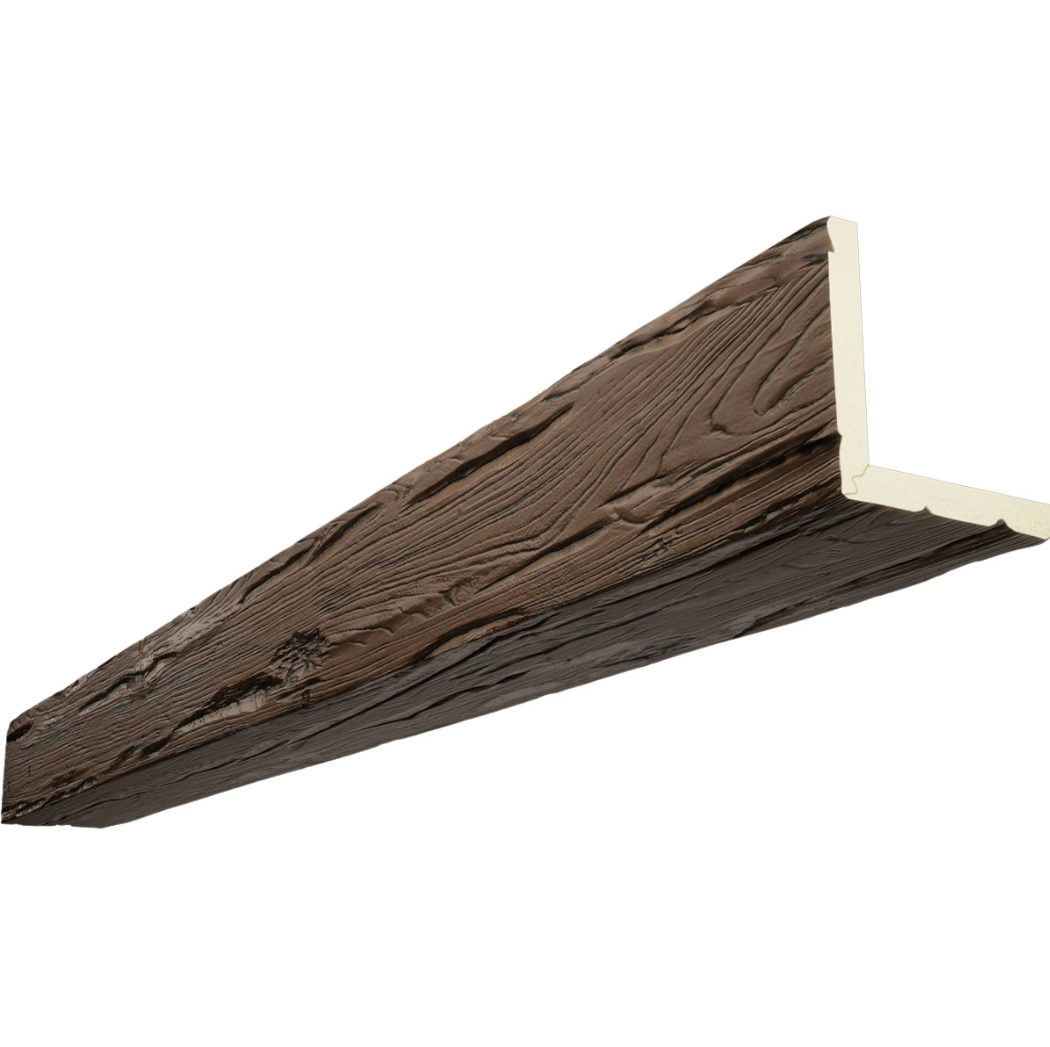
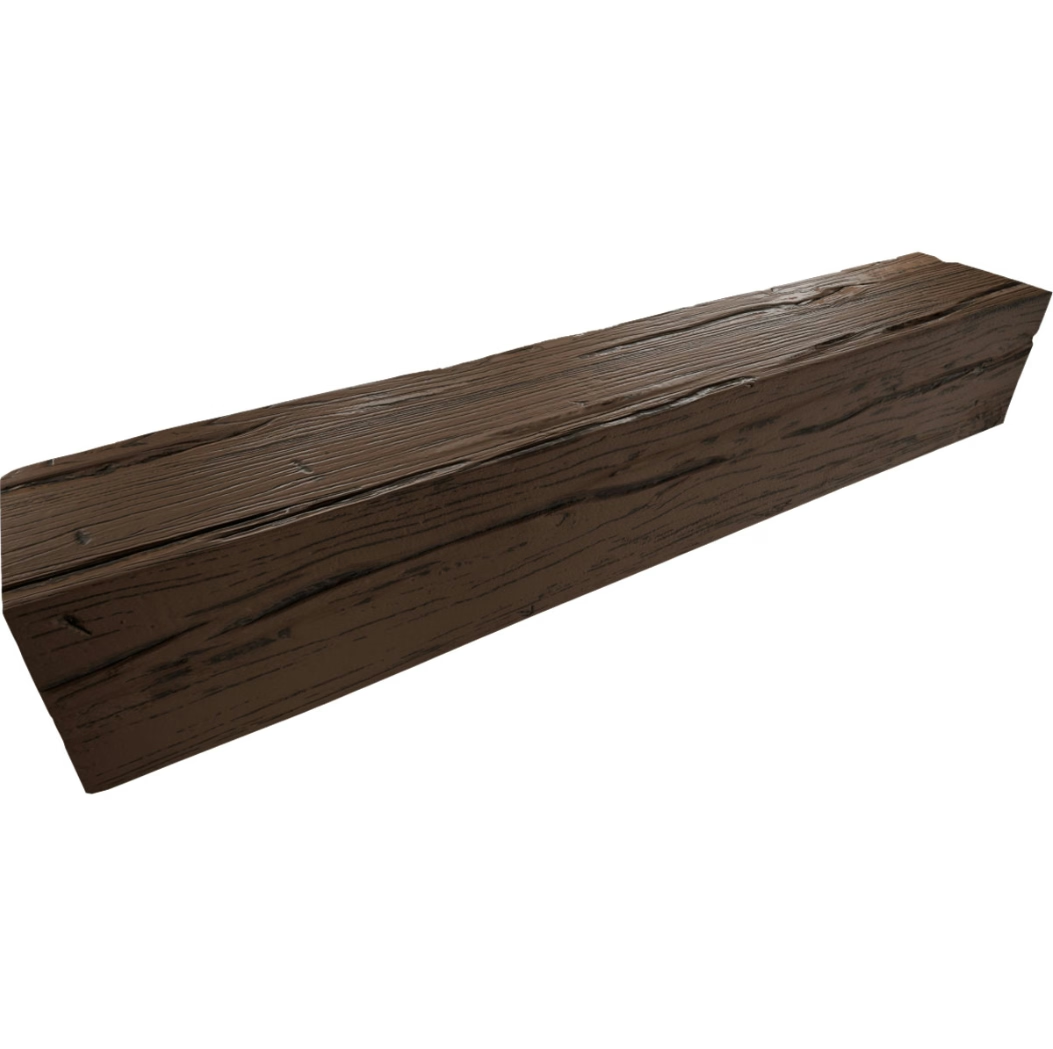
Traditional Spanish colonial construction used specific wood species with distinctive grain patterns: hand-hewn pine vigas with knots and irregular grain, rough-sawn cedar beams, oak beams with ray flecks, and other regional species. For Spanish style faux timber beams in construction projects, custom grain simulation reproduces these traditional wood species—producing authentic Spanish appearance rather than generic "wood look."
This is what custom grain means for Spanish style faux timber beams, what wood species are traditionally used, and how the simulation accuracy affects construction project results.
Wood species used in traditional Spanish construction
Spanish colonial and Spanish revival construction used specific wood species that contribute to the authentic Spanish appearance:
Hand-hewn pine
The most common traditional Spanish beam material:
- Heart pine. Old-growth pine with tight grain and characteristic knots.
- Knotty pine. Pine with visible knots and irregular grain patterns.
- Reclaimed pine. Pine from old buildings with patina and aging.
Hand-hewn pine is the foundation of Spanish beam appearance.
Cedar
Used in some Spanish traditions:
- Spanish cedar. Aromatic cedar with tight grain and warm color.
- Western red cedar. Cedar with characteristic color and grain.
- Aged cedar. Cedar with weathered patina.
Cedar provides warmth and weather resistance.
Oak
Used in formal Spanish colonial construction:
- White oak. With characteristic ray flecks when quarter-sawn.
- Red oak. With open grain pattern.
- Reclaimed oak. Oak from old buildings with patina.
Oak provides structural appearance and formality.
Cypress
Common in Spanish coastal construction:
- Bald cypress. With tight grain and natural rot resistance.
- Aged cypress. With weathered patina.
Cypress provides durability in coastal environments.
Exotic imported woods
In high-end Spanish colonial construction:
- Mahogany. With rich color and tight grain.
- Teak. With characteristic grain and weather resistance.
- Other imported species. From Spanish colonial trade routes.
Exotic woods provide luxury Spanish appearance.
How custom grain simulation works
For Spanish style faux timber beams, custom grain simulation involves:
Wood master creation
The factory creates a wood master that captures the specific species:
- Reference evaluation. Studying physical wood samples or photographs.
- Wood block selection. Choosing the right wood for the master.
- Hand-carving. Skilled craftspeople carve the grain pattern.
- Texture detail. Adding the specific texture characteristics.
- Quality inspection. Reviewing against the reference.
The wood master captures the species-specific character.
Mold production
The mold captures every detail of the wood master:
- Mold pouring captures the profile.
- Mold curing creates the production mold.
- Mold testing ensures the production matches the master.
Mold production takes 2 to 4 weeks.
Sample production
The factory produces samples for approval:
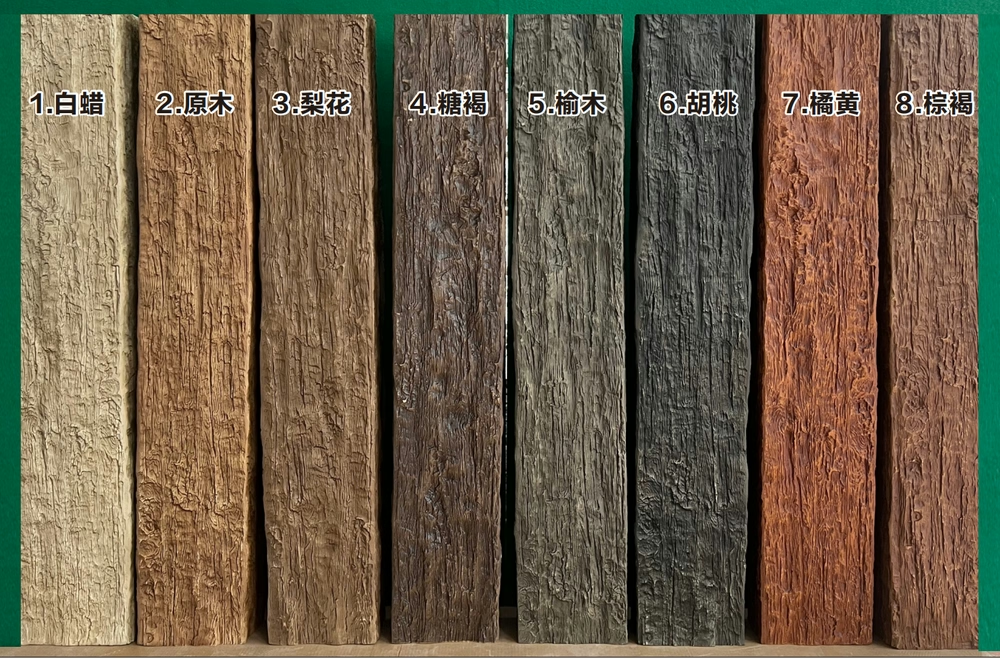
- Color matching against the species reference.
- Finish matching against the species aging.
- Multiple iteration cycles as needed.
Sample production takes 1 to 3 weeks.
Production runs
The factory produces beams from the approved mold:
- Polyurethane production using the mold.
- Color and finish application.
- Hand-detailing for authenticity.
- Quality inspection.
Production takes 3 to 6 weeks per wave.
Custom grain for construction project applications
For construction projects, custom grain simulation matters in several applications:
Authentic Spanish colonial appearance
For projects requiring authentic Spanish colonial appearance:
- The grain matches the species used in traditional Spanish construction.
- The finish matches the aging and weathering of traditional beams.
- The combination produces authentic appearance.
Custom grain produces authentic Spanish colonial.
Matching existing Spanish elements
For renovations with existing Spanish elements:
- The new beam grain matches the existing beam species.
- The new beam finish matches the existing aging.
- The combination produces cohesive renovation.
Custom grain supports renovation matching.
High-end Spanish construction
For luxury Spanish construction:
- Distinctive wood species (mahogany, teak) signal luxury.
- Custom grain supports the luxury aesthetic.
- Quality matches the project's premium standard.
Custom grain supports luxury projects.
Designer specifications
For projects with architect or designer specifications:
- The designer specifies the species and finish.
- The factory simulates the species accurately.
- The result matches the design intent.
Custom grain supports designer specifications.
Spanish wood species grain characteristics
Each Spanish wood species has distinctive grain characteristics:
Pine grain
- Pattern: Straight grain with frequent knots.
- Color variation: Subtle, mostly uniform.
- Texture: Variable from smooth to rough-sawn.
- Distinctive features: Knots, occasional resin pockets.
Pine grain is the foundation of Spanish appearance.
Cedar grain
- Pattern: Tight, straight grain.
- Color variation: Distinct heartwood and sapwood.
- Texture: Smooth to slightly rough.
- Distinctive features: Aromatic properties, natural color variation.
Cedar grain adds warmth.
Oak grain
- Pattern: Cathedral (plain-sawn) or ray flecks (quarter-sawn).
- Color variation: Distinct heartwood and sapwood.
- Texture: Open grain, distinctive.
- Distinctive features: Ray flecks in quarter-sawn oak.
Oak grain signals formality.
Cypress grain
- Pattern: Tight, straight grain.
- Color variation: Mild heartwood and sapwood.
- Texture: Smooth to slightly rough.
- Distinctive features: Natural durability, mild color variation.
Cypress grain adds durability character.
Exotic wood grain
- Pattern: Variable by species.
- Color variation: Distinctive per species.
- Texture: Smooth to medium.
- Distinctive features: Species-specific character.
Exotic wood grain signals luxury.
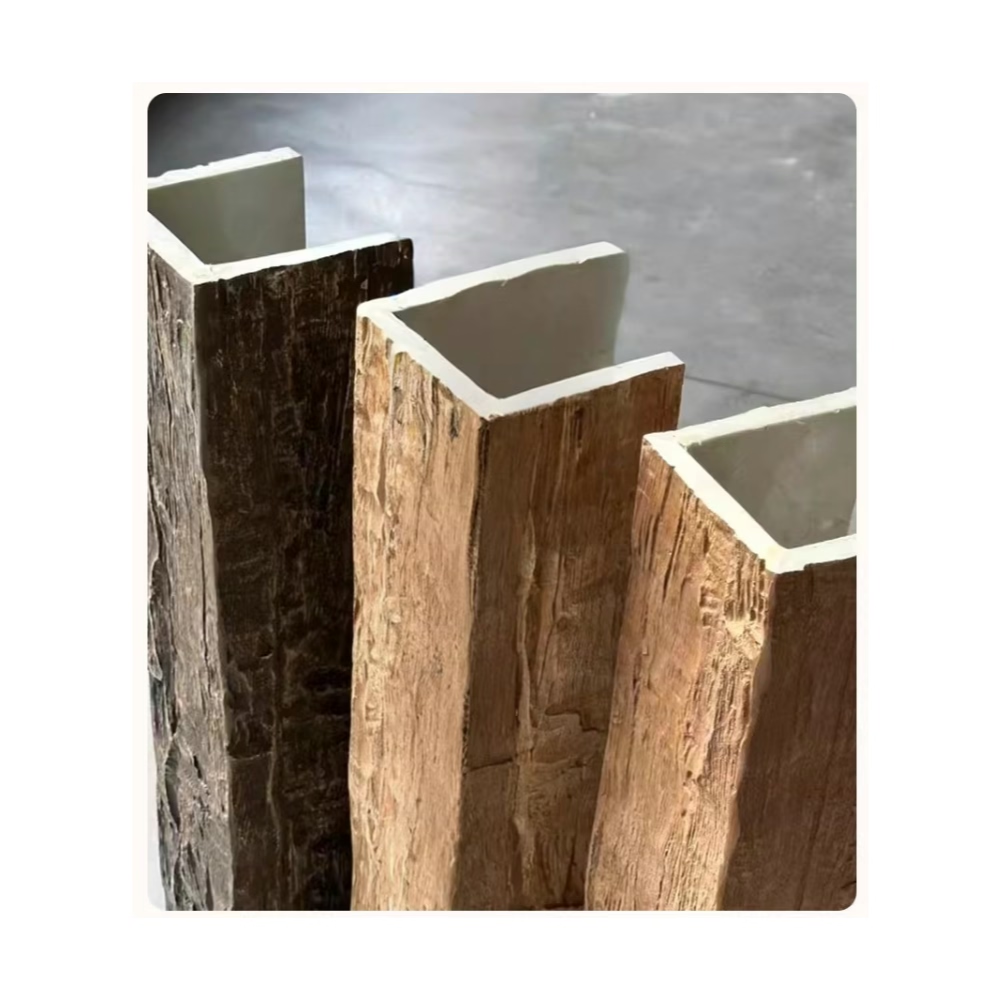
Custom grain vs standard grain
For Spanish style construction projects, custom grain vs standard grain:
Standard grain
- Stock wood species simulations.
- Generic "wood look" without specific species character.
- Lower per-piece pricing.
- Faster lead times.
Standard grain works for projects without specific species requirements.
Custom grain
- Specific wood species simulation.
- Authentic character for the specified species.
- Higher per-piece pricing (30 to 60 percent above standard).
- Longer lead times.
Custom grain works for projects with specific species requirements.
When to use each
- Standard grain for projects where generic "wood look" is sufficient.
- Custom grain for projects requiring authentic species appearance.
- Custom grain for projects matching existing Spanish elements.
- Custom grain for high-end Spanish construction.
The choice depends on the project's authenticity requirements.
Pricing for custom grain Spanish beams
Pricing for custom grain Spanish beams typically includes:
- Custom grain development fee: $2,000 to $6,000 per species.
- Color and finish development fee: $300 to $800 per color.
- Per-piece pricing: 30 to 60 percent above standard.
- Replacement beam pricing: Consistent with original orders.
For a construction project with custom grain Spanish beams, the total cost is typically 40 to 70 percent above standard Spanish beam pricing.
Common pitfalls in custom grain Spanish projects
A few issues that come up often enough to flag:
- Insufficient species reference. Custom grain based on vague reference produces inaccurate simulation.
- Skipping sample iteration. Rushing through sample approval produces mismatched species.
- Color drift across production. Inadequate monitoring produces visible variation.
- Underestimating timeline. Custom grain requires longer lead times.
- Inadequate budget planning. Custom grain costs not budgeted produce mid-project issues.
How construction projects evaluate custom grain suppliers
For construction projects evaluating custom grain Spanish beam suppliers:
- Wood master capability. The supplier has skilled wood masters.
- Spanish species experience. The supplier has done Spanish species simulation.
- Sample quality. The supplier's samples demonstrate accurate species simulation.
- Color drift monitoring. The supplier maintains color consistency across production.
- References. The supplier has done comparable Spanish custom grain work.
Spanish style faux timber beams custom grain for construction projects is a category where the species-specific simulation, the color drift monitoring, and the sample iteration discipline all need to align. The right supplier produces custom grain beams that authentically simulate Spanish species. The wrong one produces generic "wood look" beams that miss the Spanish species character.
Technical References
ASTM standards cited in every specification
Test Data
Lab results from internal testing program
Updated 2026
Reviewed against current product specs