Spanish Style Faux Timber Beams | Spec & Sourcing for Custom Builders
Custom builders handling Spanish style projects need specific guidance on specifying and sourcing Spanish style faux timber beams. The Spanish architectural vocabulary is rich—vigas, latillas, corbels, beam caps, column wraps—and each element has specific characteristics. Sourcing the right supplier and specifying correctly produces authentic Spanish results.
This is what custom builders need to know about specifying and sourcing Spanish style faux timber beams, the profile vocabulary, the color and finish considerations, and the sourcing channels.
The Spanish beam vocabulary
For custom builders specifying Spanish style beams, the vocabulary matters:
Primary vigas
The main beams spanning the ceiling:
- Cross-section dimensions: 8 inches by 10 inches to 12 inches by 14 inches.
- Length: Typically 8 to 24 feet, sometimes longer with field joints.
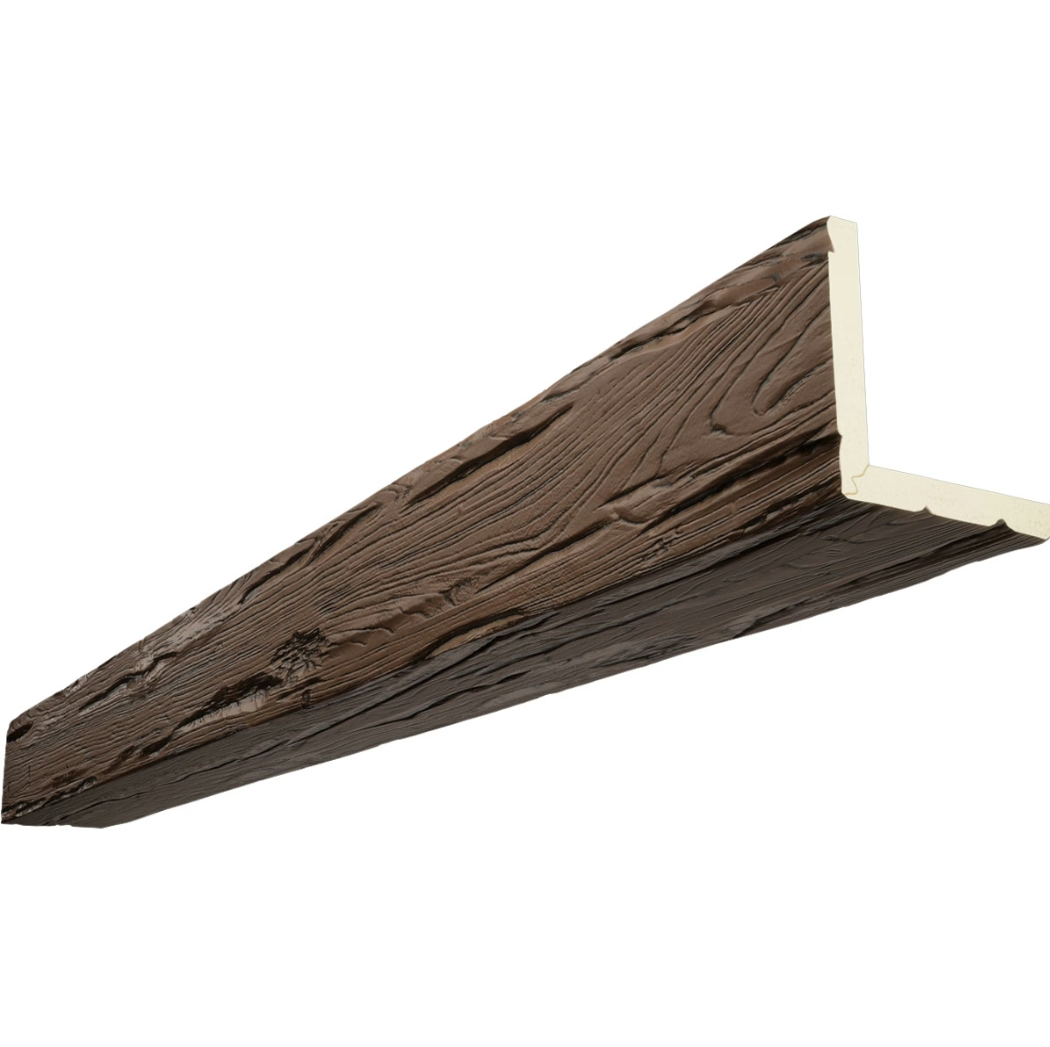
- Texture: Rough-sawn, hand-hewn, or weathered.
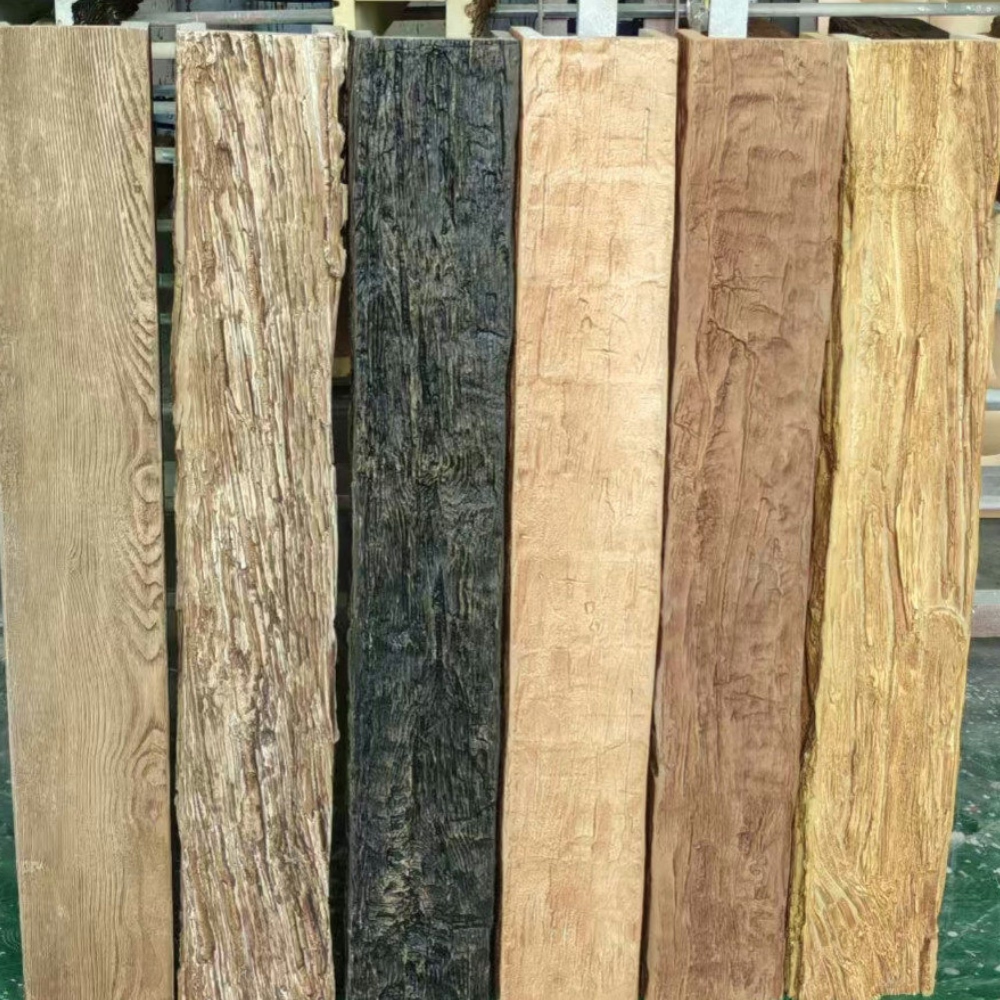
- Color: Warm honey, weathered gray, dark walnut, or whitewash.
- Spacing: 4 to 6 feet apart.
Vigas are the primary structural-looking elements.
Viga latillas
Smaller poles running perpendicular between vigas:
- Diameter: 2 to 4 inches.
- Length: Span between vigas (typically 3 to 5 feet).
- Texture: Rougher than vigas.
- Color: Often matching or slightly darker than vigas.
- Spacing: 12 to 18 inches apart.
Latillas fill between vigas and add texture depth.
Corbels
Decorative brackets supporting vigas at walls:
- Dimensions: Sized to viga cross-section.
- Profile: Geometric, carved, or simple.
- Quantity: Typically 2 per viga (one at each end), sometimes repeated along viga length.
Corbels add visual weight at beam ends.
Beam caps
Decorative end treatments on exposed viga ends:
- Profile: Stepped, carved, or plain.
- Color: Matching vigas or contrasting (sometimes whitewashed).
- Application: End caps on exposed viga terminations.
Beam caps distinguish Spanish from generic beam styles.
Column wraps
Coordinated elements for support columns:
- Coverage: Wraps square columns.
- Components: May include base and capital details.
- Coordination: Matches primary viga profile and color.
Column wraps extend the beam aesthetic to vertical elements.
Optional elements
Additional Spanish vocabulary:
- Canes or zarzos: Smaller diameter poles (1 to 2 inches) for specific applications.
- Decorative brackets: Wrought iron style or molded polyurethane.
- Arched elements: Beams integrated with arches (separate specification).
These elements appear in specific Spanish regional traditions.
Specification for Spanish style beams
For custom builders, the specification includes:
Profile and cross-section
For each beam:
- Viga cross-section per ceiling height.
- Latilla diameter per design intent.
- Coordinating element profiles.
Dimensions affect the beam's visual presence.
Color and finish
For Spanish style:
- Warm honey palette: Light to medium warm browns for traditional Spanish.
- Weathered palette: Aged, sun-bleached tones for hacienda style.
- Dark walnut palette: Rich, formal tones for Spanish colonial.
- Whitewash palette: Painted or chalked for modern Spanish.
Palette selection establishes the visual mood.
Texture specification
For Spanish style:
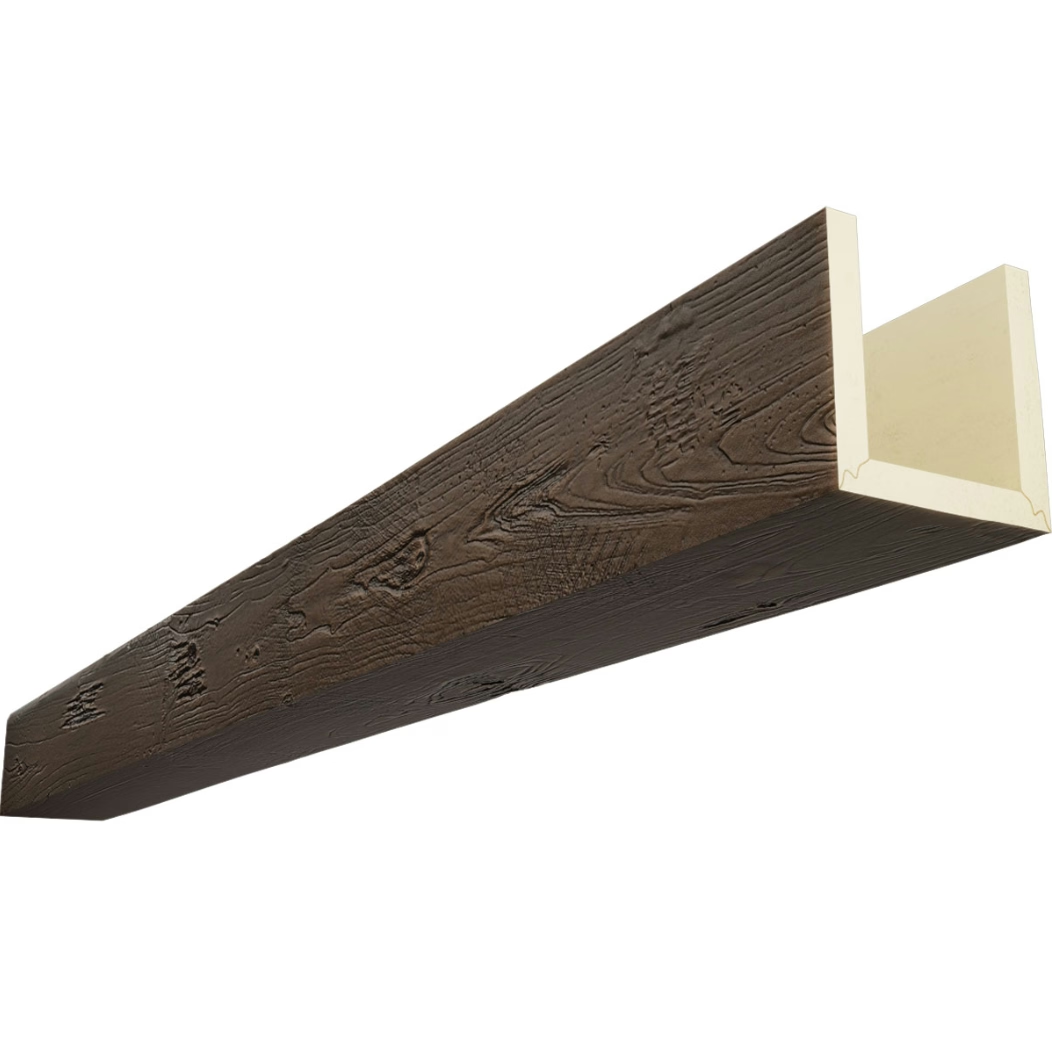
- Rough-sawn texture: Visible circular saw marks.
- Hand-hewn texture: Axe or adze marks, irregular surface.
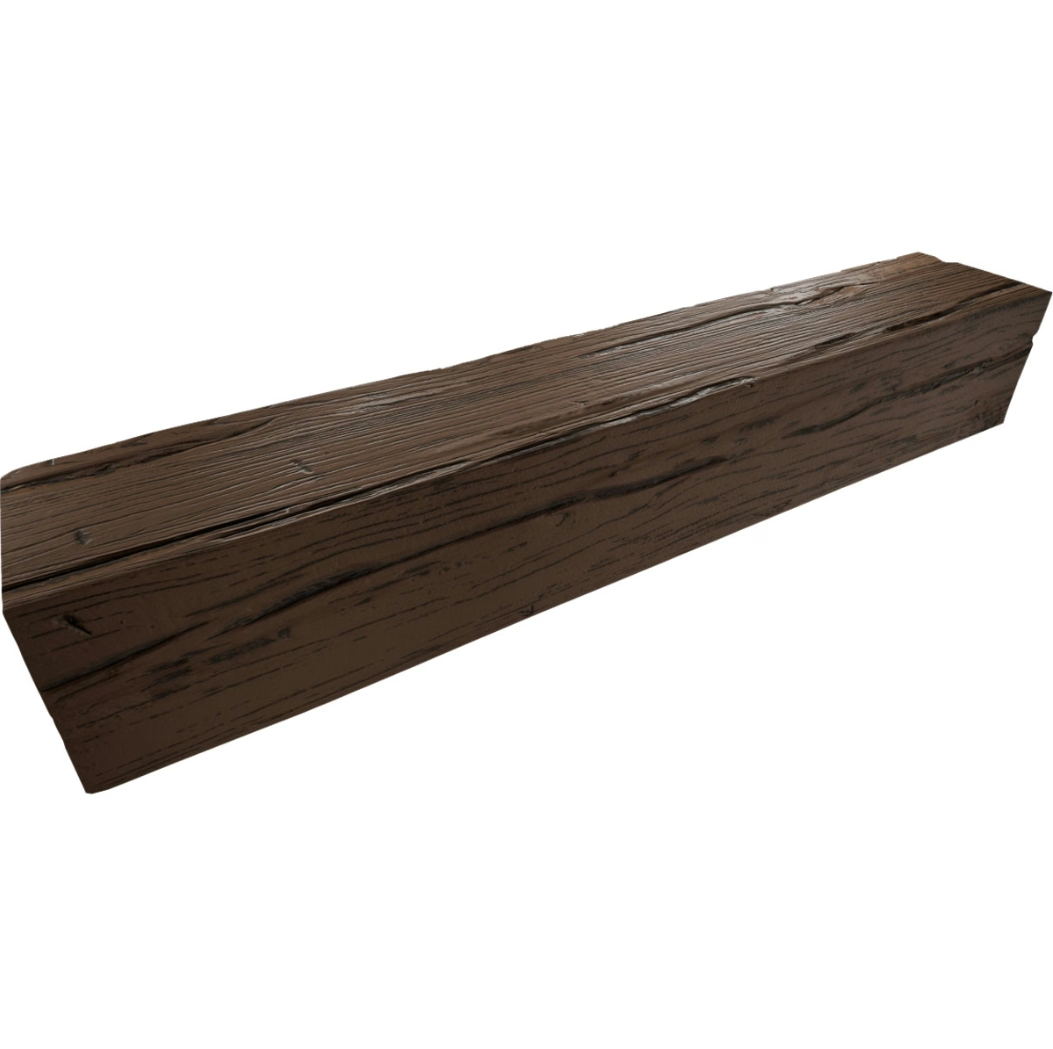
- Weathered texture: Aged appearance with erosion patterns.
Texture affects the beam's character.
Sheen
For Spanish style:
- Matte for rustic and aged looks.
- Satin for traditional Spanish.
- Semi-gloss rarely used for Spanish (more common in formal European).
Sheen affects the visual character.
Indoor-outdoor specification
For projects with indoor-outdoor continuity:
- Interior specification per room.
- Exterior specification per local conditions.
- Color matching across environments.
Coordination maintains visual continuity.
Sourcing channels for Spanish style beams
For custom builders, several sourcing channels exist:
Factory direct
For substantial volume or distinctive projects:
- Direct relationship with the factory.
- Best pricing for larger volumes.
- Direct communication on specifications.
- Custom development capability.
Factory direct works for distinctive projects.
Wholesale distributors
For mid-volume projects:
- Local or regional wholesale distributors.
- Standard Spanish profiles available.
- Shorter lead times for stock items.
- Less custom capability.
Distributors work for standard projects.
Specialty Spanish suppliers
For high-end or regional projects:
- Suppliers specializing in Spanish style.
- Authentic regional profiles.
- Higher pricing for specialty.
- Stronger designer relationships.
Specialty suppliers work for premium projects.
Import sourcing
For cost-sensitive projects:
- Direct import from overseas factories.
- Lower per-piece pricing.
- Longer lead times.
- More documentation requirements.
Import works for large volume with extended timelines.
Evaluating Spanish beam suppliers
For custom builders evaluating suppliers:
Spanish style experience
Evaluate Spanish style experience:
- Spanish style projects completed.
- Spanish profile library diversity.
- Spanish finish library diversity.
- References from comparable Spanish projects.
Spanish style experience is critical.
Coordinating element capability
Evaluate coordinating element production:
- Corbels, beam caps, column wraps in matching profiles.
- Coordinated color and finish.
- Quality consistency across elements.
Coordinating elements complete the Spanish vocabulary.
Custom capability
For distinctive projects:
- Custom profile development.
- Custom color and finish.
- Sample iteration cycles.
- Designer collaboration.
Custom capability supports distinctive Spanish work.
Quality consistency
Evaluate quality consistency:
- Master reference samples per project.
- Color drift monitoring across production.
- Texture consistency across production.
- Long-term quality standards.
Quality consistency maintains Spanish authenticity.
Lead time reliability
Evaluate lead time reliability:
- Lead time commitments.
- On-time delivery history.
- Production capacity for the project's timeline.
- Communication about production status.
Lead time reliability supports project schedules.
Sourcing strategy for custom builders
For custom builders, sourcing strategy considerations:
Establish standing specifications
For builders running multiple Spanish projects:
- Define standard Spanish profiles for typical projects.
- Develop standing color and finish specifications.
- Document standards for consistent ordering.
Standing specs reduce per-order overhead.
Build supplier relationship
For long-term value:
- Build relationship with primary Spanish supplier.
- Communicate builder's typical projects and needs.
- Negotiate volume-based pricing.
- Use the relationship for project support.
Relationships produce compounding value.
Use samples for client presentations
For buyer-facing work:
- Maintain sample library from the supplier.
- Use samples in design center or client meetings.
- Document samples shown to specific clients.
- Track sample-to-order conversion.
Samples support sales conversion.
Coordinate with designers
For projects with designer involvement:
- Coordinate specifications with the project designer.
- Support designer with supplier samples.
- Maintain designer communication.
- Document designer specifications.
Designer coordination produces accurate design intent.
Common pitfalls in Spanish style beam sourcing
A few issues that come up often enough to flag:
- Insufficient Spanish vocabulary specification. Specifying vigas without coordinating elements produces incomplete Spanish appearance.
- Wrong color palette for the design. Color palette that doesn't match the project's design intent.
- Insufficient coordinating element capability. Supplier can't produce the full Spanish vocabulary.
- Inconsistent quality across waves. Visible variation between production runs.
- Indoor-outdoor coordination gaps. Beams that don't match across environments.
Pricing for Spanish style beams
Pricing for Spanish style beams typically includes:
- Per-piece pricing by length with volume discounts.
- Premium for Spanish profiles (modest, typically 10 to 20 percent above standard).
- Coordinating elements priced per piece.
- Custom color and finish development fees.
- Documentation package pricing.
For a typical Spanish style project with 200 to 500 linear feet plus coordinating elements, total project cost is $10,000 to $30,000 including installation.
How custom builders evaluate Spanish beam suppliers
For custom builders evaluating suppliers for Spanish style beams:
- Spanish style expertise. The supplier has Spanish style experience.
- Coordinating elements. The supplier produces the full Spanish vocabulary.
- Custom capability. The supplier develops custom specifications as needed.
- Quality consistency. The supplier maintains quality across production.
- Lead time reliability. The supplier meets project schedules.
- References. The supplier has done comparable Spanish projects.
Spanish style faux timber beams spec and sourcing for custom builders is a category where the vocabulary knowledge, the supplier capability, and the operational details all need to align. The right combination produces authentic Spanish results that match the project's design intent.
Technical References
ASTM standards cited in every specification
Test Data
Lab results from internal testing program
Updated 2026
Reviewed against current product specs