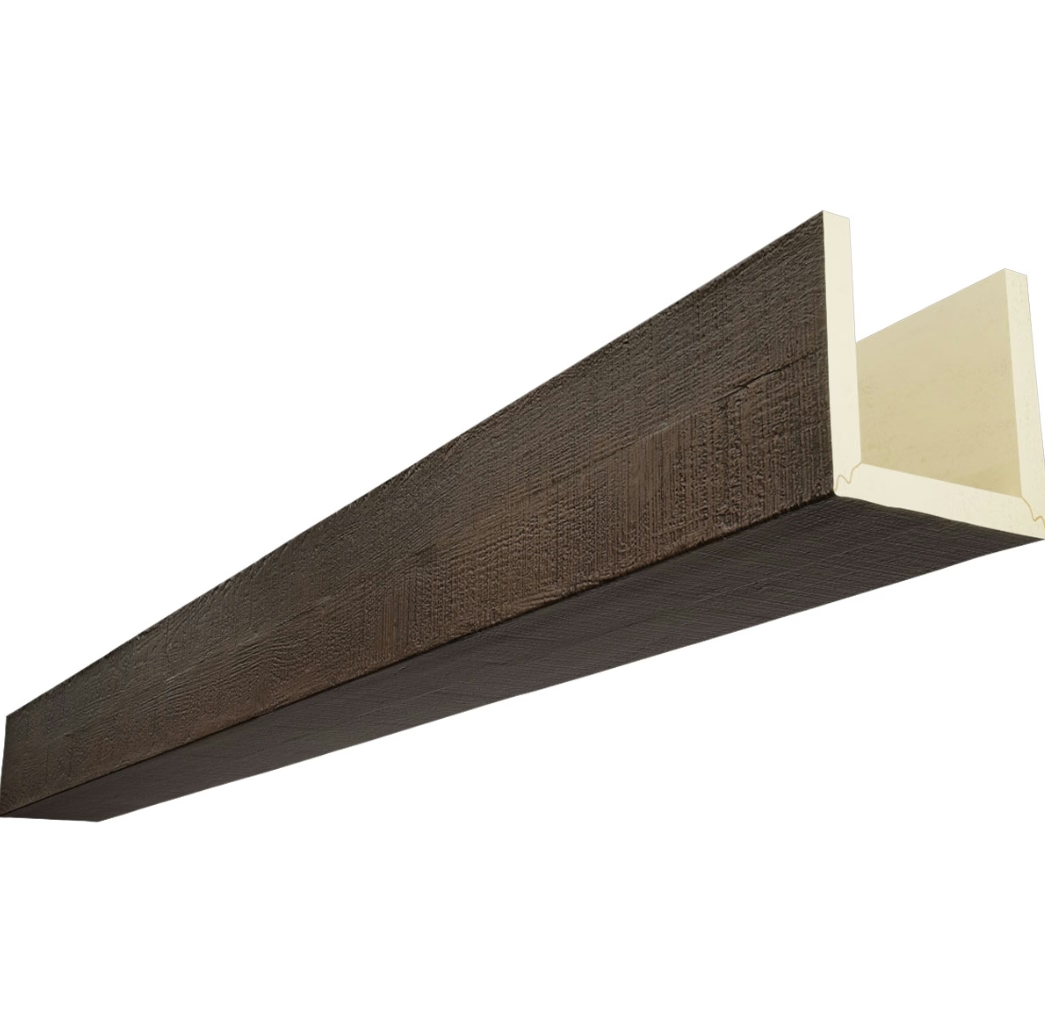
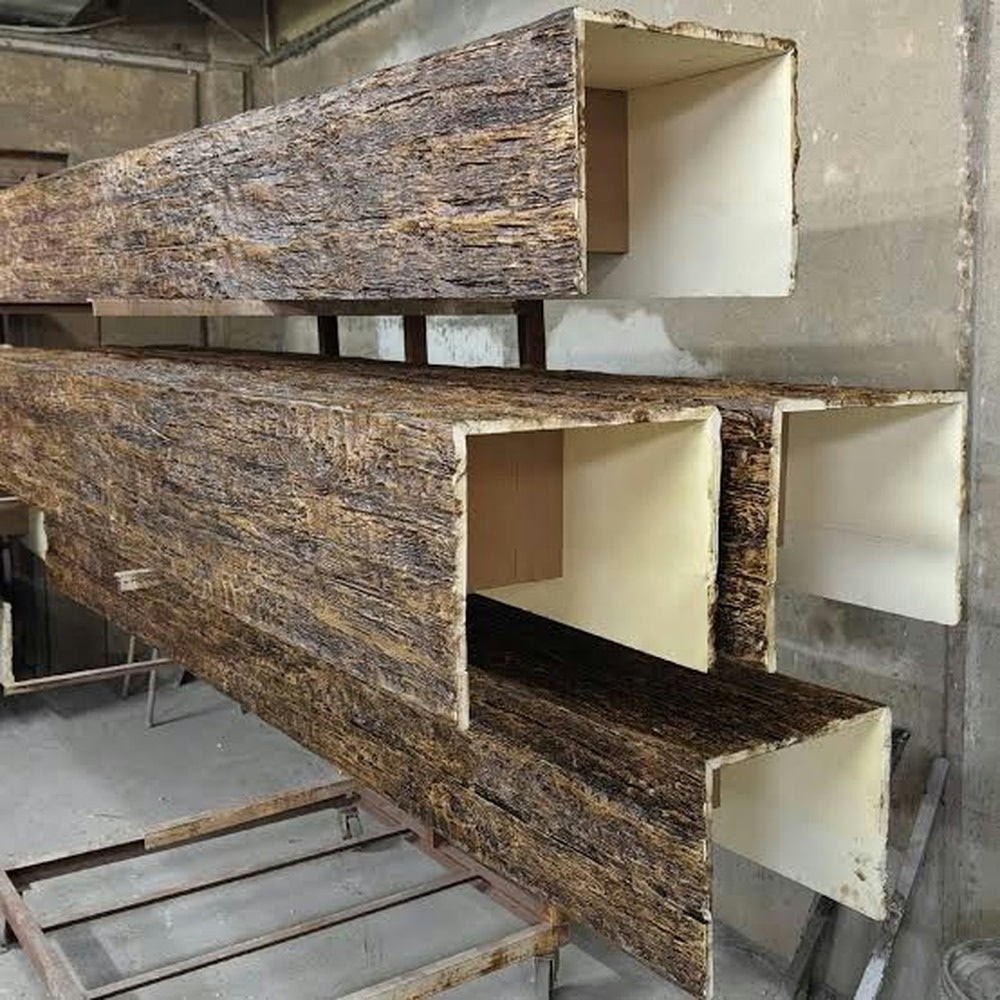
Spanish Style Faux Timber Beams | Spec & Sourcing for Custom Builders
Spanish Colonial, Mission Revival, Hacienda, Mediterranean Revival, and the modern interpretations of all of these styles share a single architectural element that defines them visually: the timber ceiling. The vocabulary is specific. Vigas run across the ceiling as primary members. Latillas run perpendicular as smaller divisions. Corbels support the vigas where they meet posts or walls. The combination reads instantly as Spanish or Mediterranean — there is no other style family that uses this exact assembly.
For custom builders working in these styles, beam specification is not optional decoration. It is the load-bearing element of the design intent. Get it wrong and the home does not read as Spanish — it reads as a contemporary home with random wood on the ceiling. Get it right and the home reads from curb to interior as belonging to a centuries-old architectural tradition.
The good news is that authentic Spanish beam vocabulary translates well to polyurethane manufacturing. The profiles are not technically difficult. The finishes are achievable with proper layering. The procurement question is finding suppliers who understand the style well enough to produce authentically rather than generically.
Spanish beam vocabulary that needs to live in the specification
Spanish Colonial beam work is not interchangeable with other beam styles. The vocabulary is defined by traditional construction methods, and the polyurethane replication must respect those methods even though the actual structural requirements are handled by the substrate construction underneath.
Vigas. Primary round or squared beams running across the ceiling. Traditional vigas were peeled pine, fir, or juniper logs with hand-hewn surfaces. The classic Spanish Colonial viga profile is roughly 6 inches to 10 inches in face dimension with a hand-hewn irregular surface — saw marks, adze cuts, occasional axe work. Where the original tree's taper is preserved (in authentic timber vigas), the beam is slightly larger at one end. Polyurethane replication can simulate taper at extra cost but is typically produced as uniform cross-section.
Latillas. Secondary members running perpendicular to the vigas, typically 2×4 or 2×6 nominal, at 12-inch to 16-inch spacing. Traditional latillas are rough-sawn small-dimension lumber with weathered character. Their purpose was both structural (tying the vigas together and supporting the roof deck above) and aesthetic (creating the strong horizontal rhythm Spanish Colonial ceilings are known for).
Corbels. Decorative and structural brackets supporting the vigas where they meet posts or walls. Traditional corbels were carved from solid wood with curves, step details, or scrollwork. The corbel itself is often the most distinctive single element of Spanish Colonial work — the first thing a visitor's eye catches at the entry soffit or under the main ceiling beam transition.
Beam caps and end treatments. Viga ends at exterior walls are often finished with carved caps, projecting pegs, or corbel-style terminations. Interior viga ends may be supported by corbels, terminated against a wall plate detail, or simply cut square where they meet an adjoining wall.
Tongue-and-groove decking. Traditional Spanish Colonial ceilings include a decking material (typically 1×6 tongue-and-groove pine) above or below the beam grid. In polyurethane beam-only installations, the decking is often separate from the beam work or is integrated into the design as a different material entirely.
A Spanish-style specification that includes only the primary beams without corbels, latillas, and proper end treatments reads as incomplete. The vocabulary is a vocabulary — each element supports the others.
Style family differences that matter in sourcing
Spanish Colonial is not a single style. The subdivisions matter when sourcing because each has its own canonical detail set.
Spanish Colonial Revival (1915–1940). The dominant style of the American Southwest. Often incorporates smoother viga surfaces, Mission-influenced parapet details, and recurring arches. Beam finishes tend to be medium to dark, with red and brown tones dominant. Corbels are typically simpler than in earlier styles.
Mediterranean Revival (1920s–1930s). More Italian and less Moorish influence. Beam work is often lighter in tone, sometimes with whitewashed finishes. Corbels tend to be more elaborate, often with carved acanthus leaf or scrollwork. Latillas may be omitted in cleaner Mediterranean compositions.
Hacienda (mid-20th century and later). Larger scale, often with deeper overhangs and more substantial vigas. Beam finishes tend toward warm browns and reds. Corbels are heavier and more architectural — sometimes 24–36 inches tall.
Modern Spanish / Contemporary Mediterranean (1990s–present). Cleaner lines, simpler corbels, and beam profiles that may be squared rather than hand-hewn. Often paired with white or neutral wall finishes where traditional Spanish uses earth tones. Finishes more variable — some projects use driftwood or whitewashed looks, some use deep walnut tones.
Santa Fe and Pueblo Revival. Specific to the American Southwest. Beam work tends to be rough-hewn with visible tool marks. Vigas often appear to project through exterior walls as log extensions. Latillas may be heavier than in other styles. Finishes tend to be warm with red undertones.
Suppliers who understand these distinctions can produce appropriate beam families for each style. Suppliers who treat "Spanish" as a single category produce generic work that does not match the specific style being built.
Polyurethane replication of authentic Spanish detail
The translation from traditional timber to polyurethane is not 1:1. Several authentic details present specific manufacturing challenges that need to be considered at specification.
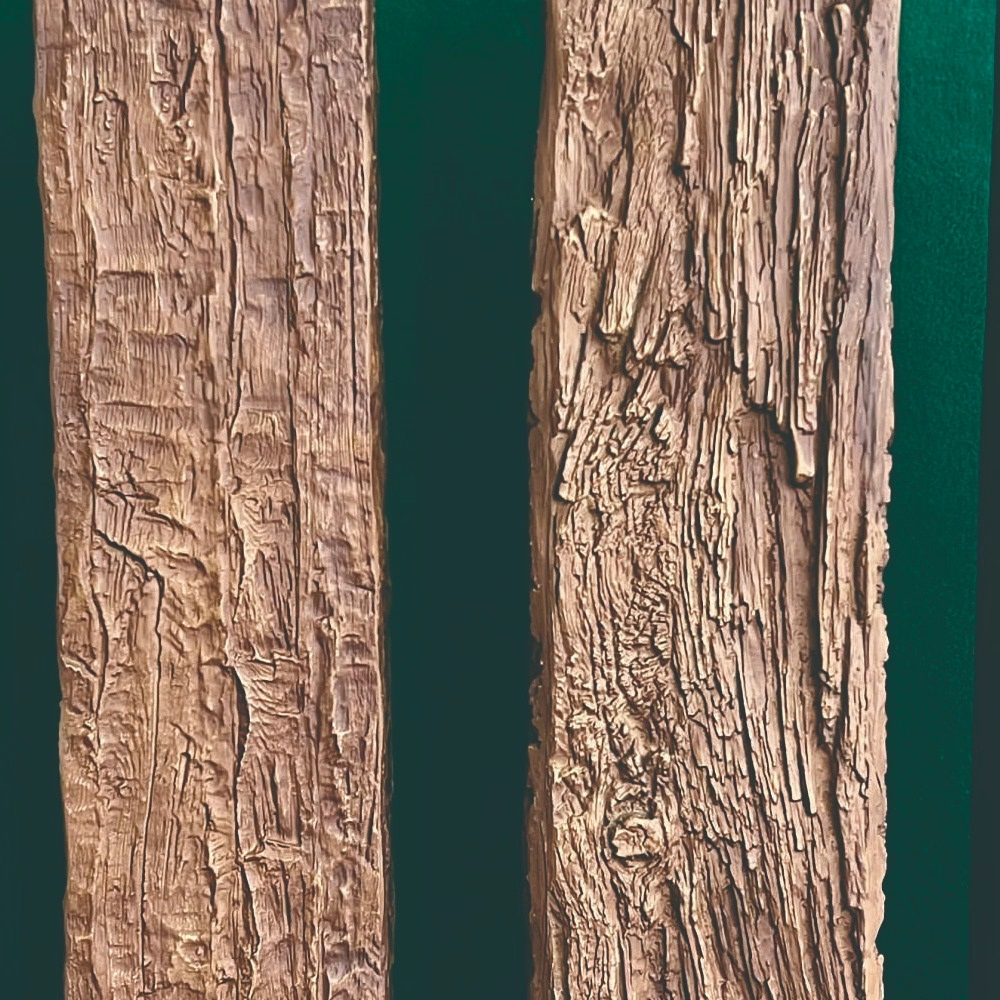
Hand-hewn surfaces. Traditional vigas carry visible adze marks, axe cuts, and irregularities from the original construction. Polyurethane replication captures these surfaces through the mold texture rather than through per-piece hand work. The result reads as authentic at viewing distance and on touch — exactly where Spanish-style beam character is most often appreciated.
Log taper. Traditional vigas often incorporate the natural taper of the original log, with one end larger than the other. Polyurethane beams are produced as uniform cross-section because mold economics make per-piece variation impractical. For high-end work where authentic taper is non-negotiable, the manufacturer can produce tapered polyurethane beams at premium cost. For most projects, the uniform cross-section is acceptable because the ceiling composition reads as a beam grid rather than as individual logs.
End-grain detail. Real wood viga ends show end-grain texture where the beam terminates. Polyurethane end caps can be produced with grain texture but are slightly less authentic than true end-grain. For beams visible at room ends (against a window, in a clerestory position), specify end-cap-grade replication. For beams terminating into walls or against ceiling-to-wall transitions, the end-grain detail is less critical.
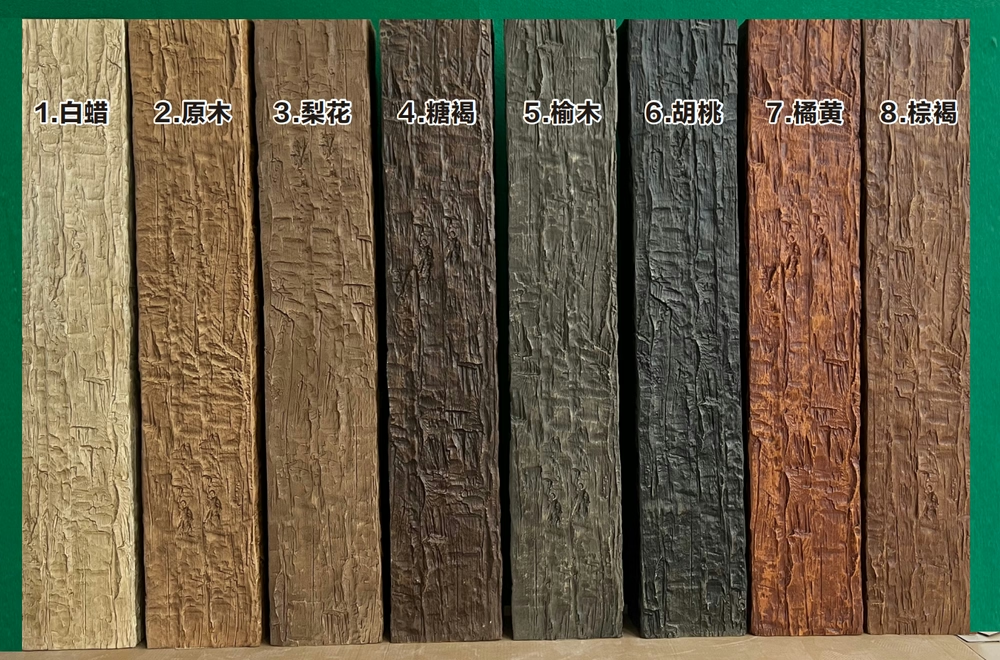
Weathering and aging. Authentic Spanish beams show decades of subtle wear, color variation, and patina. Polyurethane manufacturers replicate this through multi-layer finishing systems, often combining base stain, glaze washes, highlight dustings, and protective topcoat. Specify a finish system with at least three layers for credible Spanish authenticity.
Crack and check details. Real timber beams check (develop small cracks along the grain) as they age. Some traditional Spanish aesthetics value these checks as authentic detail. Polyurethane beams can have controlled crack details produced in the mold surface. For strict traditional aesthetics, request that the manufacturer incorporate controlled crack detailing in the mold.
Corbel sourcing as a separate problem
Corbels are the most complex element of Spanish beam work. They are also the element where poor replication is most visible.
Sourcing corbels typically involves one of three approaches.
Manufacturer's stock corbel line. Most polyurethane beam manufacturers produce a limited line of stock corbels in common Spanish profiles. These are adequate for production work where the design does not call for highly specific corbel details. Stock corbels typically run $95–$220 each depending on size and finish.
Custom corbel work from mold. For projects where the corbel needs to match a specific architectural detail, manufacturers can produce a custom mold and run a batch of corbels to match. Custom mold fees run $1,800–$4,500 per corbel profile. Per-piece costs are higher than stock until the volume exceeds the development cost threshold (typically 30–50 pieces).
Composite corbels from third-party suppliers. Architectural polyurethane decor companies (not beam manufacturers) produce stock corbels in many Spanish profiles. These can be sourced separately and combined with the beam order. The integration risk is finish matching — the corbel and the beam need to read as the same wood, with the same finish, at the same patina level. Coordinate the finishing between suppliers explicitly or source both from the same manufacturer.
For most custom residential Spanish work, the most reliable approach is sourcing beams and corbels from the same manufacturer with the same finish run. The cost savings from separating the order are not worth the finish-matching risk.
Sourcing approaches for Spanish-style work
The custom builder sourcing Spanish-style beams has a different supplier landscape than the production builder sourcing standard construction materials.
Specialty architectural decor companies. Companies that focus specifically on architectural polyurethane — beams, corbels, brackets, columns — typically have the deepest Spanish-style catalogs and the most experienced finishing staff. These companies tend to be smaller than the general building products distributors but produce work of considerably higher specificity. Lead times run 5–9 weeks for production orders, longer for custom work.
Custom millwork shops. Many custom millwork companies in the Southwest, California, and Florida have Spanish-style beam programs in solid wood or in polyurethane composites. The advantage of millwork shops is often the integration with other architectural woodwork in the project. The disadvantage is that custom millwork capacity can be limited at peak construction seasons.
Mass-market beam suppliers with Spanish product lines. Some larger polyurethane manufacturers produce Spanish-style beams as part of broader product lines. Quality and specificity vary widely. Specifying from these suppliers requires careful sample evaluation to confirm the Spanish vocabulary is being delivered rather than a generic wood profile labeled as Spanish.
For a typical custom home project, the supplier selection process involves sample requests from three to four suppliers, side-by-side evaluation by the design team, and selection based on the combination of profile authenticity and finish depth.
Specification checklist for Spanish-style beam supply
A complete Spanish-style beam specification includes elements that a generic beam specification would omit.
- Profile and dimensions for each beam type (primary viga, secondary viga, latilla, ridge beam)
- Number of pieces of each type, broken out by length
- Finish recipe including base stain color, glaze washes, highlight techniques, and topcoat specification
- Corbel specification including profile reference photo or sketch, dimensions, and finish matching to beams
- End treatment detail for each beam termination condition (wall, post, ceiling-to-wall corner, projection through exterior wall)
- Latilla spacing and orientation showing the relationship between primary and secondary members
- Coordination notes for lighting, AV, fire suppression, and exposed mechanical that interact with the beam grid
- Mounting details showing how the beams attach to the substrate — typically through cleat-and-screw systems concealed in the beam shadow line
- Fire rating requirements based on the specific occupancy and jurisdiction
Specifications that omit any of these elements typically generate RFIs during construction and field-condition compromises that hurt the final installation quality. The detail investment at specification pays back through cleaner field execution.
Working with the design team on authenticity
Designers working on Spanish-style homes have strong opinions about beam authenticity. Some prefer the heavier, more rustic Spanish Colonial vocabulary. Some prefer cleaner Modern Spanish lines. The supplier needs to know which direction the design is going because the same physical beam (a 6×8 hand-hewn viga) can be finished to support either aesthetic through finish variation alone.
Designers also commonly specify corbel details that are unique to their practice. A particular architect may have a corbel profile they have used on three previous projects and want on this one too. Custom corbel work supports this kind of design continuity.
Building a supplier relationship that respects the designer's aesthetic preferences and is flexible enough to execute custom corbel details on demand is the foundation of consistent Spanish-style work. Suppliers who treat every project as a generic beam order cannot deliver this.
When polyurethane is the right call for Spanish
The honest answer: polyurethane is the right call for Spanish-style beam work on most custom homes built today. Solid timber is the right call for a smaller number of high-budget, authentic-material projects where the actual weight, cost, and construction complexity of solid timber can be supported by the design.
Polyurethane works well when:
- The home's beam requirement is for visual character rather than actual structural support from the beams
- Construction schedule cannot accommodate 10–16 week lead times for solid timber sourcing
- Weight considerations matter (second-floor rooms, vaulted ceilings that compound structural loading)
- Budget for total installed cost matters more than budget for material alone
- Maintenance-free service life matters (solid timber requires periodic treatment for insects, moisture, and UV)
Solid timber may be preferred when:
- Authentic material is a documented project requirement
- Budget supports it ($40–$80+ per linear foot for solid timber versus $18–$35 for polyurethane)
- Long project timeline accommodates timber sourcing and acclimation
- The design intent specifically calls for timber appearance characteristics that polyurethane cannot replicate (natural checking, color variation, growth rings)
For most custom homes in Spanish styles, polyurethane delivers the design intent at appropriate cost and timeline. The work is in specifying and sourcing carefully enough that the polyurethane beam system reads as authentic traditional construction rather than as surface decoration.
A closing note on regional supply
Spanish-style homes cluster regionally — Arizona, New Mexico, Texas, California, Florida, and increasingly parts of the Carolinas and Tennessee. Suppliers with strong Spanish-style capacity also cluster regionally. Custom builders in the Southwest often work with suppliers within driving distance for finish coordination meetings, factory tours, and sample evaluations. Custom builders in other regions ship samples and rely on remote approval.
Regional sourcing has advantages for collaboration and faster response on field conditions. National sourcing is necessary for builders whose projects span multiple markets. Either approach works with the right supplier relationship, but it should be a deliberate choice rather than a default.
Technical References
ASTM standards cited in every specification
Test Data
Lab results from internal testing program
Updated 2026
Reviewed against current product specs