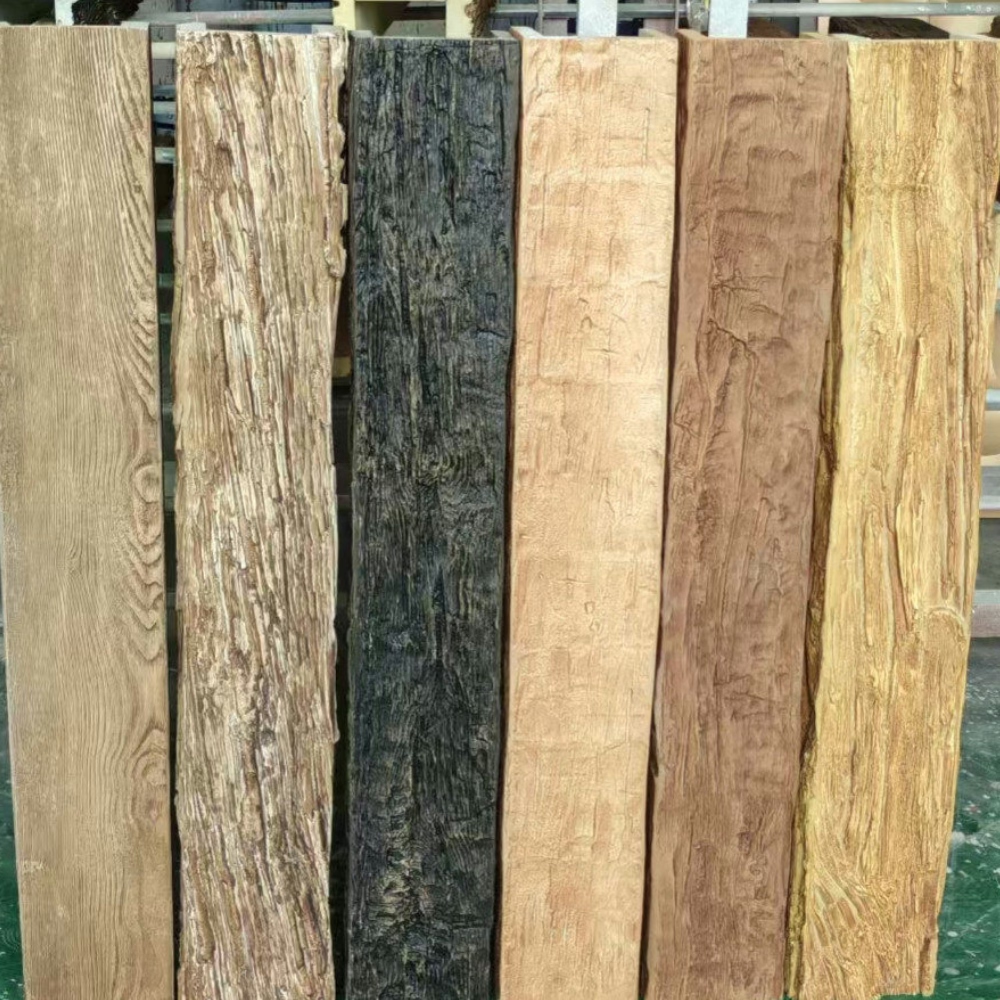
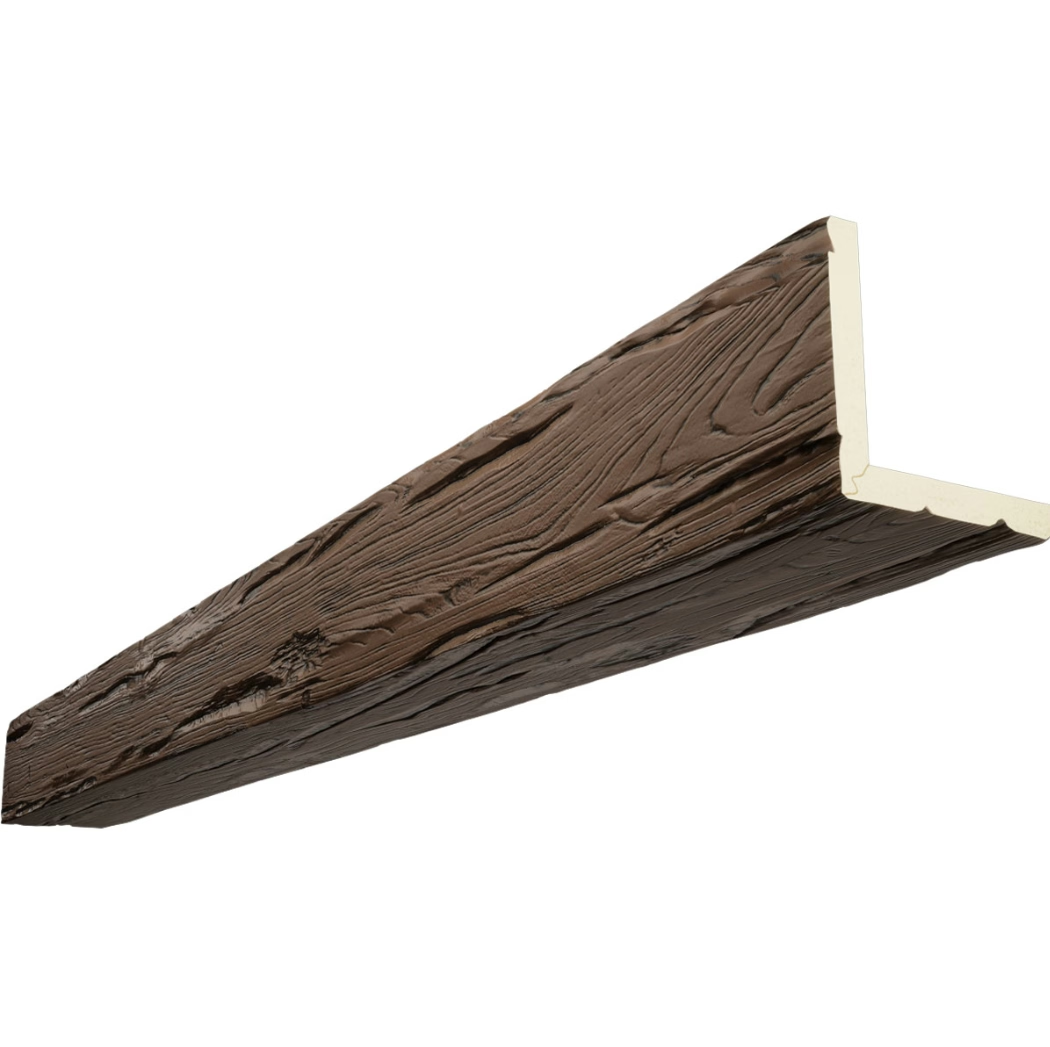
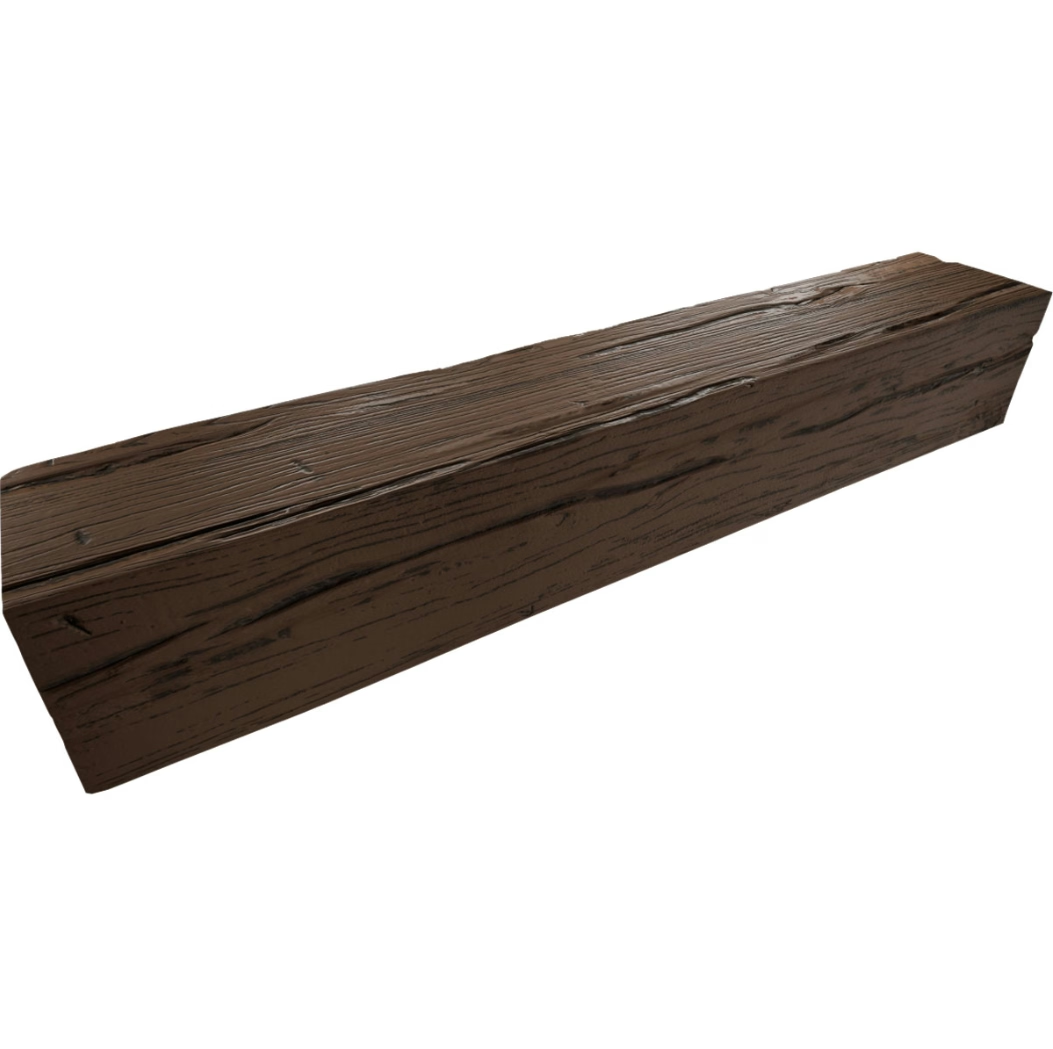
Spanish Style PU Faux Timber Beams | Custom Profiles for Contractors
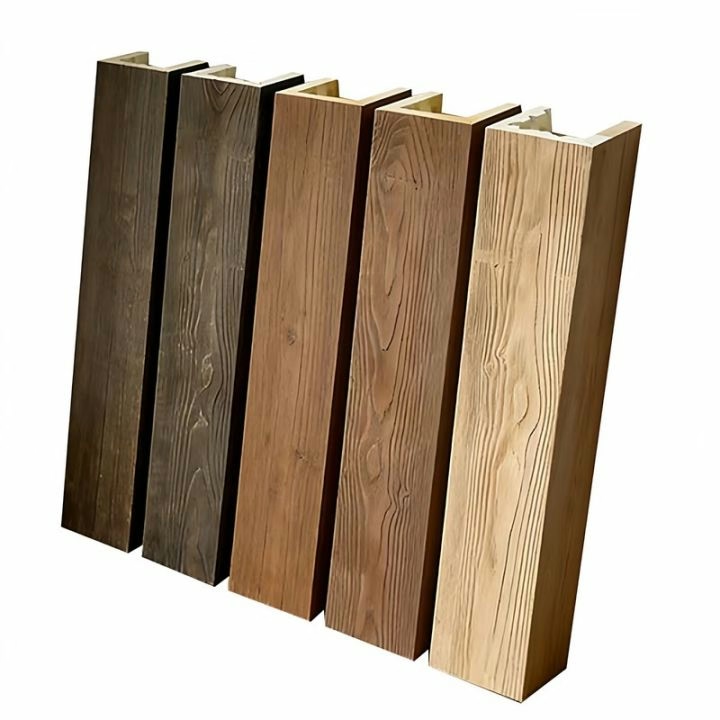
Spanish style polyurethane beams can use stock profiles for most projects, but distinctive Spanish projects often require custom profile development. The custom profiles reflect specific Spanish regional traditions, replicate historical beams from specific periods, or create distinctive new profiles that become part of the project's brand. For contractors specifying Spanish projects, understanding the custom profile process helps make informed decisions about when custom makes sense.
This is what custom profile development means for Spanish style polyurethane beams, the viga and latilla profile traditions, the custom mold process, and when custom makes sense for contractors.
Spanish viga profile traditions
Traditional Spanish viga profiles have specific characteristics:
Plain rectangular profiles
The most common traditional Spanish viga:
- Square or rectangular cross-section.
- Rough-sawn or hand-hewn surface.
- Consistent cross-section along the length.
- Sometimes with slight variations at the ends.
Plain rectangular profiles work for most Spanish projects.
Stepped or chamfered profiles
Profiles with stepped or chamfered edges:
- Edges chamfered at 45 degrees.
- Stepped profiles with multiple levels.
- Decorative edge treatments.
Stepped profiles add formality to Spanish installations.
Carved or sculpted profiles
Profiles with carved or sculpted details:
- Geometric carved details.
- Decorative scrollwork or motifs.
- Spanish colonial period details.
Carved profiles signal high-end Spanish construction.
Regional variations
Spanish profiles vary by region:
- Andalusian profiles. Specific to southern Spanish traditions.
- Catalan profiles. Distinctive northeastern Spanish style.
- Castilian profiles. Central Spanish formal style.
- Colonial Mexican profiles. Spanish colonial adaptation.
- California mission profiles. Spanish mission adaptation.
Regional variations reflect specific traditions.
Spanish latilla profile traditions
Latillas (the smaller perpendicular poles) have their own profile traditions:
Round latillas
The most common traditional latilla:
- Round cross-section from peeled poles.
- Variable diameter along the length.
- Rough or smooth surface.
Round latillas fill between vigas.
Half-round latillas
Latillas split lengthwise:
- Flat side up against the vigas.
- Round side facing down.
- More uniform appearance than full round.
Half-round latillas provide a cleaner ceiling appearance.
Square or rectangular latillas
Latillas with squared cross-sections:
- More uniform appearance.
- Easier to install.
- Less authentic but cleaner.
Square latillas work for more contemporary Spanish.
Decorative latillas
Latillas with decorative profiles:
- Carved details.
- Specific regional patterns.
- Distinctive shapes.
Decorative latillas add character to specific installations.
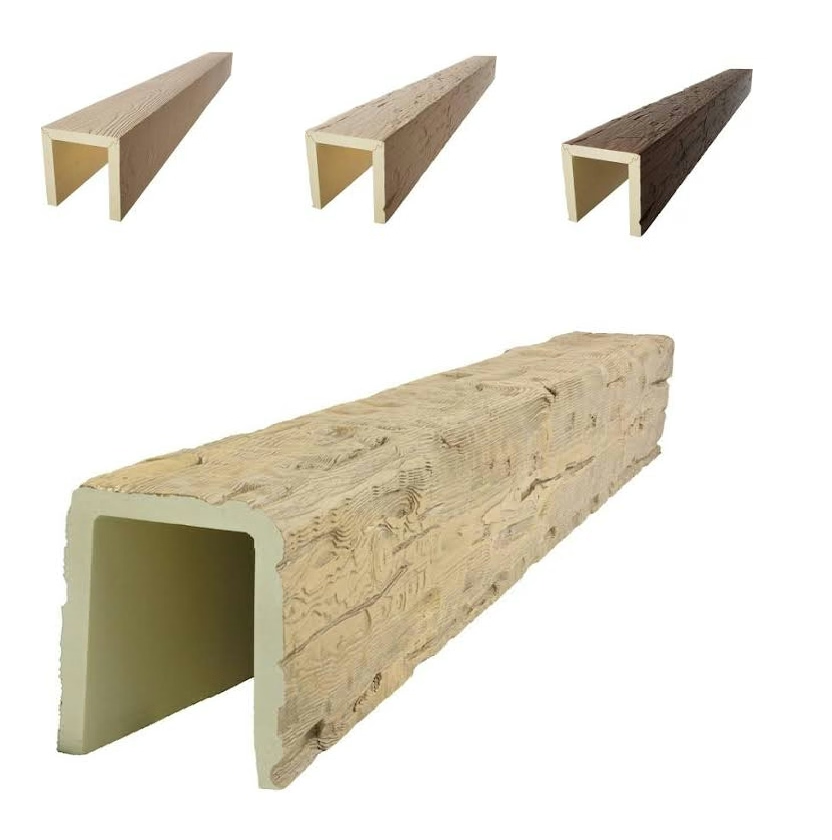
The custom profile development process
For Spanish style custom profile development, the process involves:
Reference evaluation
The contractor provides references:
- Physical wood samples (when available).
- Historical photographs or drawings.
- Reference images showing the desired profile.
- Architectural drawings or specifications.
Reference evaluation sets the foundation for the profile development.
Wood master creation
The factory creates the wood master:
- Skilled carver selects the wood block.
- Hand-cuts the profile per the reference.
- Adds texture details.
- Reviews against the reference.
- Refines as needed.
Wood master creation takes 30 to 80 hours of skilled work.
Sample production
The factory produces samples from the wood master:
- Polyurethane cast from the wood master.
- Color and finish applied per specification.
- Quality inspection.
Sample production takes 1 to 2 weeks.
Iteration
The contractor reviews samples and either approves or requests modifications:
- Cycle 1: Initial profile.
- Cycle 2: Refinements based on feedback.
- Cycle 3: Final profile.
Most custom profiles require 1 to 3 iteration cycles.
Mold production
After approval, the factory produces the production mold:
- Mold pouring from the wood master.
- Mold curing.
- Mold testing with sample production.
Mold production takes 2 to 4 weeks.
Production
The factory produces the order from the approved mold:
- Production waves aligned to construction schedule.
- Color and finish per specification.
- Quality inspection.
Production takes 3 to 5 weeks per wave.
Cost-benefit decision for contractors
For contractors, the custom profile decision involves:
When custom makes sense
- Distinctive Spanish projects. High-end projects requiring distinctive profiles.
- Historical replication. Replicating historical Spanish beam profiles.
- Regional authenticity. Projects requiring specific regional Spanish traditions.
- Designer specifications. Architect or designer has specified custom profile.
Custom makes sense for distinctive projects.
When stock profiles work
- Standard Spanish projects. Most Spanish projects work with stock profiles.
- Budget constraints. Custom profiles add significant cost.
- Time constraints. Custom profiles add lead time.
- Volume limitations. Custom profiles don't amortize across many projects.
Stock profiles work for most projects.
Cost considerations
Custom profile costs include:
- Wood master creation: Often included in mold development fee.
- Mold development: $4,000 to $10,000.
- Sample production: Often included.
- Per-piece pricing: 40 to 80 percent above stock.
- Total premium: Significant upfront and per-piece cost.
Custom profiles are a meaningful investment.
Lead time considerations
Custom profile lead times:
- Wood master creation: 4 to 8 weeks.
- Mold production: 2 to 4 weeks.
- Sample iteration: 1 to 4 weeks.
- Production: 3 to 5 weeks.
- Total: 10 to 20 weeks.
Custom profiles require longer lead times.
The contractor's role in custom profile work
For contractors specifying custom Spanish profiles, several responsibilities matter:
Reference provision
The contractor provides clear references:
- Multiple reference images.
- Physical samples when available.
- Architectural drawings.
- Designer specifications.
Clear references support accurate profile development.
Designer coordination
For projects with designer involvement:
- The designer provides the profile specification.
- The contractor coordinates with the factory.
- The contractor manages the sample approval cycle.
Coordination produces accurate results.
Sample approval management
The contractor manages the sample approval:
- Reviews samples against the design intent.
- Coordinates with the designer for approval.
- Documents the approved profile.
Sample approval produces the production specification.
Cost and timeline communication
The contractor communicates with the project owner:
- The cost premium for custom profiles.
- The longer lead times for custom profiles.
- The trade-offs between custom and stock.
Communication supports owner decision-making.
Pricing for custom profile Spanish beams
Pricing for custom profile Spanish beams typically includes:
- Mold development fee: $4,000 to $10,000.
- Per-piece pricing: 40 to 80 percent above stock.
- Color and finish development: $300 to $800 per color.
- Documentation: Often included.
- Replacement: Same per-piece pricing for replacements.
For a project with 200 to 500 linear feet of custom profile Spanish beams, total project cost is typically $15,000 to $40,000 including mold development.
Common pitfalls in custom profile Spanish projects
A few issues that come up often enough to flag:
- Insufficient reference materials. Vague references produce inaccurate profiles.
- Underestimating cost. Custom profile costs surprise the project budget.
- Underestimating lead time. Custom profile timelines don't fit project schedules.
- Skipping sample iteration. Rushing through sample approval produces mismatched profiles.
- Designer engagement gaps. Contractor doesn't coordinate with designer.
How contractors evaluate custom profile suppliers
For contractors evaluating suppliers for custom profile Spanish beams:
- Wood master capability. The supplier has skilled wood masters.
- Spanish style experience. The supplier has Spanish profile experience.
- Sample quality. The supplier's samples demonstrate high-quality profiles.
- Cost transparency. The supplier's pricing for custom profiles is clear.
- Lead time reliability. The supplier meets custom profile lead times.
- References. The supplier has done comparable custom Spanish work.
Spanish style polyurethane faux timber beams custom profiles for contractors is a category where the profile tradition expertise, the wood master capability, and the cost-benefit decision all need to align. The right supplier produces custom profiles that authentically reflect Spanish traditions. The wrong one produces custom profiles that don't quite capture the Spanish character.
Technical References
ASTM standards cited in every specification
Test Data
Lab results from internal testing program
Updated 2026
Reviewed against current product specs