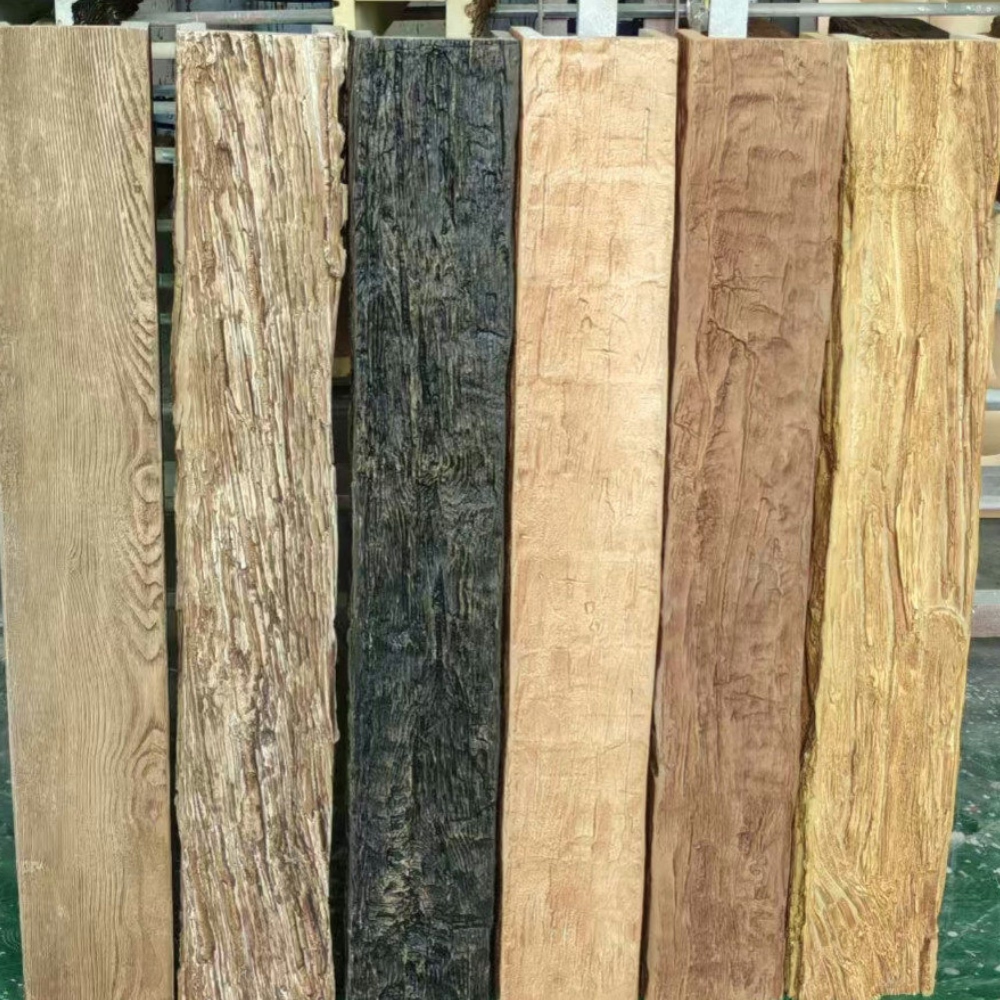
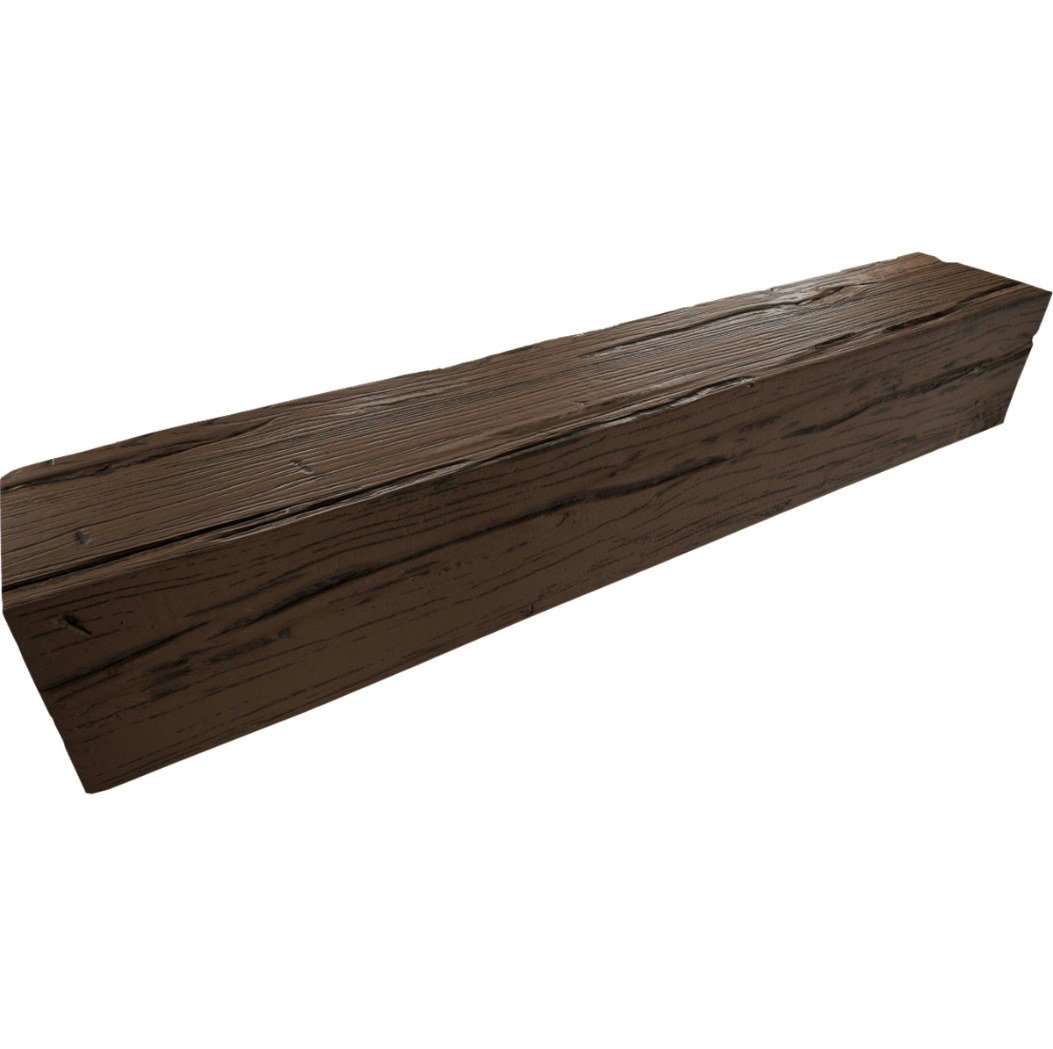
Stable PU Faux Timber Beams | Wholesale for Long-term Building Projects
For long-term building projects—structures expected to last 30, 50, or 100+ years—material stability matters. Polyurethane faux timber beams offer specific stability advantages over solid wood and other materials, making them appropriate for projects with long service life expectations. Understanding what stability means in practice and what the warranty implications are helps wholesale buyers specify correctly.
This is what dimensional stability means for polyurethane beams over decades, how they compare to solid wood and other materials, and what the implications are for long-term building projects.
What "stable" means for building materials
Material stability refers to the material's ability to maintain its dimensions and properties over time:
Dimensional stability
The material maintains its dimensions despite environmental changes:
- No swelling or shrinking from humidity.
- No significant thermal expansion or contraction.
- No warping, cupping, or twisting from internal stresses.
- No compression set from sustained loads.
Dimensional stability is the foundation of long-term performance.
Appearance stability
The material maintains its visual appearance over time:
- No color fading from UV exposure (with appropriate finish).
- No surface degradation from environmental exposure.
- No finish cracking from material movement.
- No joint separation from dimensional changes.
Appearance stability contributes to long-term aesthetics.
Structural stability
The material maintains its structural integrity:
- No loss of strength over time.
- No degradation from environmental exposure.
- No fatigue from sustained or cyclical loads.
- No biological degradation (mold, rot, insect damage).
Structural stability is what ensures the material continues to perform.
How polyurethane beams achieve stability
Polyurethane faux timber beams achieve stability through several properties:
Closed-cell structure
The closed-cell polyurethane structure:
- Doesn't absorb water.
- Doesn't allow moisture migration through the material.
- Maintains its cellular structure over decades.
The closed-cell structure is the foundation of dimensional stability.
Cross-linked polymer
The polyurethane polymer is cross-linked:
- The molecular structure resists deformation.
- The material doesn't creep under sustained loads.
- The material maintains its elastic properties over time.
The cross-linked polymer contributes to long-term stability.
Factory finish protection
The factory finish protects against environmental exposure:
- UV-stabilized finishes resist color fading.
- Moisture-resistant finishes protect against humidity.
- Chemical-resistant finishes protect against environmental exposure.
The factory finish works with the substrate to ensure stability.
Cut-end sealing
The cut-end sealing protects the most vulnerable points:
- Marine-grade or enhanced sealers for harsh environments.
- Proper sealer thickness and coverage.
- Full cure before packaging.
Cut-end sealing prevents moisture ingress through the cut ends.
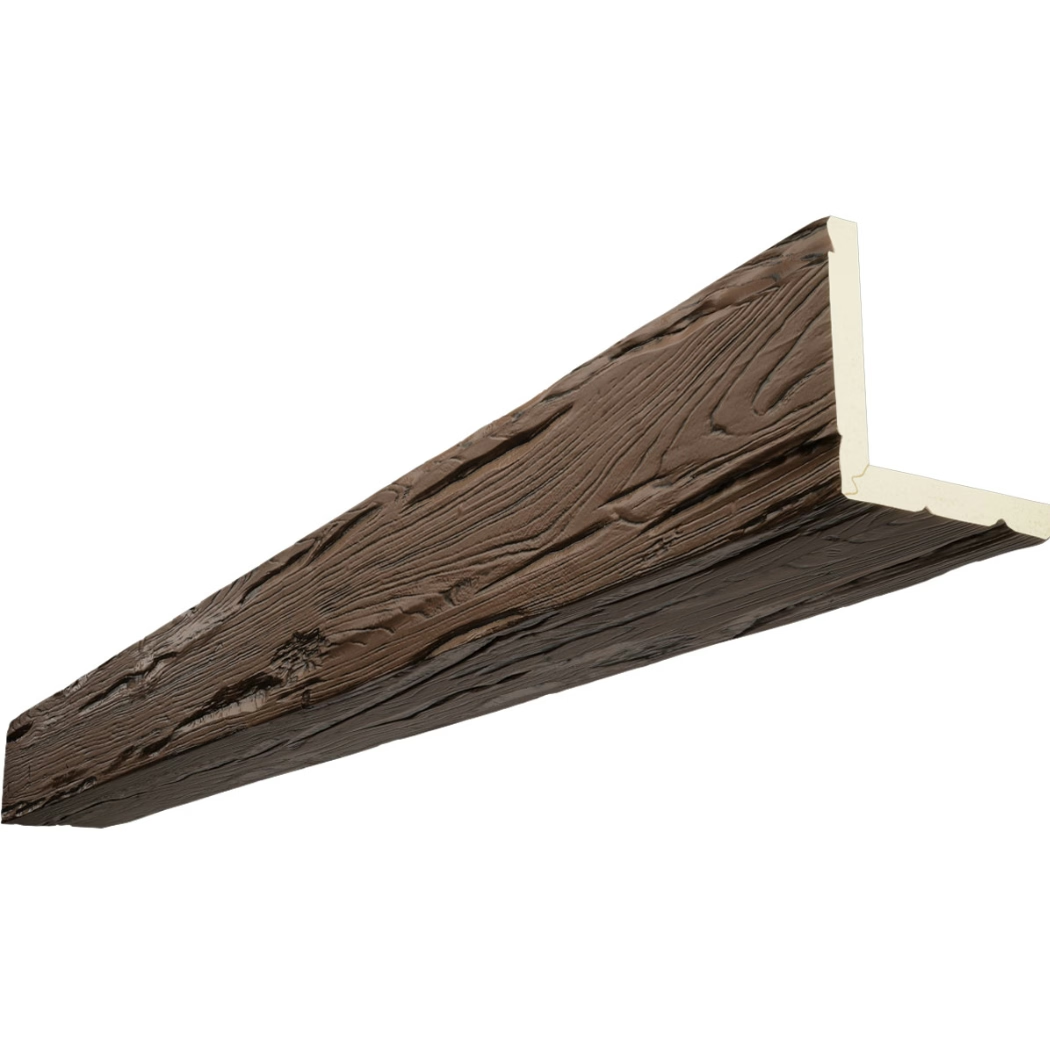
Comparison to other materials
Comparing polyurethane stability to other beam materials:
Solid wood
- Year 1 to 5: Initial warping from moisture changes.
- Year 5 to 20: Cumulative warping, finish cracking.
- Year 20 to 50: Severe warping in many beams, replacement often needed.
- Year 50+: Most beams replaced or significantly degraded.
Solid wood beams have moderate short-term stability but poor long-term stability.
MDF (medium-density fiberboard)
- Year 1 to 3: Swelling from any moisture exposure.
- Year 3 to 10: Significant degradation in any moisture exposure.
- Year 10+: Most beams replaced or severely degraded.
MDF beams have poor stability in any moisture environment.
Plaster
- Year 1 to 10: Generally stable in dry environments.
- Year 10 to 30: Cracking from building movement, moisture damage.
- Year 30+: Significant cracking, often requires replacement.
Plaster beams have moderate stability but are fragile.
Metal
- Year 1 to 50: Excellent dimensional stability.
- Year 50+: Possible corrosion in harsh environments.
Metal beams have excellent stability but different aesthetic.
Polyurethane
- Year 1 to 50: Excellent dimensional stability.
- Year 50+: Continued stability with minimal degradation.
Polyurethane beams have excellent long-term stability, comparable to metal but with wood aesthetics.
Thermal expansion considerations
Polyurethane beams do have thermal expansion, but it's typically small and manageable:
Thermal expansion coefficient
The thermal expansion coefficient of polyurethane is approximately:
- 50 to 100 × 10^-6 per °C (depending on density and formulation).
- This is roughly 2 to 5 times that of steel.
- This is roughly 5 to 10 times that of wood (in the grain direction).
For a 16-foot beam with a 50°F temperature swing:
- Polyurethane expansion: approximately 1/16 inch.
- Wood expansion: approximately 1/32 inch.
- Steel expansion: approximately 1/64 inch.
For typical interior applications, the 1/16 inch thermal expansion over 16 feet is invisible.
Managing thermal expansion
For most interior applications, thermal expansion doesn't require special design:
- The cleat system accommodates the small expansion.
- Joint gaps can absorb any visible expansion.
- The factory finish doesn't crack from the small movement.
For exterior applications or applications with extreme temperature swings, the cleat system may need expansion accommodation.
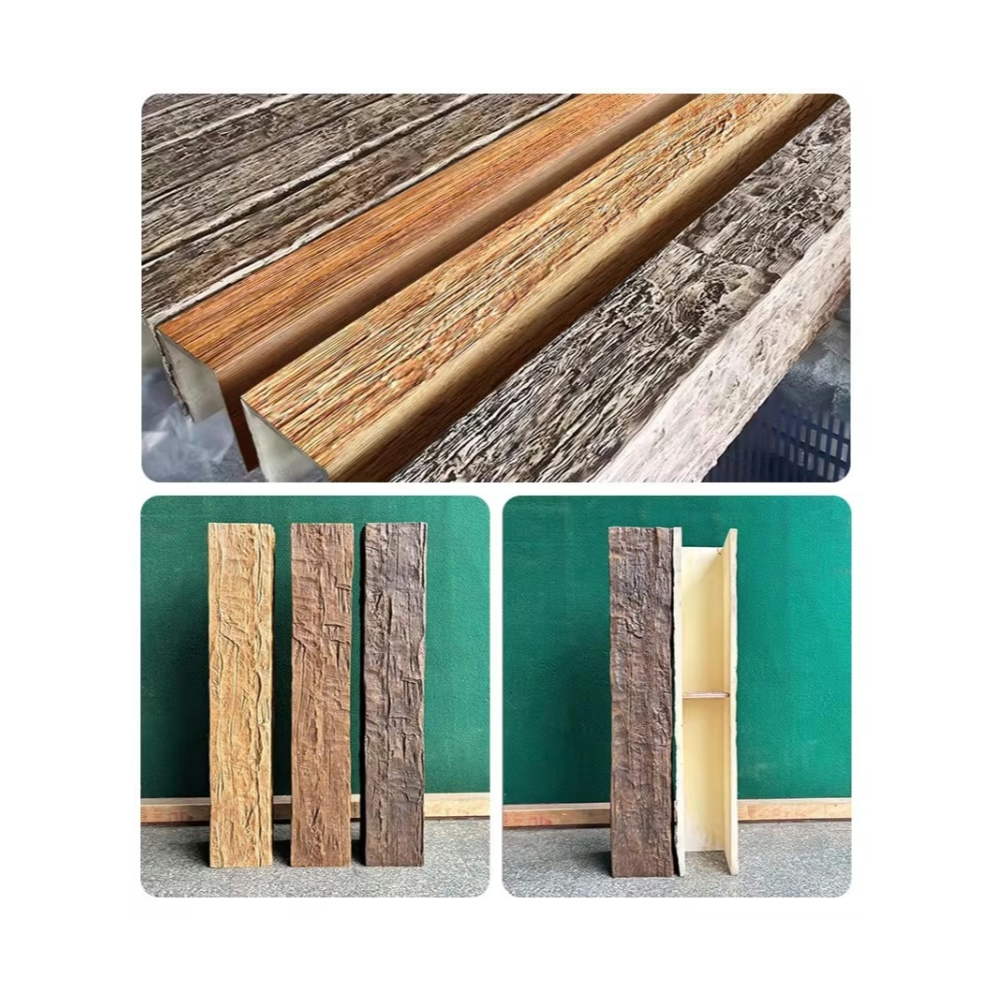
Humidity response
Polyurethane beams have minimal humidity response:
Water absorption
Closed-cell polyurethane absorbs less than 1 percent water by weight:
- Even at 100 percent relative humidity, the moisture absorption is minimal.
- The dimensional change from this absorption is negligible.
- The beam doesn't swell, shrink, or warp from humidity.
Compare to solid wood, which can absorb 10 to 20 percent water by weight and dimensionally change significantly.
Long-term humidity exposure
For beams in high-humidity environments (bathrooms, pool houses, coastal areas):
- The closed-cell structure prevents moisture absorption.
- The factory finish protects against moisture ingress.
- The cut-end sealing prevents moisture ingress at the cut ends.
With proper specification, polyurethane beams perform in high-humidity environments for decades.
UV stability
UV exposure can degrade polyurethane and the factory finish:
Substrate UV stability
Polyurethane itself can degrade under prolonged UV exposure:
- Surface chalking or color shift in unprotected polyurethane.
- Surface embrittlement over time.
- Loss of mechanical properties.
Modern polyurethane formulations include UV stabilizers that significantly slow this degradation.
Finish UV stability
The factory finish provides additional UV protection:
- UV-stabilized topcoats resist color fading.
- Pigmented finishes (vs clear finishes) provide additional UV protection.
- Exterior-rated finishes are formulated for maximum UV stability.
For exterior applications, UV-stabilized finishes are essential.
UV performance over time
With proper UV protection:
- Color stability maintained for 10 to 20 years (depending on exposure).
- Surface integrity maintained for 20+ years.
- Significant degradation only after prolonged exposure without maintenance.
For most applications, the UV performance is adequate for the building's expected service life.
Warranty implications
The stability of polyurethane beams affects warranty terms:
Standard warranty
Most polyurethane beam manufacturers offer:
- 10 to 25 year limited warranty against warping, cracking, and delamination.
- Coverage for manufacturing defects.
- Exclusions for improper installation, physical damage, or finish neglect.
The warranty reflects the material's expected stability.
Warranty considerations for long-term projects
For long-term building projects:
- Verify the manufacturer's warranty matches the project's expected service life.
- Consider extended warranty options for projects requiring 25+ year coverage.
- Document the warranty terms in the project's specifications.
The warranty documentation supports the project's long-term planning.
Warranty exclusions
Typical warranty exclusions include:
- Damage from improper installation.
- Damage from physical impact or abuse.
- Damage from finish neglect or improper maintenance.
- Color fading from UV exposure beyond specified limits.
- Damage from exposure to chemicals not covered by the specification.
The builder and homeowner should understand the warranty terms.
How to specify stable beams for long-term projects
For long-term building projects, the specification should include:
Material specification
- Polyurethane density (typically 200 to 320 kg/m³ for long-term applications).
- Closed-cell structure confirmation.
- Cut-end sealing specification.
Finish specification
- UV-stabilized finish for any UV exposure.
- Moisture-resistant finish for high-humidity environments.
- Chemical-resistant finish for harsh environments.
Documentation requirements
- Warranty terms matching the project's service life expectations.
- Care and maintenance guide.
- Replacement availability terms.
Quality assurance
- Density verification per shipment.
- Color and texture verification per shipment.
- Documentation per shipment.
Common pitfalls in stable beam specifications
A few issues that come up often enough to flag:
- Specifying standard density for harsh environments. Higher density needed for severe conditions.
- Insufficient UV protection. Standard finishes degrade in prolonged UV exposure.
- Inadequate cut-end sealing. Standard sealing may not be sufficient for high-moisture environments.
- Short warranty terms. Warranty shorter than the project's expected service life.
- Missing care and maintenance documentation. Improper maintenance can void warranty.
How wholesale buyers evaluate stable beam suppliers
For wholesale buyers evaluating stable beam suppliers:
- Material certification. The supplier confirms closed-cell polyurethane structure.
- Density documentation. The supplier provides density data per shipment.
- Cut-end sealing specification. The supplier documents the cut-end sealing process.
- Warranty terms. The supplier offers appropriate warranty for long-term projects.
- References. The supplier has long-term references showing stability.
Stable polyurethane faux timber beams wholesale for long-term building projects is a category where the dimensional stability, the warranty terms, and the long-term performance documentation all need to align. The right supplier produces beams that maintain their stability over decades. The wrong one produces beams that may degrade within years despite the stability claims.
Technical References
ASTM standards cited in every specification
Test Data
Lab results from internal testing program
Updated 2026
Reviewed against current product specs