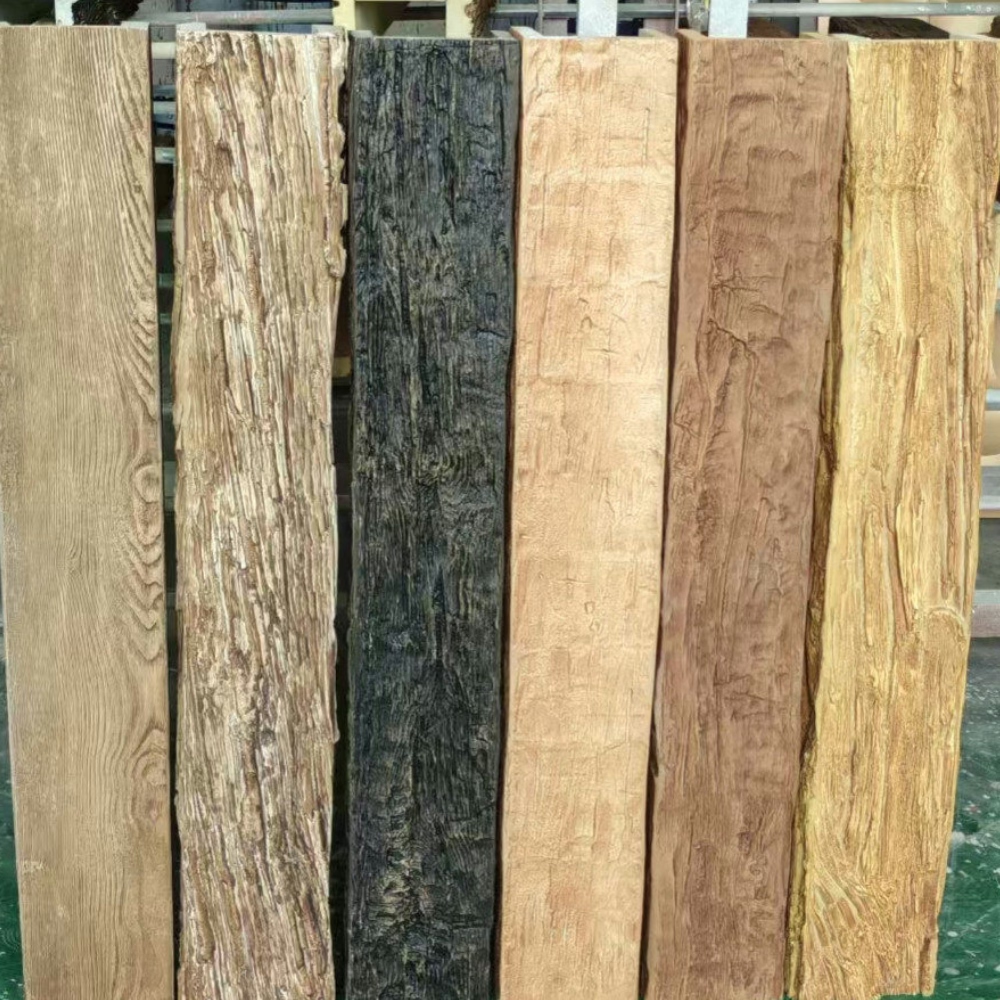
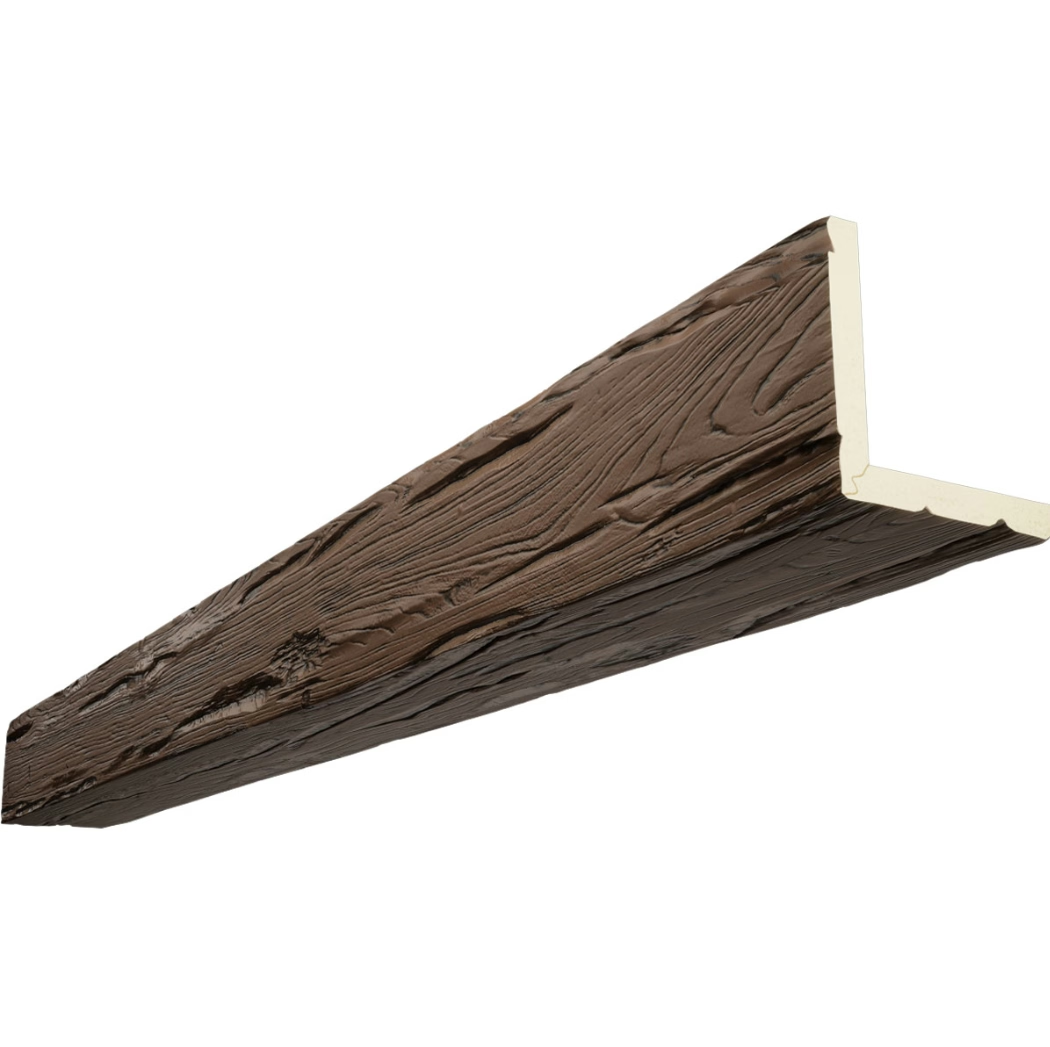
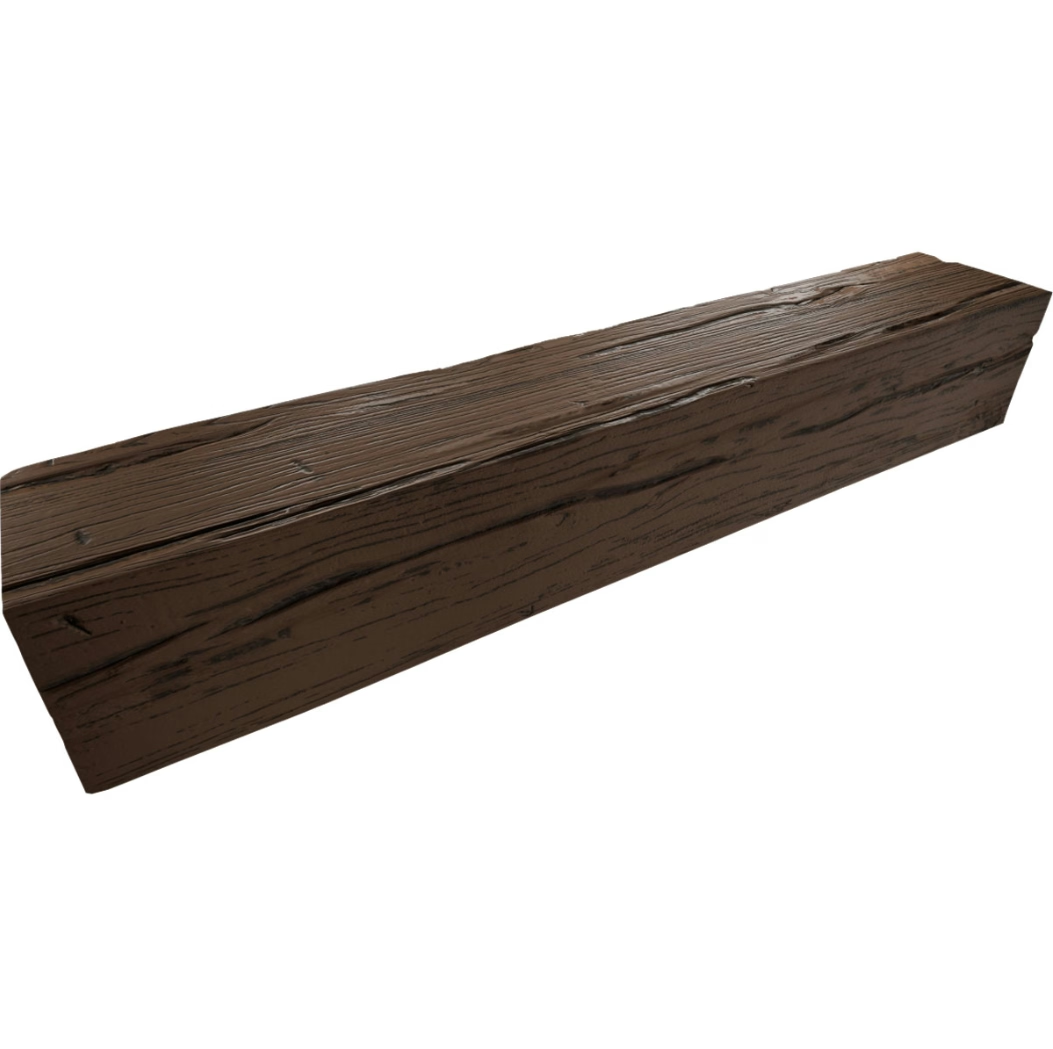
Unfinished Faux Timber Beams | Bulk Supply Options for Builders
Unfinished faux timber beams offer builders bulk supply options that combine factory production with builder-finishing flexibility. The beams come from the factory with profile, texture, and surface preparation completed, but without the final color and sealer coat. Builders with in-house finishing crews can apply the final finish on-site, achieving custom results at lower cost than factory-finished premium tier. Understanding the bulk supply options helps builders choose the right program.
What unfinished faux timber beams offer
Unfinished faux timber beams offer builders specific advantages:
Cost savings
Builders save on factory finishing costs:
- 15 to 25 percent savings vs factory-finished premium tier.
- The savings flow to builder margin or project budget.
- For builders running many projects, the savings are significant.
The cost advantage is meaningful.
Finish customization
Builders control the final finish:
- Exact color match to other woodwork in the home.
- Finish techniques specific to the design intent.
- Hand-rubbed or specialty effects.
- Coordination with on-site finishing work.
The customization produces better project integration.
Lead time compression
Unfinished beams typically have shorter lead times:
- 1 to 2 weeks shorter than fully-finished beams.
- The factory doesn't need finishing time.
- Faster turnaround for tight project timelines.
The lead time advantage helps scheduling.
Builder capability utilization
For builders with skilled finishing crews:
- The crew's capability is leveraged.
- The crew's work adds value to the project.
- The crew's skills differentiate the builder.
The capability utilization supports the builder's business model.
Bulk supply options for unfinished beams
For builders, several unfinished beam bulk supply options exist:
Standard unfinished
Stock profile, standard surface preparation:
- Stock mold profiles.
- Standard surface preparation (primer or basic sealer).
- No color or sealer applied.
- Lowest unfinished pricing.
Standard unfinished works for builders with full finishing capability.
Premium unfinished
Stock or modified profile, premium surface preparation:
- Stock or modified mold profiles.
- Enhanced surface preparation for premium finishes.
- Compatibility documentation for common finish products.
- Mid-tier unfinished pricing.
Premium unfinished works for projects requiring premium finishes.
Custom unfinished
Custom profile, custom surface preparation:
- Custom mold development.
- Custom surface preparation per project specifications.
- Finish compatibility testing.
- Higher unfinished pricing.
Custom unfinished works for distinctive projects.
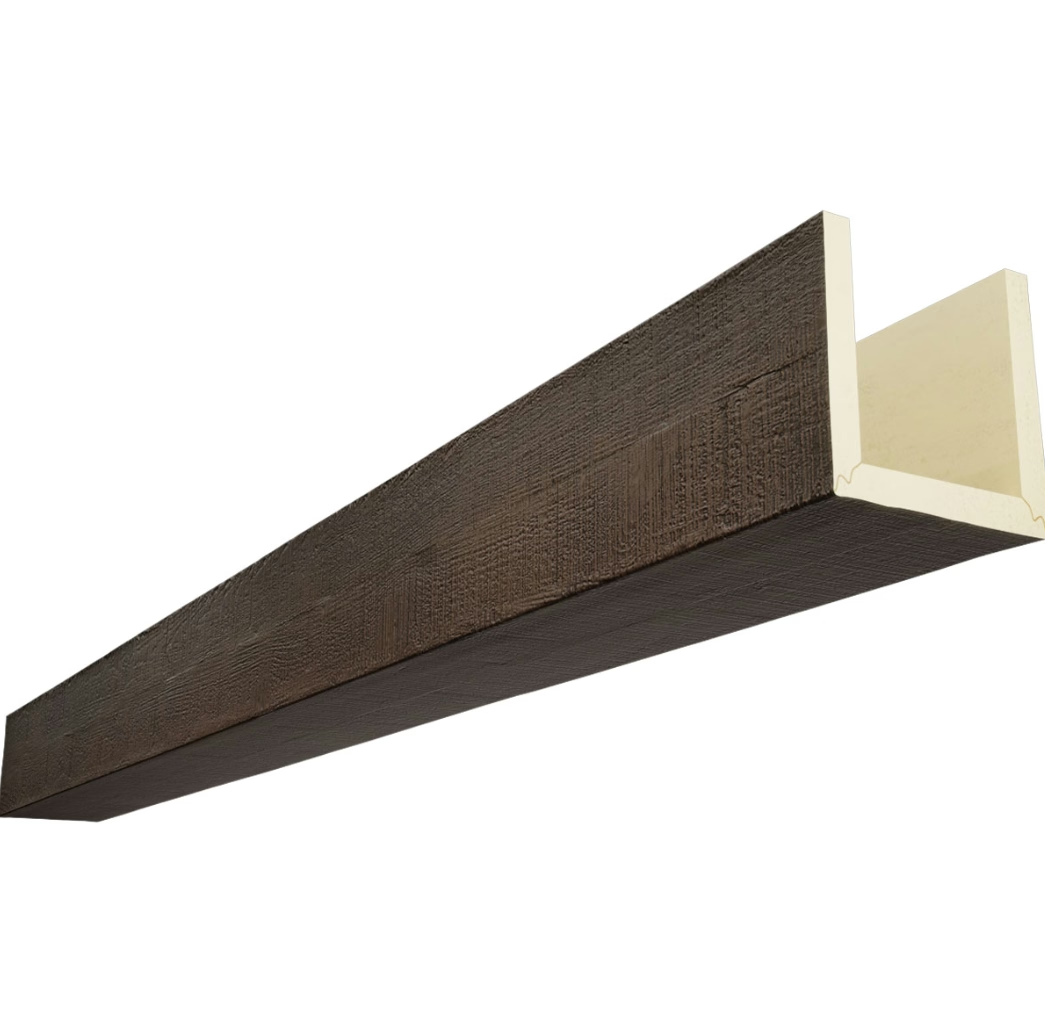
Factory surface preparation for unfinished beams
For unfinished beams, the factory surface preparation is critical:
Standard surface preparation
Typical factory preparation:
- Cut-end sealing with appropriate sealer.
- Surface cleaning to remove mold release residue.
- Basic primer or sealer for finish adhesion.
- Quality inspection.
Standard preparation supports most on-site finishing approaches.
Premium surface preparation
For projects requiring premium finishes:
- Enhanced primer or sealer.
- Compatibility documentation with specific finish products.
- Surface preparation testing.
- Documentation for builder's finisher crew.
Premium preparation supports premium on-site finishing.
Custom surface preparation
For distinctive project requirements:
- Custom primer or sealer formulation.
- Specific compatibility testing with builder's finish products.
- Custom documentation for builder's finishing process.
- Quality verification of preparation.
Custom preparation supports specific project finishing needs.
Builder's finishing process
For builders with in-house finishing crews, the on-site finishing process includes:
Pre-finishing preparation
Before applying finish:
- Beam inspection on arrival for damage.
- Cleaning to remove any contamination.
- Acclimation to install environment.
- Surface preparation verification.
Pre-finishing preparation supports quality finishing.
Stain application
The finisher applies the stain:
- Stain type per specification.
- Application technique per desired effect.
- Number of coats per depth of color.
- Dry time between coats.
Stain application establishes the color.
Specialty effects
For specialty finishes:
- Hand-rubbed effects.
- Multi-tone glazing.
- Selective weathering.
- Character marks.
Specialty effects produce distinctive finishes.
Sealer application
After stain dries, the finisher applies the sealer:
- Sealer type per durability requirement.
- Sheen level per design intent.
- Number of coats per durability.
- Dry time and curing.
Sealer application protects the finish.
Curing and inspection
The finished beams cure and are inspected:
- Full cure time per product specifications.
- Quality inspection of finished appearance.
- Touch-up for any defects.
- Documentation of finished quality.
Curing and inspection produce final quality.

Bulk supply patterns for unfinished beams
For builders, bulk supply patterns include:
Volume tiers
The builder negotiates volume tiers:
- Tier 1: 500 to 1,500 linear feet annually.
- Tier 2: 1,500 to 3,000 linear feet annually.
- Tier 3: 3,000+ linear feet annually.
Volume tiers reflect the builder's annual beam spend.
Standing specifications
The builder establishes standing specifications:
- Common profiles used across projects.
- Standard surface preparation.
- Standard documentation.
Standing specs cover most projects.
Pricing structure
Pricing for unfinished beams typically includes:
- Per-piece pricing by length with volume discounts.
- Lower than factory-finished pricing (15 to 25 percent savings).
- Premium for custom surface preparation.
- Premium for custom profiles.
Replacement availability
The supplier supports replacement:
- Replacement beams held at the factory.
- Same per-piece pricing as original orders.
- Builder can finish replacements to match original installation.
Replacement availability handles project issues.
When unfinished works vs when factory-finished works
For builders, the decision between unfinished and factory-finished:
Unfinished works when
- Builder has skilled finishing crew.
- Project requires custom color matching.
- Cost savings justify builder finishing labor.
- Timeline allows for on-site finishing.
- Builder wants finish control.
Factory-finished works when
- Builder doesn't have finishing crew.
- Project uses standard factory finishes.
- Faster installation is needed.
- Builder prefers turnkey approach.
- Quality of factory finishing exceeds builder capability.
The decision depends on the builder's capability and project requirements.
Pricing comparison
For a 200 linear foot beam project:
Unfinished beams:
- Per-piece: $2,400 (15 to 25 percent below factory-finished premium).
- Setup: $300.
- Freight: $200.
- Builder finishing labor: $1,200 (estimated).
- Builder finishing materials: $300.
- Total: $4,400.
Factory-finished premium:
- Per-piece: $3,000.
- Setup: $300.
- Freight: $200.
- Installation labor: $1,500.
- Total: $5,000.
Unfinished saves approximately $600 (about 12 percent) but requires builder finishing capability.
Common pitfalls in unfinished beam programs
A few issues that come up often enough to flag:
- Insufficient finisher crew training. Crew without training produces inconsistent finishes.
- Wrong finish products used. Products not compatible with the surface preparation.
- Insufficient dry or cure time. Rushing the schedule produces finish failures.
- Inadequate surface preparation. Factory preparation that doesn't support the builder's finish.
- Replacement stock unavailable. Damaged beams without fast replacement.
How builders evaluate unfinished beam suppliers
For builders evaluating suppliers for unfinished beams:
- Surface preparation specification. The supplier's preparation supports builder's finishing.
- Recommended products list. The supplier provides tested stain and sealer products.
- Profile quality. The supplier produces quality profiles.
- Documentation. The supplier provides documentation specific to unfinished beams.
- Replacement availability. The supplier supports fast replacement.
- References. The supplier has done comparable unfinished beam work.
Unfinished faux timber beams bulk supply for builders is a category where the surface preparation, the recommended products, and the builder's finisher crew capability all need to align. The right combination produces cost-effective beams with custom finishes. The wrong combination produces finishing issues at every project.
Technical References
ASTM standards cited in every specification
Test Data
Lab results from internal testing program
Updated 2026
Reviewed against current product specs