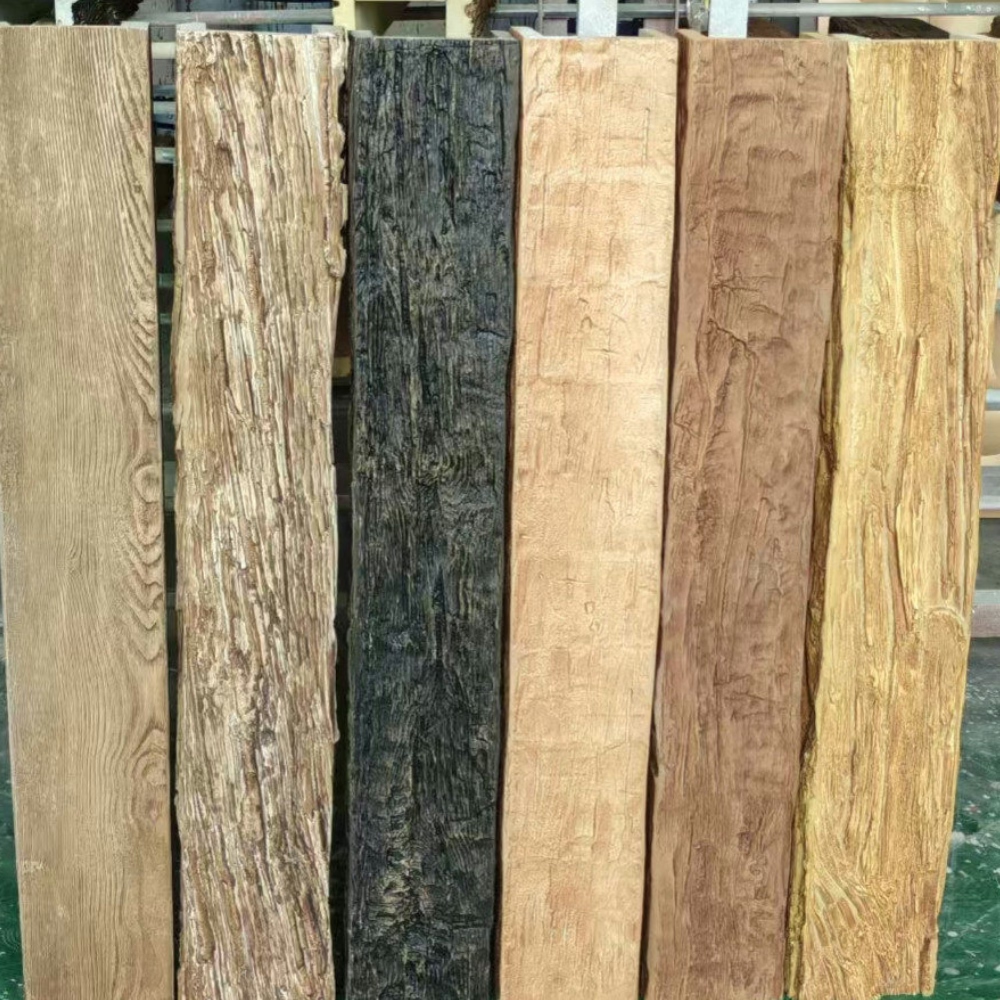
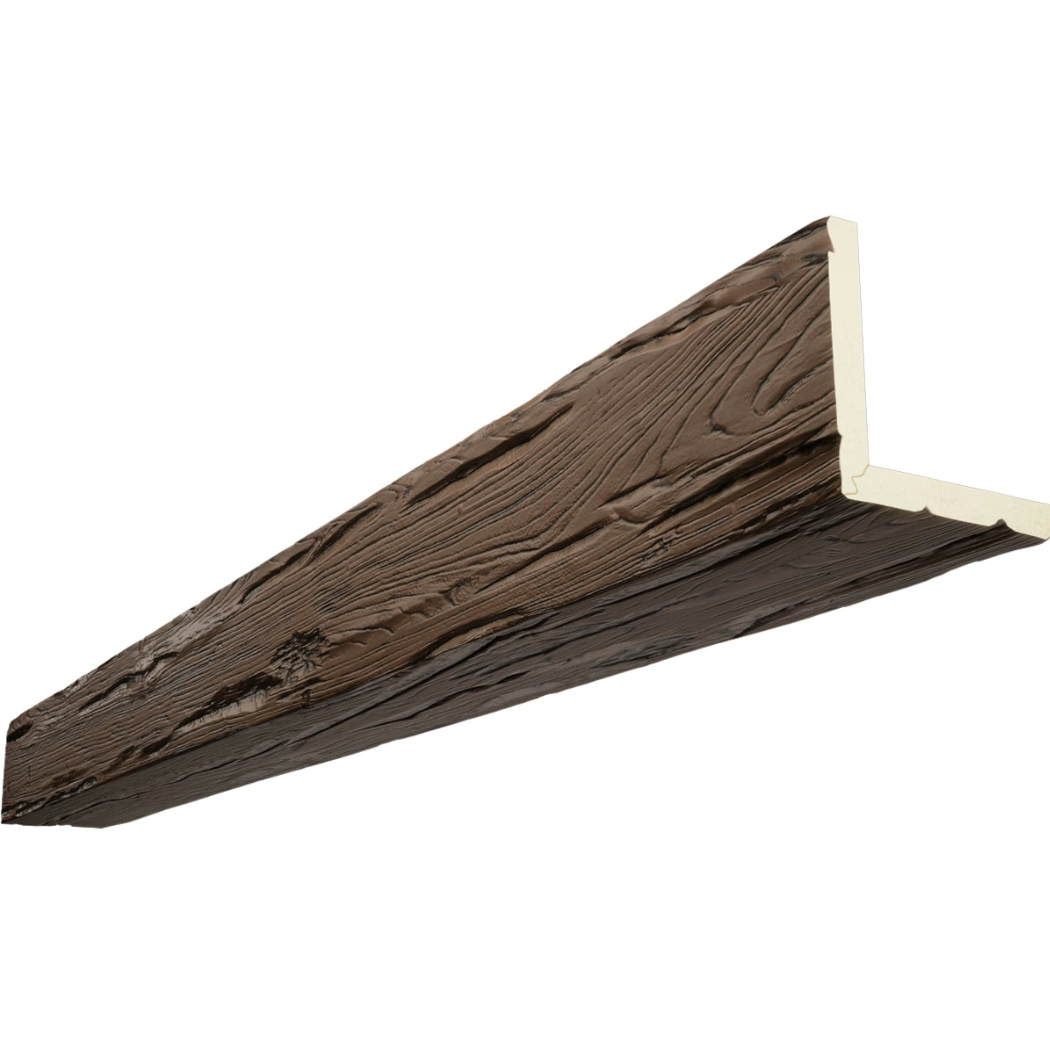
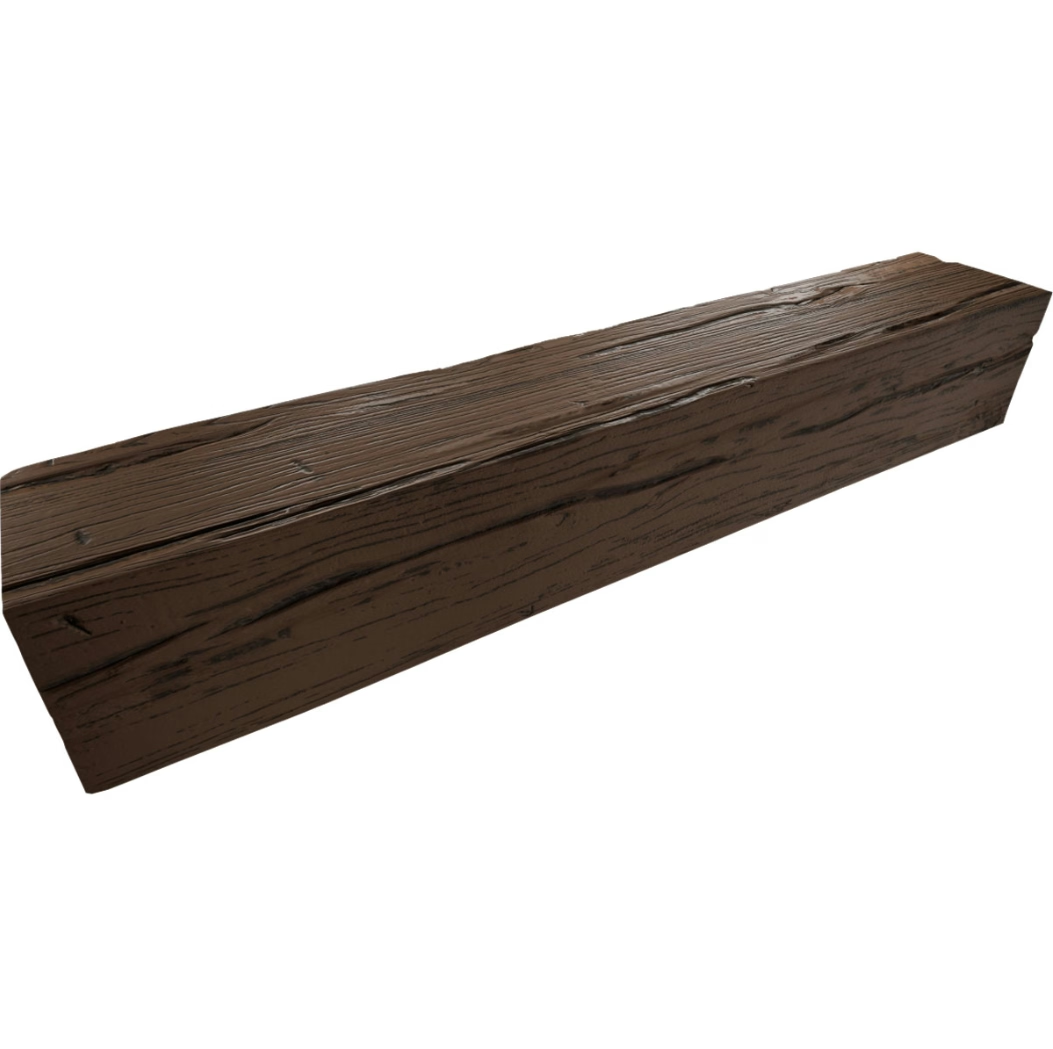
Unfinished Raw Surface Faux Wood Beams | Wholesale for Builders
Most polyurethane faux beams ship from the factory with a finished surface—color applied, sheen specified, multi-tone variation if it's an artisan beam. But there's a meaningful segment of builders and designers who prefer unfinished raw surface beams, where the factory applies a basic sealer but no color or finish, and the staining or finishing happens on-site after install.
This is the case for unfinished beams, what the tradeoffs are with prefinished options, and how the unfinished supply chain actually works.
Why builders choose unfinished beams
The reasons builders and designers specify unfinished faux wood beams fall into a few categories:
Matching existing woodwork
When the new beams are being added to a space that already has stained wood—flooring, cabinetry, trim, an existing exposed beam—the new beams need to match the existing wood exactly. Factory-applied finishes are developed against a reference sample, and the match is usually within a tonal step. On-site finishing against the actual existing wood produces a closer match.
The builder or finisher can adjust the stain on-site, layer colors, and blend the new beams with the existing wood in a way that's hard to replicate at the factory.
Custom color control
Some designers want a specific color that doesn't match any factory standard finish. On-site finishing allows the finisher to mix custom stains, apply them at the concentration that produces the exact target color, and adjust for the specific lighting in the space.
Factory color matching is precise but constrained to the factory's color library and process. On-site finishing is more flexible but requires a skilled finisher.
Project-specific weathering or aging
Some projects call for a beam finish that includes weathering or aging effects—graying, worn edges, traces of original paint, faux damage. These effects are difficult to apply consistently at the factory but can be done on-site by a skilled finisher.
For restoration work, custom home projects, or themed commercial interiors, on-site finishing may be the only way to achieve the specific look the designer wants.
Cost and lead time
Unfinished beams are typically 15 to 25 percent cheaper than prefinished beams, because the factory doesn't apply the multi-step finish. Lead times are also typically 1 to 2 weeks shorter, because the factory doesn't need to schedule finishing time.
For budget-constrained projects or projects with tight timelines, unfinished beams may be the practical choice.
The tradeoffs with prefinished beams
Unfinished beams aren't always the right choice. The tradeoffs:
Quality control
Factory-applied finishes benefit from the factory's controlled environment—consistent temperature, humidity, lighting, application technique. The finish is uniform across the run, with documented color and sheen specifications.
On-site finishes are subject to whatever conditions exist at the project site—temperature swings, humidity, dust, inconsistent lighting. The finish quality depends on the skill of the finisher and the conditions on the day of application.
For projects where finish consistency is critical—large visible ceilings, hospitality, commercial interiors—prefinished is usually the safer choice.
Time on site
Prefinished beams arrive ready to install. Unfinished beams need to be finished on-site, which adds time to the project schedule:
- Stain application: 1 to 2 days of finisher time per beam batch.
- Dry time between coats: 4 to 24 hours per coat, depending on the products used.
- Sealer or topcoat application: 1 day plus dry time.
- Total finishing time: 3 to 7 days from start to final cure.
For projects with tight construction schedules, this on-site finishing time has to be planned for.
Weather sensitivity
On-site finishing is weather-sensitive. Most stains and sealers require application within a specific temperature and humidity range, and the beams need to be protected from dust, debris, and direct sunlight during application and cure.
For projects in climates with extreme temperatures, high humidity, or active construction dust, on-site finishing is harder to schedule reliably.
Repair and touch-up
Prefinished beams arrive with a consistent factory finish. If a beam is damaged during install, the factory touch-up kit matches the factory finish.
Unfinished beams are finished on-site. If a beam is damaged after finishing, the repair has to be done on-site, with the same materials and techniques used for the original finish. Matching an aged or weathered finish on a repair is harder than matching a factory finish.
How unfinished beams are produced
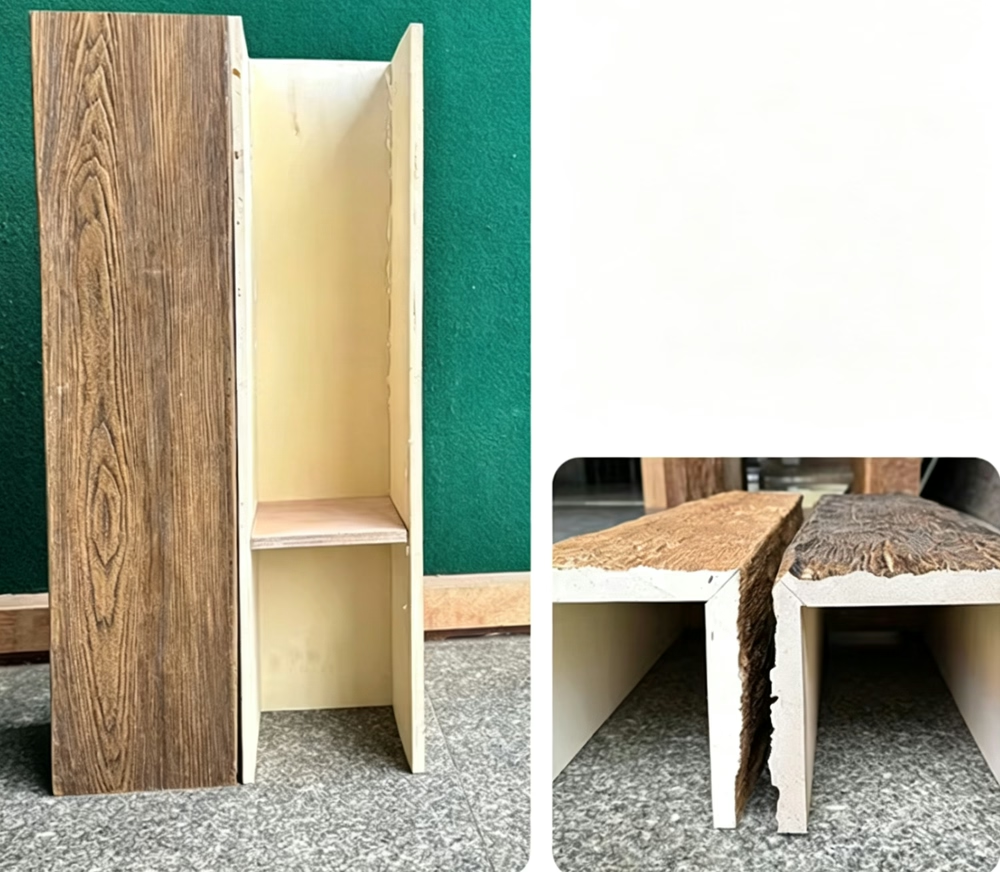
Unfinished polyurethane faux beams are produced like prefinished beams, with one key difference: the final finishing step is omitted.
The factory process:
- Mold pouring and curing. Same as for prefinished beams.
- Demolding and cutting to length. Same as for prefinished beams.
- Cut-end sealing. The factory seals the cut ends with a clear or color-neutral sealer. This is required even for unfinished beams, to prevent the cut polyurethane from absorbing moisture.
- Surface preparation. The factory may apply a basic sealer or primer to the beam surface, depending on the customer's specification. This is typically a clear sealer that prepares the surface for on-site staining.
- Packaging and shipping. The beams are packaged with extra protection to prevent surface damage during handling, since the unfinished surface is more vulnerable than a finished one.
The factory's role in the unfinished supply chain is to produce a beam that's properly sealed at the cut ends and prepared for on-site finishing. The color, sheen, and any weathering effects are applied on-site.
The on-site finishing process
For builders who choose unfinished beams, the on-site finishing process typically includes:
Step 1: Beam preparation
The beams are inspected on arrival. Any surface contamination—dust, oil, mold release residue—is cleaned off with a manufacturer-recommended cleaner. The beams are allowed to acclimate to the install environment for 24 to 48 hours before finishing.
Step 2: Stain or color application
The finisher applies the stain or color to the beam surface, working from one end to the other. The application technique depends on the desired look:
- Uniform color: Sprayer or wipe-on application for consistency.
- Multi-tone variation: Hand application with brushes or rags, layering colors.
- Weathered or aged: Multiple steps of color, glaze, and selective removal.
Step 3: Dry time
The stain or color is allowed to dry per the manufacturer's specifications. Dry time depends on the products used, temperature, and humidity.
Step 4: Sealer or topcoat
A sealer or topcoat is applied to protect the finish. The sealer type depends on the desired sheen (matte, satin, gloss) and the durability requirements.
Step 5: Final cure
The finished beams are allowed to cure before any further construction activity. Full cure time is typically 7 to 14 days, depending on the products used.

The factory's role with unfinished beams
For builders ordering unfinished beams, the factory's role extends beyond production:
- Cut-end sealing specification. The factory specifies the cut-end sealing process and the materials used. The builder's finisher needs this information for any field-cut beams.
- Surface preparation specification. The factory specifies the surface preparation—any primer, any pre-sealing, any surface texture that affects on-site finishing.
- Recommended finishing products. Most factories have a list of recommended stain and sealer products that work well with their polyurethane. The builder's finisher uses these or tests alternatives.
- Touch-up kit. For any field damage or repair, the factory supplies a touch-up kit with the same sealers and finishes used in production.
- Technical support during finishing. The factory's technical team is available to answer questions during the on-site finishing process.
A factory that supports unfinished beams well provides this documentation and support as part of the order. A factory that just ships unfinished beams without documentation is leaving the builder to figure out the finishing details alone.
Common pitfalls with unfinished beams
A few issues that come up often enough to flag:
- Field cuts not properly sealed. The builder cuts a beam on-site to fit around an obstruction. The cut end isn't sealed with the same sealer the factory used. The cut end absorbs moisture and swells over time.
- Inconsistent on-site finishing. The finisher applies the stain unevenly across the run. Some beams are darker, some lighter, and the variation reads as a manufacturing defect rather than as natural wood variation.
- Wrong products used. The finisher uses a stain or sealer that's not compatible with the polyurethane. The finish doesn't cure properly, or it reacts with the foam.
- Insufficient dry time. The beams are finished and then installed before the finish has fully cured. The finish is damaged during install or shortly after.
- Weather damage during finishing. The beams are finished on-site in conditions that aren't ideal—too hot, too cold, too humid, too dusty. The finish doesn't perform as expected.
When unfinished is the right specification
Unfinished beams make sense when:
- The project requires exact color matching to existing wood. On-site finishing allows the finisher to blend the new beams with the existing wood in ways that factory finishing can't.
- The designer wants custom color or weathering effects. On-site finishing is more flexible for one-off custom looks.
- The budget doesn't allow for prefinished pricing. Unfinished beams are 15 to 25 percent cheaper.
- The timeline allows for on-site finishing. The 3 to 7 days of on-site finishing time has to fit the construction schedule.
For most production builder projects and most commercial projects, prefinished beams are the better choice. The quality control, the timeline, and the documentation all favor prefinished. For custom home projects, restoration work, and projects where exact color matching is critical, unfinished beams may be the right call.
Technical References
ASTM standards cited in every specification
Test Data
Lab results from internal testing program
Updated 2026
Reviewed against current product specs