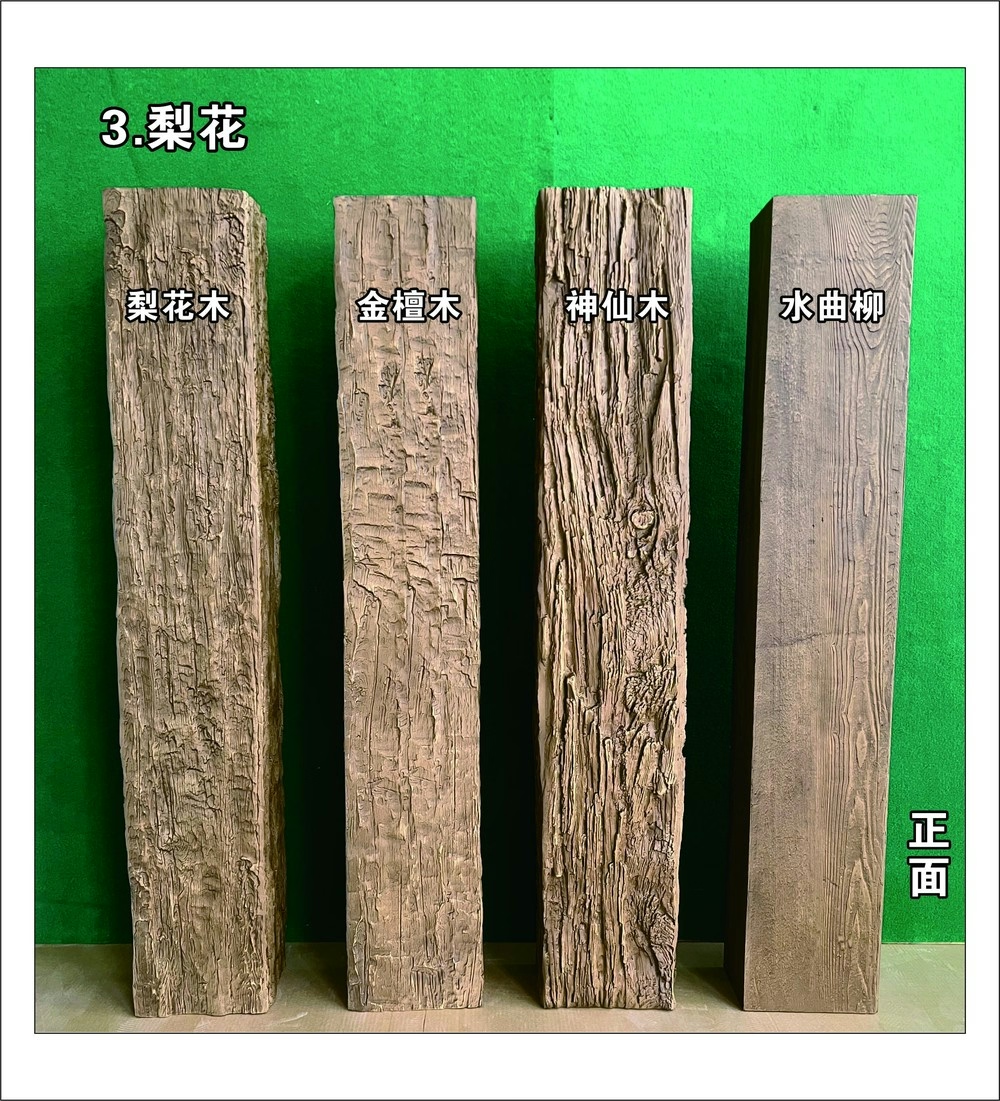
Wholesale Faux Ceiling Beams | Delivery to USA for Residential Builders
Residential builders importing wholesale faux ceiling beams from overseas suppliers need to understand the logistics, customs documentation, transit times, and operational patterns for successful cross-border procurement. This article explains what residential builders need to know about wholesale faux ceiling beam delivery to the USA.
Why international procurement for residential builders
Residential builders source faux ceiling beams internationally for several reasons:
Cost advantages
Overseas production often offers:
- 20 to 40 percent lower per-piece pricing vs domestic suppliers.
- Lower labor costs at the production location.
- Economies of scale at large factories.
- Material cost advantages in some regions.
The cost advantages can be significant.
Capacity access
International suppliers often have:
- Larger production capacity than domestic suppliers.
- Greater flexibility for volume orders.
- More extensive mold libraries.
- More custom capability.
Capacity access supports larger projects.
Specialized capabilities
Some international suppliers have:
- Specialized profiles not available domestically.
- Specific regional style expertise.
- Unique custom capabilities.
- Reference projects in the builder's market.
Specialized capabilities support distinctive projects.
Shipping methods for international beam procurement
For wholesale faux ceiling beams to the USA, several shipping methods exist:
Ocean freight (container)
Most common for wholesale orders:
- 20-foot container: Approximately 5,000 to 8,000 linear feet of beams.
- 40-foot container: Approximately 10,000 to 16,000 linear feet.
- LCL (Less than Container Load): For smaller orders, consolidated with other shipments.
- FCL (Full Container Load): For larger orders, dedicated container.
Ocean freight is the most cost-effective for wholesale orders.
Air freight
For urgent needs:
- Much faster than ocean freight (3 to 7 days vs 2 to 6 weeks).
- Significantly more expensive (5 to 10 times ocean freight).
- Limited by weight and size constraints.
- Used for samples and urgent orders.
Air freight is rarely used for wholesale beam orders.
Express courier
For very small orders or samples:
- Fastest option (1 to 5 days).
- Most expensive per unit.
- Used for samples and small orders.
- Size and weight limitations.
Express courier is for samples, not wholesale orders.
Transit times for ocean freight
Transit times vary by origin and destination:
From China
- West Coast USA (Los Angeles, Long Beach): 14 to 18 days.
- East Coast USA (New York, Savannah): 28 to 35 days.
- Gulf Coast USA (Houston, New Orleans): 30 to 40 days.
- Inland destinations: Add 3 to 7 days for ground transport.
China transit times are well-established.
From other Asian origins
- Vietnam: 18 to 25 days to West Coast, 32 to 40 days to East Coast.
- Indonesia: 20 to 30 days to West Coast, 35 to 45 days to East Coast.
- Thailand: 20 to 30 days to West Coast, 35 to 45 days to East Coast.
- India: 28 to 40 days to East Coast.
Other Asian origins vary by route.
From European or other origins
- Europe: 14 to 21 days to East Coast, 25 to 35 days to West Coast.
- Mexico: 3 to 7 days by ground.
- South America: 10 to 20 days to Gulf Coast.
Other origins vary by route and service.
Customs documentation requirements
For USA import of wholesale faux ceiling beams, customs documentation includes:
Commercial invoice
The commercial invoice includes:
- Seller and buyer information.
- Detailed product description.
- Quantity and unit of measure.
- Unit price and total value.
- Currency of the transaction.
- Terms of sale (Incoterms).
The commercial invoice is the primary customs document.
Packing list
The packing list includes:
- Detailed contents of each package.
- Dimensions and weight per package.
- Total packages and total weight.
- Package markings and numbers.
The packing list supports customs inspection.
Bill of lading (or airway bill)
The bill of lading includes:
- Shipper and consignee information.
- Vessel or flight information.
- Port of loading and discharge.
- Description of cargo.
- Freight terms.
The bill of lading is the transportation contract.
Customs bond
For USA import:
- Single-entry bond: For one-time imports.
- Continuous bond: For ongoing import operations.
- Required for shipments over $2,500 in value.
- Obtained through a customs broker.
Customs bonds protect against duties and compliance issues.
Other documentation
Additional documentation may include:
- Country of origin certificates.
- Material safety data sheets (MSDS).
- Product certifications.
- phytosanitary certificates (rarely needed for polyurethane).
Documentation varies by product and origin.
Customs duties and fees
For USA import of wholesale faux ceiling beams:
Duty rates
- HTS code 3925.90 (other plastic builders' ware): Typically duty-free or low duty.
- HTS code for polyurethane products varies.
- Some products may have antidumping duties.
- Verify the specific HTS code with customs broker.
Duty rates depend on the specific classification.
Other fees
- Merchandise processing fee: 0.3464 percent of value (minimum $27.75, maximum $538.40).
- Harbor maintenance fee: 0.125 percent of value (for ocean shipments).
- Customs broker fees: $100 to $300 per entry.
- Freight forwarder fees: Variable.
The fees add to the total landed cost.
Landed cost calculation
For imported beams, calculate the landed cost:
- Per-piece price at factory.
- Plus freight to USA port.
- Plus insurance.
- Plus duties.
- Plus customs fees.
- Plus customs broker fees.
- Plus inland freight to project site.
- Equals landed cost per linear foot.
The landed cost is the true cost for comparison.
Logistics coordination
For international beam procurement, logistics coordination includes:
Freight forwarder engagement
A freight forwarder handles:
- Booking ocean freight.
- Coordinating with the overseas supplier.
- Customs documentation preparation.
- Customs clearance.
- Inland freight to project site.
The freight forwarder is the logistics partner.
Customs broker engagement
A customs broker handles:
- Customs documentation filing.
- Duty payment.
- Customs examination coordination.
- Compliance verification.
The customs broker is the customs specialist.
Receiving coordination
Receiving coordination includes:
- Port or airport receiving.
- Customs clearance and release.
- Inland transport to project site.
- On-site delivery and storage.
Receiving coordination completes the logistics chain.
Lead time planning for international procurement
For international procurement, lead time planning includes:
Total lead time
From order to delivery:
- Production: 4 to 10 weeks.
- Production completion to port: 3 to 7 days.
- Ocean transit: 14 to 35 days.
- Customs clearance: 3 to 7 days.
- Inland transport: 3 to 7 days.
- Total: 7 to 16 weeks.
Total lead time is significantly longer than domestic.
Planning implications
For residential builders:
- Plan beam orders 8 to 16 weeks before installation.
- Use international procurement for non-urgent projects.
- Consider domestic alternatives for urgent needs.
- Build safety margin into the timeline.
Planning supports successful international procurement.
Quality verification for international orders
For international orders, quality verification is critical:
Pre-shipment inspection
Before shipment:
- Quality inspection at the factory.
- Photographic documentation.
- Quantity verification.
- Packaging inspection.
Pre-shipment inspection catches issues before shipping.
During shipment protection
For ocean freight:
- Proper crating for beam protection.
- Container loading inspection.
- Container sealing documentation.
- Shipping documentation review.
Shipment protection prevents damage.
Receiving inspection
On arrival:
- Quantity verification against order.
- Quality inspection against approved samples.
- Damage documentation if any.
- Acceptance or rejection per quality standards.
Receiving inspection catches issues on arrival.
Common pitfalls in international beam procurement
A few issues that come up often enough to flag:
- Underestimating total lead time. International procurement takes longer than expected.
- Insufficient landed cost analysis. Hidden costs make international procurement less advantageous.
- Inadequate quality verification. Quality issues discovered on arrival are expensive to resolve.
- Customs documentation errors. Documentation errors delay customs clearance.
- Damage during shipment. Improper packaging leads to damage.
How residential builders evaluate international suppliers
For residential builders evaluating international wholesale suppliers:
- Production capability. The supplier has production capability for the order.
- Quality consistency. The supplier maintains consistent quality across production.
- Export experience. The supplier has experience with USA export documentation.
- Logistics coordination. The supplier coordinates with the freight forwarder.
- References. The supplier has done comparable USA export work.
- Communication. The supplier communicates in English effectively.
Wholesale faux ceiling beam delivery to the USA for residential builders is a category where the logistics, the customs documentation, the lead time planning, and the quality verification all need to align. The right combination produces cost-effective procurement with reliable delivery. The wrong combination produces delays, quality issues, or unexpected costs.
Technical References
ASTM standards cited in every specification
Test Data
Lab results from internal testing program
Updated 2026
Reviewed against current product specs