Wholesale Faux Wood Beams: Custom Length & Texture for Builders
Custom length and custom texture are the two specifications that most distinguish one beam order from another. The factory's capabilities in these two areas determine how well the beams match the project's design intent. For builders, understanding what's available at the wholesale level—standard options, customization options, and hard limits—is the foundation for specifying beams that actually fit the project.
This is what custom length and texture look like at the wholesale level, what builders can request, and where the practical limits are.
Custom length: what the factory can do
Polyurethane faux beams can be produced in almost any length, with practical limits based on production, packaging, and shipping.
Standard length range
Most factories produce beams in lengths from 4 feet to 24 feet as standard:
- 4 to 8 feet: Common lengths, often available in standing inventory.
- 8 to 16 feet: Standard production range, most orders fall in this range.
- 16 to 24 feet: Extended range, may require special production scheduling.
- Over 24 feet: Field joint required, or special arrangement with the factory.
Custom length tolerances
The factory's standard length tolerance is typically plus or minus 1/8 inch. For projects requiring tighter tolerance:
- Plus or minus 1/16 inch: Available at modest surcharge (5 to 10 percent).
- Plus or minus 1/32 inch: Available at higher surcharge (15 to 25 percent), may affect lead time.
For most projects, the standard tolerance is sufficient. For precision-fit applications (visible joints, tight ceiling tolerances), tighter tolerance may be worth the surcharge.
Length customization fees
For lengths within the factory's standard range (4 to 24 feet), there's usually no per-length fee. The per-piece pricing is based on length tiers, not on customization:
- 4 to 8 feet: Standard tier.
- 8 to 12 feet: Standard tier.
- 12 to 16 feet: Slight premium (5 to 10 percent).
- 16 to 20 feet: Moderate premium (10 to 20 percent).
- 20 to 24 feet: Higher premium (20 to 30 percent).
For lengths outside the standard range or requiring special handling, surcharges may apply.
Field joint options for very long spans
For spans over 24 feet, the factory offers field joint options:
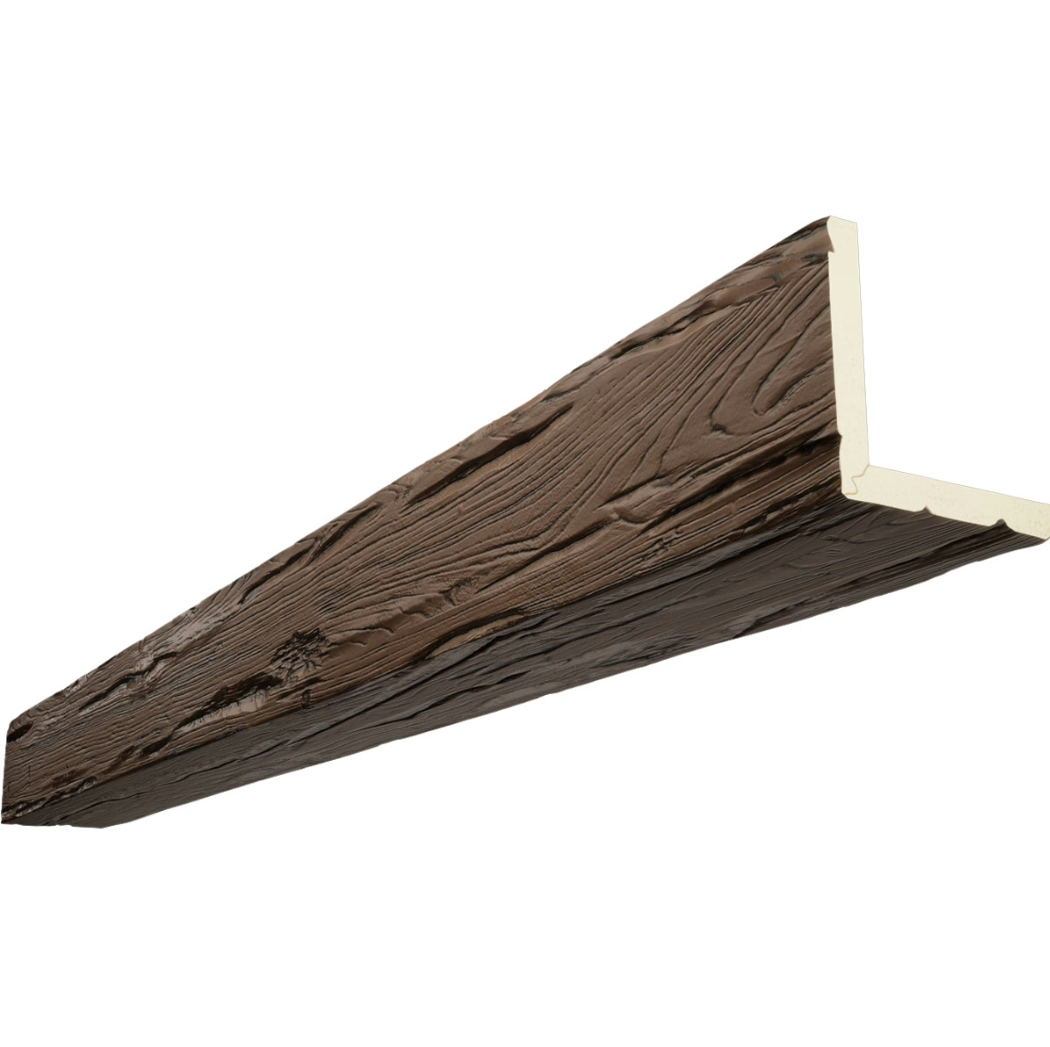
- Scarf joint: Two pieces meet at a 45-degree angle, joint hidden from below after install.
- Butt joint with cleat: Two pieces meet square, cleat behind the joint, joint disguised with filler.
- Hinged joint: Factory-produced hinged sections that fold out for install.
The field joint is designed and produced at the factory; the final assembly and joint finishing happen on-site.
What builders should specify
For builders ordering custom length beams:
- Measure each beam location at framing completion, not before.
- Provide a list of beam lengths with quantities per length.
- Identify any beam locations that require tighter tolerance.
- Identify any spans requiring field joints.
The factory uses this information to produce the beams to the project's actual dimensions.
Custom texture: what the factory can do
Texture is where most of the beam's visual character comes from. The factory's texture capabilities include:
Standard texture library
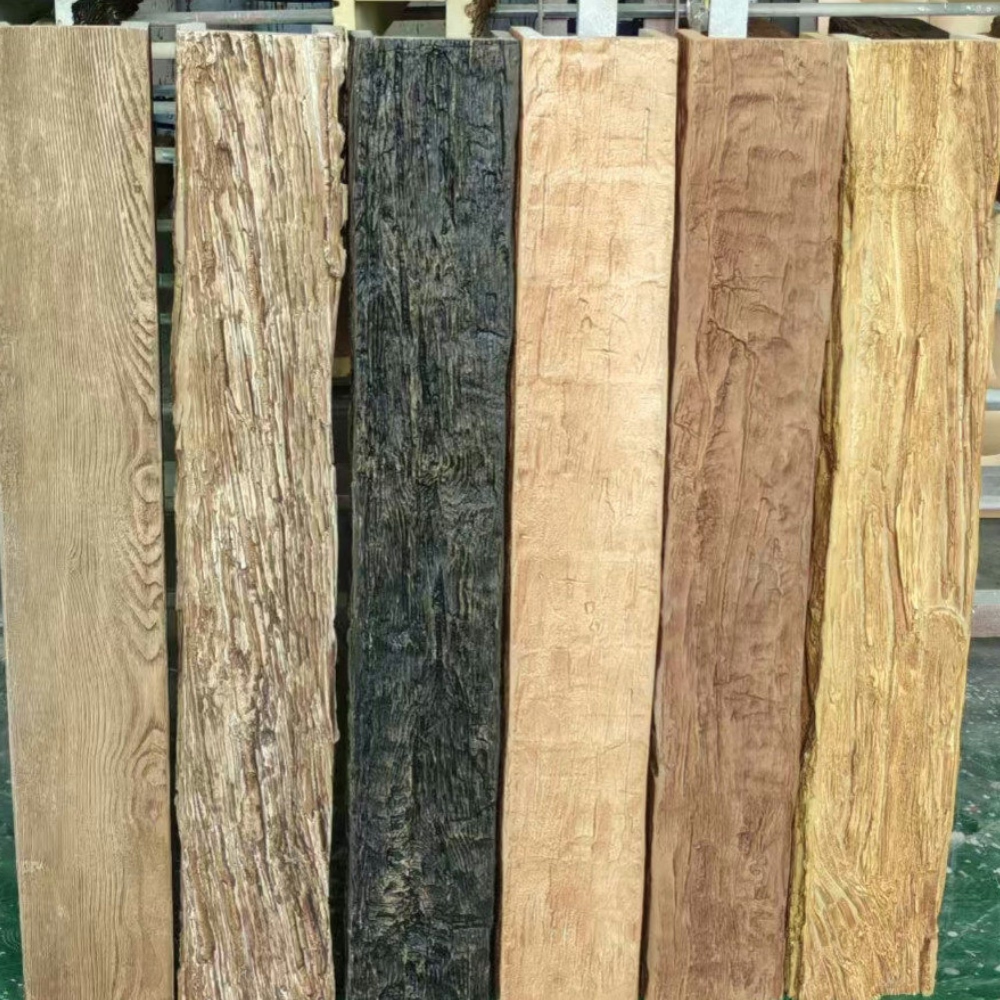
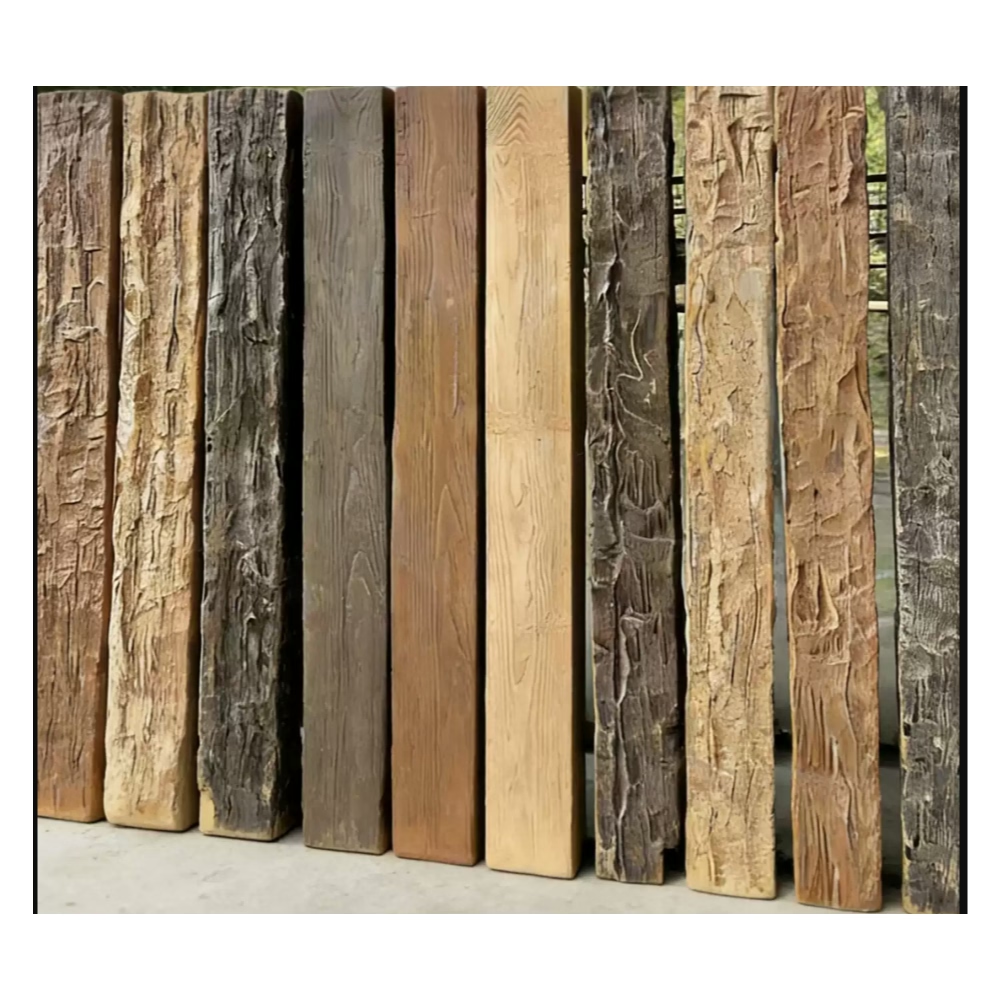
Most factories maintain a texture library of 50 to 200+ texture options, organized by category:
- Smooth or lightly planed: For Colonial, Federal, modern, contemporary styles.
- Rough-sawn: For craftsman, farmhouse, rustic styles.
- Hand-hewn: For traditional, rustic, historic styles.
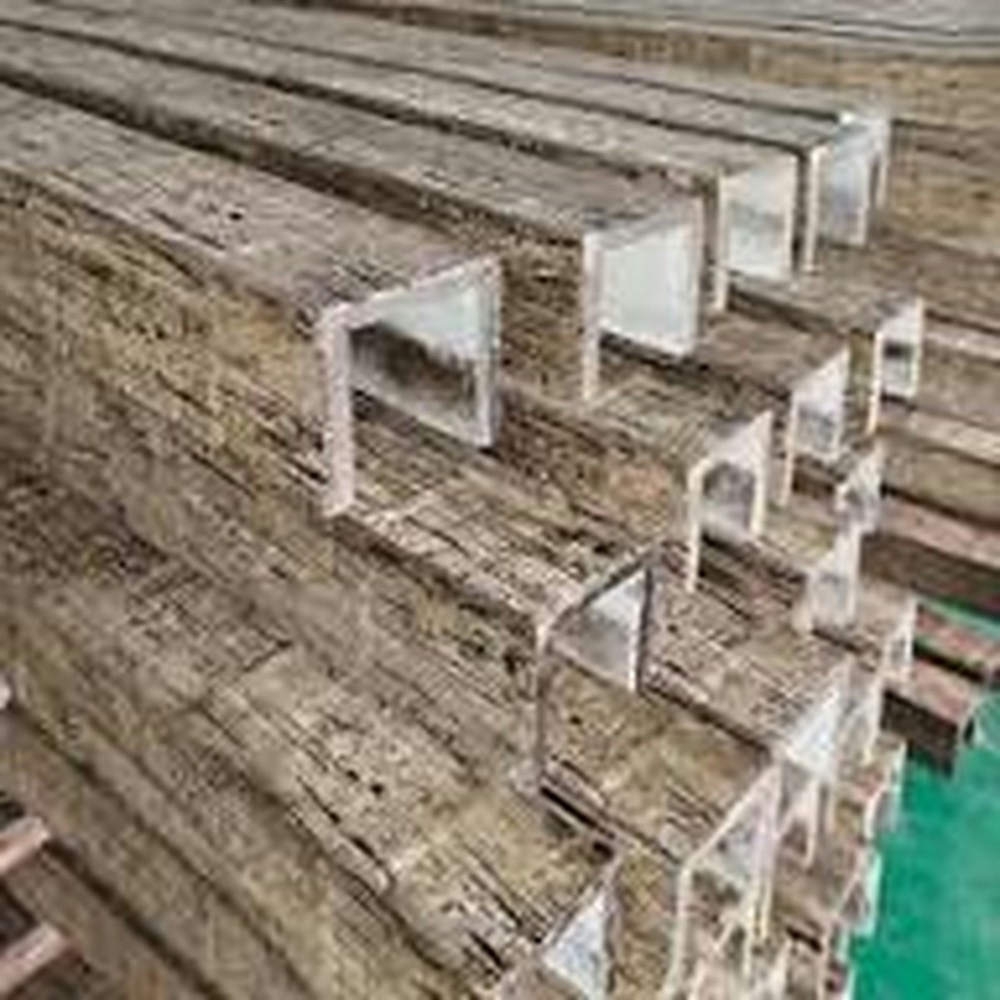
- Distressed or weathered: For reclaimed looks, aged appearances.
- Specialty textures: For specific regional styles (Spanish, Mediterranean, Asian-influenced, etc.).
The library is documented with texture reference samples, typically available to builders and designers for selection.
Custom texture development
For textures not in the standard library, the factory can develop custom textures:
- Hand-carved texture variations from a reference sample.
- Modifications to existing textures (deeper gouges, lighter wire-brushing, etc.).
- Combinations of textures (smooth base with hand-hewn accents).
- Project-specific textures based on architectural references.
Custom texture development typically takes 2 to 4 weeks and costs $500 to $2,000, depending on the complexity. The factory produces a texture sample for approval before applying it to the full beam order.
Texture across the run
For beams within a single order, the factory applies the texture consistently. For orders that include beams of different types (some smooth, some rough-sawn), the factory produces them separately to maintain texture consistency within each type.
For projects that call for slight texture variation across the run (which adds visual interest), the factory can produce the variation:
- Hand-applied texture variation on each beam.
- Multi-mold texture blending.
- Post-production hand-detailing.
These variations add cost but produce a beam ceiling that looks like real wood with natural variation.
Texture and density interaction
Texture detail is limited by polyurethane density:
- Low density (80 to 150 kg/m³): Captures coarse texture but loses fine detail.
- Medium density (150 to 250 kg/m³): Captures medium and fine texture well.
- High density (250 to 320 kg/m³): Captures the finest texture detail.
For projects with intricate texture references, high-density polyurethane is worth the premium.
How builders specify length and texture
For builders specifying custom length and texture at the wholesale level, the specification process includes:
Reference materials
Provide the factory with:
- Texture reference samples (actual samples if available, high-resolution photographs if not).
- Color reference samples or formulas.
- Cross-section drawings or photographs.
- Reference projects that match the design intent.
The factory uses these references to develop the specification and produce samples.
Sample approval
Before full production, the factory produces sample beams with the specified length and texture:
- 12-inch section of beam with the matched texture and color.
- Approval by the builder, designer, or homeowner.
- Iteration if the sample doesn't match the reference.
The sample approval cycle typically adds 1 to 3 weeks to the project timeline.
Specification documentation
The approved specification should be documented:
- Cross-section dimensions.
- Length range and tolerance.
- Texture reference (sample number or photograph).
- Color reference (formula or sample number).
- Finish specification (sheen, weathering effects).
- Density specification.
This documentation becomes the basis for the order and any reorders.
Common pitfalls in custom length and texture specifications
A few issues that come up often enough to flag:
- Ordering on plan dimensions. The most common mistake. Beams should be ordered based on field measurements, not plan dimensions.
- Specifying texture by description rather than reference. "Rustic" is too vague. The factory needs a specific texture reference.
- Insufficient density for the texture. A fine texture reference with low-density polyurethane produces a disappointing result.
- Not approving samples before production. Skipping the sample approval step leads to beams that don't match the design intent.
- Texture inconsistency across reorders. Reorders against the same texture reference should match within the agreed tolerance. The factory should be holding the texture reference and monitoring consistency.
How texture and length affect pricing
Custom length and texture affect beam pricing:
- Length: Longer beams carry a per-piece premium; field joints add cost.
- Texture: Standard textures are included in the per-piece pricing; custom textures add $500 to $2,000 (one-time, plus per-piece premium for hand-applied variation).
- Density: Higher density for fine texture costs 15 to 30 percent more per piece.
- Tolerance: Tighter tolerances cost 5 to 25 percent more per piece.
For a typical residential project with custom length and texture, the texture and length customizations add 10 to 30 percent to the per-piece pricing compared to stock profiles at standard length.
When to use the factory's capabilities
For most builders, the factory's length and texture capabilities should be used:
- Custom lengths: Always, based on field measurements. No reason to order stock lengths when the project requires custom lengths.
- Standard textures: For most projects. The factory's standard library covers most residential and commercial styles.
- Custom textures: For projects with distinctive design intent, high-end finishes, or builder-specific branding.
The factory's capabilities exist to support the project's design intent. Builders who underuse the capabilities end up with beams that don't quite match the project. Builders who overuse the capabilities (custom texture for a project that would be well-served by a standard texture) waste budget.
Wholesale custom length and texture for builders is a category where the right balance between standard and custom produces the best result. The factory's capabilities are tools; the builder's job is to use them where they add value.
Technical References
ASTM standards cited in every specification
Test Data
Lab results from internal testing program
Updated 2026
Reviewed against current product specs