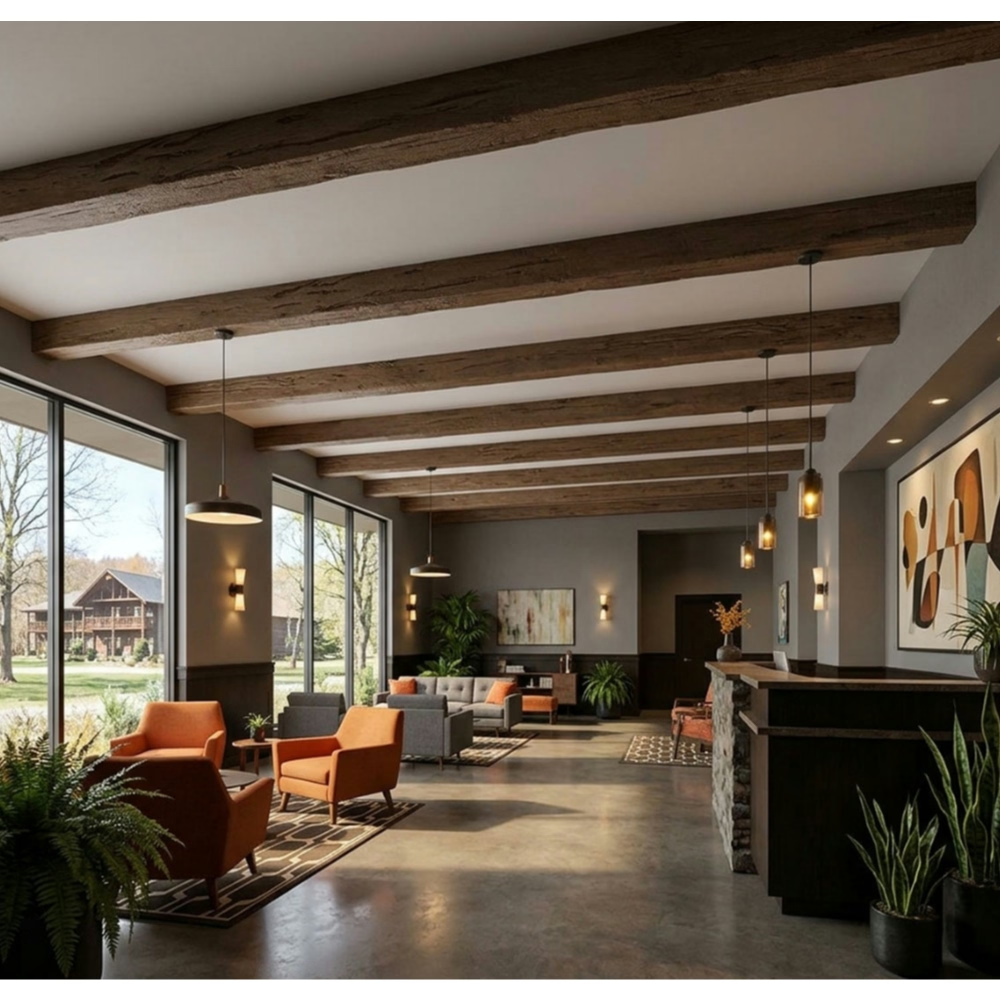
Why Builders Choose Polyurethane Faux Beams for New Residential Projects
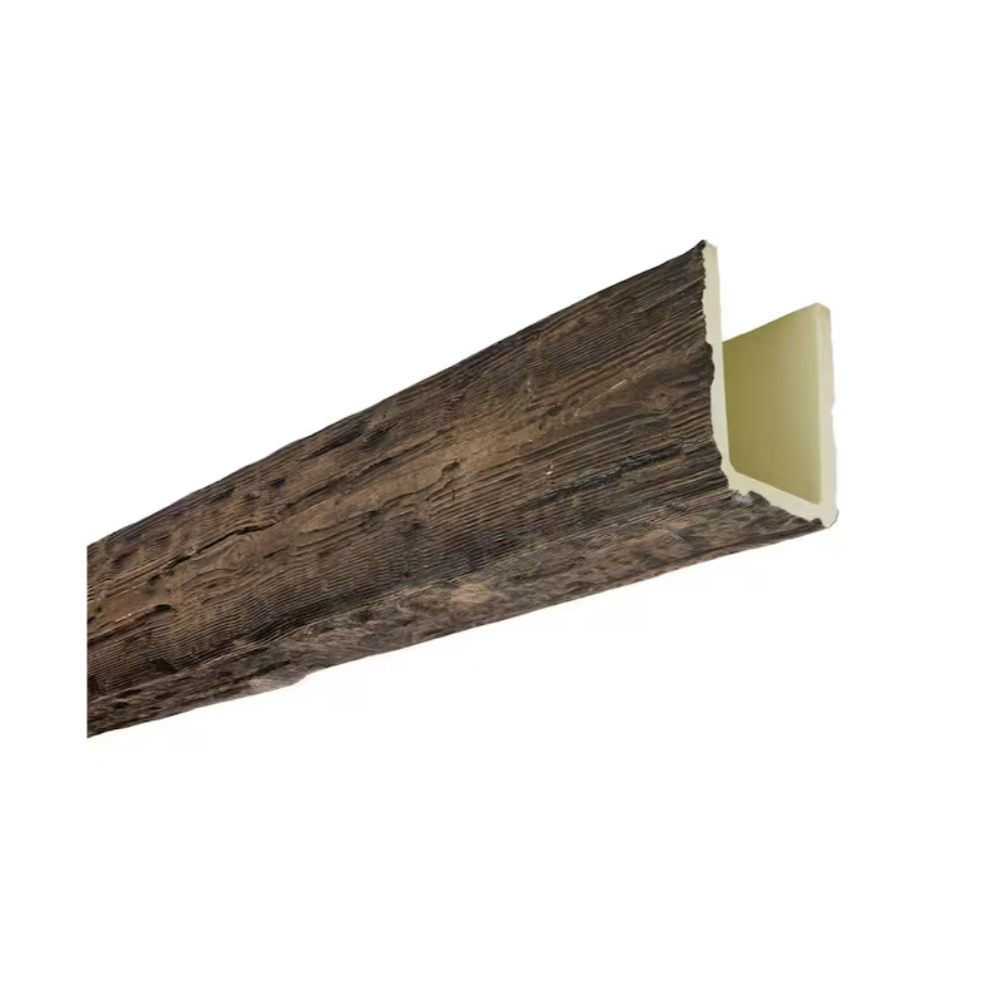
Builders choosing polyurethane faux beams for new residential projects do so for specific, practical reasons. The decision isn't marketing—it's based on benefits that affect project economics, installation efficiency, and long-term performance. Understanding the reasons helps builders make informed decisions about when polyurethane is the right choice.
Reason 1: Predictable quality
Polyurethane beams offer predictable quality:
- Factory-produced with consistent materials and processes.
- Quality control at each production stage.
- Master reference samples held for consistency.
- Color drift monitoring across production batches.
The predictability reduces quality risk for builders.
What this means in practice
For builders, predictable quality means:
- Fewer callbacks for quality issues.
- Less time spent on replacement decisions.
- More consistent appearance across homes.
- Higher buyer satisfaction.
The practical impact is fewer project complications.
Reason 2: Faster installation
Polyurethane beams install faster than alternatives:
- Lightweight (typically 2 to 4 pounds per linear foot vs 15 to 30 for solid timber).
- Standard carpentry tools sufficient.
- Two-person crew for most beams.
- Standard cleat mounting systems.
- 15 to 30 minutes per beam vs 90 to 240 minutes for solid timber.
Faster installation reduces project timelines and labor costs.
What this means in practice
For builders, faster installation means:
- Shorter beam installation phase per project.
- Lower labor costs per beam.
- Ability to handle more projects with the same crew.
- Better scheduling reliability.
The practical impact is significant labor savings.
Reason 3: Lower total cost
Polyurethane beams have lower total cost than alternatives:
- Lower material cost (per-piece pricing by length).
- Lower freight cost (lighter weight).
- Lower install labor cost (faster installation).
- Lower lifecycle cost (no warping, no refinishing needed).
Total cost analysis favors polyurethane for most projects.
What this means in practice
For builders, lower total cost means:
- Better project margins.
- More competitive pricing for buyers.
- Better budget predictability.
- Less financial risk.
The practical impact is improved project economics.
Reason 4: No warping or dimensional changes
Polyurethane beams don't warp or change dimensions:
- Closed-cell structure doesn't absorb moisture.
- No swelling or shrinking from humidity.
- No warping, cupping, or twisting.
- Maintains dimensions over decades.
The dimensional stability eliminates long-term issues.
What this means in practice
For builders, dimensional stability means:
- No callbacks for warping issues.
- No warranty claims for dimensional changes.
- No replacement of degraded beams over time.
- Maintained ceiling appearance over decades.
The practical impact is reduced long-term warranty exposure.
Reason 5: Code compliance ease
Polyurethane beams meet code requirements:
- Fire rating documentation (ASTM E84 Class A or B available).
- VOC emissions certification (GREENGUARD available).
- Seismic documentation (engineered cleats available).
- Weight advantages for structural considerations.
Code compliance is straightforward with proper specification.
What this means in practice
For builders, code compliance ease means:
- Faster permit approval.
- Less documentation effort.
- Fewer inspection issues.
- Better compliance with varying jurisdictions.
The practical impact is smoother regulatory processes.
Reason 6: Design flexibility
Polyurethane beams offer design flexibility:
- Stock profiles for common applications.
- Modified profiles for distinctive projects.
- Custom profiles for unique specifications.
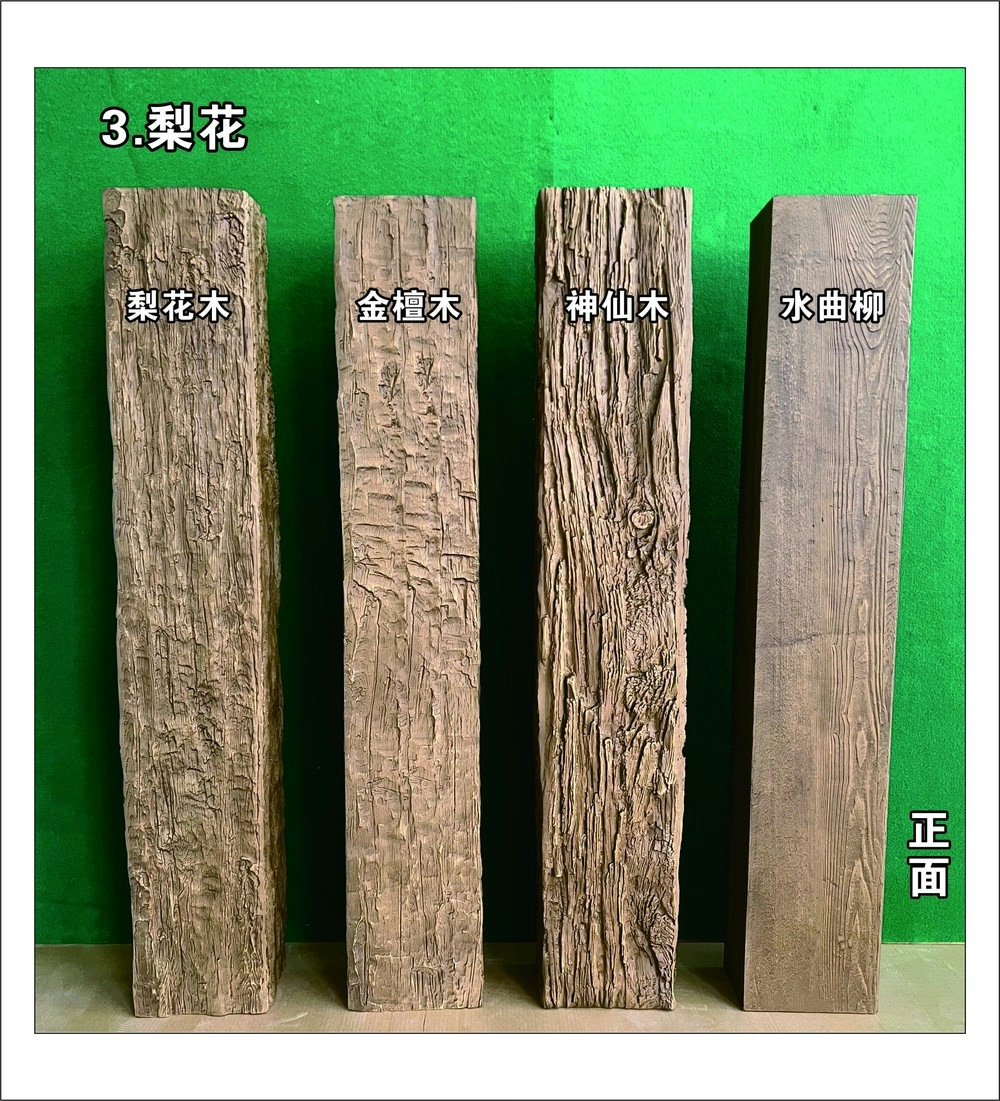
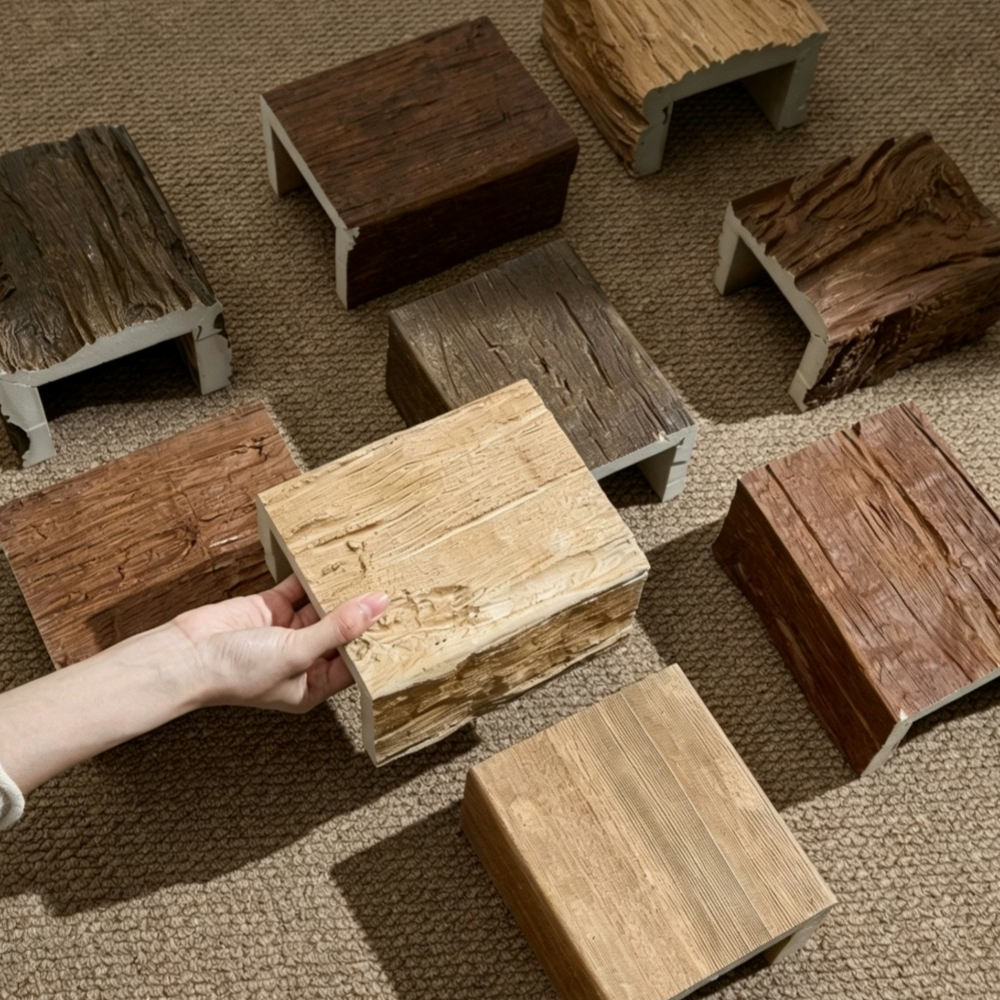
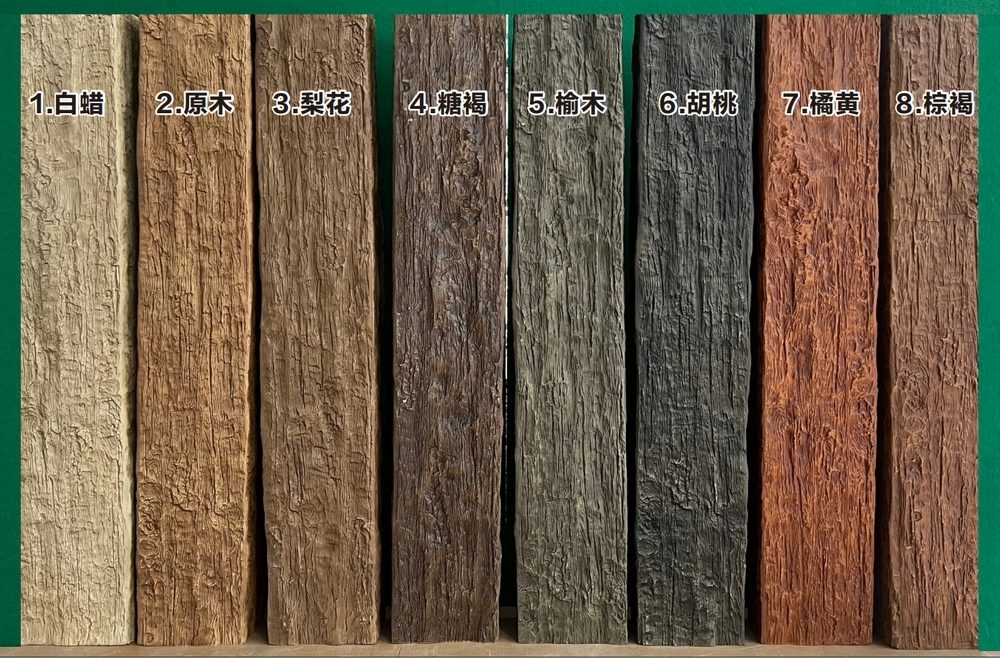
- Multiple finish options per profile.
- Coordinating elements (corbels, beam caps, column wraps).
The flexibility supports varied project requirements.
What this means in practice
For builders, design flexibility means:
- One supplier for most beam projects.
- Capability to handle distinctive specifications.
- Coordination across beam types and elements.
- Design support for buyer-driven customization.
The practical impact is consolidated procurement with design capability.
Reason 7: Lightweight construction advantage
Polyurethane beams are lightweight:
- 2 to 4 pounds per linear foot vs 15 to 30 for solid timber.
- Less structural support required.
- Easier handling during installation.
- Less load on existing structure (for renovations).
The lightweight advantage simplifies construction.
What this means in practice
For builders, lightweight construction means:
- Less structural engineering for support.
- Easier crew handling.
- Faster installation.
- Better for renovation contexts with structural limits.
The practical impact is construction simplification.
Reason 8: Consistent finish quality
Polyurethane beams have consistent finish quality:
- Factory-applied finishes under controlled conditions.
- Quality control during finishing.
- Master reference samples for color consistency.
- Hand-detailing options for premium looks.
The finish consistency is what buyers see.
What this means in practice
For builders, finish consistency means:
- Predictable buyer satisfaction.
- Fewer buyer complaints about finish variation.
- Higher quality perception.
- Better portfolio reputation.
The practical impact is improved buyer experience.
Reason 9: Long-term durability
Polyurethane beams have long-term durability:
- Maintained dimensions over decades.
- Stable finish under proper specifications.
- No biological degradation (mold, rot, insects).
- UV-stabilized options for sun exposure.
The durability matches the building's service life.
What this means in practice
For builders, long-term durability means:
- Reduced warranty claims.
- Maintained buyer satisfaction over time.
- Better portfolio reputation over time.
- Less risk of post-sale disputes.
The practical impact is reduced long-term risk.
Reason 10: Environmental considerations
Polyurethane beams have specific environmental characteristics:
- No deforestation for solid timber.
- Lower transportation impact than solid timber.
- Long service life reduces replacement.
- Some manufacturers offer recycled content options.
The environmental profile may align with builder values.
What this means in practice
For builders, environmental considerations mean:
- Potential alignment with buyer values.
- Marketing positioning opportunities.
- Compliance with environmental standards.
- Sustainable building practice.
The practical impact varies by builder's positioning.
When polyurethane isn't the right choice
Honest assessment: polyurethane isn't always the right choice:
- Solid timber is preferred for projects requiring solid wood authenticity or extreme premium positioning.
- Real reclaimed timber is preferred for projects requiring authentic aged character beyond what factory finishing can achieve.
- Custom carved beams for projects requiring hand-carved details beyond factory capabilities.
- Structural applications where the beam must carry load beyond decorative purposes.
Polyurethane is the right choice for most decorative beam applications, but not all.
Decision framework for builders
For builders evaluating polyurethane vs alternatives:
| Consideration | Polyurethane Advantage | Alternative Advantage |
|---|---|---|
| Cost | Lower total cost | Premium positioning |
| Installation | Faster, easier | Traditional craftsmanship |
| Quality | Predictable, consistent | Authentic material variation |
| Durability | Long-term dimensional stability | Traditional service life |
| Code compliance | Easier documentation | Established codes |
| Design flexibility | High | Variable |
The decision framework helps builders choose appropriately per project.
Common reasons builders choose alternatives
Some builders choose alternatives to polyurethane:
- Premium positioning. Some builders position exclusively on solid timber.
- Buyer preference. Some buyers specifically want solid timber.
- Project specifics. Some projects require structural beams.
- Material authenticity. Some projects prioritize authentic materials.
These reasons are valid for specific projects.
Making the decision
For most new residential projects, polyurethane beams are the right choice:
- The benefits align with builder needs.
- The total cost analysis favors polyurethane.
- The quality and durability meet residential requirements.
- The design flexibility supports varied projects.
The decision comes down to specific project requirements and builder positioning.
Polyurethane faux beams are chosen by builders for practical reasons that affect project economics, installation efficiency, and long-term performance. The decision isn't marketing hype—it's based on real benefits that make polyurethane the right choice for most residential projects.
Technical References
ASTM standards cited in every specification
Test Data
Lab results from internal testing program
Updated 2026
Reviewed against current product specs