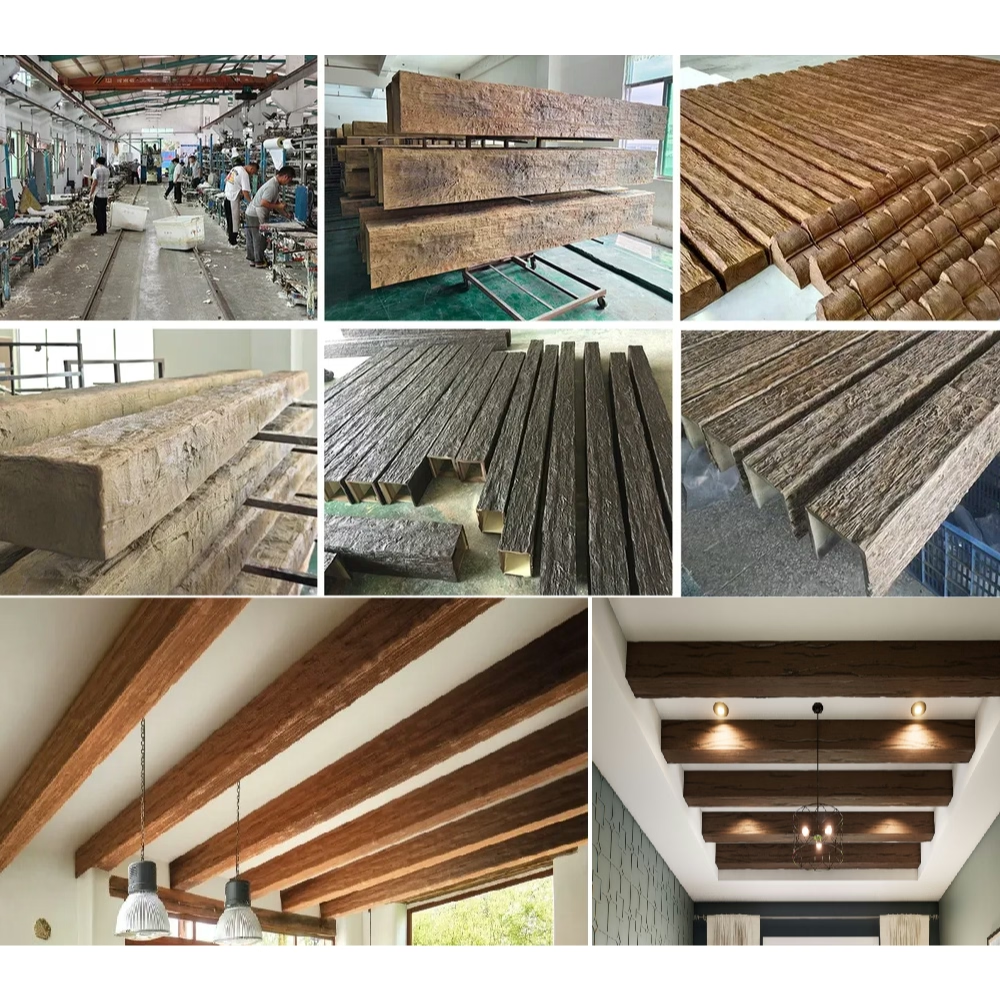
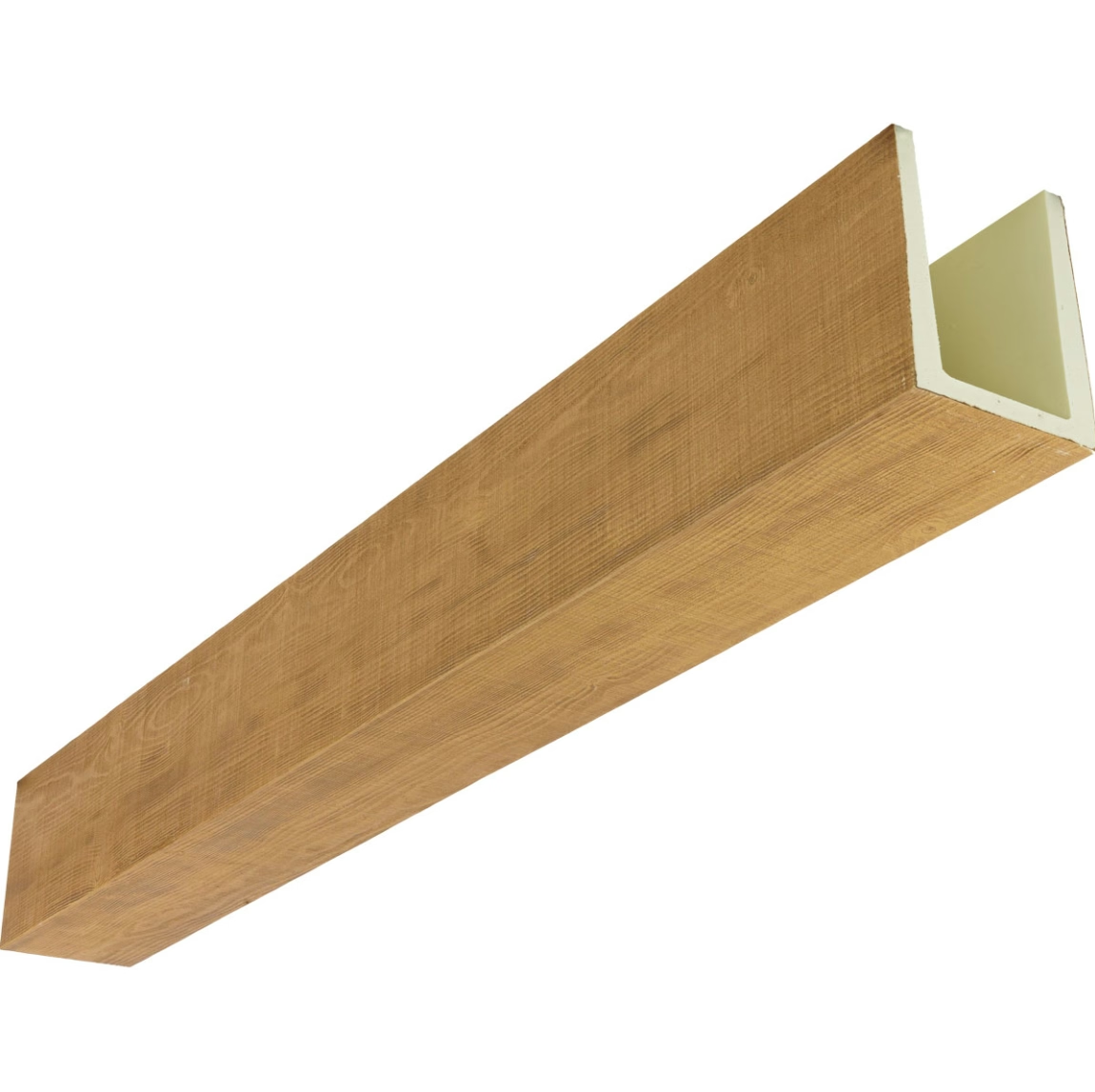
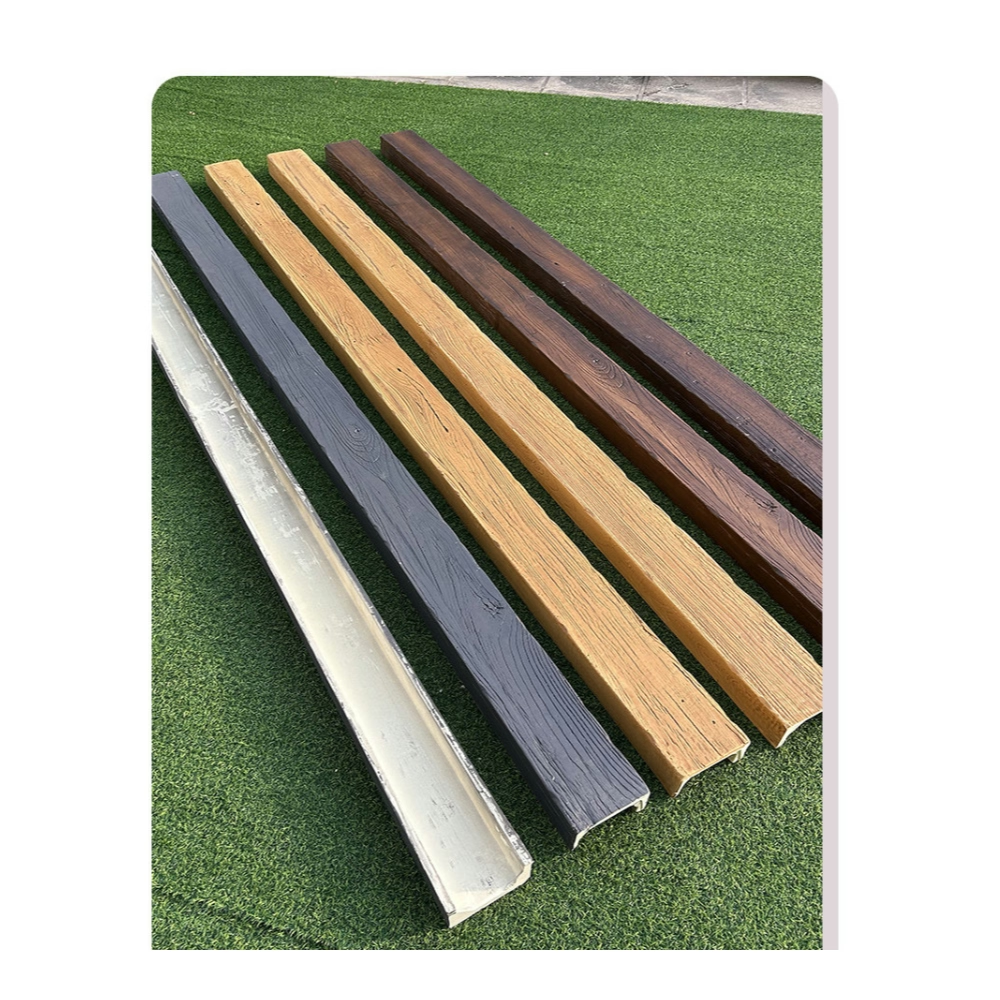
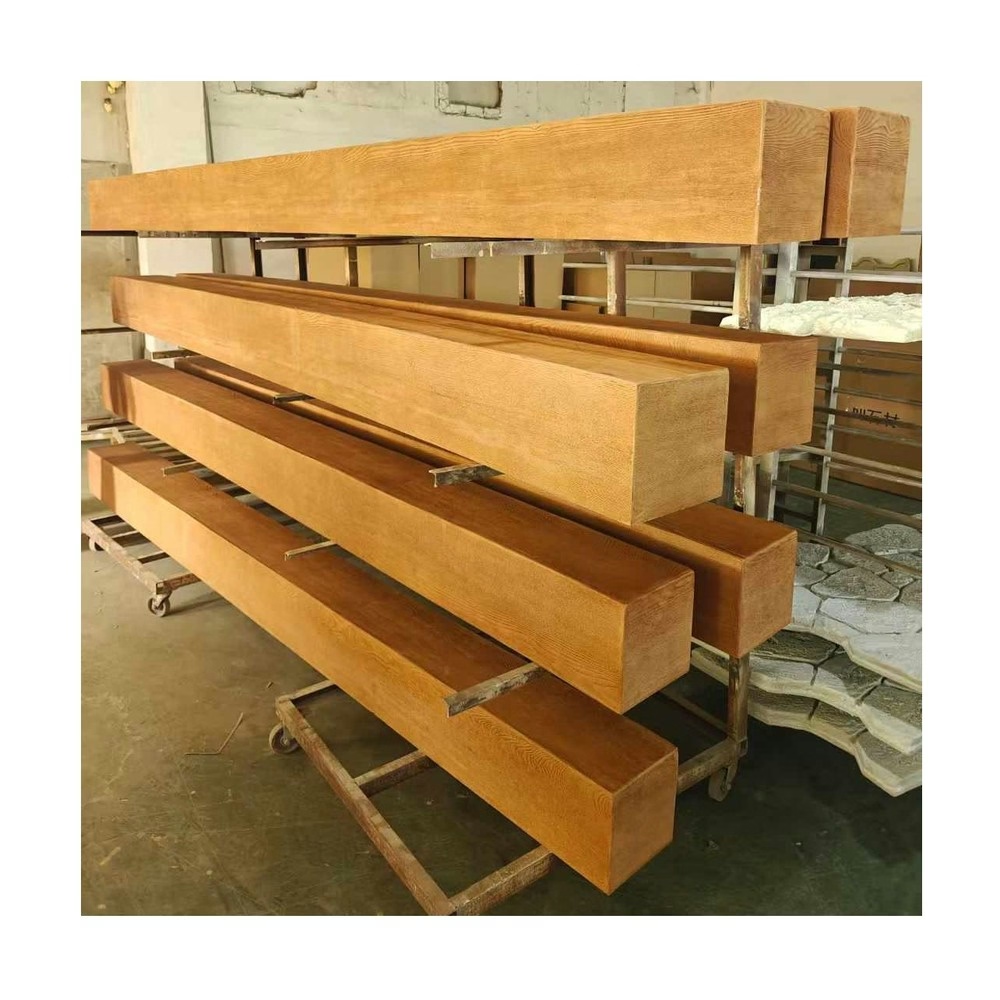
The restaurant owner attending the soft opening of her newly renovated establishment realized immediately that something was wrong: conversation at normal volume became difficult beyond intimate distance because overwhelming reverberation rendered speech unintelligible. The dramatic transformation that had added thirty-six substantial faux wood beams across the previously acoustic-tile ceiling created the rustic ambiance she had envisioned, but also changed the space from acoustically absorptive to highly reflective. Reverberation time—the duration required for sound to decay by 60 decibels after a source stops—increased from 0.8 seconds with acoustic tile to 2.4 seconds with hard polyurethane beams and painted drywall. The excessive reverberation created cacophony when the dining room filled, forcing diners to raise voices to be heard, which further increased ambient noise in a destructive feedback loop. Remediation required installing acoustical panels on walls and between beams, adding sound-absorbing materials that the original renovation budget hadn't anticipated. The additional acoustic treatment cost $18,000 and delayed opening by three weeks while materials were sourced and installed.
Acoustic reverberation impact of hard-surface beam installations represents a building performance concern that interior design frequently overlooks. Decorative ceiling treatments emphasizing visual drama often introduce hard, sound-reflective surfaces that substantially alter space acoustics. While these acoustic changes might be imperceptible or even beneficial in some occupancies, they create serious problems in speech-critical spaces where intelligibility and occupant comfort depend on controlling reflected sound. Understanding acoustic principles, predicting how design changes affect sound behavior, and incorporating appropriate acoustic treatment allows creating dramatic architectural spaces that also perform well acoustically.
Fundamentals of Room Acoustics
Room acoustics describes how enclosed spaces affect sound behavior—how sound reflects from surfaces, absorbs into materials, and decays over time after sources stop producing it. Several measurable parameters characterize acoustic performance in ways that relate to occupant experience.
Reverberation time (RT60) measures how long sound persists in a space after the source stops. Technically defined as the time required for sound pressure level to decrease by 60 decibels, reverberation time quantifies how "live" or "dead" a space sounds. Short reverberation times (under 1 second) characterize acoustically absorptive spaces where sound dies quickly—like recording studios or spaces with extensive carpet, upholstered furniture, and acoustic ceiling tile. Long reverberation times (over 2 seconds) characterize reflective spaces where sound persists—like gymnasiums, swimming pools, and spaces with hard parallel surfaces. Optimal reverberation time depends on space use: concert halls benefit from controlled reverberation (1.5 to 2.5 seconds depending on music type), while spaces prioritizing speech intelligibility require shorter reverberation (0.6 to 1.2 seconds for typical commercial occupancies).
Sound absorption coefficients quantify how effectively materials absorb versus reflect sound energy. Measured on a scale from 0 (perfect reflection) to 1.0 (complete absorption), absorption coefficients vary by frequency because materials absorb different frequencies differently. Porous materials like acoustic tile, fabric, and carpet typically absorb mid and high frequencies effectively (coefficients 0.6 to 0.9 at 1000-4000 Hz) but provide less absorption at low frequencies. Hard, dense materials like concrete, drywall, and polyurethane provide minimal absorption (coefficients 0.01 to 0.10) across most frequencies, reflecting rather than absorbing sound energy.
Speech intelligibility metrics including Speech Transmission Index (STI) and %ALcons quantify how well speech can be understood in spaces. These metrics account for reverberation, background noise, and signal strength to predict comprehension percentage. Good speech intelligibility (STI above 0.60, %ALcons below 10%) requires controlling reverberation particularly at speech frequencies (500 to 4000 Hz) and maintaining favorable signal-to-noise ratios. Spaces where speech intelligibility matters—classrooms, conference rooms, restaurants, houses of worship, transportation terminals—should be designed to achieve these metrics.
Background noise levels quantified using NC (Noise Criteria) or RC (Room Criteria) curves affect how reverberation impacts occupant experience. Higher background noise can partially mask reverberation effects but creates other problems including listening fatigue and communication difficulty. Well-designed spaces control both reverberation and background noise to achieve comfortable acoustic environments.
Acoustic Impact of Beam Installations
Decorative ceiling beam installations affect room acoustics through several mechanisms that typically degrade acoustic performance in speech-critical spaces.
Surface area increase represents the most direct acoustic impact. Adding beams to previously flat ceilings adds three-dimensional surface area (beam sides and bottom faces) beyond the original ceiling plane. This additional surface, when composed of hard reflective materials like polyurethane, increases total reflective surface area proportionally. A ceiling with substantial beam coverage might increase reflective surface area by 10% to 20% depending on beam depth and spacing. Since reverberation time relates directly to the ratio of sound-absorbing to sound-reflecting surfaces, increasing reflective area increases reverberation proportionally unless compensating absorption is added elsewhere.
Absorption replacement creates acoustic impact when beams install over previously absorptive surfaces. Retrofitting beams onto acoustic tile ceilings replaces highly absorptive surfaces (absorption coefficients 0.65 to 0.85) with highly reflective beam surfaces (coefficients 0.05 to 0.10). The acoustic impact far exceeds simple surface area increase because the change represents not just additional reflective area but replacement of absorption. A beam-heavy ceiling treatment might cover 15% to 25% of ceiling area with reflective beams while remaining area retains acoustic tile. This replacement might reduce total ceiling absorption by 20% to 35%, substantially increasing reverberation time.
Acoustic diffusion effects from three-dimensional beam geometry scatter reflected sound in multiple directions rather than producing simple specular reflection. This diffusion can be beneficial in some acoustic contexts—concert halls and performance spaces often incorporate diffusing elements deliberately. However, in speech-critical spaces, diffusion combined with hard surfaces typically exacerbates intelligibility problems by distributing reflected energy throughout the space rather than directing it usefully or absorbing it.
Ceiling height reduction from beam installations (when beams project substantially below ceiling planes) reduces room volume, which affects reverberation time through the Sabine equation: RT60 = 0.049 V / A, where V is volume in cubic feet and A is total sound absorption in sabins. Reducing volume while maintaining similar absorption decreases reverberation time. However, the absorption loss from introducing reflective beam surfaces typically overwhelms any benefit from volume reduction, resulting in net reverberation increase despite lower ceiling height.
Predicting Acoustic Impact
Quantitative prediction of how beam installations will affect room acoustics allows identifying potential problems during design rather than discovering them after construction. Several analysis approaches provide useful predictions.
Reverberation time calculation using the Sabine equation or more sophisticated variants (Eyring, Fitzroy) predicts RT60 from room geometry and material absorption properties. This analysis requires knowing room dimensions, calculating surface areas of each material type, determining absorption coefficients for each material (obtained from manufacturer data or acoustic testing laboratories), and solving the appropriate equation. Calculations should be performed for both pre-renovation and post-renovation conditions to quantify acoustic impact. Reverberation time calculations provide reasonable accuracy for typical room configurations and serve as standard practice in architectural acoustic design.
Computer acoustic modeling using specialized software provides more detailed analysis accounting for sound distribution patterns, early reflection arrival times, and spatial variation in acoustic parameters. Programs including EASE, CATT-Acoustic, and Odeon allow building three-dimensional room models with specified materials, then predicting acoustic performance throughout the space. Modeling can identify specific problem areas—particular seating locations with poor speech intelligibility—and evaluate treatment options before implementation. While more complex than simple RT60 calculations, acoustic modeling provides valuable insight for critical projects or complex geometries.
Empirical evaluation methods using occupied or mock-up conditions provide direct acoustic assessment. For renovation projects in existing spaces, measuring pre-renovation reverberation time provides baseline data. For new construction or when significant uncertainty exists about acoustic predictions, building and evaluating full-scale mock-ups allows empirical assessment before committing to full installation. Empirical approaches cost more than calculations but eliminate prediction uncertainty.
Design criteria establishing target acoustic parameters for specific space types guide whether predicted impacts are acceptable. ANSI/ASA S12.60 for classroom acoustics specifies maximum reverberation times and background noise levels. Similar guidelines exist for other occupancy types. Comparing predicted post-renovation acoustics against applicable criteria determines whether designs will perform acceptably or require modification.
Acoustic Treatment Strategies
When acoustic predictions indicate that beam installations will create unacceptable reverberation, several treatment strategies can mitigate impacts while maintaining design intent.
Acoustic panel integration within beam layouts installs sound-absorbing panels in ceiling areas between beams. These panels might be fabric-wrapped fiberglass or mineral wool products, perforated wood or metal panels with absorptive backing, or acoustic plaster systems. Strategic placement between beams maintains the visual rhythm that beams create while providing absorption to compensate for beam reflectivity. Panel sizing, spacing, and absorption characteristics should be selected through acoustic analysis to achieve target reverberation times. This approach works particularly well in grid-like beam patterns where regular panel locations appear intentional rather than arbitrary.
Acoustic treatment on beam surfaces directly converts reflective beam faces to absorptive surfaces. Several products provide acoustic absorption while maintaining wood-like appearance: acoustic wood panels with perforated or slotted faces and absorptive backing can veneer over polyurethane beams; fabric-wrapped panels custom-fabricated to beam profiles can cover beam surfaces; and specialized acoustic paints or coatings claim some absorption (though typically less than dedicated acoustic products). Direct treatment reduces acoustic impact at its source but may compromise authentic wood appearance that beams are meant to provide.
Wall-mounted acoustic treatments supplement ceiling treatments when ceiling absorption proves insufficient or impractical. Acoustic panels on upper wall areas—above head height to maintain space function—provide absorption without competing with beam visual impact. Wall treatments can be particularly effective in spaces with favorable geometry where walls represent substantial surface area relative to ceilings. Panel aesthetics ranging from utilitarian fabric-wrapped products to decorative acoustic art panels allow selecting treatments appropriate for design intent.
Furniture and finishes selection incorporating absorptive elements addresses acoustics through interior design rather than dedicated acoustic products. Upholstered seating, drapery, carpet, and other textile elements all provide useful sound absorption. In restaurants, commercial spaces, and similar occupancies where these elements appear naturally, maximizing their acoustic contribution helps compensate for reflective ceiling treatments. While furniture-based acoustic control has limitations—absorption coefficients are lower than dedicated products and coverage areas may be limited—it provides supplemental absorption with no dedicated acoustic treatment budget.
Frequency-Specific Considerations
Sound absorption varies by frequency, and different space types have different frequency priorities. Effective acoustic treatment requires considering frequency-specific performance.
Speech frequencies ranging from 500 to 4000 Hz carry the information content that determines speech intelligibility. Controlling reverberation at these frequencies is critical in speech-critical spaces. Most porous acoustic materials absorb these frequencies effectively—standard ceiling tile typically achieves absorption coefficients of 0.65 to 0.85 from 500 to 4000 Hz. Treatment strategies for beam-heavy spaces should prioritize absorption in speech frequency ranges, using materials with published absorption data demonstrating adequate performance at these frequencies.
Low-frequency absorption (below 250 Hz) requires different treatment approaches because most porous materials provide minimal low-frequency absorption. Deep airspaces behind absorptive surfaces, specialized bass trap designs, or membrane absorbers address low frequencies. Low-frequency reverberation particularly affects music performance spaces and some occupancies with significant low-frequency sound sources, but is less critical for speech-focused spaces. Treatment strategies should consider whether low-frequency control matters for specific applications.
High-frequency absorption (above 4000 Hz) is easily achieved by most materials but can be excessive if mid-frequency absorption is lacking, creating unbalanced acoustic response. Excessive high-frequency absorption relative to mid-frequencies creates "muffled" sound character. Acoustic designs should target relatively consistent reverberation time across speech frequency ranges rather than over-absorbing high frequencies while leaving mid-frequencies reverberant.
Frequency-dependent beam geometry effects can create particular acoustic characteristics. Beam spacing and depth dimensions comparable to sound wavelengths (speech wavelengths range from roughly 3 inches at 4000 Hz to 27 inches at 500 Hz) can create resonant effects, diffusion patterns, or absorption at specific frequencies. While typically modest, these effects can be analyzed using specialized acoustic modeling for situations where precise acoustic control matters.
Occupancy-Specific Requirements
Different space types have distinct acoustic requirements that determine whether beam-related reverberation impacts are problematic and what treatment approaches are appropriate.
Restaurant and dining spaces require relatively short reverberation times (0.8 to 1.2 seconds) to support conversation at normal voice levels. Excessive reverberation in dining spaces creates the problematic feedback loop where reverberation-degraded intelligibility causes diners to speak louder, increasing ambient noise, causing others to speak louder still, until the space becomes uncomfortably loud. Restaurants adding dramatic beam ceilings should incorporate substantial acoustic treatment to maintain acceptable reverberation. Treatment should be distributed throughout the space rather than concentrated in limited areas to effectively control sound buildup.
Conference rooms and meeting spaces demand even shorter reverberation times (0.6 to 0.9 seconds) and high speech intelligibility to support effective communication, particularly for A/V systems and remote meeting technology. Beam installations in these spaces require careful acoustic analysis and likely substantial treatment. The relatively small room volumes typical of conference rooms means that even modest absorption changes significantly affect reverberation, making treatment effectiveness high if properly designed.
Houses of worship present complex acoustic requirements balancing speech intelligibility for preaching with appropriate reverberation for music. Optimal reverberation times vary by denomination and worship style—traditional liturgies with organ music benefit from longer reverberation (1.5 to 2.5 seconds) while contemporary services prioritizing speech and amplified music require shorter times (1.0 to 1.5 seconds). Beam installations in worship spaces should be evaluated against the community's specific acoustic priorities.
Residential great rooms and living spaces tolerate wider ranges of reverberation than commercial speech-critical spaces. Residential acoustic comfort generally requires reverberation below 1.5 seconds but specific values matter less than in commercial applications. Beam installations in residential contexts rarely require dedicated acoustic treatment unless rooms are particularly large, have predominantly hard surfaces, or occupants have specific acoustic concerns.
Case Study: Restaurant Remediation
The restaurant project described in the opening provides instructive example of acoustic problem diagnosis and remediation following problematic beam installation.
Initial assessment measured reverberation time at multiple frequencies in the occupied space, confirming excessive values: 2.1 seconds at 500 Hz, 2.4 seconds at 1000 Hz, 2.2 seconds at 2000 Hz, and 1.8 seconds at 4000 Hz. Background noise during typical dinner service reached 78 dBA—well above comfortable ranges and indicating that occupants were raising voices in response to poor acoustic conditions. Speech intelligibility metrics calculated from measured parameters indicated STI of 0.42 (fair to poor) in most seating areas.
Treatment strategy developed by an acoustic consultant balanced aesthetic, budget, and performance requirements. The solution incorporated three acoustic treatment elements: sixteen fabric-wrapped fiberglass panels (2 inches thick, 4 feet by 8 feet) installed on upper wall areas in locations integrated with artwork and decorative elements; eight acoustic baffles (2 inches thick, 2 feet by 8 feet) suspended vertically in ceiling areas between beam runs where visual integration appeared natural; and area rugs in specific floor locations where hard flooring had contributed to reflections.
Post-treatment measurements confirmed improved performance: reverberation time decreased to 1.1 seconds at 500 Hz, 1.0 seconds at 1000 Hz, 1.1 seconds at 2000 Hz, and 0.9 seconds at 4000 Hz—within target ranges for restaurant applications. Background noise during dinner service decreased to 68 dBA, and calculated STI improved to 0.62 (good) across most seating. Occupant feedback confirmed that conversation became comfortable at normal voice levels.
Cost analysis showed that incorporating acoustic treatment during initial design would have cost approximately $12,000—substantially less than the $18,000 spent on remediation plus the revenue lost during delayed opening. The project exemplifies how acoustic considerations deferred until problems emerge cost more than acoustic design integration from project inception.
Design Integration Best Practices
Several design process practices help ensure that acoustic performance receives appropriate attention in projects incorporating substantial beam installations.
Early acoustic evaluation during schematic design identifies potential problems when design changes remain straightforward. Rough acoustic calculations based on preliminary space sizes, material selections, and beam quantities provide order-of-magnitude predictions sufficient for determining whether acoustic concerns warrant detailed attention. This early evaluation costs minimal time and prevents discovering acoustic problems during later design stages when addressing them requires significant rework.
Acoustic consultant involvement for speech-critical projects provides expertise that most architectural and interior design teams lack. Acoustic consultants can perform detailed reverberation predictions, recommend treatment strategies, specify appropriate products, and verify performance through post-occupancy measurement. Consultant fees for typical commercial projects range from $3,000 to $10,000—modest relative to construction budgets and providing substantial value through problem prevention.
Integrated material selection considers acoustic properties alongside aesthetic and functional characteristics. Material specification sections should include acoustic performance data—absorption coefficients across relevant frequency ranges—for ceiling materials, wall finishes, and flooring. This information supports acoustic calculations and ensures that all team members understand acoustic implications of material choices.
Budget allocation for acoustic treatment during project estimation prevents budget shortfalls when treatment proves necessary. Projects in speech-critical space types should include acoustic treatment line items even if detailed design hasn't yet determined exact requirements. Contingency budgeting for acoustics recognizes that these elements may be necessary even if early design stages haven't fully developed acoustic solutions.
Acoustic reverberation impact of hard-surface beam installations exemplifies how architectural design decisions affect building performance in ways extending beyond obvious visual and structural considerations. Dramatic ceiling treatments that enhance spaces aesthetically can simultaneously degrade acoustic performance substantially if acoustic impacts aren't anticipated and addressed. Projects that integrate acoustic thinking throughout design—from initial concept through material selection and detailed specification—create spaces that perform well acoustically while achieving intended design character. Those that defer acoustic consideration until problems become apparent typically spend more addressing remediation than proper design integration would have cost while accepting compromised performance or delayed occupancy during correction.
Technical References
ASTM standards cited in every specification
Test Data
Lab results from internal testing program
Updated 2026
Reviewed against current product specs