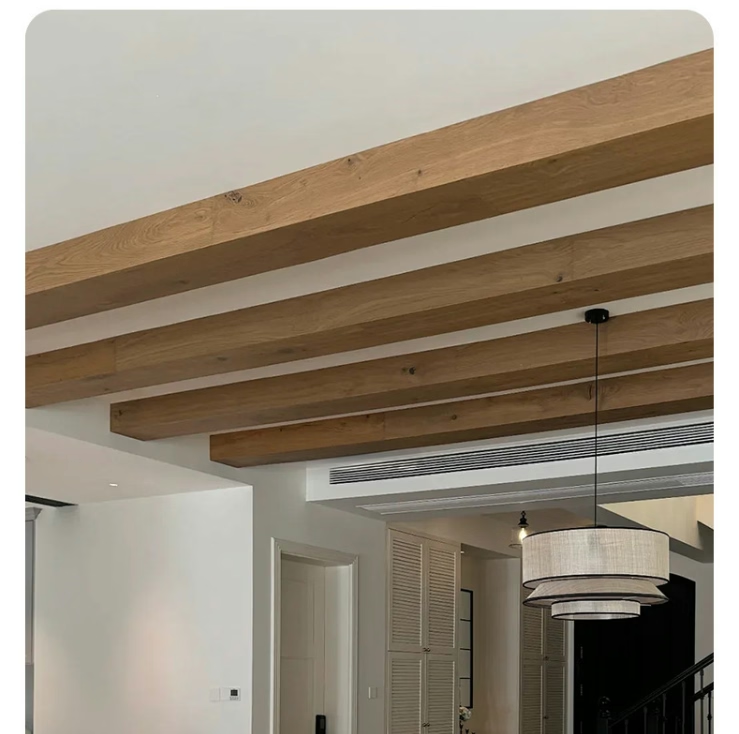
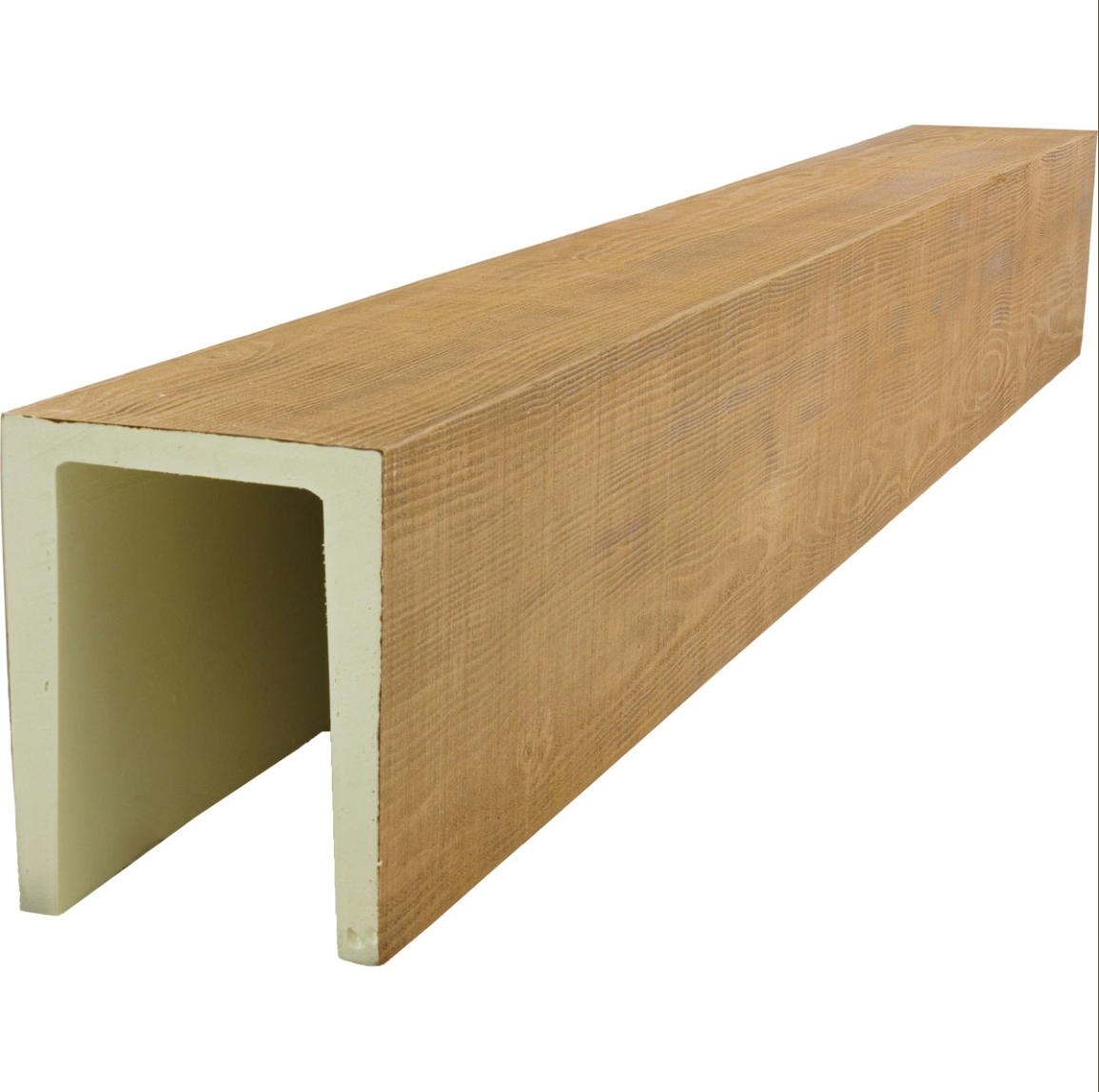
The corporate office renovation transformed traditional enclosed offices into open-plan workspace housing 200 employees. Architects added decorative beams creating visual interest breaking up the expansive ceiling plane. Three months post-occupancy, employee complaints flooded facilities management—the space proved unbearably noisy with conversations, phone calls, and keyboard clatter echoing throughout the floor. Acoustic consultant testing revealed reverberation times of 1.8 seconds—nearly triple the 0.6-0.8 seconds appropriate for offices. The hard gypsum ceilings and polyurethane beams provided zero sound absorption, creating echo chamber. We remediated by adding acoustic ceiling clouds between beams, installing sound-absorbing wall panels, and replacing some hard-surface furniture with upholstered alternatives. That $180,000 acoustic remediation taught me that decorative ceiling treatments must consider acoustic performance, not just visual appearance—particularly in spaces where noise control critically affects function.
Acoustical performance testing for sound-dampening ceiling applications requires understanding sound absorption principles, measurement standards, and material acoustic properties. While decorative beams primarily serve visual functions, their acoustic contributions—positive, neutral, or negative—affect overall space acoustic performance. Professional specifications should consider acoustic impacts alongside aesthetic and structural requirements, particularly in sound-sensitive commercial applications.
Understanding Acoustic Fundamentals
Sound absorption quantifies how much acoustic energy materials absorb versus reflecting back into spaces. Absorption coefficient (α) ranges from 0 (perfect reflection) to 1.0 (perfect absorption) at specific frequencies. Materials absorb different frequencies differently—many materials absorb high frequencies effectively but reflect low frequencies. Understanding frequency-dependent absorption guides material selection for specific acoustic goals.
Sound reflection from hard surfaces including gypsum, concrete, wood, and polyurethane creates reverberation as sound waves bounce repeatedly before dissipating. Excessive reflection produces long reverberation times making spaces sound loud, echoey, and fatiguing. Speech intelligibility degrades when reflected sound masks direct sound. Controlling reflection through absorption improves acoustic comfort.
Reverberation time (RT60) measures how long sound persists after source stops—specifically, time for sound to decay 60 decibels. Appropriate reverberation times vary by space function: offices benefit from 0.6-0.8 seconds, restaurants tolerate 0.8-1.2 seconds, while concert halls might target 1.8-2.2 seconds. Achieving target reverberation requires balancing absorptive and reflective surfaces.
Frequency spectrum considerations recognize that acoustics problems vary by frequency. Low-frequency rumble (50-200 Hz) from HVAC or traffic differs from mid-frequency speech (500-2000 Hz) or high-frequency hiss (4000-8000 Hz). Materials absorbing specific frequency ranges address particular problems. Understanding problem frequencies guides material selection.
Noise Reduction Coefficient (NRC) simplifies frequency-specific data into single number averaging absorption at 250, 500, 1000, and 2000 Hz. NRC ranges 0-1.0 with higher values indicating better absorption. While oversimplifying frequency-dependent behavior, NRC provides convenient comparison metric. Materials with NRC 0.70+ provide significant absorption while NRC below 0.15 contribute minimally.
Polyurethane Acoustic Properties
Hard surface characteristics of solid polyurethane create reflective rather than absorptive surfaces. Solid dense materials reflect sound—polyurethane beams behave acoustically similar to wood beams, offering minimal sound absorption. Testing typically shows polyurethane absorption coefficients of 0.03-0.08 (NRC 0.05)—essentially acoustically inert.
Hollow beam configurations provide opportunities for acoustic enhancement if designed intentionally. Hollow cavities filled with absorptive materials (fiberglass, mineral wool, foam) can increase absorption significantly. However, standard hollow decorative beams without absorptive fill provide minimal acoustic benefit—hollow volumes too small for meaningful low-frequency absorption.
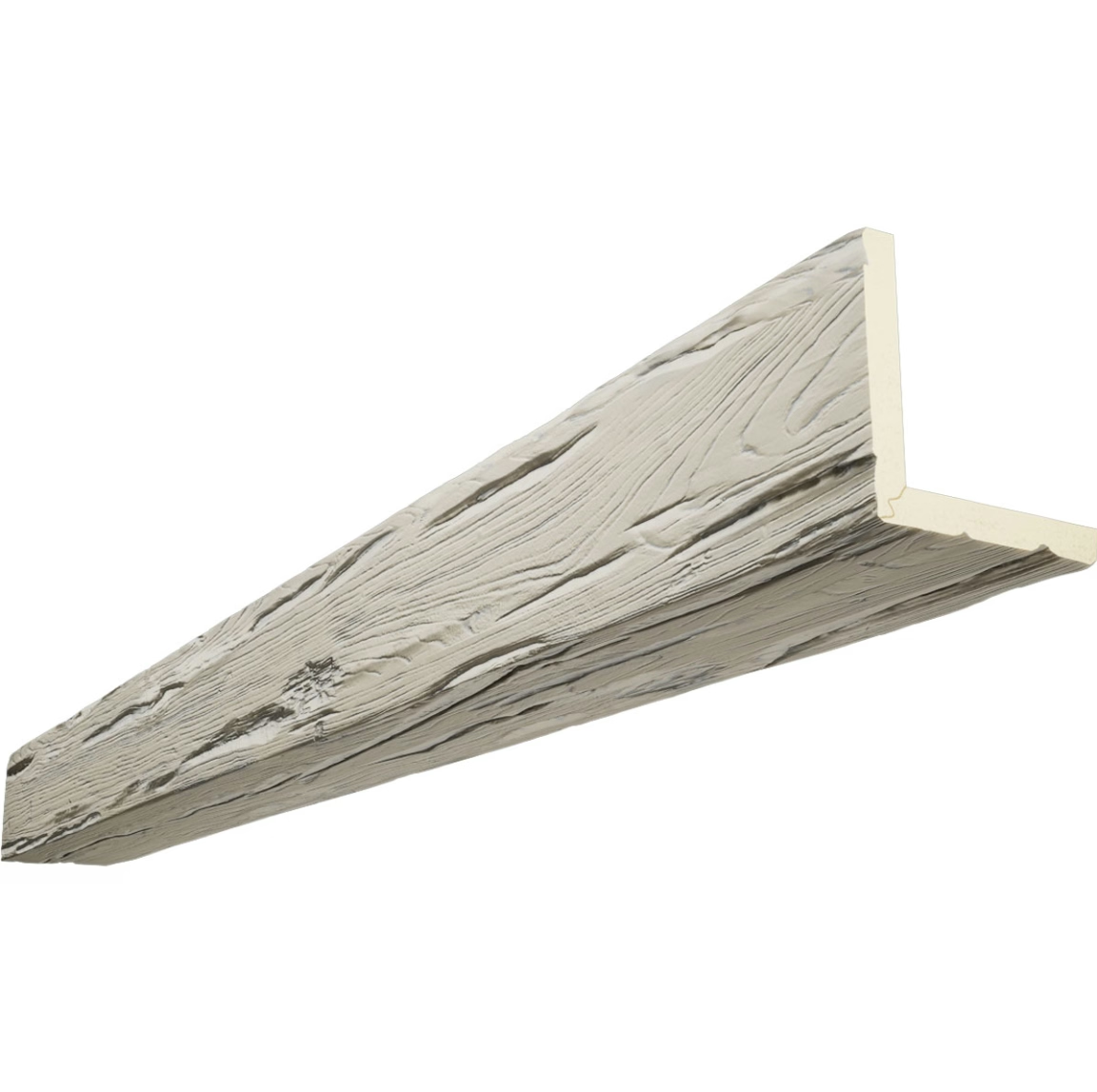
Surface texture effects on acoustics remain modest. While rough textures scatter sound creating diffusion, scattering differs from absorption. Textured beams might reduce specular reflection (mirror-like bounces) through scattering but don't significantly absorb energy. Acoustic benefits from texture prove minimal compared to truly absorptive materials.
Beam spacing and layout creating geometric patterns affects sound diffusion. Beams breaking up large flat ceiling planes scatter sound reducing flutter echo and creating more diffuse sound fields. This diffusion improves acoustic quality compared to completely flat surfaces even without increasing absorption. However, diffusion alone can't solve excessive reverberation from insufficient absorption.

Acoustic Testing Standards
ASTM C423 Standard Test Method for Sound Absorption measures absorption coefficients in reverberation chambers. Test specimens (72 square feet typical) install in standardized chamber. Measuring reverberation time with and without specimen reveals sound absorption. Testing at octave-band frequencies (125-4000 Hz) generates frequency-specific absorption data. NRC calculation averages 250, 500, 1000, 2000 Hz data.
ISO 354 provides international equivalent to ASTM C423, using similar reverberation chamber methodology with slightly different procedures. Products tested to ISO 354 provide equivalent data to ASTM C423. International projects might require ISO testing for specification compliance.
ASTM E1050 impedance tube testing measures absorption using small samples (4-inch diameter typical) in laboratory tubes. While less comprehensive than large-chamber testing, impedance tubes enable rapid cost-effective testing useful for material development and quality control. However, impedance tube results sometimes differ from room-scale behavior making chamber testing preferable for specification data.
In-situ testing methods including ASTM E2235 enable measuring installed system performance in actual spaces. Field testing validates design predictions and diagnoses acoustic problems in completed spaces. However, field testing complexity and cost limits routine use—typically reserved for research or problem diagnosis rather than standard specification verification.
Acoustic Design Integration
Ceiling absorption strategies using acoustic tiles, panels, clouds, or baffles provide primary sound absorption in most commercial spaces. Beams might install over acoustic ceilings, between acoustic elements, or in coordination with ceiling-mounted absorbers. Understanding beams as non-absorptive elements guides integrating them within broader acoustic strategies.
Wall treatments including fabric-wrapped panels, acoustic plaster, or perforated wood provide supplementary absorption particularly important in spaces with limited ceiling absorption area. Beams covering substantial ceiling area reduce available ceiling space for acoustic treatment—wall absorption compensates maintaining overall absorption.
Furniture and finishes contribution to space acoustics includes upholstered seating, curtains, carpeting, and occupants themselves. Furnished occupied spaces show better acoustics than empty hard-surfaced spaces. However, relying on furnishings alone rarely suffices—architectural acoustic treatment provides foundation that furnishings supplement.
Spatial organization separating noisy and quiet zones, providing enclosed spaces for concentrated work or private conversation, and using strategic layouts reducing sound transmission between areas complements material-based acoustic strategies. Good space planning reduces acoustic demands that materials must address.
Beam-Specific Acoustic Strategies
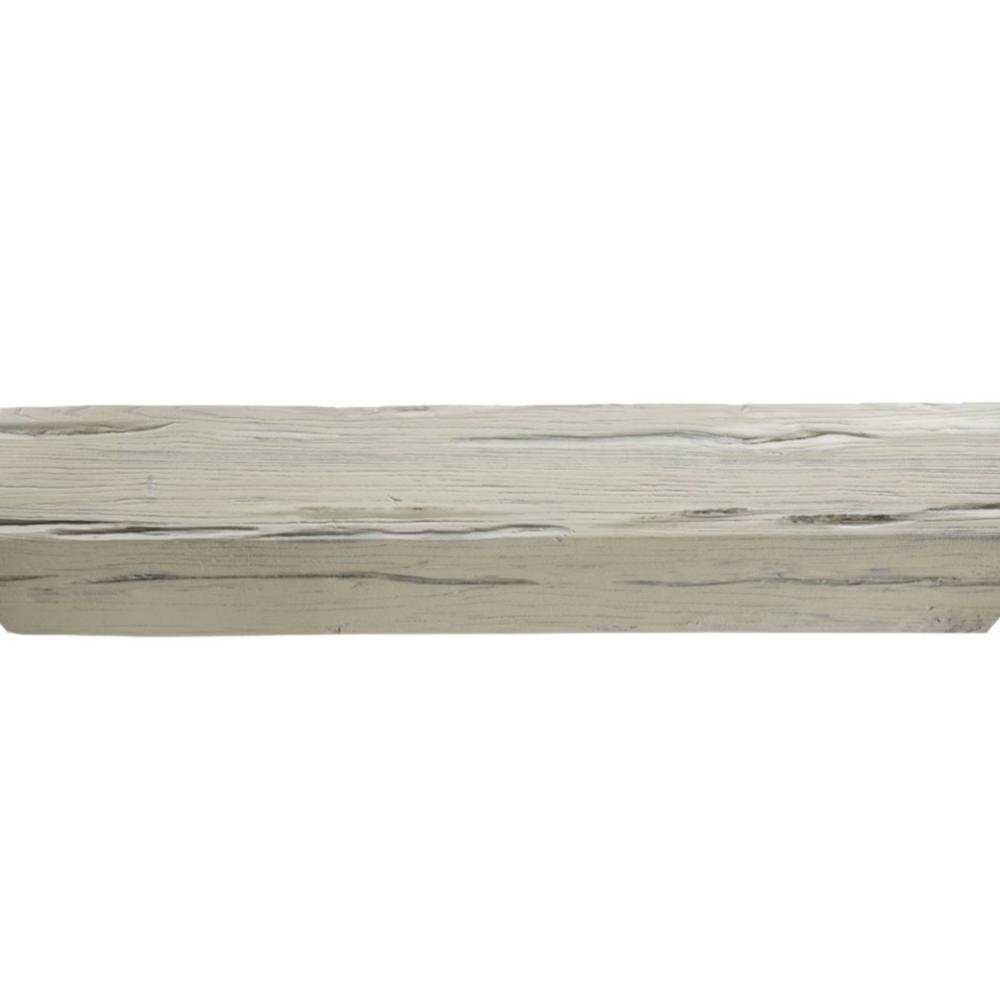
Acoustic beam products incorporating absorptive materials within or on beams provide decorative architectural elements with acoustic function. Some manufacturers offer beams with perforated faces over absorptive cores, fabric-wrapped beams, or beams designed accepting acoustic fill materials. These specialty products cost 50-100% more than standard beams but serve dual visual and acoustic functions.
Beam-and-panel systems alternating decorative beams with acoustic ceiling panels between beams combine architectural interest with acoustic performance. Beams provide visual structure while panels absorb sound. This hybrid approach common in commercial interiors balances aesthetics and acoustics. Design determining optimal beam-to-panel ratio affects both appearance and acoustic performance.
Suspended acoustic clouds mounted below or between beams provide sound absorption while allowing beam visibility. Clouds—horizontal acoustic panels suspended from structure—absorb sound from both top and bottom surfaces improving efficiency. Coordinating cloud and beam layouts creates integrated ceiling compositions.
Strategic beam placement where beams locate in areas where acoustic absorption proves less critical—perhaps entries, circulation paths, or above bars in restaurants—while leaving critical areas available for acoustic treatment optimizes limited ceiling space. Not every ceiling square foot requires equal acoustic treatment—strategic placement focuses absorption where most needed.
Performance Prediction Methods
Sabine equation for reverberation time calculation (RT60 = 0.049V/A, where V = room volume in cubic feet, A = total absorption in sabins) enables predicting room acoustics from material properties and geometry. Calculating existing and proposed conditions reveals whether designs meet acoustic targets. Sabine equation assumes diffuse sound fields—less accurate in small or irregularly shaped spaces but useful for initial estimates.
Computer modeling using acoustic simulation software (EASE, ODEON, CATT-Acoustic) predicts acoustic performance in complex spaces. Software inputs room geometry, material properties, and source locations generating predicted sound levels, reverberation times, and speech intelligibility metrics. Modeling proves particularly valuable for challenging spaces—theaters, conference rooms, worship spaces—where acoustic performance proves critical.
Absorption area calculations summing product of surface area and absorption coefficient for all room surfaces (A = Σ[area × α]) quantifies total room absorption. Comparing existing and proposed absorption reveals whether changes improve acoustics. Target total absorption depends on room volume and desired reverberation time via Sabine equation.
Commercial Application Considerations
Open-plan offices with minimal sound absorption prove notoriously problematic acoustically. Adding decorative beams without acoustic function worsens problems by reducing available ceiling area for acoustic treatment. Office specifications should emphasize acoustic beams or coordinate standard beams with substantial acoustic ceiling treatment between beams. Target office NRC of 0.70-0.80 for ceiling assemblies requires substantial acoustic material.
Restaurants and hospitality balancing aesthetic ambiance with acoustic comfort demand careful design. Excessive reverberation makes restaurants unpleasantly noisy discouraging conversation and return visits. However, some liveliness suits casual dining while excessive absorption creates unnatural "dead" acoustic that feels wrong. Target restaurant RT60 of 0.8-1.2 seconds with moderate NRC 0.50-0.70 ceiling treatments balances energy and comfort.
Educational facilities including classrooms, lecture halls, and media spaces require excellent speech intelligibility demanding reverberation below 0.7 seconds and speech transmission index (STI) above 0.60. Ceiling treatments must prioritize acoustics over pure aesthetics. Acoustic beam products or extensive acoustic ceiling treatment between decorative beams meets both needs.
Healthcare environments benefit from sound absorption reducing ambient noise supporting healing. However, infection control concerns limit fabric and porous materials in clinical areas. Hard-surface acoustic solutions—perforated metal or plastic panels over absorptive backing—provide cleanable surfaces with acoustic function. Beam applications in healthcare must coordinate with infection control requirements.
Places of worship require acoustics supporting music and speech—often competing requirements. Traditional liturgical music benefits from reverberation (1.5-2.0 seconds) while contemporary services need speech clarity (0.8-1.2 seconds). Many congregations use both formats requiring compromise or variable acoustics. Beam installations should coordinate with worship acoustic requirements rather than defaulting to residential aesthetic approaches ignoring function.
Testing and Verification Requirements
Pre-installation testing requiring manufacturers provide ASTM C423 test reports for acoustic products validates claimed performance. Standard decorative beams won't have acoustic test reports since they provide minimal absorption—only acoustic beam products warrant testing. Specifications should clearly distinguish between products requiring acoustic performance versus those serving purely decorative functions.
Post-installation verification through acoustic measurements confirms completed spaces meet design targets. Measurements might include reverberation time, ambient noise levels, or speech intelligibility metrics. Verification proves particularly important in critical applications—auditoriums, conference centers, studios—where acoustic performance directly affects function.
Warranty considerations for acoustic performance rarely exist since acoustics depend on entire room assembly rather than just individual products. However, acoustic products might warrant absorption properties measured per ASTM C423. Understanding warranty limitations prevents unrealistic expectations about performance guarantees.
Problem Diagnosis and Remediation
Excessive reverberation from insufficient absorption represents most common acoustic complaint. Symptoms include echoey sound, difficulty understanding speech, and occupant fatigue. Solutions involve adding absorption through ceiling or wall treatments. If existing ceilings include decorative beams limiting absorption area, wall treatments or suspended acoustic clouds supplement.
Flutter echo from parallel reflective surfaces creates rapid repetitive echoes. Clapping hands in empty rooms produces distinctive "ringing" flutter echo between parallel walls or between floor and ceiling. Solutions include absorption on one surface or diffusion elements breaking up parallel geometry. Decorative beams might provide some diffusion though purpose-designed diffusers prove more effective.
Hot spots and dead spots from uneven sound distribution create areas with excessive or insufficient sound levels. Causes include poor speaker placement, focusing reflections from curved surfaces, or acoustic shadows from obstacles. Solutions require sound system design, geometry modifications, or strategic absorption placement.
Low-frequency rumble from mechanical systems or exterior sources proves difficult addressing since low-frequency absorption requires substantial material thickness or specialized resonant absorbers. Standard acoustic treatments excel at mid and high frequencies but minimally affect low frequencies. Low-frequency problems might require mechanical isolation, barriers, or specialized acoustic devices.
Specification Language
Performance specifications stating required NRC values and test standards create enforceable acoustic requirements. "Ceiling system shall achieve minimum NRC 0.70 when tested per ASTM C423" provides clear verifiable requirement. Performance language allows contractors and manufacturers proposing solutions meeting requirements rather than prescriptive specifications limiting options.
Prescriptive specifications detailing specific products and configurations provide maximum control but limit competitive bidding. "Install Manufacturer X acoustic beams Model ABC at 48-inch spacing with acoustic ceiling panels Model DEF between beams" ensures specific outcome but prevents alternatives that might offer better value.
Acoustic ceiling system specifications should consider ceiling assembly holistically rather than just individual components. Overall assembly NRC matters more than individual element performance. Specifications might require overall ceiling NRC rather than specifying every component separately.
Cost-Benefit Analysis
Acoustic performance value in commercial spaces proving difficult quantifying but represents real economic benefit. Research demonstrates that poor acoustics reduce worker productivity, increase errors, and cause fatigue. Restaurant noise levels affect customer satisfaction and return visits. While quantifying precisely proves difficult, acoustic investment yields returns through improved function and occupant satisfaction.
Acoustic product premiums for specialty acoustic beams versus standard decorative beams might add 50-100% to beam costs but typically represent modest percentage of total project costs. If acoustic beams eliminate need for extensive supplementary acoustic treatment, they might achieve cost-neutrality while integrating acoustic function architecturally.
Remediation costs from addressing acoustic problems post-occupancy far exceed prevention costs. Acoustic treatment during construction costs fraction of retrofitting occupied spaces requiring work-arounds, schedule disruption, and potentially compromised solutions due to existing conditions. Prevention proves economically rational regardless of difficulty quantifying benefits precisely.
Professional Acoustic Integration
Acoustical performance testing for sound-dampening ceiling applications demands understanding sound absorption principles, material properties, and integration strategies balancing aesthetic and functional requirements. While standard decorative beams provide minimal acoustic absorption, they must coordinate with broader acoustic strategies rather than undermining acoustic performance through reducing available space for absorptive treatments. For architects and designers creating commercial spaces where acoustic comfort affects occupant satisfaction and function, systematic acoustic analysis alongside aesthetic design ensures successful projects meeting both visual and acoustic requirements.
The discipline to consider acoustics alongside aesthetics during design rather than discovering acoustic problems after occupancy distinguishes professional practice from appearance-only approaches that ignore function. Acoustic comfort represents fundamental aspect of environmental quality deserving equal attention to visual design.
通过系统的声学性能分析和测试,结合吸音材料的合理配置,可以在实现美观装饰效果的同时,创造舒适的声学环境,特别适用于办公室、餐厅等对噪音控制要求较高的商业空间。
Technical References
ASTM standards cited in every specification
Test Data
Lab results from internal testing program
Updated 2026
Reviewed against current product specs