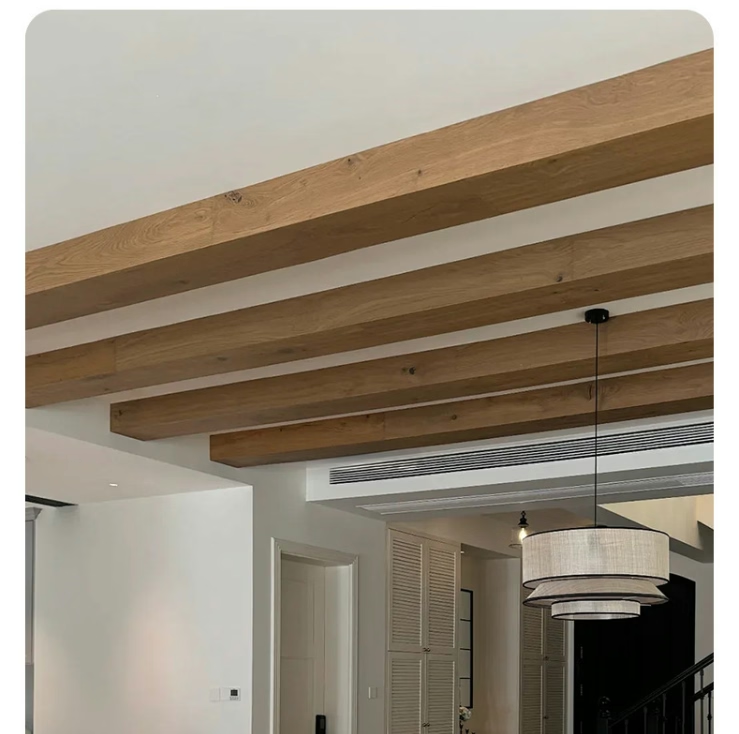
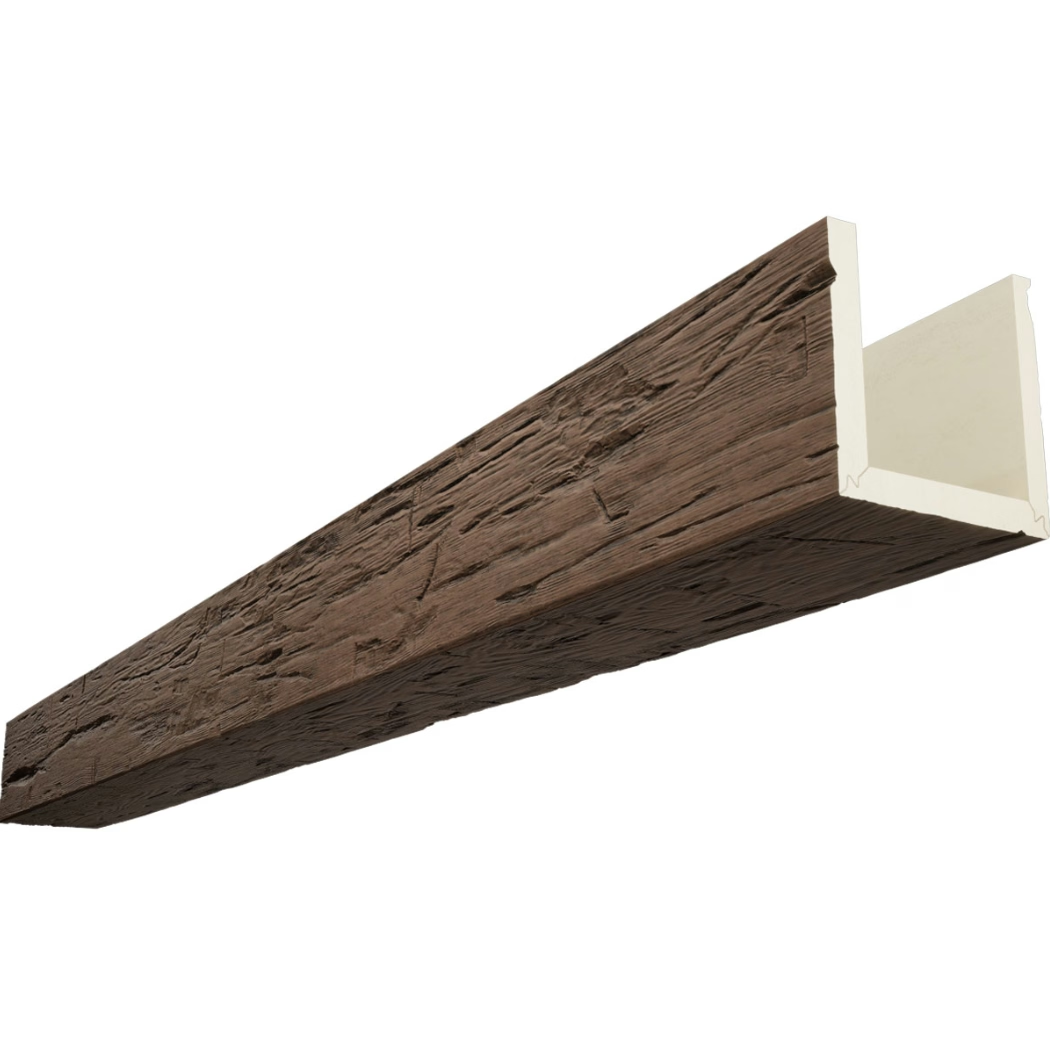
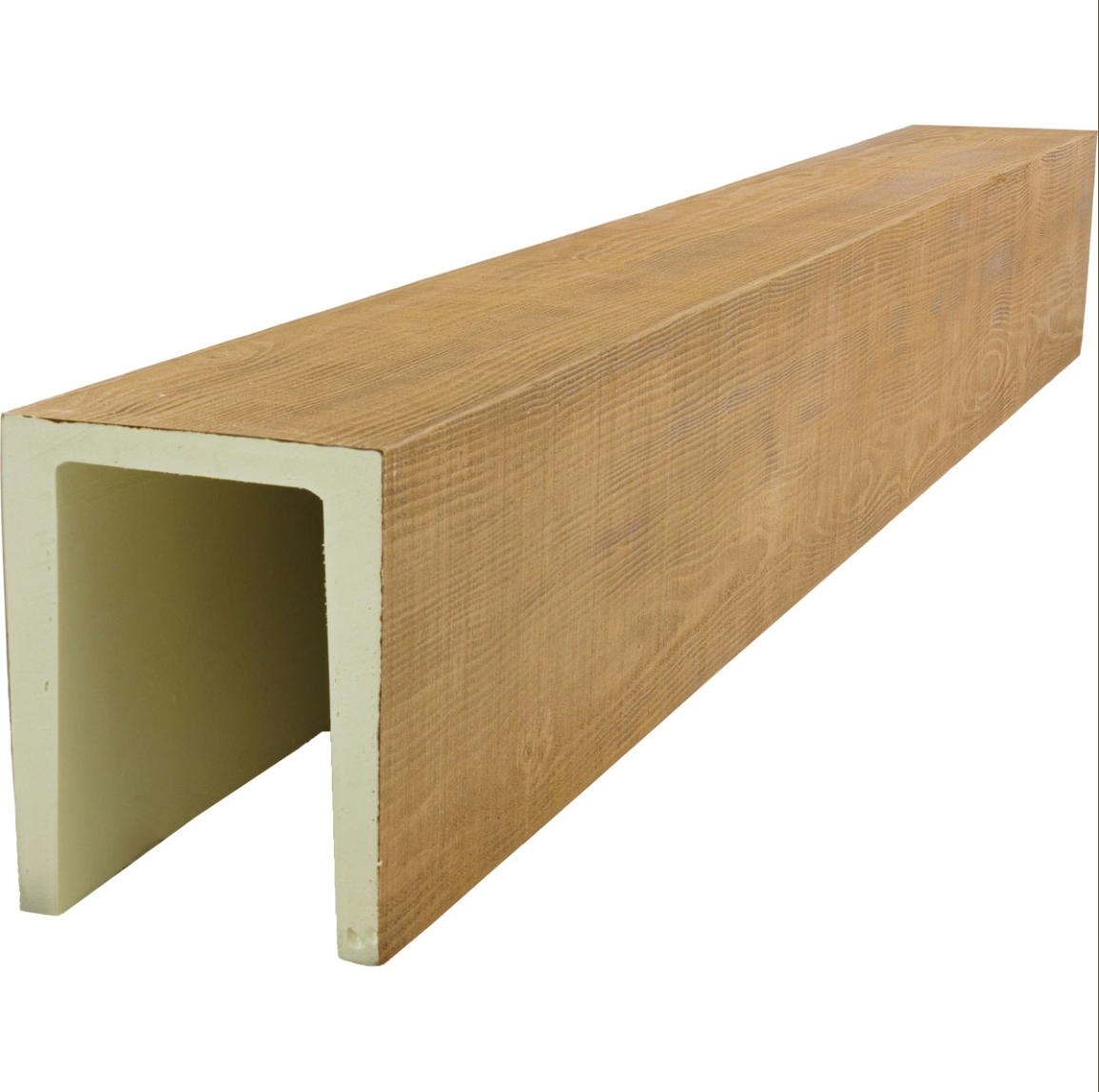
Benefits of Lightweight PU Faux Beams for Commercial Interior Builds
A restaurant wants to open in 11 weeks. The space is on the second floor of a 1920s building with plaster ceilings. The structural engineer is on vacation. The GC needs an answer today on whether decorative beams can support the design without a structural reinforcement package that would blow the budget and the schedule.
This is the daily reality of commercial interior construction. Weight matters more in commercial work than residential work because commercial buildings are typically sized for live load, not for the half-ton of solid timber that designers sometimes specify without thinking it through. Lightweight polyurethane beams resolve this problem at the material level — no engineering review needed for a 35-pound decorative element, no structural reinforcement, no schedule disruption.
The "lightweight" benefit is not marketing. It is a structural fact with cascading operational and financial consequences that commercial contractors either capture or leave on the table depending on whether they understand it.
The actual weight differential
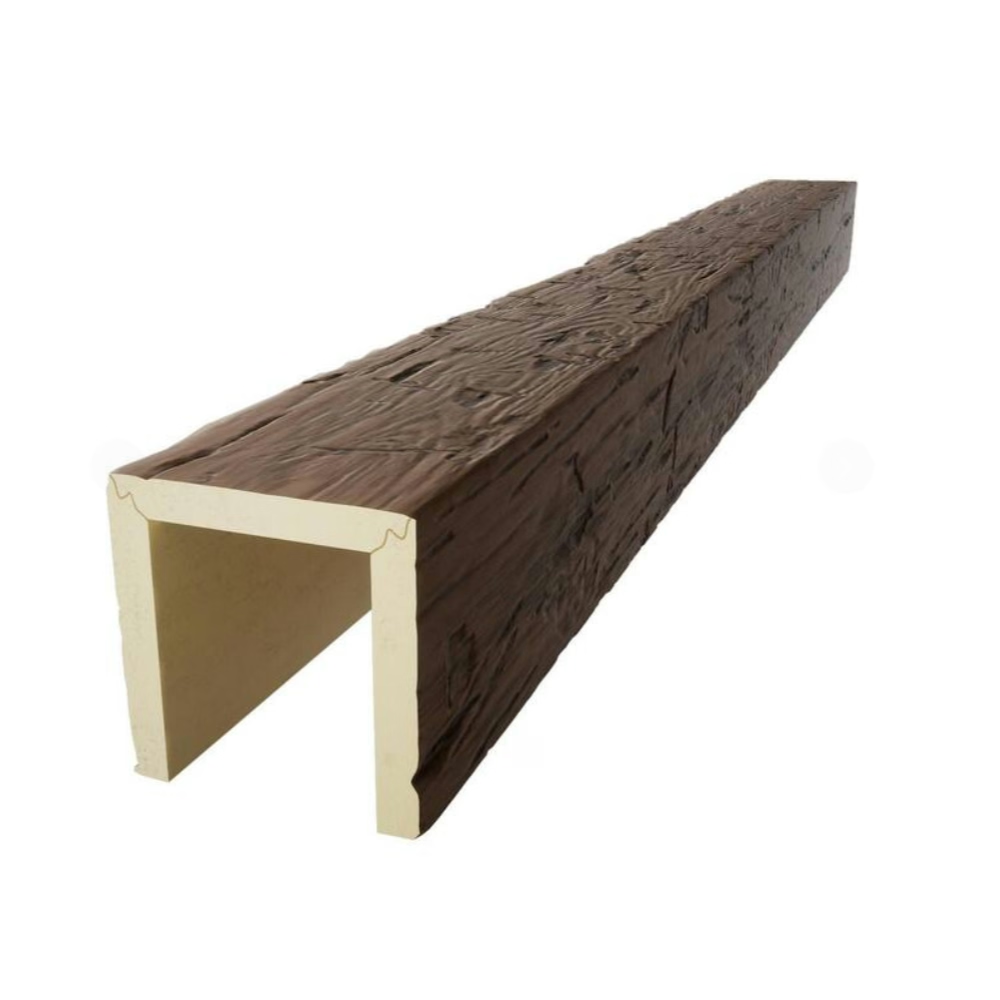
An 8×10×16 polyurethane beam weighs 28–35 pounds. The solid timber equivalent weighs 180–240 pounds. That is a 5×–7× reduction. The number is hard to grasp until you try to install both.
When a two-person crew carries a 30-pound polyurethane beam up a service elevator and positions it overhead against standard drywall, the work happens in minutes. When a four-person crew with a manual lift tries to position a 200-pound solid timber beam in the same space, the same work takes an hour and a quarter of the ceiling drywall gets scraped, and someone is probably going to need a back adjustment.
| Material | 8×10×16 weight | Crew needed | Equipment | Time per beam |
|---|---|---|---|---|
| Standard-density PU | 28–35 lb | 2 people | Ladder only | 18–25 min |
| High-density commercial PU | 35–42 lb | 2 people | Ladder or scaffold | 20–30 min |
| Solid timber | 180–240 lb | 3–4 people | Lift or hoist | 60–90 min |
The productivity difference is not incremental. It is generational. Commercial contractors who specify polyurethane on restaurant and retail tenant improvements consistently report installing 10–14 beams per crew per day versus 4–6 beams in solid timber. That is the difference between a one-day install and a three-day install — and in commercial work, days are rent or revenue.
What "existing building" actually means
The phrase "existing building renovation" covers a wide range of structural reality. Some existing buildings are steel-framed with deck capacity to spare. Many are wood-framed with original members that have been carrying their design load for 80 or 100 years and have no extra capacity for new dead loads. Some are concrete with as-built drawings that bear only passing resemblance to what was actually built.
Adding decorative beams that weigh almost nothing changes nothing about the existing structure. Adding decorative beams that weigh 180 pounds each per linear foot of run triggers questions:
- Does the existing floor structure support the new dead load?
- Will the suspended ceiling grid (if there is one) handle the point load of beam attachment?
- Does the structure need reinforcement, and if so, what is the cost and timing?
- Do existing mechanical, electrical, and plumbing systems get in the way?
Each of those questions costs money. A structural engineering review for beam loads runs $800–$1,500 per project. Reinforcement of the affected bays, where required, runs $400–$900 per beam location. Replacement of a tile ceiling grid to support added points runs another $200–$450 per beam. The investigation time alone often adds two to three weeks to a commercial schedule. None of these are problems when the beam itself weighs 30 pounds.
Scheduling pressure in commercial work
Commercial projects operate on calendar windows that exist for business reasons. A restaurant needs to open before the seasonal swing. A retail tenant's lease commencement date is fixed by a separate business agreement. A hotel renovation must release rooms back into inventory before high season. An office tenant needs to move in before the previous space's rent double-counts.
These windows do not negotiate. When a structural review takes three weeks, the schedule does not absorb it gracefully — it cascades backward through every subsequent activity. Lightweight materials eliminate the structural review at the design phase. The beam specification can move from concept to order to install inside a two-week window where solid timber would force a two-month window.
Schedule reliability is itself a project asset. General contractors with consistent on-time completion records capture better contract terms on subsequent work. Specifiers who understand that lightweight materials reduce schedule risk build a reputation for deliverability that the market rewards.
Labor and equipment economics
Commercial labor is not residential labor. Crew rates run $65–$95 per hour per worker. Equipment rental — for lifts, hoists, or specialty rigging needed for heavy beams — adds $120–$250 per day. Insurance premiums for heavy overhead installation are higher. Liability for property damage during a 200-pound beam drop is materially higher than for a 30-pound beam drop.
| Cost component | Solid timber install | PU install |
|---|---|---|
| Crew (per day) | $1,560–$2,280 | $1,040–$1,520 |
| Equipment rental | $120–$250 | $0–$40 |
| Insurance loading (per project) | $300–$600 | $80–$180 |
| Productivity (beams per day) | 4–6 | 10–14 |
For a 12-beam commercial installation, the labor and equipment difference alone runs $1,800–$2,800. The productivity difference — finishing in one day instead of three — saves an additional $2,100–$3,420 in crew and equipment time. Commercial contractors who run polyurethane-heavy workforces consistently report that crew utilization is higher, equipment inventories are smaller, and overhead supervision of beam installations is reduced.
Performance still meets commercial code
The assumption that lightweight means flimsy is a residential assumption. Commercial applications require specific performance: Class A fire rating (flame spread 0–25) per ASTM E84 in many occupancies, impact resistance for high-traffic locations, moisture resistance for food service and spa environments, and finish systems that tolerate commercial cleaning protocols.
Polyurethane beams specified to commercial standard hit these requirements with formulation choices that do not compromise weight advantage. High-density polyurethane at 10–12 lb/cu³ delivers impact resistance equivalent to softwood. Catalyzed two-part polyurethane topcoats provide chemical resistance for cleaning. Fire-rated polyurethane formulations achieve Class A without the weight penalty of fire-treated lumber.
The cost premium for commercial-grade polyurethane versus residential-grade polyurethane is modest — usually $20–$40 per beam — and is well below the cost premium for fire-treated timber or high-impact-resistant alternatives.
Where the lightweight advantage pays back most
Not every commercial project benefits equally from lightweight characteristics. The projects that capture the most value are those with the tightest constraints.
Restaurant tenant improvements typically involve opening-date pressure, occupied adjacent spaces, food service environment demands, and budget control that cannot absorb surprise structural reinforcement. Lightweight polyurethane checks every box for restaurant TI.
Retail chain roll-outs require brand-consistent execution across varied buildings, with local contractor labor rather than specialty crews. Lightweight materials allow any competent carpenter to install without specialized lifting equipment, and the brand finishes can be installed identically in a strip mall in suburban Atlanta or a flagship in downtown San Francisco.
Hotel and hospitality renovations happen during operation with minimum room-closure duration. The 18-month phased renovation of a 220-room hotel can compress three months by using materials that install faster without engineering complication.
Office tenant improvements for coworking and corporate workplace consistently require architectural interest in otherwise-generic commercial space. Lightweight beams give designers the language of exposed structure without the structural cost.
Trade-offs to acknowledge honestly
Lightweight polyurethane is not a free win on every commercial project. There are honest trade-offs that should be acknowledged.
Cost per linear foot is higher than commodity-grade solid timber. Polyurethane runs $12–$28 per linear foot for standard production versus $6–$15 for raw timber. Commercial contractors specify polyurethane for the total installed cost, including labor and schedule value, not the material-only cost.
High-impact abuse can damage polyurethane in ways that solid timber forgives. A forklift mast hitting a polyurethane beam at speed can crush it where timber would only dent. For loading docks and back-of-house areas, specify heavier timber or add steel guards.
Finish longevity in high-touch commercial environments requires maintenance schedules. Restaurant booths cleaned nightly with commercial degreaser will wear the polyurethane topcoat faster than timber's natural oils can replenish. Plan refinishing at year 5–8 in high-abuse locations.
Aesthetic authenticity requires finish choices that some commercial owners may resist. The most refined polyurethane finishes replicate real timber character including grain pattern and color variation. Solid timber has natural variation that no manufactured finish quite matches. For prestige commercial work where authentic material matters as much as performance, solid timber remains the design-correct choice despite all the operational advantages polyurethane provides.
A practical decision framework
For commercial contractors deciding whether to specify lightweight polyurethane, the framework is straightforward.
Specify lightweight polyurethane when:
- Schedule pressure is high and structural review windows are unavailable
- Existing building structural capacity is unknown or constrained
- Crew access to the install space is limited (upper floors, narrow corridors, occupied buildings)
- Budget for total installed cost matters more than material-only cost
- Finish performance needs are achievable with commercial-grade polyurethane
Consider alternative materials when:
- Authentic real-wood material is a project requirement
- High-impact abuse is expected (loading docks, industrial environments)
- Design vocabulary demands timber the architect or owner is committed to
- Long-term maintenance cycles cannot be accommodated by the operations plan
Most commercial interior work fits the first set of conditions. Most commercial interior contractors who try lightweight polyurethane once use it again.
Closing point on material honesty
Commercial contractors live with their material choices long after the project closes. The polyurethane beams specified for a 2024 restaurant will still be in service in 2034, and the warranty exposure, the maintenance cost, and the call-back risk all flow back to the original specification. Lightweight polyurethane specified to commercial standard from a manufacturer with proper documentation and warranty support is among the lowest-risk material decisions available to commercial interior work.
The benefits are operational, structural, financial, and reputational. The trade-offs are real but limited to specific use cases. The material works in commercial environments when specified correctly. That is a useful thing to know, and it is what the rest of this guide series unpacks in more detail for specific commercial applications.
Technical References
ASTM standards cited in every specification
Test Data
Lab results from internal testing program
Updated 2026
Reviewed against current product specs