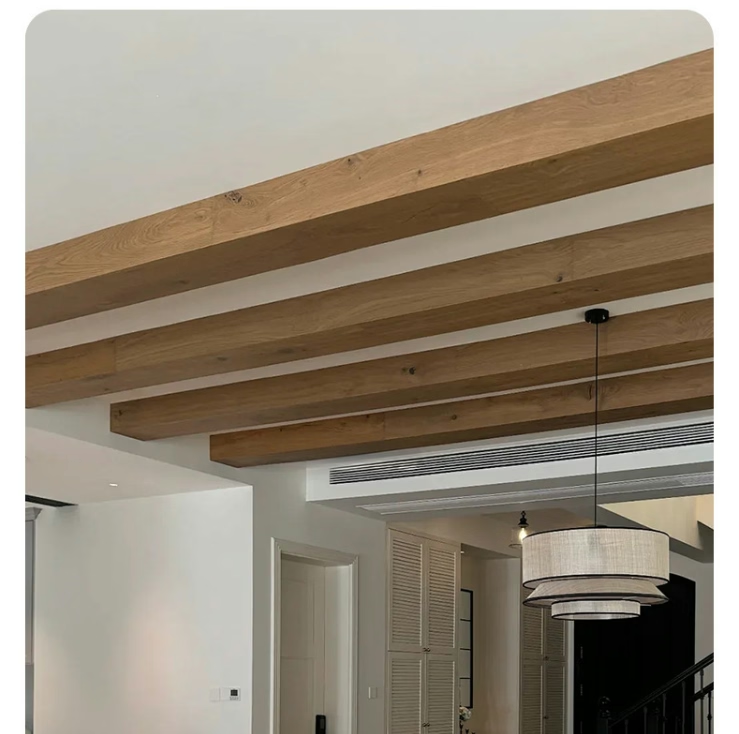
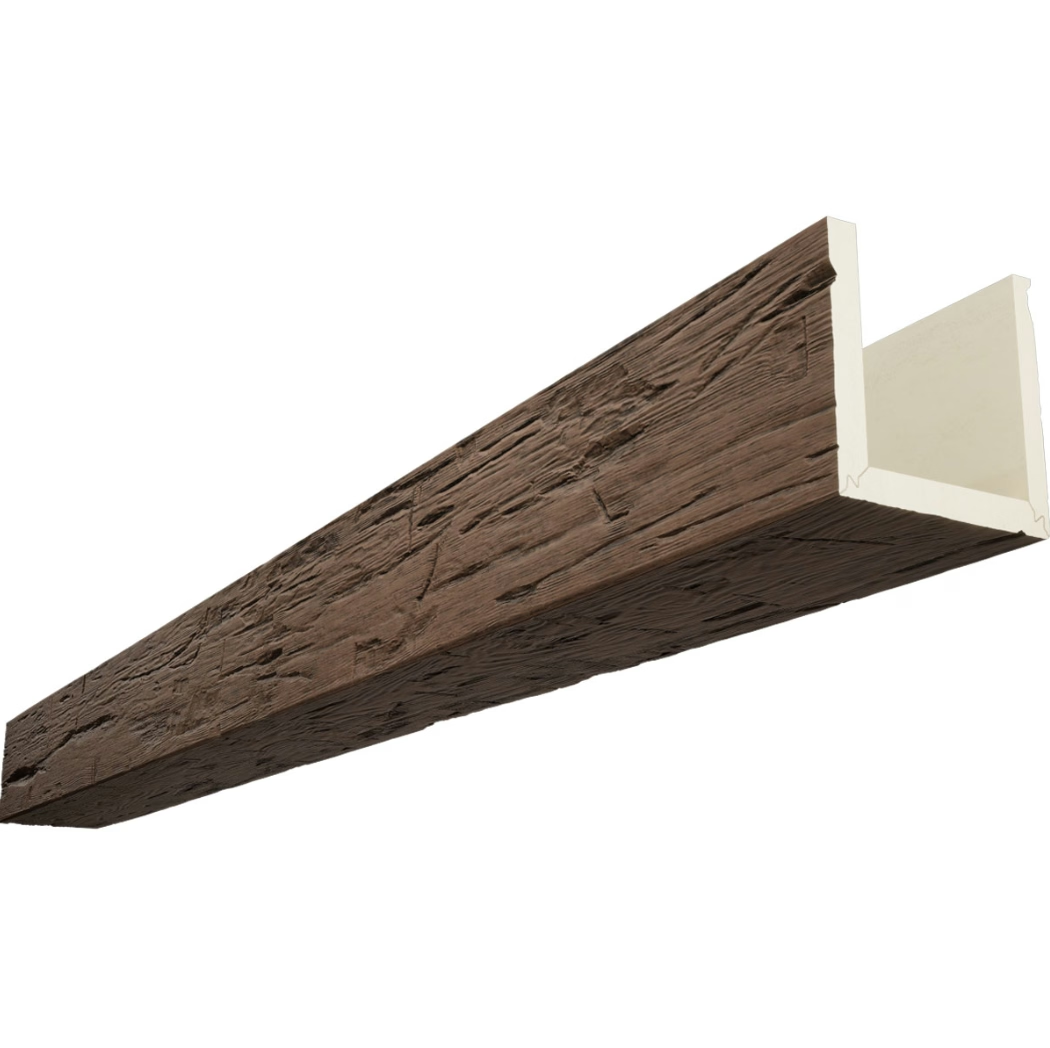
The mixed-use development spanned 18 months construction with four distinct phases: parking structure and retail (months 1-6), office tower floors 1-10 (months 4-12), office tower floors 11-20 (months 9-15), and amenity spaces (months 13-18). Decorative beams featured throughout requiring approximately 45,000 linear feet total. Initial procurement planning proposed single order delivering everything to site at project start. However, storing 45,000 feet of beams for 18 months required renting off-site warehouse space at $12,000 monthly—$216,000 total storage costs. We restructured procurement into four coordinated orders delivering 2-4 weeks before installation reducing storage to minimal on-site staging. This just-in-time strategy required careful lead time management and manufacturer coordination but saved $180,000 in storage costs while reducing damage risk from extended storage. That project taught me that bulk order management demands balancing volume pricing advantages against storage costs, damage risks, and schedule flexibility.
Bulk order lead time management for multi-phase commercial projects requires understanding manufacturing capacities, forecasting material needs, coordinating deliveries with installation schedules, and implementing inventory strategies balancing cost, risk, and schedule certainty. Sophisticated procurement approaches optimize total project costs rather than simply minimizing unit material prices without considering broader financial implications.
Understanding Manufacturing Lead Times
Standard production lead times vary by manufacturer, product complexity, and current order backlogs. Simple smooth-profile beams might ship 2-4 weeks after order while custom textured profiles require 4-8 weeks. Understanding baseline lead times establishes minimum planning horizons preventing unrealistic schedule expectations.
Capacity constraints during peak construction seasons (typically spring and summer) extend lead times as manufacturers operate at capacity. Orders placed during busy periods might experience 6-10 week lead times versus 3-4 weeks during slow seasons. Understanding seasonal demand patterns enables strategic order timing leveraging manufacturer slack capacity.
Custom product premiums for non-standard dimensions, colors, or textures often extend lead times beyond standard products. Custom orders might require 8-12 weeks accommodating special production runs versus 4-6 weeks for standard catalog items. Understanding custom production implications guides specification decisions balancing customization desires against schedule constraints.
Volume order considerations where large single orders might strain manufacturer capacity potentially extending lead times versus dividing orders across multiple smaller shipments. However, multiple small orders lose volume pricing advantages and increase administrative complexity. Understanding manufacturer capacity guides order size optimization.
Rush order possibilities exist for emergency situations where premium pricing (perhaps 20-40% surcharges) enables expedited production and shipping. Rush orders should remain exceptions rather than standard practice—systematic planning eliminates most rush requirements. However, knowing rush options exist provides contingency when unexpected situations demand fast material delivery.
Forecasting Material Requirements
Quantity calculations from architectural drawings determining total linear feet required per phase considering waste factors (typically 5-10% for straight runs, 10-15% for complex layouts) ensures ordering adequate quantities without significant excess. Detailed takeoffs prevent both shortages causing delays and overages increasing costs.
Phasing analysis determining which project phases require materials when establishes delivery schedule requirements. Multi-phase projects benefit from dividing orders matching construction phases rather than ordering everything initially. Phase-specific forecasting enables just-in-time strategies reducing storage requirements.
Contingency allowances incorporating buffers for design changes, field conditions, or waste exceeding typical factors prevents shortages requiring expensive rush reorders. Contingency sizing depends on project complexity and design certainty—perhaps 5% for well-defined projects versus 10-15% for design-build where details evolve during construction.
Design evolution tracking during design development and early construction phases enables procurement adjustments before orders finalize. Design changes after ordering creates waste from obsolete materials or expensive rush orders for changed requirements. Freezing designs before procurement commits reduces change-induced costs.

Procurement Strategy Options
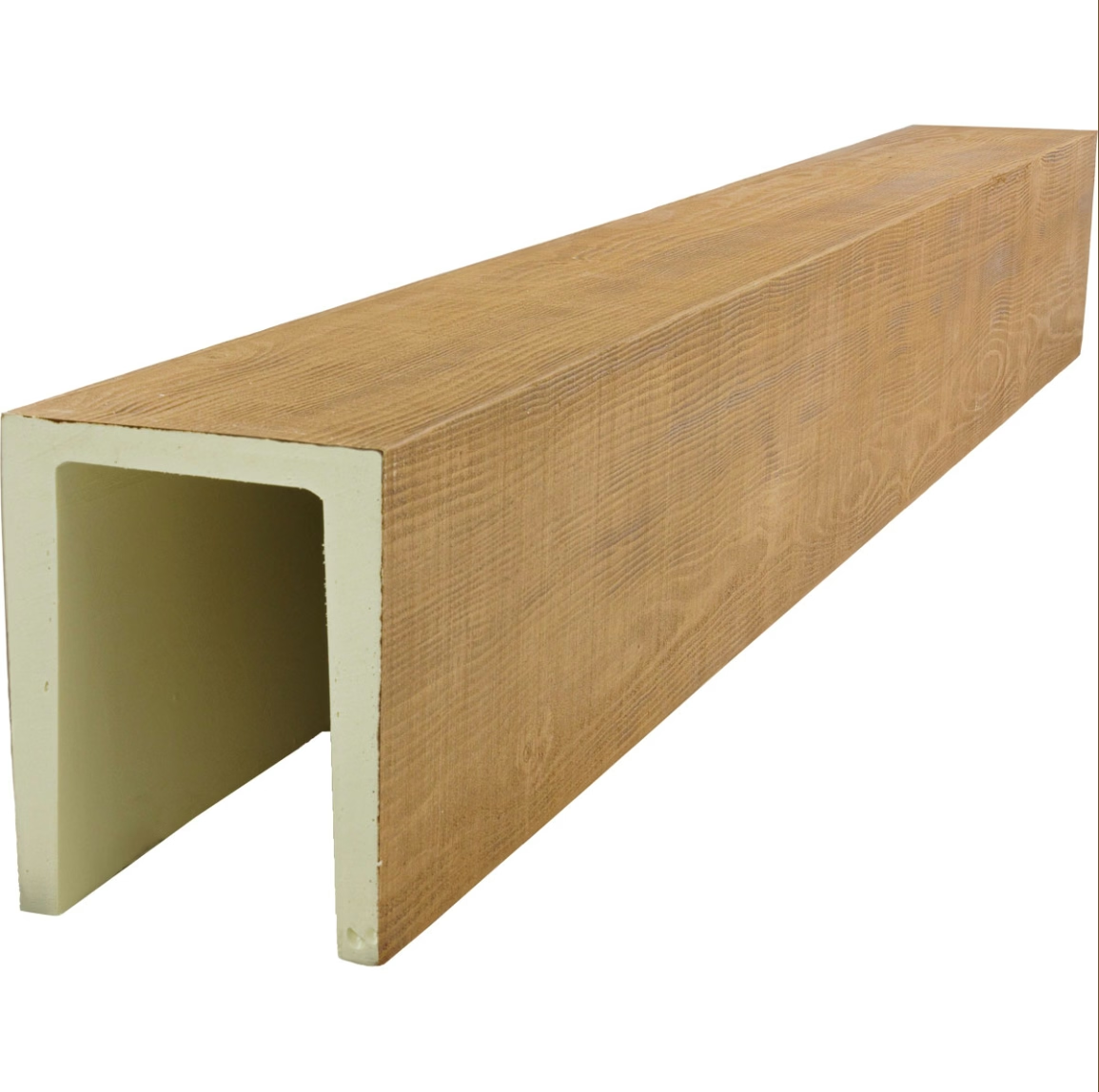
Single bulk order placing entire project order initially maximizes volume pricing and ensures complete material availability but requires substantial storage capacity and capital investment. This conservative strategy eliminates shortage risks but increases holding costs and damage exposure. Single orders suit projects with adequate storage and capital where risk avoidance justifies higher holding costs.
Phased ordering dividing procurement into multiple orders matching construction phases balances volume pricing against storage costs. Perhaps ordering 3-4 shipments over project duration reduces storage requirements while maintaining reasonable pricing through large individual phase orders. Phased strategies require lead time management ensuring subsequent orders deliver before needed.
Just-in-time delivery minimizing on-site inventory through precisely timed deliveries reduces storage costs and damage risks but demands excellent schedule coordination and supplier reliability. JIT strategies work best with experienced teams, reliable manufacturers, and stable schedules. Schedule uncertainties or unreliable suppliers make JIT risky potentially causing expensive delays.
Master agreement procurement establishing framework contracts with predetermined pricing but flexible delivery schedules provides pricing certainty while maintaining delivery flexibility. Master agreements suit multi-year programs or developers with multiple projects guaranteeing volume while allowing delivery timing optimization per project.
Consignment inventory where manufacturers store materials releasing them to projects as needed transfers storage burden to suppliers. However, manufacturers might charge storage fees or require minimum order commitments. Consignment suits large developers with strong supplier relationships and significant ongoing volume.
Delivery Coordination
Schedule integration coordinating material deliveries with installation readiness prevents materials arriving before sites ready to receive them or after installation crews stand idle waiting. Delivery windows should align with trade coordination—materials arriving 2-4 weeks before installation provides staging buffer without excessive storage duration.
Site logistics planning determining delivery truck access, unloading equipment availability, and staging area locations prevents deliveries arriving at inopportune times. Coordinating deliveries with site superintendent prevents trucks arriving during incompatible activities—perhaps concrete pours blocking access or exterior work preventing interior deliveries.
Delivery sequence optimization ordering materials in installation sequence when multiple shipments occur prevents installers searching through random materials finding correct products. If Phase 1 uses 6×8 walnut beams while Phase 2 uses 4×6 oak, delivering products in this sequence maintains organization versus mixed deliveries requiring extensive sorting.
Weather considerations for exterior staging planning deliveries during favorable weather prevents snow, rain, or extreme temperatures complicating material handling and storage. While most polyurethane products tolerate weather exposure, packaging materials (cardboard, plastic wrap) might not. Weather-aware scheduling reduces weather-related complications.
Receiving inspection procedures verifying correct products and quantities arrive in good condition catches discrepancies immediately when correction proves simplest. Receiving checklists, count verification, and damage documentation creates records supporting claims if problems discovered. Systematic receiving prevents accepting problems becoming installer's headaches.
Storage and Inventory Management
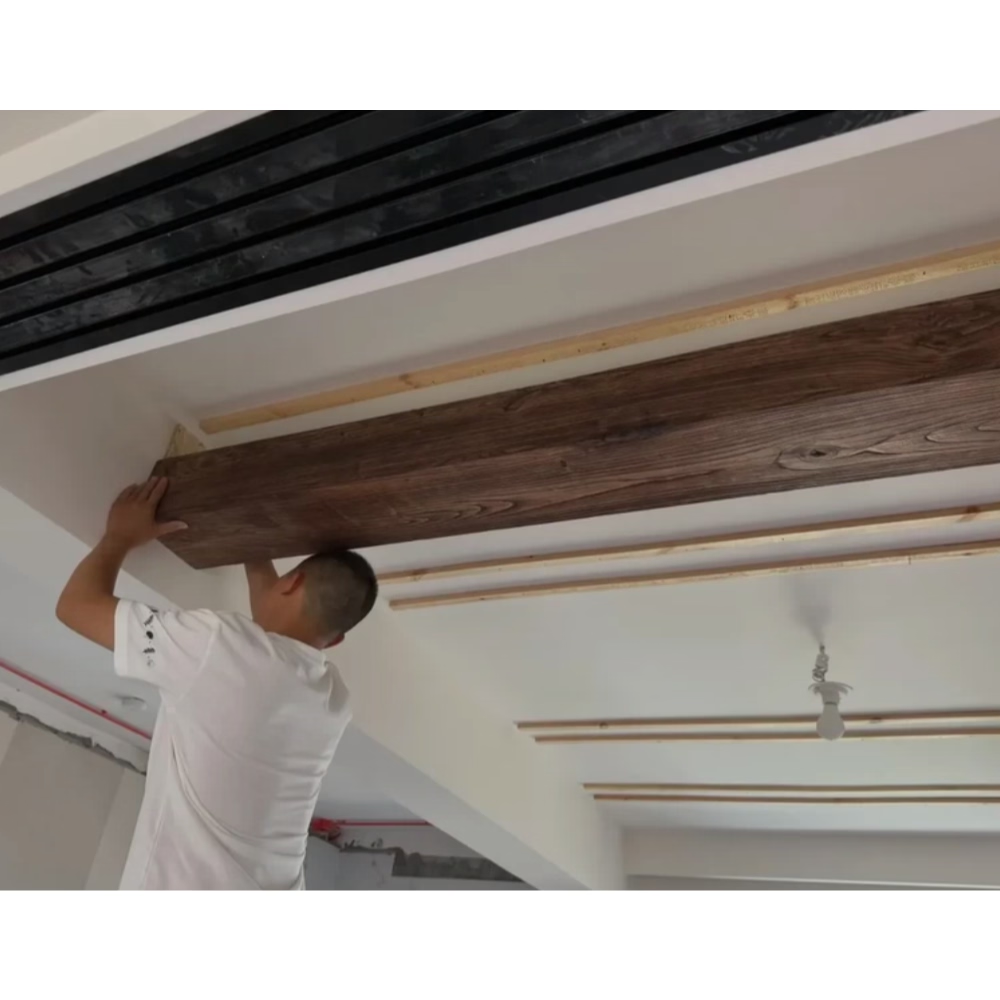
On-site staging for short-term storage (days to weeks) requires protecting materials from damage while maintaining accessibility. Flat stacking prevents warping, weatherproof covering protects against moisture, and organized layout enables finding specific products. Poor staging creates damage and installation delays from material disorganization.
Off-site warehousing for long-term storage (weeks to months) provides controlled environment preventing weather exposure and theft but adds costs ($8-15 per square foot annually) and logistics complexity. Warehouse location near project sites reduces transportation costs while remote locations might offer lower storage rates. Economic analysis determines optimal warehouse solutions.
Climate control considerations for environments with extreme temperature or humidity protecting materials from environmental stress. Most polyurethane products tolerate wide environmental ranges but extreme conditions might cause temporary dimensional changes. Climate-controlled storage eliminates environmental variables though adding costs justified only for sensitive materials or extreme climates.
Inventory tracking systems using spreadsheets, database systems, or RFID tags maintaining real-time knowledge of material quantities, locations, and conditions enables efficient material management. Simple projects might use paper tracking while complex multi-phase developments benefit from sophisticated inventory software. Tracking system sophistication should match project complexity.
Security measures preventing theft or vandalism through fencing, lighting, cameras, or security personnel protects material investments. Construction site theft represents significant industry problem—valuable readily-resalable materials deserve protection. Security investment often proves economical versus replacement costs and schedule delays from stolen materials.
Risk Management Strategies
Lead time buffers adding safety margin to manufacturer stated lead times accommodates unexpected delays without affecting project schedules. If manufacturers quote 6 weeks, ordering 8 weeks ahead provides buffer for minor delays. Buffer sizing depends on manufacturer reliability and schedule criticality—perhaps 20-30% time buffer proves reasonable.
Alternate sourcing identifying backup manufacturers capable of supplying similar products enables contingency if primary suppliers face problems. Qualifying alternates before emergencies prevents scrambling during crises. However, alternate products must match specifications preventing quality compromises under schedule pressure.
Expediting capabilities with manufacturers understanding rush order possibilities and associated costs enables responding to unexpected needs. Maintaining good supplier relationships facilitates accommodation during emergencies. However, frequent expediting indicates planning failures—systematic planning eliminates most rush requirements.
Change order protocols establishing procedures for scope changes, design modifications, or field conditions requiring additional materials prevents change-induced delays. Clear processes defining who authorizes changes, procurement lead times for additional materials, and cost implications streamlines change management.
Financial Considerations
Volume discount analysis quantifying pricing benefits of larger single orders versus smaller multiple orders reveals economic trade-offs. Perhaps single 45,000-foot order receives 15% volume discount while four 11,000-foot orders receive only 8% discount. However, storage costs might exceed discount differences making multiple orders economically superior despite higher unit prices.
Payment terms negotiation achieving favorable payment schedules—perhaps 50% deposit, 50% on delivery versus 100% in advance—improves project cash flow. Extended payment terms essentially provides free financing. However, favorable terms might reduce volume discounts requiring economic analysis determining net financial impact.
Storage cost accounting including warehouse rental, handling, insurance, and capital carrying costs reveals total storage expenses. Storage might cost $2-5 per linear foot over project duration—significant expense potentially exceeding volume discount savings. Comprehensive cost accounting guides storage versus just-in-time strategy decisions.
Cash flow optimization through staged purchases spreading costs across project duration rather than large upfront investment improves financial flexibility. Developers and contractors with capital constraints benefit from staged procurement reducing peak cash requirements. Financial engineering deserves equal attention to procurement logistics.
Communication and Coordination
Owner coordination keeping owners informed about procurement decisions, lead time requirements, and schedule implications manages expectations and secures necessary approvals. Procurement strategies affecting schedules or budgets require owner buy-in preventing misunderstandings.
General contractor integration coordinating material deliveries with overall project schedules prevents conflicts between trades. GC should know delivery schedules enabling appropriate site preparation, access provision, and staging area allocation. Poor coordination creates expensive project disruptions.
Installer involvement engaging installation contractors during procurement planning ensures materials arrive in useful formats at appropriate times. Installers provide practical insights about staging requirements, delivery sequence preferences, and material packaging that procurement teams might overlook. Collaborative planning improves execution.
Supplier relationships maintaining open communication with manufacturers about schedule changes, potential delays, or quantity adjustments enables mutual accommodation. Treating suppliers as partners rather than adversaries facilitates problem-solving when inevitable challenges arise.
Technology and Tools
Project management software tracking procurement, deliveries, and inventory within integrated project management systems improves visibility and coordination. Tools like Procore, PlanGrid, or specialized procurement software enable real-time tracking and communication. Technology investment often proves economical for large complex projects.
RFID and barcode systems enabling automated inventory tracking and materials location provide precise real-time data for large projects. While sophisticated systems require investment, technology prevents manual tracking errors and improves material management efficiency.
Delivery scheduling platforms coordinating with suppliers through shared digital calendars or scheduling systems improves delivery coordination reducing miscommunication. Simple solutions like shared Google calendars through sophisticated supplier portals enable appropriate collaboration levels for different project scales.
Lessons from Project Case Studies
Multi-building campus developments benefit from phased procurement matching building sequences. Single bulk orders prove impractical for 2-3 year developments but individual building orders lose volume advantages. Hybrid strategies—perhaps 3-4 large phase orders—balance pricing and logistics.
Tenant improvement programs with multiple simultaneous projects favor master agreements providing consistent pricing and delivery flexibility across portfolio. Developers and property owners with ongoing TI work benefit from negotiated frameworks enabling project-specific releases.
Hospitality chain rollouts opening multiple properties over extended periods combine master agreements with property-specific logistics enabling brand consistency and procurement efficiency across properties while respecting individual project schedules.
Professional Procurement Excellence
Bulk order lead time management for multi-phase commercial projects demands balancing volume pricing, storage costs, schedule certainty, and risk management through sophisticated procurement strategies. One-size-fits-all approaches rarely optimize outcomes—successful projects develop customized procurement strategies reflecting specific project characteristics, financial constraints, and risk tolerances. For project managers, developers, and contractors executing complex commercial construction, systematic procurement planning delivers better outcomes than reactive ordering responding to immediate needs without strategic thinking.
The discipline to forecast comprehensively, plan strategically, and coordinate systematically distinguishes professional procurement from amateur approaches assuming materials "will work out" without rigorous advance planning. Procurement excellence represents fundamental project management capability that successful commercial construction demands.
通过系统的批量采购计划和交付协调,可以在保证施工进度的同时,最大限度降低库存成本和材料损坏风险,实现多阶段商业项目的高效材料管理。
Technical References
ASTM standards cited in every specification
Test Data
Lab results from internal testing program
Updated 2026
Reviewed against current product specs