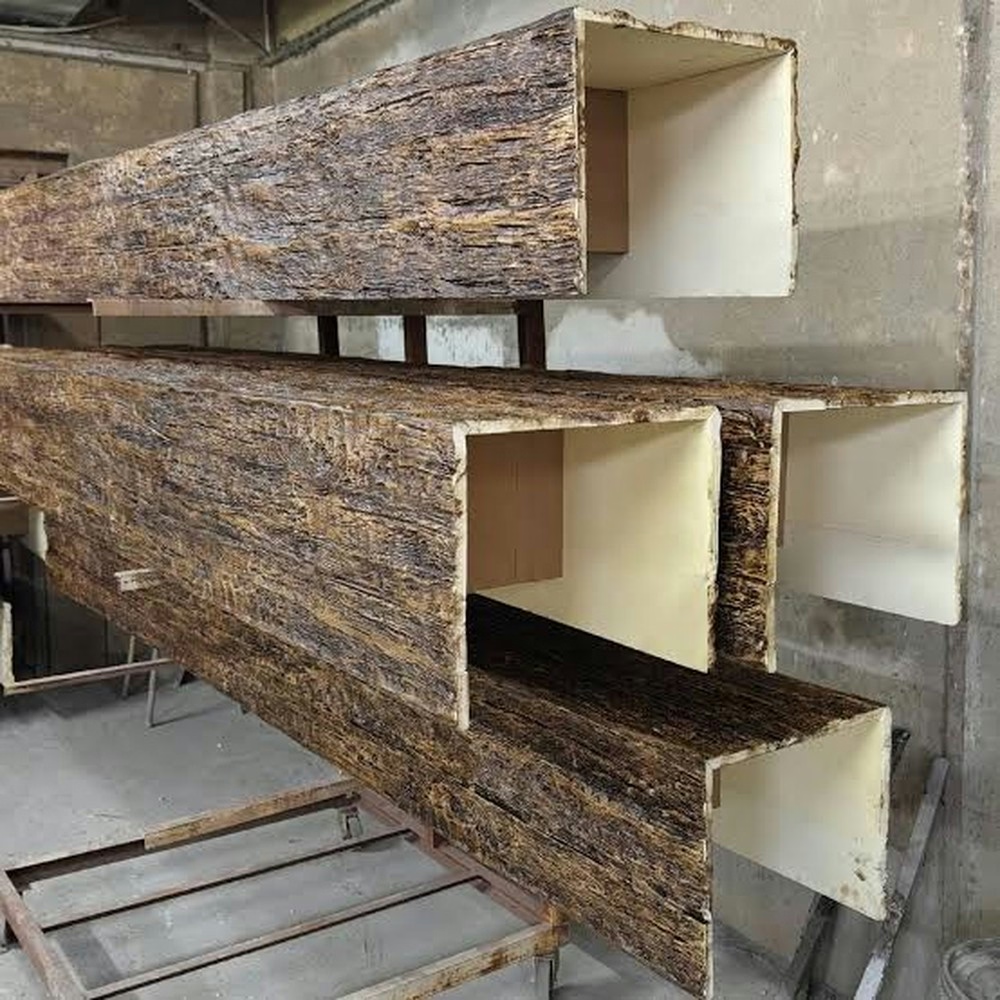
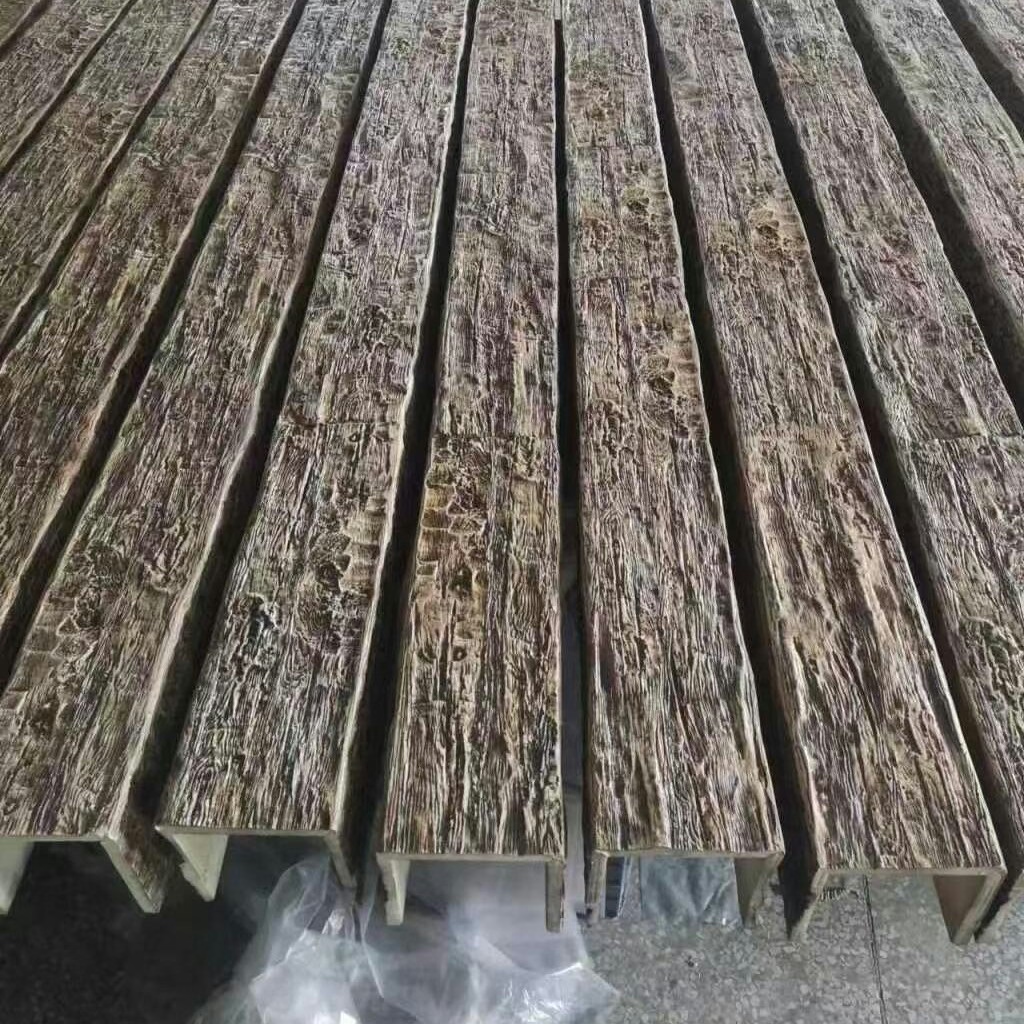
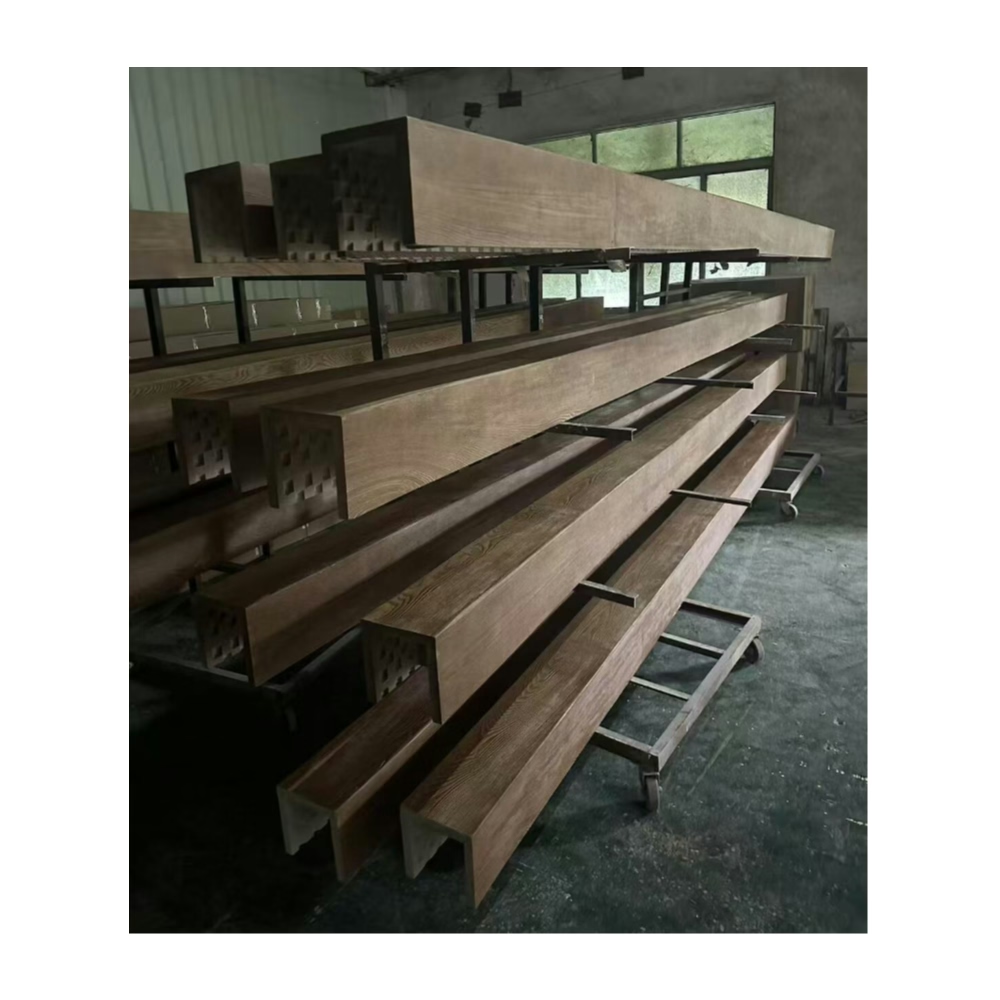
The hotel lobby featured stunning exposed beams across the entry ceiling—impressive architectural statement welcoming guests. Eighteen months post-installation, facilities staff heard loud cracking sounds during night audit. Morning inspection revealed a 14-foot beam section had detached at one end, hanging by electrical wiring routed through its interior. Fortunately, no one was present during failure preventing injury. Investigation revealed the adhesive bond had failed completely along the beam's mounting surface—not from sudden overload but from progressive degradation. The installer had applied adhesive to dusty unprepared surfaces without proper priming. Initial grab held during installation but bonds slowly weakened over months until catastrophic failure. That near-miss taught the hotel chain to require adhesive bond testing on future installations—random pull-tests validating bond strength before accepting projects.
Adhesive bond strength testing protocols for long-term reliability require understanding testing methods, interpreting results, establishing acceptance criteria, and implementing quality assurance programs ensuring installations deliver safe reliable performance through decades of service. While proper surface preparation and adhesive selection prove essential, testing validates that theoretical best practices translate into actual adequate bonds in real installations.
Understanding Adhesive Bond Mechanics
Adhesion mechanisms include mechanical interlocking where adhesive penetrates substrate surface irregularities, chemical bonding where adhesive forms molecular bonds with substrate, and physical adsorption where van der Waals forces create attraction between adhesive and substrate. Different adhesives rely on different mechanisms—understanding which mechanisms dominate guides appropriate surface preparation and testing approaches.
Cohesive versus adhesive failure modes determine where bonds fail. Adhesive failure occurs at adhesive-substrate interface when bonding proves inadequate. Cohesive failure occurs within adhesive layer when adhesive internal strength proves weaker than interface bonds. Ideal failures show cohesive failure indicating interfaces stronger than adhesive itself. Adhesive failures suggest inadequate bonding requiring investigation.
Stress distribution in bonded joints concentrates at ends and edges where geometric discontinuities create stress concentrations. Uniform stress distribution across entire bond area proves impossible—analyzing stress patterns helps understanding why bonds fail and guides design minimizing peak stresses. Testing should evaluate bonds under realistic stress distributions rather than pure uniform loading that doesn't match actual conditions.
Environmental effects on bond strength include temperature affecting adhesive stiffness, moisture causing hydrolysis or plasticization, UV exposure degrading adhesives, and cyclic loading causing fatigue. Long-term reliability requires bonds withstanding not just initial loading but decades of environmental exposure and cyclic stress. Testing should evaluate environmental resistance not just initial strength.
Time-dependent behavior in adhesives includes creep (progressive deformation under sustained load) and stress relaxation (decreasing stress under sustained strain). Bonds adequate initially might fail over time if creep allows progressive separation or if stress relaxation reduces clamping force. Long-term testing or accelerated aging reveals time-dependent behavior that short-term testing misses.
Testing Method Categories
Destructive pull-off testing using mechanical equipment applying tension perpendicular to bonded surfaces until failure measures ultimate bond strength. Pull-off testing provides quantitative strength data enabling comparison against acceptance criteria. However, destructive testing damages installations limiting use to statistical sampling rather than 100% testing.
Non-destructive evaluation using methods that assess bond quality without destroying bonds enables testing installed systems without damage. NDT methods include ultrasonic testing detecting voids or delamination, thermal imaging revealing debonded areas appearing thermally different than bonded areas, and coin-tap testing where acoustic response to tapping reveals bond quality. NDT allows comprehensive evaluation without damage but provides qualitative assessment rather than quantitative strength data.
Proof loading applies loads less than ultimate strength verifying bonds withstand service loads with safety margin. Proof loads might be 1.5-2× expected service loads. Passing proof test provides confidence without breaking bonds. However, proof testing risks damaging bonds if loads exceed actual bond strength. Proof loads should remain below expected ultimate strength with adequate margin.
Accelerated aging testing subjects bonded samples to elevated temperature, humidity cycling, UV exposure, or combinations accelerating degradation mechanisms. Comparing aged samples to unaged controls reveals degradation rates enabling long-term performance predictions. Accelerated testing particularly valuable for new adhesive systems lacking long-term field history.

ASTM Testing Standards
ASTM D4541 Standard Test Method for Pull-Off Strength of Coatings Using Portable Adhesion Testers describes field-portable pull-off testing applicable to adhesive bonds. Testing involves bonding dollies (aluminum discs) to surfaces with high-strength epoxy, then using hydraulic or mechanical testers pulling dollies perpendicular to surfaces measuring failure stress. This method enables field testing installed systems providing quantitative bond strength data.
ASTM D903 Standard Test Method for Peel or Stripping Strength of Adhesive Bonds measures resistance to peeling forces—relevant for flexible adhesive applications though less applicable to rigid beam mounting. Peel testing reveals behavior under peeling stresses different from tensile stresses that pull-off testing measures. Understanding appropriate test methods prevents testing modes not representative of actual loading.
ASTM D1002 Standard Test Method for Apparent Shear Strength of Single-Lap-Joint Adhesively Bonded Metal Specimens measures shear strength under tensile loading. While developed for metal bonding, principles apply to other materials. Shear testing reveals different information than perpendicular pull-off testing—both loading modes exist in actual beam installations requiring testing both.
ASTM D2294 Standard Test Method for Creep Properties of Adhesives in Shear by Compression Loading evaluates long-term behavior under sustained loads. Creep testing requires extended testing durations—often weeks or months—making routine field use impractical. However, adhesive manufacturers should provide creep data validating long-term reliability.
Field Testing Procedures
Sample selection using statistical sampling plans balancing inspection confidence against destructive testing damage determines how many tests conduct and where. Random sampling throughout installations provides representative data. Risk-based sampling concentrating tests in critical areas or suspicious conditions focuses resources on highest-risk locations. Sample size depends on installation size and acceptable risk—perhaps minimum 3-5 tests per 1,000 square feet of bonded area.
Surface preparation before testing ensuring test areas cleaned and dollies properly bonded prevents test equipment adhesion failure rather than testing actual beam bonds. Dollies bond with high-strength epoxy providing adequate cure time (typically 24 hours) ensures dolly bonding exceeds beam adhesive strength making tests measure actual bonds not test apparatus failures.
Testing equipment calibration and verification before testing confirms equipment accuracy. Portable pull-off testers should periodically calibrate against known loads ensuring accuracy. Using uncalibrated equipment generates unreliable data creating false confidence or unwarranted concern. Equipment manufacturers typically recommend annual calibration.
Test execution using proper techniques ensures valid results. Pull-off testers must align perpendicular to surfaces—angled loading creates shear components affecting results. Load application rates should match standard recommendations—typically 100-200 psi per second. Consistent technique across all tests enables meaningful comparisons.
Failure mode documentation recording whether failures occur adhesively (at interfaces), cohesively (within adhesive), or in substrate provides crucial information. Photographs documenting failure surfaces plus written descriptions create records enabling interpretation. Cohesive failures generally indicate adequate bonding while adhesive failures suggest problems requiring investigation.
Acceptance Criteria Development
Minimum strength thresholds establish performance floors below which bonds prove unacceptable. Criteria depend on actual loads, safety factors, and code requirements. For ceiling-mounted decorative beams, minimum pull-off strength might be 150-200 psi ensuring bonds dramatically exceed actual loads (typically 10-30 psi from beam self-weight plus safety factors). Establishing rational criteria prevents both under-testing (accepting inadequate bonds) and over-testing (rejecting adequate bonds).
Statistical approaches using multiple samples establishing mean strengths and variability providing more reliable assessment than single tests. If five tests average 180 psi with standard deviation of 30 psi, this data indicates different population than five tests averaging 180 psi with standard deviation of 5 psi. Statistical analysis accounting for variation provides confidence about actual bond quality.
Failure mode considerations where cohesive failures might prove acceptable at lower strengths than adhesive failures since cohesive failures indicate good bonding. Some standards require cohesive failure regardless of measured strength. If adhesive failures occur even at high strengths, this suggests marginal bonding—inadequate surface preparation or adhesive compatibility issues.
Comparative assessment where bonds compare against control samples prepared in ideal conditions reveals whether field installations match laboratory standards. If field bonds achieve 70-80% of laboratory-prepared control bonds, this indicates reasonable field quality. If field bonds achieve only 30-40% of controls, this suggests field problems requiring investigation and possibly remediation.
Quality Assurance Programs
Pre-installation verification testing adhesive batches, surface preparation effectiveness, and installation crew proficiency before starting production work catches problems early. Mock-up installations allowing testing without affecting actual projects validates procedures before applying them to critical installations. Front-end verification prevents discovering problems after substantial work completion.
In-process monitoring during installation provides real-time quality feedback enabling immediate correction. Perhaps testing first day's work before proceeding validates installation quality. For large projects, periodic testing throughout installation maintains quality rather than assuming initial good results continue. Progressive monitoring catches problems before extensive non-conforming work accumulates.
Final inspection after installation completion before project acceptance provides last verification opportunity. Holding retention pending successful testing creates incentive for quality work while providing leverage if problems discovered. Final testing should use same methods and criteria as earlier testing maintaining consistency.
Long-term follow-up testing during warranty periods or building maintenance cycles monitors bond aging and degradation. Testing 1, 3, and 5 years post-installation reveals whether bonds maintain strength or degrade over time. Declining strength trends indicate problems requiring investigation and possible remediation before failures occur.
Environmental Testing Considerations
Freeze-thaw cycling for installations in unconditioned spaces experiencing freezing exposes bonds to expansion-contraction stress from ice formation. Testing might involve 20-50 freeze-thaw cycles measuring bond strength after cycling. Bonds degrading substantially under freeze-thaw prove unsuitable for cold-climate unconditioned applications.
Heat aging at elevated temperatures accelerates thermal degradation enabling predicting long-term behavior without waiting decades. Aging at 140-160°F for weeks simulates years of typical service. Comparing aged and unaged samples reveals thermal stability. However, accelerated aging might not perfectly replicate actual long-term aging—results provide estimates rather than guarantees.
Humidity exposure and wet-dry cycling reveals moisture sensitivity. Bonds might show adequate dry strength but degrade substantially when wet. Cyclic exposure between wet and dry conditions often proves more damaging than constant humidity. Testing after humidity exposure reveals moisture resistance.
UV exposure for applications receiving natural light subjects bonds to photodegradation. UV chambers or natural outdoor exposure reveals UV resistance. While most ceiling applications receive minimal UV, sunrooms or skylighted areas might warrant UV aging validation.
Combined environmental exposure simulating multiple stressors simultaneously—perhaps heat plus humidity, or UV plus humidity—often proves more realistic than single-factor testing. Combined exposure might reveal synergistic degradation not apparent from single-factor tests.
Problem Diagnosis and Remediation
Low bond strength diagnosis determining root causes guides remediation approaches. Possible causes include inadequate surface preparation, incorrect adhesive selection, improper adhesive mixing or application, insufficient cure time, environmental contamination during installation, or substrate problems. Systematic investigation reveals actual causes enabling effective rather than symptomatic remediation.
Localized failures where some areas show adequate strength while others prove deficient suggest installation quality variations rather than systematic design problems. Perhaps some installers prepared surfaces properly while others cut corners, or contamination affected specific areas. Identifying patterns guides targeted remediation rather than complete replacement.
Systemic failures where bonds uniformly prove inadequate suggest fundamental problems—wrong adhesive for substrate, improper surface preparation procedures, or environmental factors affecting all bonds similarly. Systemic failures often require extensive remediation possibly including complete reinstallation.
Remediation verification requiring testing repaired or reinstalled work at higher rates than original installation ensures remediation successfully addresses problems. If 5% original sampling found problems, perhaps 15-20% sampling validates remediation. Higher scrutiny proves appropriate when earlier work proved deficient.
Legal and Liability Considerations
Standard of care for adhesive installations requires following manufacturer instructions, industry best practices, and applicable codes. Deviating from these standards without engineering justification creates liability exposure. Documentation proving standard of care compliance protects against liability claims if failures occur despite proper execution.
Warranty implications of testing vary by contract terms. Some warranties might be voided by destructive testing while others require testing validation. Understanding warranty terms before testing prevents inadvertently voiding coverage. Negotiating warranty terms explicitly permitting or requiring testing maintains protection while enabling verification.
Failure liability when inadequately bonded beams fail causing injury or property damage might be assigned to contractors, designers, adhesive manufacturers, or property owners depending on circumstances. Proper installation, appropriate adhesive selection, adequate testing, and documentation demonstrating due diligence provides liability protection. Conversely, neglecting reasonable precautions creates exposure.
Documentation Requirements
Test reports documenting test dates, locations, methods, equipment, procedures, results, failure modes, and observations create records substantiating quality. Reports should include photographs of failure surfaces providing visual documentation. Comprehensive reports enable future reference if questions arise years post-installation.
Chain of custody for tested materials maintaining sample identification from field through testing prevents confusion about which samples represent which locations. Labeled samples with unique identifiers cross-referenced to installation drawings enable correlating test results to specific locations.
Photographic documentation before, during, and after testing creates visual records supplementing written reports. Photos of test apparatus setup, failure surfaces, and overall installation context provide valuable documentation. Digital photography with date-stamps creates readily accessible permanent records.
Training and Certification
Installer training in proper adhesive selection, surface preparation, application technique, and quality verification ensures crews understand critical factors affecting bond quality. Training should include both classroom instruction and practical hands-on experience. Documented training creates records proving installers received appropriate instruction.
Testing technician certification through formal programs ensures personnel conducting testing possess necessary skills. While not all applications require certified technicians, critical projects benefit from formally trained qualified personnel. Certification programs include both written exams and practical demonstrations.
Ongoing professional development keeping installation crews and testing personnel current with evolving materials, methods, and standards maintains competence. One-time training proves inadequate—regular updates ensure continued proficiency as technologies evolve.
Professional Quality Assurance
Adhesive bond strength testing protocols for long-term reliability require systematic testing methods, rational acceptance criteria, and comprehensive quality assurance programs ensuring installations deliver safe reliable performance through decades of service. While proper surface preparation and adhesive selection prove foundational, testing validates that theoretical procedures translate into actual adequate bonds in real installations. For contractors, building owners, and facility managers responsible for safe reliable building systems, investing in bond strength verification provides confidence and documentation protecting against premature failures that create safety hazards, liability exposure, and expensive repairs.
The discipline to test systematically, interpret results properly, and remediate deficiencies promptly distinguishes professional practice from casual installation assuming adhesive "will hold" without verification. Bond strength testing represents fundamental quality assurance that serious professional practice demands.
通过系统的粘合强度测试和质量控制程序,可以确保吊顶梁的长期可靠性和安全性,防止粘合失效导致的安全事故和昂贵的维修成本。
Technical References
ASTM standards cited in every specification
Test Data
Lab results from internal testing program
Updated 2026
Reviewed against current product specs