Artisan PU Faux Beams | How to Source for Luxury Residential Construction
A $4 million home does not tolerate "good enough." The client has hired an architect with a portfolio. The interior designer has flown in from New York. The millwork shop is fabricating custom cabinetry at $1,200 a linear foot. The lighting is being specified by someone whose previous work appears in Architectural Digest. The beams in the great room cannot be the cheapest element of the project.
This is the world of luxury residential construction, and it is its own supply environment. Standard builder relationships, distributor relationships, and production-scale sourcing assumptions do not transfer cleanly. The economics support different decisions, the schedule tolerates longer waits, the finish tolerance is much tighter, and the relationship between supplier and project carries more weight.
Sourcing artisan-grade polyurethane beams for luxury work is not just a question of finding the right product. It is a question of finding the right supplier relationship — one that responds to specification refinement, supports multiple iteration rounds, treats every sample approval as a serious undertaking, and protects the project team's reputation alongside their own.
What "artisan" means in polyurethane specifications
The word "artisan" gets used loosely in building products marketing. Genuine artisan-grade polyurethane beams have a specific set of characteristics that distinguish them from production-grade product.
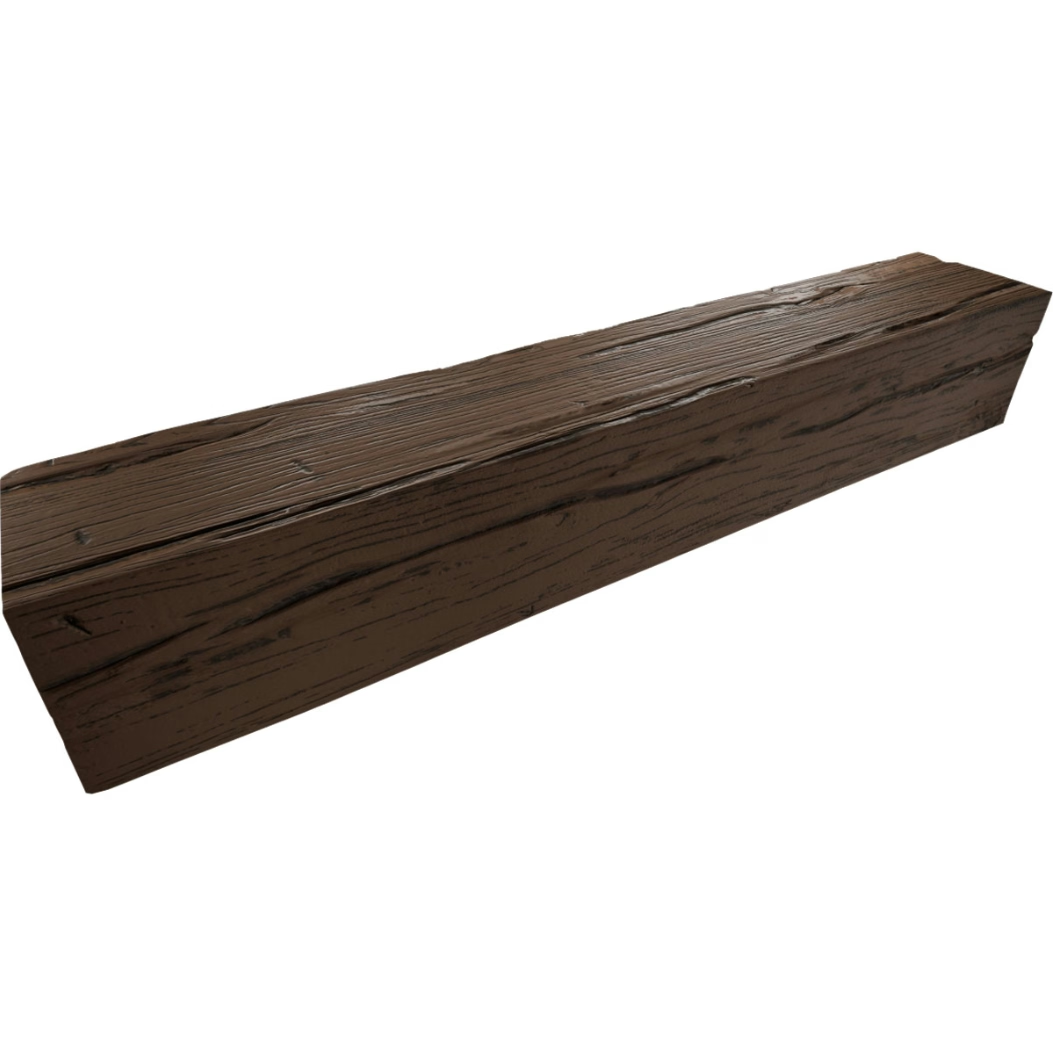
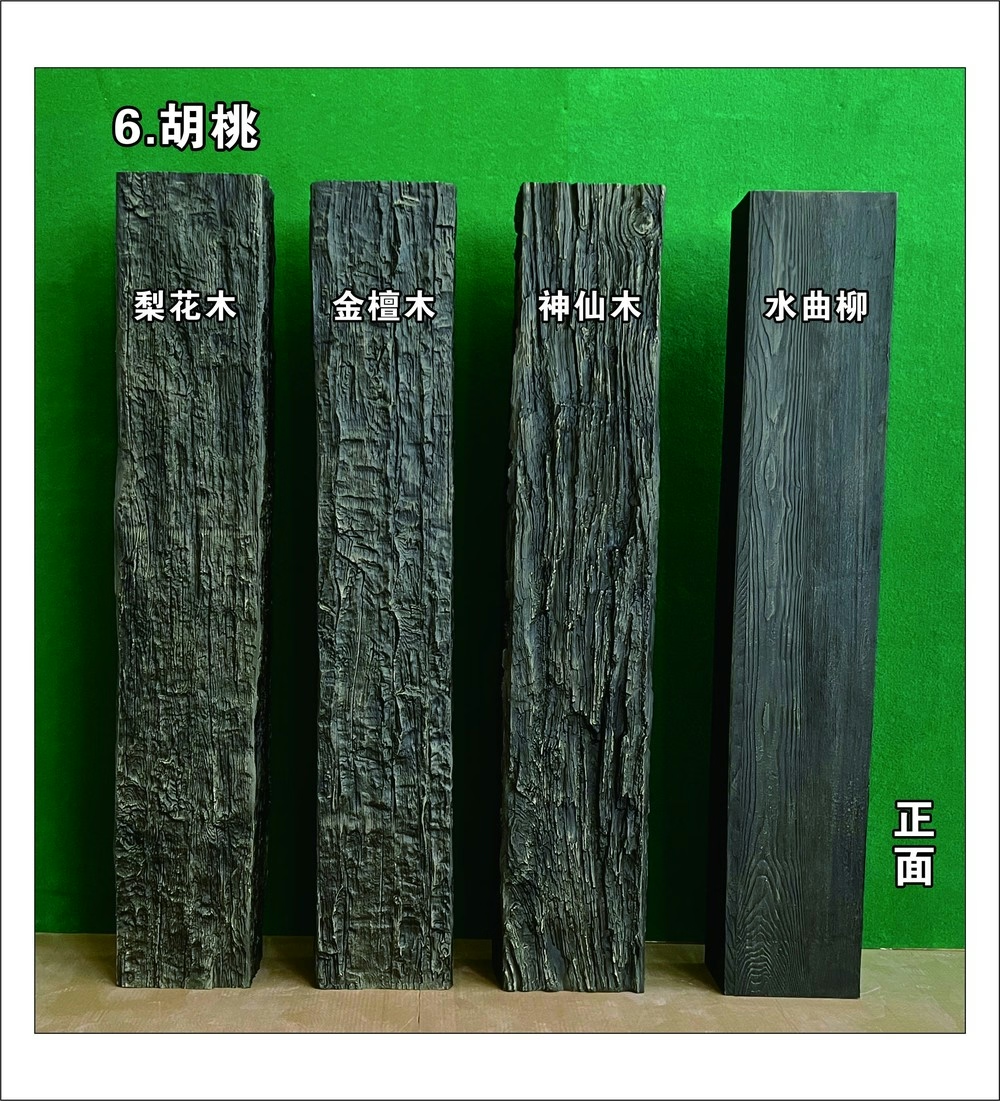
Layered finishing systems. Artisan finish means a minimum of five finishing operations applied in sequence to a single beam. Typical artisan finishes include:
- Base stain application (often hand-applied rather than sprayed)
- Highlight glaze wash to bring dimension to the texture
- Selective dusting or dry-brush to create color variation
- Crack and texture accent work in recessed areas
- Final topcoat with hand-rubbed highlights on raised areas
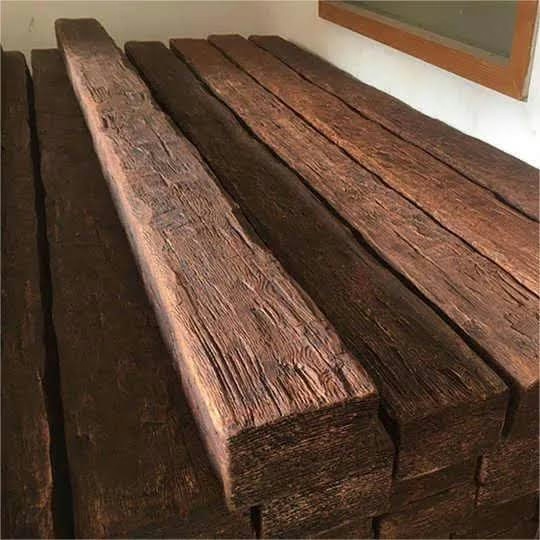
Production-grade finishes typically run two to three operations. The difference is visible up close and tangible to the touch. A hand-rubbed artisan beam under raking light shows gradient tones across its surface; a sprayed production beam shows uniform color regardless of the lighting.
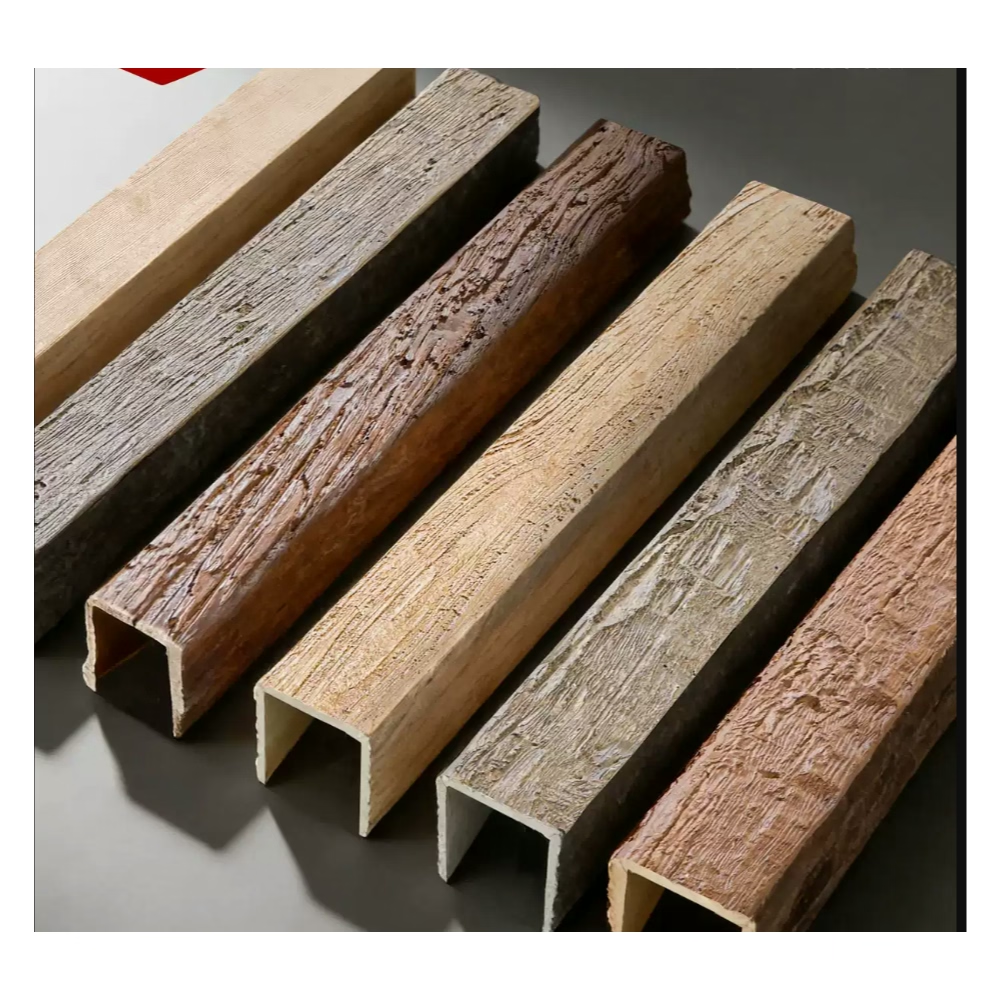
Texture variation across the beam. Artisan-grade production allows for some surface variation from beam to beam within a single project, mimicking the natural variation that real timber shows. Production-grade work is engineered for uniformity — each beam looks the same as the next, which is desirable in production homes but reads as artificial in luxury work.
Dimensional precision on the cuts. Production-grade beams are fabricated to standard tolerances around 1/16 inch. Artisan-grade beams are produced to tighter tolerances, around 1/32 inch or better. The difference matters at corners and intersections where beams need to meet cleanly without scribing or shimming.
Documentation and traceability. Artisan-grade orders typically include batch-specific documentation: master sample reference, finishing date, technician of record, and QC signoff at multiple checkpoints. Production-grade documentation covers general QC but not the per-batch granularity that luxury projects sometimes require.
Hand-detail work at terminations. Where a beam terminates against a wall, transitions to a different ceiling treatment, or meets another beam at a corner, the difference between an artisan and a production-grade product often shows. Production-grade work covers the transition mechanically — with mounting cleats and field fitting. Artisan-grade work addresses the transition in finishing, with hand-applied detail that conceals the assembly.
Project scale and the artisan cost structure
Artisan work is expensive per linear foot and the per-foot price does not drop dramatically with volume the way production pricing does. The economics are different:
| Beam type | Per linear foot (8×10 profile) | Volume discount threshold |
|---|---|---|
| Production-grade polyurethane | $14–$22 | 200+ linear feet |
| Mid-grade polyurethane | $22–$32 | 100+ linear feet |
| Artisan-grade polyurethane | $32–$55 | Volume matters less than finish complexity |
For luxury custom homes, the typical beam order is 80–200 linear feet across 6–18 beams. That volume puts the project in the category where artisan finishing is economically viable and where the per-piece premium over mid-grade product is justified by the design intent.
A typical great room with artisan-grade beams costs $3,500–$8,500 for the beam package, depending on profile complexity, length, and finish depth. For a $4 million home, this is a small investment in a high-visibility space. For a $900,000 home, it would represent disproportionate spending on the beam line item.
Luxury builders and designers should not rationalize artisan pricing down to mid-grade levels. The market for artisan beams supports the premium pricing because the product delivers something production work does not. Trying to negotiate artisan pricing into production pricing drives suppliers to cut the finishing work — the most expensive part of the production — and the result is a generic-looking beam at a premium price.
Supplier capability questions specific to luxury work
The supplier evaluation process for luxury residential work asks different questions than production builder qualification.
Sample development responsiveness. A production supplier provides samples from existing inventory. A luxury-capable supplier develops samples against the specific project specification, including custom finish recipes if needed. The depth of sample development is itself a quality signal — a supplier who treats sample work as a critical deliverable typically treats production work the same way.
Iterative refinement tolerance. Luxury projects almost never approve a first sample. Designers refine the specification, ask for adjustments, request color shifts, and iterate toward an approved master. A supplier who responds to iteration requests with resistance or significant cost loading is poorly suited to luxury work. A supplier who treats iteration requests as routine and inexpensive is well-suited.
Custom mold capability. Many luxury projects require custom beam profiles — historical reproduction, designer-specific profiles, or unique shapes not available in standard catalogs. Custom mold fees run $3,500–$9,000 per profile. For a luxury builder running multiple projects per year, amortizing a custom mold across several projects lowers the per-project cost to acceptable levels.
Lead time tolerance and schedule reliability. Luxury schedules have built-in buffer for the right suppliers. They do not have buffer for unreliable suppliers. Late deliveries force design compromises that the architect will not accept. On-time delivery with a one-week buffer is the baseline.
Field service capability. Artisan-grade beams occasionally need field touch-up after installation. A supplier who can dispatch a finisher for field touch-up work is providing service that production suppliers do not. This capability is rare and very valuable for high-end work.
Reference portfolio depth. Luxury suppliers should have an extensive portfolio of completed luxury residential projects. The portfolio should include projects similar in scale and style to the current bid — not only commercial or production work. Visit at least one completed project from the portfolio to evaluate the actual installed quality rather than relying on marketing imagery.
The relationship that luxury work requires
Luxury projects have a different interpersonal dynamic between project team and supplier. Some specific notes based on how well-run luxury supply relationships function.
The architect or designer is the primary aesthetic decision-maker. Suppliers should treat the architect's studio as the design lead, not the builder's purchasing agent. Communication style, sample presentation, and revision protocols should adapt to the designer's expectations rather than to the builder's procurement staff.
The luxury builder often serves as project manager rather than decision-maker. Builders in this segment understand their role is execution quality, schedule reliability, and field coordination. They expect the supplier to interface professionally with the design team directly. Suppliers who route every question through the builder create friction that the builder recognizes as unnecessary.
Communication formality matters. Luxury projects have rhythm to their communication. Project meeting cadence, status reports, milestone documentation, and design submittal packages follow established formats that production work does not require. Suppliers who default to formal communication even when informal might suffice tend to do better in luxury work than suppliers who default to informal communication.
The supplier's reputation in the design community matters more than pricing or speed. Luxury architects know which suppliers deliver consistently. A new supplier with a great price but no reputation among the architects in the market will struggle to win luxury work. Conversely, established suppliers with strong design-community reputations can win work at prices above the production market because the relationship value outweighs the cost premium.
Practical sourcing workflow for luxury projects
The sourcing workflow for an artisan beam specification on a luxury project typically follows this pattern.
Step 1: Pre-qualification (1 week). Develop the shortlist of capable suppliers based on portfolio depth, reputation in the design community, and demonstrated luxury project experience. Reach out to 3–5 suppliers for initial discussion of the project scope.
Step 2: RFI and rough pricing (2 weeks). Issue a request for information including preliminary beam quantity, profile expectations, finish direction, and timeline. Request rough pricing from shortlisted suppliers. Conversations at this stage help confirm the project's economics before deeper engagement.
Step 3: Sample request (1 week). Selected suppliers (typically two or three) provide sample beams representing their interpretation of the specification. Samples are physical pieces, not digital renderings.
Step 4: Sample evaluation and iteration (4–6 weeks). Designer reviews samples, identifies revision requests, communicates to supplier, reviews revised samples. This iteration phase is where the relationship's character shows. Suppliers who collaborate well through this phase are the suppliers worth committing to.
Step 5: Master sample approval and PO (1 week). Designer approves a specific sample as the production master. PO is issued with reference to the master sample. Production scheduling begins.
Step 6: Production and quality control (4–8 weeks). Supplier produces the beam order with regular progress updates. Mid-production sample shipments may be requested for verification against the master.
Step 7: Delivery and field support (coordinated with construction). Beams ship to the project site or staging facility. Supplier may be present at delivery to verify condition, and may provide on-site or remote support for any field questions that arise.
Total elapsed time from supplier engagement to delivery is typically 12–20 weeks for luxury projects. The luxury project schedule accommodates this duration. Production-grade project schedules do not.
Common pitfalls in luxury sourcing
A few specific issues show up repeatedly in luxury beam sourcing.
Specifying artisan finish on production-grade substrate. Some suppliers offer artisan-finish pricing on production-grade beams. The substrate density, dimensional precision, and core material are still production-grade; only the finishing has been upgraded. The result looks like an artisan beam from 20 feet but reveals its production substrate on close inspection. Specify the substrate grade separately from the finish grade.
Treating the beam supplier as interchangeable with the cabinetry or millwork supplier. Custom millwork shops sometimes offer beam fabrication as a sideline. The quality of beam-specific work at a millwork shop rarely matches the quality of a specialized beam manufacturer. For luxury work, source beams from a specialist rather than a generalist.
Letting schedule pressure push the project into production-grade work. When luxury projects encounter schedule compression, the temptation is to switch from artisan to production-grade to recover time. The result is a finished home that has premium materials throughout and a beam ceiling that reads as second-tier. Either protect the schedule or accept that the beam ceiling was always a stretch goal.
Ignoring field conditions during specification. Architects and designers working remotely from the construction site sometimes specify beam details that are difficult to execute in the field. Ceiling substrate conditions, lighting integration points, and structural attachment points need field verification before the specification is locked. Field-condition surprises at install time are the most common source of artisan-beam project frustration.
The economics of luxury beam supply
A reasonable question: are artisan polyurethane beams worth the premium over mid-grade options for every luxury project? The honest answer is no.
For great rooms, formal living rooms, libraries, primary bedrooms, and other high-visibility spaces where the beams will be seen up close and where they form a meaningful aesthetic statement, artisan work is worth the premium. For secondary spaces, hallways, closets, and other areas where beams are present but not focal, mid-grade work delivers adequate quality at lower cost. A complete luxury home can mix the two tier strategically.
The decision should be made room by room, not project-wide. Luxury builders who spec artisan beam work throughout the home regardless of visibility are overinvesting in beam line items. Luxury builders who spec production-grade beam work throughout are underinvesting in their most visible spaces. The optimal approach is differentiated by room visibility.
A closing thought for luxury builders
Luxury custom home builders succeed or fail based on reputation. Reputation builds over years through reliable execution on small details — the finish on a beam ceiling, the reveal around a custom cabinet, the consistency of stone color across a kitchen. Beam sourcing is one of the small details that luxury builders either treat seriously or regret.
The suppliers who can deliver artisan-grade polyurethane work are not the same suppliers who can deliver commodity production work. The pricing, the relationship, the communication style, the iteration tolerance — all of it is different. Build the source list of artisan-capable beam suppliers, walk their factories, evaluate their previous luxury projects, and commit to the relationships that are worth committing to.
When a designer calls in the middle of a project to ask for a custom corbel match against a beam specification received yesterday, that is when the artisan-capable supplier relationship pays off. When the homeowner is in the great room during the punch list, walking around the ceiling beam with a flashlight checking finish depth, that is when the artisan-grade beam work pays off. Both moments are real and both happen on luxury projects. Preparing for them is what artisan sourcing is for.
Technical References
ASTM standards cited in every specification
Test Data
Lab results from internal testing program
Updated 2026
Reviewed against current product specs