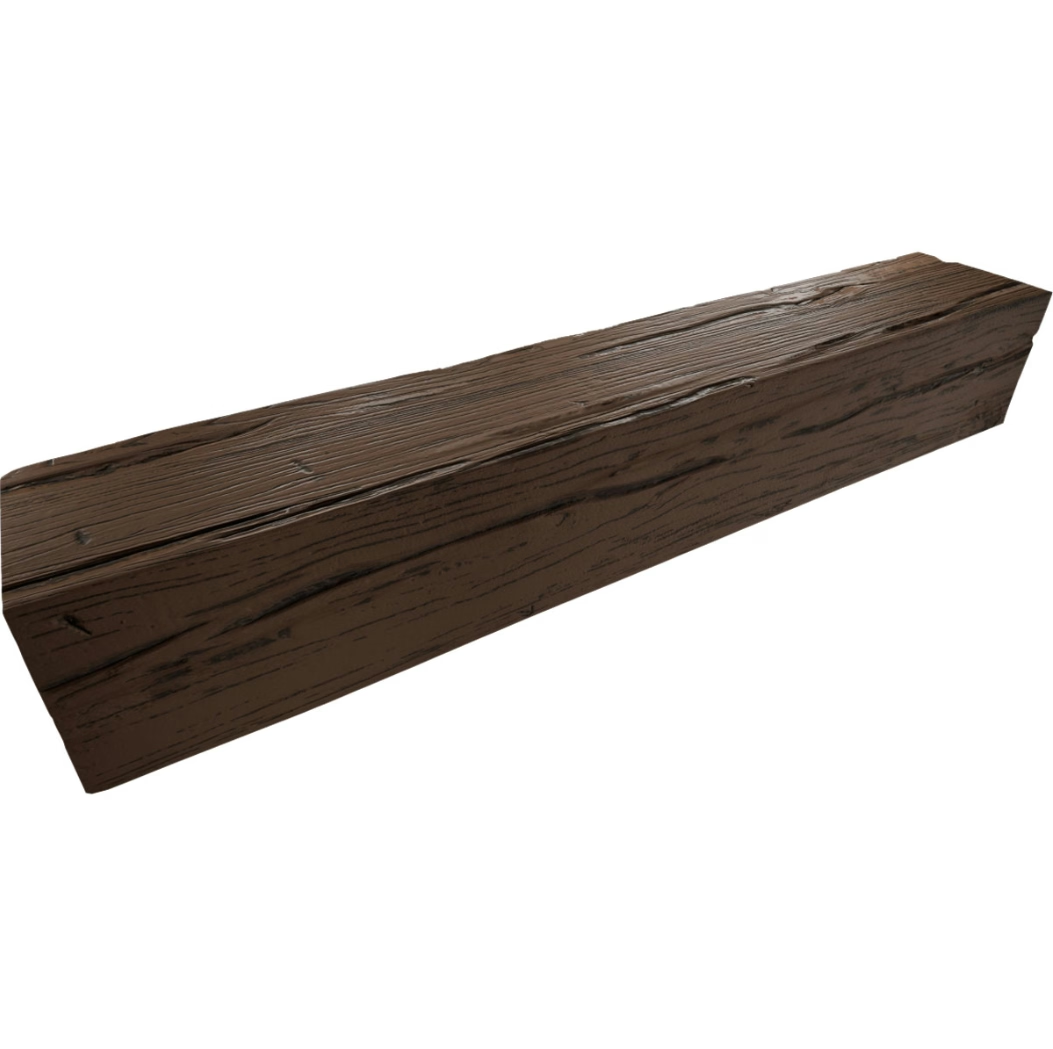
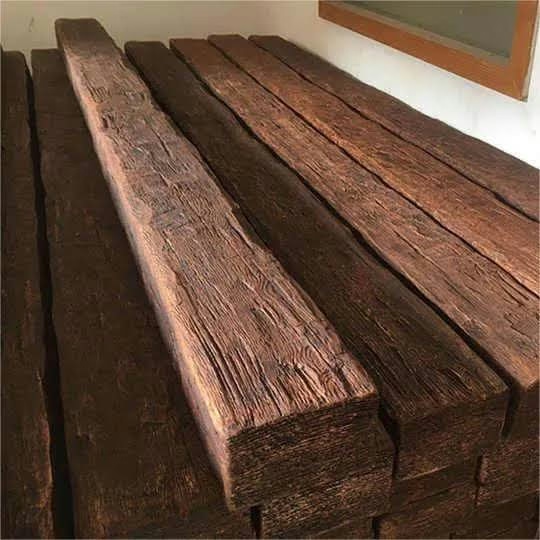
How to Get Quote for Bulk PU Faux Beams for New Build Projects
The quote process for bulk polyurethane faux beams on new construction projects looks straightforward on the surface — send a list of beams to a manufacturer, get prices back, pick the best one. In practice, the quality of the resulting quote depends almost entirely on the quality of the specification that the buyer provides. A vague specification produces a vague quote with hidden assumptions that surface as change orders during production. A precise specification produces a precise quote that holds through order placement and delivery.
This article walks through the actual quoting process from the buyer's perspective — what to prepare before contacting suppliers, what information suppliers need, what a complete quote includes, how to compare competing quotes effectively, and the operational details that affect which quote is actually the best one for the specific project.
What new construction means for the quote
New construction projects have characteristics that differentiate them from renovation or TI work:
- Specifications are typically defined earlier in the design process because there's no existing building to discover surprises in
- Quantities are often larger because the project is planned end-to-end with all beam locations known from the start
- Schedules are typically more generous because the project isn't constrained by a lease commencement or operating business
- Design changes are still possible during the build, creating exposure to change orders on the beam package
- Volume discounts are more achievable because the total project quantity is known upfront
These characteristics favor a deliberate, structured quoting approach. The quote can be precise, the volume thresholds can be evaluated, and the supplier relationship can be built over the project duration with confidence in continuity.
Information to prepare before requesting quotes
The single biggest mistake wholesale buyers make in the quoting process is sending incomplete information. The supplier has to guess what the buyer actually wants, the quote includes assumptions that don't match the buyer's real need, and the order changes after the fact reveal the mismatch.
The information every quote request should include:
Project overview. Total square footage, project type (single-family subdivision, multi-family, commercial tenant improvement, etc.), expected delivery date range, and the buyer's role in the project (general contractor, developer, builder, importer/distributor).
Complete beam list. Profile dimensions (width × height or width × depth), quantity per length, total linear footage by profile, and quantities broken out by location if the project has multiple phases or building types.
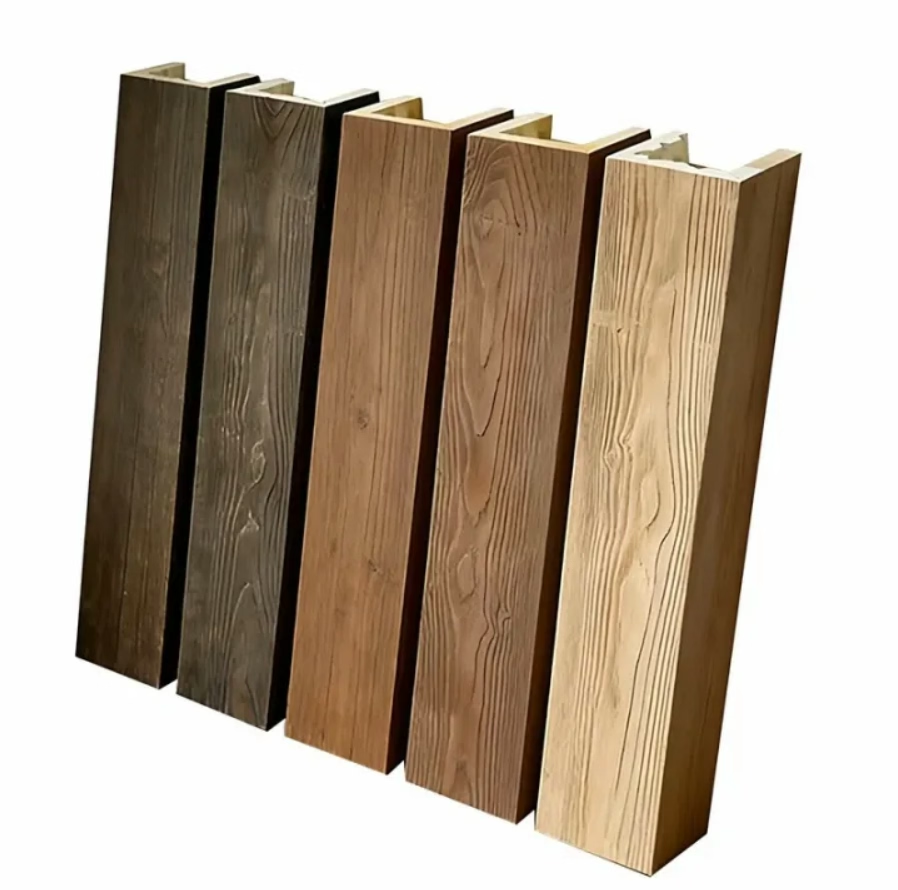
Finish specification. Named finish from supplier catalog, sample reference for custom color matching, fire rating requirement (Class A, B, or C), and exterior vs interior determination for each location.
Customization details. Any profile modifications from standard catalog items, custom texture requests, special end treatments, mounting cleat specifications, or coordination requirements with other trades.
Logistics parameters. Delivery destination (city and state or country), preferred shipping terms (FOB factory, CIF port, DDP destination), expected container consolidation with other building materials if applicable, and any storage or staging considerations.
Documentation requirements. Code compliance documentation, sustainability certifications (GREENGUARD, LEED documentation), specific warranty terms, or per-project certification letters needed for permit or closeout.
Payment terms expected. Whether the buyer typically pays deposit-balance, requires Net-30 terms, uses letters of credit, or has specific financing arrangements.
The more complete this information, the more accurate the quote. The most accurate quotes typically result from buyers who provide this information in a structured format (Excel spreadsheet, formal RFQ document) rather than email prose.

The information suppliers will typically ask for
Beyond the buyer's prepared information, suppliers ask additional questions during the quoting process. The questions are diagnostic — how readily the supplier asks them, and how well the buyer's preparation supports answering them, indicates whether the supplier relationship is worth developing.
Common supplier follow-up questions:
Are the beams for the same project or multiple locations? Multiple locations can affect logistics, packaging, and even production scheduling. The answer changes the quote structure.
Does the project require sequential deliveries or single shipment? Sequential deliveries can be necessary when staging area is limited. The answer may add cost for split shipments.
What is the expected order date relative to the delivery date? This confirms whether the buyer's timeline is realistic for the supplier's typical lead time.
Is there a target landed cost? Some suppliers work from price targets rather than specifications. Knowing the target helps them optimize the spec if there are tradeoffs.
Has the buyer worked with this supplier before? First-time relationships are typically quoted at standard terms. Established relationships may receive different pricing or terms.
What is the buyer's annual volume potential? Suppliers often quote aggressively for buyers with multi-project pipelines, because future order potential affects current quote pricing.
The honest answer to most of these questions will produce the most accurate quote. Suppliers are building a relationship as they quote, and the relationship works better when both parties have realistic expectations from the start.
What a complete quote should include
A complete quote from a polyurethane beam supplier should include enough detail that the buyer can compare it against competing quotes and use it as the basis for a purchase order. Quotes that lack the following information force the buyer to make assumptions — and assumptions are where procurement errors live.
Comprehensive quote components:
Itemized pricing by profile and length. Per-piece or per-linear-foot pricing for each item in the beam list, with extended totals by line and a project total.
Setup fees and one-time charges. Color match fees, finish development fees, custom mold fees (if any), tooling charges, documentation fees, and any other non-recurring costs.
Volume discount tiers. Quantities at which pricing drops, the pricing at each tier, and confirmation of which tier the current quote corresponds to.
Lead time specification. Production lead time, packaging time, and shipping time — usually stated separately. Total elapsed time from PO to delivery should be explicit.
Payment terms. Deposit percentage, balance due timing, acceptable payment methods, and any conditions that affect standard terms.
Freight terms. Who arranges freight, who pays freight, point at which ownership transfers, and freight cost estimate if requested.
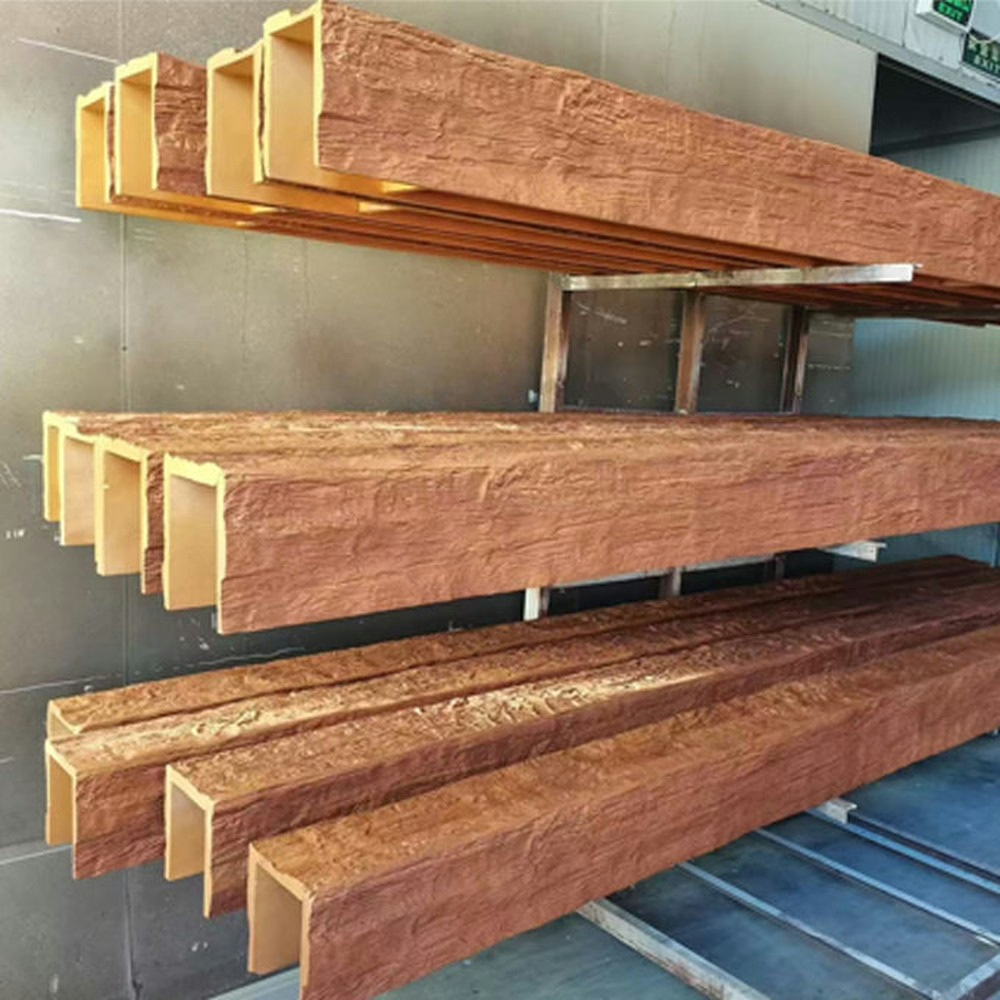
Packaging specification. Standard packaging, custom packaging if needed, container utilization if applicable, and any special handling requirements.
Warranty terms. Standard warranty period for substrate and finish, exclusions, and any conditions affecting warranty coverage.
Documentation included. Material data sheets, fire rating certificates, GREENGUARD or other sustainability certifications, installation guides, and any other standard documents that ship with the order.
Validity period. How long the quote pricing and terms remain valid — typically 30–60 days for non-custom work, shorter for custom work in volatile pricing environments.
The buyer should request any missing component if the initial quote is incomplete. Suppliers who resist providing complete information are not quoting from a position of operational confidence, which is itself diagnostic.
Comparing competing quotes effectively
Comparing quotes from multiple suppliers is one of the most valuable steps in the procurement process. Done badly, it produces a false sense of precision (the lowest number wins). Done well, it reveals the actual best supplier for the project's needs.
The comparison framework:
Verify equivalent specifications. Make sure all quotes are based on the same profile, same finish, same fire rating, same logistics, same payment terms. If two quotes are based on different specifications, comparing them directly is meaningless.
Compare total landed cost rather than per-piece pricing. A quote that's lower per piece but excludes freight, includes lower-quality packaging, or has shorter warranty may not actually be lower cost.
Compare lead times against the project schedule. A quote that's cheaper but doesn't align with the construction schedule forces expedite costs downstream that may exceed the savings.
Compare payment terms against cash flow. A quote requiring 70% deposit versus another requiring 40% deposit has different cash flow implications that affect total cost of the working capital deployed.
Compare documentation against project requirements. A quote that includes needed certifications versus another that requires separate purchases is actually cheaper when the documentation is included.
Compare warranty against project risk. A longer warranty period has value beyond the per-piece savings, particularly for projects where beam replacement is expensive in labor or disruption.
Compare supplier track record alongside pricing. A new supplier offering 20% below established competition may reflect aggressive pricing for market entry. The savings may not survive beyond the first order.
The cheapest quote on the spreadsheet is rarely the best quote on the project. The right comparison accounts for all the dimensions on which the supplier relationship adds value or creates risk.
Where volume discounts actually come from
Wholesale buyers with bulk orders expect volume discounts, but the size and structure of those discounts varies widely. Understanding how suppliers structure volume discounts helps in the quote evaluation and negotiation.
Standard volume discount tiers (approximate industry norms):
Tier 1 (entry level): 200–500 linear feet. Typically 5–10% below small-order pricing. Often available at minimum order quantities.
Tier 2 (mid-volume): 500–1,500 linear feet. Typically 12–22% below small-order pricing. Achieved on medium residential or small commercial projects.
Tier 3 (high-volume): 1,500–5,000 linear feet. Typically 22–35% below small-order pricing. Achieved on medium commercial or large multi-family projects.
Tier 4 (production-volume): 5,000+ linear feet. Typically 30–45% below small-order pricing. Achieved on large multi-family developments or production builder commitments.
Beyond tier 4, additional discounts may be available for buyers committing to annual volume thresholds or multi-project relationships. These are typically negotiated separately from per-project quotes.
Volume discounts typically apply to the per-piece or per-linear-foot pricing. They usually do not apply to setup fees, customization fees, or freight. Volume discount savings should be calculated against total product cost, not total project cost.
Special considerations for new construction quotes
Some factors specific to new construction projects affect the quoting process.
Phasing. Many new construction projects deliver in phases — multiple buildings, multiple sections, or multiple floor plans. Quotes should specify pricing per phase rather than only as a total, because the buyer's actual order may shift between phases as the project progresses.
Plan type variations. Multi-family and subdivision projects often have multiple floor plan types with different beam counts per plan. Quotes should specify whether pricing is consistent across all plan types or varies, and how the buyer should order across plan types.
Builder model home requirement. Some builders produce a model home with upgraded beams before the production spec is locked. The model home beams are typically priced separately from the bulk order and delivered on accelerated schedule. Quotes should accommodate this split.
Standing specification discounts. Buyers with ongoing repeat business across multiple projects can negotiate standing specification discounts that apply across all orders. The standing spec discount structure should be documented separately from per-project quotes.
Change order flexibility. Construction projects always include changes. Quotes should specify how the supplier handles scope changes during production, including cost implications for substitutions, additions, and cancellations.
The new construction project timeline provides more room for these considerations than renovation work. Using that time to address them upfront prevents downstream complications.
Avoiding the most common quote errors
The procurement errors that show up repeatedly in beam quoting include:
Quoting on partial specifications. Buyers who request quotes before the design is complete get quotes based on assumptions. The quote changes when the design firms up, and the change creates friction.
Comparing per-piece pricing on different specifications. Quotes that appear comparable may be based on different fire ratings, different finishes, or different quality grades. The lowest per-piece price may be the lowest-quality product.
Treating the first quote as the best price. Many buyers treat the first quote received as the baseline and don't pursue competitive quotes. The first quote is rarely the best quote available.
Failing to verify customs and duty costs in advance. International quotes may exclude customs duties, customs broker fees, and import compliance costs. The total landed cost includes all of these.
Ignoring payment terms in the comparison. Quotes with very different payment structures create different cash flow implications. A 40% deposit quote versus a 70% deposit quote is not directly comparable without considering financing implications.
Failing to confirm warranty transferability. Some warranties apply only to the original buyer and don't transfer to the property owner. For new construction where ownership changes at sale, the warranty's transferability matters.
Missing documentation details. Code compliance documentation, sustainability certifications, and per-project certification letters may be quoted separately rather than as part of the standard package. The omission may or may not be intentional — confirm in writing.
These errors are all preventable with attention to detail during the quote evaluation. None of them require expert knowledge — they require careful reading and comparison.
A practical quote timing strategy
For new construction projects, the quote timing strategy should be:
Begin quote preparation at design development. This is when the beam specification is firming up but the project is still flexible. Quotes received early establish realistic pricing that informs the construction budget.
Issue formal RFQ to 3–5 shortlisted suppliers at the same time. Issuing simultaneously produces more comparable quotes and signals serious intent to all suppliers.
Allow 2–3 weeks for response. Quality quotes take time. Suppliers who respond in 24 hours without detailed pricing are typically quoting from standard price lists rather than the specific project specification.
Compare quotes within one week of receipt. Prompt comparison reflects the validity window for most quotes and keeps the process moving.
Select the supplier within the quote validity period. Quote pricing is typically valid for 30–60 days. Delays past the validity period force requote and may produce different pricing.
Issue PO promptly after selection. The production schedule starts when the PO is issued, not when the quote is accepted. Delay between quote acceptance and PO issuance can affect lead time.
The timing discipline matters more than the specific approach because suppliers schedule production based on PO dates. Buyers who maintain timing discipline consistently report smoother project execution.
A closing note on the procurement relationship
Getting a good quote is the start of a procurement relationship rather than the end of one. The quote establishes pricing and terms; the relationship determines whether the order actually delivers on those commitments. Buyers who treat quoting as the procurement endpoint miss the operational substance of the relationship.
The best wholesale beam suppliers provide more than product. They provide specification support during design, reliability during production, accuracy during packaging, and responsiveness during delivery. They anticipate problems that their experience tells them are coming and address them before they reach the buyer. None of these qualities show up on a price comparison spreadsheet.
When the quoting process is structured to evaluate supplier relationship quality alongside pricing, the resulting supplier selection tends to be more successful. The initial quote is a starting point for a relationship — not a single transaction. Project economics improve substantially when the relationship works. They suffer when it doesn't.
For new construction projects with substantial beam quantities, the relationship approach to procurement consistently produces better outcomes than the transactional approach. Build the quote process around that understanding and the project benefits throughout the construction cycle and for any repeat work that follows.
Technical References
ASTM standards cited in every specification
Test Data
Lab results from internal testing program
Updated 2026
Reviewed against current product specs