Custom Faux Timber Beams | FAQ for Wholesale Buyers & Builders
Wholesale buyers and builders working with polyurethane faux timber beams for the first time ask similar questions. Some questions are about the product itself — how the material behaves, what customizations cost, how the finish systems work. Other questions are operational — what the order process looks like, how freight gets arranged, what payment terms are typical. The honest answers help new buyers decide whether polyurethane beams are right for their project, how to evaluate suppliers, and what to expect through the procurement cycle.
This article collects the questions that wholesale buyers actually ask, organized into sections that follow the natural procurement workflow. The answers reflect typical industry practice rather than any single supplier's approach; specific suppliers will have variations on these answers.
Questions about products and specifications
What profiles and sizes can I order?
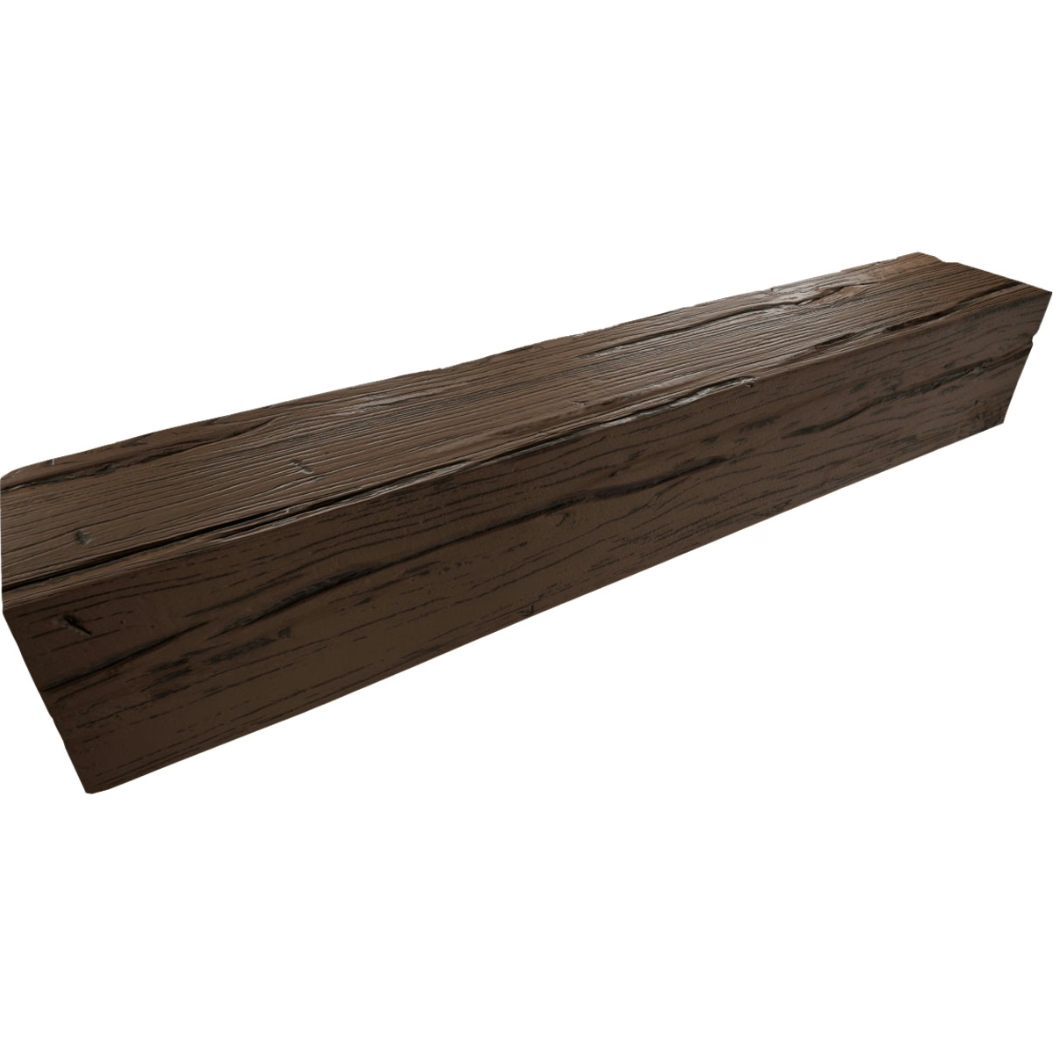
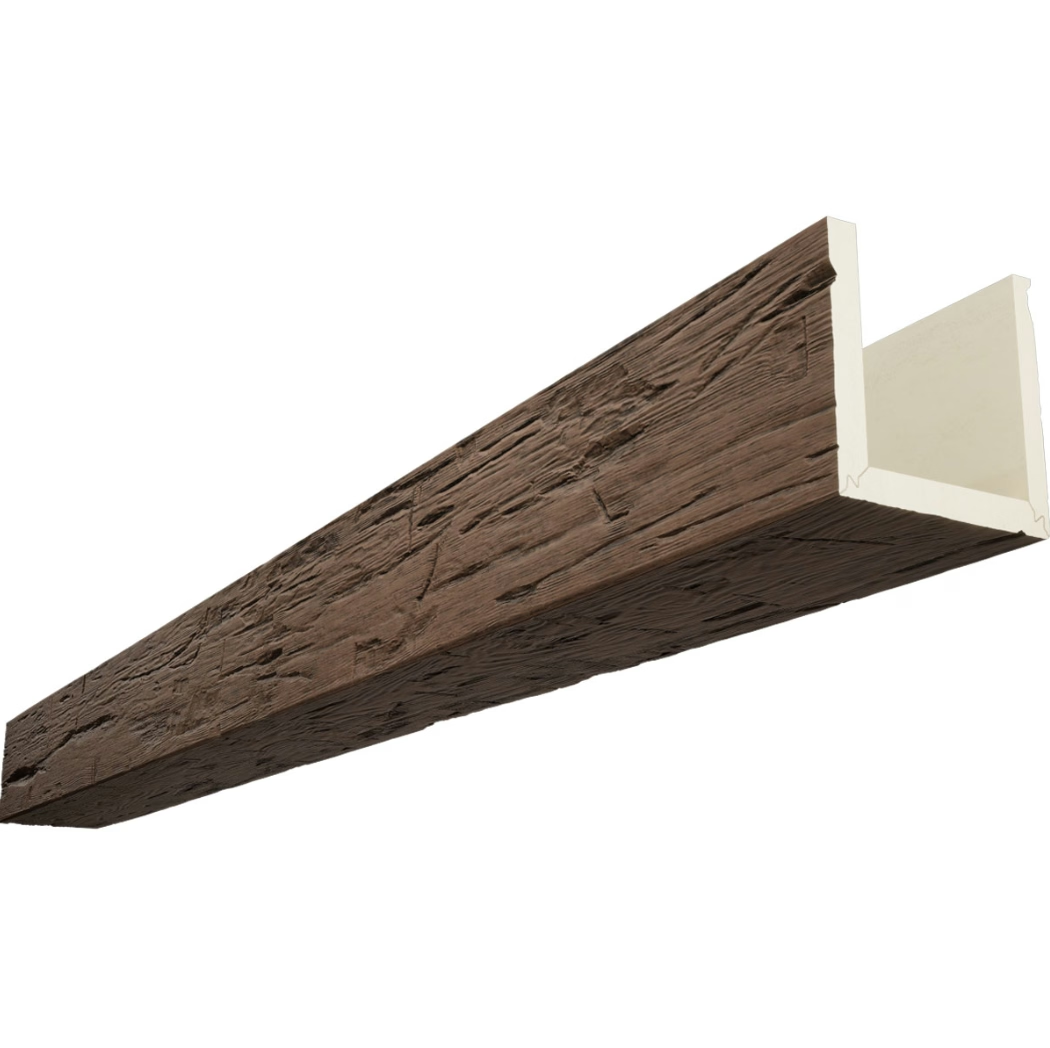
Most polyurethane beam manufacturers offer stock profiles in standard sizes — typically 4×6, 6×8, 8×10, 10×12, and 12×14 nominal dimensions. Lengths are commonly produced up to 16 feet on standard molds, with some manufacturers capable of 20-foot or 24-foot production on extended molds.
Custom profiles outside the standard catalog are available through custom mold production. Custom mold fees typically run $3,500–$8,500 per profile depending on complexity. Lead time for new mold development is 6–12 weeks.
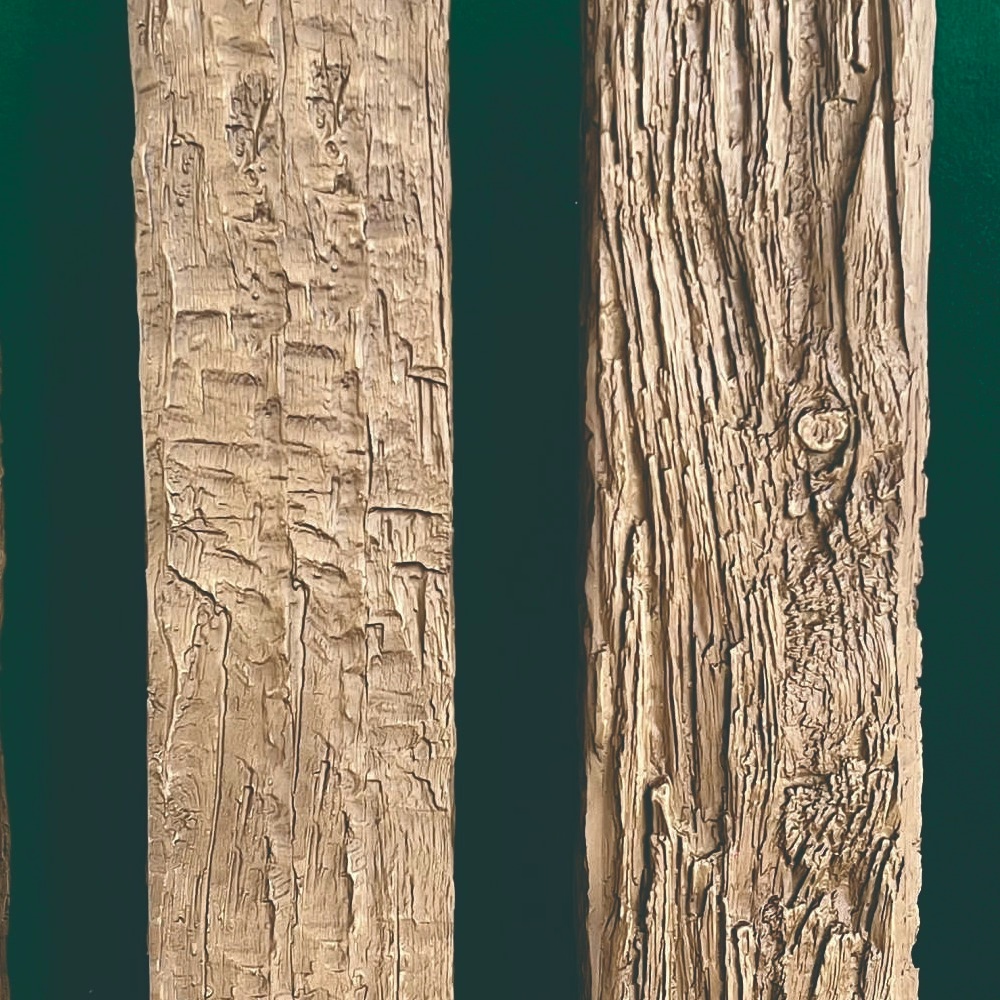
How realistic does the faux wood actually look?
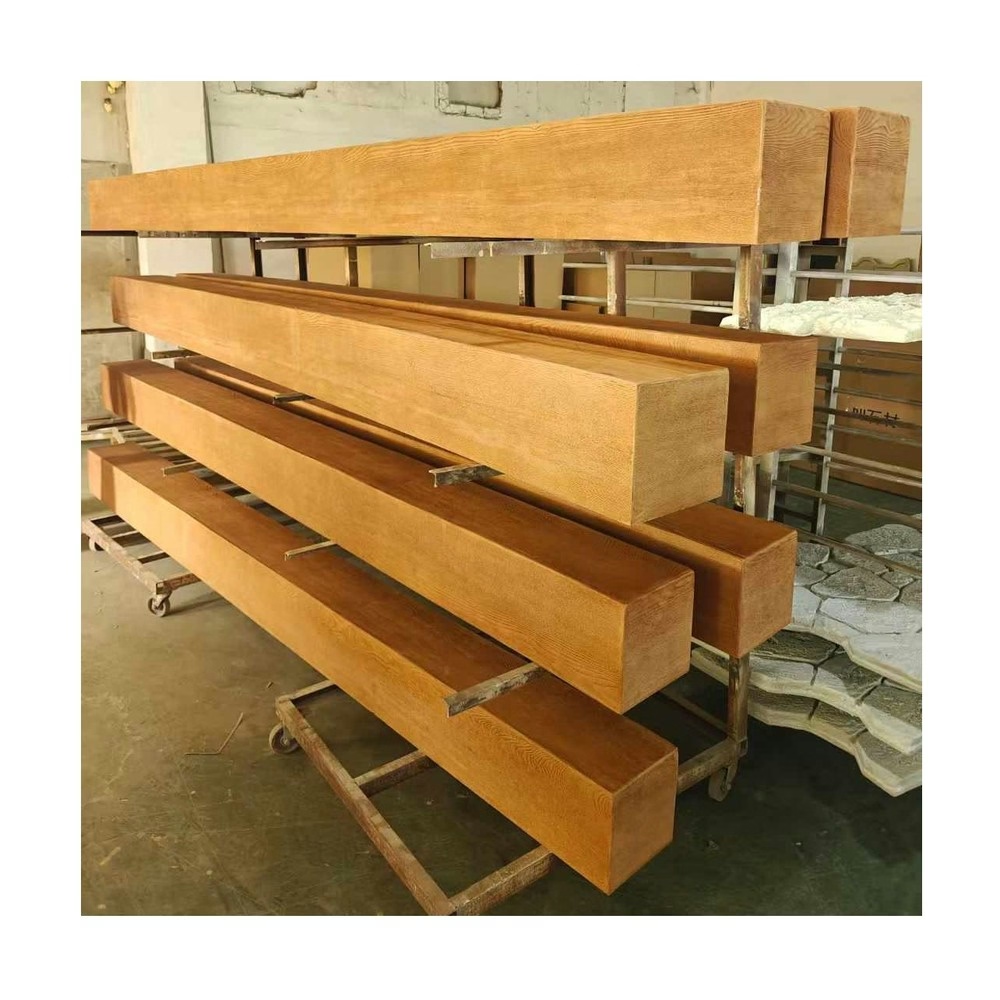
At conversation distance (5–8 feet), quality polyurethane beams are visually indistinguishable from solid timber to most casual viewers. At close inspection (touching distance, 1–2 feet), experienced viewers can detect the polyurethane material but typically cannot identify it without insider knowledge of the surface feel and sound when tapped.
The finish is the primary driver of realism. Multi-layer finishes with hand-applied stain, glaze washes, and protective topcoats produce dramatically more authentic appearance than sprayed single-coat finishes. Specify artisan-grade finishing for high-visibility applications.
What customization options are available?
Customization typically includes:
- Length within mold capacity (often no additional fee)
- Profile modifications within existing mold capability
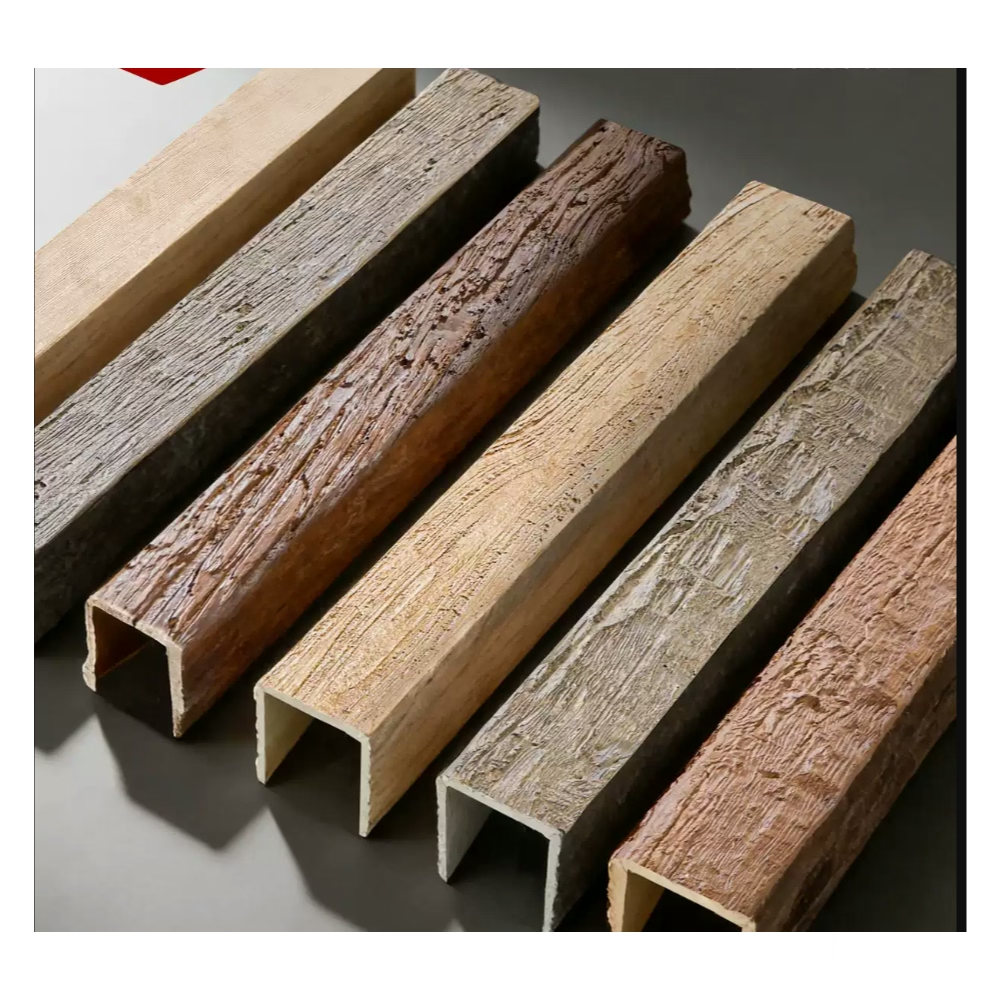
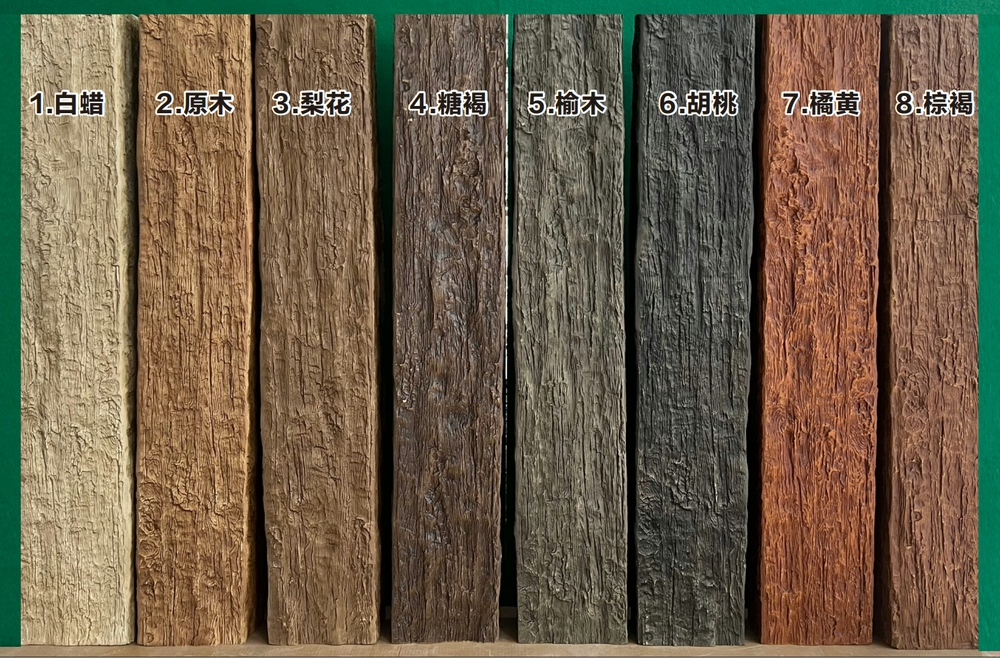
- Custom color matching against samples or photographs
- Finish depth (production-grade to artisan-grade)
- Texture variation (hand-hewn more or less aggressive)
- Corbel matching to beam family
- Mounting cleat specifications to fit unique substrates
Major mold changes require new mold development as described above.
What are the typical fire rating options?
Standard polyurethane beams are Class C rated per ASTM E84. Fire-retardant-treated versions achieve Class B (flame spread 26–75). Fire-rated versions with intumescent coatings achieve Class A (flame spread 0–25). Code requirements for specific applications vary by jurisdiction and occupancy. Confirm requirements with the building official before specifying.
How do exterior applications differ from interior?
Exterior-rated polyurethane beams use UV-stabilized formulations and weather-resistant topcoats. Cost is approximately 30–60% higher than comparable interior products. Lead times are longer due to additional testing and certification requirements. For most wholesale buyers, exterior applications represent a small fraction of total volume and are specified only when the project specifically requires them.
Are samples available before placing a production order?
Yes. Most manufacturers produce samples against buyer specifications for a fee of $50–$250 per sample depending on customization. Standard finish samples from existing inventory may be available at no charge for serious buyers with reasonable order probability.
Questions about ordering process
What is the typical order workflow?
The standard workflow:
- Buyer submits spec (profiles, quantities, lengths, finishes) via email or quote request
- Manufacturer provides formal quote within 2–5 business days
- Buyer reviews and refines the quote as needed
- Buyer issues purchase order and remits deposit per terms
- Manufacturer produces sample(s) for approval if not already done
- Production order moves to scheduling
- Production runs with progress updates
- Beams finish QC and packaging
- Beams ship per agreed logistics
- Buyer takes delivery and inspects
- Final payment per terms
Total elapsed time from quote request to delivery is typically 5–9 weeks for stock specifications, longer for custom work.
What payment terms are typical?
Common payment term structures:
- New buyer relationship: 40–50% deposit at order, balance before shipment
- Established relationship: Net-30 from delivery possible after 2–3 transactions
- Large custom profile orders: 50–70% deposit, balance before shipment
- Standing specification orders with repeat customers: Net-30 standard
International buyers often use letters of credit, particularly for first transactions or large orders. Domestic buyers typically use wire transfer or ACH for deposits and balance.
What is the minimum order quantity?
MOQs vary by specification:
- Stock profiles, stock finishes: Often 4–10 pieces or roughly 50–100 linear feet
- Stock profiles with custom color: 200–400 linear feet typical
- Modified stock profiles: 300–500 linear feet
- Custom profile mold work: 500–1,000+ linear feet to amortize mold development
For very small orders (under 50 linear feet), some manufacturers charge a small-order premium of 15–30% to cover fixed production overhead.
Can I change an order after it's placed?
Order change policies vary, but generally:
- Changes before production starts: Usually accepted without penalty
- Changes during production: May incur fees or partial material write-off
- Changes after finishing: Not possible; order must be completed as specified
Communicate changes as early as possible. The longer the order has progressed, the more expensive changes become.
Can I cancel an order?
Cancellation policies typically include:
- Cancellation before production start: Full refund of deposit
- Cancellation mid-production: Partial refund based on work completed, possibly 30–60% retention
- Cancellation after finishing: No refund; order completes and ships per original specification
Special orders with custom mold development are typically non-cancellable once mold production begins.
Questions about lead times
What are typical lead times?
Lead time depends on production backlog and order complexity:
- Stock specification orders: 3–5 weeks production, 1–2 weeks shipping
- Custom color matching: 6–8 weeks production
- Custom profile orders with new mold: 12–18 weeks production
- Large volume orders (1,000+ linear feet): 8–12 weeks production
Lead times are quoted at the time of order confirmation. Confirm the projected timeline before issuing the PO.
Can I get rush production?
Many manufacturers offer expedited production for an additional fee. Rush premiums typically run 20–50% above standard pricing and reduce lead time to 2–3 weeks. Rush availability depends on the manufacturer's production capacity at the time of order.
What if my delivery date changes?
For delivery date changes after order placement:
- Rescheduling within the production window (before finishing completes): Usually accommodated without charge
- Rescheduling after finishing but before shipping: May incur storage fees ($2–$8 per linear foot per week)
- Long-term delays: May require renegotiation of payment terms
Communicate schedule changes promptly. Most manufacturers are flexible when given advance notice.
Questions about logistics and freight
How are beams shipped?
Most polyurethane beam shipments move via ocean freight in containers for international orders or via truck for domestic orders. Smaller orders ship by LCL (less than container load) ocean freight or by air freight. Sample shipments typically use international courier services.
What shipping terms are available?
Common shipping terms include:
- FOB factory: Buyer takes ownership and arranges freight at the factory loading dock
- CIF destination: Manufacturer arranges freight to the destination port, buyer handles inland transportation
- DDP destination: Manufacturer handles freight and customs to the buyer's specified location
- EXW (Ex Works): Buyer picks up at factory
DDP terms simplify buyer operations but include the freight cost in the product price, reducing visibility into logistics costs separately.
Who handles customs clearance?
For international orders, either the buyer or the buyer's customs broker handles import clearance. Most manufacturers provide required documentation (commercial invoice, packing list, bill of lading, country of origin certificate) and can recommend brokers if needed.
Some manufacturers arrange customs clearance through their freight forwarder as an additional service. This is convenient but adds cost relative to the buyer handling clearance directly.
How are beams packaged for shipping?
Standard packaging includes:
- Foam end caps on each beam
- Cardboard or plastic corner protection
- Shrink wrap or stretch wrap for moisture protection
- Wooden crating for long beams (over 12 feet) or high-value shipments
- Palletized for forklift handling
- Project-specific labels and packaging marks for identification
Beams are typically packed vertically in containers to maximize cube utilization. A 40-foot container holds 1,800–2,400 beams depending on profile dimensions.
What about damage in transit?
Marine cargo insurance covers ocean freight at 0.3–0.5% of declared cargo value. Inland transit insurance is available through most trucking companies and freight forwarders. Document damage on the bill of lading before accepting delivery, with photographs, to support claims.
For polyurethane beams specifically, damage in transit is rare because the material is robust and standard packaging is effective. The most common damage cause is container shifting during ocean transit, which is why blocking and bracing inside the container matters.
Questions about installation
How are polyurethane beams installed?
Standard installation process:
- Mounting cleats (typically 1×3 or 2×3 lumber) are fastened to the substrate at planned beam locations
- Beams are lifted into position against the cleats
- Beams are secured through the side or top into the cleats using long screws or finish nails
- Joints at corners and intersections are filled and finished
- Any field damage from installation is touched up
A two-person crew can typically install 8–12 beams per day on standard residential or small commercial projects.
What tools are needed?
Standard carpentry tools:
- Cordless drill or impact driver with appropriate bits
- Level (4-foot or laser)
- Tape measure, pencil, chalk line
- Stud finder or magnetic locator
- Step ladder or scaffolding for ceiling height access
- Safety equipment (eye protection, dust mask)
Specialty tools are not required for typical installations. For complex projects with many beams at high ceilings, scaffold towers or lifts may be needed.
Can beams be field-cut?
Yes. Standard woodworking tools cut polyurethane beams cleanly. Use carbide-tipped saw blades for longer tool life. Field cuts may require touch-up with the manufacturer's supplied finish repair materials.
What about field damage during installation?
Minor scratches and dents from normal installation work can be repaired with touch-up kits provided by the manufacturer. More significant damage may require beam replacement. Order 5–10% extra material beyond measured quantities to allow for damage replacement without project delays.
Are polyurethane beams suitable for DIY installation?
For small projects with straightforward installations, DIY is feasible for homeowners with basic carpentry skills. For larger projects, complex layouts, or high ceilings, professional installation is recommended. Most manufacturers provide installation guides and technical support by phone or email.
Questions about supplier selection
How do I identify capable suppliers?
For wholesale buyer evaluation:
- Industry directories and trade publications
- Trade show attendance (International Builders' Show, AIA Conference, HD Expo)
- Referrals from other builders or industry peers
- Sample evaluation from 3–5 suppliers before commitment
- Site visit to factory for serious relationships
- Reference projects comparable in scale to your work
Capable suppliers for serious wholesale relationships typically have 5+ years in business, transparent ownership and operations, established export documentation processes, and references from buyers of comparable scale.
What questions should I ask suppliers?
Critical questions for supplier qualification:
- What is your production capacity for my order volume?
- What is the typical lead time for my specification?
- Can you provide references from comparable wholesale accounts?
- What customization capabilities do you offer?
- What documentation do you provide with each order?
- What payment terms do you offer for new accounts?
- What is your quality control process?
- What warranty do you provide?
- What is your replacement or repair policy for damaged goods?
- What freight options do you support?
Suppliers who answer these questions directly and confidently are more likely to be reliable partners than suppliers who are evasive or who provide inconsistent answers.
How do I verify supplier claims?
Verification approaches:
- Request samples and evaluate quality independently
- Request references and contact them directly
- Ask for documentation examples (certifications, test reports, installation guides)
- Verify business credentials through third-party services (Dun & Bradstreet, equivalent local services in supplier country)
- For large relationships: visit the production facility and meet the team
- For first orders: keep them modest until track record is established
Verification takes time but prevents problems that cost more.
How long does a typical supplier relationship last?
Strong wholesale beam supplier relationships commonly last 10+ years and span hundreds of projects. The relationship becomes a competitive advantage once established — the supplier understands the buyer's preferences, has master samples on file, can anticipate specifications, and provides smoother service with each successive project.
Weaker relationships end after a few transactions due to quality issues, communication problems, or schedule failures. The failure modes are usually visible by the second or third order if they exist.
Questions about pricing
How is beam pricing structured?
Pricing depends on several factors:
- Base price per linear foot by profile size and grade
- Customization premiums (color matching, finish depth, custom profiles)
- Volume discounts at tier thresholds (typically 200+, 500+, 1,000+ linear feet)
- Order minimums that may apply to small orders
- Tooling and setup fees for custom work
- Freight costs as separate line item or included depending on terms
Buyers should request complete pricing that itemizes each component to enable apples-to-apples comparison across suppliers.
What discounts are available?
Common discount structures:
- Volume discounts at tier thresholds
- Standing specification discounts for buyers with ongoing repeat business
- Early payment discounts (typically 1–2% for payment within 10 days)
- Multi-project discounts for buyers committing to multiple orders
- Annual volume rebates for buyers exceeding annual thresholds
Discounts vary by supplier and typically require negotiation rather than being published.
How do I calculate accurate landed cost?
Landed cost calculation:
- Product cost (per-piece pricing × quantity)
- Plus setup fees, tooling fees, or mold development
- Plus freight to destination (ocean freight, inland trucking, air freight as applicable)
- Plus customs duties (typically 0–5% for polyurethane beams into the US under HTS 3925.90)
- Plus customs broker fees ($150–$350 per entry)
- Plus warehousing or staging costs if applicable
- Plus financing costs for orders using letters of credit or extended payment terms
- Plus contingency for unexpected costs (typically 5–10%)
Total landed cost enables accurate project budgeting and profit margin calculation.
Questions about quality and warranty
What quality issues should buyers watch for?
Common quality issues to inspect on receipt:
- Finish color consistency across the order (compare against master sample)
- Surface defects in texture or finish (cracks, voids, finish holidays)
- Dimensional consistency (verify against specifications, especially at critical sizes)
- Damage from shipping (cracks, dents, broken corners)
- Packaging integrity (no broken cartons, no torn wrapping)
- Quantity verification (count pieces, check for shortages)
Documenting any issues with photographs at receipt supports warranty claims and supplier follow-up.
What warranty is typical?
Standard warranties are 10–25 years for manufacturing defects in substrate, with shorter warranty periods (5–10 years) for finish systems. Warranties exclude damage from improper installation, modification, or unusual environmental exposure.
Warranty documentation should be retained as part of project records. Some commercial projects require specific warranty terms that may need to be negotiated with the supplier.
What if beams don't match the approved sample?
For mismatches with the approved master sample:
- Document the mismatch with photographs against the master
- Contact the supplier within the warranty period (or sooner, while goodwill negotiation is possible)
- Supplier investigates and may request return of affected pieces for inspection
- Resolution typically involves replacement pieces, refinishing of affected pieces, or credit against the order
The pre-shipment sample approval process is designed to prevent this issue. Take sample approval seriously and verify the master against the production batches before shipment if possible.
Quick reference summary
| Question | Typical answer |
|---|---|
| Stock profile MOQ | Often 4–10 pieces or 50–100 linear feet |
| Custom color MOQ | 200–400 linear feet |
| Custom profile MOQ | 500–1,000+ linear feet |
| Stock spec lead time | 3–5 weeks production |
| Custom profile lead time | 12–18 weeks production |
| Rush production premium | 20–50% additional |
| Standard payment terms | 40–50% deposit, balance before shipment |
| Custom profile deposit | 50–70% |
| Container capacity | 1,800–2,400 beams (40-foot) |
| Marine insurance | 0.3–0.5% of cargo value |
| Standard warranty | 10–25 years substrate, 5–10 years finish |
| Custom mold fee | $3,500–$8,500 per profile |
For wholesale buyers working on their first polyurethane beam procurement, the answers above provide a starting framework. Specific suppliers will have variations, and the relationship deepens as both parties learn each other's expectations and capabilities.
The wholesale beam procurement process rewards buyers who invest time upfront in supplier qualification, sample evaluation, and contract clarity. The relationships that develop from careful procurement consistently produce better outcomes than transactional purchases optimized for short-term cost.
Technical References
ASTM standards cited in every specification
Test Data
Lab results from internal testing program
Updated 2026
Reviewed against current product specs