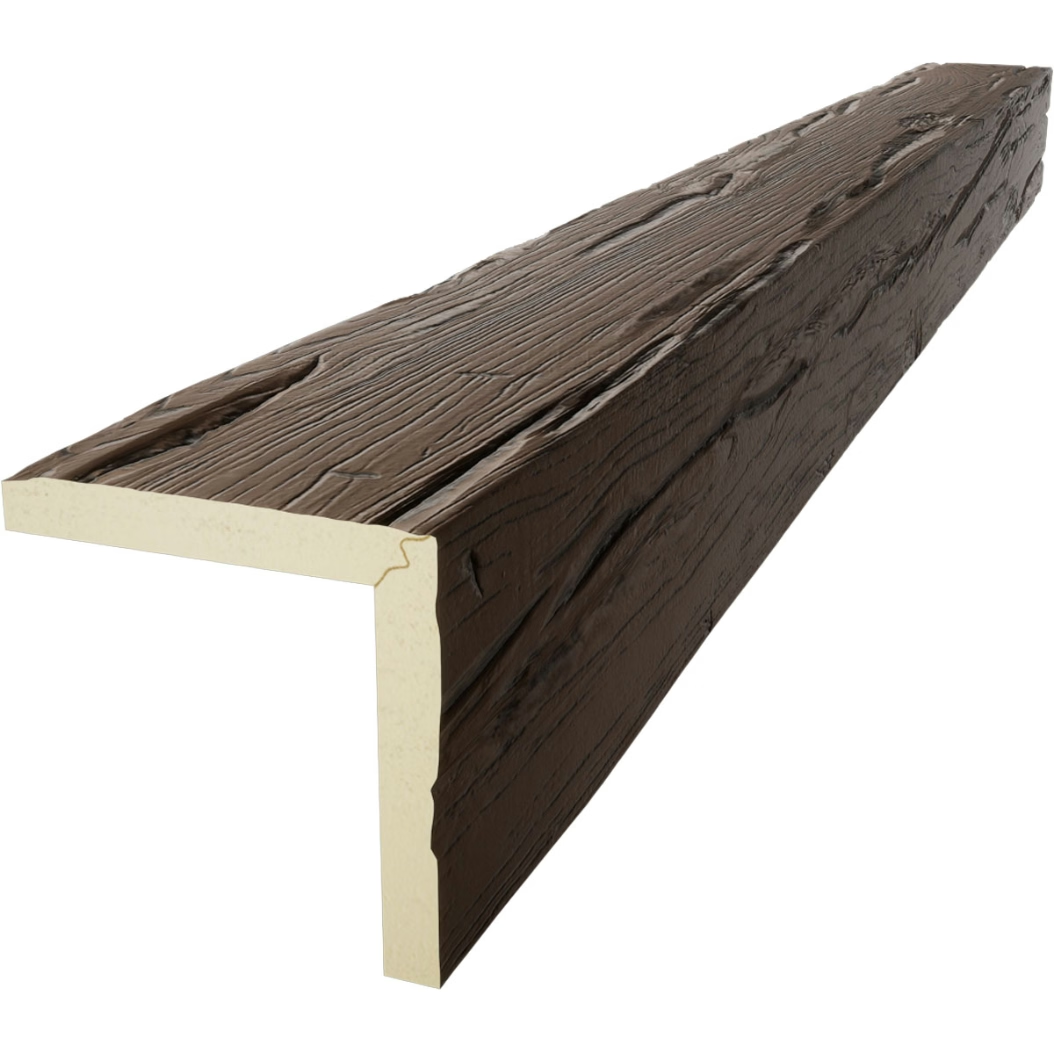
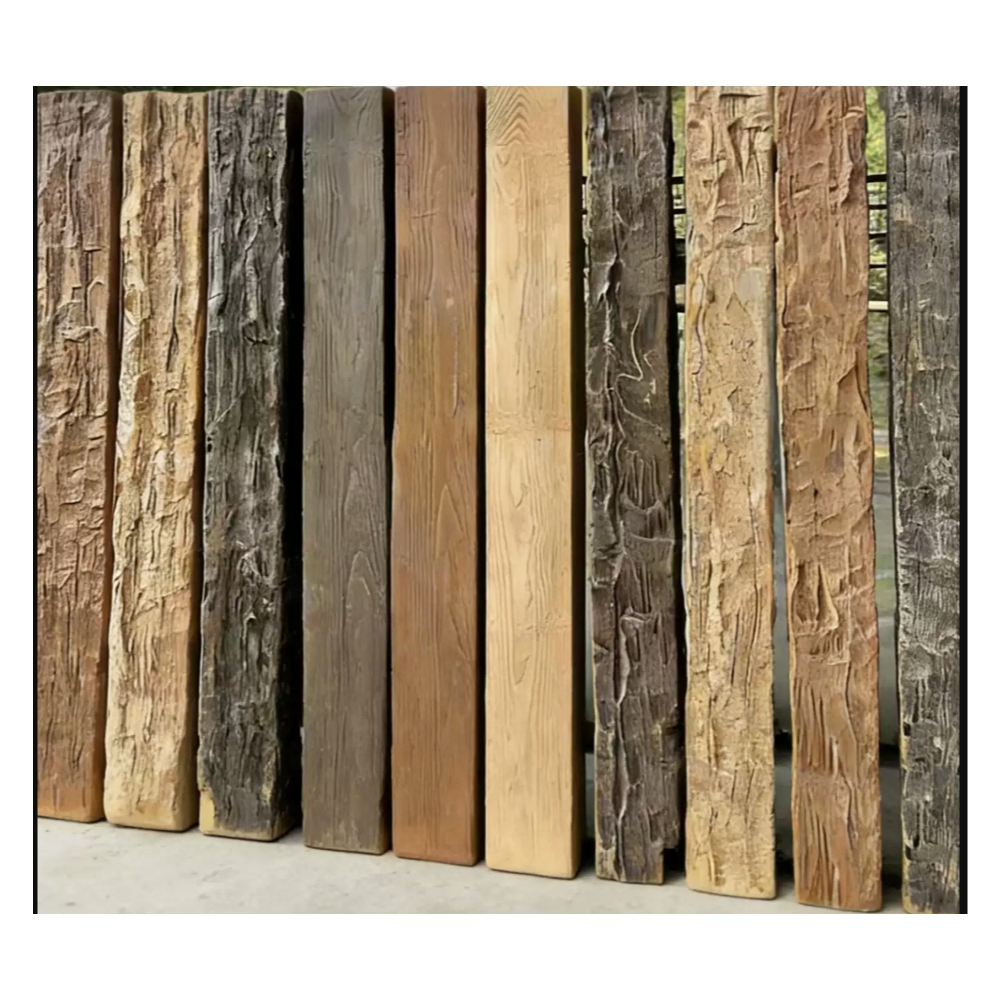
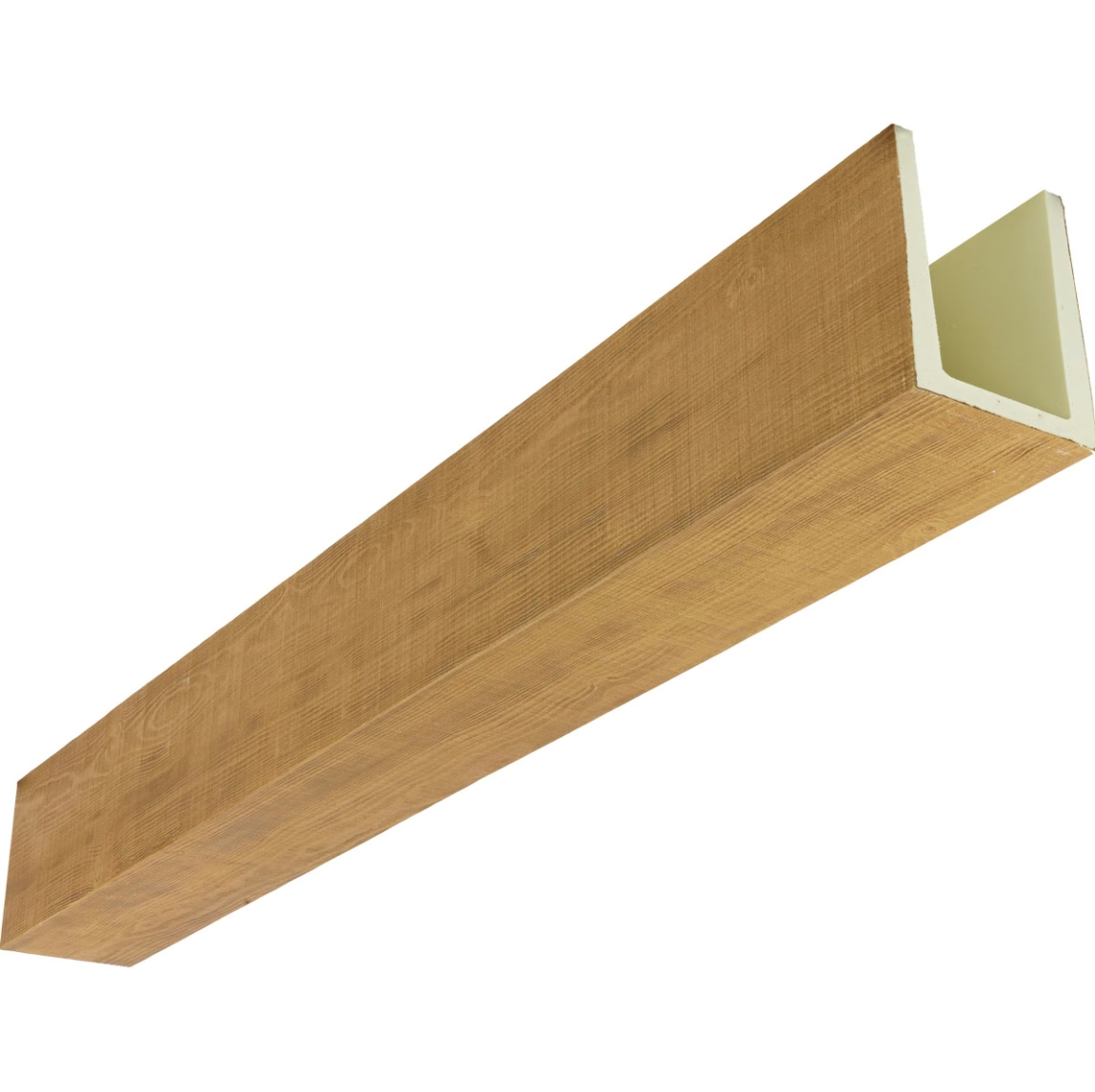
The facilities manager for a semiconductor manufacturing cleanroom discovered a disturbing pattern in production equipment failures: over a three-month period following a facility renovation that added decorative ceiling beams to administrative areas adjacent to production zones, six separate instances of unexplained electronic component damage occurred in equipment near doorways connecting administrative and production spaces. Investigation by ESD specialists revealed the problem source: polyurethane ceiling beams in administrative areas were accumulating substantial static charges in the low-humidity cleanroom environment (maintained at 30-35% RH for process control). Personnel walking beneath charged beams and then entering production areas were experiencing electrostatic discharge events when they contacted grounded equipment—discharges sufficient to damage sensitive semiconductor devices. Voltage measurements on beam surfaces exceeded 15,000 volts in some locations. Remediation required applying conductive topcoat finishes to all beams in administrative areas and implementing enhanced ESD protocols for personnel transitions between spaces. The additional finishing work cost $24,000 and required production scheduling adjustments to allow safe coating application, but eliminated the equipment damage that had been costing substantially more in yield loss and equipment repair.
Electrostatic discharge considerations for polyurethane surface finishes address a specialized but critical concern in facilities housing sensitive electronic equipment or handling flammable materials. Polyurethane foams, like most polymeric materials, are excellent electrical insulators that readily accumulate static charges through triboelectric effects—the charge separation that occurs when dissimilar materials contact and separate, such as when people or objects brush against surfaces. In most building occupancies, static electricity represents merely a nuisance causing minor shocks. However, in electronics manufacturing, data centers, medical device facilities, and explosive atmospheres, electrostatic discharge can damage equipment, corrupt data, ignite flammable vapors, or injure personnel. Understanding ESD mechanisms, assessing facility requirements, and implementing appropriate surface treatments or grounding strategies prevents these problems in applications where polyurethane beams install in ESD-sensitive environments.
Electrostatic Discharge Fundamentals
Static electricity generation and discharge follow physical principles that allow predicting when ESD concerns require attention in building design.
Triboelectric charging occurs when materials with different positions in the triboelectric series contact and separate. Electrons transfer from one material to another during contact, and the materials retain charge imbalance when separated. Materials farther apart in the triboelectric series generate more charge when interacting. Polyurethane falls toward the negative end of the series, meaning it tends to acquire negative charge when contacted by materials like nylon (clothing), polyester (clothing), or human hair and skin. The magnitude of charge accumulated depends on contact area, pressure, separation speed, and humidity.
Charge accumulation on insulating surfaces continues until leakage currents (through slight surface conductivity or air ionization) balance charging. Equilibrium voltage depends on material resistivity, humidity, and geometry. Insulating materials including polyurethane can reach voltages exceeding 20,000 volts in low-humidity conditions. High voltages create strong electric fields that can induce charges in nearby conductive objects (including people), setting up conditions for discharge when conductive objects approach or contact charged surfaces or when charged people contact grounded objects.
Discharge mechanisms include spark discharge (rapid electron flow through air when voltage exceeds breakdown threshold around 300 volts/mm), brush discharge (slower discharge through partial air ionization at sharp edges or points), and propagating brush discharge (rapid surface discharge along charged dielectric surfaces). Spark discharge represents the most energetic and potentially damaging mechanism, capable of igniting flammable atmospheres or destroying sensitive electronic components. Energy released in discharge events ranges from microjoules (sufficient to damage sensitive semiconductors) to millijoules (sufficient for ignition of optimal flammable atmospheres).
Humidity effects on static electricity are substantial and explain why ESD problems often correlate with seasonal changes or climate control. Water molecules adsorbed on material surfaces provide charge leakage paths that dissipate static accumulation. High humidity (above 60% RH) typically prevents problematic static buildup on most materials. Moderate humidity (40-60% RH) provides adequate static control for most purposes. Low humidity (below 30% RH) enables high voltage accumulation on insulating surfaces. Facilities maintaining low humidity for process control or preservation purposes face elevated ESD risks.
Sensitive Environments and Threshold Requirements
Different occupancies have varying sensitivity to ESD, determining whether standard polyurethane beam finishes are acceptable or require modification.
Electronics manufacturing facilities including semiconductor fabrication, circuit board assembly, and component handling represent the most ESD-sensitive environments. Industry standards including ANSI/ESD S20.20 specify comprehensive ESD control programs for these facilities. Voltage generation thresholds typically specify that facility surfaces should not generate voltages exceeding 100-200 volts when tested per standard protocols. Standard polyurethane finishes vastly exceed these thresholds in low-humidity conditions, making them unsuitable for direct use in production areas without ESD treatment.
Data centers and server rooms house electronic equipment that, while less sensitive than bare semiconductor devices, can experience data corruption or component damage from ESD events. Industry guidance suggests maintaining ESD control to prevent voltages exceeding 2000-3000 volts—less stringent than semiconductor facilities but still often requiring ESD-treated materials in low-humidity conditions. Many data centers maintain relatively low humidity (35-45% RH) to prevent corrosion and condensation, creating conditions where static generation becomes significant.
Medical device facilities handling implantable devices, diagnostic electronics, or life-support equipment often adopt ESD protocols similar to electronics manufacturing, recognizing that device damage could have patient safety implications. Healthcare facility design increasingly incorporates ESD control measures, particularly in operating rooms with sensitive monitoring equipment and in manufacturing areas producing medical electronics.
Explosive atmospheres in facilities handling flammable solvents, powders, or gases require ESD control to prevent ignition. Minimum ignition energies for sensitive flammable atmospheres fall below 0.1 millijoule—readily achieved in ESD events from charged surfaces. Industry standards including NFPA 77 provide guidance for static control in hazardous locations. While decorative ceiling beams might appear remote from ESD ignition concerns, charged beams can induce charges on people who then become ignition sources when they enter explosive atmosphere zones.
Standard commercial and residential occupancies generally require no special ESD control for building finishes. Static shocks from doorknobs or carpet represent nuisances rather than safety concerns in these environments. Standard polyurethane beam finishes perform acceptably without ESD treatment.
Material Electrical Properties
Understanding electrical properties of polyurethane and surface finish materials helps predict ESD behavior and select appropriate treatments.
Volume resistivity of standard polyurethane foam exceeds 10^14 ohm-cm, classifying it as an insulator. Materials with volume resistivity above 10^12 ohm-cm accumulate static charge readily because charges cannot dissipate through bulk material. This high resistivity means that any static charge generated on polyurethane surfaces remains localized rather than distributing throughout the material or dissipating to ground.
Surface resistivity of polyurethane finishes typically ranges from 10^12 to 10^15 ohm/square for standard decorative coatings—also well within insulating range. Surface resistivity determines how readily charges distribute across surface areas and how quickly accumulated charges dissipate. High surface resistivity means localized charging persists, with charges remaining concentrated near charge generation locations rather than spreading to lower local voltage.
Static decay time quantifies how quickly accumulated charges dissipate from surfaces. Materials suitable for ESD control typically show decay times under 2 seconds (time for voltage to decrease to 10% of initial value). Standard polyurethane finishes show decay times exceeding minutes to hours, indicating essentially no practical charge dissipation. This slow decay means that charging events accumulate over time rather than dissipating between events.
ESD-safe material classifications define target electrical properties for static control. Conductive materials (resistivity below 10^6 ohm/square) provide rapid charge dissipation but can themselves become charged capacitor plates and may conduct enough current to feel shocks. Static-dissipative materials (resistivity 10^6 to 10^11 ohm/square) provide controlled dissipation fast enough to prevent charge accumulation while limiting discharge currents to safe levels. Most ESD-control applications target static-dissipative range as optimal balance between too-fast discharge (potentially damaging) and too-slow discharge (allowing accumulation).
ESD-Control Surface Treatment Options
Several surface treatment approaches can modify polyurethane beams to provide adequate ESD control in sensitive environments.
Conductive topcoat finishes incorporating carbon black, metal particles, or intrinsically conductive polymers reduce surface resistivity to static-dissipative range. These coatings apply over standard beam finishes using spray, brush, or roller techniques similar to conventional finish application. Commercial ESD coatings typically achieve surface resistivity in 10^6 to 10^9 ohm/square range, providing charge dissipation within 1-2 seconds. Coating appearance ranges from clear (maintaining underlying beam aesthetic) to slightly tinted or textured depending on conductive additive type and concentration. Application cost typically adds $4-8 per square foot of beam surface area, with performance typically maintained for 5-10 years before recoating becomes necessary.
Conductive paint systems using water-based or solvent-based vehicles with conductive additives provide ESD control with standard painting equipment. These systems achieve static-dissipative properties throughout coating thickness, meaning performance persists despite surface wear. Color options are typically limited compared to standard architectural coatings because conductive additives affect appearance. Dark colors (grays, blacks) conceal conductive additives most effectively; light colors show additive particles more visibly and may require higher loading (reducing conductivity) to achieve acceptable appearance.
Topical antistatic sprays or wipes provide temporary ESD control through depositing hygroscopic compounds that absorb moisture from air to create conductive surface films. These treatments offer convenience and low cost ($15-30 per beam for initial treatment) but require frequent reapplication (monthly to quarterly depending on conditions and traffic). Performance degrades in very low humidity (below 30% RH) where even hygroscopic compounds cannot absorb sufficient moisture. Topical treatments work well for temporary ESD control during specific activities or as interim measures pending more permanent solutions.
Grounding straps or conductors attached to beam surfaces provide ESD control when connected to facility ground systems. Conductive tape or discrete conductors route along beam surfaces to grounding points, providing charge dissipation paths. This approach requires penetrating beam finishes to ensure electrical contact with any charge accumulated on surfaces and must include sufficient conductor density to limit voltage before discharge occurs. Visual impact of visible conductors limits application to situations where aesthetics are secondary to ESD control. Installation cost typically runs $50-100 per beam depending on length and complexity.
Testing and Verification Methods
Confirming that ESD control treatments perform adequately requires testing following established protocols.
Surface resistance testing using resistance meters designed for ESD applications measures resistivity between electrodes placed on material surfaces. Test voltage (typically 10-100 volts) and electrode configuration (concentric ring or parallel bar) are standardized in ANSI/ESD STM11.11. Measurements classify materials as conductive, static-dissipative, or insulating based on resistance values. Testing should occur at multiple locations on each beam surface and under controlled environmental conditions (ideally 23°C, 12% RH per standards, though practical testing may use ambient conditions with appropriate notation).
Static decay testing measures voltage decay time from charged surfaces, directly assessing dissipation performance. Testing charges surfaces to specified voltage (typically 1000-5000V) using corona discharge or contact charging, then monitors voltage decrease over time. Decay to 10% of initial voltage within 2 seconds indicates adequate static dissipation. Decay times exceeding 10 seconds indicate inadequate ESD control. Testing equipment includes electrostatic voltmeters with appropriate range (0-20kV typical) and non-contact measurement capability.
Triboelectric testing simulates charging through friction using standardized materials and motion. Test methods might involve rubbing surfaces with defined materials under controlled pressure and speed, then measuring resulting voltage. This functional testing reveals whether treatments prevent charge generation under realistic use conditions. Results depend significantly on test parameters, making standardized protocols essential for meaningful comparison.
Field verification in operating facilities uses periodic spot-checking of installed beams to confirm ongoing ESD performance. Testing quarterly or semi-annually during scheduled maintenance provides early detection of coating degradation or other problems before ESD control is compromised. Documentation of test results creates performance records supporting quality systems and compliance demonstrations.
Design Integration for ESD-Sensitive Facilities
Projects in ESD-sensitive facilities should integrate static control considerations throughout design and specification.
Material specification should explicitly address ESD requirements where applicable. Rather than specifying standard polyurethane beams and hoping to address ESD later, specifications should call for factory-applied ESD coatings where available, or specify field-applied coatings as part of base installation scope. Performance requirements stating maximum allowable surface resistivity and decay time create objective standards that contractors must meet. Testing protocols and acceptance criteria should be specified to ensure verification occurs.
Zoning strategies can minimize ESD treatment requirements by limiting decorative elements in most-sensitive zones. Facilities might avoid decorative beams entirely in Class 1 ESD zones (most sensitive production areas), allow beams with rigorous ESD treatment in Class 2 zones (adjacent support areas), and use standard finishes in Class 3 zones (areas with no ESD sensitivity). This approach focuses cost and complexity where most critical while allowing design flexibility elsewhere.
Humidity control system design that maintains adequate humidity (40-50% RH minimum) provides first-line ESD control by preventing static accumulation on most materials. This approach benefits from protecting all materials facility-wide rather than requiring individual treatment of each material. However, process requirements, energy costs, or comfort concerns may limit humidity control in some facilities.
Grounding system integration connects ESD-treated surfaces to facility grounding where practical. Conductive coatings remain effective without grounding through local dissipation, but connecting to ground provides positive charge removal and reduces voltage accumulation rates. Grounding connections require coordinating with electrical systems and may complicate installation in retrofit applications where grounding paths aren't readily available.
Special Considerations for Cleanroom Environments
Cleanroom facilities present unique challenges combining ESD sensitivity with particulate contamination control.
Particle generation from ESD coatings must be evaluated because conductive additives (carbon particles, metal flakes) can shed from surfaces if not properly bound in coating matrix. Cleanroom classifications specify maximum allowable particle counts at various sizes; decorative finishes must not contribute particles exceeding these limits. Low-particulate ESD coatings formulated specifically for cleanroom applications use finely divided additives and robust binder systems to minimize shedding. Testing per ISO 14644 cleanroom standards verifies particle generation rates.
Outgassing from coating materials can contaminate cleanroom environments with volatile organic compounds or other contaminants affecting sensitive processes. Low-outgassing ESD coatings using water-based chemistry or fully-cured thermoset polymers minimize contamination risks. Outgassing testing following ASTM E595 or similar protocols quantifies volatile content and identifies any problematic compounds.
Cleaning compatibility ensures that ESD coatings withstand cleanroom cleaning protocols without degradation. Cleanrooms typically use frequent wet-cleaning with specialized cleaning agents to maintain contamination control. ESD coatings must resist these cleaning chemicals while maintaining conductive properties. Compatibility testing with specific cleaning agents used in the facility prevents specifying coatings that degrade in service.
Access restrictions in operating cleanrooms complicate coating application and testing. Many cleanrooms cannot tolerate finishing work during production, requiring that work occur during facility shutdowns or in phased approaches working in limited areas sequentially. Planning must account for these constraints in scheduling and may influence decisions about factory-applied versus field-applied coatings.
Maintenance and Long-Term Performance
ESD control coatings require maintenance to sustain performance over building service life.
Wear resistance of ESD coatings varies by formulation and affects maintenance frequency. Hard epoxy or polyurethane topcoats with conductive additives may maintain performance for 10+ years in low-traffic ceiling applications. Softer coatings or those subjected to cleaning may require recoating every 3-5 years. Specifying hard, abrasion-resistant ESD coatings reduces long-term maintenance burden where initial cost premium is acceptable.
Cleaning protocols should use ESD-safe cleaning materials that don't compromise coating conductivity. Some cleaning agents leave residual films that insulate treated surfaces, defeating ESD control. Other agents may dissolve or degrade coating binders. Facility maintenance specifications should identify approved cleaning agents verified compatible with installed ESD coatings.
Periodic testing following initial installation provides early warning of performance degradation. Testing annually or biennially using same protocols as acceptance testing reveals when surface resistivity is increasing toward problematic levels, allowing scheduled recoating before ESD control is lost. Documented testing demonstrates ongoing compliance with ESD control programs.
Recoating procedures should follow coating manufacturer recommendations to ensure new coating bonds to existing coating and achieves specified properties. Surface preparation including cleaning and light abrasion improves coating adhesion. Application techniques affecting film thickness and uniformity impact electrical properties—spray application typically provides most uniform properties compared to brush or roller application.
Cost-Benefit Analysis
ESD control treatments add cost to beam installations; justification requires comparing incremental cost against risks mitigated.
Treatment cost for typical projects using conductive topcoat finishes might add $6,000-12,000 to beam installation budgets for medium-sized facilities (2000-3000 sq ft of beam surface area). Factory-applied coatings command premiums of 25-40% over standard finishes. Field-applied coatings add labor cost plus coating materials. These increments appear substantial until compared against alternative risks.
Equipment damage costs in electronics facilities can vastly exceed ESD treatment costs. Single ESD event damaging semiconductor manufacturing equipment might cause $50,000-500,000 in lost production and equipment repair. Yield losses from damaged product can reach similar magnitudes. Multiple events over facility lifetime make even expensive ESD treatments economically attractive. The semiconductor facility described in the opening spent $24,000 on remedial ESD coatings after experiencing equipment damage that exceeded $100,000 in lost yield and repair costs.
Insurance and liability considerations favor ESD control in sensitive facilities. Demonstrable ESD control programs may reduce liability if equipment damage or safety incidents occur. Insurance underwriters may view comprehensive ESD programs favorably when setting premiums for facilities housing valuable equipment.
Regulatory compliance in some industries mandates ESD control per quality standards (ISO 9001 with ESD requirements, AS9100 aerospace standard). Non-compliance can jeopardize certifications essential for business operations. ESD treatment costs become business necessities rather than optional upgrades in these contexts.
Electrostatic discharge considerations for polyurethane surface finishes exemplify how specialized building occupancies impose requirements beyond standard architectural practice. Materials perfectly acceptable in typical commercial or residential applications become problematic in environments where static electricity threatens equipment, products, or safety. Projects in ESD-sensitive facilities must recognize these special requirements early in design, specify appropriate surface treatments, verify performance through testing, and maintain ESD control throughout facility life. The incremental cost and complexity of ESD treatments represents sound investment preventing damage costs and operational disruptions that far exceed treatment expense. As electronics become increasingly pervasive in modern buildings and devices become ever more sensitive to ESD, attention to static control in architectural materials will continue growing in importance across wider ranges of building types.
Technical References
ASTM standards cited in every specification
Test Data
Lab results from internal testing program
Updated 2026
Reviewed against current product specs