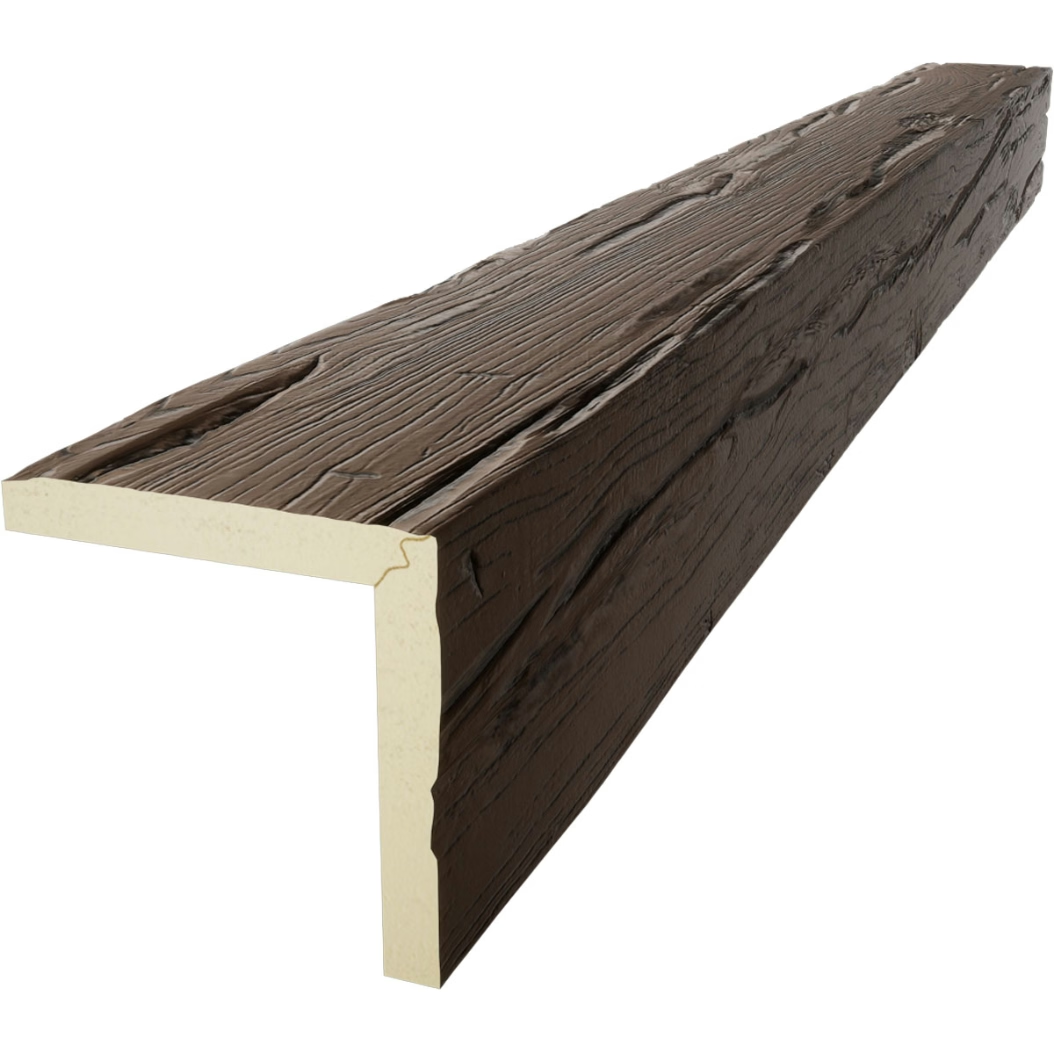
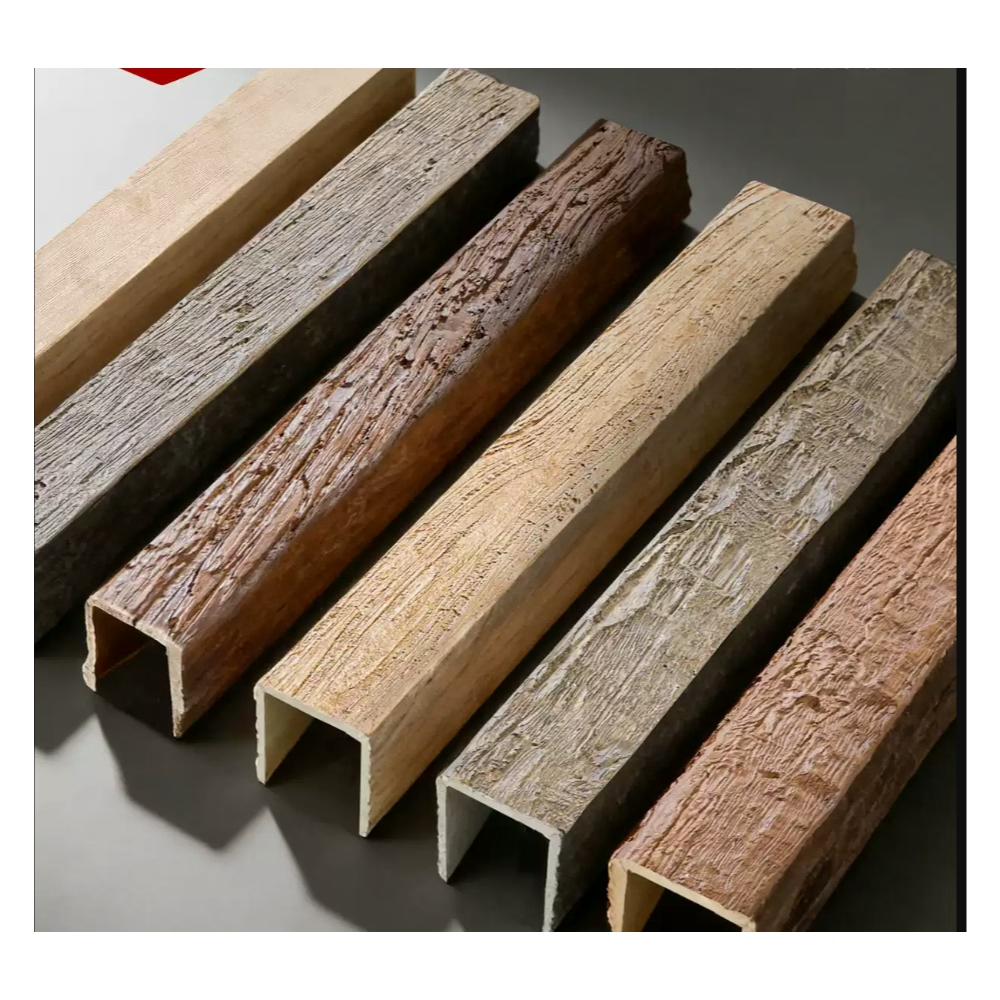
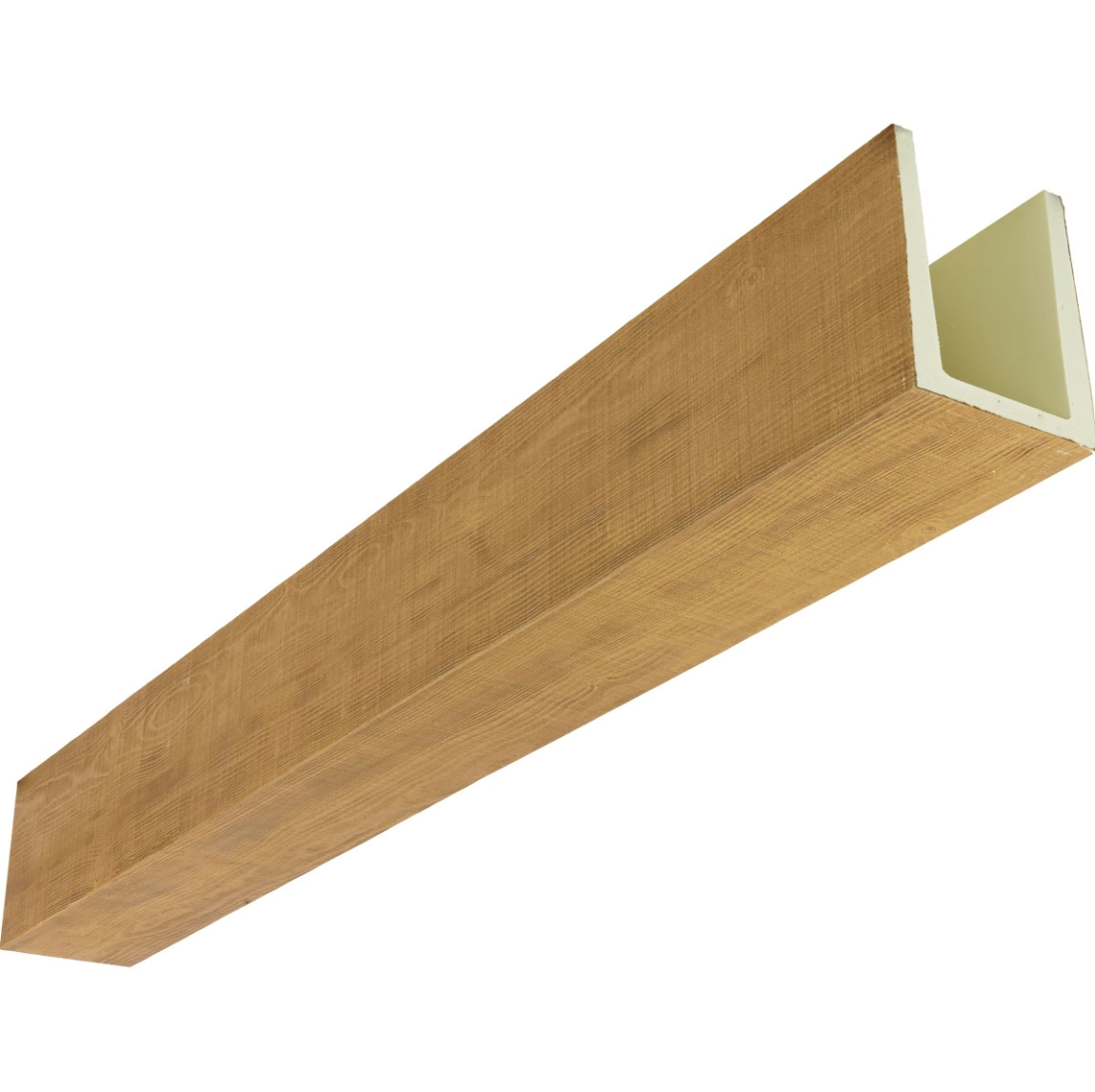
The project architect pursuing LEED Gold certification for a new corporate headquarters discovered a critical documentation gap three weeks before planned LEED submittal: the decorative ceiling beams specified for executive office areas lacked formaldehyde emission test reports required to demonstrate compliance with LEED v4 Materials and Resources credits. The manufacturer's literature claimed "low-VOC" and "environmentally friendly" but provided no quantitative emission data or third-party certification. When pressed for test reports, the manufacturer acknowledged that their products had never been tested for formaldehyde emissions using the ASTM D6007 or ISO 16000 chamber methods that LEED accepts. Without compliant test data, the beams could not contribute to LEED credits, potentially jeopardizing the project's certification goal. The design team faced difficult choices: specify alternative beam products with proper certification (requiring redesign and specification changes), proceed without LEED credit for beams (accepting point loss), or delay the project for manufacturer testing (adding months to schedule). Ultimately, switching to certified products cost $18,000 in design rework and premium materials, plus three weeks of schedule delay while new products were sourced and shop drawings revised.
Formaldehyde emission testing requirements for indoor air quality certification address growing concern about chemical pollutants affecting occupant health and comfort in buildings. Formaldehyde—a volatile organic compound produced by certain building materials and used as a chemical intermediate in adhesive and polymer production—has been identified as a respiratory irritant and probable human carcinogen at elevated concentrations. Building standards including LEED, WELL Building Standard, California Proposition 65, and CARB (California Air Resources Board) regulations now impose limits on formaldehyde emissions from building products. Polyurethane foam beams manufactured using certain chemical processes can potentially emit formaldehyde, requiring testing and certification to verify compliance with increasingly stringent indoor air quality requirements. Understanding regulatory requirements, testing methodologies, and product selection criteria allows specifiers to make informed material choices supporting project IAQ goals while avoiding the specification pitfalls that compliant documentation shortfalls create.
Formaldehyde in Building Products
Formaldehyde presence in building materials originates from several sources, each requiring different control approaches.
Formaldehyde as a chemical feedstock appears in adhesive resins including urea-formaldehyde, phenol-formaldehyde, and melamine-formaldehyde compounds used extensively in composite wood products. These thermosetting resins cure through formaldehyde condensation reactions that ideally consume all free formaldehyde. However, incomplete curing or resin degradation over time releases residual formaldehyde. Composite wood products represent the largest sources of formaldehyde emissions in buildings, prompting specific regulations (CARB Phase 2, EPA TSCA Title VI) limiting emissions from plywood, particleboard, MDF, and similar products.
Formaldehyde from off-gassing of unreacted monomers occurs in some polymer materials if polymerization is incomplete or uses formaldehyde-containing intermediates. Some polyurethane formulations historically used formaldehyde-based crosslinkers or employed manufacturing processes producing formaldehyde as reaction byproduct. Modern polyurethane chemistry has largely eliminated formaldehyde from mainstream formulations, but legacy products or some specialty formulations may still show detectable emissions requiring testing to verify acceptability.
Formaldehyde from photochemical reactions can form in materials exposed to UV and oxidizing conditions, even if initial formulation contained no formaldehyde. Polymer degradation through photooxidation can generate various carbonyl compounds including formaldehyde as breakdown products. This secondary formation mechanism affects long-term emission profiles differently than residual formaldehyde from manufacturing processes.
Background formaldehyde in indoor air comes from sources beyond building materials, including outdoor air infiltration, combustion appliances, cleaning products, and metabolic processes. Typical background concentrations in residential buildings range from 10-30 μg/m³. Building material contributions add to this background, with total concentrations ideally maintained below 27 μg/m³ (the LEED threshold), 33 μg/m³ (WELL Building Standard threshold), or lower targets in especially health-conscious buildings.
Regulatory Framework and Standards
Multiple regulatory frameworks address formaldehyde emissions, each with specific testing requirements and compliance thresholds.
LEED v4 and v4.1 Materials and Resources credits include specific requirements for formaldehyde emissions from building products. Products must demonstrate formaldehyde emissions below 27 μg/m³ when tested per CDPH Standard Method v1.2 or ISO 16000 series, or must comply with CARB phase 2 limits for composite wood products. Products meeting requirements contribute to Materials and Resources Credit: Building Product Disclosure and Optimization. Documentation requires third-party certified test reports showing compliant emissions. LEED certification increasingly drives market demand for tested, certified products.
California Proposition 65 (Safe Drinking Water and Toxic Enforcement Act) requires warnings on products containing chemicals known to cause cancer or reproductive toxicity, including formaldehyde above specified levels. While not explicitly an emission standard, Prop 65 creates market pressure for low-formaldehyde products to avoid warning label requirements. De minimis exposure levels around 40 μg/day (corresponding roughly to 20-30 μg/m³ continuous exposure) serve as practical thresholds below which warnings typically aren't required, though interpretation involves complex exposure modeling.
CARB Phase 2 regulations specifically address composite wood products, establishing emission limits of 0.05 ppm (approximately 62 μg/m³) for plywood, 0.09 ppm for particleboard, 0.11 ppm for MDF, and 0.13 ppm for thin MDF. EPA's TSCA Title VI federalized similar requirements nationally. While these standards target composite wood products specifically, they establish reference points for acceptable formaldehyde emissions influencing broader material specifications.
WELL Building Standard Feature A01 requires all building materials to meet formaldehyde emission limits of 33 μg/m³ when tested per CDPH Standard Method or ISO 16000-9. WELL v2 expanded these requirements across wider ranges of product categories and project types. Projects pursuing WELL certification must demonstrate material compliance through third-party test reports as prerequisite for certification.
Testing Methodologies
Standardized emission testing methods provide reproducible measurement of formaldehyde release from building products under controlled conditions.
ASTM D6007 Standard Test Method uses small-scale environmental chambers (typically 20-50 liters) to measure VOC and formaldehyde emissions from product samples. Test method specifies chamber construction, sample loading ratio (surface area to chamber volume), environmental conditions (23°C, 50% RH, 0.5 air changes per hour), and sampling duration. Formaldehyde in chamber air is collected on DNPH (2,4-dinitrophenylhydrazine) cartridges, then analyzed by HPLC to quantify concentration. Results report emission rates (μg/m²·hr) and chamber concentrations (μg/m³) at steady-state (typically 7-14 days).
ISO 16000 series standards including ISO 16000-9 (formaldehyde determination) and ISO 16000-6 (chamber methodology) provide internationally recognized testing protocols similar to ASTM D6007 but with some procedural differences. ISO methods specify slightly different chamber conditions and sampling procedures. Many international product certifications require ISO testing rather than ASTM methods. Test laboratories typically offer both ASTM and ISO testing to serve different market requirements.
CDPH Standard Method v1.2 (California Department of Public Health) represents the most widely referenced method for LEED and health-focused certifications. Based largely on ISO 16000 series, CDPH adds specific requirements for sample preparation, testing schedules, and reporting formats. The method specifies testing at 24 hours, 4-7 days, and 14 days, with compliance based on 14-day results for most applications. CDPH testing has become the de facto standard for green building material certification in North America.
CARB testing methods specific to composite wood products follow different protocols optimized for those materials. Large chamber methods or small-scale chamber methods specified in CARB regulations differ from CDPH procedures, reflecting different material types and emission characteristics. Products regulated under CARB undergo different testing than general building products even though formaldehyde is the target compound for both.
Typical Emission Levels from Polyurethane Products
Understanding typical formaldehyde emission levels from polyurethane helps establish expectations and interpret test results.
Modern polyurethane foam formulations using conventional MDI (methylene diphenyl diisocyanate) or TDI (toluene diisocyanate) chemistry typically show very low formaldehyde emissions—often below 5 μg/m³ in chamber tests, well below regulatory thresholds. These formulations don't use formaldehyde as feedstock and don't generate significant formaldehyde during cure or aging. Products using these chemistries routinely achieve LEED and WELL compliance with minimal concern about formaldehyde.
Specialty or modified formulations might show higher emissions if they incorporate formaldehyde-containing additives, use alternative chemical processes that generate formaldehyde byproducts, or include recycled content from sources with residual formaldehyde. These products require testing to verify compliance rather than assuming typical formulations apply. Manufacturers should provide specific emission data for all formulations rather than generic statements about "polyurethane" emissions.
Coatings and adhesives applied to polyurethane substrates can contribute formaldehyde emissions exceeding substrate emissions. Some adhesive formulations include urea-formaldehyde resins, and certain coatings use formaldehyde-containing crosslinkers. Complete product testing should include all layers as applied to end products, not just base polyurethane foam in isolation. Factory-finished products should be tested in finished condition; field-applied finishes require separate verification.
Time-dependent emission profiles show highest emission rates immediately after manufacturing, declining over days to weeks as residual volatiles outgas. Testing at 14 days represents near-equilibrium conditions after initial outgassing completes. Real-world emissions in buildings typically fall below test chamber results because ventilation rates in chambers (0.5 ACH) are lower than most buildings (0.5-2 ACH), so chamber testing represents conservative assessment.
Product Certification and Documentation
Third-party certification programs provide standardized verification of formaldehyde compliance recognized by green building rating systems.
GREENGUARD Certification (managed by UL) represents one of the most widely recognized indoor air quality certifications. GREENGUARD Certified products meet emission limits including 50 μg/m³ for formaldehyde. GREENGUARD Gold (formerly GREENGUARD Children & Schools) applies more stringent limits including 27 μg/m³ for formaldehyde, aligning with LEED requirements. Products achieving GREENGUARD Gold automatically satisfy LEED and many other green building standards for formaldehyde. Manufacturers submit products for chamber testing by accredited labs; products passing testing receive certification valid for specific periods (typically 1 year) before retesting is required.
SCS Indoor Advantage Certification provides alternative third-party verification using CDPH Standard Method. Gold level certification requires formaldehyde below 27 μg/m³, meeting LEED thresholds. SCS certification includes annual testing and factory audits verifying consistency with tested formulations. Products listed in SCS database with current certification status provide reliable documentation for specification purposes.
Declare labels and Health Product Declarations (HPD) provide ingredient transparency but don't necessarily include emission testing. These disclosure formats identify whether formaldehyde is intentionally added to formulations and may reference test data if available, but don't substitute for emission testing. HPD version 2.2 added fields for emission data, improving integration with performance testing, but many HPDs still lack comprehensive emission data.
Manufacturer test reports without third-party certification provide useful information but carry less weight for certification purposes. Test reports from accredited laboratories following standardized methods can demonstrate compliance, but some rating systems require third-party certification programs rather than accepting individual test reports. Specifiers should understand which documentation formats their projects require and ensure products provide appropriate certification level.
Specification Strategies
Material specifications should clearly address formaldehyde requirements to ensure products supplied support project IAQ goals.
Performance specification approach states formaldehyde emission limits that products must meet without prescribing specific testing methods or certifications. This allows manufacturers flexibility in demonstrating compliance while ensuring performance standards are achieved. Example language: "Products shall demonstrate formaldehyde emissions not exceeding 27 μg/m³ when tested per CDPH Standard Method v1.2 or equivalent ISO 16000 series methods. Documentation shall include third-party test reports from laboratories accredited to ISO/IEC 17025 for VOC chamber testing."
Prescriptive specification requiring specific certifications simplifies compliance verification at potential cost of limiting product options. Example language: "Products shall achieve GREENGUARD Gold certification or SCS Indoor Advantage Gold certification including formaldehyde testing. Current certification documentation shall be provided with product submittals." This approach eliminates ambiguity about acceptable documentation but may exclude products that would meet performance requirements but lack particular certification.
Tiered requirements establish preferred and acceptable compliance paths, incentivizing higher-performing products while maintaining fallback options. Example language: "Products with GREENGUARD Gold or SCS Indoor Advantage Gold certification preferred. Alternative: Products with test reports per CDPH Standard Method v1.2 showing formaldehyde below 27 μg/m³, tested within 24 months by ISO 17025 accredited laboratory." Tiered approach balances performance goals with product availability.
Submittal requirements should explicitly state documentation needed for approval: "Product submittals shall include test reports or certificates documenting formaldehyde emissions. Reports shall identify tested product by manufacturer name, product designation, and finish/coating system. Test reports shall include complete laboratory identification, test methods, test conditions, and quantified results for formaldehyde." Clear submittal requirements prevent post-approval disputes about documentation adequacy.
Indoor Air Quality Modeling
Predicting formaldehyde contributions to whole-building IAQ allows assessing whether material selection will achieve target concentration goals.
Material emission rate data from product testing provides input for IAQ modeling. Emission rates in μg/m²·hr from chamber testing, combined with installed surface areas and building volumes, allow calculating concentration contributions. A building installing 500 m² of beams with 1.5 μg/m²·hr formaldehyde emission rate adds 750 μg/hr formaldehyde release. In a 5000 m³ building with 0.5 ACH ventilation rate (2500 m³/hr air exchange), equilibrium concentration from beams alone would be 750 μg/hr ÷ 2500 m³/hr = 0.3 μg/m³—negligible contribution to total formaldehyde.
Additive effects from multiple materials require considering all formaldehyde sources when predicting total concentrations. Floor coverings, composite wood casework, wall coverings, and other materials each contribute to total formaldehyde load. IAQ models sum contributions from all sources plus background to predict total concentration. This multi-material analysis determines whether each individual material must meet stringent limits or whether some higher-emitting materials can be accommodated within total concentration budgets.
Ventilation rates dramatically affect indoor concentrations—doubling ventilation roughly halves pollutant concentrations for source-generated pollutants. Buildings designed with high ventilation rates (3-4 ACH or more) can tolerate higher emission rates from materials while maintaining acceptable concentrations. Conversely, tight buildings with minimal ventilation (0.35 ACH or less) require very low material emission rates to achieve acceptable IAQ. Coordinating material selection with mechanical system design optimizes cost-performance balance.
Temporal dynamics including emission rate decay over time, intermittent occupancy patterns, and ventilation scheduling complicate IAQ prediction. Detailed modeling using tools like CONTAM or IDA-ICE can simulate these dynamic effects, though simpler steady-state calculations often suffice for material specification purposes. Dynamic modeling becomes valuable for predicting IAQ immediately post-construction when emission rates peak, versus long-term occupied conditions when emissions have declined.
Project Case Study: Corporate Headquarters
The corporate headquarters LEED certification challenge illustrates documentation requirements and specification impacts.
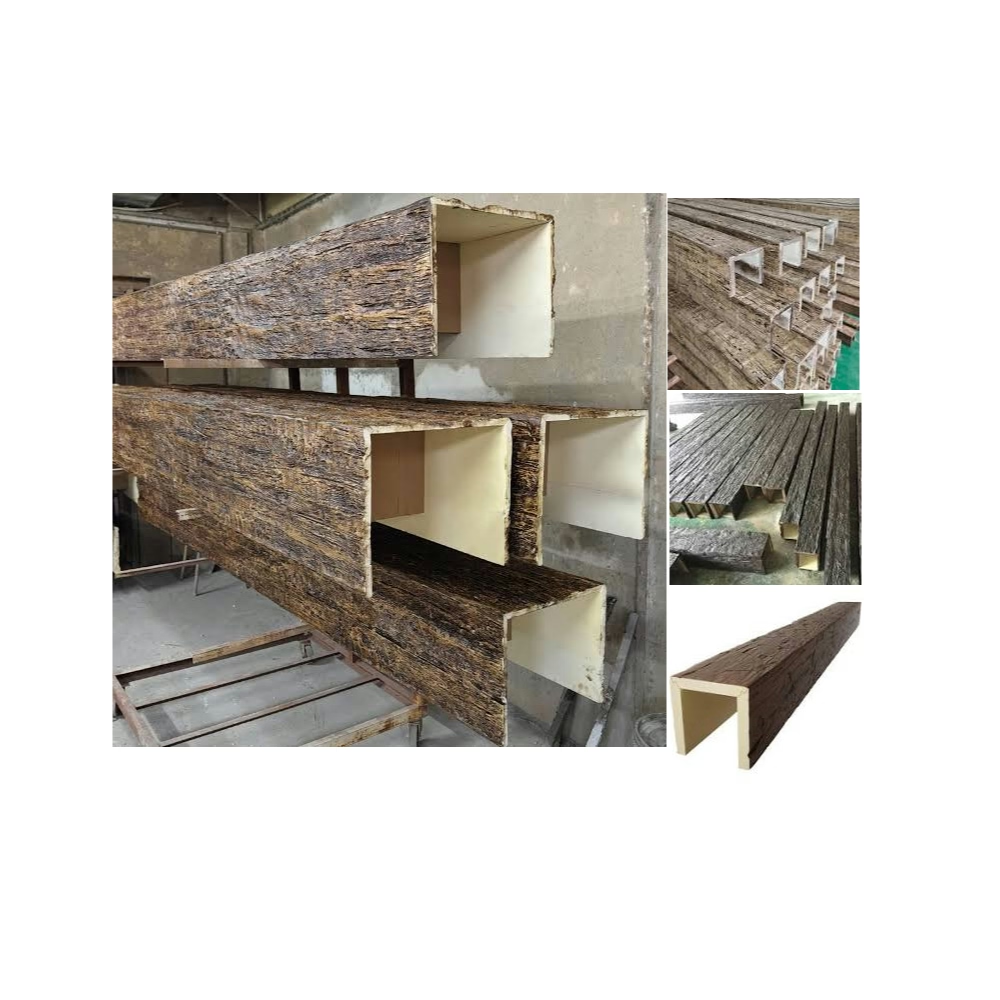
Initial specification had stated "polyurethane faux wood beams with wood-grain textured finish" but included no IAQ requirements or certification requirements. This specification allowed suppliers to propose standard products that might or might not have emission testing. When LEED documentation phase revealed the need for formaldehyde emission data, the selected manufacturer could not provide compliant documentation because products had never been tested.
Alternative product research identified several manufacturers offering GREENGUARD Gold certified beams at price premiums of 15-25% over originally specified products. The certified products used identical polyurethane foam chemistry but had undergone chamber testing and annual recertification to maintain GREENGUARD Gold status. Higher costs reflected testing expenses, certification fees, and quality assurance systems ensuring production consistency with tested formulations.
Decision analysis weighed LEED point value against product cost premiums and schedule impacts. The beams contributed to one LEED Materials and Resources credit worth 1-2 points. Missing these points wouldn't necessarily jeopardize Gold certification because the project had point cushion, but represented optimization failure. Premium costs totaling $18,000 represented roughly $9,000-18,000 per LEED point—higher than team's target but accepted to maintain project goals. Schedule impact of three weeks for redesign and product sourcing was absorbed within overall schedule float.
Specification revision for future projects incorporated clear IAQ requirements: "Polyurethane ceiling beams shall achieve GREENGUARD Gold certification or demonstrate formaldehyde emissions below 27 μg/m³ per CDPH Standard Method v1.2. Test reports or certificates shall be provided with product submittals." This revision ensured early identification of compliant products, avoiding late-project scrambles. Estimated cost impact of IAQ requirements in future projects: 10-20% premium on beams (typically 1-2% of overall construction cost), providing much better value than reactive product substitution.
Lessons learned emphasized importance of incorporating IAQ requirements into specifications from project inception rather than treating as add-on requirements during documentation phases. Early specification allows budget and schedule to accommodate certified products, manufacturers to understand requirements, and design teams to verify documentation availability before committing to particular products.
Formaldehyde emission testing requirements for indoor air quality certification represent evolving standards reflecting increasing attention to occupant health and building performance. Green building rating systems, health-based standards, and regulatory requirements converge around formaldehyde as a key indicator pollutant requiring verification testing. Polyurethane beam products, like all building materials in health-conscious projects, must provide credible emission data demonstrating compliance with applicable thresholds. Manufacturers investing in testing and certification open markets in LEED, WELL, and health-focused projects; those lacking documentation face specification barriers regardless of actual emission levels. Specifiers incorporating clear IAQ requirements in material specifications ensure products supplied support project certification goals while avoiding late-project documentation crises. As building industry continues emphasizing health and sustainability, emission testing and certification transition from niche requirements to standard practice for wider ranges of products and projects.
Technical References
ASTM standards cited in every specification
Test Data
Lab results from internal testing program
Updated 2026
Reviewed against current product specs