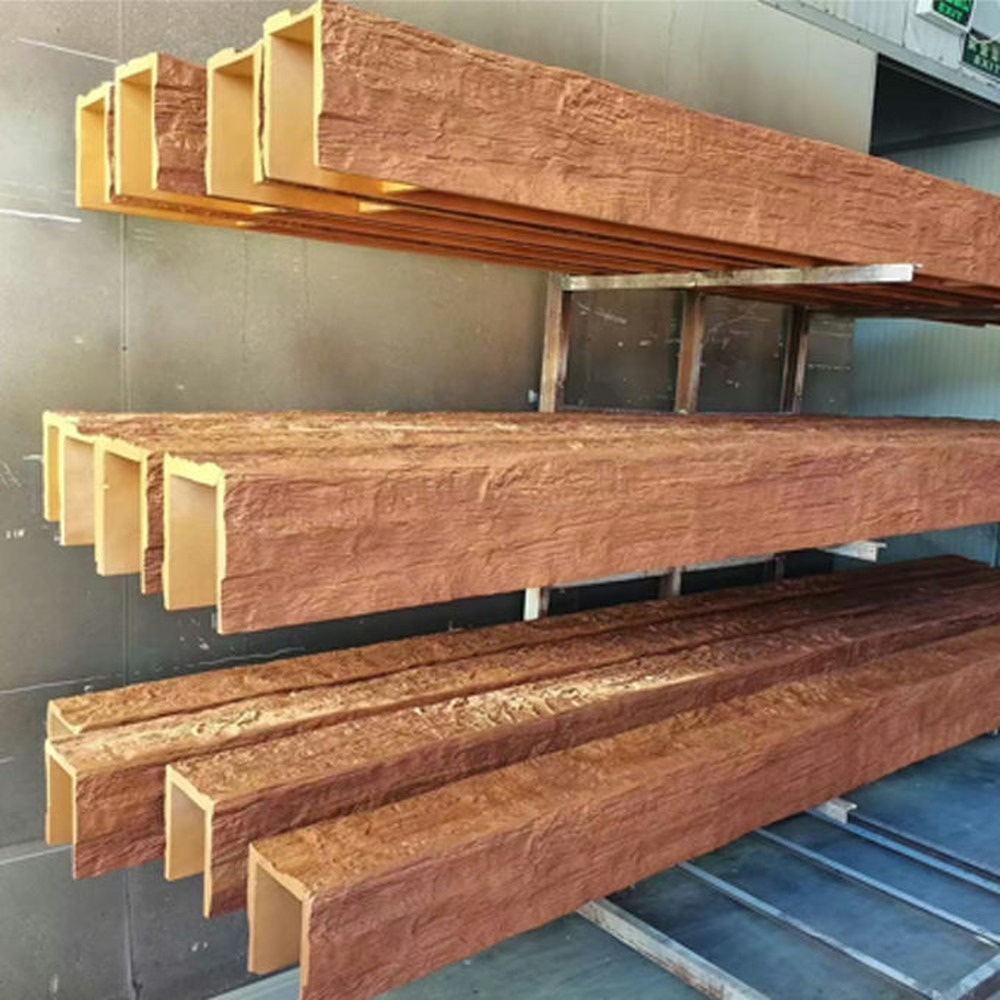
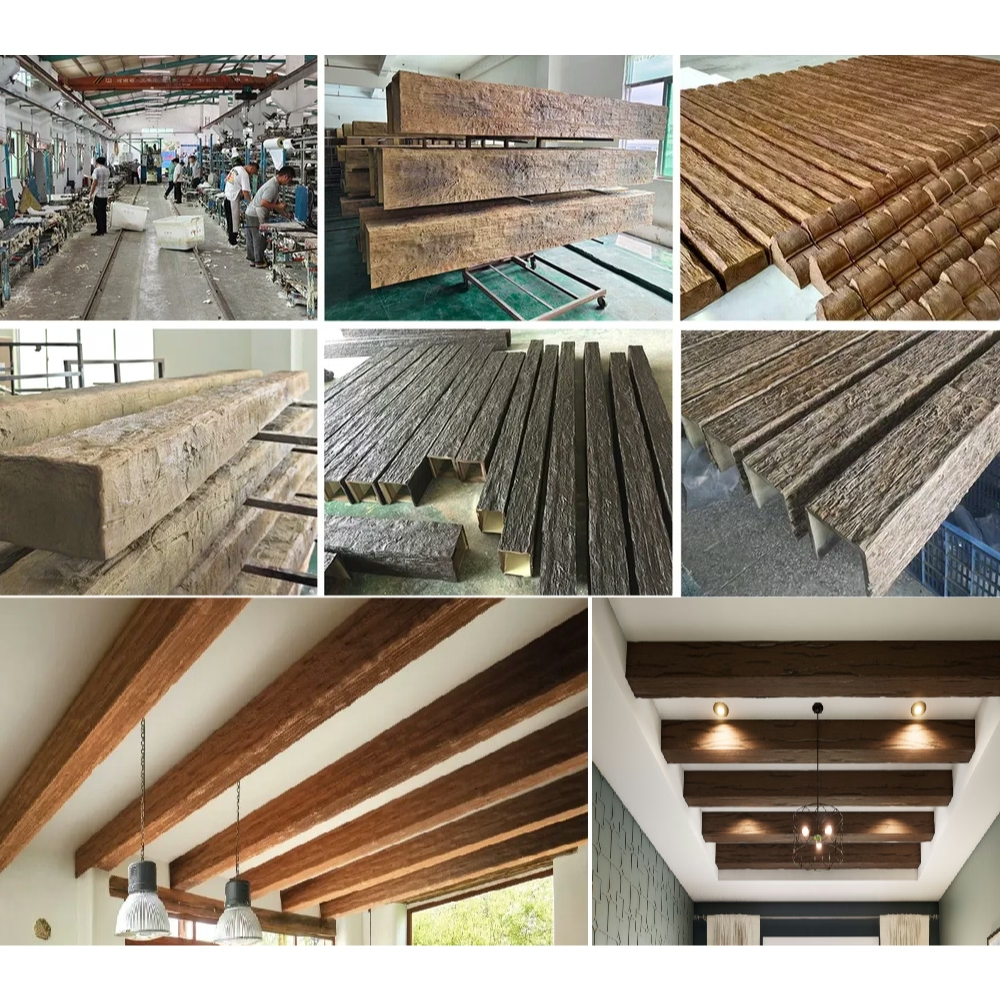
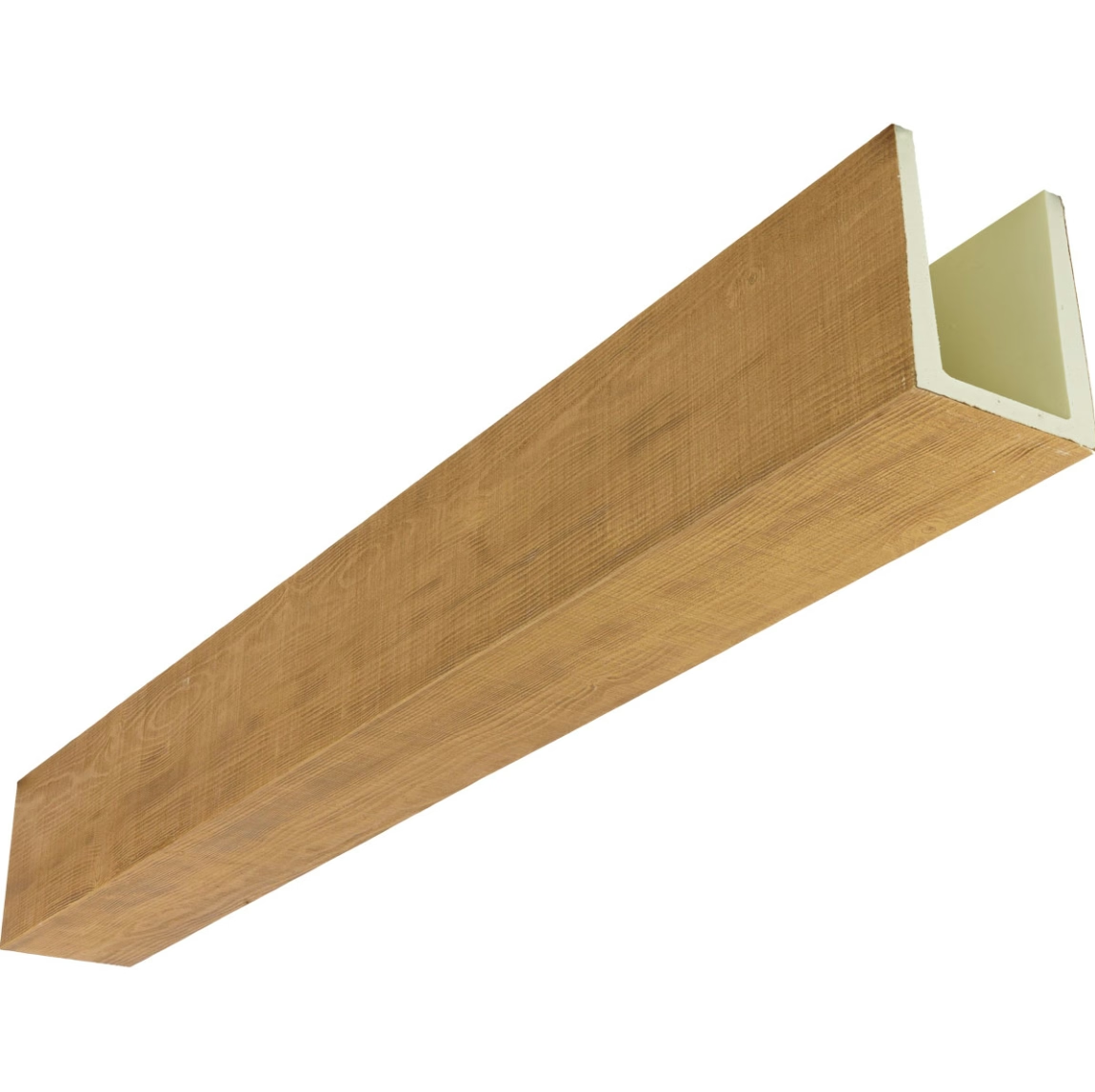
The structural engineer reviewing construction documents for a medical office building in Seismic Design Category D identified a potentially dangerous specification: the ceiling beam installation detail showed adhesive-only attachment with no mechanical fasteners. Building codes in high seismic zones require that non-structural ceiling components like decorative beams incorporate mechanical attachment capable of resisting lateral forces that earthquake ground motion produces. Adhesive bonds, while adequate for vertical load resistance in static conditions, cannot reliably resist the horizontal shaking that seismic events create. The specification required revision to include mechanical fasteners sized and spaced according to seismic force calculations—a requirement that the interior design team had been unaware existed. The revision was straightforward during design, but discovering this deficiency during construction would have required removing and reinstalling completed beam work.
Seismic zone considerations for adhesive-mounted ceiling beam installations represent an aspect of building code compliance that receives insufficient attention in many projects. The geographic variability of seismic requirements means that installation methods appropriate in low-seismic regions may be entirely inadequate—and potentially dangerous—in high-seismic areas. Understanding how seismic design requirements affect ceiling-mounted decorative elements ensures that installations provide not just aesthetic value but also life safety performance during the earthquake events that building codes are designed to address.
Seismic Design Categories and Building Code Requirements
Building codes in the United States classify geographic locations into Seismic Design Categories (SDC) ranging from A through F, with A representing minimal seismic risk and F representing extreme risk. This classification system, incorporated into the International Building Code (IBC) and referenced by most state and local building codes, determines the stringency of seismic design requirements that apply to buildings in each location.
The SDC designation for any particular project site depends on both the site's expected ground motion intensity and the building's occupancy category. Expected ground motion derives from geological and seismological data that maps earthquake probability and intensity across the country. Occupancy category reflects the building's use, with higher categories assigned to uses where earthquake damage poses particular risks—hospitals, schools, fire stations, and other essential or high-occupancy facilities receive higher occupancy categories than standard commercial or residential buildings.
Lower seismic design categories (A and B) impose minimal seismic requirements on non-structural building components like decorative ceiling beams. Buildings in these zones can typically employ adhesive-only attachment for lightweight ceiling elements without additional mechanical fastening. The low probability and expected intensity of seismic events in these regions means that static attachment methods provide adequate safety.
Moderate seismic design categories (C and lower D) begin imposing specific requirements for non-structural component attachment. Building codes for these zones typically require that ceiling-mounted elements be positively attached to structure in ways that resist both vertical and lateral forces. Adhesive attachment may be acceptable if testing demonstrates adequate shear strength, but many jurisdictions require at least some mechanical fastening to provide redundant load paths that maintain attachment if adhesive bonds fail.
High seismic design categories (upper D, E, and F) impose stringent requirements for non-structural component attachment. These codes typically require fully mechanical attachment capable of resisting calculated lateral forces based on the component's weight and the building's expected seismic response. Adhesive may supplement mechanical attachment but cannot serve as the sole attachment means. The severe ground motion expected in high seismic zones creates forces that can exceed adhesive bond strength, making mechanical fastening essential for life safety.
Seismic Force Demands on Ceiling-Mounted Components
Earthquake ground motion produces dynamic forces on building components that differ substantially from the static loads that components experience under normal conditions. Understanding these force characteristics helps explain why attachment methods adequate for static loads may fail during seismic events.
Lateral forces represent the primary seismic demand on ceiling components. Earthquake ground motion shakes buildings horizontally, creating inertial forces that attempt to move building components in directions they normally don't experience loads. A ceiling-mounted beam experiences primarily vertical gravitational loads under normal conditions—the beam's weight pulls straight down on whatever attachment system holds it to the ceiling. During seismic events, horizontal ground motion creates lateral forces attempting to slide the beam horizontally along the ceiling surface or swing it like a pendulum if connections allow rotation.
The magnitude of seismic lateral forces that ceiling components experience depends on several factors. Component weight directly affects seismic force—heavier components develop larger inertial forces when accelerated by ground motion. Mounting height within the building influences forces because upper floors experience greater acceleration than lower floors due to building flexibility. Building period (the time required for one complete oscillation cycle) affects how structure amplifies ground motion, with some building designs amplifying acceleration substantially at certain floor levels.
Building codes provide equations for calculating seismic forces on non-structural components that account for these variables. The basic form relates seismic force to the component's weight multiplied by acceleration factors that depend on the building's seismic design category, the component's importance for life safety, and its position within the building. For typical decorative ceiling beams in standard occupancies, calculated seismic forces typically range from 0.3 to 1.0 times the component's weight—meaning that attachment systems must resist horizontal forces equal to 30% to 100% of the vertical weight they support.
Dynamic effects create force demands beyond simple calculated values. Real earthquake ground motion includes complex frequency content and rapid changes in direction that can create stress concentrations, fatigue effects, and resonance amplification that static force calculations don't fully capture. Building codes address these effects partly through safety factors built into the basic force equations and partly through detailing requirements that ensure robust, ductile connections capable of deforming without sudden failure.
Adhesive Performance Under Seismic Loading
Construction adhesives used for ceiling beam attachment perform well under the static vertical loads they typically support but face more challenging conditions during seismic events. Understanding adhesive behavior under dynamic lateral loading reveals why seismic codes mandate mechanical fastening in high-risk zones.
Shear loading represents the primary demand that seismic forces place on adhesive bonds. Static gravitational loads create tension (pull-off) stresses that attempt to separate bonded surfaces by pulling straight away from each other. Most construction adhesives achieve their highest strength under tension loading. Seismic lateral forces create shear stresses that attempt to slide bonded surfaces across each other in the plane of the bond. Adhesive shear strength typically measures lower than tensile strength, meaning adhesives resist sliding forces less effectively than pull-off forces.
Bond line thickness affects shear performance significantly. Thin, uniform bond lines provide better shear resistance than thick, inconsistent bonds. Ceiling beam installation often creates bond lines of variable thickness because ceiling surfaces may not be perfectly flat and beam installation techniques may not achieve uniform adhesive application. Thicker sections of adhesive provide less shear strength per unit area than thin sections, and the thick sections often govern overall bond performance.
Cyclic loading during earthquakes fatigues adhesive bonds in ways that static loading doesn't. Earthquake ground motion reverses direction many times during a seismic event, creating cyclic loads that stress adhesive bonds repeatedly in alternating directions. This cyclic loading can progressively damage adhesive, reducing bond strength throughout the earthquake duration. An adhesive bond that initially resists calculated seismic forces adequately may fail after multiple loading cycles progressively weaken it.
Temperature effects during curing and throughout service life affect adhesive performance. Construction adhesives require particular temperature and humidity conditions during cure to develop full strength. Installation during cold weather, on damp surfaces, or in other non-ideal conditions may produce bonds weaker than manufacturers' published strength values. Even properly cured adhesive can lose strength over time through environmental exposure, aging, and stress relaxation.
Mechanical Fastening Systems for Seismic Zones
Mechanical fasteners provide the reliable lateral force resistance that seismic codes require for ceiling component attachment in moderate and high seismic zones. Several fastener types and configurations can satisfy these requirements when properly designed and installed.
Structural screws driven through beam mounting flanges into ceiling substrates provide positive mechanical connection that resists both tension and shear. Screws sized according to calculated seismic loads and spaced at intervals that distribute forces along beam length create reliable attachment. Screw installation requires that ceiling substrates provide adequate holding—wood framing members, concrete, or suitable backing boards rather than just drywall. Pilot holes may be necessary to prevent splitting wood substrates or damaging beam material during installation.
Toggle bolts or similar hollow-wall anchors provide mechanical attachment when ceiling substrates don't offer solid backing. These fasteners work by expanding or deforming behind hollow ceiling assemblies to create bearing against structure that resists pull-out. Toggle bolts offer good tension resistance but somewhat limited shear capacity, making careful sizing important for seismic applications. Installation requires access to ceiling cavity spaces to position toggles properly.
Powder-actuated fasteners driven through steel channels into concrete ceilings provide very high strength attachment in certain applications. This approach typically uses steel mounting channels fastened to concrete structure, with beams then attaching to the channels through screws or clips. The steel channel system distributes forces and provides excellent resistance to seismic loads. This method works particularly well in commercial construction with concrete ceiling substrates.
Combination systems using both adhesive and mechanical fasteners offer redundant load paths that improve reliability. In these systems, adhesive provides the primary static load support while mechanical fasteners serve primarily to resist seismic lateral forces. This approach takes advantage of each system's strengths—adhesive's excellent static load capacity and mechanical fasteners' reliable lateral resistance. Building officials in seismic zones generally view redundant attachment favorably because it provides backup if either attachment system underperforms.
Design and Detailing for Seismic Compliance
Achieving seismic-compliant ceiling beam installations requires attention during both design and construction to ensure that attachment systems provide required performance.
Force calculations establish the baseline requirement for attachment design. Structural or civil engineers should calculate expected seismic forces on ceiling beams using the appropriate code equations and building-specific parameters. These calculations account for beam weight, mounting height, seismic design category, and building characteristics to determine the lateral force that attachment systems must resist. The calculation results specify required fastener strength and spacing.
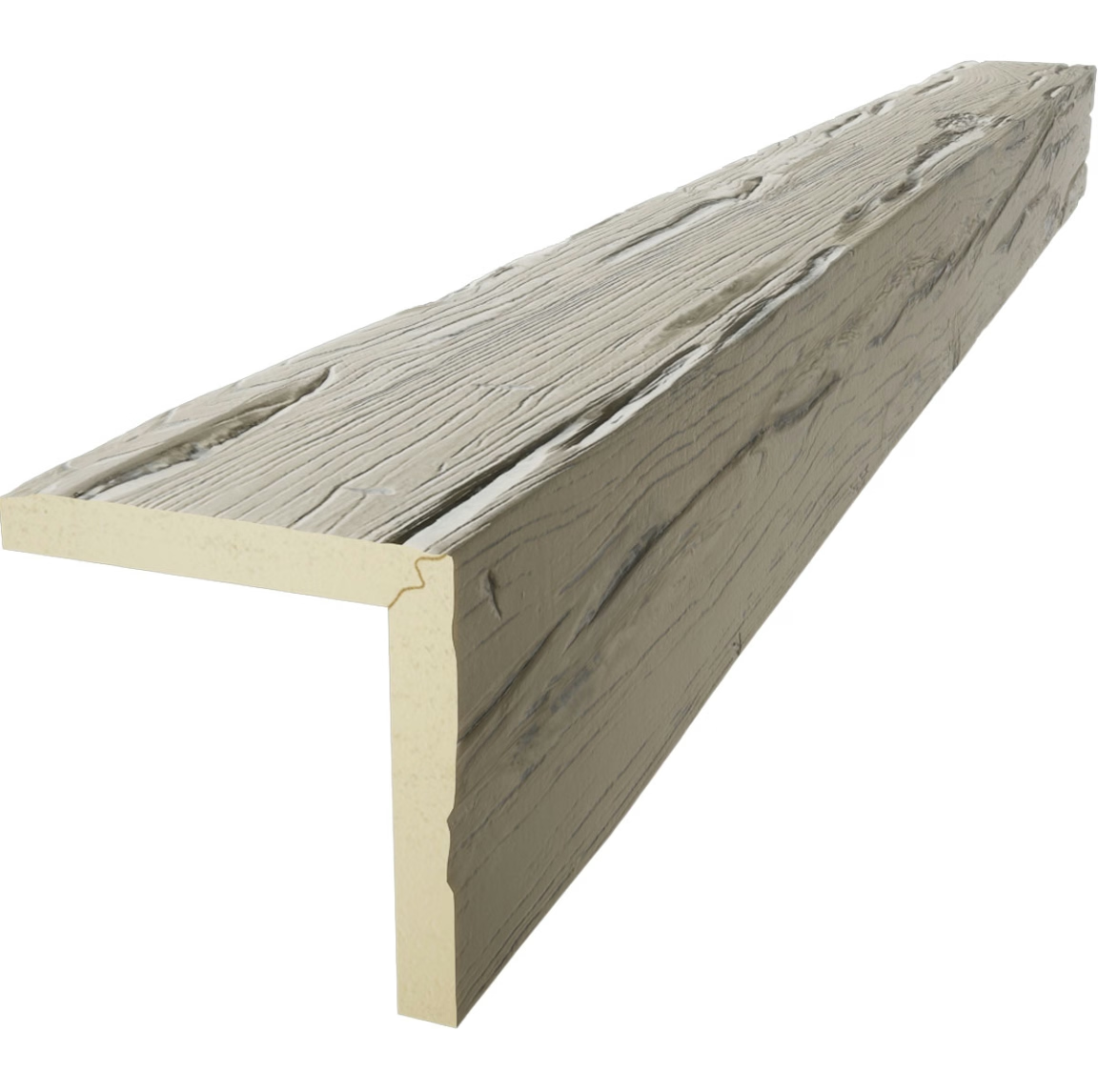
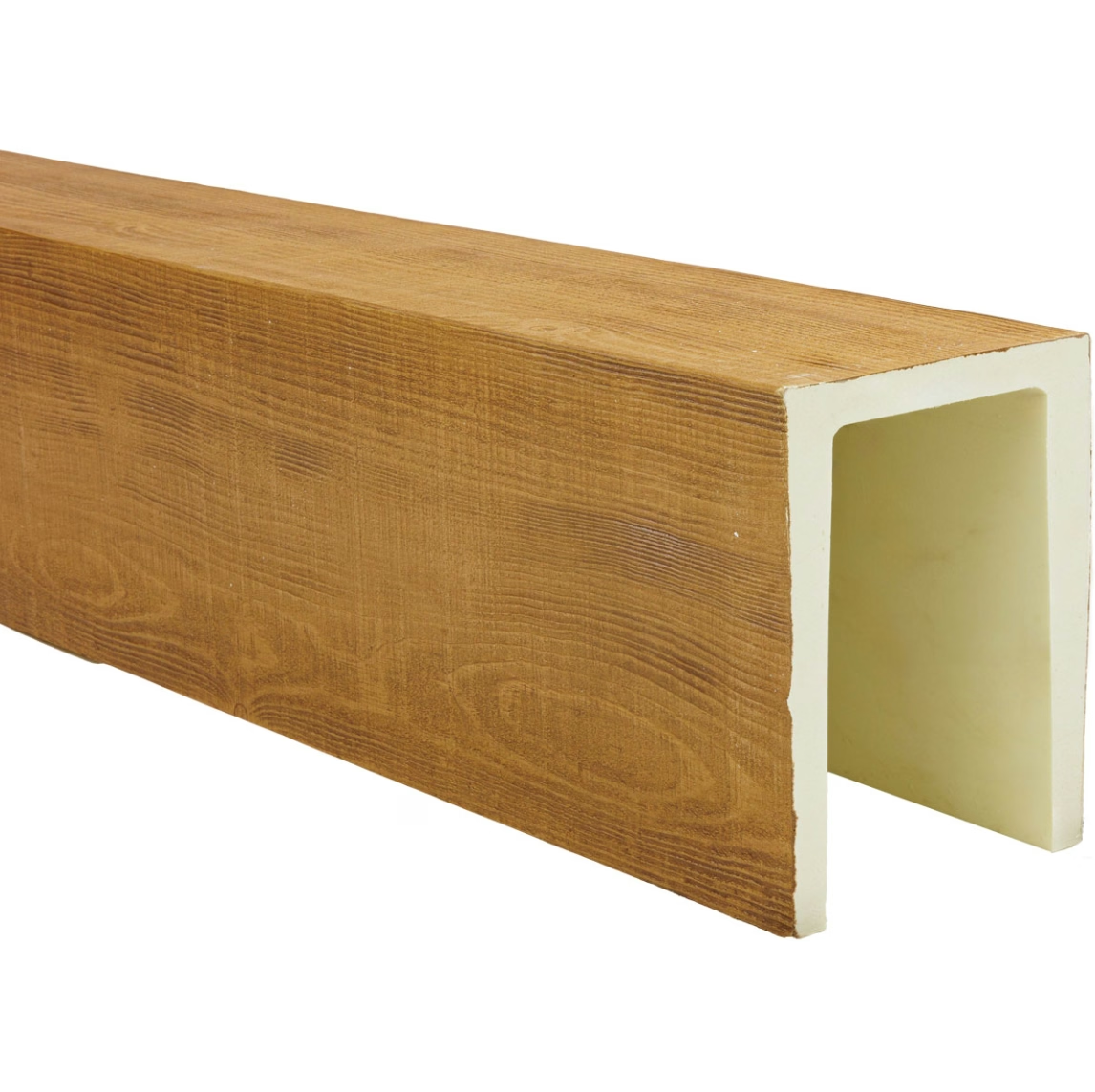
Attachment detailing translates force requirements into specific fastener configurations. Details should specify fastener type, size, spacing, and installation requirements clearly enough that installers can execute the design without ambiguity. Typical seismic-compliant details for polyurethane faux beams specify structural screws at 16 to 24-inch spacing through mounting flanges into ceiling framing, supplemented by construction adhesive between fasteners. Exact specifications depend on calculated forces and substrate conditions.
Substrate verification ensures that ceiling materials provide adequate holding for specified fasteners. Design details should identify acceptable ceiling substrates and specify substrate requirements where multiple conditions might exist. For example, details might specify that screws must penetrate solid wood framing members at least 1 inch, requiring that installers locate framing and adjust beam positions if necessary to achieve this penetration. Where ceiling substrates vary, different fastener types may be specified for different conditions.
Quality control provisions help ensure that installations achieve design intent. Specification sections should describe installation procedures, required substrate preparation, fastener torque requirements, and inspection points. Particularly critical installations may warrant special inspection by qualified personnel who verify that attachment work complies with approved details before ceiling finishes conceal connections.
Geographic Variability in Requirements
The specific requirements for seismic-compliant ceiling beam installation vary substantially by geographic location, reflecting regional differences in seismic risk. Understanding this variability helps project teams apply appropriate standards.
West Coast locations including California, Oregon, and Washington fall predominantly in high seismic design categories requiring stringent attachment. Projects in these regions should assume that mechanical fastening meeting calculated force requirements will be mandatory. Building departments in these areas actively review and enforce seismic provisions, making compliance essential for permit approval and inspection acceptance.
Intermountain West and Alaska regions include areas of high to moderate seismic risk. Projects in cities like Salt Lake City, Anchorage, and Reno encounter seismic requirements approaching West Coast stringency. Design teams should research specific site conditions early in design to understand applicable requirements.
Central and Eastern regions generally fall in lower seismic design categories, but notable exceptions exist. The New Madrid Seismic Zone affecting parts of Missouri, Arkansas, Tennessee, and Kentucky includes areas of elevated seismic risk despite the region's distance from active plate boundaries. Charleston, South Carolina, and surrounding areas also fall under heightened seismic provisions due to historical earthquake activity. Projects in these areas require seismic attention despite their non-coastal locations.
Low seismic regions including much of the Great Plains, Texas, and Florida typically allow adhesive-only attachment for lightweight ceiling elements. Projects in these areas face minimal seismic requirements for decorative ceiling components. However, designers should verify local requirements rather than assuming low requirements, as some jurisdictions adopt more conservative standards than minimum code requirements mandate.
Retrofit and Renovation Considerations
Existing buildings in seismic zones sometimes require seismic upgrades when undergoing substantial renovation. These retrofit situations create particular challenges for ceiling beam installations in buildings where original construction didn't meet current seismic standards.
Triggered upgrades occur when renovation scope exceeds thresholds that building codes define as requiring seismic improvement. Most codes exempt minor alterations from seismic upgrade requirements but mandate improvements when alterations reach certain percentages of building value or area. Adding decorative ceiling beams rarely triggers seismic upgrades by itself, but may occur as part of larger renovations that do trigger upgrades.
Voluntary seismic improvements beyond code minimums sometimes make sense even when not legally required. Building owners concerned about earthquake risk may choose to install ceiling components with seismic-compliant attachment even if existing building conditions wouldn't legally require it. This approach provides improved life safety and reduced earthquake damage risk at modest incremental cost.
Existing ceiling conditions in retrofit projects may complicate achieving compliant attachment. Older buildings may have ceiling assemblies that don't provide suitable fastener substrates, or existing finishes may need modification to accommodate required fastening. Structural engineers familiar with seismic retrofit can design solutions appropriate for specific existing conditions, potentially including supplemental blocking, structural channels, or other elements that provide adequate attachment.
Historic preservation concerns sometimes conflict with seismic upgrade requirements. Historic buildings undergoing renovation face competing demands to preserve historic character while meeting life safety codes including seismic provisions. Solutions may include concealed attachment systems that provide seismic compliance without visible alterations to historic surfaces, or performance-based design approaches that achieve equivalent safety through alternative means.
Field Installation Quality Assurance
Achieving seismic-compliant installations requires quality execution in the field, not just adequate design. Several quality assurance practices help ensure that installed systems perform as intended.
Installer training ensures that workers understand seismic attachment requirements and know how to execute compliant installations. Contractors working in high seismic zones should verify that installers have experience with seismic requirements and understand the distinction between decorative installations that merely look good and structural installations that must perform during earthquakes.
Substrate verification before installation prevents fastening into inadequate materials. Installers should verify that ceiling substrates match conditions assumed in design, and should identify and address any discrepancies before proceeding. This verification might include probing ceilings to locate solid framing, testing existing fastener holding in sample locations, or confirming concrete strength where powder-actuated fasteners will be used.
Installation inspection at appropriate points ensures compliance before work becomes concealed. In critical applications, qualified inspectors should verify attachment details while visible, before ceiling finishes or trim conceal connections. Photographic documentation provides records of compliant installation that address later questions without requiring destructive investigation.
Pull testing of sample installations verifies that achieved attachment strength meets design requirements. Non-destructive or minimally destructive testing of selected fasteners or short beam sections confirms that installation methods produce required performance. Testing protocols should be established during design so that acceptance criteria are clear before installation begins.
The medical office building project described in the opening proceeded with revised details specifying #10 structural screws at 16-inch spacing through beam mounting flanges into wood ceiling framing, supplemented by construction adhesive between fasteners. Seismic force calculations showed that this attachment configuration provided adequate lateral force resistance for the building's Seismic Design Category D classification and the beams' weight. The revised details satisfied both structural engineering review and building department plan check, allowing construction to proceed with compliant installations that would perform safely during seismic events.
Seismic considerations for ceiling beam installations exemplify how building codes extend beyond obvious structural elements to address life safety performance of architectural components. Decorative ceiling beams may appear to be simple aesthetic additions, but in seismic zones they become non-structural components subject to specific engineering requirements. Projects that understand and address these requirements from design through installation create beautiful spaces that also provide the life safety performance that modern building codes demand.
Technical References
ASTM standards cited in every specification
Test Data
Lab results from internal testing program
Updated 2026
Reviewed against current product specs