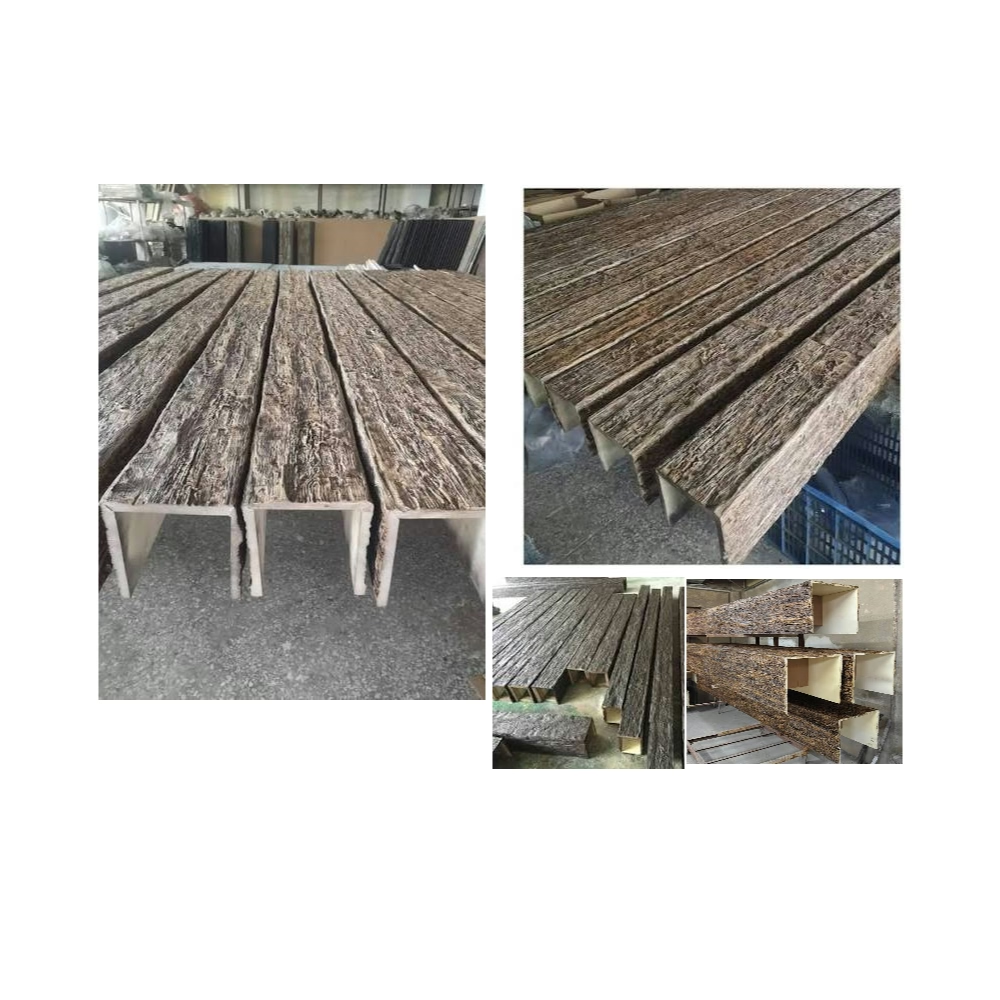
The tech executive's custom home featured whole-home automation controlling lighting, climate, security, and entertainment through integrated systems—but the ceiling design review revealed a problem. The dramatic faux beam layout the interior designer proposed conflicted with the lighting designer's recessed fixture placement and the low-voltage control wiring the automation system required. Three design consultants had worked independently creating beautiful but incompatible plans. Coordinating beam routing, fixture locations, and control infrastructure into a unified ceiling system required two weeks of redesign—time we could have saved by addressing integration from project inception rather than discovering conflicts during construction document review.
Smart home technology continues advancing, with lighting control representing one of the most visible and frequently-used automation categories. Integrating these systems with decorative beam ceilings demands planning that coordinates aesthetic, electrical, and control infrastructure requirements into cohesive installations delivering both beauty and technological sophistication.
Understanding Smart Lighting System Architectures
Centralized control systems use dedicated low-voltage wiring from wall switches to central control panels, with line-voltage power feeding fixtures from these panels. Systems like Lutron HomeWorks, Crestron, and Control4 follow this architecture, requiring specialized wiring during rough-in that must coordinate with beam layouts since wire routing through hollow beams can simplify installation versus routing entirely through ceiling cavities.
Wireless mesh systems using Zigbee, Z-Wave, or proprietary protocols eliminate most control wiring, with battery-powered switches communicating wirelessly to smart bulbs or in-fixture modules. Systems like Philips Hue, LIFX, and Caseta wireless operate this way, simplifying integration with beam ceilings since control infrastructure doesn't require physical wire routing. However, line-voltage power wiring still must reach fixtures, and some systems use wired hubs requiring network and power connections.
Hybrid approaches combine wired and wireless elements—perhaps wired wall switches for reliability with wireless fixture control for flexibility. These systems offer resilience and capability but create planning complexity since designers must track which elements require physical wiring versus wireless connectivity. Beam installations must accommodate the wired components while allowing wireless signal propagation that metal structures or dense materials might block.
Power-line communication systems like Insteon transmit control signals over existing electrical wiring, eliminating separate control wiring. These systems simplify installation since standard electrical rough-in suffices, but signal reliability can suffer from electrical noise or circuit loading. Beam integration proves straightforward since control infrastructure requirements don't differ from conventional wiring.
Wire Routing Through Hollow Beam Channels
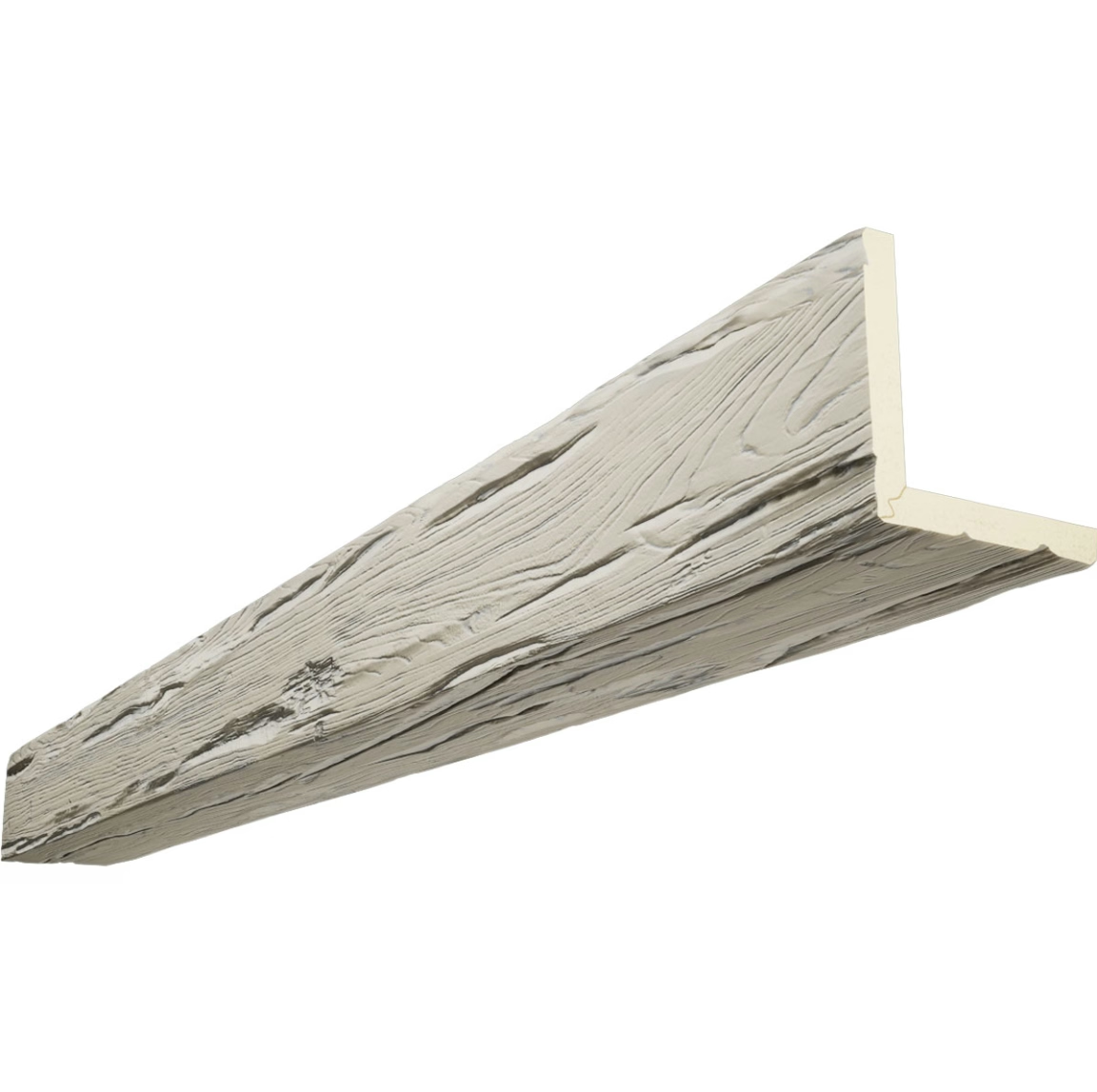
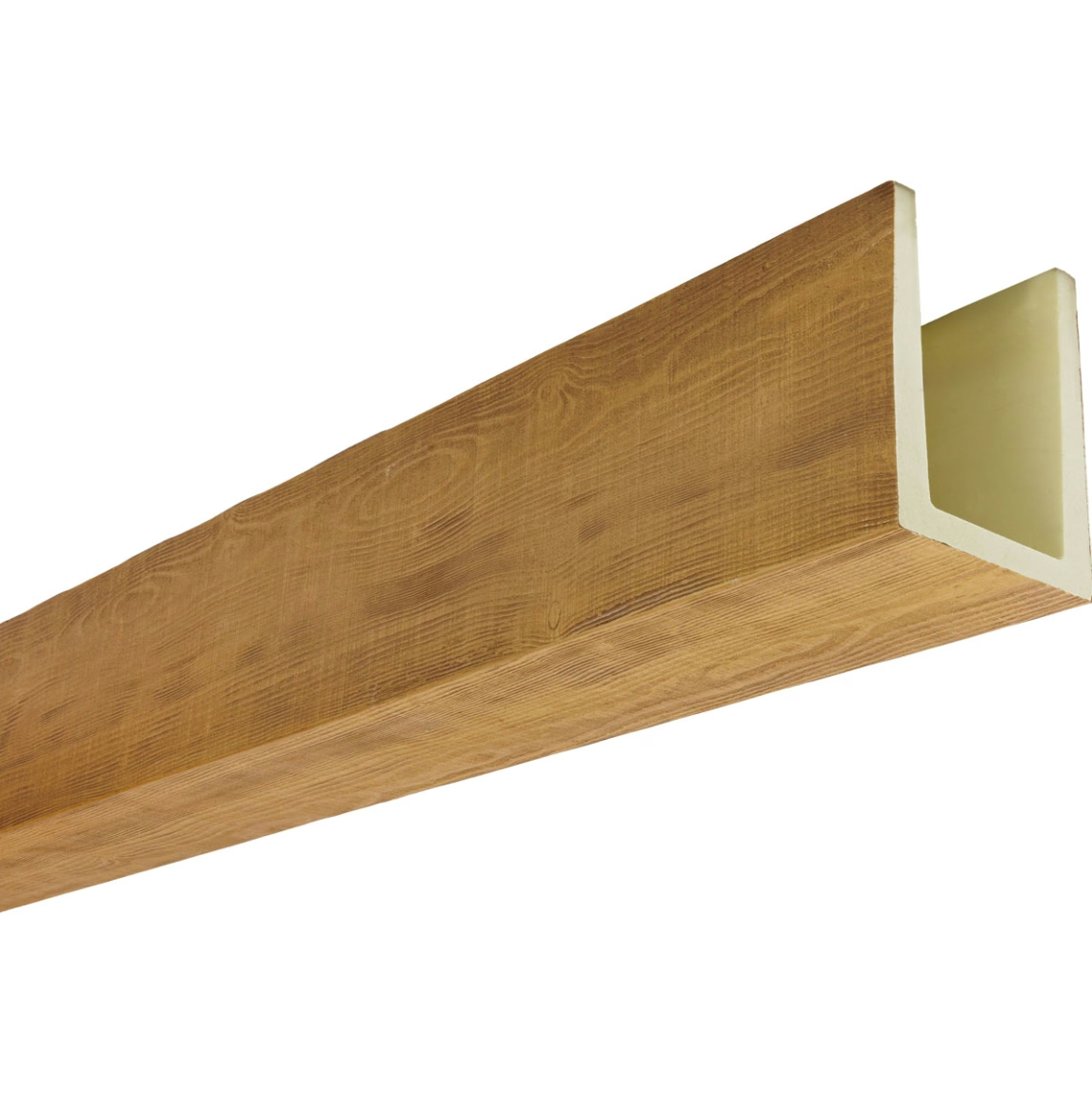
Low-voltage control wiring benefits significantly from beam routing when systems require dedicated control lines between switches, sensors, and panels. Rather than fishing wires through tight ceiling cavities or running exposed conduit, hollow beams provide ready-made raceways simplifying wire pulls. Installers feed wires through beam interiors during installation, emerging at fixture locations or control device positions as needed.
Line-voltage fixture power feeding through beams creates cleaner installations than multiple ceiling penetrations for each fixture. Where beams run toward fixture locations, routing fixture power through beam interiors consolidates penetrations and conceals wiring completely. The NEC limitations on mixing low and line-voltage wiring in common raceways require separation—typically by running separate wire bundles within the beam cavity or dividing the cavity using internal partitions.
Network infrastructure for IP-based lighting controls—increasingly common in commercial installations and high-end residential—may need routing to Power-over-Ethernet (PoE) fixtures. Cat6 data cables running through beams to ceiling-mounted access points or fixture-integrated controls simplify installations versus running all network infrastructure separately. The structured cabling standards for maximum run lengths and bend radii apply—don't create sharp bends that could damage data cables or degrade signal quality.
Sensor wiring for occupancy detection, daylight harvesting, or other smart lighting features follows similar routing strategies. Ceiling-mounted sensors positioned along beams can conceal wiring within beam channels, with junction access at sensor positions. This concealment maintains clean ceiling appearance that exposed wiring would compromise—particularly important when sensors mount in prominent locations where visible wiring would be unacceptable.
Fixture Selection and Mounting Integration
Smart bulb compatibility varies between fixture types. Recessed cans, track lighting, and pendants typically accept standard base smart bulbs—LED bulbs with integrated WiFi, Zigbee, or Z-Wave radios. Verify that fixture designs accept the larger heat sink profiles many smart bulbs require—older narrow recessed fixtures designed for compact fluorescent bulbs may not accommodate smart LED dimensions.
Fixture-integrated smart controls embed connectivity in the fixture itself rather than in the bulb. These solutions—often found in commercial-grade products—provide more robust installations since the control electronics don't depend on bulbs that homeowners might mistakenly replace with standard non-smart alternatives. Mounting these fixtures follows standard procedures with additional attention to wireless signal path clearance preventing metal beam faces from blocking radio transmission.
Mounting adjustments for aimable fixtures in smart systems require considering whether fixture aiming will occur before or after smart configuration. If fixtures aim toward specific areas that trigger automated responses—"light the seating area when motion detected there"—the precise aiming affects system performance. Document final fixture aims during commissioning so automation programming can reference accurate conditions rather than assumptions about fixture coverage.
Fixture accessibility for maintenance and bulb replacement remains important despite LED longevity claims. Smart bulbs may require replacement or reset sooner than basic LEDs due to electronics failures or firmware issues. Ensure beam-integrated fixtures remain accessible using standard ladders or lifts without requiring beam removal. Fixtures buried behind beams that require carpentry work for routine maintenance create ongoing problems.
Control Device Positioning and Aesthetics
Wall switch locations must coordinate with beam-defined sight lines and traffic patterns. Smart switches often feature larger face plates than standard devices—particularly touch screens or multi-gang combinations. Position these devices where they're functionally convenient and visually unobtrusive, avoiding placement where sightlines create awkward visual relationships between prominent switches and dramatic ceiling features.
Scene controllers and keypads in smart systems may mount near room entries or architectural focal points. These devices serve as interfaces to sophisticated control, making their positions prominent design elements. Coordinate keypad locations during space planning—not as afterthoughts during electrical rough-in—ensuring they integrate with overall design intent rather than appearing as uncoordinated technical additions.
Sensor positioning for occupancy or daylight harvesting must respect both functional requirements and aesthetic integration. Ceiling sensors mounted along beam faces can nestle inconspicuously between beams, with small low-profile devices creating minimal visual impact. Avoid placing sensors where they become focal points—positions at ceiling centers or directly over furniture groupings that draw eyes upward. Peripheral mounting maintains function while minimizing visual prominence.
Voice control devices—when ceiling-mounted for whole-room coverage—integrate best along beam runs or at beam intersections where their presence seems intentional rather than random. The small round or rectangular forms of ceiling-mounted Amazon Alexa or Google Assistant devices can read as light fixtures, sensors, or speakers when properly positioned. Mounting at beam intersections creates organizational logic that isolated ceiling placement lacks.
Network Infrastructure and Connectivity Considerations
Wireless access point placement affects smart lighting reliability in systems using WiFi, Zigbee, or Z-Wave communication. Metal beam faces can attenuate radio signals, creating dead zones if access points and fixtures have metal barriers between them. Position wireless infrastructure considering beam locations as potential signal obstructions, with access points placed to maintain line-of-sight or minimal obstruction to fixture and switch locations.
PoE injectors and network switches serving lighting networks may require accessible ceiling locations for maintenance and troubleshooting. These devices—often rack-mounted in AV closets for whole-home systems—sometimes deploy in distributed configurations with ceiling-mounted switches serving local zones. Coordinate these locations with beam layouts ensuring access without removing beams and planning ventilation since network equipment generates heat.
Backup power considerations for lighting control systems affect infrastructure planning. Some smart systems require constant power to maintain programming or network connectivity—power outages cause these systems to lose settings or require reprogramming. Uninterruptible power supplies (UPS) for control panels and network equipment create resilience, but these systems require planning for equipment location and battery service access.
Signal repeaters or range extenders in wireless mesh systems improve reliability in large spaces or those with construction barriers attenuating signals. Plan repeater locations during design rather than adding reactively when commissioning reveals dead zones. Repeaters positioned along beam runs can mount discretely while strategically improving coverage without prominent device placement.
Programming and Automation Scene Design
Scene definitions that reference beam-related aesthetics help users understand automation programming. Rather than generic "Scene 1" or "Preset A," name scenes descriptively: "Beam Accent Evening" for settings emphasizing uplight onto beams, or "Beam Downlight Reading" for focused task lighting. These descriptive names make systems more intuitive for users who think spatially about their environments rather than technically about fixture configurations.
Color temperature programming in tunable white systems can enhance beam appearance through the day. Morning scenes might use cooler 4000K light emphasizing crisp wood grain details. Evening scenes shift to warmer 2700K creating cozy ambiance. Automated schedules shift color temperature matching natural daylight progression—circadian lighting strategies that research suggests supports occupant wellbeing while also optimizing aesthetic beam presentation.
Dimming curves for beam-integrated lighting should consider how different intensity levels affect beam appearance. At high intensity, beams appear as part of bright overall environment. At low levels, strategically dimmed fixtures can create dramatic shadows emphasizing beam three-dimensionality. Program scenes exploring this range rather than treating all fixtures uniformly—understanding that fixtures near beams contribute to beam appearance as much as general room illumination.
Integration with other smart systems—climate control, window shades, entertainment—creates sophisticated whole-home experiences. Automation might dim lights when TV turns on, close shades at sunset while adjusting ceiling lighting to maintain room brightness, or adjust lighting when climate system detects occupancy. These integrated behaviors require planning during system design rather than layering piecemeal after construction completes.
Installation Sequencing and Coordination
Rough-in planning must occur before beam installation since concealed wiring must route before beams cover access. Coordinate with electricians ensuring all fixture boxes, junction boxes, switch boxes, and sensor locations roughed-in correctly before beams install. Once beams cover ceiling surfaces, fishing additional wiring becomes difficult or impossible—advance planning prevents costly access problems later.
Wire pulling through beam interiors typically occurs during beam installation, with electricians and beam installers working together. The beam installer creates necessary penetrations for wire egress, while electricians feed wire through beam channels as beams install. This coordination requires both trades present simultaneously—difficult to schedule but essential for efficient installation avoiding two-stage processes where beams install then require opening for wire pulling.
Testing and commissioning should verify all fixtures and controls function correctly before finishing work conceals final access. Smart systems often require configuration and programming that reveal fixture problems, wiring errors, or connectivity issues. Discovering these after drywall finishing and final painting makes corrections disruptive and expensive. Final testing before closeup prevents these downstream problems.
Documentation including wire routing diagrams, fixture schedules with smart device addresses, and control system programming files creates essential maintenance references. Future renovations or system upgrades require understanding as-built conditions—documentation that many installations neglect. Creating and delivering these records to owners benefits long-term system supportability even though immediate construction pressure tempts skipping documentation.
Troubleshooting and Maintenance Access
Common failure modes in smart lighting systems—connectivity losses, firmware issues, device failures—require diagnostic access to fixtures and control devices. Consider this accessibility during design rather than assuming "set-and-forget" reliability. Ladder access to fixtures, toolless beam removal for major access needs, and clearly-documented device locations all support effective troubleshooting when problems occur.
Firmware updates for smart fixtures and controls require network connectivity and sometimes physical access to devices. Some systems update automatically over network connections. Others require installers to visit sites with update software loaded on tablets or laptops. Design installations assuming occasional service needs rather than permanent inaccessibility—choices made for aesthetic perfection can create maintenance nightmares lasting decades.
Replacement bulbs for smart systems should be documented in owner's manuals with current sources identified. Smart bulb technologies evolve rapidly—products available during installation may discontinue within years. Documenting specific models, purchasing sources, and alternative compatible options helps owners maintain systems without requiring original installers to source obsolete parts.
System obsolescence planning acknowledges that smart technology evolves faster than building lifecycles. Today's cutting-edge system may be abandoned technology within 10-15 years. Design allowing system replacements without major construction work future-proofs installations. If control wiring must replace with wireless protocols, or if fixture types must change to accommodate new technologies, can this occur without removing beams or major construction? Forward-thinking design considers these scenarios even if specific replacement paths remain unknown.

Integrating smart home and IoT lighting controls with faux beam ceilings demands coordination from project inception through commissioning and documentation. Planning that considers aesthetic design, electrical infrastructure, and control system requirements simultaneously delivers installations where technology and architectural beauty work together rather than conflicting. As smart home adoption continues accelerating, this integration expertise separates sophisticated design professionals from those treating technology as afterthought—a distinction clients notice and value when choosing who guides their projects.
Technical References
ASTM standards cited in every specification
Test Data
Lab results from internal testing program
Updated 2026
Reviewed against current product specs