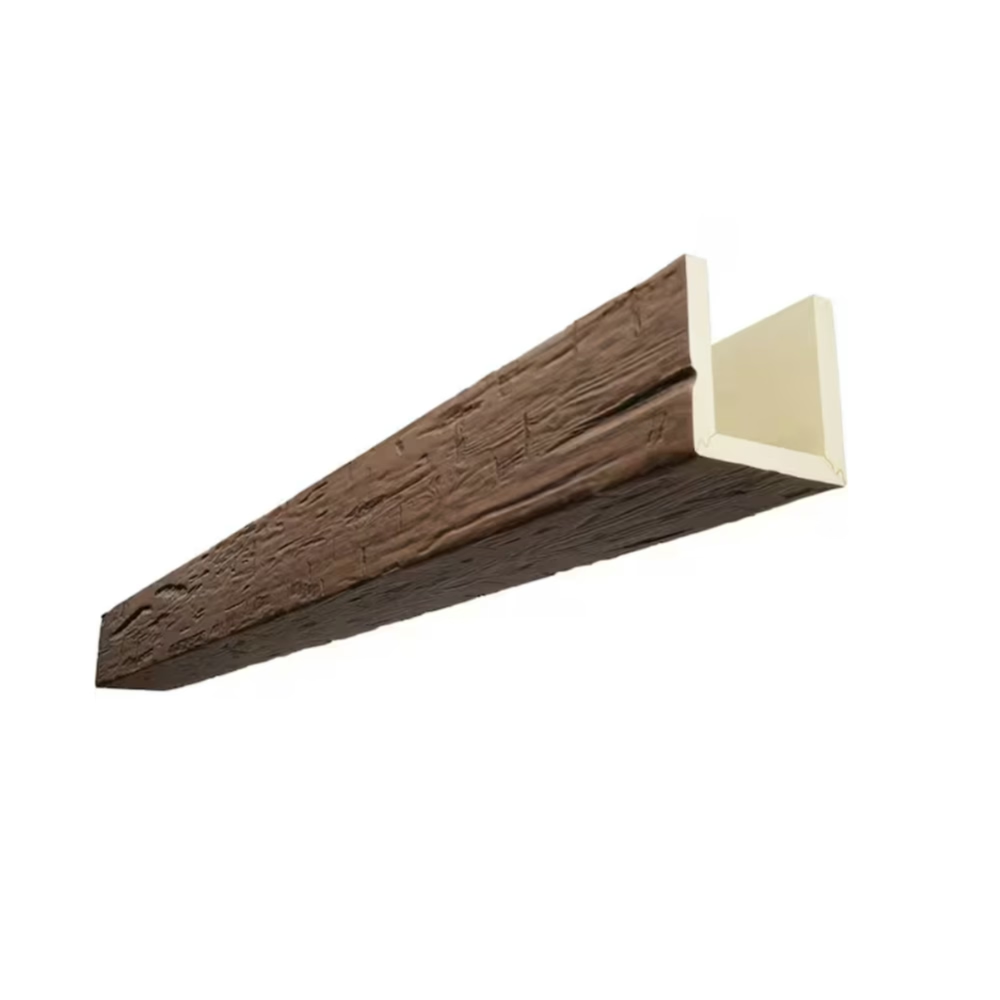
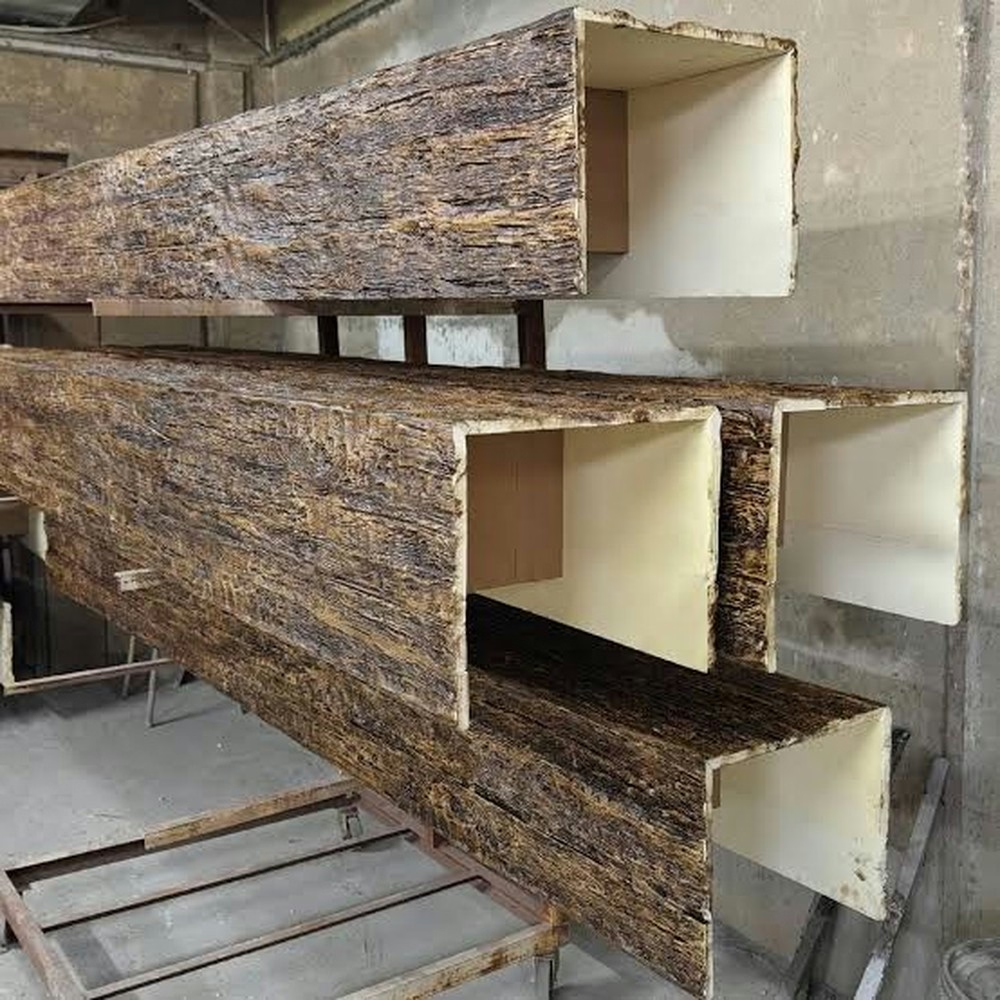
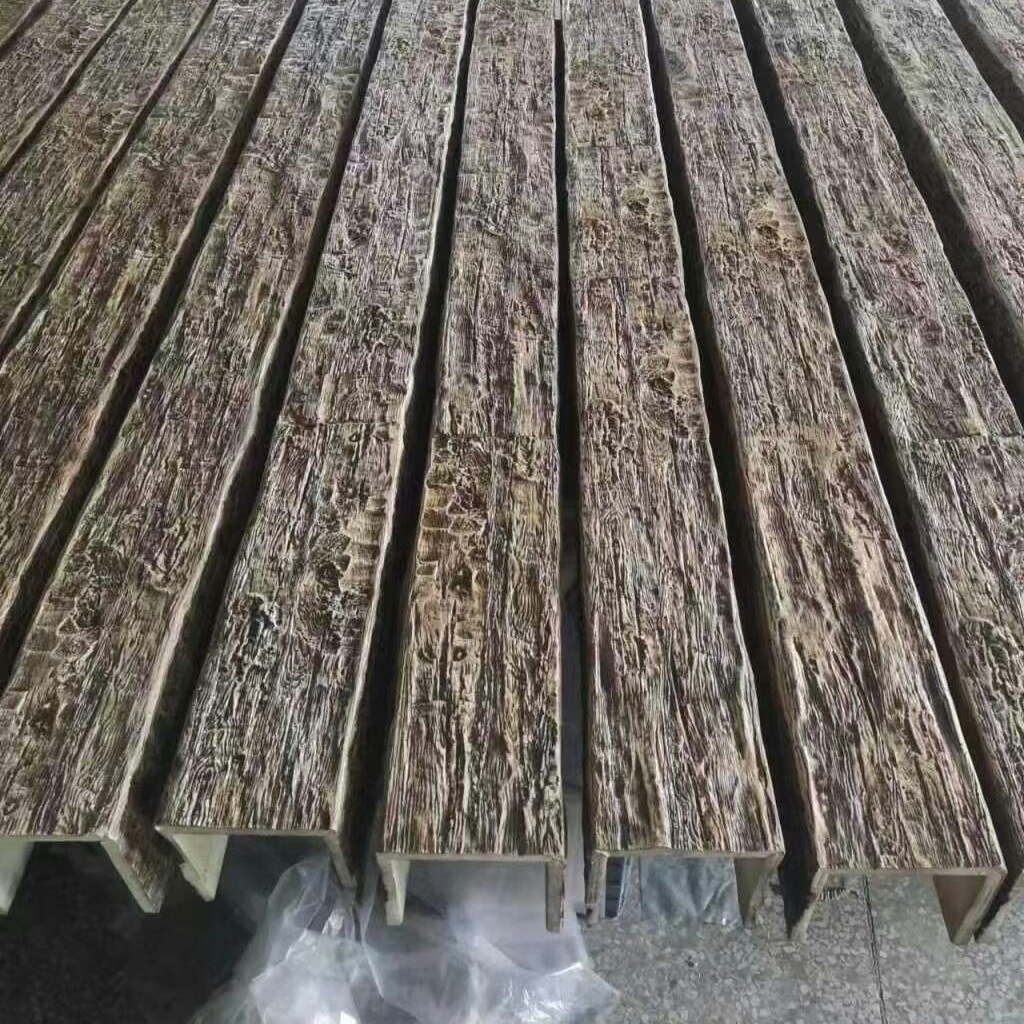
The architectural review board rejected our design three times—they insisted ceiling beams in the historic renovation must appear authentic, with no visible fastener heads compromising the aesthetic. Traditional mechanical fastening was unacceptable, yet the beams needed to support their own weight across 12-foot spans in a public space where failure could cause injury. Advanced structural adhesive technology solved the challenge, delivering invisible attachment with pull strength exceeding 400 pounds per linear foot. That project introduced me to adhesion science that has transformed decorative beam installation over the past decade.
Construction adhesives have evolved from supplemental bonding agents used alongside mechanical fasteners into primary structural mounting systems capable of supporting substantial loads independently. Understanding the chemistry, surface science, and application techniques behind modern adhesion technology allows installers to achieve results impossible with fasteners alone—invisible connections, simplified installation in challenging substrates, and elimination of fastener-induced stress concentrations.
Evolution of Construction Adhesive Technology
First-generation construction adhesives based on solvent-borne neoprene or natural rubber formulations offered convenience but limited structural capacity. These products supplemented mechanical fastening by filling gaps and preventing squeaks rather than providing primary load support. Their tendency to creep under sustained loads, limited temperature resistance, and degradation from UV or moisture exposure restricted applications to non-critical bonding.
Polyurethane adhesive chemistry introduced in the 1980s delivered dramatically improved performance through reactive bonding mechanisms. Unlike earlier adhesives that simply dried, polyurethane formulations chemically cure through moisture-initiated reactions that create crosslinked polymer networks. These cured bonds resist creep, tolerate temperature extremes, and maintain strength across decades. The chemistry's gap-filling properties through controlled foaming during cure made it particularly suited to ceiling applications where substrate irregularities create uneven contact.
Hybrid polymer technology represents the current generation, combining benefits of multiple chemistries while eliminating traditional weaknesses. These formulations—often called MS polymers or modified silicone—cure without solvents, produce no offensive odors, achieve high strength rapidly, and bond to virtually any substrate without primers. Their elastic properties accommodate thermal expansion while maintaining structural integrity, making them ideal for decorative beam applications requiring both strength and flexibility.
Nano-particle additives in premium formulations enhance bonding at molecular levels by increasing surface interaction and reducing internal stress concentrations. These microscopic reinforcements create bondlines more resistant to impact, vibration, and thermal cycling than adhesives achieve through chemistry alone. While more expensive than standard formulations, nano-enhanced adhesives deliver performance margins that justify cost premiums for critical applications.
Chemistry of High-Strength Bonding
Molecular adhesion occurs through several mechanisms that collectively determine bond strength. Mechanical interlocking develops as liquid adhesives flow into substrate surface irregularities, then harden to create physical engagement. This effect explains why rough or porous surfaces generally bond more effectively than smooth, dense materials—greater surface area and more interlocking opportunities create stronger mechanical grip.
Chemical bonding at interfaces creates molecular-level connections between adhesive and substrate through hydrogen bonding, van der Waals forces, or true chemical reactions. Surface energy matching between adhesive and substrate determines bonding effectiveness—high surface energy substrates like metals and glass bond readily, while low surface energy plastics require surface treatment or specialized adhesives. Polyurethane beams fall into the moderate surface energy category, bonding well with most construction adhesives when properly prepared.
Cohesive strength within the cured adhesive mass itself often limits total joint strength more than interfacial adhesion. An adhesive might bond perfectly to both ceiling and beam surfaces, but if internal cohesive strength proves inadequate, the bondline fails internally rather than at interfaces. Premium adhesives optimize cohesive strength through chemistry that creates dense crosslink networks without becoming brittle.
Viscoelastic properties determine how adhesives respond to sustained loads versus sudden impacts. Purely elastic materials return to original dimensions after stress removal but can fracture under sudden loads. Purely viscous materials flow under sustained stress but absorb impacts well. Optimal adhesives exhibit viscoelastic behavior—elastic enough to resist creep, viscous enough to absorb stress without cracking. This balance proves critical for ceiling applications experiencing constant gravitational loads plus occasional impacts from building vibration or seismic activity.
Cure mechanisms affect working time, strength development rates, and ultimate performance. Moisture-cure polyurethanes react with atmospheric humidity, curing from exposed surfaces inward. This mechanism creates workable cure schedules in normal humidity but potentially causes incomplete curing in thick bondlines or arid environments. Two-part epoxies cure through mixed-component reactions, providing consistent performance regardless of environmental conditions but requiring mixing precision and offering limited working time. Understanding cure mechanisms helps select appropriate adhesives for specific project conditions.

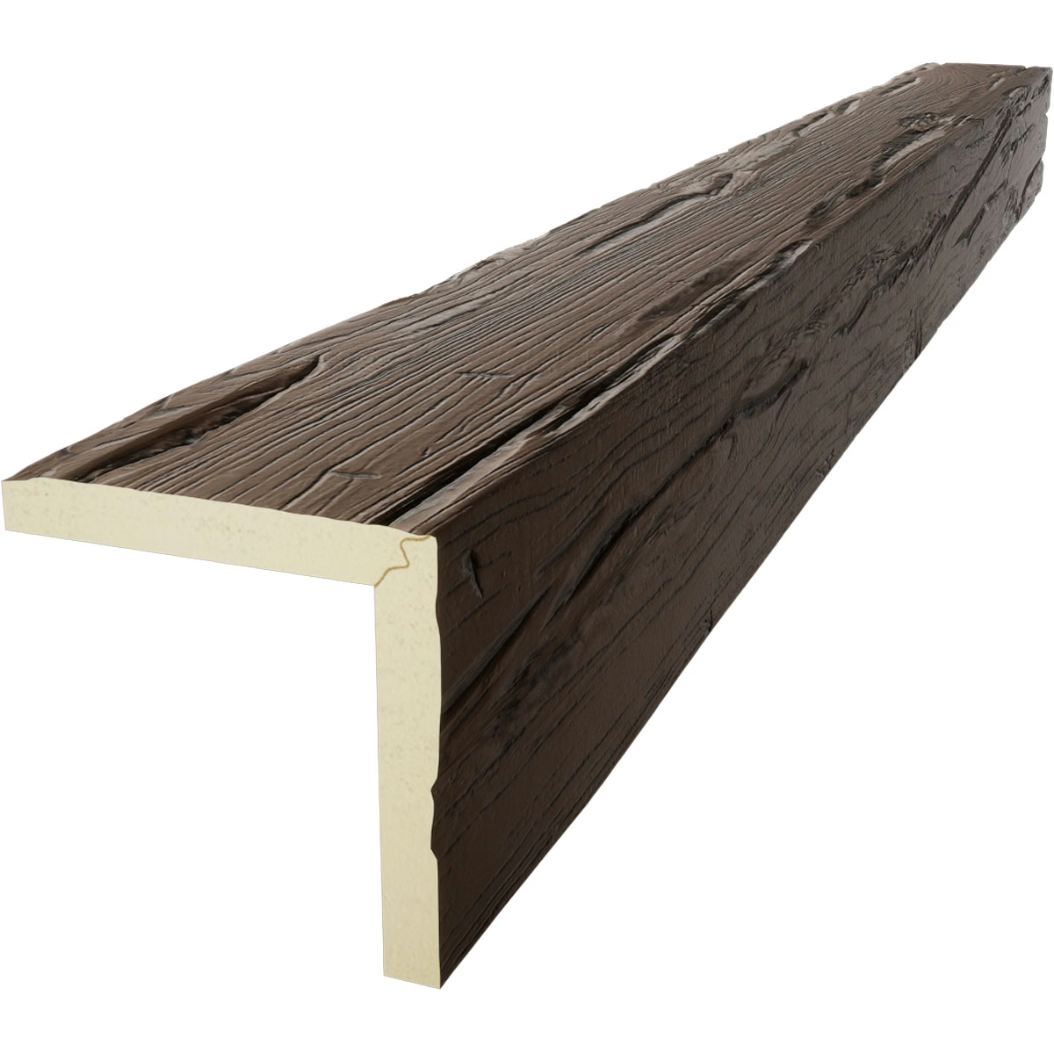
Surface Preparation Science
Surface energy measurement quantifies how readily liquids spread on and adhere to solid surfaces. High surface energy materials (metals, glass, primed wood) accept wetting readily, allowing adhesives to spread and make intimate contact. Low surface energy surfaces (plastics, oily or dusty materials) resist wetting, creating weak bonds regardless of adhesive quality. Surface preparation aims to maximize surface energy through cleaning, abrading, or chemical treatment.
Contamination removal proves the most critical preparation step, yet one frequently shortcut by installers. Dust, oils, mold release agents, and deteriorated paint create weak boundary layers that fail under load even when adhesive itself performs perfectly. The bond becomes only as strong as the weakest component—typically the contamination layer rather than the adhesive. Professional cleaning protocols using appropriate solvents followed by abrasion remove these contaminants reliably.
Mechanical abrading increases surface area geometrically while removing weak surface layers and exposing fresh material with maximum surface energy. Sanding with 80-120 grit abrasives creates ideal surface texture for most construction adhesives—rough enough for mechanical interlocking without creating such deep voids that adhesive bridges rather than filling. Power sanding ensures consistent results while reducing labor compared to hand sanding.
Primer application addresses surface characteristics that inhibit adhesion despite proper cleaning and abrading. Porous substrates like bare drywall or concrete might absorb adhesive before adequate bondline thickness develops, creating starved joints with inadequate strength. Primers seal these surfaces while providing chemically reactive sites that enhance adhesive bonding. Some polyurethane surfaces require primers that modify surface energy, allowing construction adhesives to wet and bond effectively.
Moisture content verification prevents adhesion failures on substrates where excess moisture interferes with cure chemistry or creates weak boundaries. Wood substrates above 19% moisture content shouldn't receive moisture-cure adhesives until drying occurs. Conversely, some moisture proves necessary for these adhesives to cure—applications in extremely arid conditions may require misting surfaces before adhesive application to ensure adequate cure initiation.
Application Techniques for Maximum Strength
Bead pattern geometry influences load distribution and bond strength significantly. Continuous beads along beam edges create perimeter bonding that resists peel forces effectively but may not provide adequate area for shear load transfer. Serpentine patterns across beam backs maximize bonded area while allowing trapped air to escape during beam positioning. Optimal patterns combine perimeter beads for peel resistance with interior serpentines for shear strength.
Bead sizing follows manufacturer specifications that balance adequate adhesive volume against excessive squeeze-out and cost. Bead diameters of 1/4 to 3/8 inch suit most ceiling applications, compressing to approximately half their original height when beams press against ceilings. Undersized beads may not fill gaps adequately or provide sufficient bonded area. Oversized beads waste material while creating cleanup challenges as excess adhesive squeezes from joints.
Substrate coverage percentage affects both strength and economy. Complete coverage maximizes bonding area but proves unnecessary for typical loading and creates excessive squeeze-out. Industry practice aims for 40-60% coverage after compression—enough to achieve required strength while minimizing material cost and cleanup. This coverage translates to beads spaced at roughly double their post-compression width.
Compression force during positioning eliminates voids and ensures intimate contact between adhesive and both substrates. Pressing beams firmly against ceilings forces adhesive into surface irregularities while displacing trapped air that would create unbonded areas. Temporary bracing maintains compression during initial cure periods prevents gravitational sagging that opens gaps in bondlines before adhesive develops strength.
Working time management prevents applying more adhesive than can be positioned before surface skinning reduces bonding effectiveness. Moisture-cure polyurethanes begin developing surface skins within 5-20 minutes depending on humidity and temperature. Hybrid polymers offer longer working times—30-60 minutes typically—allowing more relaxed installation pacing. Planning adhesive application in sections that can be completed within working time windows ensures optimal bonding.

Hybrid Mechanical-Adhesive Systems
Strategic fastener placement provides immediate load support while adhesive cures and remains permanently engaged to provide long-term redundancy. Fasteners every 24-36 inches along beam lengths support weight during installation and initial cure periods. Adhesive carrying the majority of long-term loads prevents fastener hole stress concentration while maintaining backup load paths if adhesive degrades unexpectedly. This redundancy approach satisfies both engineering analysis and practical risk management.
Fastener selection for hybrid systems requires compatibility with adhesive chemistry. Some stainless steel fasteners react with acidic-cure adhesives, causing corrosion that weakens connections. Coated fasteners might not bond adequately with surrounding adhesive, negating the hybrid benefit. Understanding material compatibility prevents creating galvanic couples or bond inhibition that compromises system performance.
Temporary fastening using removable bracing rather than permanent mechanical fasteners suits applications where absolutely no visible fasteners can be tolerated. Threaded rods through beam U-channels to ceiling joists provide temporary compression during cure, then remove completely once adhesive achieves full strength. This approach requires greater labor than permanent fasteners but delivers truly invisible installations.
Adhesive as fastener concealment uses generous adhesive application around fastener heads to fill counterbored holes, making mechanical connections invisible. This technique provides mechanical fastening security while achieving the clean aesthetic adhesive-only systems deliver. Color-matched adhesive formulations allow filling fastener recesses imperceptibly.
Load Testing and Verification
Pull testing quantifies actual achieved bond strengths under controlled conditions. Test samples using project-specific materials, preparation methods, and adhesives undergo progressively increasing perpendicular loads until failure. Failures occurring above calculated safety factors validate that production installations will perform adequately. Tests revealing inadequate strength trigger review of materials or processes before full installation proceeds.
Shear testing evaluates resistance to tangential loads that ceiling applications experience from thermal expansion, building movement, or seismic activity. While gravitational loads create primarily perpendicular tension, real-world conditions include shear components that can reach significant magnitudes. Adhesive systems must resist both load types adequately—some formulations excel in tension but perform poorly in shear or vice versa.
Accelerated aging protocols subject bonded assemblies to temperature cycling, humidity exposure, and sustained loading that simulate years of service life compressed into weeks. Post-aging strength testing reveals whether adhesive performance degrades with time or remains stable. Premium adhesives show minimal strength loss after accelerated aging, while inferior products might lose 30-50% of initial strength.
Creep testing under sustained loads verifies that adhesives won't gradually deform over decades, allowing beams to sag despite adequate initial strength. Samples support representative loads for extended periods—weeks to months—while measuring any incremental displacement. Acceptable adhesives show negligible creep after initial elastic deformation, maintaining dimensional stability throughout testing.
Field verification through non-destructive testing allows quality assurance on actual installations without damaging completed work. Acoustic testing using hammer taps listens for hollow sounds indicating unbonded areas. Thermal imaging detects temperature variations suggesting voids where different thermal mass exists. While less definitive than destructive pull tests, these methods identify gross defects in accessible installations.
Environmental Factors Affecting Performance
Temperature during application and cure dramatically affects adhesive performance. Most construction adhesives specify minimum application temperatures—typically 40-50°F—below which cure reactions slow unacceptably or don't initiate. Cold substrates require warming or heated installation spaces to achieve proper cure. Conversely, excessive heat accelerates cure, shortening working time and potentially creating internal stresses as rapid curing prevents stress relaxation.
Humidity requirements vary by adhesive chemistry. Moisture-cure polyurethanes require adequate humidity to initiate cure—minimum 30-40% relative humidity typically. Extremely dry conditions like winter heating or arid climates may necessitate substrate misting. Hybrid polymers prove less humidity-sensitive, curing reliably across broader moisture ranges. Understanding specific product requirements prevents cure failures.
Substrate temperature affects adhesive viscosity and wetting behavior. Cold surfaces increase adhesive viscosity, reducing flow into surface irregularities and creating thicker bondlines with potentially reduced strength. Warm substrates decrease viscosity, improving wetting but potentially causing excessive squeeze-out and thin bondlines. Maintaining substrate temperatures within manufacturer-specified ranges optimizes performance.
UV exposure influences long-term durability for adhesives in applications where light reaches bondlines through translucent materials or at beam ends. Most construction adhesives include UV stabilizers adequate for concealed applications, but exposed bondlines may yellow, become brittle, or lose strength with prolonged sun exposure. Applications with UV exposure require specifically rated products or physical shielding of bondlines.
Chemical exposure from cleaning products, household solvents, or industrial environments can degrade adhesive bonds over decades. Resistance to common chemicals varies significantly between adhesive types. Polyurethanes generally resist moisture, mild alkalis, and most household chemicals well. Epoxies offer broader chemical resistance including stronger acids and solvents. Matching adhesive selection to expected exposure conditions ensures long-term durability.
Specialized Adhesive Systems
Structural acrylics cure rapidly—often within minutes—through redox reactions initiated by mixing, making them suited to applications requiring fast strength development. Their low odor, gap-filling capability, and high strength suit professional installations where working time can be tightly controlled. The chemistry requires precise mixing ratios and offers minimal working time, making these adhesives better suited to experienced installers than DIY users.
Epoxy adhesives deliver maximum strength and chemical resistance for the most demanding applications. Two-part formulations require mixing but cure reliably regardless of environmental conditions. Their rigidity suits applications requiring stiff bondlines but makes them less ideal for flexible joints accommodating thermal movement. Cost exceeds most alternatives, positioning epoxies for specialty applications where their unique properties justify premiums.
Hot melt adhesives offer instant grab eliminating temporary bracing requirements. These thermoplastic materials melt when heated, then solidify as they cool, achieving handling strength within seconds. Their primary limitation involves relatively low ultimate strength and poor elevated temperature performance—heat can re-melt bonds. They suit temporary installations or light-duty applications but lack strength for primary structural bonding in most ceiling applications.
Pressure-sensitive adhesives (PSA) provide convenience for removable or repositionable installations. These tacky materials bond on contact when pressure is applied but allow disassembly without damaging substrates. Load-bearing capacity remains limited compared to structural adhesives, restricting PSA to light decorative elements or temporary installations. The technology continues advancing, with some modern PSA systems approaching structural capabilities.
Troubleshooting Adhesion Failures
Interfacial failure at adhesive-substrate boundaries indicates inadequate surface preparation, contamination, or incompatible material pairing. These failures show relatively clean substrate surfaces with minimal adhesive residue—the bond separated at the interface rather than tearing through adhesive. Resolution requires improved cleaning, priming, or potentially different adhesive chemistry that bonds more effectively to specific substrates.
Cohesive failure within adhesive mass suggests either adhesive inadequate for loading conditions or improper cure. Adhesive remains on both substrates after failure, having torn internally. This failure mode might indicate adhesive selection error for loading magnitude, insufficient cure time before loading, or environmental factors preventing proper cure. Solutions involve upgrading to higher-strength adhesives or addressing cure conditions.
Mixed-mode failures showing both interfacial and cohesive characteristics represent ideal scenarios when failures occur during testing—they indicate the system performed near its theoretical maximum capacity with both interface and cohesive strengths approaching their limits. Further improvement requires either stronger adhesive formulations or increased bonded area to reduce stress levels.
Creep failure developing slowly over months or years indicates adhesive lacks adequate stiffness for sustained loads. Visual symptoms include beams sagging progressively despite no acute failure event. This failure mode particularly affects adhesives with excessive thermoplastic content that flows under constant stress. Prevention requires selecting adhesives specifically rated for permanent load-bearing, avoiding products intended only for temporary or intermittent loading.
Environmental degradation shows as gradual strength loss, brittleness, or discoloration after years of service. UV exposure, moisture cycling, temperature extremes, or chemical exposure break down adhesive chemistry, reducing performance below initial capabilities. Preventing this failure requires selecting adhesives formulated for anticipated exposure or protecting bondlines from degrading environmental factors.
Regulatory and Safety Compliance
VOC regulations limit volatile organic compound emissions from adhesives in many jurisdictions. Traditional solvent-based adhesives often exceed allowable limits, forcing reformulation or product replacement with low-VOC alternatives. Modern hybrid polymers and water-based formulations generally meet strictest regulations while delivering performance equal or superior to older high-VOC products. Specifying compliant adhesives prevents regulatory issues while supporting indoor air quality.
Flammability ratings affect adhesive selection for commercial projects and buildings with strict fire codes. Most construction adhesives carry flame spread ratings, with lower numbers indicating better fire performance. Applications in exit corridors, high-rises, or institutional buildings may require adhesives meeting specific fire performance standards. Documentation of compliant products satisfies code officials and protects against liability.
Indoor air quality certifications from organizations like GREENGUARD or FloorScore indicate products meet strict emissions limits for VOCs and other airborne chemicals. These certifications become increasingly important as green building standards penetrate mainstream construction. Specifying certified adhesives supports LEED credits and other green building programs while ensuring occupant health protection.
Handling safety requirements vary significantly between adhesive chemistries. Isocyanate-based polyurethanes require skin and respiratory protection due to sensitization risks. Epoxies may cause dermatitis with repeated exposure. Hybrid polymers generally present minimal health risks with basic precautions. Understanding safety requirements ensures proper protective equipment and ventilation during installation.
Future Developments in Adhesion Technology
Smart adhesives incorporating sensing capabilities may eventually monitor bond integrity throughout service life. Embedded sensors detecting stress, temperature, or degradation would alert building owners to developing problems before failures occur. While currently limited to laboratory research, this technology promises revolutionary maintenance approaches for critical installations.
Bio-based adhesive chemistries derived from renewable resources rather than petroleum offer environmental benefits with improving performance. Early plant-based adhesives couldn't match synthetic performance, but current generations approach parity while offering reduced environmental impact. Continued development will likely produce bio-adhesives suitable for structural applications currently requiring synthetic chemistries.
Reversible adhesives allowing controlled disassembly without substrate damage would revolutionize temporary installations and sustainable building practices. Research into bonds that release on command through heat, UV exposure, or chemical triggers promises future installations that can be completely disassembled for component reuse. Current reversible systems lack structural capacity, but development continues toward stronger formulations.
Professional Best Practices
Comprehensive adhesion technology enables installation approaches impossible with mechanical fastening alone. Understanding chemistry, surface preparation requirements, and application techniques allows professional installers to achieve invisible, structural connections that meet the most demanding architectural and engineering requirements. The evolution from gap-filling compounds to primary structural systems reflects decades of materials science advancement now accessible to informed practitioners.
For contractors and specifiers working on projects where traditional fastening creates aesthetic compromises or where substrates challenge mechanical attachment, modern adhesive technology provides proven alternatives. The investment in understanding these systems and applying them properly returns dividends through expanded capability, differentiated services, and installations that exceed what conventional approaches can achieve.
Technical References
ASTM standards cited in every specification
Test Data
Lab results from internal testing program
Updated 2026
Reviewed against current product specs