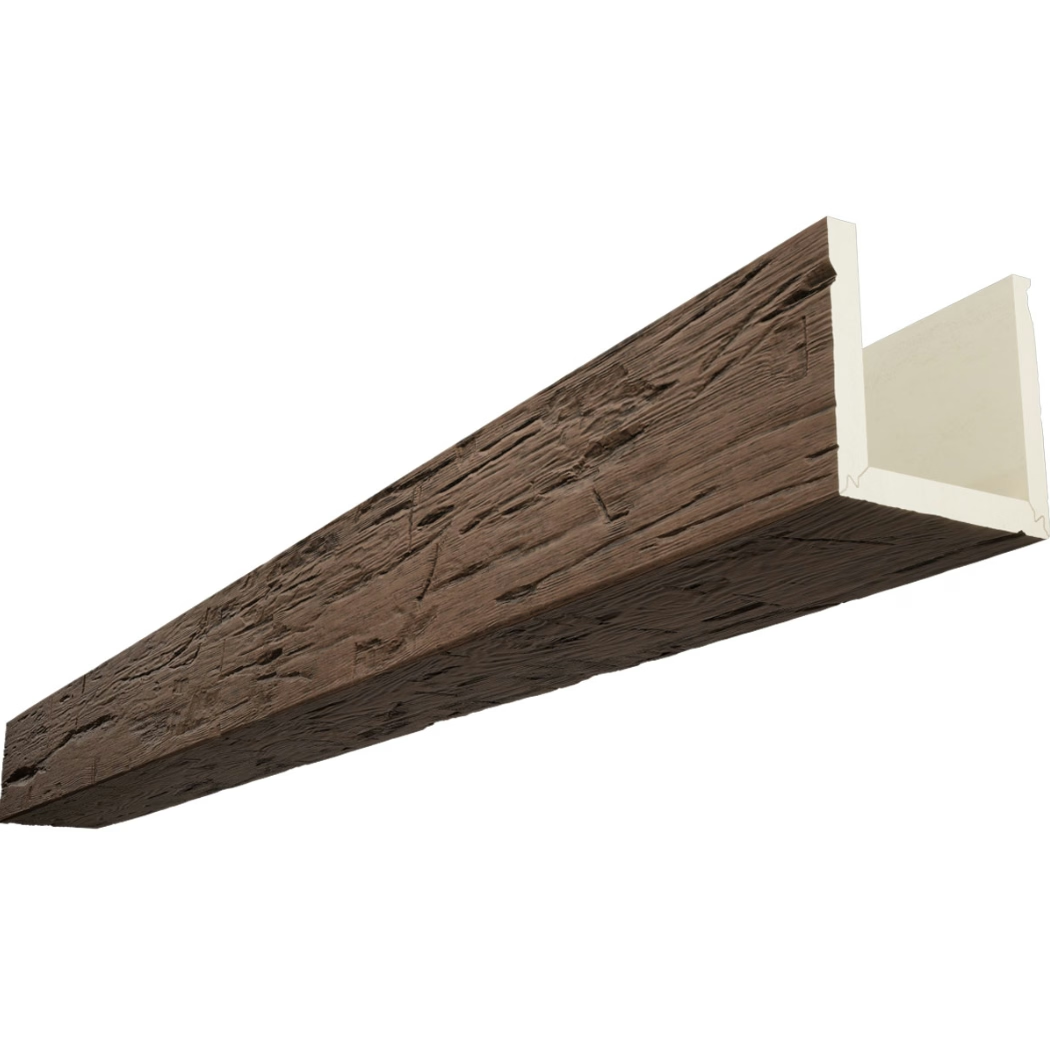
The hotel chain project required 4,200 linear feet of custom beams across twelve properties, with phased delivery over eighteen months to match construction schedules. We selected a manufacturer offering the lowest bid—a decision that seemed financially prudent until the third shipment arrived with color variations so pronounced that installed beams in different buildings wouldn't match. The supplier couldn't correct the problem, forcing us to source replacement materials from a more expensive but reliable alternative. The "savings" cost us three times the original contract value through delays, rework, and relationship damage with the hotel developer.
That painful lesson taught me that supplier reliability assessment demands systematic evaluation extending far beyond comparing unit prices and reviewing product samples. For projects where beam specifications involve custom sizing, specific colors, or phased deliveries spanning months, supplier capabilities, quality systems, and organizational stability matter as much as product quality itself. Understanding how to evaluate these factors separates strategic procurement from penny-wise but pound-foolish purchasing decisions.
Production Capacity and Scalability
Manufacturing throughput determines whether suppliers can fulfill large orders within required timeframes without compromising quality through overextension. Requesting facility tours reveals production equipment, staffing levels, and organizational systems that indicate capacity. A manufacturer running three shifts on aging equipment at maximum capacity lacks surge capability if your order encounters delays requiring schedule compression. Conversely, facilities operating single shifts with modern equipment possess flexibility to accelerate production when necessary.
Mold inventory assessment proves particularly critical for custom beam projects. Standard profiles ship from existing tooling, but custom dimensions require new mold fabrication adding 6-12 weeks to lead times. Suppliers with extensive mold libraries might already possess tooling close enough to your specifications that minor modifications suffice, dramatically shortening custom product timelines. Questions about mold inventory, tooling capabilities, and modification options reveal whether custom orders represent routine or exceptional work for specific suppliers.
Workforce stability influences quality consistency across production runs. High employee turnover creates training challenges where experienced operators familiar with critical quality parameters depart before knowledge transfers to replacements. Observing production areas during facility tours reveals whether workers appear experienced and engaged or if evidence suggests chronic understaffing and high turnover. Long-term employees provide consistency that directly translates to product quality.
Raw material sourcing strategies affect supply security and price stability. Manufacturers relying on single-source materials face supply disruption risks when raw material suppliers experience problems. Diversified sourcing with qualified alternative suppliers provides resilience but requires more sophisticated procurement management. Understanding supplier material strategies helps assess supply chain risk—particularly important for projects with inflexible completion deadlines.
Production planning systems indicate organizational sophistication that affects delivery reliability. Manual scheduling using whiteboards and paper travellers works adequately for small operations with limited product variety but struggles with complex multi-order environments. Computerized ERP systems tracking work-in-process, inventory, and scheduling provide visibility that supports reliable delivery commitments. While sophisticated systems don't guarantee performance, their absence raises concerns about operational maturity.
Quality Management Systems
ISO 9001 certification demonstrates commitment to documented quality processes, measurement, and continuous improvement. Certified manufacturers maintain controlled procedures, calibrated measurement equipment, and traceability systems that support consistent output. While certification doesn't guarantee perfect products, it indicates organizational discipline that produces reliable quality. Requesting certification documentation and scope verification ensures that certification covers the specific products you're purchasing rather than unrelated product lines.
Statistical process control implementation separates sophisticated quality management from simple go/no-go inspection. SPC tracks process parameters over time, identifying trends before they produce non-conforming products. Manufacturers using SPC typically display control charts on production floors, demonstrating commitment to data-driven quality. Asking about SPC programs and requesting example control charts reveals whether quality management operates reactively or proactively.
First article inspection protocols verify that production setups will generate conforming products before full production begins. Comprehensive first article inspections including dimensional verification, color matching, surface quality assessment, and documentation review prevent producing large quantities of non-conforming product. Suppliers should describe their first article processes, including who conducts inspections, what parameters are measured, and how approval is documented.
In-process inspection frequency and methods determine how quickly quality deviations are caught and corrected. Inspecting only completed products allows defects to propagate through entire production runs before detection. Frequent in-process checks catch problems early, limiting non-conforming output. Touring production areas and observing inspection activities reveals actual practices versus stated policies—the disparity can prove enlightening.
Non-conforming material procedures indicate how suppliers handle quality escapes. Even excellent manufacturers occasionally produce defective products—their response separates professionals from amateurs. Documented procedures for quarantining suspect material, investigating root causes, implementing corrective actions, and communicating with customers demonstrate mature quality management. Requesting descriptions of recent quality issues and resolutions reveals organizational approaches to problem-solving.
Customer complaint handling systems provide insight into after-sale support quality. Responsive complaint management systems log issues, track resolution progress, and analyze trends to prevent recurrence. Asking about typical complaint response times, escalation procedures, and complaint analysis reveals whether organizations view problems as customer service opportunities or adversarial disputes to minimize.


Financial Stability and Business Viability
Financial statement analysis reveals whether suppliers possess the stability necessary for long-term relationships. Reviewing several years of financial statements shows revenue trends, profitability patterns, debt levels, and working capital adequacy. Privately held companies may resist providing detailed financials, but requesting high-level information or allowing third-party financial due diligence demonstrates legitimate business interest rather than idle curiosity.
Credit rating checks through commercial credit agencies provide independent assessment of financial health and payment practices. Poor credit ratings might indicate financial stress, excessive debt loads, or payment disputes with suppliers—any of which threatens reliable performance. While not automatically disqualifying, poor ratings warrant additional investigation and potentially more stringent contract terms protecting buyer interests.
Banking relationships quality sometimes reveals financial stability that statements don't fully capture. Suppliers with long-term banking relationships and adequate credit lines possess financial flexibility to manage cash flow variations from large orders. Questions about banking relationships help assess whether suppliers can finance the working capital required to execute your project without payment-related performance pressures.
Insurance coverage adequacy protects buyers from liability exposure and demonstrates supplier sophistication. Comprehensive general liability, product liability, and professional liability policies indicate that suppliers take risk management seriously. Requesting certificates of insurance and verifying coverage limits match project exposure levels proves essential before executing contracts.
Business continuity planning reveals whether suppliers have thought through disaster scenarios that might affect performance. Fire, flood, equipment failure, or key person loss can devastate operations lacking contingency plans. Sophisticated suppliers maintain documented business continuity plans addressing facility backup, data recovery, supply chain alternatives, and communication protocols. While you might not need detailed plans, knowing they exist provides reassurance.
Technical Support and Engineering Capability
Application engineering support quality determines how effectively suppliers translate project requirements into product specifications. Skilled application engineers understand architectural and construction contexts, suggest optimal solutions, and identify potential issues proactively. Weak technical support forces buyers to solve all specification problems independently—a capability gap particularly problematic for unique or challenging applications.
CAD and BIM support availability matters for projects using digital design tools. Suppliers providing 3D models, BIM objects, and specifications in digital formats streamline design processes and reduce coordination errors. This capability indicates technical sophistication and customer-service orientation that typically extends to other business aspects.
Custom color matching capability involves both technical expertise and quality control systems ensuring consistent reproduction. Requesting information about color matching processes, spectrophotometry equipment, and batch-to-batch consistency protocols reveals whether custom colors represent core competencies or occasional accommodations. Suppliers uncomfortable discussing color science details likely lack the capability to deliver consistent custom colors across phased deliveries.
Installation support through technical literature, video tutorials, or direct consultation helps ensure that products install properly. Even quality products fail when installed incorrectly—suppliers providing comprehensive installation support reduce this risk while demonstrating commitment to project success extending beyond selling products. Evaluating available installation resources indicates customer service philosophy.
Problem-solving responsiveness when issues arise separates excellent suppliers from adequate ones. The ability to reach knowledgeable technical staff who can address urgent questions prevents small problems from becoming project-stopping crises. Testing responsiveness during evaluation phases by asking technical questions and monitoring response time and quality reveals actual support capabilities.
Communication and Relationship Management
Account management structure affects communication efficiency and relationship quality. Dedicated account representatives who learn your business, understand requirements, and advocate internally for your needs create smoother working relationships than generic customer service handling all accounts identically. Asking about account management approaches reveals whether suppliers prioritize relationship building or view customers transactionally.
Communication responsiveness provides critical insight into organizational culture and customer service priority. Suppliers who respond promptly to inquiries during sales processes but become unresponsive after orders are placed demonstrate priorities that don't align with buyer interests. Testing responsiveness throughout evaluation and initial transactions reveals patterns that predict long-term relationship quality.
Transparency about capabilities and limitations builds trust more effectively than overpromising. Suppliers acknowledging that certain requirements stretch their capabilities or suggesting modifications that work better with their processes demonstrate honesty that supports long-term relationships. Organizations claiming they can do anything perfectly regardless of complexity warrant skepticism.
Language and cultural considerations matter for international procurement. Suppliers in countries where English isn't primary must maintain staff capable of clear technical and commercial communication. Misunderstandings from language barriers create expensive errors—verifying communication capability during evaluation prevents problems. Cultural differences in business practices, quality expectations, and communication styles also require consideration and accommodation.
Documentation and Traceability
Technical data sheet completeness and accuracy indicate attention to detail that extends to products themselves. Comprehensive data sheets specifying materials, dimensions, tolerances, physical properties, and installation requirements demonstrate technical sophistication. Incomplete or generic data sheets suggest less rigorous organizational approaches to documentation and potentially to manufacturing.
Material certifications and testing reports provide objective verification of product performance claims. Certificates documenting flame spread ratings, load testing results, or environmental compliance prove that products meet stated specifications. Suppliers unable or unwilling to provide certifications raise concerns about whether claimed performance is verified or merely marketing.
Traceability systems linking finished products to raw material lots, production dates, and operators enable root cause analysis when quality issues arise. Sophisticated traceability allows identifying exactly which products might be affected by discovered problems, preventing unnecessary replacement of conforming material while ensuring affected products are addressed. Asking about lot tracking and traceability capabilities reveals quality system maturity.
As-built documentation for custom products prevents future sourcing challenges when expansions or repairs require matching original installations. Detailed records of custom colors, dimensions, and finishes allow reproducing specifications years later when memories fade and personnel changes occur. Suppliers maintaining comprehensive project records provide long-term value beyond initial transactions.
Reference Checks and Reputation Research
Customer references from similar projects provide firsthand perspectives on supplier performance. Requesting references for projects matching your scope and complexity reveals performance with comparable demands. Questions about quality consistency, schedule adherence, problem resolution, and long-term satisfaction generate insights that sales presentations don't provide. Speaking with multiple references creates patterns more reliable than single data points.
Industry reputation through trade associations, online reviews, and peer networks indicates how suppliers perform broadly rather than just on carefully selected reference projects. Negative patterns across multiple sources warrant serious consideration, while consistently positive feedback provides confidence. Social media and industry forums sometimes reveal issues that formal reference checks miss.
Complaint patterns through Better Business Bureau or similar consumer protection organizations indicate how suppliers treat customers experiencing problems. Organizations with numerous unresolved complaints demonstrate poor customer service that likely extends to commercial relationships. Checking these resources provides independent perspective on supplier reputation.
Longevity in business suggests stability and accumulated competency that new entrants lack. While young companies sometimes offer innovative advantages, established suppliers demonstrate proven capability to navigate economic cycles, adapt to market changes, and maintain business operations through challenges. Balancing innovation with stability requires assessing risk tolerance for specific projects.
Contract Terms and Legal Considerations
Payment terms indicate financial health and risk allocation. Suppliers demanding full prepayment before production begins might face cash flow problems suggesting instability. Conversely, offering terms with partial payment milestones tied to delivery demonstrates confidence and reasonable risk sharing. Terms should balance supplier cash flow needs against buyer protection from non-performance.
Warranty provisions protect buyers from defective materials while revealing supplier confidence in product quality. Comprehensive warranties covering materials, workmanship, and performance for substantial periods indicate quality confidence. Limited warranties or numerous exclusions suggest quality concerns or unwillingness to stand behind products.
Lead time commitments must include clear definitions of when timing begins and what delays might be excused. Ambiguous lead time definitions create dispute potential—clarifying whether quoted times start at order placement, deposit receipt, or specification approval prevents misunderstandings. Force majeure clauses should be reasonably limited rather than so broad they excuse virtually any delay.
Intellectual property rights for custom designs deserve explicit address in contracts. If your project involves unique profiles or finishes, clarifying ownership and use restrictions prevents suppliers from offering your custom designs to competitors. These provisions require legal review but provide important protection for proprietary designs.
Dispute resolution procedures including escalation processes, mediation requirements, or arbitration clauses establish frameworks for addressing conflicts without immediate litigation. Clear dispute procedures sometimes prevent problems from escalating by providing structured paths to resolution.
Logistics and Delivery Capabilities
Packaging quality affects product condition at arrival. Inadequate packaging allows damage during transportation—even perfect manufacturing becomes worthless if products arrive damaged. Observing typical packaging or requesting packaging specifications reveals whether suppliers invest appropriately in protection or minimize packaging costs at the expense of product integrity.
Freight capabilities including carrier relationships, consolidation options, and delivery coordination indicate logistical sophistication. Suppliers managing logistics competently provide tracking, coordinate delivery timing, and handle damage claims efficiently. Those lacking logistics expertise shift these responsibilities to buyers, creating additional workload and potential complications.
Phased delivery management for projects requiring staged shipments across months demands sophisticated planning and inventory management. Suppliers must produce to schedules, store completed products appropriately, and ship on coordinated schedules without mixing batches that might have slight variations. Not all manufacturers possess the organizational discipline for complex phased deliveries—assessing capability prevents problems.
Global shipping experience matters for international projects involving customs, documentation, and cross-border logistics. Suppliers experienced in export have established procedures handling these complexities efficiently. Those inexperienced in international shipping face learning curves that create delays and cost overruns buyers ultimately absorb.
Long-Term Partnership Potential
Strategic alignment between buyer and supplier objectives creates foundations for lasting relationships delivering mutual benefit. Suppliers viewing customers as partners invest in understanding needs, suggesting improvements, and accommodating reasonable special requests. Transactional suppliers focused solely on maximizing immediate profits prove reliable only when situations remain routine—complications reveal whether relationships transcend transactions.
Continuous improvement orientation indicates suppliers won't stagnate but will enhance products, processes, and services over time. Organizations committed to improvement welcome feedback, track performance metrics, and implement changes addressing identified opportunities. Asking about recent improvements and continuous improvement processes reveals whether cultures embrace change or resist it.
Innovation capability determines whether suppliers can support evolving project needs as designs and standards advance. Manufacturers investing in R&D, monitoring industry trends, and developing new capabilities provide long-term value beyond executing current requirements. Understanding innovation priorities and capabilities helps predict whether partnerships will remain productive as needs evolve.
Decision Framework and Scoring
Weighted evaluation matrices quantify subjective assessments across multiple criteria, supporting objective supplier comparisons. Assigning weights to factors based on project priorities—quality might carry 30% weight, price 25%, delivery 20%, with remaining factors sharing 25%—creates structured frameworks. Scoring each supplier against criteria and calculating weighted totals produces comparable metrics that inform but don't replace judgment.
Risk assessment considering probability and impact of various failure scenarios helps balance cost against reliability. A supplier 20% cheaper but carrying 40% probability of late delivery that would create six-figure project delay costs proves poor value despite lower unit prices. Quantifying risk exposure illuminates whether apparent savings justify additional risks.
Total cost of ownership extends beyond unit prices to include quality-related rework, expedited shipping, coordination overhead, and risk-adjusted failure costs. Cheap products requiring extensive quality management, generating rework, or creating schedule disruptions often cost more than premium products delivering flawless performance. TCO analysis reveals these hidden costs that price comparison misses.
Professional Procurement Excellence
Supplier reliability assessment requires systematic evaluation of numerous factors that collectively determine whether relationships will succeed beyond initial transactions. Price remains important but represents only one component of value—often not the most important one for complex projects where failure carries costs far exceeding material savings.
For procurement professionals, contractors, and project managers responsible for sourcing large beam quantities where supplier performance directly affects project success, investing time in thorough supplier assessment prevents expensive problems while identifying partners capable of supporting projects from specification through installation and beyond. The discipline to assess thoroughly rather than simply accepting lowest bids separates professional procurement from amateur purchasing.
Technical References
ASTM standards cited in every specification
Test Data
Lab results from internal testing program
Updated 2026
Reviewed against current product specs