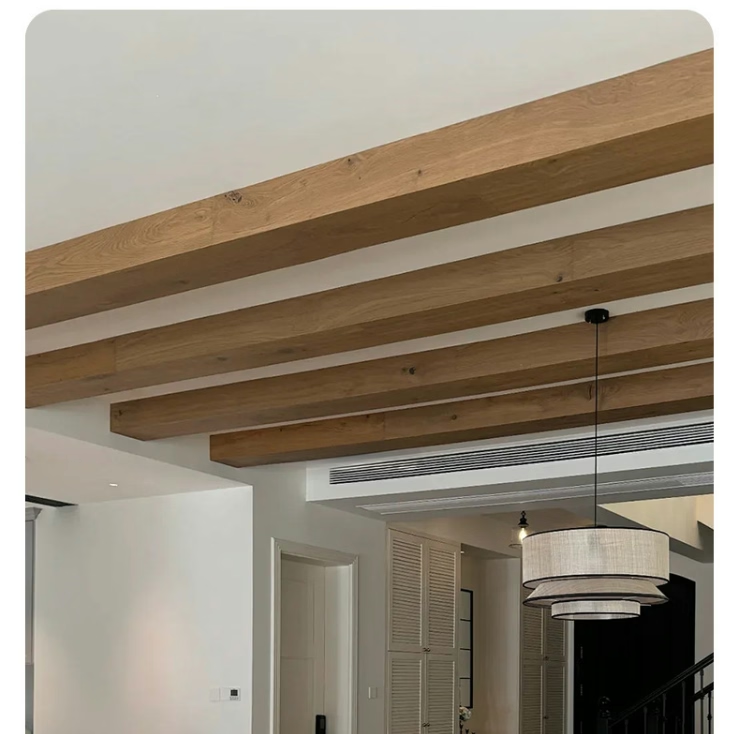
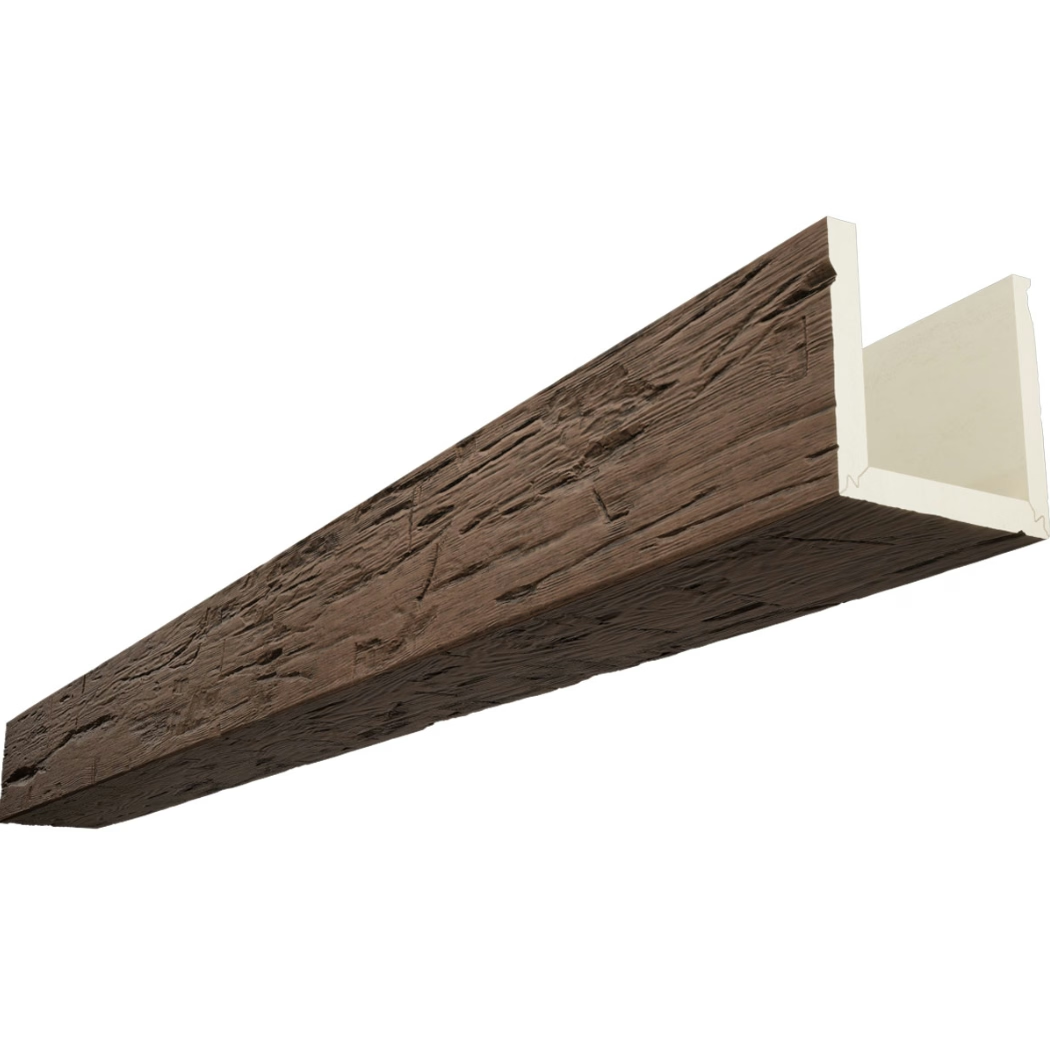
The submittal review for a luxury hotel project returned with three pages of red-lined comments—the manufacturer's technical data sheet lacked half the information our specifications required. No flame spread rating. No dimensional tolerances. No load capacity data. No VOC content. The glossy marketing brochure included beautiful photography but zero useful technical content. After three rounds of requests for actual technical information, we abandoned that manufacturer and sourced from a supplier understanding that professional projects demand professional documentation. That experience reinforced my insistence on comprehensive technical data sheets before specifying products for commercial work.
Technical data sheets bridge the gap between marketing claims and engineering reality. While brochures emphasize aesthetics and applications, data sheets provide the dimensional, physical, chemical, and performance specifications that design professionals need for material selection and specification writing. Understanding what comprehensive data sheets should contain helps both manufacturers produce useful documentation and specifiers evaluate whether products merit serious consideration.
Essential Product Identification Information
Manufacturer identification including complete legal business name, physical address, phone contacts, website, and email creates accountability while enabling communication. Marketing divisions promoting products often differ from technical departments providing specification support—data sheets should include both sets of contacts. International manufacturers should list both origin country contacts and regional offices supporting local markets.
Product line designation and model numbering systems allow precise identification within manufacturers' product families. Generic descriptions like "faux wood beams" prove inadequate when manufacturers offer dozens of profiles, sizes, and finishes. Clear model numbers—preferably logical systems where numbers encode key attributes—enable unambiguous specification and ordering. Documentation should explain numbering conventions so specifiers understand what coded information model numbers contain.
Revision dates and version control ensure that technical information remains current. Products evolve as manufacturers improve formulations, update testing, or modify specifications. Dated data sheets with clear revision histories allow verifying whether documentation reflects current production. Professional organizations maintain document control systems providing this traceability—its absence suggests immature organizations lacking quality management discipline.
Certification marks and compliance statements noting relevant standards, certifications, and regulatory compliance belong prominently on data sheets. Flame spread classification, emissions certifications, building code compliance, and industry standards the product meets should appear early in documentation. These marks allow quick determination whether products qualify for specific project requirements without reviewing detailed technical sections.
Standard specification references guide specification writing by citing CSI MasterFormat sections where products logically specify. Architectural millwork might reference Section 06 40 00, while specialty finishes could cite 09 97 00. These references help specifiers locate appropriate specification sections while demonstrating manufacturer understanding of construction documentation practices.
Dimensional Specifications and Tolerances
Nominal versus actual dimensions distinguish between marketing descriptions and manufacturing reality. A beam described nominally as "8x8 inches" might measure 7.75 x 7.75 inches actual. Data sheets should clearly state both nominal and actual dimensions, preventing confusion during coordination and installation. Assumptions about standardized sizing create conflicts when actual dimensions vary from expectations based on nominal descriptions.
Manufacturing tolerances quantify acceptable variation from stated dimensions. Professional specifications typically cite ±0.06 inches for width and depth, ±0.125 inches for length, and ±0.03 inches for wall thickness in quality polyurethane beams. These tolerances affect layout planning, joint detailing, and installation clearances. Without documented tolerances, specifiers can't determine whether products will meet project requirements for precision.
U-channel opening dimensions determine fit over support structures—perhaps the single most critical dimension for hollow beam products. If openings vary by quarter inches, some beams won't fit mounting cleats while others fit loosely. Documentation should specify opening dimensions at several points along beam lengths, noting whether openings remain consistent or taper slightly as molding processes sometimes create.
Weight per linear foot affects handling, transportation costs, structural loading, and installation labor requirements. A 12-foot beam weighing 30 pounds allows single-person installation, while one weighing 80 pounds demands two-person crews. Documentation should provide weights for all standard lengths, allowing accurate logistics and installation planning.
Available lengths both standard and custom inform ordering strategies and installation planning. Standard lengths—typically 6, 8, 10, and 12 feet—ship faster and cost less than custom. Maximum single-piece lengths affect whether long spans require joints. Minimum order quantities for custom lengths influence whether special sizes prove economically feasible for specific projects.

Material Composition and Properties
Base material identification specifying polyurethane chemistry, density, and formulation characteristics affects product performance and code compliance. Documentation should note whether products use rigid polyurethane foam, high-density structural foam, or solid cast polyurethane—these variants have different properties affecting applications. Density measurements in pounds per cubic foot indicate material quality and performance characteristics.
Additives and reinforcements including UV stabilizers, fire retardants, colorants, and fillers affect performance, safety, and environmental attributes. While manufacturers guard detailed formulations as proprietary, general disclosure of major additive categories allows specifiers to assess suitability. Products containing flame retardants meet different fire codes than non-treated materials. UV-stabilized formulations suit high-exposure applications that unstabilized products can't tolerate.
Recycled content percentage if any contributes toward LEED and green building credits. Documentation should distinguish post-consumer versus post-industrial content, noting the percentage of each type. Vague claims about "recycled materials" without quantification don't support credit calculations that require specific percentages.
VOC content and emissions data satisfy indoor air quality requirements and building codes. Documentation should cite VOC content in grams per liter as manufactured, plus emissions testing results following CDPH Standard Method v1.2 (California Section 01350) or equivalent protocols. Simply stating "low VOC" without test data doesn't satisfy professional specification requirements.
Physical properties including tensile strength, flexural strength, compressive strength, and impact resistance characterize material performance. While decorative beams aren't structural elements, these properties affect durability, damage resistance, and whether products withstand installation and service conditions. Test results should reference ASTM or equivalent standards governing measurement methods.
Performance Characteristics
Flame spread and smoke development ratings classify fire performance according to ASTM E84 tunnel testing. Building codes reference these classifications (Class A: 0-25, Class B: 26-75, Class C: 76-200) to determine acceptable materials for various occupancies and applications. Commercial projects typically require Class A ratings for interior finishes, making this specification critical for code compliance.
Water resistance and moisture absorption properties determine suitability for humid environments or exterior-grade applications. Testing following ASTM D570 quantifies water absorption percentages after specified immersion periods. Products for bathrooms, kitchens, or unconditioned spaces require documented moisture resistance that marketing claims can't substitute for.
UV resistance for products in high-light environments including sunrooms or near skylights requires accelerated weathering testing following ASTM G154 or equivalent. Documentation should report exposure hours and any degradation in appearance, strength, or dimensions. Products without UV testing data shouldn't be specified for high-exposure applications regardless of marketing claims about "UV resistance."
Thermal performance including coefficient of thermal expansion and operating temperature ranges affects installation details and long-term dimensional stability. Materials expanding significantly with temperature require expansion joints or flexible mounting. Documentation should specify minimum and maximum service temperatures beyond which performance degrades.
Chemical resistance to common cleaning agents, solvents, and environmental exposures determines maintenance compatibility and longevity. Resistance charts showing effects of various chemicals—bleach, ammonia, alcohol, acids, bases—guide maintenance protocol development and help predict service life in specific environments.
Acoustic properties including sound absorption coefficients and sound transmission class might matter in applications where acoustic performance supplements or conflicts with ceiling system acoustic requirements. While solid polyurethane provides negligible absorption, products with acoustic treatments should document performance following ASTM C423 for absorption or ASTM E90 for transmission loss.
Installation Requirements and Limitations
Recommended installation methods including adhesive types, fastener specifications, and blocking requirements provide guidance ensuring successful installations. Data sheets should reference adhesive manufacturers and product lines proven compatible rather than generic recommendations like "construction adhesive" that encompass products with vastly different performance.
Substrate compatibility listing acceptable ceiling types—drywall, plaster, wood, concrete—with any special preparation requirements prevents installation over incompatible substrates. Some products require primers on certain surfaces. Others don't bond adequately to specific materials regardless of preparation. This information prevents specification for unsuitable applications.
Environmental conditions during installation including acceptable temperature and humidity ranges ensure proper adhesive curing and material handling. Most installations require minimum 50°F temperatures and moderate humidity. Documentation should note these requirements, allowing contractors to plan installation timing appropriately.
Required clearances from heat sources, lighting, and mechanical equipment prevent thermal damage or fire hazards. Specifications should state minimum distances from recessed lighting, HVAC vents, and other heat-generating elements. These clearances affect layout planning and sometimes determine whether specific installation concepts prove feasible.
Span limitations without intermediate support define maximum unsupported lengths preventing excessive sag. While lightweight polyurethane beams span impressive distances, documenting maximum recommended spans without deflection guides installation planning. These limits depend on beam dimensions—larger beams span farther than compact profiles.
Quality Assurance and Testing Documentation
Third-party testing laboratory identification noting accredited facilities performing testing provides verification credibility. Testing by manufacturer-operated labs carries less weight than independent laboratory results from ISO 17025 accredited facilities. Documentation should name testing laboratories and provide report numbers allowing verification.
Test report dates ensure that documentation reflects current products rather than obsolete formulations. Testing conducted fifteen years ago might not represent current production if formulations evolved. Recent testing—generally within five years—provides confidence that data represents actual product performance.
Sampling methods describing whether testing used production samples, prototype materials, or specially prepared specimens affects result reliability. Testing of carefully prepared prototype materials might not represent actual production quality. Documentation should note whether testing used randomly selected production units or specially manufactured samples.
Quality control procedures during manufacturing including inspection frequency, measured parameters, and acceptance criteria demonstrate organizational commitment to consistency. While detailed QC procedures remain proprietary, general descriptions of process control, batch testing, and inspection protocols indicate quality management sophistication.
Certification listings including UL, ICC-ES, or other third-party certifications provide shorthand verification that products meet comprehensive testing and quality requirements. These listings allow specifiers to reference established evaluations rather than conducting independent assessment of every performance claim.
Warranty and Liability Information
Warranty coverage terms specifying duration, what's covered, exclusions, and claim procedures clarify manufacturer commitment to product performance. Comprehensive warranties covering materials and performance for substantial periods—10+ years for quality products—demonstrate confidence while protecting building owners. Documentation should include complete warranty text rather than just general descriptions.
Exclusions and limitations clarifying what warranty doesn't cover prevent misunderstandings about coverage scope. Typical exclusions include damage from improper installation, failure to follow maintenance recommendations, or exposure beyond product ratings. Clear exclusion language protects manufacturers from unreasonable claims while setting realistic expectations.
Claim procedures specifying how to report problems, documentation requirements, and resolution timelines help building owners exercise warranty rights effectively. Complex procedures creating obstacles to claims suggest manufacturers preferring to avoid honoring warranties. Straightforward procedures demonstrate customer service orientation.
Representative liability insurance demonstrating adequate coverage protects specifiers and building owners if product failures create property damage or injury. Requesting certificates of insurance verifying million-dollar-plus liability coverage ensures that manufacturers can respond financially to significant problems.
Environmental and Sustainability Documentation
EPD (Environmental Product Declaration) availability or reference provides lifecycle environmental impact data supporting green building certifications. Even if complete EPDs exceed data sheet scope, noting their existence and where to obtain them helps sustainability-focused specifiers.
Emissions certifications including GREENGUARD, FloorScore, or compliance with California 01350 support indoor air quality credits and healthy building initiatives. Logo marks on data sheets allow quick identification of certified products, with detailed reports referenced for specifiers requiring documentation.
Regional manufacturing information noting production locations helps calculate regional material credits for LEED. Products manufactured within 500 miles of project sites contribute toward these credits when documented properly.
Recycling and disposal guidance assists building owners with end-of-life material management. Documentation noting whether products can recycle, how to dispose responsibly, or whether manufacturer take-back programs exist supports sustainable material management.
Maintenance and Service Life
Cleaning and maintenance instructions preserve appearance and performance throughout service life. Documentation should recommend specific cleaning products or general product categories while noting what to avoid. Simple maintenance guidance—periodic dusting, occasional damp wiping—reflects realistic requirements.
Refinishing procedures if products accept field painting or refinishing provide flexibility for future changes. Documentation should specify compatible primers, paints, and application methods. Products that can't refinish should state this clearly, managing expectations appropriately.
Expected service life estimates based on testing, field experience, or engineering analysis help building owners plan lifecycle costs. While predicting exact service life proves difficult, general guidance—"50+ years in typical interior applications"—provides useful context for decision-making.
When Data Sheets Fall Short
Incomplete documentation lacking critical specifications signals manufacturers unprepared for professional market demands. Specifiers should request missing information directly, determining whether manufacturers can provide required data or whether products lack testing supporting professional use. Persistent inability to provide basic technical information should disqualify products from serious consideration.
For architects, engineers, and contractors specifying materials where performance must meet contractual obligations and regulatory requirements, comprehensive technical data sheets represent minimum acceptable documentation. Marketing materials never substitute for engineering data. Professional practice demands technical rigor that only proper documentation provides. Manufacturers understanding this distinction and investing in comprehensive technical documentation distinguish themselves from competitors treating professional markets as extensions of consumer retail rather than specialized channels with legitimate specialized requirements.
Technical References
ASTM standards cited in every specification
Test Data
Lab results from internal testing program
Updated 2026
Reviewed against current product specs