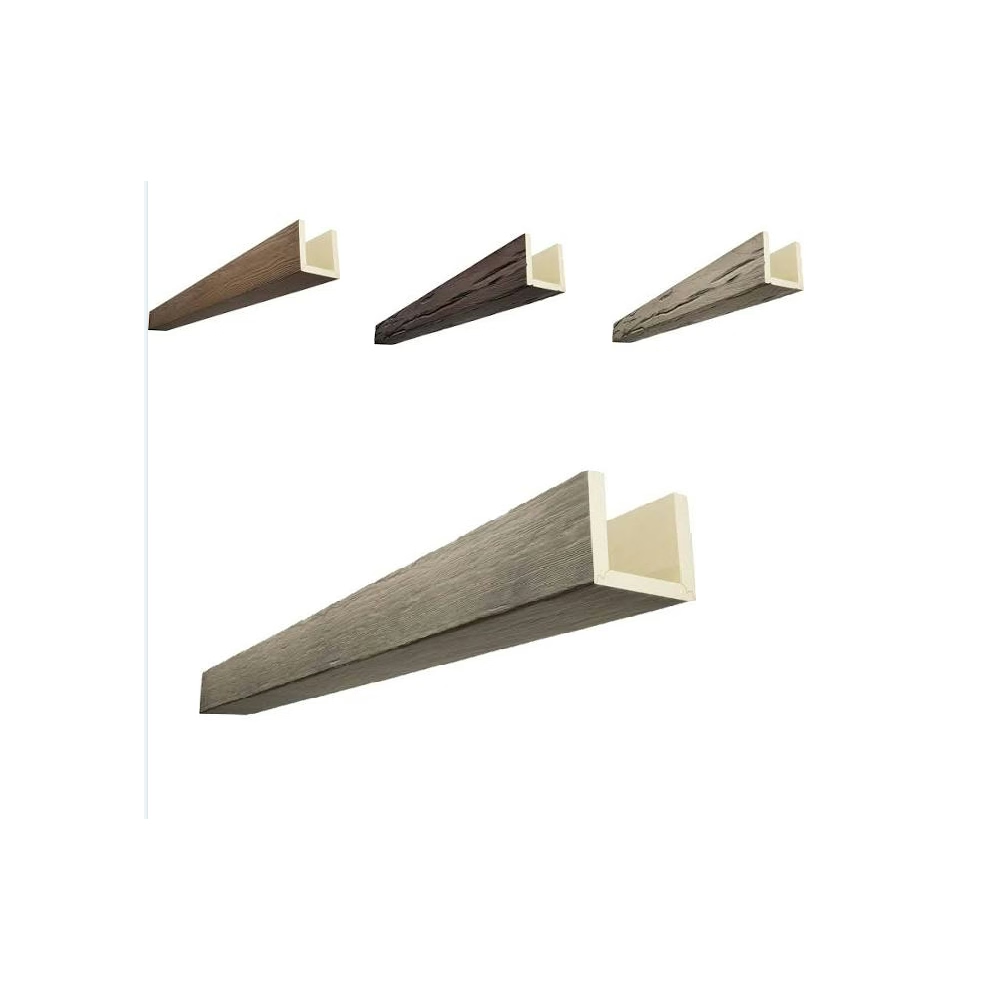
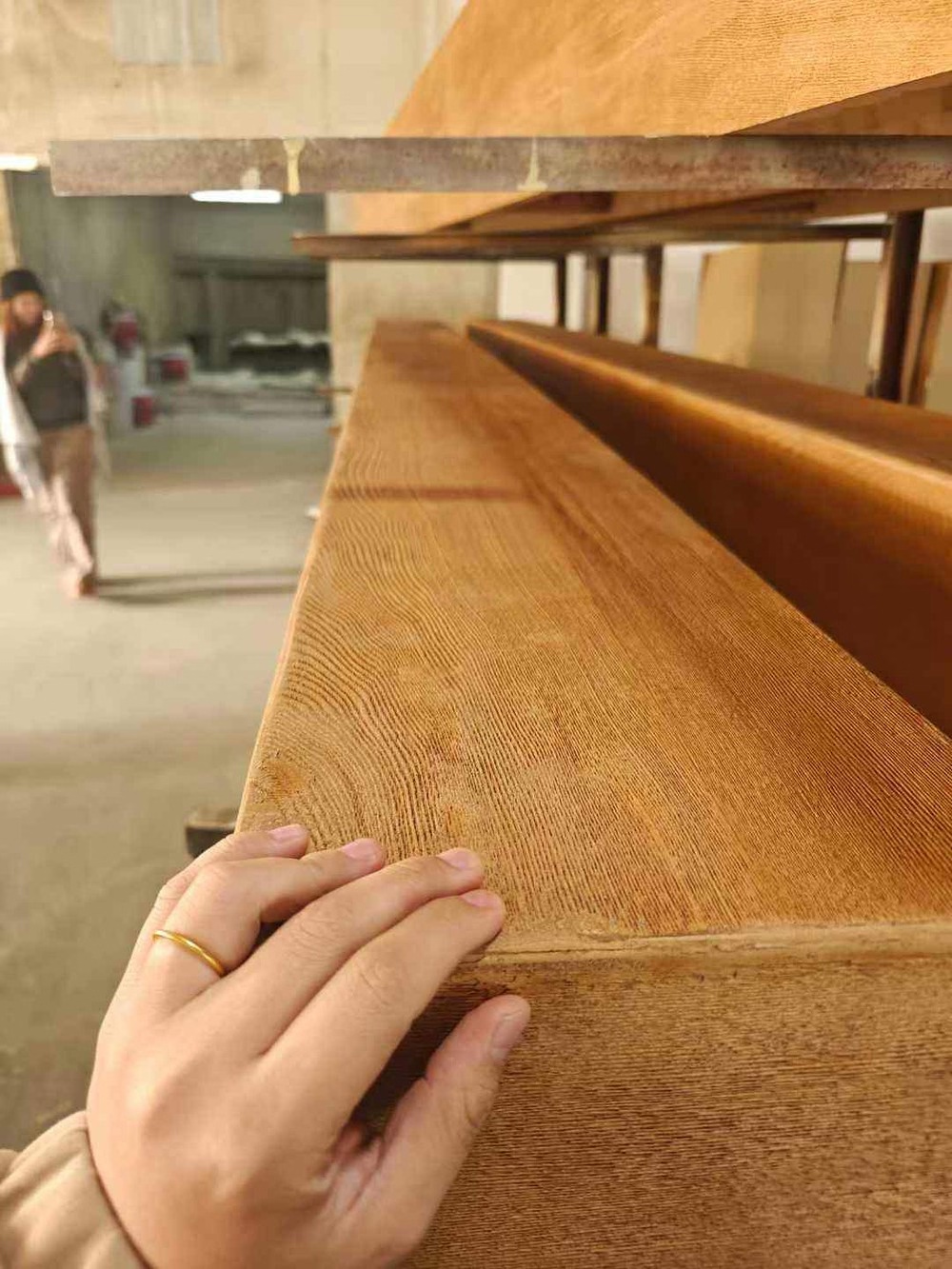
The young couple loved the farmhouse aesthetic but had allocated only $800 for their family room ceiling—barely enough for materials, let alone professional installation. Rather than dismissing their budget as inadequate, we developed a strategic approach: three economy-grade beams instead of five premium ones, simple rectangular profiles rather than hand-hewn textures, standard 8-foot lengths avoiding custom cutting upcharges, and DIY installation following detailed instructions I provided. The result looked terrific, cost $650 including all materials, and taught them installation skills they used completing a dining room ceiling months later. That project demonstrated how thoughtful value engineering and realistic expectations allow achieving attractive results within almost any budget.
Budget constraints force prioritization and creativity that often yield better designs than unlimited budgets permit. Understanding where to invest, where to economize, and how to maximize visual impact per dollar spent enables creating attractive spaces that respect financial realities while delivering the character and warmth that motivates ceiling enhancement projects.
Understanding Economy-Grade Product Differences
Material density in economy beams typically runs lower than premium products—perhaps 3-4 pounds per cubic foot versus 6-8 pounds in high-end options. Lower density reduces material costs but also impacts durability, impact resistance, and perceived quality when handling. For residential ceiling applications where beams don't experience abuse, this density difference matters less than in commercial settings with higher traffic and potential contact.
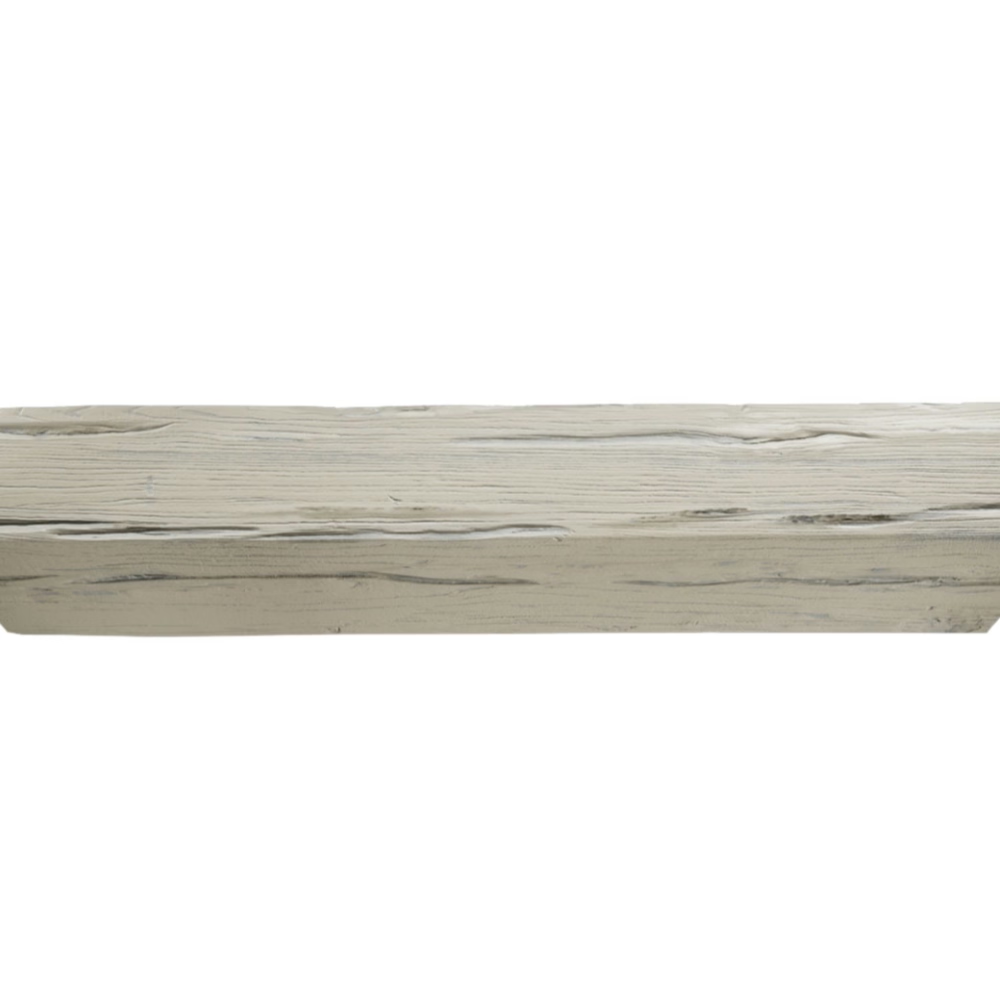
Surface finish quality varies between economy and premium grades, with economy products showing less refined texture detail, potential minor surface imperfections, and simpler color palettes. These differences prove negligible when viewing beams installed at ceiling height but become apparent during close inspection or side-by-side comparison with premium alternatives. Understanding these trade-offs allows making informed decisions about where economy grades suffice versus where premium quality justifies additional cost.
Dimensional consistency tends to show more variation in economy products lacking the tight manufacturing tolerances premium brands maintain. Width might vary ±1/8 inch rather than ±1/16 inch. Lengths might deviate farther from nominal dimensions. This variability requires more field adjustment during installation but creates manageable challenges for DIY installers willing to measure carefully and adapt to actual received dimensions.
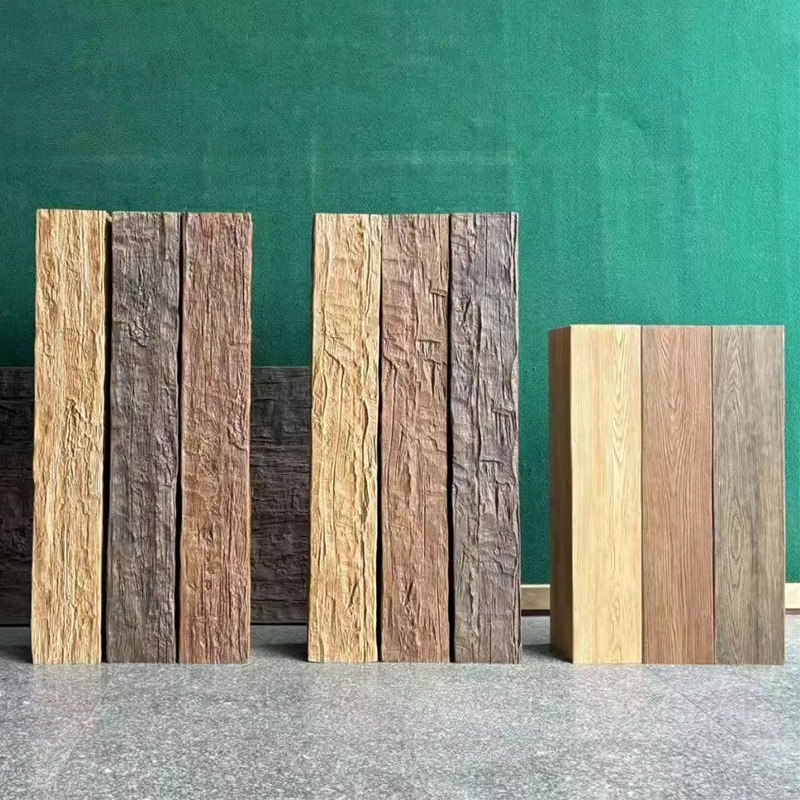
Color options in economy lines typically include basic wood tones—oak, walnut, cedar—without the specialty finishes, custom colors, or distressed treatments that premium lines offer. This limited selection suits most residential applications where standard wood tones meet aesthetic requirements. Projects requiring specific color matches or unusual finishes must step up to premium products offering broader customization.
Warranty coverage for economy products generally provides shorter terms with more exclusions than premium warranties. A budget beam might carry 1-2 year limited warranty covering manufacturing defects while premium alternatives offer 10+ year comprehensive coverage. For budget-conscious buyers, shorter warranties represent acceptable trade-offs given lower initial investment.
Strategic Design for Budget Maximization
Beam count reduction focuses impact through fewer, well-placed beams rather than trying to cover entire ceilings. A single dramatic statement beam often delivers more visual impact than multiple economy beams scattered across ceilings. Understanding that quality trumps quantity in architectural detail guides effective budget allocation.
Focal area concentration places beams where they create maximum impact—above dining tables, in conversation areas, defining main living zones—while leaving less-important ceiling areas plain. This strategic placement creates character where it matters most while respecting budget limitations. Not every ceiling area requires equal treatment.
Simple profile selection using basic rectangular or box-beam shapes without elaborate texturing reduces per-foot costs significantly. Hand-hewn profiles, corbel details, and specialty shapes command premium prices, while simple profiles deliver clean architectural presence at economy pricing. Sophisticated design doesn't require complex profiles—proper proportion and placement matter more than intricate details.
Standard length utilization building layouts around available stock lengths—typically 6, 8, 10, and 12 feet—eliminates custom cutting charges that can add 20-30% to material costs. Planning room treatments that use standard lengths without field cutting maximizes budget efficiency. A 16-foot room works beautifully with two 8-foot beams rather than requiring expensive 16-foot custom lengths.
Single-room focus completing one space beautifully rather than attempting multiple rooms mediocrely creates satisfying results that demonstrate concept value. Success in one room builds confidence and often motivates finding budget for additional spaces later. Partial solutions that leave projects obviously incomplete prove less satisfying than fully realized single-space treatments.

Material Sourcing and Cost Management
Direct manufacturer purchasing bypassing retail markup can reduce costs 20-40% when manufacturers sell direct to consumers. Not all manufacturers offer direct sales, but those who do provide significant savings. Buying direct often requires minimum order quantities—full boxes rather than individual pieces—but these minimums prove manageable for even single-room projects.
Seasonal sales and promotions at major home improvement retailers create opportunities for budget purchases. End-of-season clearances, holiday sales, and promotional periods offer genuine discounts rather than perpetual "sale" pricing. Patience to wait for sales can stretch budgets significantly, though project schedules might not allow timing flexibility.
Closeout and overstock sourcing through building material liquidators, habitat for humanity ReStores, or online marketplaces occasionally yields premium products at economy prices. These opportunities require flexibility about colors and profiles since selection depends on available excess inventory. Buyers willing to adapt designs to available materials find excellent values.
Bulk buying coordination with neighbors or friends completing similar projects allows accessing contractor pricing or case-quantity discounts. Splitting orders spreads discount benefits across multiple buyers. This cooperative approach requires coordination effort but delivers meaningful savings justifying the organizational overhead.
Generic alternatives from lesser-known manufacturers sometimes offer adequate quality at significant savings compared to name brands. While quality varies more in generic products, budget-conscious buyers willing to carefully evaluate specific offerings occasionally find good value. Reading reviews and examining samples before committing helps identify legitimate bargains versus false economies.
DIY Installation Cost Savings
Labor costs typically equal or exceed material costs for professional installation, making DIY installation the single largest budget savings opportunity. Ceiling beam installation requires basic tools, modest physical capability, and careful attention to instructions but not specialized skills. Most homeowners can complete installations successfully, saving $1,500-3,000 on typical residential projects.
Tool borrowing or rental eliminates purchasing specialized equipment used once. Stud finders, laser levels, and pneumatic nailers often available through tool libraries, rentals, or borrowing from friends allow professional results without tool investment. Local libraries in some communities maintain tool lending programs providing free access to installation equipment.
Helper recruitment from friends or family provides extra hands without labor costs. Beam positioning, holding pieces while fastening, and general assistance make installations safer and faster. Reciprocal help exchanges where friends assist each other's projects cost nothing while building skills and relationships.
Phased installation allows spreading work across multiple weekends, accommodating energy levels and schedules without rush. Unlike professional crews needing to complete work efficiently, DIY installers can pause between stages, allowing time for planning next steps and recovering from physical effort. This flexibility represents hidden value that time-pressured professionals can't offer.
Learning investment viewing first project as skill development rather than just achieving immediate results creates capabilities for future projects. Successfully installing beams builds confidence and skills applicable to other home improvements. This educational value extends beyond single projects, multiplying benefits of DIY approaches.
Value Engineering Techniques
Hollow U-channel products instead of solid beams deliver equivalent visual appearance at substantially lower cost. Hollow construction uses less material while creating identical appearance from below. For non-structural decorative applications, hollow construction provides all benefits at reduced pricing.
Simplified mounting systems using basic mechanical fastening without adhesive supplements eliminates adhesive costs while simplifying installation. Screws directly into blocking or ceiling joists provides adequate support for lightweight beams without expensive construction adhesives. This approach suits budget projects where fasteners will remain visible or where installations can accommodate exposed fasteners.
Partial finishing where beam tops visible only during installation remain unfinished reduces material costs without affecting appearance. If beam tops never appear visible after installation, factory finishing these surfaces wastes money without delivering value. Specifying finish-only-on-visible-surfaces reduces costs on custom orders.
Accent beams instead of comprehensive treatments using single beams as architectural accents rather than complete ceiling coverages stretches budgets further. One beam defining a space creates impact disproportionate to its cost. Multiple accent treatments across a home might cost less than fully treating single rooms while creating cohesive style throughout.
Future expandability planning initial installations to allow adding beams later as budget permits creates finished appearance while leaving expansion options. Installing blocking for future beams costs little during construction but enables easy additions when finances improve. This phased approach delivers immediate satisfaction while keeping options open.
Appearance Enhancement Without Cost Increase
Painting economy beams custom colors using DIY finishing creates personalized appearance rivaling premium factory finishes at minimal cost. Quality primer and paint applied carefully produces attractive results. This approach suits projects wanting specific colors unavailable in economy beam lines.
Texture addition through simple techniques like dry brushing, antiquing glazes, or light distressing creates visual interest without expensive premium products. DIY faux finishing techniques widely documented online allow homeowners creating custom appearances at material costs under $50 for typical rooms.
Lighting integration mounting inexpensive LED strip lights in beam U-channels creates dramatic uplighting effects making economy beams appear more substantial. This modest electrical work transforms simple beams into sophisticated architectural lighting elements. LED strip costs of $30-50 per beam seem expensive proportionally but deliver major visual enhancement.
Trim coordination using painted trim pieces coordinating beam colors with existing room woodwork unifies design schemes. Matching or complementing baseboards, window casings, and door trim creates cohesive color stories making beam installations appear intentional and integrated rather than obviously added.
Styling context using appropriate furniture, décor, and lighting that harmonizes with beam aesthetics elevates overall room appearance. Budget beams in beautifully styled rooms look better than premium beams in poorly furnished spaces. Design coordination matters more than material quality in creating attractive environments.
Common Budget Mistakes to Avoid
False economy choosing absolute cheapest options that look obviously cheap wastes money despite low initial cost. Products that appear plastic, poorly finished, or dimensionally irregular undermine rather than enhance spaces. Modest increases to next quality tier often yield disproportionate appearance improvements justifying small incremental costs.
Over-buying materials from fear of shortage wastes budget on unnecessary inventory. Careful measurement and ordering appropriate quantities avoids both shortages requiring expensive emergency purchases and surplus representing dead money. Most retailers accept returns of unopened products, making conservative ordering with backup ordering plans more economical than initial over-ordering.
Skipping preparation steps to save time often creates problems requiring expensive correction. Proper ceiling preparation, accurate layout, and careful blocking installation prove essential to successful results. Rushing past these steps creates crooked installations requiring correction that might cost more than proper initial work.
Inadequate tool investment attempting installations with completely inadequate tools frustrates installers and compromises results. While avoiding unnecessary tool purchases makes sense, having minimum adequate tools—quality drill, level, measuring tools—proves essential. Trying to work with completely inadequate equipment wastes time and risks poor results.
Ignoring instructions assuming installation intuition suffices leads to mistakes requiring correction. Following provided installation guides, watching instructional videos, and seeking clarification about unclear steps prevents errors. Pride refusing to follow instructions proves expensive when mistakes require material replacement.
Realistic Expectation Setting
Visual quality from distance understanding that ceiling-height installations don't require museum-quality finishing helps calibrate expectations appropriately. Minor surface imperfections invisible from normal viewing distances don't justify premium pricing for most budget projects. Reserving perfectionism for details actually visible maintains perspective about quality requirements.
Longevity realism accepting that economy products might require replacement sooner than premium alternatives frames appropriate expectations. If budget beams deliver 10-15 years of service versus 25+ years for premium alternatives, that trade-off might prove acceptable given lower initial investment. Understanding lifecycle cost versus first cost creates informed decision-making.
Comparison avoidance resisting temptation to directly compare budget installations with premium examples prevents dissatisfaction. Budget projects should evaluate against their own success criteria—did they improve spaces within available budgets?—rather than against unlimited-budget professional installations. Appropriate comparison frames realistic satisfaction.
Pride of ownership focusing on accomplishment of creating improvements within constraints rather than dwelling on what unlimited budgets might have enabled supports satisfaction with budget projects. Completing attractive improvements with limited resources represents genuine achievement deserving appreciation rather than regret about premium alternatives left unbuilt.
Incremental Improvement Strategies
Phase one focus completing critical anchor spaces establishes design direction while respecting immediate budget limitations. Success in priority rooms demonstrates concepts and often motivates finding budgets for phase two and beyond. Incomplete ambitious plans frustrate more than completed modest plans satisfy.
Learning curve advantage making later phases easier and less expensive as skills improve means first projects carry highest costs per linear foot. Subsequent projects benefit from learned lessons, tool investments, and improved efficiency. This learning curve effect argues for modest initial projects building toward more ambitious later work.
Material cost trends monitoring market prices allows timing future purchases strategically. Construction material prices fluctuate with economic conditions, creating better and worse buying opportunities. Patience waiting for favorable pricing stretches budgets significantly for non-urgent projects.
Salvage and reuse considering whether existing materials might relocate to new uses as designs evolve extends material investments. A beam from phase one that doesn't suit phase two designs might perfect for phase three in different space. Viewing materials as inventory rather than permanent installations increases flexibility.
Financing Alternatives
Home improvement credit cards offering promotional 0% APR periods allow purchasing materials immediately while spreading payments over 12-18 months. This approach suits buyers with stable cash flow able to pay balances within promotional periods, effectively providing interest-free financing. Failing to pay within promotional periods triggers retroactive interest negating advantages.
Contractor referral programs where suppliers offer discounts to homeowners purchasing materials through contractor accounts provide savings when relationships allow. Some contractors cooperate with DIY customers purchasing materials using contractor privileges while customers complete installation labor.
Layaway approaches purchasing materials gradually as budget allows, then installing when complete sets accumulate works for patients without credit access. This old-fashioned technique requires discipline but avoids debt while achieving goals.
Achieving Character Within Constraints
Budget-grade polyurethane beams enable architectural character in homes where financial realities might otherwise preclude enhancement. Understanding product differences, strategic design, material sourcing, DIY installation, and value engineering allows creating attractive spaces within tight budgets. The key lies not in compromising vision but in intelligently focusing resources where they deliver maximum impact while accepting strategic compromises that preserve most value while fitting financial constraints.
For homeowners aspiring to architectural improvements but constrained by limited budgets, economy-grade beams provide accessible entry to ceiling enhancement that delivers satisfaction despite financial limitations. Success requires realistic expectations, thoughtful planning, and willingness to invest sweat equity, but these barriers prove surmountable for motivated homeowners prioritizing character over luxury specifications.
Technical References
ASTM standards cited in every specification
Test Data
Lab results from internal testing program
Updated 2026
Reviewed against current product specs