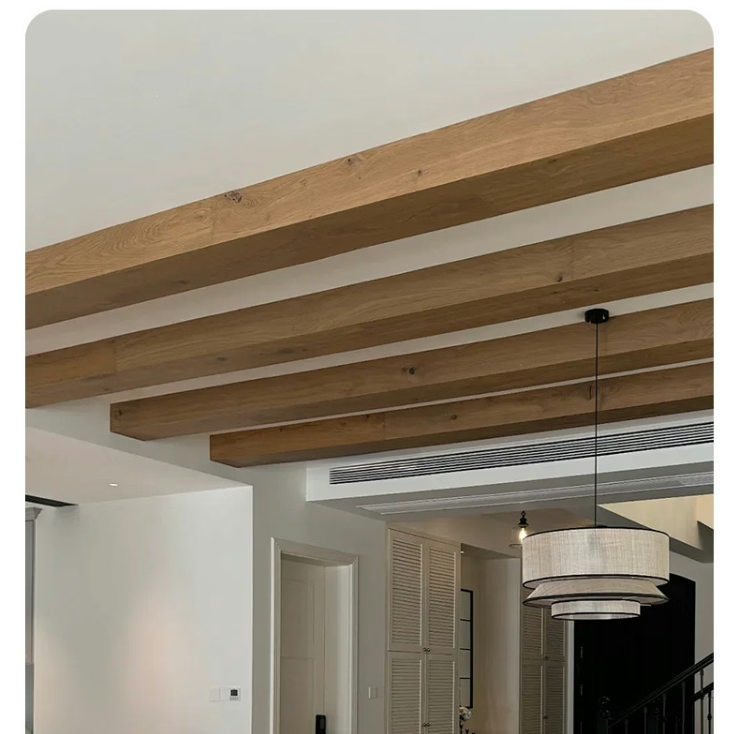
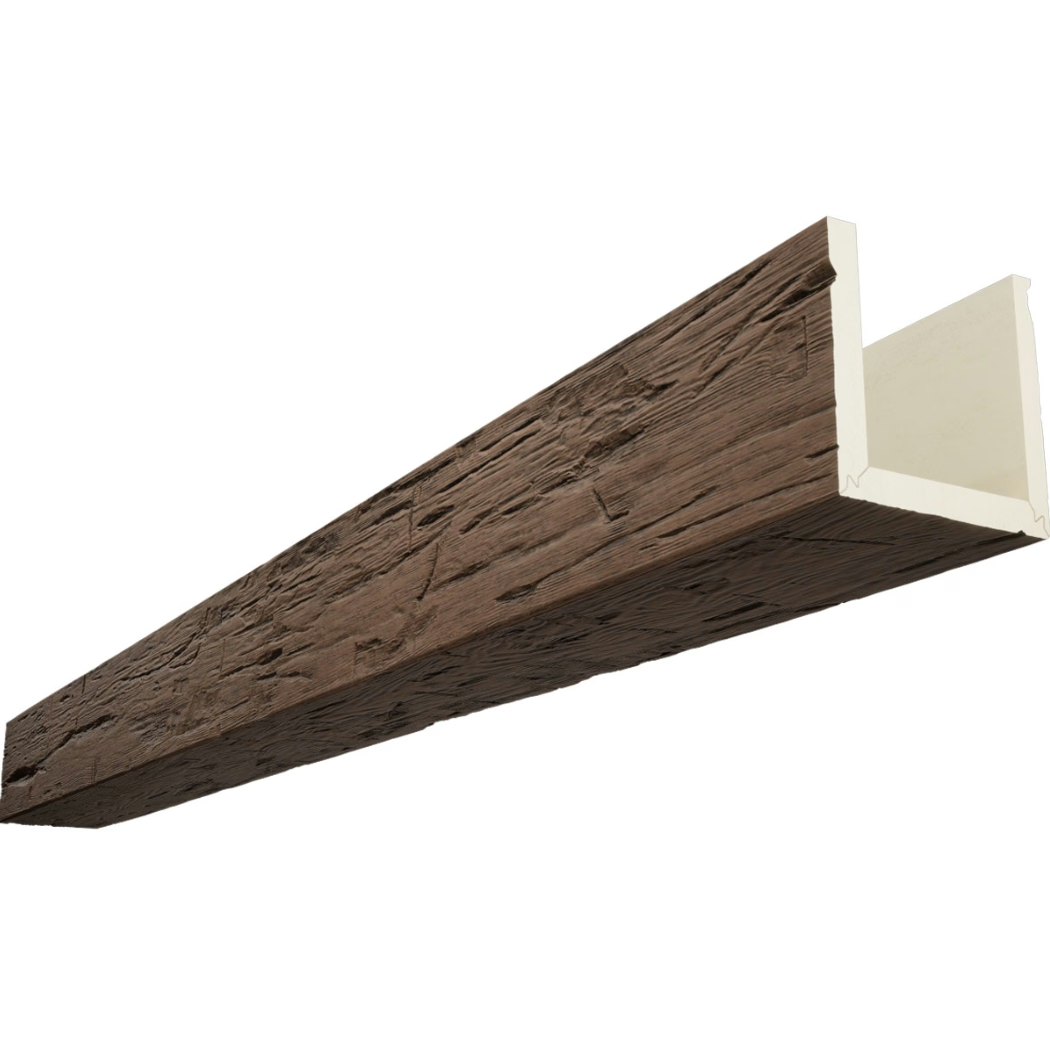
The boutique hotel group operated eleven properties across the Southeast, each with unique character reflecting local architecture and history. Yet guests moving between properties felt no connection—properties seemed like unrelated hotels rather than a cohesive brand family. The ownership group wanted to establish brand identity without forcing cookie-cutter uniformity that would erase the individual character that guests valued. We developed a design language using ceiling beams as signature elements—every property featured beams in public spaces, but beam styles, colors, and configurations varied reflecting local character. Rustic hand-hewn beams suited the North Carolina mountain lodge while refined smooth beams matched the Charleston historic district property. The consistency of "beams as signature ceiling treatment" created brand recognition while specific implementations remained locally appropriate. Guest surveys showed 68% brand recognition improvement while property-specific character scores remained stable.
Hospitality chains face constant tension between brand consistency that builds recognition and local customization that creates authentic sense of place. Design systems using architectural elements strategically allow balancing these competing objectives—establishing recognizable patterns while permitting variation within defined parameters. Ceiling beams offer particularly effective vehicles for this balance, providing substantial visual impact through treatments that adapt to varying contexts while maintaining identifiable brand signatures.
Understanding Brand Identity in Hospitality Design
Visual consistency creating guest recognition relies on repeating identifiable design elements across properties. When guests immediately recognize brand signatures upon entering any property, design has succeeded in establishing visual identity. This recognition creates comfort—guests know what to expect—while supporting brand equity that commands premium pricing versus non-branded competitors.
Flexible frameworks allowing variation within boundaries prevent brand systems from creating identical properties that ignore context. Rigid standardization might ensure consistency but produces cookie-cutter environments feeling artificial in diverse locations. Sophisticated brand systems establish parameters—material palettes, proportions, design languages—while allowing interpretation adapting to specific contexts.
Hierarchy of elements distinguishing which design aspects require strict adherence versus allowing flexibility guides implementation. Core brand signatures—perhaps ceiling treatment patterns and specific color palettes—maintain consistency while accent elements permit local variation. Understanding this hierarchy prevents both excessive rigidity and chaotic inconsistency.
Regional appropriateness ensuring designs respect local architecture, materials, and cultural contexts creates authentic sense of place. A design system working beautifully in Arizona might feel completely wrong in New England. Successful brand systems work with rather than against regional context, finding authentic expressions of brand language within local vernacular.
Guest experience consistency extending beyond just visual design into service standards, amenity offerings, and operational practices completes brand identity. Visual design serves broader brand strategy ensuring all touchpoints communicate consistent values and quality expectations. Ceiling treatments supporting this broader consistency prove most effective when coordinating with comprehensive brand strategies.
Strategic Use of Ceiling Beams in Brand Systems
Signature ceiling moments creating memorable first impressions in arrival sequences establish immediate brand recognition. Lobbies, registration areas, or dramatic public spaces featuring distinctive beam treatments become brand signatures that guests remember and identify with properties. These signature moments anchor brand identity while other spaces can vary more freely.
Transitional consistency maintaining recognizable elements while adapting to space-specific requirements balances identity with functionality. Beams in guest corridors might simplify compared to dramatic lobby treatments but maintain family resemblance through proportions, colors, or spacing patterns. This gradient from signature moments to supporting elements creates cohesion without monotony.
Material consistency using defined beam profiles, finishes, and textures across properties provides recognizable continuity even when colors or configurations vary. If all properties use hand-hewn texture beams but vary stain colors regionally, texture provides continuity while color allows customization. Material consistency proves more forgiving than rigid specification of every attribute.
Proportional systems establishing dimensional relationships rather than absolute sizes allows beam treatments scaling appropriately to varying room sizes while maintaining proportional consistency. A ratio of beam width to spacing of 1:6 maintains recognizable rhythm whether using 4-inch beams at 24-inch spacing or 6-inch beams at 36-inch spacing. Proportional thinking creates adaptable systems that rigid dimension specifications can't match.

Developing Design System Documentation
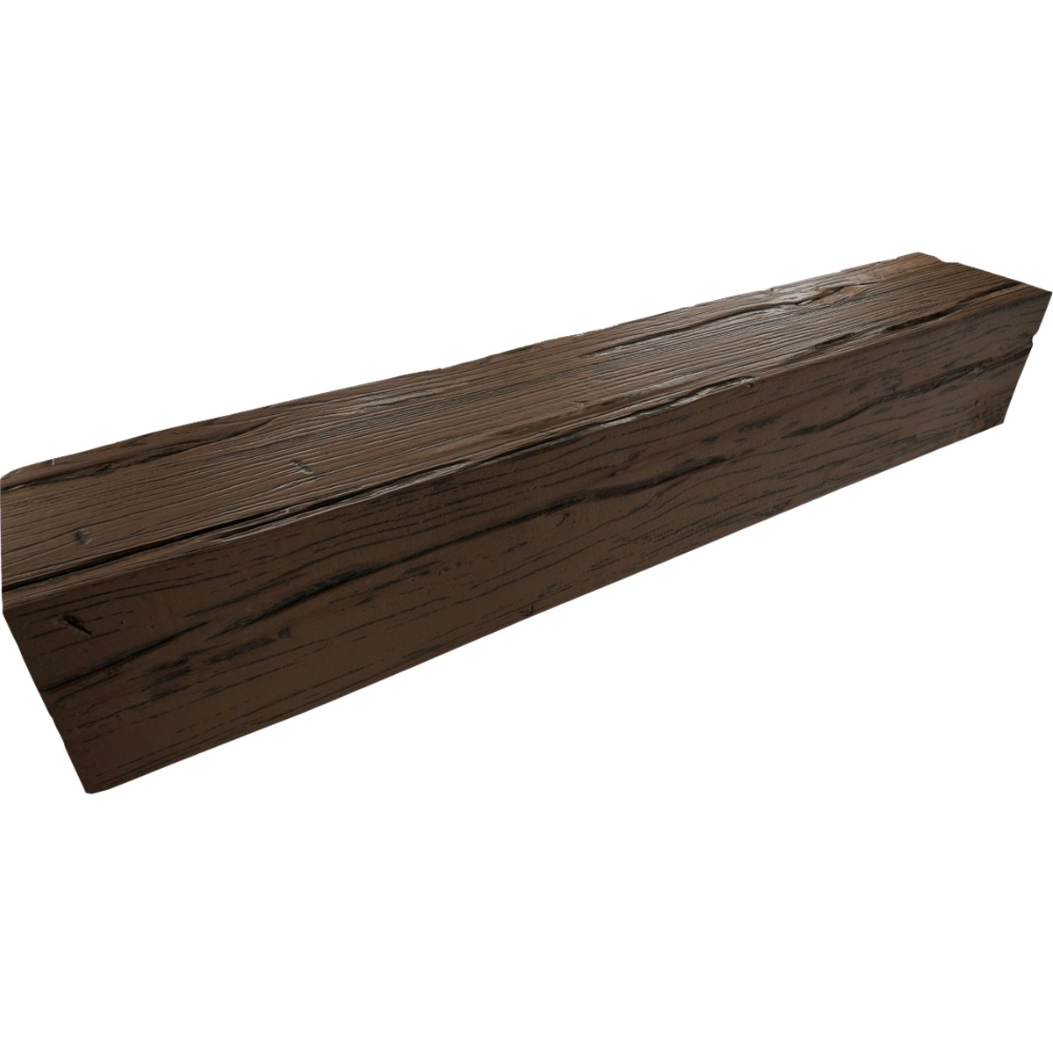
Brand standards manuals documenting approved beam profiles, colors, installation patterns, and application guidelines create reference materials ensuring consistent implementation across properties and design teams. These comprehensive guides should include both prescriptive specifications for core elements and flexible guidelines for adaptable components. Visual examples showing both compliant and non-compliant implementations help designers understanding intentions.
Material specification libraries cataloging approved products, manufacturers, and finish options streamline procurement while ensuring consistency. Rather than requiring designers researching materials for each project, centralized libraries provide pre-approved options meeting brand standards. Periodic updates incorporating new products or discontinuing obsolete ones keep libraries current.
Installation detail standards establishing mounting methods, joint treatments, and finishing techniques ensure consistent execution quality across properties despite potentially different contractors. Standard details reduce design time while preventing quality variations from contractors interpreting vague specifications differently. Details should include both typical conditions and special scenarios requiring adaptation.
Decision trees guiding when to use specific beam treatments, what customization proves acceptable, and escalation paths for situations exceeding normal parameters help designers navigating brand systems. These tools prevent paralysis from unclear guidelines while maintaining appropriate oversight preventing brand dilution through excessive customization.
Case study examples showing successful implementations across diverse contexts illustrate how brand systems adapt to varying conditions. Photo documentation with explanatory text showing why specific choices were made helps designers understanding not just what standards say but why. Examples prove more instructive than abstract rules.
Color Strategy and Regional Adaptation
Core palette definition establishing 3-5 signature colors that appear consistently across all properties creates color recognition. These core colors might include specific wood tones, accent colors, or neutral backgrounds that immediately signal brand identity. Core palettes should prove broadly adaptable across contexts while remaining distinctive.
Regional variations allowing property-specific colors complementing core palettes provide customization within brand framework. A property in adobe architecture regions might incorporate warm terracotta tones alongside core palette, while New England properties might add cooler grays. These regional colors should harmonize with rather than conflict with core brand colors.
Application rules determining where core versus regional colors apply guides appropriate use. Perhaps public space beams must use core palette colors while guest room beams permit regional variation. Or maybe base beam colors come from core palette while accent details allow regional colors. Clear rules prevent confusion about acceptable variation.
Finish consistency across color variations maintains recognizable brand signatures even when hues vary. If all properties use hand-hewn texture and semi-transparent stains allowing wood grain visibility, this consistency unifies diverse colors. Material and finish consistency often proves more critical than exact color matching for brand recognition.
Testing protocols requiring mockups or rendering approval before final implementation ensures that color adaptations meet brand standards. New properties or significant renovations should submit ceiling treatment proposals including actual material samples or high-quality renderings for brand team review preventing implementations that drift too far from standards.
Pattern and Layout Systems
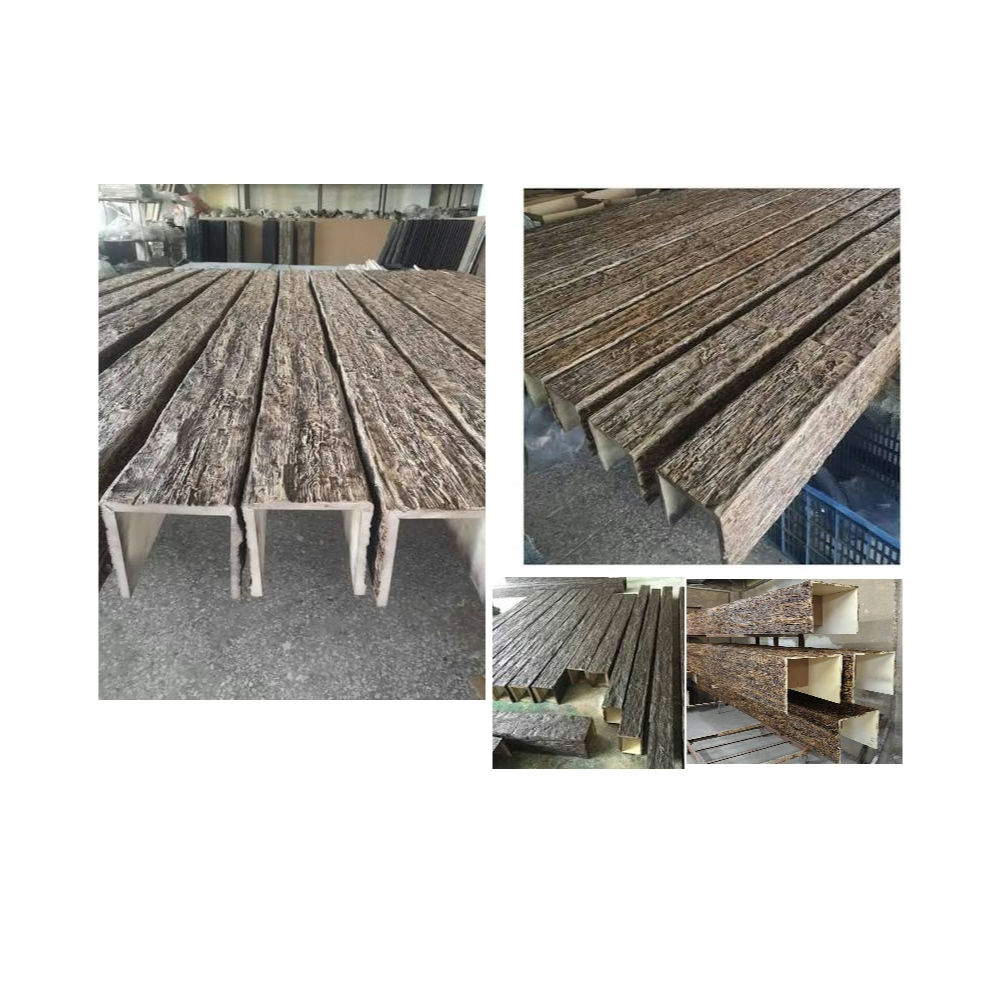
Rhythmic consistency through standardized beam spacing ratios creates recognizable patterns even when absolute dimensions vary. A system using 1:5 beam-to-gap ratios (6-inch beams at 30-inch spacing or 8-inch beams at 40-inch spacing) maintains visual consistency across rooms of different sizes. Rhythm proves more recognizable than specific dimensions.
Directional standards establishing whether beams run parallel to primary circulation, perpendicular to windows, or follow other orientation rules creates consistency in how spatial organization reads. Direction dramatically affects spatial perception—consistent directional approaches across properties create subconscious brand recognition even without conscious analysis.
Grid systems for coffered ceilings or beam intersections establishing proportional relationships between primary and secondary members maintains recognizable complexity across varying room sizes. A 1:1.5 ratio between cross-beam spacing and primary beam spacing scales appropriately whether creating 4×6 foot coffers or 6×9 foot coffers maintaining consistent proportional feel.
Edge treatments at wall intersections, penetrations, or terminations following consistent detailing approaches unifies diverse installations. If all properties detail beam ends with returns creating clean finished edges, this consistency registers even when beam styles vary. Detail consistency often proves more important than overall design consistency for quality perception.
Material Quality Standards
Grade specifications defining minimum quality levels prevents cost-cutting that might undermine brand positioning. If brand identity includes authentic rustic character, using premium hand-hewn beams versus economy smooth profiles proves essential regardless of budget pressures. Quality standards should explicitly state minimum acceptable products preventing value-engineering that compromises brand.
Texture and authenticity requirements ensuring realistic wood character maintains brand integrity particularly for brands positioning on authenticity or natural materials. Cheap obviously-fake beams undermine premium positioning regardless of other design successes. Quality standards should address surface detail, color depth, and overall realism.
Dimensional consistency specifications establishing acceptable tolerances prevents installations appearing sloppy despite individual beams meeting manufacturer specifications. If brand identity includes refined execution, tight installation tolerances prove essential. Standards should specify both product tolerances and installation tolerances ensuring complete systems meet brand quality expectations.
Durability requirements ensuring materials withstand hospitality use patterns prevents premature degradation requiring costly replacement. Hotel environments experience conditions—cleaning chemicals, physical contact, high humidity in some areas—requiring more durable products than residential applications. Specifications should address these use patterns explicitly.
Multi-Property Procurement Strategies
Master specifications creating single comprehensive specification document used across properties reduces design time while ensuring consistency. Rather than writing specifications for each property, master specifications provide templates requiring only minimal project-specific customization. This standardization improves quality while reducing documentation costs.
Preferred vendor relationships establishing partnerships with manufacturers and distributors capable of supporting multi-property programs provides pricing advantages, priority service, and consistent product availability. Vendors viewing hospitality groups as key accounts invest in relationships providing better support than transactional customers receive.
Volume pricing negotiations leveraging aggregate purchase quantities across property portfolios achieves costs impossible for single projects. If annual chain purchases total $500,000 worth of beams, this volume commands attention that $25,000 individual projects can't match. Centralized procurement maximizes volume leverage.
Inventory management for standard materials maintaining stock of commonly-used profiles and colors enables rapid procurement and supports renovation projects without long lead times. Some large chains maintain central inventory warehouses stocking approved materials serving entire portfolios. This inventory investment proves economical through reduced emergency procurement costs and enabled schedule flexibility.
Implementation and Quality Control
Pre-installation approval requiring submission of material samples, installation plans, and contractor qualifications before construction begins prevents unauthorized substitutions or inadequate execution. Approval processes create quality gates ensuring standards implementation rather than just documentation.
Progress inspection during installation by brand team representatives or qualified third parties verifies compliance with standards. Inspections catch problems during construction when correction costs minimally compared to post-completion remediation. Regular inspection also signals brand team commitment to standards encouraging contractor compliance.
Completion verification requiring final inspection and photographic documentation before accepting installations creates accountability while building reference archives showing successful implementations. These completion records become case studies helping future designers while documenting quality baselines for ongoing maintenance.
Ongoing maintenance standards ensuring beam treatments maintain appearance throughout property lifecycles extends brand consistency beyond just installation. Maintenance protocols addressing cleaning, touch-up, and eventual replacement keep installations presenting brand appropriately through years of operation.
Renovation and Refresh Strategies
Phased rollout implementing brand standards across existing properties over time balances immediate impact against capital availability. Prioritizing highest-visibility properties or those most needing renovation focuses limited capital where it creates maximum brand benefit. Complete portfolio transformation might span 5-10 years through strategic prioritization.
Retrofit challenges adapting brand standards to existing architecture requires flexibility while maintaining brand integrity. Historical buildings, unusual geometries, or structural limitations might prevent standard implementations. Having pre-approved alternative approaches prevents each retrofit becoming custom design exercises compromising standards.
Refresh cycles planning periodic updates maintaining contemporary appearance prevents brand systems becoming dated. Design trends evolve—systems must either prove timeless or include planned refresh cycles keeping brand current. Understanding this lifecycle guides whether to pursue classic designs maintaining relevance indefinitely or contemporary designs requiring more frequent updates.
Performance Measurement
Guest recognition testing through surveys or focus groups measuring whether guests identify brand signatures validates design system effectiveness. If guests don't recognize brand elements, systems aren't succeeding regardless of designer opinions about consistency. Quantitative recognition measurement should guide system refinement.
Photography review comparing installations across properties reveals inconsistencies or drift from standards. Annual photography audits compiled into visual comparisons make variations obvious that might not appear apparent viewing properties individually. This systematic review supports continuous improvement.
Cost analysis tracking implementation costs versus value created through brand equity quantifies design system ROI. If brand consistency commands 15% rate premiums but costs only 8% more to implement than generic designs, ROI clearly justifies investment. Understanding economics validates design investments.
Evolution and Adaptation
Trend monitoring watching hospitality design evolution informs when brand systems require updates remaining current. Design languages appropriate today might appear dated in five years—successful brands evolve while maintaining core identity. Balancing evolution against stability requires judgment but ignoring market changes risks obsolescence.
Pilot programs testing potential system updates at single properties before chain-wide rollout reduces risk of changes proving unsuccessful. New beam styles, colors, or configurations can trial at willing properties, gathering guest feedback before committing entire portfolio to changes.
Continuous improvement incorporating lessons learned, new materials, and improved techniques refines brand systems over time. Systems should evolve based on accumulated experience—what works well gets codified while problematic approaches get modified. This improvement orientation prevents systems stagnating into rigid dogma resistant to beneficial change.
Creating Lasting Brand Signatures
Unified design language across multiple hospitality properties using ceiling beams strategically creates brand recognition while respecting local context and individual property character. Success requires sophisticated design systems establishing clear parameters for consistency while allowing appropriate variation. For hospitality groups managing property portfolios, investing in comprehensive brand systems yields returns through enhanced brand equity, operational efficiencies, and guest satisfaction that far exceed development costs.
The discipline to develop and maintain design systems distinguishes professional hospitality brands from collections of disconnected properties. Ceiling beam treatments provide particularly effective vehicles for brand expression—visible, memorable, adaptable elements creating signature moments that guests recognize and remember across properties.
Technical References
ASTM standards cited in every specification
Test Data
Lab results from internal testing program
Updated 2026
Reviewed against current product specs