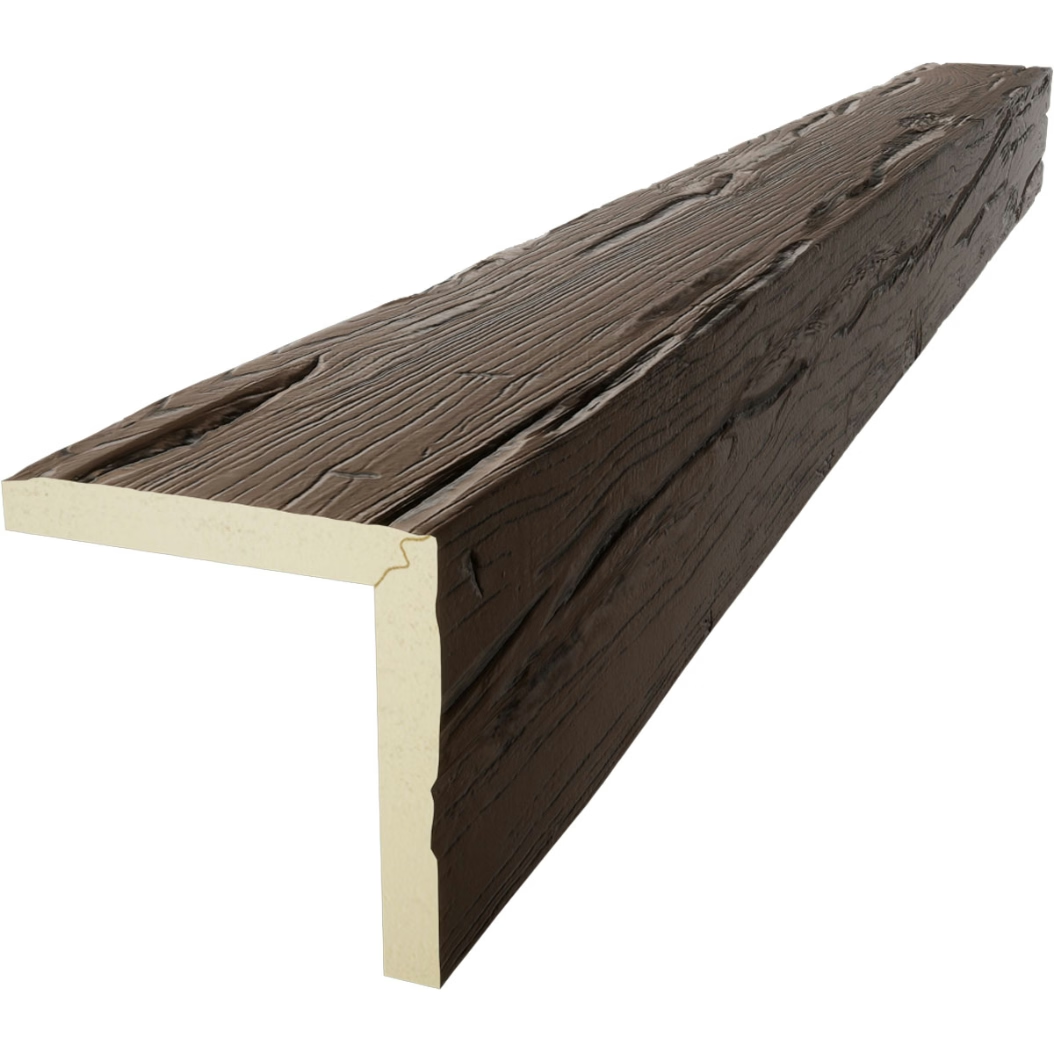
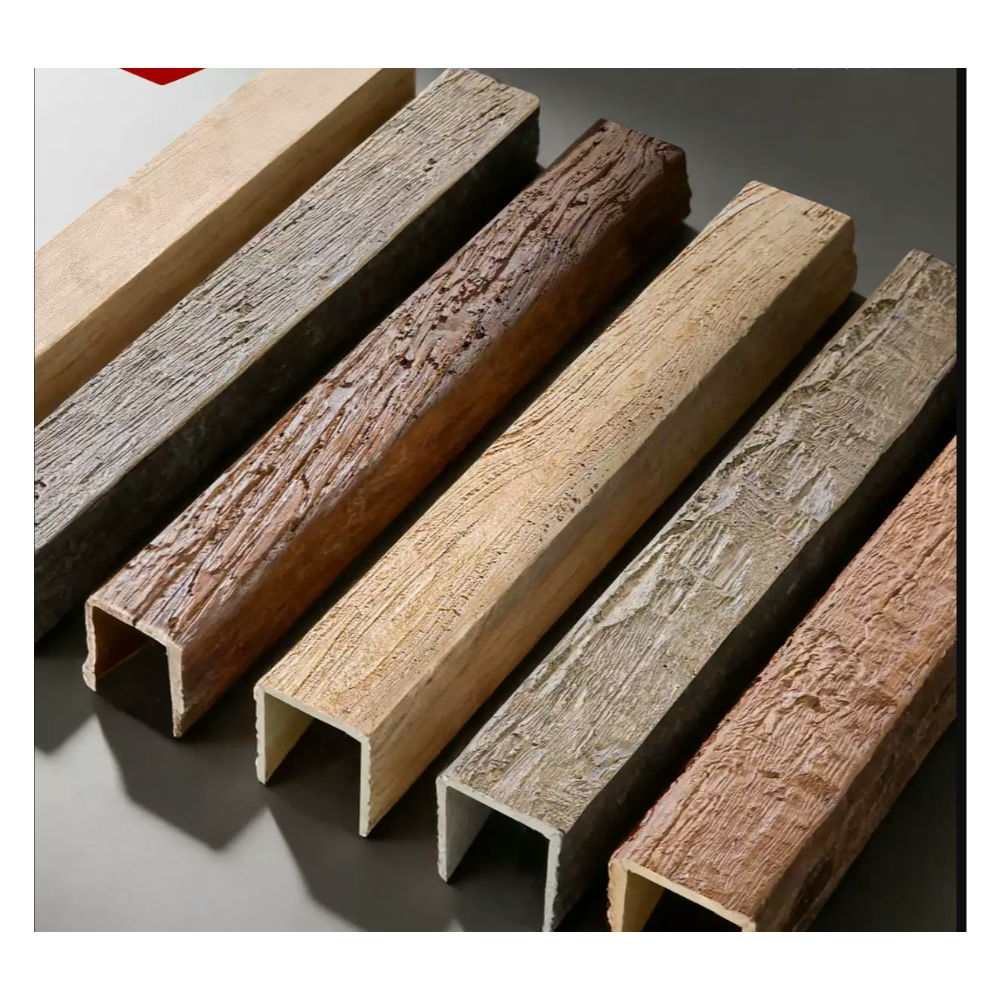
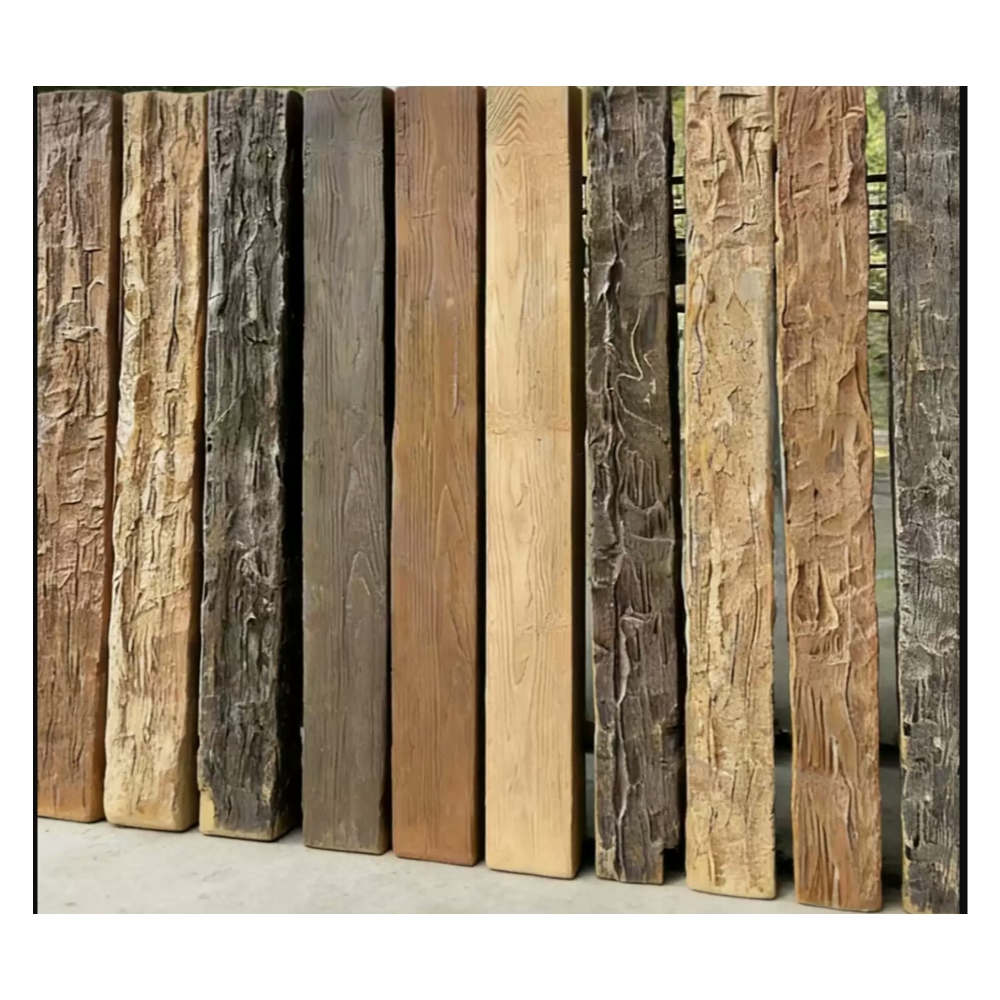
The interior designer reviewing progress photos from a high-end mountain residence renovation noticed alarming color changes in ceiling beams surrounding the great room's dramatic south-facing skylights: after just eight months of exposure, the beams that had been installed with rich walnut brown finish were showing pronounced yellowing and color fading in areas receiving direct sunlight, while beams in shaded areas maintained their original appearance. The differential fading created obvious visual discontinuity that destroyed the carefully coordinated color palette. Laboratory analysis of surface samples revealed advanced UV-induced degradation—the polyurethane foam substrate had yellowed from photooxidation, and the coating system had chalked and lost gloss from UV exposure. Radiation measurements in the affected areas documented UV intensity levels exceeding 200 W/m² during peak sun angles—equivalent to aggressive outdoor exposure conditions despite the interior location. Remediation required stripping and refinishing all affected beams with UV-resistant coating systems, installing UV-filtering film on skylights to reduce future exposure, and adjusting automated shade systems to provide sun protection during peak radiation periods. The comprehensive remediation cost $32,000 and delayed project completion by five weeks.
UV degradation resistance in south-facing skylight adjacent installations addresses accelerated weathering that occurs when interior building materials experience solar exposure intensities approaching outdoor conditions. While building interiors generally receive minimal UV radiation from artificial lighting, large glazed areas—particularly overhead skylights in sunny climates—admit sufficient UV to cause rapid degradation of UV-sensitive materials. Polyurethane foams and many coating systems exhibit poor UV resistance, yellowing, chalking, and eventually losing mechanical properties under sustained UV exposure. Understanding UV degradation mechanisms, predicting exposure conditions in skylight-adjacent locations, and specifying UV-resistant materials or protective measures prevents appearance degradation and premature material failure in these challenging installations.
UV Radiation Characteristics and Material Effects
Solar ultraviolet radiation spans wavelengths from 290-400 nanometers, with different wavelength bands causing distinct material degradation mechanisms.
UVB radiation (290-320 nm) represents the most energetic and damaging UV wavelengths reaching earth's surface. UVB photons carry sufficient energy to break chemical bonds in polymers directly, initiating degradation reactions. Glass effectively blocks most UVB below 310 nm, but transmits 40-60% of UVB above 310 nm depending on glass type. Standard float glass used in skylights provides some UVB attenuation but allows significant transmission that can degrade materials. Even interior locations receive meaningful UVB through standard glazing.
UVA radiation (320-400 nm) represents longer wavelength UV that glass transmits readily—standard float glass transmits 70-85% of UVA. While individual UVA photons carry less energy than UVB, UVA causes degradation through photosensitized reactions where absorbed radiation excites molecules that then react with oxygen to form radicals attacking polymer chains. The higher transmission and intensity of UVA compared to UVB means that total degradation from UVA often exceeds UVB contribution despite lower per-photon energy.
Photooxidation represents the primary degradation mechanism for polyurethane exposed to UV. UV photons absorbed by urethane linkages or impurities in the polymer initiate free radical formation. These radicals react with atmospheric oxygen to form peroxy radicals that attack polymer chains, breaking bonds and creating carbonyl groups. Continued photooxidation progressively degrades polymer molecular weight, causing yellowing (from carbonyl chromophore formation), surface chalking (from polymer fragmentation), gloss loss, and eventually mechanical property degradation including embrittlement and cracking.
Dose rate and cumulative dose both affect degradation progression. High-intensity UV exposure accelerates degradation compared to lower intensity exposure accumulating to the same total dose, because radical concentrations increase with dose rate and certain reactions proceed more rapidly at higher radical densities. Skylight-adjacent locations experiencing intense UV during limited daily periods may show faster degradation than locations with lower-intensity but longer-duration exposure.
Solar Exposure Conditions Near Skylights
Predicting UV exposure levels in skylight-adjacent ceiling locations requires understanding solar geometry, glazing properties, and interior surface angles.
Solar altitude and azimuth throughout the year determine when direct sun strikes particular interior surfaces. South-facing skylights in northern hemisphere mid-latitudes receive maximum solar input near summer solstice when solar altitude reaches 70-80° at solar noon. During these conditions, direct sunlight penetrates deeply into interiors, potentially reaching ceiling surfaces 20-30 feet from skylights. Solar path diagrams or computer modeling establish exactly when and where direct sun reaches interior surfaces throughout the year.
Glazing transmission characteristics determine what fraction of incident solar radiation reaches interiors. Standard clear float glass transmits approximately 88-90% of visible light, 70-85% of UVA, and 40-60% of shorter-wavelength UVA and UVB. Low-iron glass increases visible transmission to 91-92% but has similar UV transmission. Low-E coatings designed for thermal performance typically provide minimal UV attenuation unless specifically formulated for UV blocking. UV-filtering glazing options can reduce UV transmission to below 10% while maintaining 70-80% visible light transmission, substantially reducing interior UV exposure.
Interior reflection and scattering distribute solar radiation beyond direct beam paths. Even locations not receiving direct sunlight receive diffuse radiation scattered from walls, floors, and other surfaces. These secondary radiation levels typically measure 10-20% of direct beam intensity but accumulate exposure over longer daily periods, contributing meaningfully to total UV dose. Light-colored interior surfaces reflect more radiation, increasing diffuse exposure levels compared to dark surfaces that absorb radiation.
Seasonal variation in exposure creates different degradation patterns than constant exposure. Summer months with high solar altitude deliver intense exposure to ceiling areas near skylights. Winter months with lower solar angles may deliver minimal exposure to the same locations but intense exposure to vertical surfaces farther from skylights. Annual UV dose accumulates from these varying conditions, with some surfaces experiencing year-round exposure while others see seasonal variation.
Polyurethane UV Susceptibility
Base polyurethane foam formulations vary in UV resistance depending on chemical structure and additives.
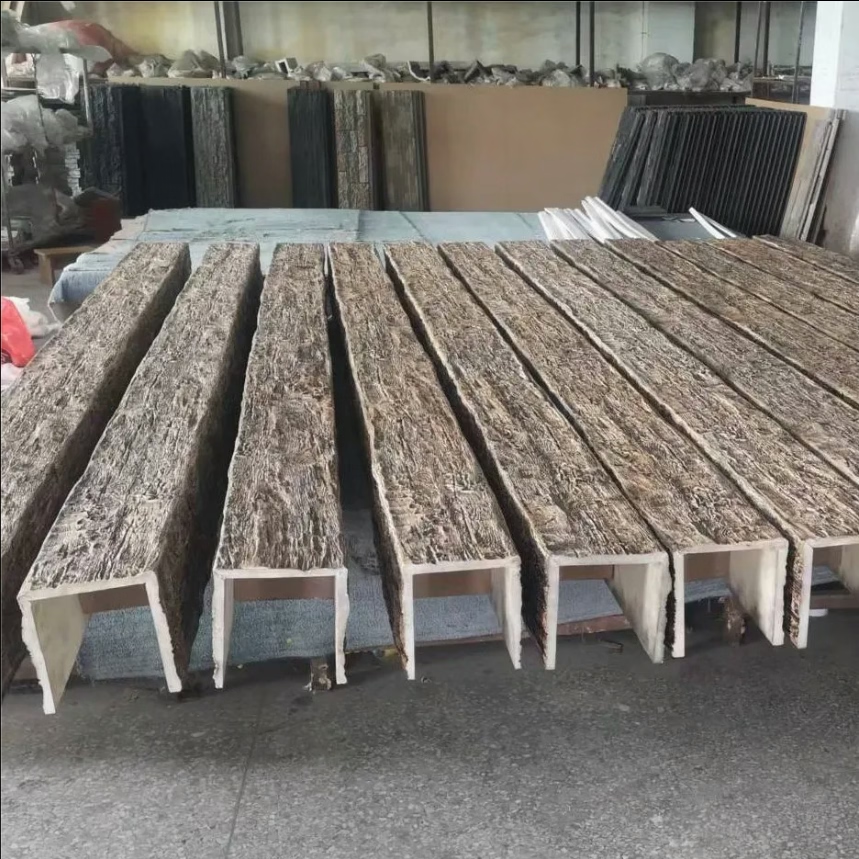
Aromatic polyurethane formulations common in rigid foams show poor UV resistance, yellowing rapidly under UV exposure. The aromatic rings in these polymers create chromophores that absorb UV strongly, initiating photooxidation. Yellowing becomes visible after UV doses equivalent to weeks or months of outdoor exposure, or months to years of high-intensity interior exposure through skylights. Aromatic polyurethane beams without UV protection are unsuitable for locations receiving significant solar exposure.
Aliphatic polyurethane formulations exhibit substantially better UV resistance because they lack chromophoric aromatic rings, absorbing less UV and generating fewer free radicals. However, even aliphatic polyurethane undergoes slow photooxidation from impurities and chain defects, eventually yellowing and degrading under sustained UV exposure. Aliphatic polyurethane may perform adequately for moderate interior exposures but still requires protective coatings or UV stabilizers for high-exposure skylight-adjacent applications.
UV stabilizer additives incorporated into polyurethane formulations improve resistance through several mechanisms. UV absorbers (benzotriazoles, benzophenones) absorb UV radiation before it reaches sensitive polymer sites, dissipating energy harmlessly as heat. Hindered amine light stabilizers (HALS) scavenge free radicals formed during photooxidation, breaking degradation chains before extensive damage accumulates. Antioxidants prevent oxygen participation in photooxidation reactions. Properly stabilized polyurethane can resist yellowing and degradation for years under interior UV exposure, though performance eventually degrades as stabilizers deplete.
Density and cell structure of polyurethane foam affect UV penetration depth and degradation patterns. Closed-cell foams limit UV penetration to surface layers (typically 0.5-2 mm depth), protecting bulk material while surface degrades. Open-cell foams allow deeper UV penetration, causing more uniform degradation through greater thickness. Surface degradation in closed-cell foam creates chalky layer that eventually erodes, progressively exposing fresh material to UV.
Protective Coating Systems
Surface coatings provide the most effective protection for polyurethane beams in high-UV locations, using several protective mechanisms.
UV-absorbing pigments in coatings block UV from reaching polyurethane substrate. Titanium dioxide and iron oxide pigments provide excellent UV absorption while delivering opacity and color. Carbon black provides extreme UV absorption, making dark-colored coatings highly UV-resistant. Light-colored coatings require higher pigment loading or supplemental UV absorbers to achieve adequate protection. Transparent or lightly-tinted coatings offer minimal UV absorption from pigments alone, relying primarily on UV absorber additives.
UV absorber additives in clear or lightly-pigmented coatings absorb UV wavelengths selectively while remaining transparent to visible light. Benzotriazole and benzophenone UV absorbers provide broad-spectrum UV protection while maintaining coating clarity. These additives must be incorporated at sufficient concentration (typically 2-5% by weight) to absorb meaningful UV fraction. Performance degrades over time as UV absorbers themselves degrade or migrate, requiring eventual recoating to maintain protection.
HALS additives in topcoat formulations provide long-term stability by catalytically scavenging free radicals. Unlike UV absorbers that sacrifice themselves protecting the coating, HALS regenerate after radical scavenging and provide extended protection. Modern exterior-grade coatings typically combine UV absorbers (providing initial UV screening) with HALS (providing long-term radical scavenging) for synergistic protection. Interior applications benefit from similar formulations when UV exposure is significant.
Film thickness of protective coatings affects UV protection level because thicker films provide longer optical path length for UV absorption. Coatings must be applied at manufacturer-specified thicknesses to achieve rated UV protection—thin applications reduce protection proportionally. Multiple-coat systems building to 3-5 mils dry film thickness typically provide better UV protection than single-coat applications at 1-2 mils, though proper application technique matters more than merely achieving thickness through heavy single coats.
Material Selection Strategies
Specifying UV-resistant materials from project inception prevents degradation problems more effectively than attempting to protect UV-sensitive materials.
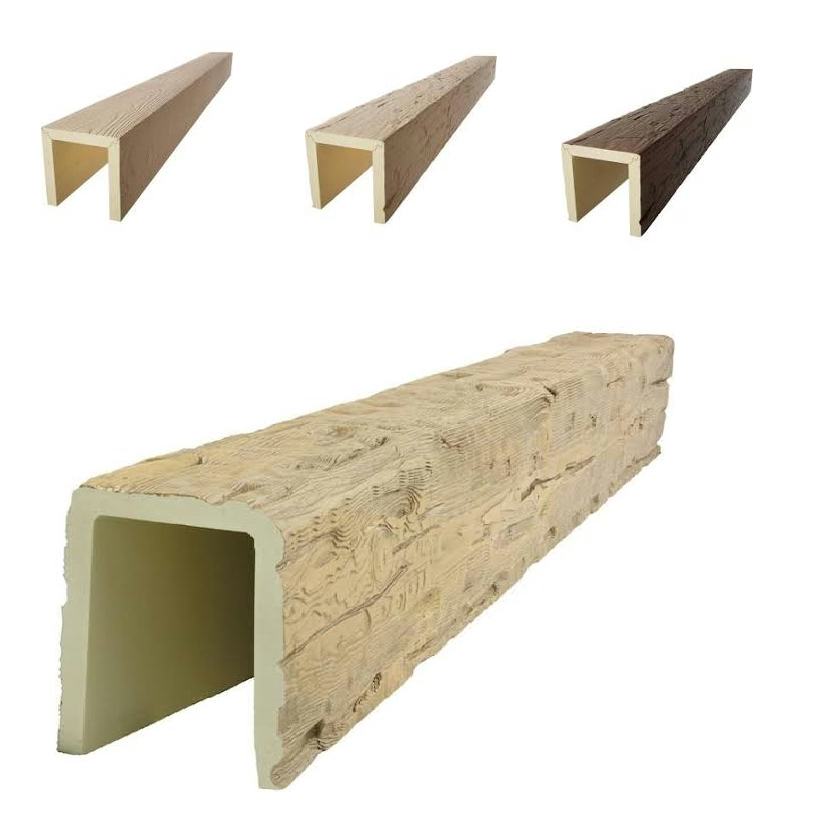
Factory-applied UV-resistant finishes optimize protection by applying coatings under controlled conditions ensuring proper surface preparation, coating thickness, and cure. Manufacturers offering beams specifically for high-UV applications typically use stabilized polyurethane substrates plus multi-coat UV-resistant finish systems providing protection exceeding field-applied coatings. Premium of 30-50% over standard finishes reflects coating cost and application process rigor, but delivers superior performance justifying cost in critical applications.
Alternative materials for extreme UV exposure might include FRP (fiberglass-reinforced polymer) beams inherently UV-stable, or mineral-composite beams using portland cement or gypsum matrices unaffected by UV. These alternatives sacrifice some authentic wood appearance characteristics that polyurethane provides but eliminate UV degradation concerns. Cost typically runs 50-100% premium over standard polyurethane beams, justified only in most-demanding applications.
Color selection affects UV degradation visibility. Darker colors show less yellowing than light colors because yellow discoloration is less apparent against dark backgrounds. Medium earth tones (browns, tans, grays) tend to age more gracefully than light colors or very dark colors—light colors yellow noticeably, while very dark colors show fading and chalking prominently. Specifying colors that "age gracefully" reduces appearance impact even when some UV degradation occurs.
Sample exposure testing for critical projects can verify performance before full installation. Beam samples exposed to actual site UV conditions (installed near skylights for 3-6 months before main installation) reveal whether specified finishes provide adequate protection. Accelerated testing using UV chambers simulating years of exposure in days provides faster assessment but may not perfectly predict real-world performance. Testing adds time and cost but provides confidence for high-stakes projects.
Glazing Selection and UV Filtering
Modifying skylight glazing to reduce UV transmission protects all interior materials, not just ceiling beams, providing comprehensive solution.
UV-filtering glazing options include laminated glass with UV-absorbing interlayers, glazing with factory-applied UV-filtering coatings, and UV-absorbing glass compositions. These products reduce UV transmission to 5-15% while maintaining 65-80% visible light transmission—adequate daylight admission while drastically reducing UV exposure. Cost premium ranges from 20% for UV-absorbing interlayers to 40% for specialty UV-filtering glass. Specifying UV-filtering glazing during initial skylight installation represents cost-effective protection compared to applying UV treatments to multiple interior finishes.
Retrofit UV-filtering films applied to existing glazing provide cost-effective UV reduction when skylight replacement isn't feasible. Quality films reduce UV transmission to 10-20% while minimally affecting visible light (85-90% transmission maintained). Film application costs $8-15 per square foot professionally installed. Film service life ranges from 10-20 years depending on product quality and UV exposure intensity, requiring eventual replacement but providing interim protection at fraction of glazing replacement cost.
Dynamic shading systems including motorized blinds, electrochromic glazing, or automated louvers reduce UV exposure during peak sun periods while allowing full daylight other times. These systems optimize between daylight utilization and UV protection, providing complete UV blocking during highest-intensity periods while admitting light during morning, evening, and overcast conditions. Cost for motorized systems ranges from $50-150 per square foot including controls, justified in applications valuing both daylight and UV protection.
Glazing maintenance affects UV transmission over time. Dirt accumulation on glazing surfaces reduces both visible and UV transmission, accidentally providing some UV protection. However, relying on dirty glazing is poor practice—cleaning to maintain daylight transmission removes this accidental protection. UV-filtering properties should be integral to glazing rather than depending on surface conditions.
Design Integration for Skylit Spaces
Architectural design can minimize UV exposure through strategic beam placement and skylight configuration.
Beam positioning strategies might avoid locating beams in highest-UV zones immediately adjacent to skylights, instead positioning beams in lower-exposure peripheral areas. North-facing skylights (in northern hemisphere) receive minimal direct sun, dramatically reducing UV exposure compared to south-facing equivalents. East and west skylights receive direct sun at lower solar altitude angles less likely to strike ceiling beams directly. Design layouts considering solar geometry can reduce UV exposure substantially through strategic skylight orientation and beam placement.
Architectural shading elements including internal light shelves or external overhangs block direct sun at high solar altitudes while admitting low-angle sun during winter or morning/evening hours. These passive systems provide UV protection without operating costs or maintenance requirements of mechanical systems. Designing appropriate overhang dimensions requires solar geometry analysis ensuring adequate summer sun blocking while maintaining winter daylight admission.
Diffusing glazing options scatter direct sunlight, reducing peak intensity while distributing light more uniformly. Translucent insulated panels, prismatic glazing, or opal glass reduce direct beam intensity by 60-80% while maintaining total light transmission at 50-70%. This reduces peak UV exposure proportionally, extending material service life. Appearance effects of diffusing glazing should be evaluated—some applications benefit from diffused light quality, while others require clear glazing for view preservation or architectural effect.
Material zoning strategies might specify UV-resistant finishes only for beams in high-exposure zones while using standard finishes elsewhere in the same space. This reduces project cost while focusing UV protection where most needed. However, color matching between UV-resistant and standard finishes requires attention to ensure visual consistency initially and as materials age at different rates.
Monitoring and Maintenance Programs
Long-term performance in UV-exposed locations benefits from monitoring and planned maintenance addressing degradation before appearance becomes unacceptable.
Visual inspection protocols establish regular assessment schedules documenting condition changes. Photographs taken annually or biannually from consistent locations and lighting allow objective comparison revealing gradual yellowing, chalking, or gloss loss that might not be apparent to observers seeing conditions daily. Inspection should assess not just visible appearance but also coating integrity, looking for cracking, peeling, or adhesion loss indicating advanced degradation requiring remediation.
Gloss measurement using gloss meters provides quantitative assessment of surface degradation. Initial gloss readings established immediately after installation serve as baseline for future comparisons. Gloss loss of 30-50% from initial values typically indicates significant UV degradation even if visual appearance remains marginally acceptable. Gloss measurement at consistent locations and angles following ASTM standards provides reproducible data tracking degradation progression.
Color measurement using spectrophotometers quantifies yellowing and color shifts not readily apparent to visual assessment. Color difference calculations (Delta E values) compared to initial or unexposed reference samples indicate when degradation reaches thresholds requiring attention. Delta E values exceeding 3-5 units typically represent visible color differences warranting consideration of maintenance interventions.
Recoating schedules based on inspection and measurement data allow proactive maintenance before appearance degradation becomes objectionable. Rather than reactive recoating only after obvious problems develop, planned schedules might recoat UV-exposed beams every 5-8 years based on observed degradation rates. This preserves appearance and prevents substrate degradation that would require more extensive remediation if coating protection is completely lost.
Case Study: Mountain Residence Remediation
The mountain residence project described in the opening exemplifies UV degradation problems in skylight-adjacent installations and their comprehensive remediation.
UV exposure assessment measured radiation levels throughout daily cycles across seasons. South-facing skylight locations received UV irradiance exceeding 200 W/m² at solar noon in summer—approximately 60% of unobstructed outdoor intensity at the high-altitude location. Daily UV doses at peak exposure locations exceeded 20 kJ/m² during summer months—aggressive exposure causing rapid polyurethane degradation in absence of adequate protection. Winter exposure dropped to 30-40% of summer levels but still accumulated meaningful yearly dose.
Material forensics on degraded beam samples revealed that original finish system used standard interior-grade polyurethane coating without UV absorbers or stabilizers. The coating had yellowed, chalked, and lost approximately 70% of initial gloss. Substrate polyurethane beneath coating showed yellowing penetrating 2-3 mm depth, indicating UV had penetrated through degraded coating. Mechanical property testing found surface tensile strength decreased 40% from unexposed areas, indicating advanced photooxidation.
Remediation strategy combined multiple approaches: (1) Stripped and refinished all beams in high-exposure zones with two-part aliphatic polyurethane coating incorporating UV absorbers and HALS at maximum recommended loading. (2) Applied UV-filtering film to skylights reducing UV transmission from 75% to 12% while maintaining 82% visible light transmission. (3) Programmed automated fabric shades to deploy during peak UV periods (10 AM - 2 PM in summer months) while remaining open at other times, further reducing UV dose while preserving daylight benefits.
Post-remediation monitoring over three years has shown excellent performance. Gloss retention exceeds 90% of initial values; color measurements show Delta E values under 2 units (imperceptible differences). UV exposure levels with film and shading operational average 60% below pre-remediation levels, dramatically extending expected service life. Project cost of $32,000 for complete remediation appears justified by elimination of recurring degradation problems that would have required repeated recoating at similar or greater expense over building lifetime.
UV degradation resistance in south-facing skylight adjacent installations exemplifies how interior locations can experience weathering approaching outdoor severity when large glazed areas admit intense solar radiation. Materials perfectly adequate for typical interior applications fail rapidly under concentrated UV exposure in these locations. Projects incorporating substantial skylights in sunny climates must recognize these elevated exposures and specify materials, coatings, and protective measures providing adequate UV resistance. The alternative—standard materials in high-UV locations—leads to premature appearance degradation and recurring maintenance requirements that proper initial material selection would prevent. As contemporary architecture increasingly emphasizes natural daylighting through extensive glazing, understanding and addressing UV durability in interior materials becomes essential for long-term building performance.
Technical References
ASTM standards cited in every specification
Test Data
Lab results from internal testing program
Updated 2026
Reviewed against current product specs