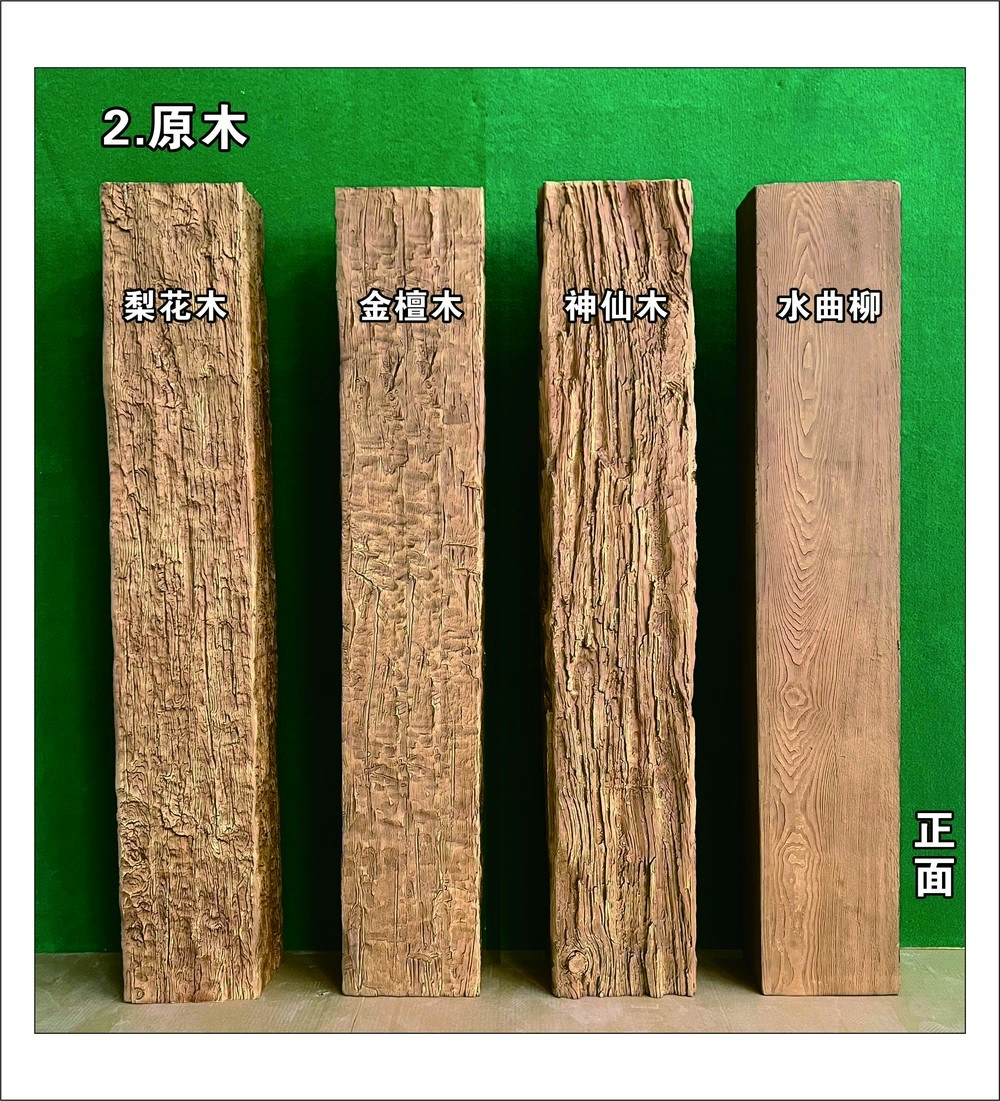
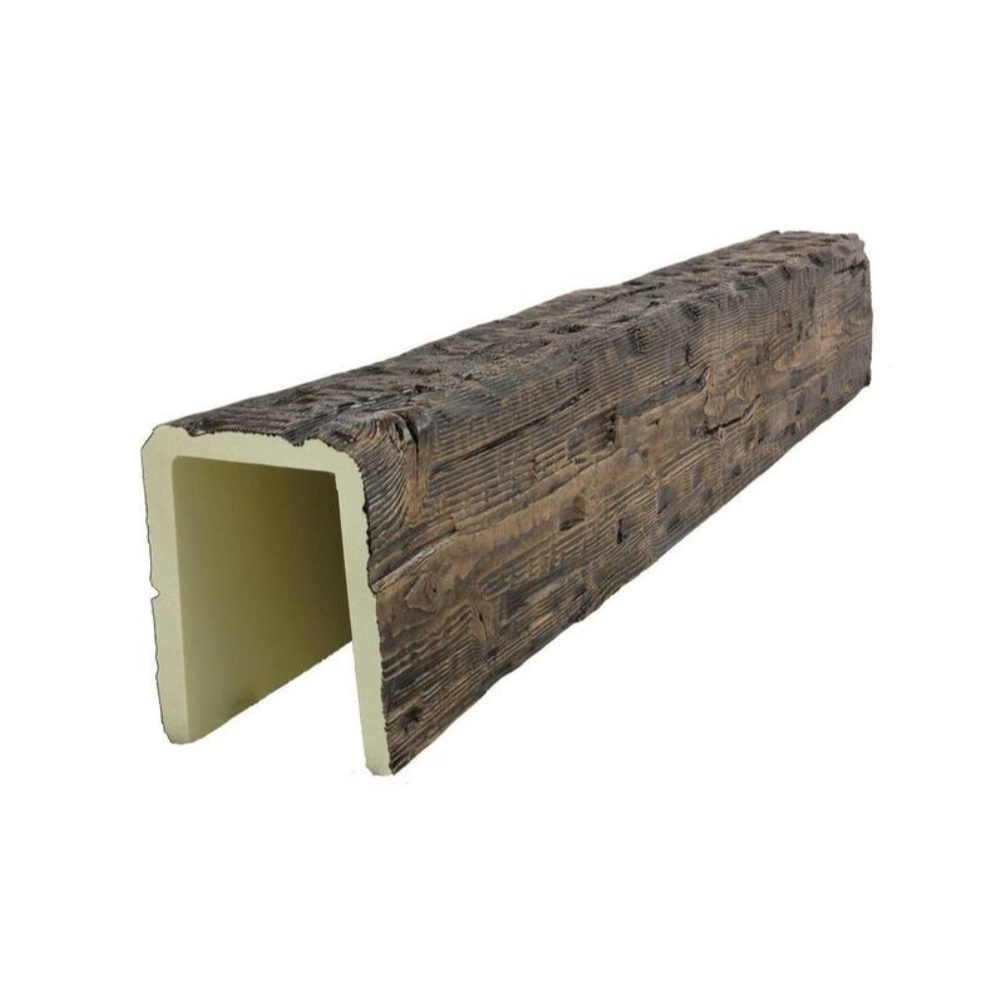
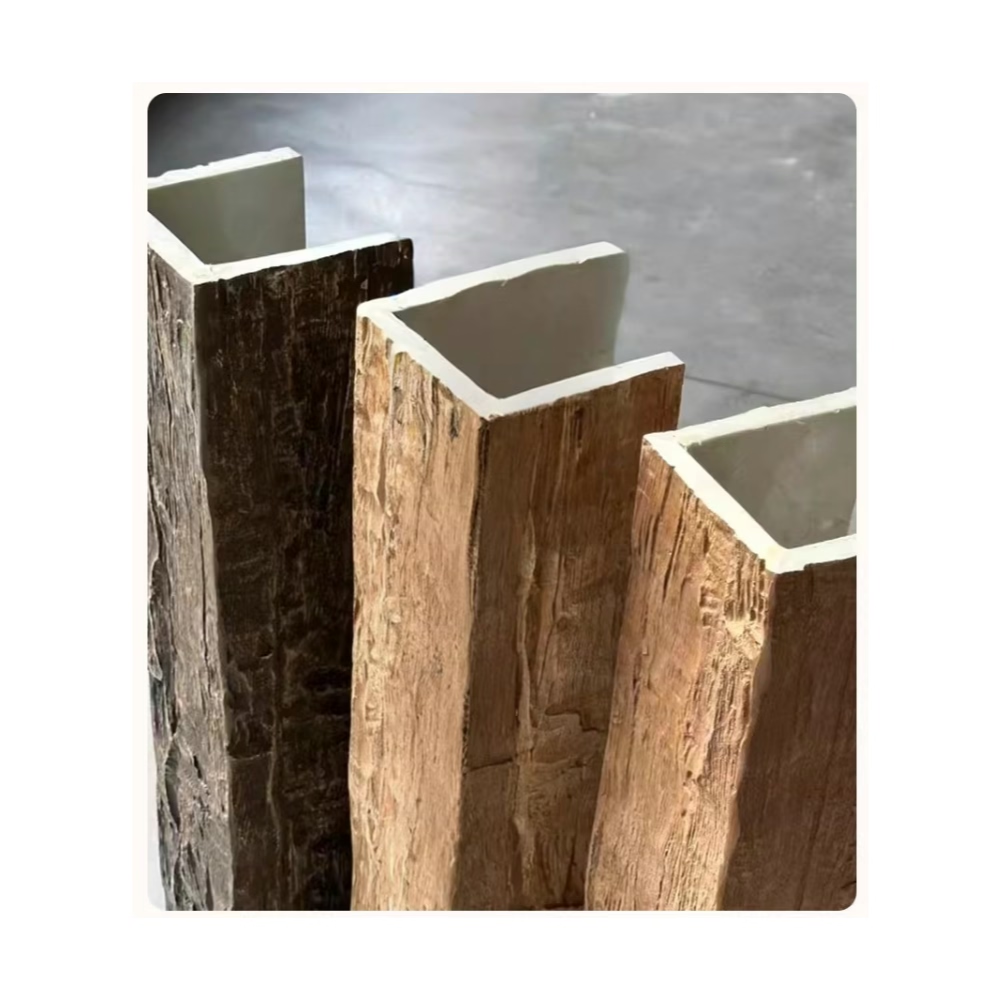
The resort's covered outdoor dining terrace looked spectacular at completion—rich walnut-toned faux beams creating warmth and architectural character perfectly complementing the coastal setting. Eighteen months later, those south-facing beams showed significant fading—the rich browns bleaching to washed-out tans that made the entire space look neglected and cheap. The manufacturer had specified "suitable for covered outdoor use," which we interpreted as UV-resistant. It wasn't. The distinction between "outdoor" meaning moisture-resistant versus truly UV-stable cost the resort $40,000 in replacement and taught me to verify UV specifications explicitly rather than assuming "outdoor" encompasses all environmental challenges.
Ultraviolet radiation from sunlight degrades both polymers and colorants, causing fading, chalking, and material breakdown. Exterior applications and sun-exposed interior spaces require beams formulated specifically for UV exposure—not just moisture resistance. Understanding UV degradation mechanisms, protective formulations, and realistic performance expectations allows specifying products that maintain appearance through years of sun exposure.
Understanding UV Degradation Mechanisms
Ultraviolet radiation carries energy sufficient to break chemical bonds in polymers, initiating degradation cascades that progressively destroy material integrity. In polyurethane, UV attack breaks urethane linkages and oxidizes polymer chains, causing surface chalking, gloss loss, and eventually structural degradation. Without UV stabilization, exposed polyurethane can show significant degradation within months of intense sun exposure.
Colorant fade occurs through separate mechanisms. Organic pigments—the primary colorants in most faux wood finishes—experience molecular structure changes when UV energy breaks chromophore bonds that create color. This photodegradation converts colored molecules to colorless or differently-colored compounds, causing the visible fading that makes browns turn tan and grays bleach to white.
The fade rate depends on several factors: UV intensity (higher at altitude and near equator), exposure duration (south-facing surfaces receive more than north), surface orientation (horizontal surfaces receive more radiation than vertical), and color selection (darker colors fade more noticeably than light tones). A dark brown beam on a south-facing porch roof in Arizona faces far more aggressive exposure than a light gray beam on a north wall in Oregon.
Different wavelengths within UV spectrum cause varying damage. UV-B (280-315nm) and UV-A (315-400nm) both contribute to degradation, though UV-B proves more energetic and damaging. Sunlight contains both, with atmospheric filtering reducing UV-B more than UV-A. Protective formulations must address the full UV spectrum rather than targeting single wavelength ranges.
The compound degradation effects of UV and moisture prove particularly destructive. UV radiation damages surface layers, creating microcracks that admit moisture. Moisture causes polymer swelling and hydrolysis, which increases UV penetration. This synergy explains why outdoor-exposed materials degrade faster than lab UV testing alone would predict—real-world exposure involves multiple simultaneous degradation mechanisms.
UV-Resistant Formulations and Protective Technologies
Hindered amine light stabilizers (HALS) represent the primary UV protection technology in modern polyurethane formulations. These compounds intercept free radicals created by UV attack, interrupting degradation cascades before significant damage accumulates. HALS work through regenerative mechanisms—the stabilizer molecule restores itself after neutralizing radicals, providing long-term protection rather than depleting rapidly.
UV absorbers complement HALS by capturing UV energy before it reaches vulnerable polymer chains or colorants. These compounds—typically benzotriazoles or benzophenones—absorb UV radiation and dissipate the energy as harmless heat. Effective formulations combine absorbers and HALS, providing layered protection addressing both UV capture and radical scavenging.
Pigment selection dramatically affects fade resistance. Inorganic pigments—iron oxides, titanium dioxide, carbon black—offer superior UV stability compared to organic colorants. However, inorganic pigments provide limited color range and cannot replicate the complex multi-tone appearances that wood grain demands. High-quality formulations use UV-stable organic pigments in topcoats over inorganic base colors, balancing appearance fidelity with fade resistance.
Clear coat protection adds another defensive layer. UV-resistant clear polyurethane topcoats over colored base layers protect colorants from direct UV exposure while providing HALS and UV absorbers preventing substrate degradation. The clear coat also provides gloss control and surface protection against physical wear that would compromise underlying color layers.
The formulation cost differential between standard and UV-stabilized polyurethane typically adds 15-35% to material costs. HALS and UV absorbers represent specialty chemicals commanding premium pricing. UV-stable pigments cost more than standard colorants. Manufacturers serving exterior markets absorb these costs as necessary for product performance, while residential-focused suppliers may offer UV protection only as premium options.
Testing Standards and Performance Specifications
ASTM G154 and G155 define accelerated weathering test protocols using xenon arc or fluorescent UV lamps simulating natural sunlight exposure. These tests subject materials to UV radiation, moisture, and temperature cycling over compressed timeframes—typically 1,000-2,000 hours representing several years of outdoor exposure. Color change measurements using spectrophotometers quantify fading objectively through Delta E calculations indicating perceptible color shift.
The industry accepts Delta E values under 2.0 as imperceptible to human observers, 2.0-3.5 as noticeable upon close inspection, and above 3.5 as obvious color change. Specifications for exterior-grade products typically target Delta E under 3.0 after 2,000 hours accelerated weathering—roughly equivalent to 3-5 years Florida exposure depending on orientation and exposure conditions.
Real-world performance often diverges from lab testing since natural exposure involves complexity that accelerated tests cannot fully replicate. Florida exposure testing—mounting samples on outdoor racks in high-UV environments—provides validation that accelerated testing correlates with actual service conditions. Products performing well in Florida typically succeed in most other North American climates, though extreme environments like high-altitude desert may exceed even Florida intensity.
The ASTM D4226 standard for architectural-grade PVC materials—while written for different polymers—provides useful benchmarks that quality faux beam manufacturers target: less than 5 Delta E units after 2,000 hours weathering, and retention of at least 50% original properties (impact strength, flexibility) after exposure. These metrics separate durable exterior products from residential-grade materials unsuitable for outdoor use.
Application Guidelines for UV-Exposed Installations
Direct sunlight exposure represents the most aggressive condition—beams fully exposed without shading receive maximum UV dose. Even UV-stabilized products will show some fading over years in direct exposure. Realistic expectations suggest 5-7 years before noticeable fading in direct sun, versus 10-15+ years in shaded conditions with the same products. No organic material, including UV-resistant polyurethane, maintains perfect color indefinitely in direct sunlight.
Covered outdoor applications—porches, patios, pergolas—provide partial protection while still demanding UV-stabilized products. These installations receive indirect UV reflection and scattered radiation even without direct sun. Standard interior-grade beams will fade in these environments within 2-3 years. UV-stabilized products maintain appearance 10+ years in covered but sun-exposed locations.
Orientation effects should inform installation planning. South and west-facing exposures receive more intense UV than north and east orientations in northern hemisphere. When design flexibility exists, preferentially position dark-colored beams on less-exposed orientations, reserving heavily-exposed positions for lighter colors showing less obvious fading. This strategic placement extends apparent service life without compromising design intent.
Color selection influences fade visibility. Light earth tones—cream, tan, light gray—show less obvious fading than dark browns or blacks. The absolute color change may be similar, but starting from lighter baselines, the shift appears less dramatic. For maximum-exposure applications where fading concerns dominate, consider light-to-medium tones rather than dark dramatic colors.
Window exposure in interior spaces often goes unrecognized as UV challenge. South-facing clerestory windows, skylights, and large glass walls admit substantial UV radiation that can fade beams 10-15 feet from windows. Interior applications near these high-daylight features should use UV-stabilized products, particularly with dark colors showing obvious fading. Standard interior products suffice only in low-daylight spaces without significant direct sun penetration.
Maintenance and Appearance Restoration
Cleaning schedules should emphasize regular debris and dirt removal preventing surface contamination that can accelerate UV degradation. Quarterly or semi-annual washing with mild soap and water removes accumulated pollutants and organic matter. Avoid harsh chemicals or abrasive cleaning that could damage protective clear coats, compromising the UV defense system.
Inspection protocols identify early degradation requiring intervention before extensive damage occurs. Look for gloss loss, surface chalking, and color shifts during annual maintenance inspections. Early-stage degradation often responds to restoration treatments, while advanced deterioration may require refinishing or replacement. Catching problems early minimizes intervention costs and preserves appearance.
Refreshment coating extends service life when early fading appears. UV-resistant clear coats applied over original finishes renew protection and restore gloss. This maintenance—typically needed every 7-10 years in harsh exposures—costs $5-8 per linear foot professionally applied or $2-3 DIY. Compare this to $30-60 per foot for beam replacement, making periodic refinishing economically attractive.
Complete refinishing addresses advanced fading requiring color restoration. Strip or sand existing finishes, apply new color coats matching original tones, and topcoat with UV-resistant clear finishes. This intensive maintenance costs $15-25 per foot professionally, still cheaper than replacement while delivering appearance approaching new condition. Refinishing proves most practical when beam structure remains sound but appearance has degraded.
Realistic Performance Expectations and Warranties
Manufacturer warranties for exterior-grade products typically cover material integrity—delamination, cracking, structural failure—rather than absolute color retention. Warranty language often specifies "normal fading" as excluded or acknowledges color shift within specified ranges. Read warranty terms carefully understanding what protection they actually provide rather than assuming comprehensive appearance guarantees.
The expected service life before visible fading depends heavily on exposure intensity. Covered north-facing installation in Seattle might show minimal fading for 15+ years. Direct south exposure in Phoenix may show noticeable change within 5 years despite UV-stabilized formulations. Setting realistic expectations based on site-specific conditions prevents disappointment when products perform within specifications but still fade more than customers anticipated.
Comparative performance against alternatives provides useful context. UV-stabilized polyurethane substantially outperforms solid wood in exterior applications—untreated wood grays and checks within 2-3 years where polyurethane maintains color 5-10 years. Even compared to painted wood requiring refinishing every 3-5 years, polyurethane offers maintenance advantages despite eventual fading.
The lifecycle cost analysis should include eventual refinishing or replacement in economic calculations. If UV-stabilized beams cost $150 each and need refinishing after 10 years costing $30, the 20-year cost approaches $180 each. If standard beams cost $100 but require replacement after 8 years, the 20-year cost exceeds $200. This lifecycle perspective often justifies premium UV-stabilized products despite higher initial investment.
Specification Language for UV-Critical Projects
Technical specifications for exterior applications should explicitly require UV stabilization tested per ASTM standards, not just generic "suitable for outdoor use" claims. Specify maximum Delta E after 2,000 hours ASTM G154 weathering—typically 3.0 or less for quality products. Require submittal of actual test reports, not just manufacturer claims of testing.
Sample requirements should include naturally-weathered samples showing actual long-term performance, not just fresh factory samples. Ask manufacturers for samples removed from buildings after 5+ years exposure. The appearance of these aged samples provides far better performance indication than pristine factory samples that haven't faced real-world UV exposure.
Warranty requirements should specify remedies for excessive fading—typically refinishing or replacement at manufacturer expense if fading exceeds specified limits within warranty period. Without explicit remedies, "limited warranty" language may prove essentially worthless since normal fading exclusions negate most appearance claims.
Alternative material comparisons during specification development help optimize decisions. In extreme UV environments, considering metal beams with baked enamel finishes, fiber-cement products, or other alternatives may prove superior to polymer products regardless of UV stabilization. Not every challenge suits polyurethane solutions—sometimes different materials better serve project requirements.

UV stability and color fade resistance separate exterior-grade faux beams from interior products sharing similar appearance when new. Understanding degradation mechanisms, protective formulations, and realistic performance expectations allows specifying products that maintain appearance through years of sun exposure. The premium cost of UV-stabilized materials proves modest compared to replacement or refinishing expenses when standard products fail prematurely. For sun-exposed applications, UV resistance isn't optional enhancement—it's fundamental requirement determining whether installations deliver lasting value or disappointing performance requiring expensive correction.
Technical References
ASTM standards cited in every specification
Test Data
Lab results from internal testing program
Updated 2026
Reviewed against current product specs