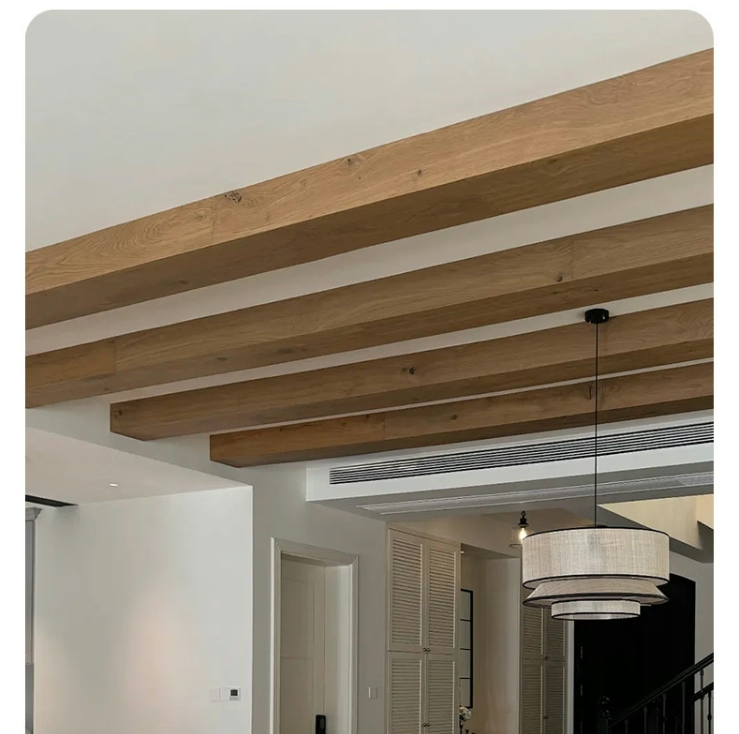
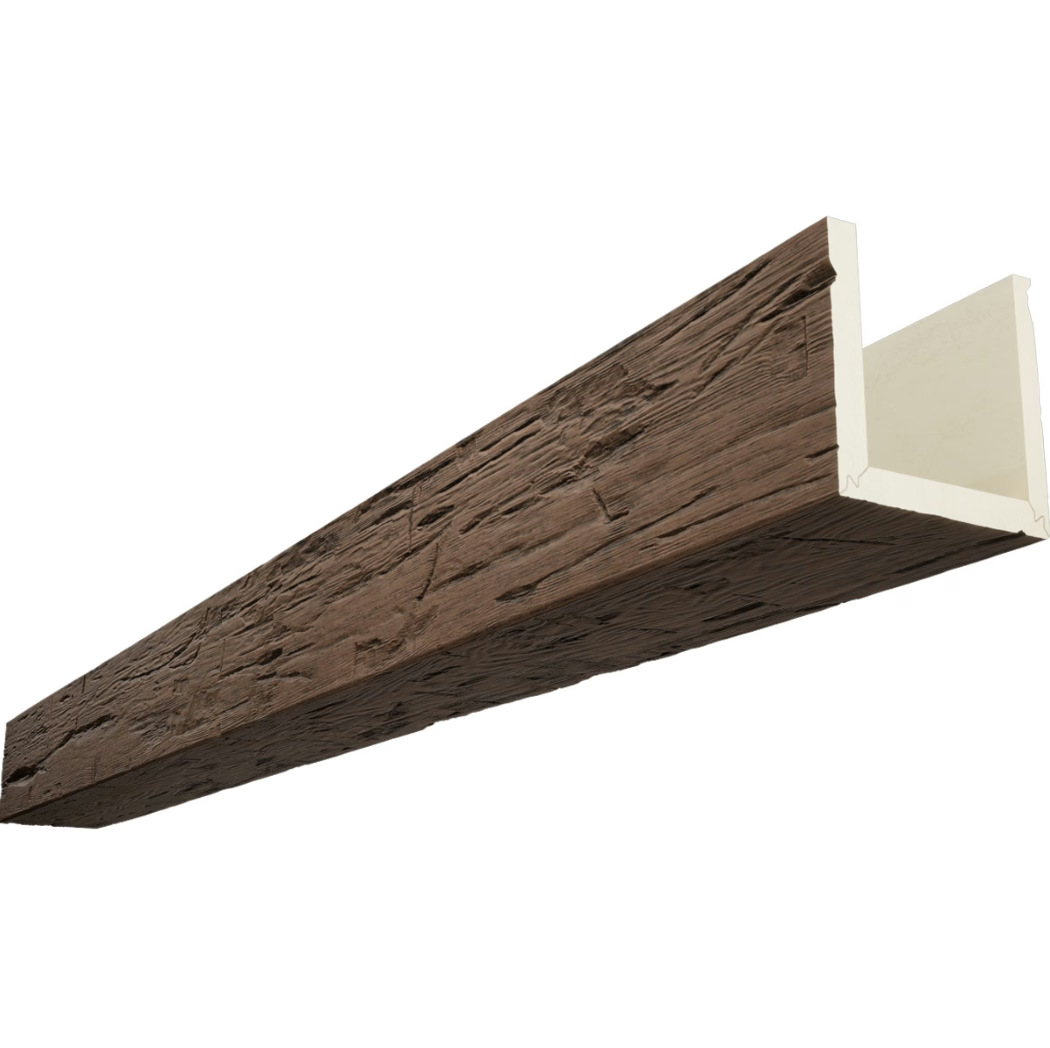
The mixed-use development budget came in 18% over proforma during design development. The owner demanded across-the-board 15% cost reduction from all scopes—including decorative finishes. Our original beam specification used premium hand-hewn profiles with custom color matching across 47,000 square feet of commercial space. Rather than simply switching to cheapest alternatives that would obviously compromise design intent, we conducted systematic value engineering: standardized three colors instead of seven customs, simplified some profiles from hand-hewn to smooth in less-visible locations, reduced beam density in secondary corridors while maintaining full treatment in lobbies, and negotiated volume pricing leveraging total quantities. These strategic adjustments achieved 19% cost reduction while preserving design character in critical areas. The project delivered on budget with architectural quality where it mattered most.
Value engineering—strategic cost reduction through design optimization—proves essential when budgets can't accommodate original specifications. Effective value engineering preserves essential quality and performance while identifying savings through smarter material selection, specification refinement, and scope optimization. Understanding systematic value engineering methods allows achieving budget targets without compromising project success.
Value Engineering Principles
Function analysis identifying which specification attributes deliver essential value versus those providing marginal benefit guides rational cost reduction. Not all specification features matter equally—some prove critical while others add cost without proportional value. Understanding functional priorities prevents cutting essential qualities to save modest costs while preserving expensive but non-critical features.
Lifecycle thinking evaluates total ownership costs rather than just first costs. Cheaper materials requiring frequent replacement or maintenance might cost more long-term than durable premium products. Value engineering should optimize lifecycle costs not just minimize initial expenses. However, lifecycle arguments must prove genuine rather than justifying gold-plating.
Performance preservation ensuring reduced-cost alternatives still meet essential performance requirements maintains functional adequacy despite cost reduction. Value engineering cuts costs, not corners—specifications should deliver required performance at lower cost rather than accepting reduced performance to save money. Understanding minimum acceptable performance guides appropriate cost reduction.
Stakeholder priorities understanding what matters most to owners, users, and other stakeholders guides where quality preservation justifies cost versus where cost reduction proves acceptable. Owners might prioritize visible public spaces while accepting economy in back-of-house areas. Users might value durability over premium aesthetics. Understanding priorities enables targeted value allocation.
Collaborative process engaging architects, contractors, suppliers, and owners generates creative solutions that siloed thinking misses. Best value engineering results from team collaboration where diverse perspectives identify opportunities and evaluate trade-offs collectively. Autocratic mandates ("cut 15% from everything") rarely optimize value like collaborative problem-solving.
Systematic Analysis Methodology
Cost breakdown analysis separating material costs, labor, overhead, and profit quantifies where money goes enabling targeted reduction strategies. If materials represent 40% of total cost, focusing exclusively on material savings achieves limited results. Understanding cost structures reveals which components offer greatest savings potential.
Specification review examining every requirement determining which prove essential versus aspirational identifies reduction opportunities. Original specifications often include desirable but non-essential features that accumulated during design development. Systematic review separates must-haves from nice-to-haves enabling strategic reduction.
Comparative evaluation researching alternative products, manufacturers, and approaches reveals options original specifications didn't consider. Market changes, new products, or simply expanded research might identify alternatives delivering equivalent value at lower cost. Remaining open to alternatives prevents specification inertia limiting cost reduction options.
Quantity optimization examining whether specified quantities exceed actual needs identifies scope reduction opportunities. Perhaps original designs included beams in every corridor when treatment in main corridors plus lobbies would achieve design intent at fraction of cost. Strategic scope reduction focuses impact where it matters most.
Schedule analysis determining whether timeline constraints add costs identifies potential savings through flexible scheduling. Rush orders, overtime installation, or premium freight add costs that relaxed schedules might avoid. When timing flexibility exists, leveraging it creates savings without quality compromise.

Material Specification Optimization
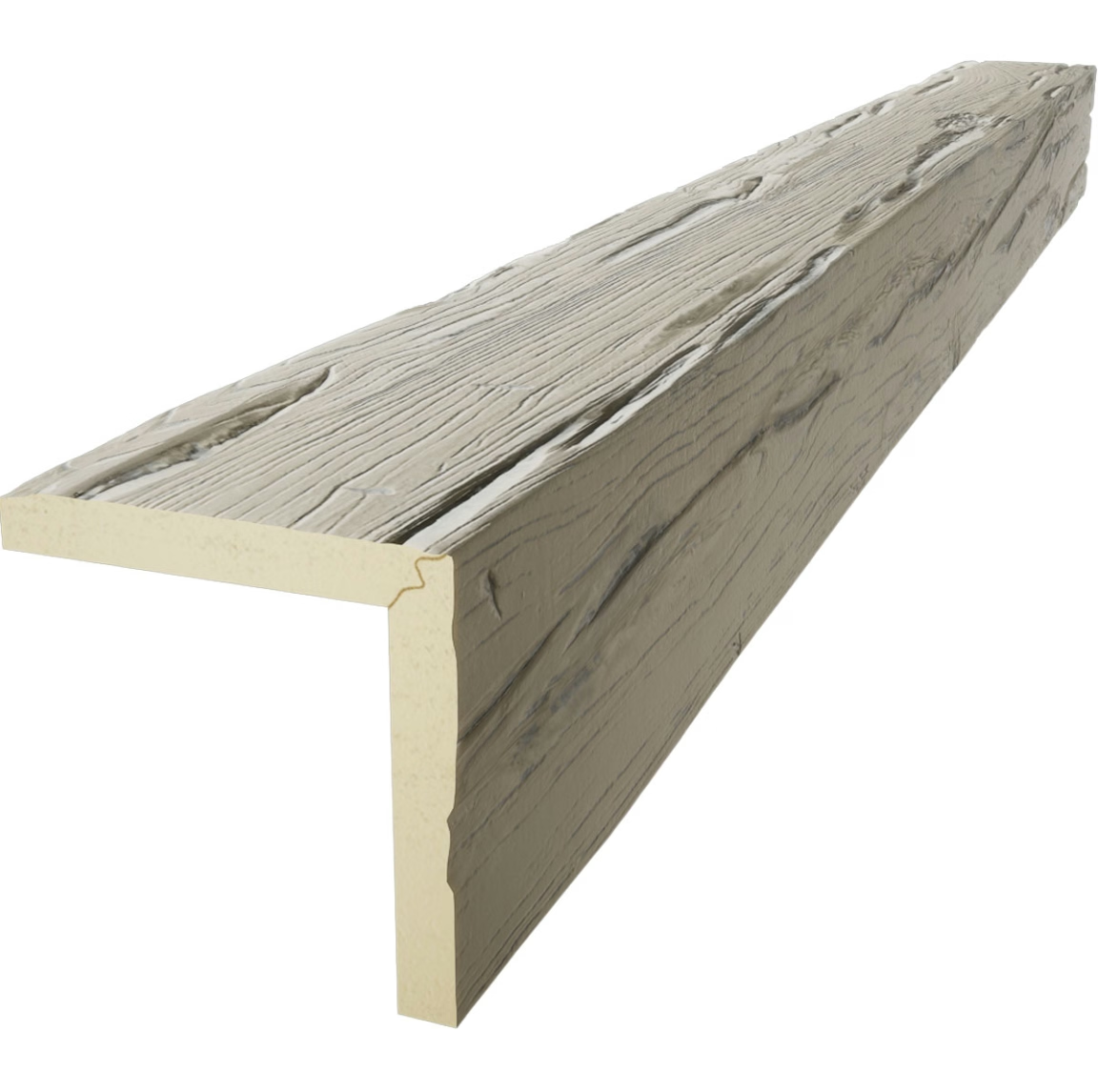
Profile simplification using less complex beam profiles reduces manufacturing costs while maintaining visual presence. Hand-hewn textures cost premium over smooth profiles—if hand-hewn appearance isn't essential everywhere, strategic profile simplification saves substantially. Perhaps public spaces receive premium profiles while back areas use economy versions.
Standard versus custom sizing leveraging manufacturer standard lengths and dimensions avoids custom fabrication premiums. Custom 17-foot beams cost more than standard 16-foot or 18-foot options. Working within standard sizing saves 10-20% compared to custom dimensions when design accommodates standards.
Color standardization reducing palette to fewer standard colors eliminates custom color matching charges. Seven custom colors might reduce to three standard colors achieving similar overall effect at fraction of cost. Custom colors add 15-30% premiums that standard colors avoid.
Material grade selection choosing appropriate quality grades rather than defaulting to premium avoids paying for features unnecessary for specific applications. Premium residential-grade beams might exceed requirements for commercial applications where hospitality-grade products suffice. Understanding actual requirements prevents over-specification.
Finish specification refinement determining whether premium finishes deliver value proportional to cost identifies savings opportunities. Distressed finishes, antiquing, or special treatments add costs—evaluating whether these features justify premiums or whether simpler finishes achieve similar effects guides specification decisions.
Installation Cost Reduction
Simplified mounting using basic mechanical fastening rather than complex adhesive-plus-fastener systems reduces labor and materials when simpler approaches meet performance requirements. If fasteners provide adequate support, eliminating adhesive saves material cost plus application labor. Understanding actual structural requirements prevents over-engineering installation systems.
Standardized blocking creating repetitive installation patterns reduces layout time and installation complexity. If every beam uses identical blocking configuration, installation crews develop efficiency through repetition. Standardization also reduces errors from complex varied installations requiring constant attention to differing details.
Installation sequence optimization identifying most efficient work progression reduces labor hours required. Strategic sequencing might allow completing one area before moving equipment rather than jumping between locations. Efficient sequencing particularly benefits projects with rental equipment whose daily costs accumulate regardless of productivity.
Reduced customization minimizing field cutting, fitting, and modification saves labor while reducing waste. Designs accommodating standard beam lengths without field cutting eliminate cutting time, reduce waste, and prevent installation errors from mismeasurement. Design coordination enabling installation of products as received maximizes efficiency.
Contractor qualification ensuring capable installers complete work efficiently prevents cost overruns from learning curves or rework. While not directly reducing specified costs, ensuring qualified contractors prevents project cost inflation from execution problems. Qualification represents risk management protecting value engineering savings.
Scope Refinement Strategies
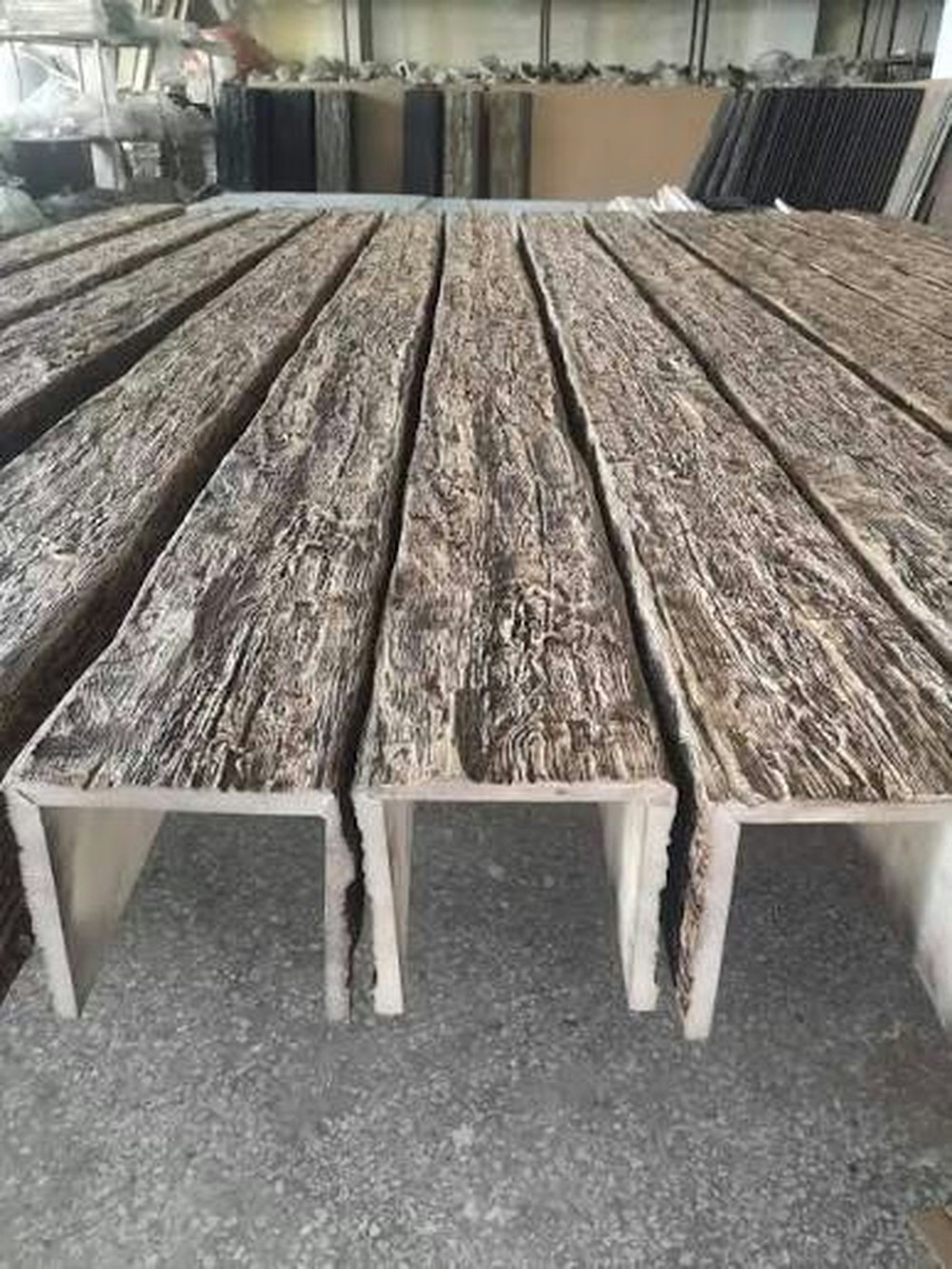
Strategic coverage using beams where they create maximum impact while leaving secondary spaces untreated focuses budgets on high-value applications. Rather than thinning beam density everywhere uniformly, concentrating full treatment in visible public areas while eliminating it from low-visibility spaces preserves impact where noticed.
Hierarchy establishment creating primary and secondary treatment levels allows differentiation by space importance. Perhaps main lobbies receive premium treatments while secondary lobbies get economy versions and support corridors remain untreated. Tiered approach maintains quality where it matters while reducing overall costs.
Phasing implementation allowing initial construction including essential infrastructure—blocking and prep work—while deferring actual beam installation until future budgets become available spreads costs across time. This approach suits situations where immediate budget constraints prove temporary but where infrastructure installation during construction proves more economical than retrofit.
Alternate locations reconsidering where beam treatments deliver most value might reveal that different locations than originally specified provide better value. Perhaps shifting coverage from one large space to two smaller high-traffic areas creates more perceived value at similar cost. Design flexibility enables optimization.
Procurement Strategies
Volume aggregation combining quantities across multiple projects or properties achieves pricing impossible for individual projects. If organization manages multiple concurrent projects, consolidated procurement leverages total volume. Even modest volumes (5,000+ linear feet) access pricing tiers unavailable to small buyers.
Alternative sourcing identifying multiple qualified manufacturers creates competitive pricing while providing backup sources. Single-source specifications limit negotiating leverage and create supply risk. Qualifying multiple suppliers enables competitive bidding driving costs down while maintaining quality standards through specification requirements.
Direct purchasing bypassing distributor markups when manufacturers sell direct reduces costs 15-25% typical distributor margins represent. Not all manufacturers offer direct sales, but those who do provide significant savings opportunities. Direct purchase requires handling logistics that distributors normally manage but saves substantially.
Timing flexibility allowing procurement during non-peak periods or leveraging manufacturer inventory situations creates opportunities. End-of-quarter, closeout inventory, or production scheduling gaps might enable negotiating discounts. Flexible timing allows capitalizing on these opportunities when they arise.
Payment terms negotiation achieving cash discounts, extended terms, or other financial accommodations provides soft cost savings. While not reducing unit prices, favorable payment terms improve project cash flow or capture percentage discounts. Financial engineering complements product specification optimization.
Quality Protection Boundaries
Non-negotiable performance requirements establishing minimum acceptable standards prevents value engineering from compromising essential attributes. Fire ratings, structural capacity, durability in specific environments—these requirements must remain inviolate regardless of cost pressures. Clearly defined boundaries guide value engineering toward acceptable solutions.
Aesthetic integrity preservation in critical locations maintains design intent where appearance significantly affects user experience or brand perception. Lobbies, main dining rooms, signature public spaces deserve quality protection while support spaces might accept greater compromise. Understanding where aesthetics prove critical guides selective quality preservation.
Longevity requirements ensuring materials withstand expected service lives without premature replacement prevents false economy where cheap materials require early replacement. Even under budget pressure, selecting materials that last intended building lifecycles proves rational. Short-sighted savings creating premature failures costs more long-term.
Warranty maintenance ensuring value-engineered alternatives carry manufacturer warranties equivalent to original specifications protects against defective products. Warranty coverage indicates manufacturer confidence while providing recourse if problems develop. Accepting products without warranty protection creates risk that might exceed savings.
Documenting Value Engineering Decisions
Decision rationale recording why specific changes were made creates institutional knowledge helping future projects and supporting decisions if questioned later. Documentation might note "Changed from hand-hewn to smooth profile in secondary corridors based on limited visibility from typical viewing distances, reducing cost $8,400 while maintaining character in primary spaces."
Cost impact quantification tracking savings from each decision creates accountability and measures value engineering success. Detailed cost tracking enables learning which strategies deliver best savings informing future value engineering efforts. Documentation should show original cost, revised cost, and net savings per decision.
Quality trade-off assessment documenting what quality attributes changed and judgment about acceptability creates transparency supporting decisions. Rather than simply noting cost reduction, documentation should acknowledge "Reduced UV stabilizer grade accepts 5-10 year service life versus 15-20 year, deemed acceptable for application based on typical tenant improvement cycles of 7 years."
Stakeholder approval documentation recording who approved significant changes creates clear accountability and prevents later disputes about unauthorized changes. Major changes should document owner approval with signatures or emails confirming acceptance of proposed modifications.
Common Value Engineering Mistakes
Indiscriminate cutting applying uniform percentage reductions across all elements ignores that some costs deliver critical value while others don't. Cutting everything 15% might eliminate essential features while retaining expensive but non-critical elements. Surgical precision beats brute-force cuts.
Short-term thinking optimizing first cost without considering lifecycle creates false savings. Materials requiring replacement in 5 years don't save money if original specifications would have lasted 15 years. Lifecycle thinking should inform all value engineering decisions.
Quality creep allowing uncontrolled incremental increases that negate value engineering savings undermines cost reduction discipline. After value engineering achieves target budget, preventing scope additions that incrementally restore costs requires vigilance. Saved money often attracts spending pressures from parties wanting to add features.
Inadequate documentation leaving decisions poorly explained creates risk that future teams won't understand logic behind choices. When renovations or expansions occur years later, understanding original decisions prevents repeating value engineering exercises or making incompatible choices.
Alternative Materials and Approaches
Wood alternatives comparing faux beams to real wood alternatives considering total installed cost plus maintenance creates informed decisions. Real wood might cost less for materials but more for installation and ongoing maintenance. Comprehensive comparison reveals which alternative delivers best value for specific applications.
Hybrid systems combining premium materials in visible areas with economy alternatives in concealed areas optimizes resource allocation. Perhaps beam sides and bottoms receive premium finishes while tops nobody sees use economy treatment. This selective quality focuses spending where it matters.
Non-beam alternatives reconsidering whether ceiling treatment must involve beams or whether other approaches might deliver similar impact differently could reveal unexpected savings. Perhaps architectural soffits, decorative panels, or ceiling tiles achieve design goals at different cost. Remaining flexible about solutions versus prescriptive about specific products opens possibilities.
Negotiation Strategies
Volume commitments guaranteeing purchases across defined periods leverages buyer commitment for pricing concessions. If buyer commits to $200,000 annual purchases, this commitment justifies volume pricing individual orders wouldn't access. Commitment-based pricing requires confidence in volume forecasts but delivers meaningful savings.
Specification flexibility offering contractors alternatives meeting performance requirements rather than prescriptive specifications creates bidding competition. Performance specifications encourage contractors proposing cost-effective solutions rather than simply pricing prescriptive requirements that might exceed actual needs.
Payment advantages offering favorable payment terms—faster payment, larger deposits, progress payments—might enable negotiating material discounts. Suppliers value cash flow certainty and might discount prices for payment reliability or speed.
Measuring Value Engineering Success
Cost achievement tracking actual costs versus targets quantifies value engineering effectiveness. Successful value engineering delivers target budgets without sacrificing essential quality. Documentation should compare original estimate, value engineering target, and actual cost demonstrating success.
Quality verification confirming that value-engineered solutions deliver acceptable performance and appearance validates that cost reduction didn't compromise essential attributes. Post-occupancy evaluation assessing whether decisions proved sound or whether different choices should inform future projects enables continuous improvement.
Stakeholder satisfaction surveying whether owners, users, and other stakeholders feel final results meet their needs despite cost reduction provides ultimate success measure. If stakeholders feel shortchanged or disappointed, value engineering failed regardless of budget achievement.
Professional Value Engineering Practice
Value engineering beam specifications requires balancing cost reduction against quality preservation through systematic analysis, creative problem-solving, and disciplined execution. Successful value engineering achieves budget targets while maintaining essential performance, appearance, and longevity that ensure project success and stakeholder satisfaction. For architects, contractors, and owners facing budget constraints, professional value engineering provides frameworks for optimizing specifications rather than simply defaulting to cheapest alternatives that might compromise project success.
Effective value engineering distinguishes professional practice from crude cost cutting. The discipline to analyze systematically, preserve critical qualities, and document decisions thoroughly separates strategic optimization from penny-wise but pound-foolish economizing that creates long-term problems to solve short-term budget pressures.
Technical References
ASTM standards cited in every specification
Test Data
Lab results from internal testing program
Updated 2026
Reviewed against current product specs