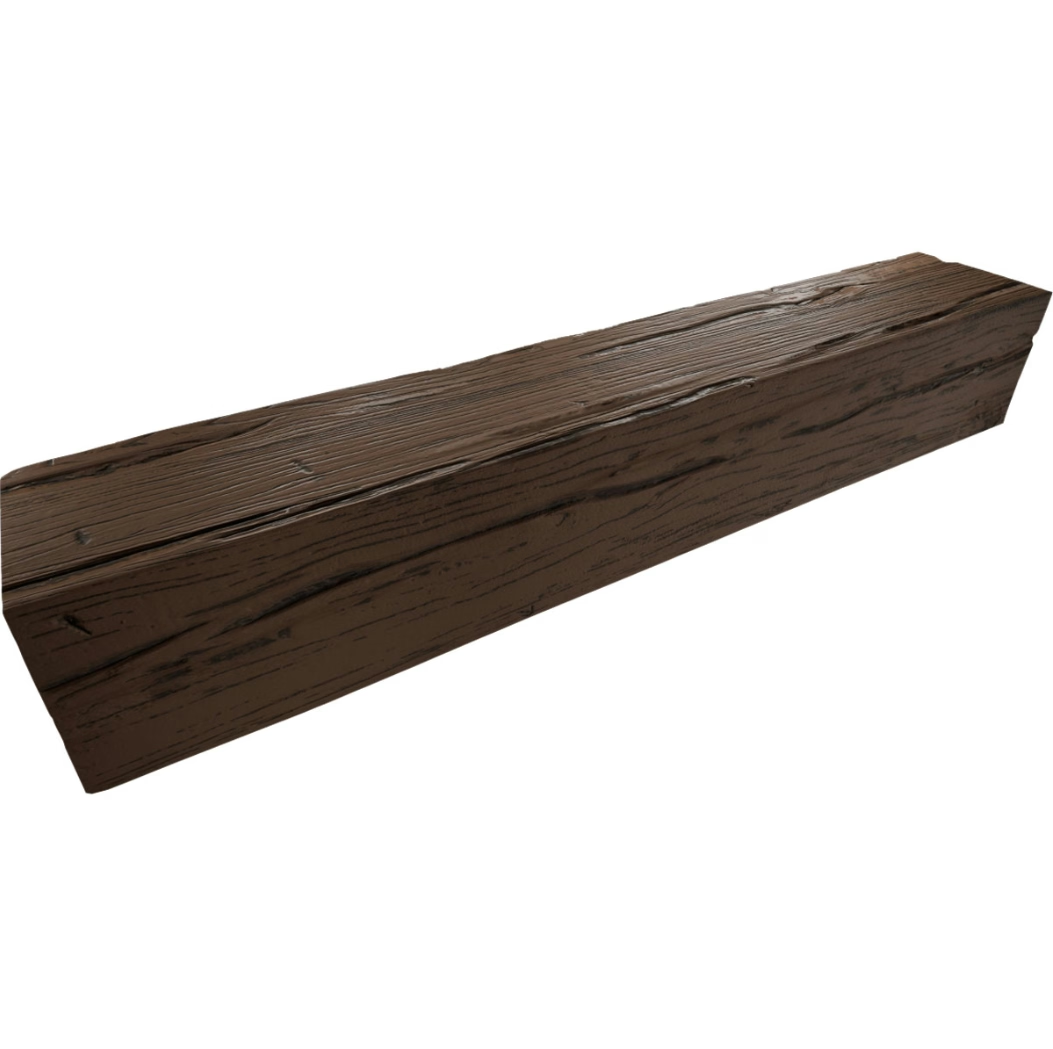
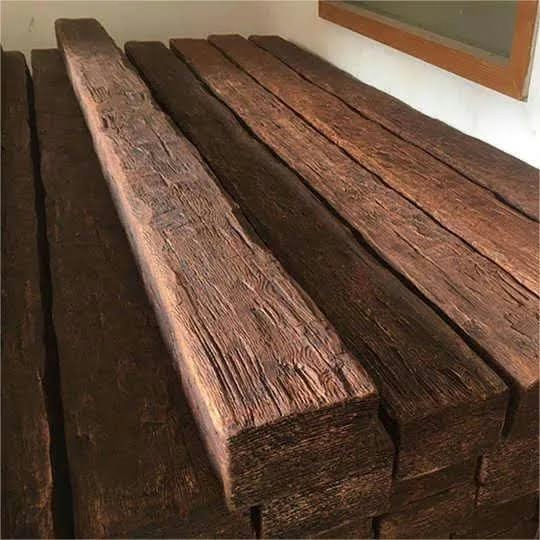
The hotel project specified beams from a manufacturer offering "lifetime warranty"—language that impressed the owner and influenced product selection. Three years post-installation, color fading appeared on south-facing beams. We filed warranty claims expecting coverage under the lifetime guarantee. The manufacturer denied claims citing warranty fine print excluding "fading from UV exposure" and "normal wear and tear." The "lifetime warranty" actually covered only manufacturing defects for ten years, with numerous exclusions rendering it nearly worthless for real-world problems. We learned that warranty marketing language often promises more than actual terms deliver. Now we analyze actual warranty documents before specifying products, comparing real coverage rather than promotional claims.
Warranty terms vary dramatically across manufacturers despite similar promotional language. Understanding what warranties actually cover, exclusions that limit protection, claim processes that determine ease of recovery, and practical enforceability separates meaningful warranties from marketing fluff. Systematic warranty comparison guides purchasing decisions ensuring buyers receive genuine protection proportional to product premiums that warranty claims might justify.
Understanding Warranty Fundamentals
Express warranties explicitly stated by manufacturers create legal obligations to repair, replace, or refund if products fail to meet written guarantees. These written commitments form contracts between manufacturers and buyers. Express warranty terms should appear in writing—verbal promises lack enforceability.
Implied warranties including merchantability (fitness for normal use) and fitness for particular purpose exist under law even without explicit statements. However, manufacturers typically disclaim implied warranties in favor of limited express warranties. Understanding what implied protections might exist versus what manufacturers disclaim helps evaluating actual coverage.
Limited warranties restrict liability through time limits, covered defects, exclusions, damage limitations, and remedies. Most manufacturer warranties prove "limited" rather than "full" warranties. The term "limited" often appears in fine print while promotional materials emphasize coverage without acknowledging limitations.
Warranty duration specifies coverage periods—perhaps 5, 10, 15 years, or "lifetime." However, "lifetime" definitions vary—some mean product expected life (perhaps 20-30 years), others mean ownership period, and some mean company existence. Understanding actual coverage periods prevents misinterpreting ambiguous terms.
Pro-rated coverage reduces manufacturer obligations proportionally over time. A 10-year pro-rated warranty might provide 100% coverage year one, declining 10% annually, reaching 10% coverage by year ten. Pro-rating significantly reduces real protection compared to full-term coverage.
Coverage Scope Analysis
Manufacturing defects including material flaws, dimensional inaccuracies, or construction problems typically receive warranty coverage since these represent manufacturer responsibility. Defects present at purchase—warped profiles, incorrect dimensions, finish imperfections—generally qualify for warranty claims if identified promptly.
Material degradation from inherent product problems versus environmental exposure creates gray areas. Premature cracking, delamination, or structural failure from material inadequacy might warrant coverage. However, manufacturers often claim degradation resulted from improper installation or environmental factors beyond their control rather than material deficiencies.
Color consistency between batches or color retention over time varies in coverage. Some warranties explicitly cover color matching across shipments while others disclaim responsibility for batch variations. UV fading, even when premature, often falls under exclusions rather than coverage. Understanding color-related terms proves particularly important since color issues generate frequent complaints.
Dimensional stability including warping, twisting, or shrinkage from manufacturing issues might receive coverage. However, dimensional changes from improper storage, installation errors, or environmental extremes typically fall under exclusions. Distinguishing cause determines coverage applicability.
Surface finish defects including texture irregularities, finish adhesion failure, or coating problems qualify as manufacturing defects. However, damage from cleaning chemicals, abrasion, or impact typically don't warrant coverage despite affecting finish appearance.

Common Exclusions and Limitations
Installation errors represent most common exclusions—warranties rarely cover problems from improper installation. Manufacturers reasonably argue they can't warranty contractor workmanship. However, this exclusion allows manufacturers blaming installation for problems that might actually stem from product defects. Proving problem causation becomes buyer's burden.
Environmental exposure including UV fading, moisture damage, temperature extremes, or chemical exposure typically falls outside coverage despite these representing normal use conditions in many applications. These exclusions significantly limit practical warranty value since environmental factors cause many real-world problems.
Normal wear and tear including minor surface abrasion, traffic marking, or gradual appearance changes over years doesn't warrant coverage. While reasonable that warranties don't cover infinite product life, distinguishing "normal wear" from "premature degradation" proves subjective. Manufacturers invoke this exclusion defending against legitimate claims.
Consequential damages including installation costs, property damage from product failure, business interruption, or other indirect losses rarely receive coverage. Warranties typically limit remedies to product repair or replacement, excluding all consequential costs. This limitation means even successful warranty claims might not make buyers whole.
Use outside specifications including exposure conditions, loading beyond ratings, or applications exceeding product capabilities void warranties. This exclusion reasonably protects manufacturers from liability for misuse but requires buyers understanding and documenting that applications remain within product specifications.
Claims Process Evaluation
Notification requirements specifying how quickly buyers must report defects affect claim success. Some warranties require written notice within 30 days of discovery. Delayed notification allows manufacturers denying claims despite legitimate defects. Understanding notification windows ensures timely reporting.
Documentation requirements for substantiating claims vary from simple defect descriptions to comprehensive records including purchase documentation, installation photos, and environmental conditions. Onerous documentation requirements create barriers discouraging claims even when coverage technically exists.
Inspection provisions allowing manufacturers examining claimed defects before approving coverage prove reasonable but create practical challenges. Manufacturer inspectors might take weeks or months to visit sites. During delays, defects might worsen, creating disputes about original versus subsequent damage.
Remedy determination—who decides whether repair, replacement, or refund applies—affects practical outcomes. Manufacturer-controlled remedies often favor repair over replacement to minimize costs, while buyers might prefer replacement. Understanding remedy determination helps setting realistic expectations.
Return policies for defective products sometimes require buyers shipping products to manufacturers at buyer expense. For large or installed beams, return costs might exceed product value, making warranty claims economically irrational despite coverage. Return requirements significantly impact practical warranty value.
Manufacturer Comparison Framework
Tier 1 premium manufacturers typically offer 15-25 year warranties with relatively broad coverage and reasonable claim processes. Premium warranties reflect confidence in product quality while supporting higher pricing. However, even premium warranties contain significant exclusions.
Tier 2 mid-market manufacturers generally provide 5-15 year warranties with moderate coverage and standard claim procedures. These warranties protect against obvious defects but exclude many real-world problems. Mid-market warranties offer adequate protection for typical applications without extraordinary exposure.
Budget manufacturers often offer minimal warranties—perhaps 1-5 years covering only blatant manufacturing defects. Limited warranties correlate with budget pricing, reflecting realistic quality expectations and manufacturer risk tolerance. Budget warranties provide minimal practical protection.
Direct-to-consumer versus distribution channel sales affect warranty administration. Direct sellers control the entire warranty relationship while products sold through distributors create three-party relationships complicating claim processes. Distribution channels might add complexity but can advocate for buyers during disputes.
International Considerations
Cross-border warranty validity for products purchased in one country but used in another creates complications. Some manufacturers honor warranties globally while others limit coverage to original purchase countries. International projects should verify cross-border warranty applicability.
Currency and reimbursement issues arise when warranty claims involve costs incurred in different currencies than purchase prices. Exchange rate fluctuations between purchase and claim might affect actual reimbursement values. Clarifying currency provisions prevents surprises.
Jurisdictional differences in consumer protection laws create varying baseline warranties beyond manufacturer terms. European Union consumer laws provide stronger baseline protection than US law. Understanding applicable jurisdiction affects actual protection levels regardless of manufacturer warranty terms.
Transfer and Renewal Provisions
Transferability to subsequent owners varies significantly. Some warranties transfer automatically maintaining full protection while others become void upon property sale or transfer only partially. Property transactions should consider warranty transfer provisions affecting long-term value.
Registration requirements conditioning coverage on buyer registration within specified periods create coverage risks. Unregistered warranties might become void despite legitimate defects. Understanding registration requirements ensures compliance maintaining coverage.
Renewal options extending coverage beyond initial terms sometimes exist for additional fees. While extending protection proves valuable, renewal costs should be evaluated against product replacement costs determining whether extended coverage provides value.
Enforcement and Dispute Resolution
Legal enforceability varies by jurisdiction and warranty language. Warranties must comply with applicable consumer protection laws. Provisions conflicting with law prove unenforceable regardless of what warranty documents state. Understanding legal context helps evaluating real protection levels.
Arbitration clauses requiring disputes resolution through arbitration rather than court litigation affect buyer rights. Mandatory arbitration eliminates jury trial rights while potentially reducing resolution costs. Evaluating arbitration provisions helps understanding dispute resolution processes.
Class action waivers preventing buyers from joining collective actions against manufacturers for widespread defects limit buyer remedies. While benefiting manufacturers, these waivers disadvantage buyers facing defects affecting numerous installations. Consumer advocates criticize these provisions though courts often uphold them.
Attorney fee provisions determining who pays legal costs if warranty disputes litigate significantly affect practical enforcement. If manufacturers never reimburse buyer attorney fees, even winning claims might prove economically irrational for modest-value products. Fee-shifting provisions improve practical enforceability.
Reading Warranty Documents Critically
Marketing versus legal language distinctions separate promotional claims from actual contractual obligations. Brochures might tout "comprehensive lifetime protection" while warranty documents reveal limited 10-year coverage with extensive exclusions. Legal terms control—promotional materials don't create enforceable obligations beyond written warranty terms.
Defined terms within warranties assign specific meanings to common words. "Defect" might be defined narrowly excluding many problems ordinary language would consider defective. "Normal use" might exclude common applications. Reading definitions carefully reveals actual coverage scope.
Exclusion emphasis recognizing what warranties don't cover often matters more than what they do cover. Extensive exclusion lists might eliminate most real-world problems from coverage. Careful exclusion review reveals practical warranty value better than coverage descriptions.
Remedy limitations distinguishing between manufacturer obligations (replacement, repair, refund) versus consequential damages buyers might actually suffer reveals real financial protection. Even perfect warranty performance might leave buyers suffering losses from defective products if consequential damages remain uncovered.
Third-Party Warranties and Insurance
Extended warranties from third parties sometimes supplement manufacturer warranties. These products deserve skepticism—independent analysis often reveals poor value with high premiums relative to coverage. However, legitimate extended coverage occasionally proves worthwhile for critical applications where product failure creates extraordinary costs.
Product liability insurance protecting buyers from property damage or injury from defective products provides protection distinct from warranty coverage. Insurance addresses safety-related failures while warranties cover economic losses from product inadequacy. Understanding this distinction prevents confusing different protection types.
Documentation Best Practices
Purchase record retention including invoices, specifications, and correspondence preserves evidence necessary for warranty claims. Without purchase proof, warranty claims might fail on procedural grounds regardless of product defects. Systematic record retention enables successful claims.
Installation documentation through photographs, contractor certifications, and installation records proves proper installation defending against manufacturer claims that installation errors caused problems. Documentation burden falls on buyers—manufacturers won't document proper installation proving their product failed.
Condition monitoring through periodic inspections and photographic records establishes problem timelines helping prove defects developed during warranty periods. Contemporary documentation proves more credible than retrospective claims about when problems appeared.
Correspondence records preserving all communications with manufacturers regarding defects, claims, and resolutions creates paper trails supporting claims or proving manufacturers knew about problems if disputes escalate. Email and written correspondence provide better documentation than phone conversations.
Calculating Warranty Value
Risk-adjusted pricing incorporating warranty quality into value analysis prevents over-paying for weak warranties or under-valuing strong protection. A product with robust warranty might justify 10-15% premium over identical product with weak warranty. Conversely, slightly cheaper products with worthless warranties might actually cost more long-term.
Expected claim probability estimating likelihood of needing warranty protection helps valuing coverage. If product defect rates run 2-3%, warranty value equals roughly 2-3% of product cost adjusted for coverage limitations. This probabilistic thinking prevents over-valuing unlikely-to-be-needed coverage.
Claim hassle costs including time, documentation effort, and aggravation reduce practical warranty value even when coverage technically exists. Difficult claim processes might make warranty pursuit irrational despite legitimate coverage. These transaction costs should discount theoretical warranty value.
Industry Trends and Evolution
Extended coverage periods as manufacturing quality improves allow longer warranties without increased risk. Some premium manufacturers now offer 20-30 year coverage reflecting confidence in modern materials and manufacturing. Longer warranties generally correlate with better products though some represent marketing rather than confidence.
Simplified claim processes through online portals, photo-based claims, and streamlined documentation requirements reduce claim barriers making warranties more practical. User-friendly processes increase real warranty value by reducing transaction costs pursuing claims.
Smart product integration with condition monitoring sensors enabling manufacturers detecting problems before visible failures might revolutionize warranties. Predictive maintenance enabled by IoT integration could prevent failures rather than just responding after damage occurs.
Professional Purchasing Practice
Warranty terms comparison across leading polyurethane beam manufacturers reveals dramatic variation in real protection despite similar promotional language. Systematic warranty analysis examining coverage scope, exclusions, claim processes, and enforceability separates meaningful protection from marketing fluff. For buyers investing in decorative ceiling treatments, understanding warranty realities guides informed purchasing decisions ensuring products backed by genuine protection proportional to their cost.
Professional procurement demands reading actual warranty documents rather than relying on sales representations. The discipline to analyze coverage critically, compare alternatives systematically, and document installations properly maximizes protection from whatever warranty coverage exists while preventing unrealistic expectations about warranty limitations.
制造商保修条款的系统性比较和深入分析,能够帮助采购商识别真正有价值的保修承诺,避免被营销话术误导,确保产品投资获得切实的长期保护。
Technical References
ASTM standards cited in every specification
Test Data
Lab results from internal testing program
Updated 2026
Reviewed against current product specs