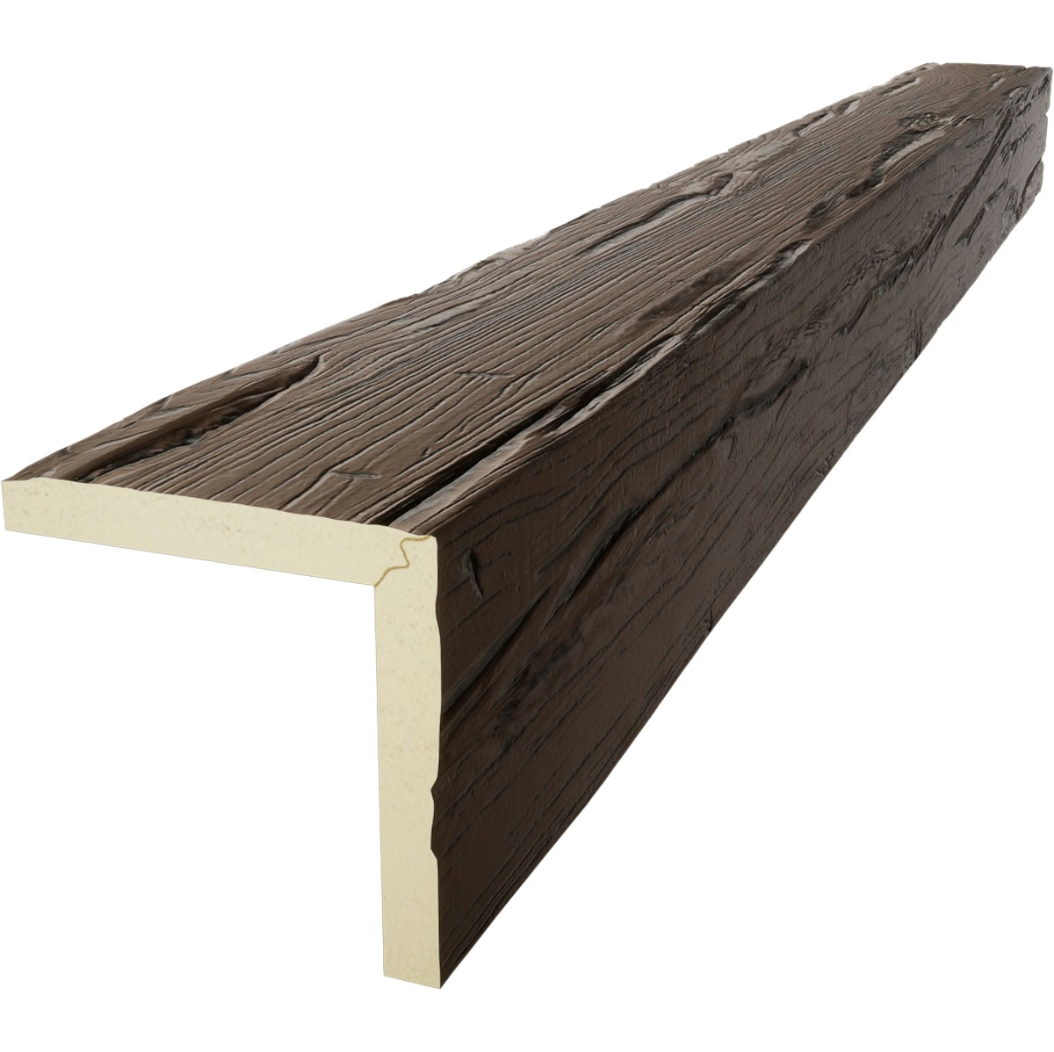
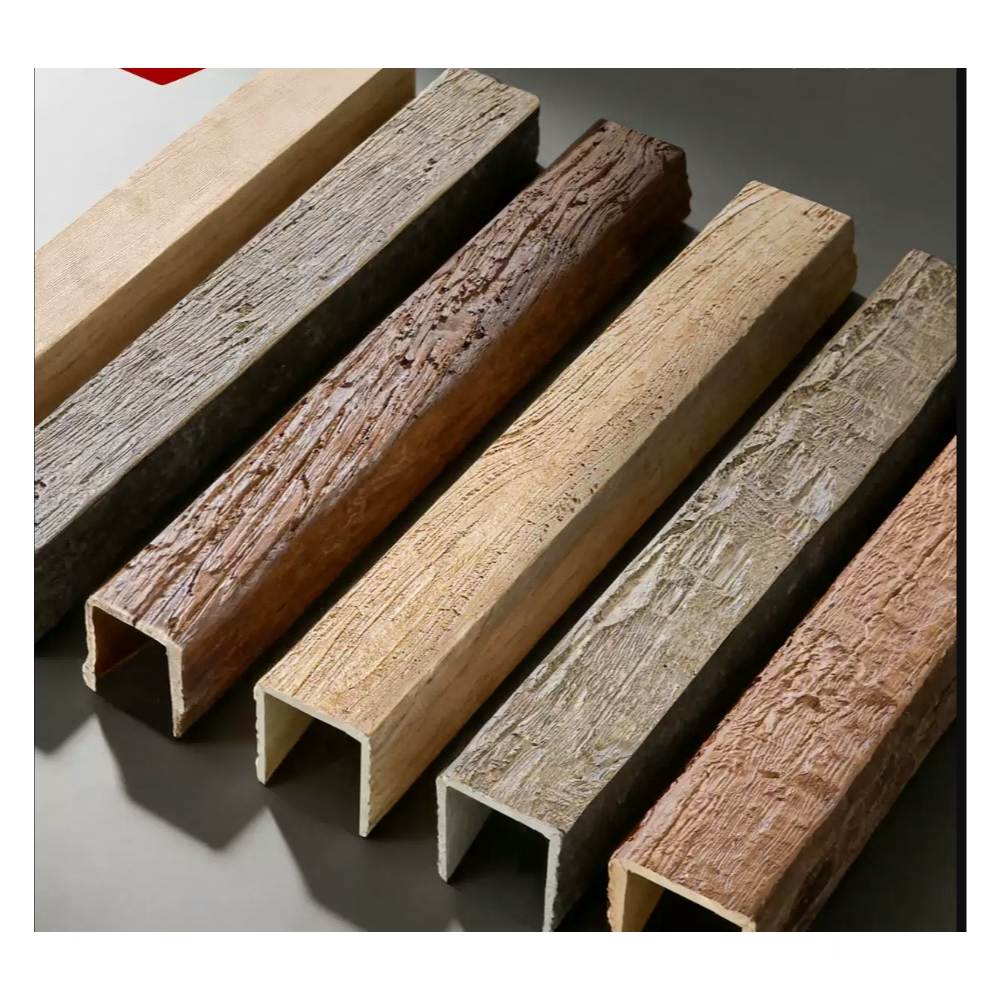
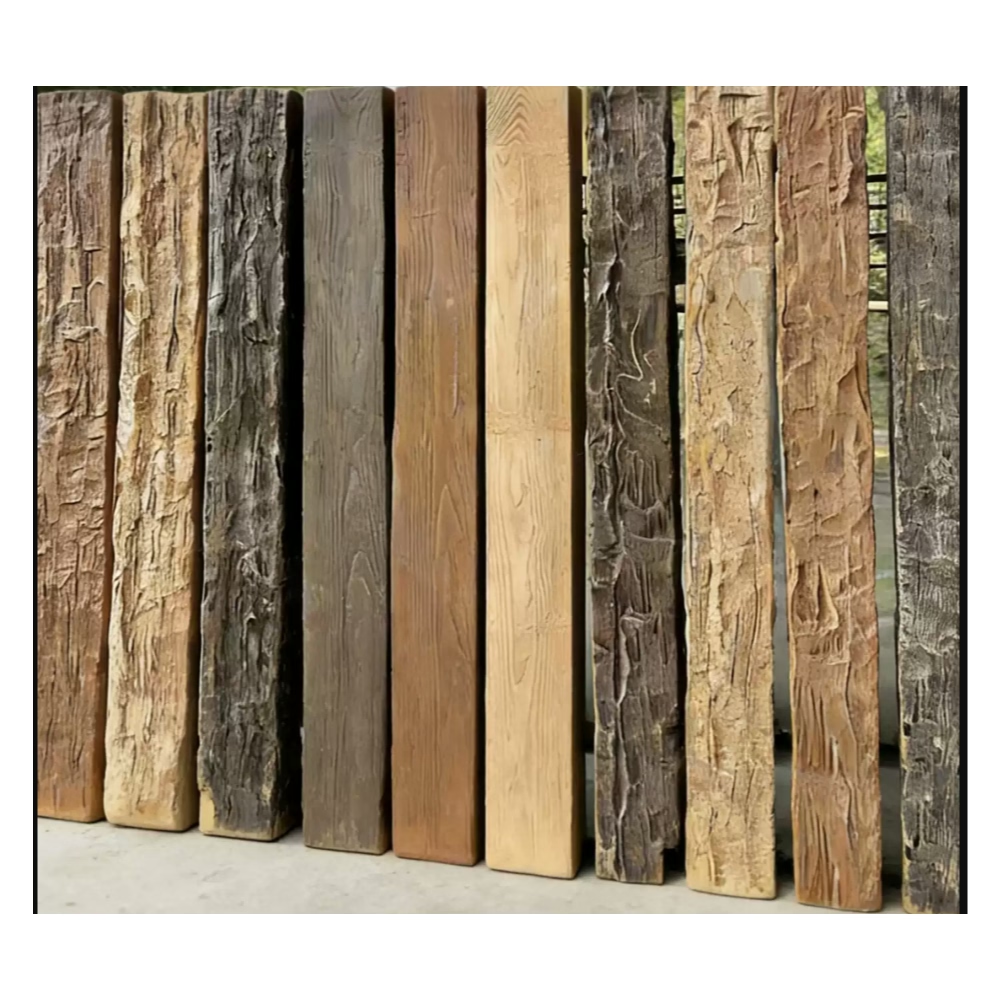
The Arizona resort featured extensive beam installations throughout guest rooms and public spaces—beautiful architectural treatment enhancing Southwestern character. First summer brought guest complaints about gaps appearing at beam joints and popping sounds from ceiling areas. Investigation revealed that summer temperatures elevated ceiling spaces to 95-100°F while winter maintained 65-70°F—a 30-35°F seasonal swing. This temperature variation created approximately 3/8-inch expansion in 16-foot beam spans (using typical polyurethane coefficient of thermal expansion of 40×10⁻⁶ per °F). The original installation used rigid connections without expansion accommodation—seasonal expansion stressed joints creating gaps and fastener popping. We remediated by installing expansion joints, converting to flexible mounting systems, and using elastomeric caulks accommodating movement. That $45,000 remediation taught me that installations must accommodate the full range of environmental conditions buildings experience, not just installation-day conditions.
Year-round climate control effects on polyurethane dimensional stability require understanding material thermal and hygroscopic properties, predicting seasonal environmental variation, and designing installation systems accommodating movement without damage. While polyurethane exhibits better dimensional stability than many materials, significant environmental changes create measurable dimensional changes that installation systems must accommodate through appropriate design and detailing.
Understanding Material Properties
Coefficient of thermal expansion (CTE) quantifies dimensional change per degree temperature change. Polyurethane CTE typically ranges 30-50×10⁻⁶ per °F (50-90×10⁻⁶ per °C) depending on formulation. This means a 16-foot (192-inch) beam experiencing 30°F temperature change expands/contracts approximately 0.17-0.23 inches. Understanding CTE enables calculating expected dimensional changes from anticipated temperature variations.
Hygroscopic expansion from moisture absorption proves less significant for polyurethane than wood but still measurable. Polyurethane might absorb 0.5-2% moisture by weight in high humidity, creating modest swelling. While much less hygroscopic than wood (which can absorb 15-20% moisture creating substantial dimensional change), polyurethane still responds measurably to humidity extremes.
Glass transition temperature (Tg) marks where polymers transition from rigid glassy state to more flexible rubbery state. Polyurethanes used in building products typically have Tg well below normal service temperatures (perhaps 40-60°F Tg versus 65-85°F typical interior temperatures), meaning they operate in rubbery regime where material properties including stiffness and expansion characteristics remain relatively stable. However, extreme cold might approach Tg creating more significant property changes.
Elastic modulus temperature dependence shows stiffness decreasing as temperature increases. Room-temperature elastic modulus might decrease 20-30% at elevated temperatures (100-120°F) affecting deflection behavior. Installations designed assuming room-temperature properties might show increased deflection during hot conditions if not accounting for stiffness reduction.
Material aging over years can modify properties including CTE and moisture sensitivity. UV exposure, thermal cycling, and time gradually change polymer properties. Well-formulated products maintain stable properties for decades but eventual material evolution occurs. Understanding long-term stability guides predictions about 20-30 year performance versus just installation conditions.
Predicting Environmental Conditions
Seasonal temperature extremes in interior spaces vary significantly by climate zone, building type, and HVAC systems. Air-conditioned spaces might maintain 68-76°F year-round showing minimal seasonal variation. Unconditioned or minimally-conditioned spaces might experience 55-85°F annual swings. Attic or ceiling cavity temperatures can exceed interior temperatures by 15-30°F during summer due to solar heat gain on roofs.
Geographic climate zones from IECC or Köppen classifications indicate typical temperature and humidity patterns. Cold climates (Zones 6-8) show large annual temperature swings but relatively stable humidity during heating. Hot-humid climates (Zone 1-2) show modest temperature variation but extreme humidity changes. Understanding regional patterns guides design for local conditions.
Building orientation and exposure affecting solar heat gain creates microclimates within buildings. South-facing rooms with extensive glazing might experience 10-15°F higher temperatures than north-facing rooms despite identical HVAC settings. West-facing spaces receiving afternoon sun show late-day temperature peaks. Considering exposure when planning beam installations prevents oversimplifying environmental assumptions.
HVAC system design and capacity affects how well buildings maintain target conditions versus drifting with exterior conditions. Well-designed, properly-sized systems maintain tight temperature and humidity control. Undersized or poorly designed systems allow greater interior condition variation. Understanding actual system performance versus design intent reveals realistic environmental conditions.
Ceiling cavity conditions often differ substantially from occupied space conditions. Attic spaces above insulated ceilings might reach 120-140°F during summer while occupied spaces below maintain 75°F. Beams mounted to ceiling surfaces experience occupied space temperatures while blocking in ceiling cavities experiences elevated attic temperatures. Understanding these microclimates guides appropriate design approaches.

Calculating Dimensional Changes
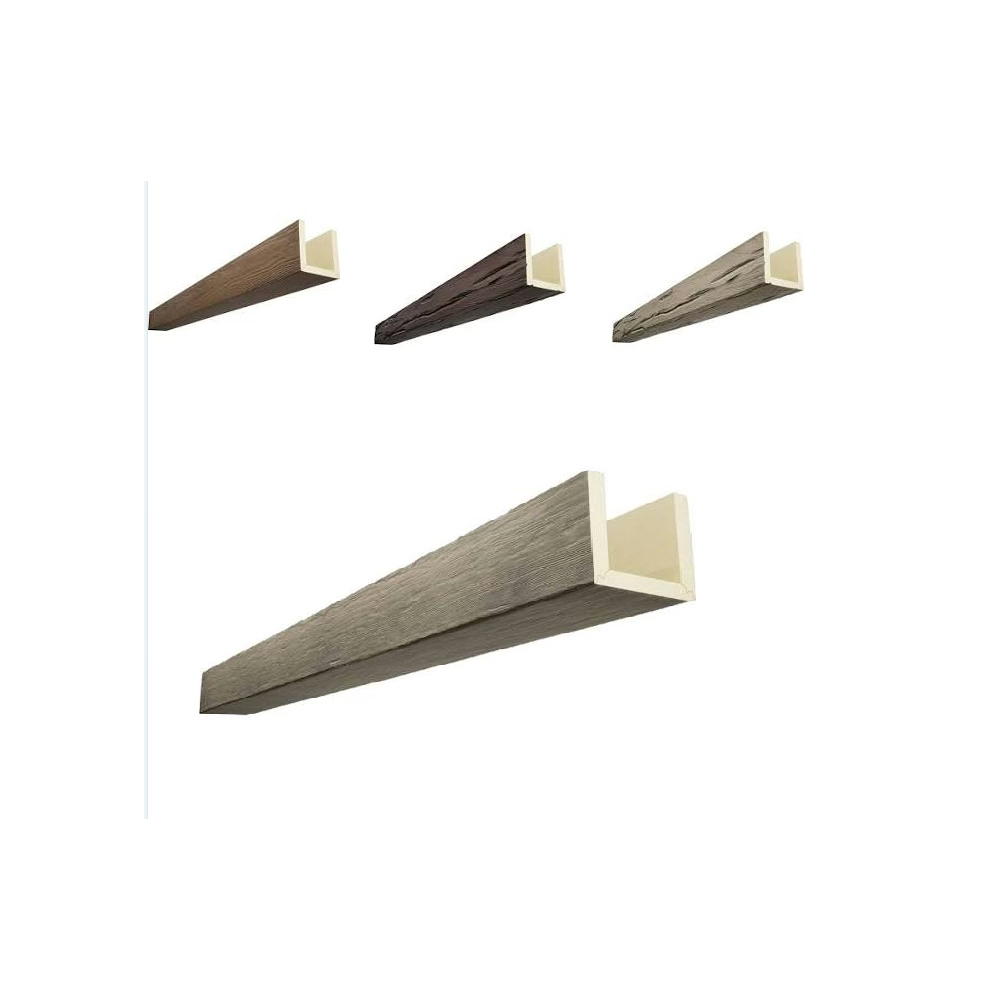
Linear expansion calculations using ΔL = L × CTE × ΔT quantify expected length changes. For 16-foot beam (192 inches), 40×10⁻⁶ CTE, and 30°F temperature swing: ΔL = 192 × 0.00004 × 30 = 0.23 inches. This calculation establishes minimum expansion accommodation requirements in mounting systems and joints.
Area and volume changes for three-dimensional components follow similar principles but affect all dimensions. A 6×8 inch beam cross-section experiencing thermal expansion grows in both width and height dimensions. Volume expansion proves particularly relevant for hollow beams where internal dimensions change affecting fit on mounting cleats.
Cumulative expansion in long installations with multiple beam sections requires considering total length rather than individual sections. Five 12-foot beams spanning 60 feet total show greater absolute expansion than single 12-foot sections though percentage change remains constant. Long installations demand particular attention to expansion accommodation.
Differential expansion between materials with different CTEs creates interface stresses. If polyurethane beams (CTE 40×10⁻⁶) mount to wood blocking (CTE 3-5×10⁻⁶), the materials expand at different rates potentially creating stress at connections. Understanding differential expansion guides connection design allowing materials moving at different rates without damage.
Restrained versus free expansion determines whether dimensional change creates stress (restrained) or simply movement (free). Rigidly fastened beams restrained from expanding develop internal stresses potentially causing cracking, fastener failure, or connection damage. Free expansion allowed through flexible mounting simply creates movement without stress.
Installation System Design
Expansion joints providing deliberate gaps between beam sections accommodate expansion without stress. Joint sizing should provide capacity for maximum expected expansion plus safety factor. If calculations predict 0.25-inch expansion, providing 0.375-0.5 inch joint capacity accommodates analysis uncertainties and extreme conditions beyond typical patterns.
Flexible mounting using elastomeric adhesives, slotted fastener holes, or compliant mounting systems allows beams moving without rigid constraint. Flexible systems accommodate expansion through material deformation rather than requiring large joint gaps. This approach suits applications where visible expansion joints appear undesirable.
Fixed-point strategy establishing single secure attachment point per beam with all other connections allowing sliding creates controlled expansion pattern. Thermal expansion occurs symmetrically from fixed point toward beam ends. This predictable expansion pattern simplifies joint design versus systems with multiple fixed points creating complex stress patterns.
Sliding connections using specialized hardware, oversized holes with washers, or similar details enable beams sliding relative to mounting substrates as thermal expansion occurs. Sliding connections require careful detailing preventing beams binding while maintaining adequate support and appearance.
Flexible joint treatments using elastomeric caulks or backer rods with sealants filling expansion joints accommodate movement while maintaining finished appearance. Unlike rigid joint compounds that crack when expansion occurs, flexible sealants stretch and compress with dimensional changes maintaining seal integrity through thermal cycles.
Seasonal Installation Considerations
Installation temperature affecting baseline dimensions determines whether beams initially stressed in compression or tension. Installing during summer heat leaves beams expanded—winter contraction creates tensile stress potentially opening joints. Installing during winter cold creates opposite pattern. Understanding seasonal position within annual temperature cycle guides anticipating post-installation behavior.
Seasonal optimization installing during mid-range temperatures between seasonal extremes minimizes maximum stress in either direction. If annual range spans 60-90°F, installing at 75°F creates equal expansion/contraction potential rather than biasing toward one extreme.
Material conditioning allowing beams equilibrating to installation environment temperature before mounting prevents installing thermally-stressed materials. Beams delivered in cold trucks then immediately installed in warm buildings might expand after installation creating false tight fits. Conditioning 24-48 hours in installation environment stabilizes dimensions.
Humidity Effects and Management
Moisture absorption in high-humidity environments creates modest swelling in polyurethane. While less hygroscopic than wood, extended exposure to 80-90% RH might create 1-2% linear expansion from moisture absorption. Coastal or humid-climate installations should consider hygroscopic expansion in addition to thermal effects.
Humidity cycling from seasonal or HVAC variations creates dimensional cycling as materials absorb and release moisture. Materials don't instantly equilibrate—moisture changes lag humidity changes by days or weeks creating time-dependent dimensional variations. Understanding this time lag explains why problems might develop weeks after humidity changes rather than immediately.
Vapor barriers and moisture control in ceiling assemblies prevent excessive moisture exposure protecting both structural elements and decorative treatments from moisture-induced dimensional changes and degradation. Proper building envelope design complements material selection creating durable assemblies.
Long-Term Performance Monitoring
Initial post-installation inspection after first seasonal cycle reveals whether expansion accommodation proves adequate. First summer after winter installation (or vice versa) stresses systems maximally. Inspecting after this first full cycle catches problems while relatively easy correcting.
Annual inspection rhythm checking joint conditions, connection integrity, and finish quality documents long-term performance trends. Systematic inspection over years reveals whether initial performance continues or whether progressive degradation indicates problems requiring attention.
Documentation through photography and written records creates baselines against which future conditions compare. Date-stamped photos showing joint gaps, surface conditions, and overall appearance enable detecting changes that memory alone might miss.
Problem Diagnosis and Remediation
Joint gaps developing seasonally indicate inadequate expansion accommodation. If gaps open during summer heat, thermal expansion isn't adequately accommodated. If gaps open during winter cold, installation occurred during warm conditions without adequate joint provision for contraction.
Fastener failure or popping from restrained thermal expansion indicates insufficient sliding or flexible mounting. Restrained beams unable to expand stress fasteners eventually causing failure. Converting to flexible mounting or providing expansion relief solves these problems.
Cracking or splitting from thermal stress accumulation might occur in restrained beams subjected to repeated thermal cycling. Progressive damage accumulates over multiple seasons. Relief through flexible mounting or expansion joints prevents further damage while cracked sections might require replacement.
Finish cracking at joints or connections indicates movement exceeding finish material flexibility. Using flexible caulks rather than rigid compounds prevents finish cracking during normal thermal movement.
Climate-Specific Design Strategies
Extreme cold climates with large annual temperature swings require generous expansion accommodation and flexible mounting systems. Arctic or sub-arctic installations might experience 60-80°F seasonal swings demanding maximum attention to thermal movement.
Desert climates with extreme daily and seasonal temperature variation require robust thermal management. Daytime-to-nighttime swings of 30-40°F create daily cycling in addition to seasonal patterns. Materials experiencing these extreme cycles require durable flexible mounting surviving tens of thousands of cycles.
Coastal humid climates require considering both thermal and hygroscopic expansion. Seasonal humidity variations from 40% winter to 80% summer create expansion from both temperature and moisture. Combined effects might exceed thermal expansion alone.
Tropical climates with stable warm temperatures but high humidity require minimal thermal expansion accommodation but must address hygroscopic effects and material degradation from constant heat and moisture.
Material Selection Strategies
Lower-CTE formulations when available reduce thermal expansion magnitude. Some polyurethane formulations achieve CTE values at lower end of typical range (30-35×10⁻⁶) versus higher values (45-50×10⁻⁶). For climate-extreme applications, seeking lower-CTE products reduces expansion-related challenges.
Composite construction combining materials with different properties might achieve superior dimensional stability. However, composites introduce differential expansion challenges requiring careful engineering.
Testing and Validation
Environmental chamber testing subjecting samples to temperature and humidity cycling validates product dimensional stability and reveals CTE values. Testing might cycle samples between 40-100°F and 30-80% RH measuring dimensional changes at each condition. This empirical data proves more reliable than manufacturer generic specifications.
Field trials installing test sections in actual environments documenting performance under real conditions validates designs before full implementation. Trial installations in extreme exposure locations reveal whether designs adequately accommodate actual conditions.
Professional Engineering Standards
Year-round climate control effects on polyurethane dimensional stability demand understanding material properties, predicting environmental conditions, calculating dimensional changes, and designing installation systems accommodating movement. While polyurethane exhibits good dimensional stability, significant environmental variation creates measurable changes requiring accommodation through expansion joints, flexible mounting, or both. For architects, engineers, and contractors installing beams across diverse climates, systematic analysis of thermal and hygroscopic expansion prevents problems from inadequate accommodation of foreseeable dimensional changes throughout buildings' annual environmental cycles.
The discipline to calculate expected dimensional changes and engineer appropriate accommodation separates professional installations remaining stable through decades from amateur work that fails during first seasonal cycle after installation. Material dimensional stability represents fundamental building science that decoration cannot ignore.
通过系统分析热胀冷缩和湿度变化的影响,合理设计伸缩缝和柔性连接系统,可以确保天花梁装置在全年气候变化中保持稳定性和美观性。
Technical References
ASTM standards cited in every specification
Test Data
Lab results from internal testing program
Updated 2026
Reviewed against current product specs