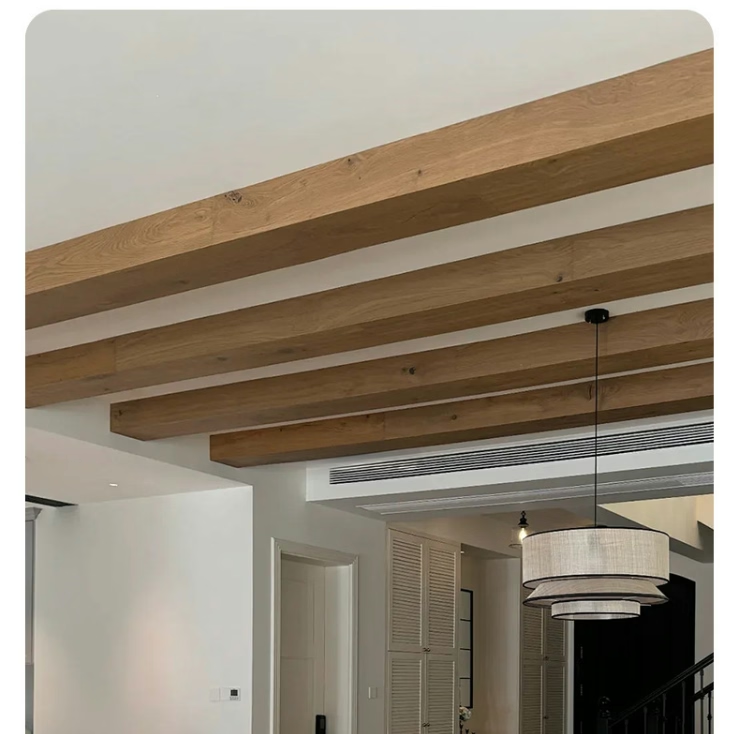
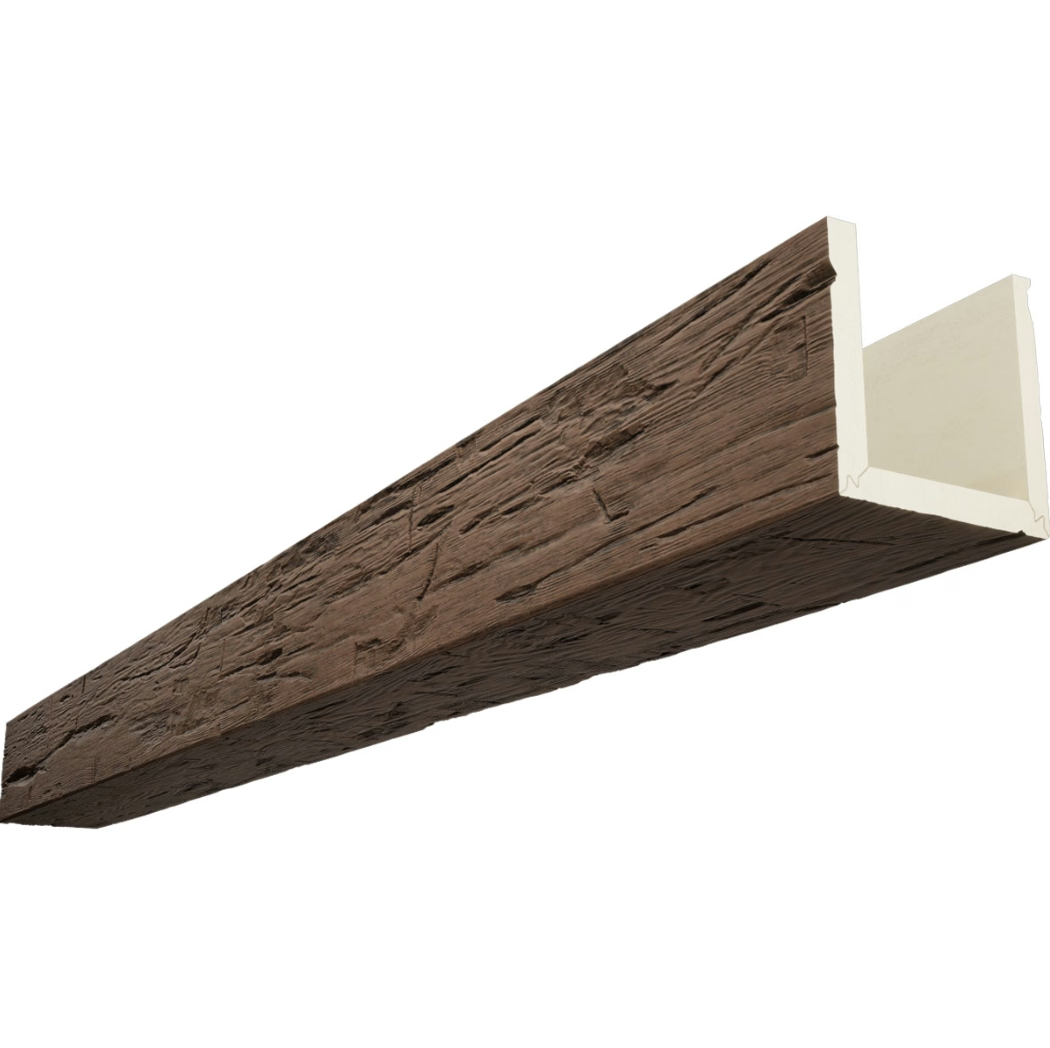
The elementary school renovation prioritized indoor air quality—administrators wanted to ensure that materials wouldn't compromise student health or exacerbate respiratory conditions. The original beam specification cited "low-VOC polyurethane"—vague language that didn't define actual emission levels or testing standards. During submittal review, the environmental consultant questioned what "low-VOC" meant numerically and requested test data proving compliance with CDPH Standard Method v1.2 (California's stringent indoor air quality standard). The manufacturer couldn't provide California Section 01350 certification—their "low-VOC" claim meant meeting basic EPA standards insufficient for school applications. We respecified beams from manufacturers with GREENGUARD Gold certification proving emissions met strict limits for schools and healthcare. That specification revision delayed the project three weeks but ensured compliance with the district's indoor air quality requirements and prevented potential health concerns.
Zero-VOC requirements for health-conscious commercial environments demand understanding emission sources, testing protocols, certification programs, and specification language ensuring materials meet stringent indoor air quality standards. Generic "low-VOC" claims prove inadequate—specific certifications and test data prove compliance with measurable health-protective standards required in schools, healthcare facilities, and wellness-focused commercial spaces.
Understanding VOC Basics
Volatile organic compounds (VOCs) include thousands of carbon-based chemicals that vaporize at room temperature. Some VOCs prove harmless while others cause health effects ranging from respiratory irritation to carcinogenic risk. Total VOC (TVOC) measurements quantify overall emissions but don't distinguish between benign and hazardous compounds. Understanding VOC complexity prevents treating all emissions equivalently regardless of actual health implications.
Emission sources in polyurethane products include unreacted monomers, catalysts, additives, pigments, and breakdown products from curing reactions. Fresh polyurethane emits VOCs as residual reactants off-gas and as chemical reactions complete. Well-formulated products minimize residual emissions while budget formulations might contain higher residual content emitting VOCs for extended periods.
Off-gassing timeline shows initial high emission rates declining over days to weeks as mobile compounds evacuate from materials. Most emissions occur within first 72 hours after production or installation. However, some compounds continue emitting at low levels for months or years. Understanding emission timelines helps predicting when spaces become occupiable after material installation.
Health effects from VOC exposure vary dramatically by compound. Formaldehyde causes respiratory irritation and cancer risk. Benzene proves highly toxic and carcinogenic. Many VOCs cause odor nuisance without significant health risk. Understanding which specific compounds emit proves more important than total VOC levels—10 ppm of harmless alcohols might prove less concerning than 0.1 ppm of formaldehyde.
Cumulative exposure in indoor environments where multiple materials emit VOCs creates total chemical load affecting occupants. Individual materials might meet emission limits but combined emissions from flooring, paints, furniture, and ceiling treatments might exceed recommended exposure levels. Whole-building approaches considering all emission sources prove most protective.
Regulatory Standards and Testing Protocols
California Section 01350 represents most stringent emission standard widely used in North America. This protocol tests material emissions in controlled chambers, measuring 35 specific VOCs plus total VOCs at multiple timepoints (3.5, 14, 28, 168 hours). Results compare against chronic health-based exposure limits. Products meeting Section 01350 prove suitable for schools and healthcare facilities with most vulnerable populations.
CDPH Standard Method v1.2 (California Department of Public Health) replaced older Section 01350 testing protocols in 2017, maintaining stringent limits while updating methods. Products certified under v1.2 meet rigorous health-based standards appropriate for sensitive environments. Specifications requiring v1.2 compliance ensure stringent health protection.
ANSI/BIFMA e3 Furniture Sustainability Standard includes emission testing for furniture but also applies to some architectural products. Testing follows similar principles to California methods with defined emission chambers and analytical protocols. Products meeting ANSI/BIFMA e3 prove acceptable for commercial interiors.
EPA testing methods including 24-hour emission tests provide less rigorous evaluation than California standards. Products meeting only basic EPA requirements might not satisfy health-conscious projects. Understanding hierarchy of standards prevents accepting minimal compliance when stringent standards intended.
European emissions standards including EN 16516 and AgBB (German Committee for Health-related Evaluation of Building Products) provide EU equivalents to US standards. International projects might require demonstrating compliance with European protocols. Understanding international standards enables global product specification.

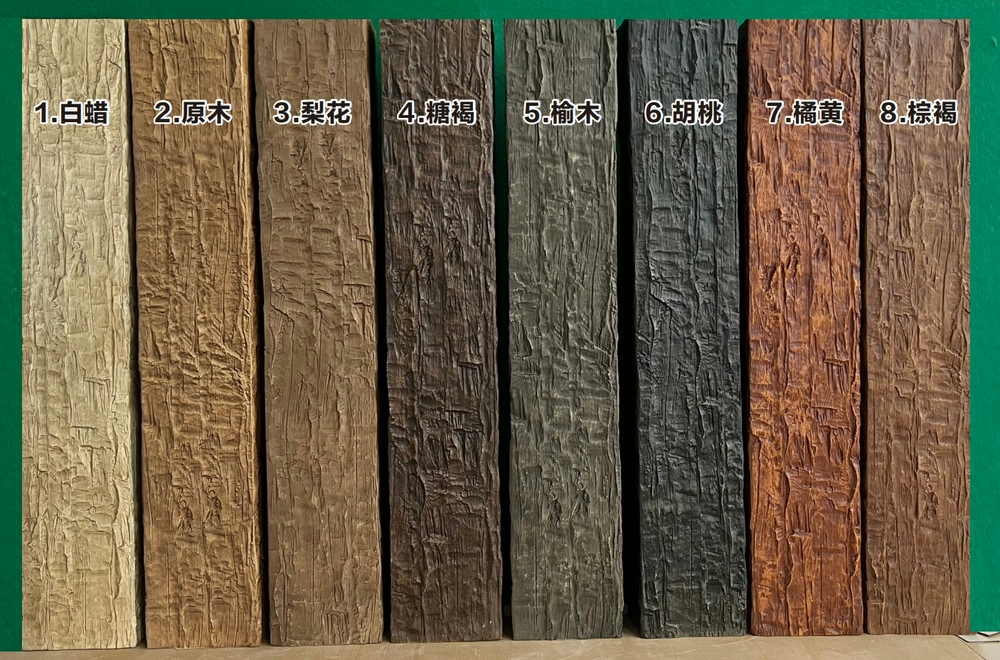
Third-Party Certification Programs
GREENGUARD Certification validates low chemical emissions meeting third-party standards. Basic GREENGUARD certification demonstrates emissions remain below levels causing indoor air quality concerns in typical commercial environments. Products with GREENGUARD certification suitable for most commercial applications.
GREENGUARD Gold Certification (formerly GREENGUARD Children & Schools) imposes stricter limits appropriate for children and healthcare patients—vulnerable populations requiring maximum protection. Gold certification requires meeting California Section 01350 limits. Schools and healthcare projects typically specify GREENGUARD Gold rather than basic GREENGUARD.
Indoor Advantage and Indoor Advantage Gold from SCS Global Services certify emissions meeting ANSI/BIFMA standards and California Section 01350 respectively. These certifications provide alternatives to GREENGUARD from different certification bodies. Understanding equivalencies between programs enables accepting alternative certifications meeting equivalent standards.
LEED v4 and v4.1 Materials credits under LEED green building rating system award points for low-emitting materials. LEED accepts various certifications including GREENGUARD, Indoor Advantage, or emission test reports meeting specified criteria. Understanding LEED requirements guides appropriate certification for projects pursuing LEED certification.
Living Building Challenge Red List compliance under strictest green building standard prohibits specific worst-actor chemicals. Red List restrictions exceed VOC limits alone—banning categories of hazardous compounds regardless of emission levels. LBC projects require verifying products don't contain Red List chemicals.
Material Formulation Strategies
Water-based versus solvent-based systems fundamentally affect VOC content. Water-based polyurethanes use water rather than organic solvents as carriers, dramatically reducing VOC content. However, water-based systems might compromise some performance characteristics—understanding performance trade-offs guides appropriate selection.
Catalyst selection affects residual emissions since some catalysts remain unreacted in cured products continuing to emit. Low-emission catalysts or catalyst systems converting completely during cure minimize residual emissions. Manufacturer formulation expertise significantly affects emission profiles even using similar base chemistries.
Additive selection including pigments, UV stabilizers, flame retardants, and processing aids contributes to emission profiles. Each additive represents potential emission source. Low-emission formulations carefully select additives minimizing VOC contribution. Budget formulations might use whatever additives prove cheapest regardless of emission impacts.
Curing and post-cure processing allowing extended cure times before shipping or applying post-cure heat treatments accelerates off-gassing in controlled factory environments rather than occupant spaces. Products shipped after initial emission peak prove preferable to products emitting heavily during installation and occupancy.
Raw material quality using high-purity feedstocks versus industrial-grade materials affects residual content and emissions. Premium formulations specify high-purity materials despite cost premiums. Budget formulations accept industrial-grade materials with higher impurity and emission potential.
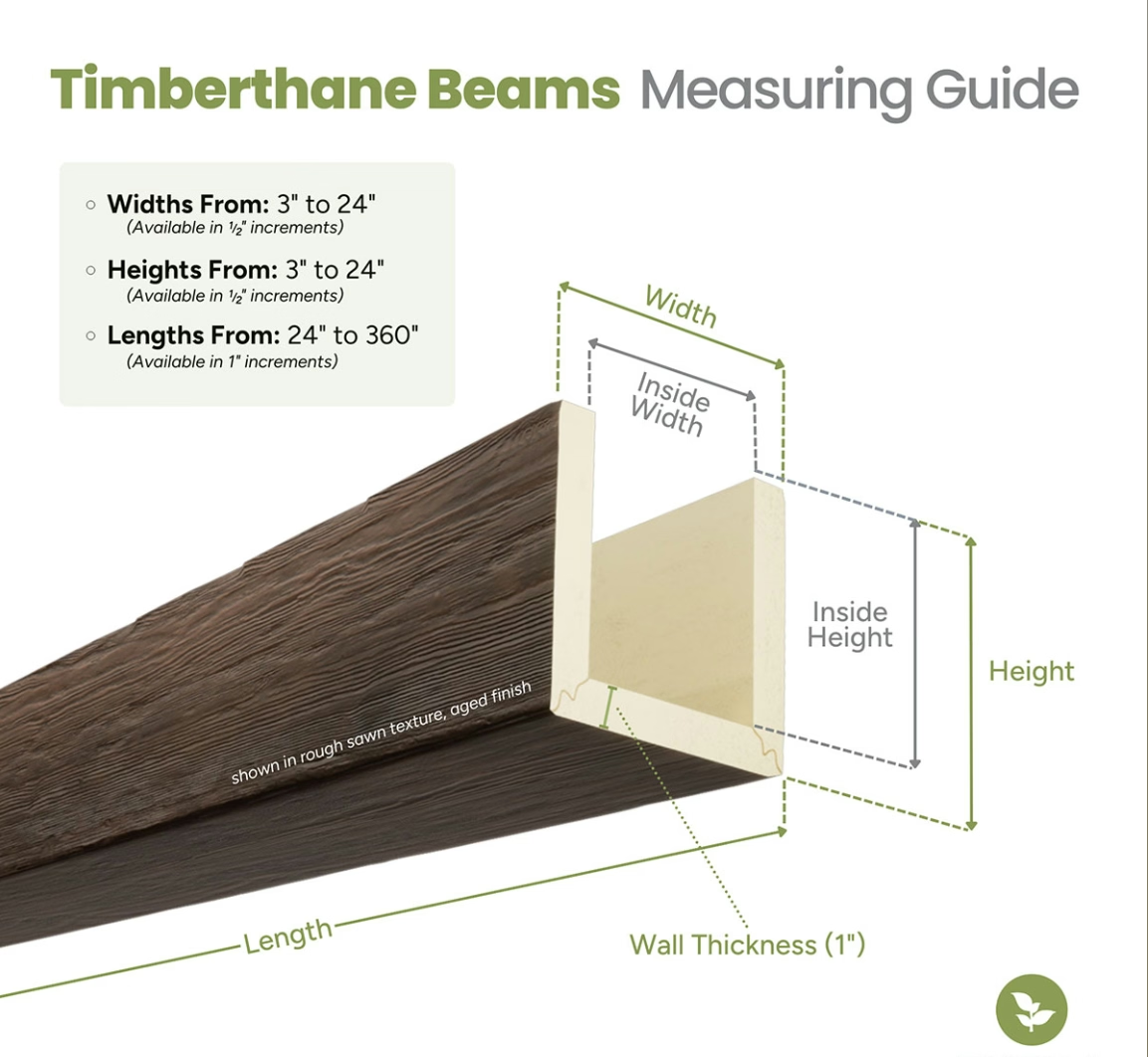
Specification Language Requirements
Explicit certification requirements specifying "GREENGUARD Gold certified" or "meeting California Section 01350" creates enforceable standards versus vague "low-VOC" claims without defined meaning. Clear specification language enables verification and prevents substitution with non-compliant alternatives.
Test report requirements demanding emission test reports from accredited laboratories provides documentation beyond just certification claims. Requiring actual test data allows verifying products meet limits with margins rather than barely scraping by minimum standards. Test reports also reveal specific compounds emitted guiding risk assessment.
Submittal documentation requiring certificate of compliance, chain-of-custody documentation, and test reports creates verification trail ensuring specified products actually install versus substitutions during procurement or installation. Documentation requirements enforce specification intent.
Or-equal provisions when allowing alternative products should maintain equivalent certification and test requirements. "Or-equal" shouldn't allow substituting certified products with non-certified alternatives claiming equivalence. Equal means equal performance including emissions.
Product consistency requirements ensuring installed products match tested samples prevents "test one, ship another" scenarios. Requiring manufacturers certify that installed products match tested formulations closes potential compliance loopholes.
Installation Considerations
Installation adhesive compatibility ensuring adhesives used for beam mounting also meet emission requirements prevents undermining low-emission products with high-emission installation materials. Adhesive emissions often exceed product emissions—selecting low-VOC adhesives proves equally important to product selection.
Ventilation during and after installation accelerates off-gassing diluting VOC concentrations. Enhanced ventilation—perhaps 3-5 air changes per hour versus normal 0.35 ACH—during installation plus 72 hours post-installation evacuates emissions before occupancy. Pre-occupancy ventilation proves particularly important for time-sensitive projects.
Flush-out periods allowing extended ventilation after construction but before occupancy proves most effective emission mitigation. LEED recommends 14-day flush-out delivering 14,000 cubic feet of fresh air per square foot. While time-consuming, flush-out dramatically reduces VOC concentrations before occupancy.
Bake-out techniques using elevated temperature and ventilation accelerate emissions in empty buildings before occupancy. Raising temperatures to 85-90°F while vigorously ventilating for 24-48 hours drives emissions from materials. While energy-intensive, bake-out proves effective for time-critical occupancies.
Phased occupancy strategies installing materials progressively with delays between phases rather than all-at-once allows emissions declining before installing next materials. Progressive installation plus ventilation between phases maintains better indoor air quality than installing everything simultaneously.
Testing and Verification
Pre-installation testing requiring manufacturers provide emission chamber test reports before product approval enables rejecting non-compliant materials before installation. Front-end verification prevents discovering non-compliance after installation when remediation proves expensive.
Post-installation air quality testing measuring actual indoor VOC concentrations after construction validates whether materials collectively meet indoor air quality targets. Testing might use passive samplers or active pumps collecting air samples analyzed by laboratories. Post-occupancy verification provides confidence that theoretical compliance translated into actual acceptable conditions.
Continuous monitoring in critical environments like NICUs, operating rooms, or research laboratories might use real-time VOC monitors detecting concentration changes. Continuous monitoring enables immediate response to emission events rather than discovering problems through periodic testing.
Health-Conscious Occupancy Types
K-12 schools protecting developing children vulnerable to chemical exposures require strictest standards. California and many other jurisdictions mandate Section 01350 compliance for school materials. Even without mandates, professional ethics demand maximum protection for children spending substantial time in school environments.
Healthcare facilities including hospitals, clinics, and especially critical care areas like NICUs require low-emission materials protecting vulnerable patients with compromised health. Healthcare facilities increasingly specify GREENGUARD Gold certification for all building materials. Infection control and indoor air quality concerns make healthcare uniquely demanding environments.
Childcare centers serving infants and toddlers require equivalent protection to schools. Small children experience higher dose per body weight from chemical exposures making stringent standards appropriate. Licensing requirements increasingly incorporate indoor air quality standards affecting material selection.
Wellness-focused commercial spaces including yoga studios, fitness centers, and wellness-oriented offices prioritize indoor air quality as business differentiator. While not legally required, these businesses often voluntarily specify low-emission materials aligning with brand positioning and customer expectations.
Multi-family housing particularly affordable housing for vulnerable populations benefits from low-emission materials. While typical codes don't mandate emission standards for residential construction, some progressive jurisdictions and affordable housing programs incorporate air quality requirements protecting residents.
Cost Implications and Value Proposition
Premium pricing for certified low-emission products typically adds 10-20% to material costs compared to conventional alternatives. However, percentage premium decreases as low-emission formulations become mainstream rather than specialty products. Market evolution reducing premium makes health-protective choices increasingly affordable.
Avoided health costs from reduced exposure to harmful chemicals provides economic justification for material premiums. Quantifying avoided sick days, reduced asthma incidents, or improved cognitive performance proves challenging but represents real value. Health-conscious organizations increasingly recognize that indoor air quality investments yield returns through occupant health and productivity.
Marketing and branding value for organizations demonstrating health commitment through material selection provides intangible but real benefits. Schools promoting healthy learning environments, healthcare facilities demonstrating patient safety commitment, and commercial tenants offering healthy workspaces gain competitive advantages justifying material investments.
Green Building Program Integration
LEED Materials and Resources credits award points for low-emitting materials. Projects can earn multiple points through comprehensive low-emission material selection. Understanding LEED documentation requirements ensures proper submittals capturing credit opportunities.
WELL Building Standard emphasizing human health and wellness includes strict emission requirements across multiple features. WELL projects require low-emitting materials as prerequisite rather than optional credit. Understanding WELL requirements guides specification for projects pursuing this health-focused certification.
Living Building Challenge Materials Petal includes emission requirements plus Red List restrictions. LBC projects face strictest material standards requiring most rigorous documentation and verification. Understanding LBC demands guides early product research and manufacturer engagement.
Supply Chain Transparency
Material ingredient disclosure through Health Product Declarations (HPD) or similar documentation reveals what chemicals products contain. Transparency enables evaluating not just emissions but also ingredient hazards. Progressive specifiers increasingly require ingredient disclosure supplementing emission testing.
Manufacturer engagement asking manufacturers about formulations, raw materials, and emission control demonstrates professional diligence. Manufacturers committed to health protection welcome technical discussions while those hiding behind vague marketing might resist detailed questions. Engagement quality reveals manufacturer priorities.
Future Trends and Innovations
Zero-emission formulations approaching zero detectable emissions represent ultimate goal. While current "zero-VOC" claims might allow emissions below detection limits rather than true zero, technology continually improves. Future products might achieve emission levels effectively indistinguishable from clean air.
Bio-based materials using renewable rather than petroleum feedstocks potentially reduce emissions and environmental impacts. However, bio-based doesn't automatically mean low-emission—natural materials can emit substantial VOCs. Bio-based claims require verification through emission testing rather than assumption.
Real-time emission monitoring technology embedded in products might eventually enable continuous verification that products maintain low-emission profiles throughout service lives. While currently speculative, such monitoring could revolutionize quality assurance.
Professional Health Protection
Zero-VOC requirements for health-conscious commercial environments demand understanding emission sources, testing protocols, certification programs, and specification strategies ensuring materials meet stringent indoor air quality standards. Generic "low-VOC" claims prove inadequate—specific certifications like GREENGUARD Gold and testing per California Section 01350 provide documented health protection required in schools, healthcare, and wellness-focused spaces. For specifiers, designers, and building owners prioritizing occupant health, systematic emission verification through recognized standards protects vulnerable populations while demonstrating organizational commitment to health and sustainability.
The discipline to specify certified products, verify compliance through documentation, and coordinate low-emission materials throughout projects distinguishes health-protective practice from merely checking regulatory boxes. Indoor air quality protection represents fundamental ethical responsibility toward building occupants deserving serious professional attention.
通过采用经过认证的零VOC或超低VOC材料,并建立严格的测试和验证体系,可以确保室内空气质量达到最高健康标准,保护学校、医疗和健康建筑中的敏感人群。
Technical References
ASTM standards cited in every specification
Test Data
Lab results from internal testing program
Updated 2026
Reviewed against current product specs